

wayground logo

Free Printable Worksheets

Font size

S
M
L
XL
Worksheets

1st and 2nd quarter Review

Total questions: 122

Worksheet time: 3hrs 32mins

Name
Class
Date
1.

If something new is discovered in science, what will most likely happen?

a)

The scientific knowledge may change as long as there is empirical evidence to support it.

b)

Science will be called inaccurate and untrustworrthy.

c)

The scientists that discovered the new information will be fired from their research positions.

d)

None of the above.

2.

How can we collect empirical evidence?

a)

Through our own personal beliefs and bias

b)

Through experimentation, investigations, and observations.

c)

Predictions from only mathematical models.

d)

Predictions from only 3-D physical models.

3.

What is an example of reasoning?

a)

Honey is stored in hives.

b)

Honeybees store their honey in hives.

c)

Honeybees use hexagons to store the honey and pollen they bring to the hive.

4.

What is an example of evidence?

a)

Football players are 33% more likely to get injured than baseball players.

b)

Football is more dangerous than baseball.

c)

Baseball is a fun sport.

5.

Evidence is your __________________

a)

Proof

b)

Question

c)

Reasoning

6.

Reasoning shows ______________ and _______________

a)

Questions and problems

b)

How and why

c)

Evidence and reasoning

7.
Why do we randomly select our samples?
a)
for control
b)
reduce bias
c)
so we don't get the same answers from everyone
d)
to eliminate confounding results
8.

_________________ research operates with variables that can be manipulated.

a)

Correlational

b)

Quantitative

c)

Qualitative

d)

Artifacts

9.

____________ research is an in-depth study of a particular phenomenon.

a)

Descriptive

b)

Correlational

c)

Qualitative

d)

Quantitative

10.

What is a model (in general)?

a)

A simplified version of something.

b)

A unique picture of an atom.

c)

A image of an atom.

d)

A fun puzzle

11.

The process to develop a model is as follows:

a)

Observation

b)

Hypothesis

c)

Patterns

d)

Develop a model and test for accuracy

12.
Sal is studying the solar system. He makes a physical model using different-sized foam balls to represent the planets. Which best describes why a physical model is a useful tool for studying the solar system?
a)
Solar system models can be used to study a system that is too big to study directly.
b)
A model of the solar system eliminates the need for scientists to study the solar system directly.
c)
A model of the solar system provides an exact replica of the actual solar system, so scientists can experience what each planet is like.
d)
A model of the solar system can provide more data about the solar system than direct observations.
13.

Pick the reasons why we use models

a)

Models are expensive

b)

Models help you understand complex systems

c)

Models are used when systems are too expensive or impossible to use

14.

Models can be helpful in scientific investigations because

a)

it may not be possible to work with the real thing.

b)

they can be smaller and more manageable than the real thing.

c)

they can be safer to work with than the real thing.

d)

all of the above

15.
What is the advantage of creating a model of a dinosaur?
a)
they are too large to easily study 
b)
they are too complicated to study
c)
Real dinosaurs cannot be studied because they are extinct
d)
The model is safer to work with. 
16.
When experimenting with the growth of a plant, a scientist uses three (of the same type of) plants, two different fertilizers, equal light, and equal water. What type of variable is the fertilizer?
a)
Dependent
b)
Independent
c)
Control
d)
Compound
17.
Which variable depends on what is done at the beginning of an experiment?
a)
Dependent
b)
Independent
c)
Control
d)
Following
18.
What would the INDEPENDENT variable be in an experiment testing which types of paper airplane goes furthest?
a)
the paper used
b)
the type of paper airplane
c)
the distance of each plane's flight
d)
how hard the plane is thrown
19.
Steve wanted to see if the type of fertilizer made sunflowers grow larger. What is the dependent variable 
a)
Type of fertilizer
b)
Size of sunflower
c)
Type of sunflower
20.
Molly investigated if the age of students caused them to be better drivers. What is the dependent variable?
a)
Type of car
b)
Skill of driving
c)
Age of student
21.
Sam wanted to know if the color of the chair you sat in when taking a test affected your test grade. What is the dependent variable.
a)
Color or chair
b)
Grade on test
c)
Age of students
22.
Sarah is bringing treats to her elementary school class on her birthday. The number of treats she brings in is based on the number of students in her class.
t = the number of treats
s = the number of students

Which of the variables is independent?
a)
s
b)
t
23.
Sarah is bringing treats to her elementary school class on her birthday. The number of treats she brings in is based on the number of students in her class.
t = the number of treats
s = the number of students

Which of the variables is independent?
a)
s
b)
t
24.
Carey and Justin are raising money to purchase books for their school's library. The more money they raise, the more books they will be able to purchase for the library.
m = the amount of money Carey and Justin raise
b = the number of books Carey and Justin will be able to purchase

Which of the variables is dependent?
a)
m
b)
b
25.
Sarah is participating in a walkathon to raise money for local literacy programs. The amount of money Sarah will raise depends on the distance she walks.
m = the amount of money Sarah will raise
d = the distance Sarah walks

Which of the variables is dependent?
a)
m
b)
d
26.
Research Question: Does the type of gasoline put in a car effect how fast the car can drive. What is the independent variable?
a)
Type of gasoline
b)
which car the gas is put into
c)
how fast the car can drive
d)
how much gas is put into the car
27.
An experiment is performed on plants to see how different liquids affect plant growth. Each plant in the experiment is given a different liquid; water, apple juice, or milk. Each plant has the same amount of soil, sunlight, and listens to the same music. In this investigation, the independent variable is ...
a)
The type of plant
b)
The amount of sunlight
c)
The type of music
d)
The type of liquid
28.
Ms. S set up an experiment to see how the mass of a ball affects the distance it rolls off a ramp. What is the dependent variable?
a)
Distance traveled by the ball
b)
Height of the ramp
c)
Mass of the ball
d)
Where the experiment took place.
29.
Mr. S normally uses praise as a reward to train his dog. He wants to know the best way to train his dog, so he sets up an experiment to find out if there is a better way to get his dog to respond to commands. What is his dependent variable?
a)
Type of reward
b)
Praise
c)
Type of dog
d)
Amount of time the dog follows commands
30.
The measurable factor in an experiment is known as the: 
a)
Control
b)
Independent Variable
c)
Constant
d)
Dependent Variable
31.
What is the Independent Variable (IV) in the following testable question: Does the temperature of a tennis ball affect the height of its bounce?
a)
the temperature of tennis ball
b)
height of the bounce
32.
What is the Dependent Variable (DV) in the following testable question? Does a metal baseball bat vibrate more than a wooden baseball bat?
a)
the type of baseball bat
b)
the amount of vibration
33.
Mrs. G set up an experiment to see how the type of ball affects the distance it rolls off a ramp.  Identify the Independent Variable in this experiment.
a)
distance traveled by the ball
b)
height of the ramp
c)
the type of ball
34.
What types of charges repel?
a)
Positive and Positive
b)
Positive and Neutral
c)
Negative and Neutral
d)
Neutral and Neutral
35.
If a substance has a higher number of electrons than protons on its surface, what type of charge does it have?
a)
A positive charge.
b)
A negative charge.
c)
A neutral charge
d)
No charge at all
36.
The closer the charges, the ___________ the force between them
a)
closer
b)
further
c)
stronger
d)
weaker
37.
Which part of the atom is positively charged?
a)
Proton
b)
Neutron
c)
Electron
38.
A balloon has a negative charge.  The glass rod has a positive charge.  What will happen when the glass rod is brought near the balloon?
a)
The balloon will be attracted to the rod
b)
The balloon will be repelled by the rod
c)
The balloon will remain in place
d)
The balloon will spin in circles
39.
To demonstrate static electricity, a teacher takes an inflated balloon and rubs it against his hair.  The rubber balloon picks up electrons from his hair, which makes his hair have
a)
a net negative charge
b)
a magnetic force
c)
a net positive charge
40.

Two small hollow metal spheres hung on insulating threads attract one another as shown. It is known that a positively charged rod will attract sphere A. Which statements can be correctly concluded about the charge on the spheres?

a)

A has a positive charge

b)

B has a negative charge

c)

A and B have opposite charges

d)

A is neutral

41.

The amount of attraction between two objects which are not in contact with each other is known as the _________.

a)

Normal force

b)

Gravitational force

c)

Magnetic force

d)

Electrical force

42.

What is the proper setup of the gravitational force formula?

a)

Fg= Gm2/r

b)

F=ma

c)

Fg= Gr2/(m1+m2)

d)

Fg= G (m1m2)/r2

43.

What effect does increasing the distance between the two objects do to the gravitational force?

a)

The distance between two objects has no effect on the gravitational force

b)

It increases

c)

It stays the same

d)

It decreases

44.

When do gravitational forces exist between two objects?

a)

They only exist between microscopic objects.

b)

They are always present between any two objects.

c)

Gravitational forces only act on objects falling on Earth.

d)

They only exist for objects in space.

45.

What does the variable G in the gravitational force equation represent? Fg = G m1 m2r2F_g\ =\ G\ \frac{m_1\ m_2}{r^2}  

a)

Universal gravitational constant

b)

Combined masses of the two objects

c)

Gravitational force

d)

Dielectric constant

46.

Which of the following changes would increase the gravitational force between two objects?

a)

Increase G

b)

Increase the mass

c)

Increase r

d)

Decrease G

47.

When calculating the r value for gravitational force, where do we measure between two objects?

a)

The sum of their diameters

b)

The center of their masses

c)

The furthest reaches of their orbits

d)

The tips of one of their poles

48.

Why do we not feel a gravitational attraction to the objects around us?

a)

The masses are too small for the Fg value to be noticeable

b)

Gravitational forces are not found on Earth

c)

The radius between us and the objects is too great

d)

Electrical forces overpower the gravitational forces

49.
Bill jogs 400 meters to Andy's house, turns around, and runs 400 meters back home.  He does so in 267 seconds.  What is Bill's average speed?
a)
about 3 m/s
b)
about 1.5 m/s
c)
0
d)
about 4 m/s
50.
What is the formula to calculate speed?
a)
S = t/d
b)
S = d/t
c)
S = d x t
d)
S = t x d
51.

A runner races in the 100 meter dash. It takes her 10 seconds to finish. What is her average speed?

a)

10 m/s

b)

1000 m/s

c)

100 seconds

d)

10 seconds

52.
Which of the following is a unit of time?
a)
sec
b)
mi
c)
m/s
d)
km
53.
Which of the following is a unit of speed ?
a)
sec
b)
mi
c)
m/s
d)
min
54.
Which of the following is a unit of distance ?
a)
miles/hr
b)
mi
c)
s
d)
min
55.
Which of the following is a unit of distance ?
a)
miles/hr
b)
hr
c)
km
d)
min
56.

Are the forces acting on this object balanced or unbalanced?

a)

Balanced

b)

Unbalanced

57.

What is the net force?

4 lines
58.

Are the forces acting on this object balanced or unbalanced?

a)

Balanced

b)

Unbalanced

59.

What is the net force?

4 lines
60.

What is the net force?

4 lines
61.

Are the forces acting on this object balanced or unbalanced?

a)

Balanced

b)

Unbalanced

62.
According to the Law of reflection, a light ray striking a mirror
a)
continues moving through the mirror in the same direction
b)
moves into the mirror at a slightly different angle
c)
bounces off the mirror toward the direction it came from
d)
bounces off the mirror at the same angle it hits.
63.
This shows the phenomenon known as....
a)
reflection
b)
refraction
c)
mirrors
d)
focal point
64.
We can see objects because of_______
a)
reflection
b)
refraction
c)
transmission
d)
diffraction
65.

What is white light?

a)

The type of light that is found in x-rays

b)

The type of light given off by the sun and light bulbs

c)

The type of light that is used in microwave ovens

d)

The type of light that makes up radio waves

66.

What happens when a beam of light hits a solid object?

a)

The light passes through it

b)

All the light is absorbed

c)

A shadow forms

d)

All the light is reflected

67.

What can you use to see all the different colors in white light?

a)

A flashlight

b)

A shadow

c)

A camera

d)

A prism

68.

Light


What is pigment?

a)

The entire range of light, including visible and invisible light

b)

A special chemical that absorbs some colors and reflects others

c)

The tool you need to see the spectrum of colors in white light

d)

The shadow that is formed on a wall when light is blocked

69.

What color is an object that absorbs all the colors in the light spectrum?

a)

A rainbow

b)

White

c)

Black

d)

Invisible

70.

A leaf is green. What does this tell you about the light that is being absorbed?

a)

The light is a UV ray.

b)

The light is not a part of the light spectrum.

c)

All colors are reflected except green.

d)

All colors are absorbed except green

71.
The law of Conservation of Energy states that energy can not be created or destroyed only transferred.
a)
True
b)
False
72.
A rubber band is stretched.
a)
Potential to kinetic
b)
Kinetic to potential
73.
A stretched rubber band is released.
a)
Potential to kinetic
b)
Kinetic or potential
74.
What would have the greatest kinetic energy?
a)
A car driving down a hill.
b)
A person running down a hill. 
c)
A ball rolling down a hill. 
75.
Which is the best example that something has kinetic energy?
a)
a. a car parked on a steep hill 
b)
b. a tennis ball rolling across the court
c)
c. a picture hanging on the wall 
d)
d. a piece of coal before it's burned 
76.

Where would this tossed baseball have the least amount of kinetic energy?

a)

point W

b)

point X

c)

point y

d)

point z

77.

Identify the number that shows where water is boiling

a)

1

b)

2

c)

3

d)

4

e)

5

78.

Identify the number on the graph where ice is melting

a)

1

b)

2

c)

3

d)

4

e)

5

79.

When deciding if a graph is showing the phase changes for water, you only need to know these numbers

a)

0, 200

b)

-10. 100

c)

0, 100

d)

it doesn't matter about the numbers

80.

Molecules in HOT water are different than COLD because

a)

They are closer together

b)

They are spread farther apart

c)

Are invisible

81.

What does this demonstrate?

a)

Radiation with waves

b)

Convection with current

c)

Conduction with contact

82.

OUCH! I accidentally touched the hot plate.

Heat transferred to me from

a)

Radiation

b)

Conduction

c)

Convection

83.

The weather changed on the cold front because of the air current changing temperature through

a)

Convection

b)

Radiation

c)

Conduction

84.

Heating food in the microwave occurs because the waves

a)

radiate from the inside out-use radiation

b)

move in a current-convection

c)

has direct contact-conduction

85.
The measure of average kinetic energy of all the particles within an object is called ____________. 
a)
temperature
b)
conduction
c)
radiation
d)
heat 
86.
The Law of Conservation of Energy states:
a)
Energy can created or destroyed but not transformed 
b)
Energy cannot be created or destroyed, it can only transformed
c)
Energy can't be created, destroyed or transformed
87.
Photosynthesis
a)
endothermic
b)
exothermic
88.
Melting 
a)
exothermic
b)
endothermic
89.
Surrounding temperature gets warmer
a)
endothermic
b)
exothermic
90.
Surrounding temperature gets cold
a)
Endothermic
b)
Exothermic
91.
What is between air particles?
a)
Particles of oxygen
b)
Particles of nitrogen
c)
Nothing
d)
Other elements
92.
The smallest piece of anything that still has the properties of that thing is called
a)
an element.
b)
a particle.
c)
a substance.
d)
a gas.
93.

The nucleus of an atom contains which subatomic particles?

a)

protons and electrons

b)

protons and neutrons

c)

electrons and neutrons

d)

protons, electrons, and neutrons

94.
Particles in an atom that are neutral and have no charge are 
a)
negatrons 
b)
electrons 
c)
neutrons 
d)
protons 
95.

What is a substance made of two or more elements that are chemically combined called?

a)

A. element

b)

B. compound

c)

C. mixture

d)

D. solution

96.

Is salt (NaCI) a compound or an element?

a)

Compound

b)

element

97.

What is the definition of a compound?

a)

The smallest part of any substance which can exist on its own

b)

Two or more atoms chemically joined together (can be the same or can be different)

c)

A simple substance in which all the atoms are identical

d)

Two or more different elements chemically joined together

98.

A substance that cannot be broken down into any other substance by ordinary chemical means is called

a)

a molecule.

b)

a mixture.

c)

an element.

d)

a compound.

99.

What is an example of a mixture?

a)

Table salt

b)

Water

c)

Oxygen

d)

Air

100.

A substance that contains only one type of atom is a(n)

a)

compound

b)

element

c)

heterogeneous mixture

d)

homogeneous mixture

101.

A compound is made of ________ atoms.

a)

big

b)

similar

c)

different

102.
Salt is a _________. 
a)
compound 
b)
element 
c)
mixture 
103.
This picture represents which of the following?
a)
element
b)
compound
c)
mixture of elements
d)
mixture of compounds
104.
This picture represents which of the following?
a)
element
b)
compound
c)
mixture
105.

The smallest unit of an element is

a)

a compound.

b)

a molecule.

c)

an atom.

d)

a mixture.

106.

The smallest unit of a compound is

a)

an element.

b)

a molecule.

c)

an atom.

d)

a mixture.

107.

True or False: All molecules are compounds.

a)

true

b)

false

108.

True or false: Air is a mixture.

a)

true

b)

false

109.

Which of the following is a mixture?

a)

oxygen

b)

gold

c)

sand

d)

water

110.

What is matter?

a)

anything that has mass and takes up space

b)

anything that has volume and is solid

c)

anything that you can see

111.

Atoms combine to make (a)   .

112.

Is this an atom or molecule?

a)

atom

b)

molecule

113.

Elements are made of all the (a)   type of atom.

114.

When a molecule is made of DIFFERENT types of atoms, it is called a _____________.

a)

element

b)

compound

115.

What makes these atoms/elements different from one another?

a)

the number of protons

b)

the number of electrons

c)

the number of neutrons

116.

Oxygen is different than hydrogen because oxygen has (a)   protons and hydrogen has 1 proton.
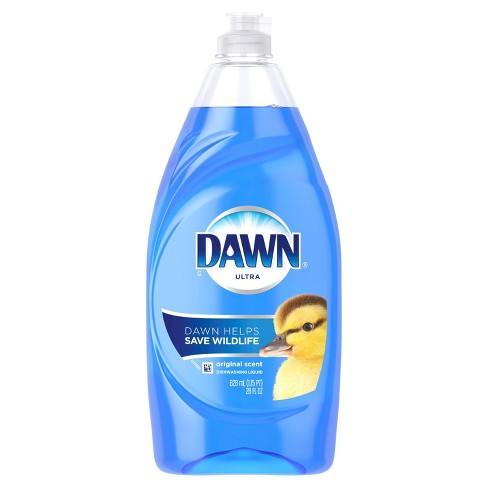
117.

A bottle of dishwashing detergent contains a clear, viscous liquid. The label has a long list of ingredients, including water, sodium lauryl sulfate, fragrance, and Blue dye #5.

What can you infer about the material in the bottle from this label and the appearance of the liquid?

a)

It is a pure substance.

b)

It is a compound.

c)

It is a heterogeneous mixture.

d)

It is a homogeneous mixture.

118.

Liquid to Gas

a)

melting

b)

vaporization

c)

condensation

d)

sublimation

119.

Freezing

a)

F

b)

C

c)

A

d)

D

120.

Gas to liquid

a)

vaporization

b)

melting

c)

condensation

d)

sublimation

121.

Sublimation

a)

A

b)

B

c)

C

d)

F

122.

Deposition

a)

A

b)

C

c)

B

d)

F
