wayground logo

Free Printable Worksheets

Font size

S
M
L
XL
Worksheets

Science SOL Review

Total questions: 125

Worksheet time: 3hrs 34mins

Name
Class
Date
1.
What is the approximate percentage of the Earth that is illuminated by the Sun at any given time?
a)
90%
b)
10%
c)
25%
d)
50%
2.
The sky darkens at midday and the Sun seems to disappear. Minutes later, the Sun reappears and the daylight returns. The best explanation for this is...
a)
a partial solar eclipse is occurring
b)
the Moon has created a lunar eclipse
c)
the Sun has created a lunar eclipse
d)
the Moon has created a solar eclipse
3.
During which phase of the Moon will the tides be highest?
a)
Full Moon
b)
Quarter Moon
c)
Gibbous Moon
d)
Crescent Moon
4.
How many high tides does Virginia experience each day?
a)
4
b)
2
c)
1
d)
3
5.
The first country to land humans on the Moon and return them safely to Earth was
a)
Germany
b)
Russia
c)
U.S.A.
d)
China
6.
The image shown represents which Moon phase?
a)
Waxing gibbous
b)
Waning gibbous
c)
Waning crescent
d)
Waxing crescent
7.
What tool would you use to study stars and space?
a)
microscope
b)
oscilloscope
c)
telescope
d)
nanoscope
8.
Which of the following is true?
a)
Earth is the center of the solar system
b)
The sun orbits the earth
c)
Gravity exists only on Earth
d)
The sun is the center of the solar system
9.
How long is Earth's rotation?
a)
one day
b)
one year
c)
one decade
d)
one hour
10.
Earth's rotation causes what?
a)
one year
b)
day and night
c)
moon phases
d)
seasons
11.
How long is Earth's revolution?
a)
one day
b)
one year
c)
one decade
d)
one hour
12.
The imaginary line that represents earth's tilt is called what?
a)
axis
b)
equator
c)
prime meridian
d)
degrees
13.
What causes seasons?
a)
earth's distance to the sun
b)
earth's tilt and revolution
c)
earth's tilt and rotation
d)
the moon
14.
A severe storm that involves strong winds and forms over warm water is:
a)
tornado
b)
thunderstorm
c)
hurricane
d)
blizzard
15.
A severe storm which involves a funnel cloud forming from a cumulonimbus cloud:
a)
hurricane
b)
tornado
c)
thunderstorm
d)
blizzard
16.
What is the most abundant gas found in the atmosphere?
a)
Carbon Dioxide
b)
Nitrogen
c)
Oxygen
d)
Water Vapor
17.
Humidity is the...
a)
Amount of Water Vapor in the Air
b)
Amount of Wind in the Air
c)
Amount of Precipitation in the Air
d)
Amount of Pressure in the Air
18.
Warm air near the Earth’s surface rises and then cools and drops, this creates a _________________ in the atmosphere.
a)
run-off
b)
Greenhouse Effect
c)
convection current
d)
water cylce
19.
What kind of weather is usually associated with a low pressure system?
a)
Sunny weather
b)
Precipitation (rain, snow, etc.)
20.
What kind of weather is usually associated with a high pressure system?
a)
Sunny weather
b)
Precipitation (rain, snow, etc.)
21.
What weather instrument is this?
a)
Radar
b)
weather satellite
c)
barometer
d)
anemometer
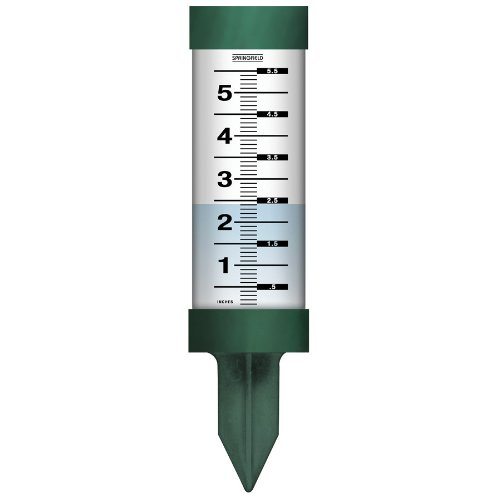
22.
What does this device show?
a)
a change in temperature
b)
a change in humidity
c)
wind speed
d)
the amount of rainfall
23.
What are the 3 main fossil fuels?
a)
Coal, Oil, and Gasoline
b)
Coal, Oil, and Natural Gas
c)
Electricity, Gasoline, Petroleum
d)
Coal, Oil, Non-renewable Resources
24.
Geothermal energy is energy from 
a)
the sun
b)
heat from deep in the earth
c)
wind
d)
inexhaustable
25.
A hydroelectric power plant generates electricity by using the energy of which of the following?
a)
Blowing wind
b)
Organic material
c)
Moving water
d)
Earth’s core
26.
This Picture Represents Which Type of Alternative Energy?
a)
Wind
b)
Solar
c)
Biofuels
d)
Geothermal
27.

What is a watershed?

a)

Land that collects & channels water

b)

Shape of the land

c)

A natural stream of water

d)

River & its tributaries

28.

Which state is NOT included in the Chesapeake Bay Watershed?

a)

Virginia

b)

West Virginia

c)

Delaware

d)

North Carolina

29.

Which of the following watersheds is the largest?

a)

Potomac Shenandoah Watershed

b)

Chesapeake Bay States

c)

Chesapeake Bay Watershed

d)

Shenandoah Watershed

30.

Wetlands include all of the following EXCEPT

a)

marshes

b)

swamps

c)

bogs

d)

prairies

31.

How many gallons of water can one oyster filter per day?

a)

10 gallons

b)

1000 gallons

c)

100 gallons

d)

50 gallons

32.

What is the first layer in the atmosphere?

a)

Thermosphere

b)

Troposphere

c)

Mesosphere

d)

Exosphere

33.

What is the outermost layer?

a)

Exosphere

b)

Thermosphere

c)

Ionosphere

d)

Mesosphere

34.

Which layer is above the Stratosphere?

a)

Ionosphere

b)

Thermosphere

c)

Troposphere

d)

Mesosphere

35.

Which layer do airplanes and jet fly in?

a)

Mesosphere

b)

Stratosphere

c)

Thermosphere

d)

Troposphere

36.

Which layer is the farthest from Earth and can still be affected by Earth´s gravity.

a)

Exosphere

b)

Troposphere

c)

Mesosphere

d)

Ionosphere

37.

Which layer contains most of the mass of Earth's atmosphere

a)

Mesosphere

b)

Troposphere

c)

Ionosphere

d)

Thermosphere

38.

Which layer lies at the top of the Mesosphere and the bottom of the Thermosphere

a)

Mesosphere

b)

Troposphere

c)

Ionosphere

d)

Thermosphere

39.
___ is the basic particle from which all elements are made.
a)
Atom
b)
Compounds
c)
Water
d)
Air
40.
The image shows a hydrogen ion. What is an ion?
a)
An balanced atom
b)
An atom with no electrical charge
c)
An atom with an unequal number of electrons and protons.
d)
An atom with zero protons
41.
Which type of chemical bond is created when atoms share electrons?
a)
Covalent Bond
b)
Ionic Bond
c)
Super Glue
d)
Magnetic Bond
42.
When baking soda is mixed with water, it dissolves in to the water. In this case the water is said to be the _____
a)
Solvent
b)
Solute
c)
Acid
d)
Base
43.
Acidic substances fall near what level on the pH scale?
a)
Lower (smaller value)
b)
Higher (high value)
c)
middle
d)
Not on the pH scale
44.
What type of mirror is shown?
a)
concave mirror
b)
convex mirror
c)
plane mirror
d)
distortion mirror
45.
Which letter shows the type of wave that can be seen by the human eye?
a)
A
b)
B
c)
C
d)
D
46.
Which electromagnetic waves have the longest wavelengths and the lowest frequencies?
a)
infrared waves
b)
radio waves
c)
ultraviolet rays
d)
gamma rays
47.
Electromagnetic waves can transfer energy without a(n)
a)
medium
b)
electric field
c)
magnetic field
d)
change in either a magnetic or an electric field
48.
A disturbance that transfers energy from place to place is 
a)
power
b)
electromagnetic
c)
a wave
d)
polarized
49.
Which season is taking place in the Northern Hemisphere in Position 1?
a)
Winter
b)
Spring
c)
Summer
d)
Fall
50.
The Moon ________ around the Earth.
a)
moves parallel
b)
rotates
c)
moves perpendicular
d)
revolves
51.
The amount of matter in an object is 
a)
pressure
b)
weight
c)
mass
d)
force
52.
Newton's third law states that any action will have a(n) _______ and ______ reaction
a)
Equal and similar
b)
Equal and opposite
c)
Equal and different
d)
Greater and opposite
53.
What is 3.68 x 10³ as a number? 
a)
36,800,000
b)
368
c)
3,680
d)
36,800
54.
What happens as a gas is cooled?
a)
The motion of the particles do not change
b)
The motion of the particles increase in speed
c)
The motion of the particles decrease in speed
d)
none of the above
55.
Convert 12 kilograms to grams. 
a)
12,000 grams
b)
120 grams
c)
0.00012 grams
d)
0.12 grams
56.
Where is most of the mass of an atom located?
a)
electron cloud
b)
in the nucleus
c)
in the electrons
d)
throughout the atom
57.
Where are the metals on the periodic table?
a)
on the left
b)
on the right
c)
on the top
d)
they are not there
58.
What is an example of an exothermic reaction?
a)
baking a cake
b)
ice pack
c)
fireworks
d)
none of the above
59.
Heat transfer by contact is known as ________________. 
a)
Conversion
b)
Conduction
c)
Radiation
d)
Convection
60.
How has the mass changed after the phase change?
a)
It is the same
b)
It has increased
c)
It has decreased
d)
none of the above
61.
The production of oxygen from a reactant in a chemical reaction is shown. The graph shows the volume of oxygen produced as a function of the amount of reactant consumed. If the trend continues, how much oxygen will be produced when 25 g of the reactant is consumed? 
a)
3.0 ml
b)
1.5 ml
c)
5.0 ml
d)
4.0 ml
62.
What is the volume of the liquid in the graduated cylinder shown above? 
a)
25.6 L
b)
23.1 L
c)
25.6 mL
d)
23.1 mL
63.
The triple-beam balance shown above measures in grams. What is the mass of the chick? 
a)
10 kg, 7.5 g
b)
175 g
c)
17.5 g
d)
10.75 g
64.
Tony recorded data from his chemistry experiment in the following table. Which of the categories from Tony's data table includes qualitative observations? 
a)
temperature
b)
volume
c)
mass
d)
color
65.
What is the difference between a theory and an opinion? 
a)
A theory is a scientific fact, while an opinion is not.
b)
An opinion is a scientific fact, while a theory is not.
c)
An opinion is supported by scientific evidence, while a theory is not.
d)
A theory is supported by scientific evidence, while an opinion is not.
66.
What is happening in the statement below?
The ice cube melted.
a)
Matter is changing from a liquid to a solid.
b)
Matter is changing from a liquid to a gas.
c)
Matter is changing from a solid to a liquid.
d)
Matter is changing from a gas to a liquid.
67.
To measure length, you would use _____________.
a)
milliliters
b)
centimeters
c)
gallons
d)
pounds
68.
To measure volume, you would use ________________.
a)
milliliters
b)
centimeters
c)
inches
d)
pounds
69.
Burning and baking are examples of __________________ because they are irreversible.
a)
chemical changes
b)
physical changes
c)
melting
d)
freezing
70.
When heat is added to a solid, it ______________.
a)
freezes
b)
evaporates
c)
melts
d)
condenses
71.
A property of matter that can be observed or measured without changing the identity of the matter ex. color,shape size, etc. 
a)
physical change
b)
physical property
c)
chemical property
d)
chemical change
72.
The molecules of a liquid vs. a gas of the same type of substance...
a)
Move slower in a gas.
b)
Move slower in a liquid.
c)
move at the same speed
d)
cannot be determined
73.
Heat is the _______ of energy.
a)
Transfer
b)
Measure
74.
Temperature is the ________ of energy.
a)
Transfer
b)
Measure
75.
Is melting butter for popcorn a chemical or physical change?
a)
chemical
b)
physical
76.
This is the master copy of an organism's information code.
a)
DNA
b)
Gene
c)
Genetics
d)
Clone
77.
Any permanent change in an organism's genetic material
a)
Clone
b)
Mutation
c)
Selective Breeding
d)
Genetic Engineering
78.
Guanine, a nitrogen base, always pairs with this nitrogen base.
a)
Adenine
b)
Thymine
c)
Cytosine
d)
DNA
79.
This is a section of DNA on a chromosome that contains instructions for making specific proteins.
a)
Genetics
b)
Genome
c)
Gene
d)
Heredity
80.
The parents' genotypes are
a)
One homozygous and one heterozygous
b)
Both are heterozygous
c)
both are homozygous
d)
One is pure and one is homozygous
81.
How are earthquakes, sound, and light waves alike? 
a)
They transmit energy.
b)
They carry matter.
c)
They travel in space.
d)
They can be seen.
82.
What is the relationship between eyesight and light?
a)
Light shines on all objects, allowing people to see them.
b)
Light shines through all objects, allowing people to see them.
c)
Light enters the eye before striking an object, allowing people to see the object.
d)
Light reflects off an object and then enters the eye, allowing people to see the object.
83.
How does 250mL of water compare to 500 mL of water?
a)
They have the same melting point but different boiling points.
b)
They have the same boiling point but different melting points.
c)
They have the same volume but different melting points.
d)
They have the same density but different volumes.
84.
Which best explains why the moon has phases?
a)
The moon's position changes in relation to the sun and Earth.
b)
The sun's position changes in relation to the moon and Earth.
c)
The Earth casts a shadow on the moon as it rotates.
d)
The moon rotates along its axis.
85.
Which causes the movement of tectonic plates?
a)
gravitational pull between Earth and the moon
b)
convection occurring beneath the Earth's crust
c)
energy produced by earthquakes within the Earth
d)
rotation of liquid rock found within the core
86.
Which best summarizes the order of energy flow in a food chain?
a)
sun to decomposers to producers to consumers 
b)
sun to consumers to decomposers to producers
c)
sun to producers to consumers to decomposers
d)
sun to producers to decomposers to consumers
87.
Which process forms clouds?
a)
precipitation
b)
infiltration
c)
condensation
d)
evaporation
88.
White, thin, feathery clouds, usually made of ice crystals are...
a)
Stratus
b)
Cumulus
c)
Cirrus
89.
____________ air rises because it is ____________dense.
a)
Cool, Less
b)
Warm, Less
c)
Cold, More
d)
Warm, More
90.
Identify the type of front that is shown in the image.
a)
Occluded Front 
b)
Cold Front
c)
Stationary Front
d)
Warm Front
91.
In what form does the Sun's energy travel to Earth?
a)
Heat
b)
Electrical energy
c)
Electromagnetic radiation
d)
Mechanical energy
92.
This gas makes up 78% of the atmosphere
a)
oxygen
b)
nitrogen
c)
ozone
d)
carbon dioxide
93.
Many birds migrate long distances when the seasons change. Which of the following is an environmental stimulus that would signal to the birds the changing seasons?
a)
changes in the length of daylight
b)
increase in population of edible plants
c)
decreased number of offspring per hatching event
d)
increase in annual precipitation levels
94.
How does the sun make heat?
a)
burning carbon
b)
breaking apart uranium in a nuclear fission reaction
c)
through the nuclear fusing hydrogen into helium at a temperature of millions of degrees
d)
constant friction of billions of particles at a very high rate of speed
95.
Which word means a characteristic an organism has that helps it survive?
a)
variation
b)
mutation
c)
adaptation
d)
evolution
96.
Which word means natural differences that occur within the same species?
a)
variations
b)
adaptations
c)
mutations
d)
evolution
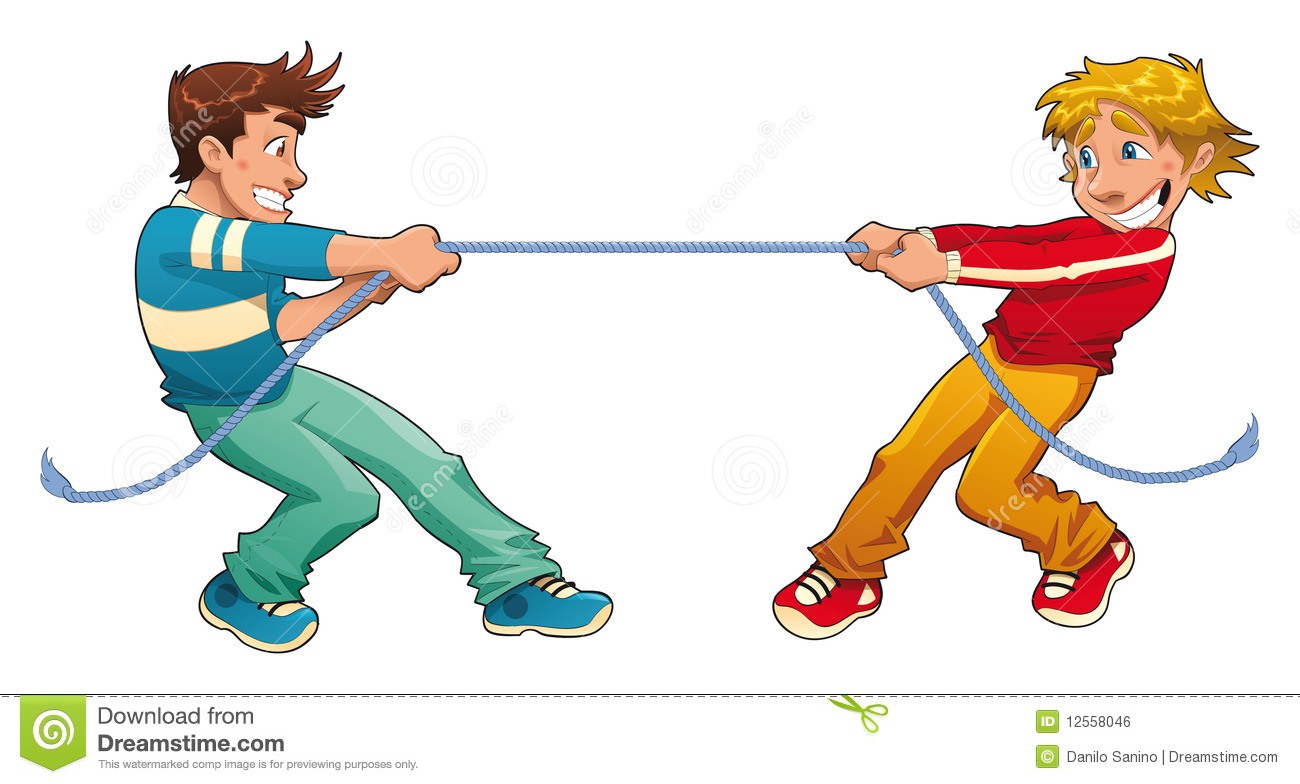
97.
If these boys are pulling with the same amount of force, what will happen?
a)
The boy in blue will win.
b)
They will not move at all.
c)
The boy in red will win.
d)
Both will fall down.
98.
Which of the following organisms would be considered unicellular?
a)
Humans
b)
Dogs
c)
Mushrooms
d)
Amoebas
99.
An organism that can make its own food
a)
Humans
b)
Heterotroph
c)
Autotroph
d)
Multicellular
100.

(Select all that are true) Humans are -

a)

heterotrophic

b)

multicellular

c)

reproduce asexually

d)

uniceullar

101.

What type of cells are you made of?

a)

Eukaryotic cells

b)

Prokaryotic cells

c)

Plant cells

d)

Fungi cells

102.

What is another name to describe an autotroph?

a)

Consumer

b)

Producer

c)

Herbivore

d)

Predator

103.
In the energy pyramid below, which organism has the least amount of energy available?
a)
Producers
b)
Herbivores
c)
Carnivores
d)
Top Predator
104.
What does a Primary Consumer eat?
a)
Tertiary Consumers
b)
Secondary Consumers
c)
Producers
105.
In a food web, arrows point at:
a)
who gets energy.
b)
who gets eaten.
106.
Which level has the most energy available?
a)
producer
b)
primary consumer
c)
secondary consumer
d)
tertiary consumer
107.

Which food chain is represented in this food web?

a)

python --> rat --> grasshopper --> corn

b)

lavenders --> butterfly --> dragonfly --> thrush

c)

flowering plant --> butterfly --> frog --> dragonfly

d)

mangoes --> fruit fly --> dragonfly --> eagle

108.

What is the Scientific Method?

a)

the process of observation, measurement, and experiment, and the formulation, testing, and modification of hypotheses

b)

the Process of making a logical guess before doing a experiment

c)

The process of thinking all the options through before doing a experiment

d)

The process in which you do a lab and come back and reflect on the experiment

109.

The cell wall of fungi is made up of

a)

Chloroplast

b)

Chitin

c)

Cell Membrane

d)

Cellulose

110.

The levels of classification from broadest to most specific

a)

Species, Genus, Family, Order, Class, Phylum, Kingdom, Domain

b)

Family, Class, Phylum, Species, Kingdom Domain, Genus, Order

c)

Genus, Species, Order, Family, Kingdom, Domain, Phylum, Class

d)

Domain,Kingdom, Phylum, Class, Order, Family, Genus, Species

111.

An amoeba is a ting, single-celled organism that is found in water. It is able to alter its shape as it moves. An amoeba belongs to which kingdom?

a)

Animal

b)

Protista

c)

Bacteria

d)

Archaea

112.

Dandelions are yellow, flowering organisms that are found in grasslands or meadows. There are 30 species of dandelions found all over the world. Dandelions belong to which kingdom?

a)

Animal

b)

Fungi

c)

Protista

d)

Plantae

e)

Bacteria

113.

Staphylococcus aureus is a type of bacteria that nearly 30% of people have in their nose. It can sometimes cause serious illness. Staphylococcus aureus belongs to which kingdom?

a)

Archaea

b)

Protista

c)

Fungi

d)

Bacteria

114.

An organisms appearance or other detectable characteristic. The way something looks

a)

Genotype

b)

Trait

c)

Phenotype

d)

Alleles

115.

Sharks are organisms that are found in the ocean. Sharks can have up to 7 rows of teeth each containing 40-45 teeth. Sharks belong to which kingdom?

a)

Plantae

b)

Animal

c)

Fungi

d)

Protista

116.

A plants cell wall is made up of

a)

Chitin

b)

Cellulose

c)

Cell Membrane

d)

Nuclear Membrane

117.

A single celled organism that does not have a nucleus nor membrane bound organelles

a)

eukaryote

b)

prokaryote

118.

An organism made up of cells that have a nucleus and membrane bound organelles

a)

Prokaryote

b)

Eukaryote

119.

The powerhouse of the cell

a)

Nucleus

b)

Golgi Complex

c)

Endoplasmic Reticulum

d)

Mitochondria

120.

The movement of particles from an area of HIGH concentration to an area of LOW concentration

a)

Active Transport

b)

Diffusion

c)

Osmosis

d)

Endocytosis

121.

Found only in a plant cell, this organelle is where photosynthesis takes place

a)

Chlorophyll

b)

Cell Wall

c)

Chloroplast

d)

Nucleus

122.

The passing of traits from parent to offspring

a)

Genetics

b)

Heredity

c)

Selective Breeding

d)

Phenotype

123.

A diagram that shows the occurrence of a genetic trait through several generations of a family.

a)

Punnett Square

b)

Homozygous

c)

Heterozygous

d)

Pedigree

124.

An organism that gets energy by breaking down the remains of dead organisms and consumes or absorbs the nutrients

a)

Consumer

b)

Producer

c)

Decomposer

d)

Scavenger

125.

The entire genetic makeup of an organism

a)

Phenotype

b)

Genotype

c)

Gene

d)

Recessive Traits