
 Worksheets
2022 Accelerated Winter Review
Total questions: 122
Worksheet time: 2hrs 43mins
The fossil record is made up of ____________.
prehistoric dinosaur fossils.
all scientific data about fossils.
all animal fossils in America.
all fossils ever discovered.
If you wanted to know the age of a rock in years, which would you need to use?
Absolute Dating
Relative dating
Rock layers closer to the surface are _____________ than those deeper down.
Younger
Older
What law states that each sedimentary rock layer is older than the rock layer above it and younger than the layer below it?
Law of Superposition
Law of Layeration
Law of Deposition
Law of Sublimation
Which of these might cause unconformity?
Exposure to the elements
Volcanic eruptions
Tectonic plate motion
Adolescent rebellion
What term refers to the steady loss of radioactivity in elements?
radiometric dating
radioactive decay
radiology
Formed when the hollow space formed by and organism is filled in with dirt and become solid
Mold
Cast
Tar
Amber
Which of the following is an example of a mold fossil?


This type of fossil is tree sap hardened and replaced by minerals.
Petrified wood
Imprint
Amber
Mold
Turtles look much like they did millions of years ago. What can we infer about turtle fossils?
They did not change over time.
The turtle survived the ice age.
Turtles went extinct.
Turtles were never endangered.

Relative dating of rock layers tells us that the deeper we dig, _______.
the younger the rocks get
the smellier the rocks get
the harder the rocks get
the older the rocks get

Which layer is YOUNGER? Layer E or Intrusion D?
Layer E
Intrusion D

Which layer is OLDER? Layer E or Intrusion A?
Layer E
Intrusion A
How does absolute age differ from relative age?
only absolute dating indicates which rock is older than another
only absolute dating finds the age in years
only relative dating finds the age in years
By saying "my dad is 48 and I am 13", you would be using...
relative dating
absolute dating
law of superposition
law of crosscutting
Saying: "I am older than my sister," is an example of which type of dating used in Geology:
Relative Dating
Absolute Dating
Chronological Sibling Timelies
Fossil Dating

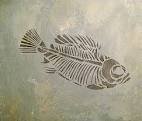
What do fossils teach us about?
Everything we need to know about a plant or animal.
They teach us about the past and the environment.
Everything single living thing will become a fossil when it dies.
That wooly mammoths are not extinct.

Under the ice in the artic are rocks with fossils. Some of those fossils are of plants that only grow in warm places. What does finding these fossils there tell us?
This are was not always cold.
Some plants can grow in rock.
Rock is always covered with ice.
The artic is not a very cold place.
How does the fossil record help to support the theory of evolution?
the fossil record shows that organisms slowly change over time
The fossil record shows that species evolve very quickly
The fossil record does not support the theory of evolution
This is the outermost, rigid layer of the Earth, made up of two parts, divided into pieces call tectonic plates.
Inner Core
Asthensophere
Lithosphere
Outer Core

The hot liquid rock inside the mantle is called ___.
Magma
Lava
Fireballs
We see magma during ____.
Floods
Earthquakes
Volcanoes
Blizzards
What causes the Earth's crustal plates to move?
revolution of the Earth around the Sun
convection currents in the Earth's mantle
volcanism within the Earth's lithosphere
the rotation of the Earth on its axis

Which layer of the Earth's top portion is called the asthenosphere?
Layer 1
Layer 2
Layer 3
Layer 4
The lithosphere...
Is made of solid iron.
Is the crust and top part of the mantle.
Is a long chain of volcanic islands.
Is where two plates come together.

Magma in the mantle moves in circular patterns called...
Lithospheric Currents
The Iron River
Subduction
Convection Currents
Oceanic crust is __________ than continental crust.
Thinner
Darker
Lighter
Faster
The site where two plates meet:
Boundary
Asthenosphere
Subduction
Volcano
Pick the 3 kinds of plate boundaries:
Convergent
Divergent
Subduction
Transform

Alfred ___________ came up with the idea of Continental Drift after noticing that all the continents of the Earth looked as though they fit together like pieces of a puzzle.
Smith
Wegener
Einstein
Edison

Two plate coming together represent a ___________ boundary.
Divergent boundary
Convergent boundary
Subduction zone
Mid Ocean Ridge

Oceanic crust being pushed UNDERNEATH thicker continental crust at a Convergent boundary is called...
Subduction
Sea-Floor Spreading
Flexion
Volcanism
What name did Alfred Wegener give to the 225 million year old "super" continent?
Pangaea
Gaia
Lithosdome
Hessville


A lunar eclipse occurs at which moon phase?
quarter moon
new moon
crescent moon
full moon

What type of eclipse is this an example of?
Lunar Eclipse
Solar Eclipse
The mantle "flows" because of large differences in temperature from the bottom to the top, which create convection currents.
True
False
In sea floor spreading, molten material rises from the mantle and erupts
along the edge of the continents
along the mid-ocean ridges
in deep ocean trenches
at the North and South pole


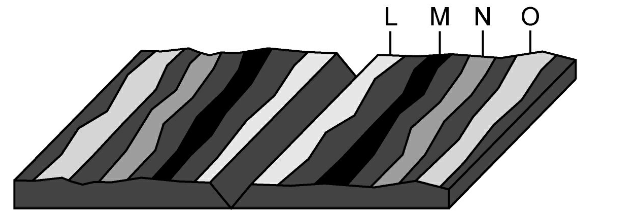
Where is the asthenosphere located?
Crust and Upper Mantle
Mantle
Crust
Core

What is happening at this boundary to create a volcano?
Plates are sliding beside each other
Both plates are lifting and folding
One plate is going under the other and melting
The plates are moving apart and making new crust

Which major geologic events tend to occur in the Ring of Fire? (PICK 2)
Volcanoes
Earthquakes
Hurricanes
Tornadoes
Which of these proves that Earth has changed over time?
Fossilized cactus in desert
Fossilized polar bear at North Pole
Fossilized fish on top of mountains
Fossilized leaves in rain forest
How can you explain finding a fossil of a tropical (warm) plant in an arctic (cold) region?
The climate changed from warm to cold as the land drifted away from the equator
Plants can live in ice
Wind eroded the land and deposited the fossil further north
A river moved the fossil over the course of several years
Tides are the cycle of rising and falling ocean water that repeats approximately
every 24 hours
every 12.5 hours
every 25 hours
every 6.25 hours
A neap tide has the least difference between consecutive low and high tides.
True
False
An orbit is...
The spinning of the Earth
The path that Earth follows around the Sun
How long it takes the Earth to revolve around the Sun
The path that the Sun follows around the Earth

When Earth spins on its axis it is called
resolution
revolution
umbra
rotation
geostationary orbit

Which model of the universe has Earth at its center of the revolving planets and stars?
Kepler's
Brahe's
heliocentric
geocentric

Which model of the solar system has the sun at the center with Earth and the other planets revolving around it.
Brahe's
Kepler's
heliocentric
geocentric

Which are the terrestrial planets? (Can chose more than 1)
Mars and Jupiter
Earth and Saturn
Venus and Mercury
Uranus and Pluto
Earth and Mars

Which of the planets are the gas giants? (Can chose more than 1)
Earth and Venus
Mars and Mercury
Uranus and Saturn
Jupiter and Neptune

These are rocky objects that revolve around the sun, but are too small to be considered planets
comets
asteroids
meteoroid
meteorite

The difference between a meteoroid and a meteorite is that...
a meteoroid hits Earth's surface
a meteoroid is a streak of light when it burns in Earth's atmosphere and a meteorite does not.
a meteorite hits Earth's surface
a meteorite is a streak of light when it burns in Earth's atmosphere and a meteoroid does not.

The tide with the greatest difference between consecutive low and high tides
neap tide
King tide
spring tide
full moon tide

The tide with the least difference between the low and high tides.
neap tide
King tide
spring tide
full moon tide
What type of surfaces do the first four planets have?
Rock
Liquid
Gas
Gas and Liquid
What can we use to measure the distance of objects in our solar system?
Astronomical unit
Cosmic mile
Astrological kilometre
Light- year
The 4th planet from the sun. It's red and a lot like Earth.
Mercury
Venus
Earth
Mars
The 5th planet from the sun. It has more mass than all the other planets combined.
Jupiter
Saturn
Neptune
Uranus
The 6th planet from the sun. Has thousands of small, icy moons that orbit it, forming its famous rings.
Jupiter
Saturn
Neptune
Uranus
The 8th planet from the sun. Not known by the ancients. Named after the Roman god of the sea because of its blue color.
Jupiter
Saturn
Neptune
Uranus
The 7th planet from the sun. Has an axial tilt of 98 degrees, which means it orbits the sun tipped over on its side.
Jupiter
Saturn
Neptune
Uranus
The variable the scientist changes in an experiment. (Cause)
Independent Variable
Dependent Variable
Controlled Variable
Unchanging Variable
The variable the scientist measures in an experiment. (Effect)
Independent Variable
Dependent Variable
Controlled Variable
Unchanging Variable
A large cloud of dust and gas in space. A "stellar nursery."
Nebula
Comet
Asteroid
Galaxy
Pick the odd one out.
Mars
Earth
Venus
Neptune
Pick the odd one out.
Jupiter
Mercury
Saturn
Neptune
The ________ mass two objects have, the greater the gravity between them.
more
less
Gravity is weaker if objects are _____________.
closer together
farther apart

Base your answer to the following question on what you know about distance and gravity and the information in provided in the table.
Why does the Moon orbit the Earth and not the Sun?
A brick and a pencil are dropped at the same time from the same height. Which one would hit the ground first?
brick
pencil
both would hit at the same time
What two things determine the gravity of an object?
mass & weight
mass & distance
density & mass
volume & distance

