wayground logo

Free Printable Worksheets

Font size

S
M
L
XL
Worksheets

KS3 SCIENCE: Periodic Table and Preparing Salts

Total questions: 127

Worksheet time: 1hrs 11mins

Name
Class
Date
1.
What elements make up Copper sulphate? CuSO4
a)
copper, sulphate
b)
copper, sulphur
c)
copper, sulphur and oxygen
d)
copper and oxygen
2.
Magnesium and hydrochloric acid are mixed together in a beaker, hydrogen is produced as well as magnesium chloride.
Choose correct word equation
a)
magnesium chloride + hydrogen --> magnesium + hydrochloric acid
b)
magnesium + hydrochloric acid --> magnesium chloride + hydrogen
3.
Magnesium + Hydrochloric acid --> Magnesium chloride + hydrogen
Choose correct reactants
a)
Magnesium and hydrochloric acid
b)
Magnesium chloride and hydrogen
4.
Iron + Hydrochloric acid --> ?
a)
iron sulfate + water
b)
iron + hydrogen
c)
iron chloride + hydrogen
d)
iron chloride + water
5.

How can we prevent sodium from reacting?

a)

By keeping it under a layer of oil.

b)

By galvanising it.

c)

By keeping it cool.

d)

By heating it.

6.
Salts that are made with carbonic acid are called ______________.
a)
chlorides
b)
sulfates
c)
nitrates
d)
carbonates
7.
acid + metal ----->
a)
salt + hydrogen
b)
salt + water + carbon dioxide
c)
salt + water
d)
salt + carbon dioxide
8.

Acid + Carbonate ----->

a)

salt + hydrogen

b)

salt + water + carbon dioxide

c)

salt + water

d)

salt + carbon dioxide

9.
Magnesium + sulphuric acid --> ?
a)
magnesium sulfate + water
b)
magnesium sulfate + hydrogen
c)
magnesium chloride + hydrogen
d)
magnesium chloride + water
10.
Zinc + nitric acid --> ?
a)
zinc sulfate + water
b)
zinc sulfate + hydrogen
c)
zinc nitrate + hydrogen
d)
zinc chloride + water
11.
Salts produced by the reactions of hydrochloric acid are known as... 
a)
chlorines
b)
nitrates
c)
chlorides
d)
bromides
12.
acid + alkali ----->
a)
salt + hydrogen
b)
salt + water + carbon dioxide
c)
salt + water
d)
salt + carbon dioxide
13.
What reactants are needed to prepare (make) copper carbonate?
a)
copper and hydrochloric acid
b)
copper and sulfuric acid
c)
copper and nitric acid
d)
copper and carbonic acid
14.
What reactants are needed to prepare (make) magnesium nitrate?
a)
magnesium and hydrochloric acid
b)
magnesium and sulfuric acid
c)
magnesium and nitric acid
d)
magnesium and carbonic acid
15.
What reactants are needed to prepare (make) lead sulfate?
a)
lead and hydrochloric acid
b)
lead and sulfuric acid
c)
lead and nitric acid
d)
lead and carbonic acid
16.

How do you know when a reaction between a metal and an acid is complete?

a)

All the metal is dissolved

b)

There is a color change in the acid

c)

Bubbles stop forming!

d)

All the acid evaporates
17.
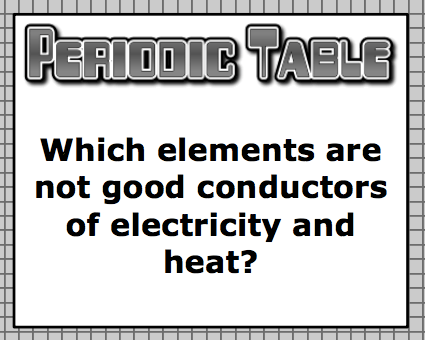
Why is burning a salt one way to determine the metal used in preparing it?
a)
Each metal burns a different color.
b)
Some metals burn and some don't.
c)
Each metal has a different colored smoke.
d)
Burning salts is not will not help determine the metal.
18.
In a reaction between an acid and a carbonate gas bubbles will appear. What is that gas?
a)
helium
b)
hydrogen
c)
oxygen
d)
carbon dioxide
19.
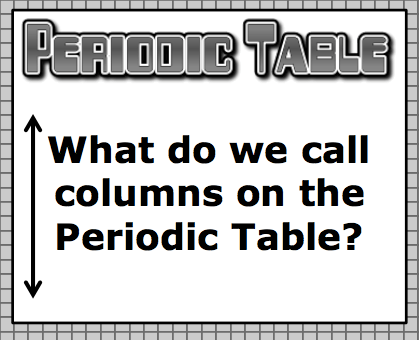
a)
Periods
b)
Groups
20.
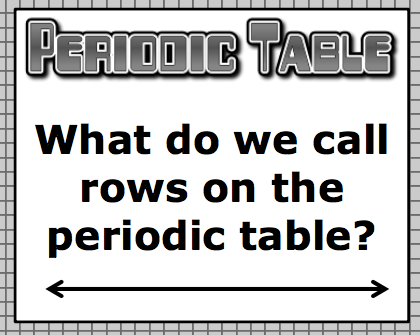
a)
Periods
b)
Groups
21.
a)
energy levels
b)
valence electrons
c)
protons
d)
neutrons
22.
a)
energy levels
b)
valence electrons
c)
protons
d)
neutrons
23.
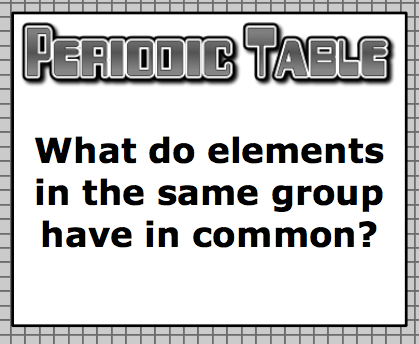
a)
Same group
b)
Same period
24.
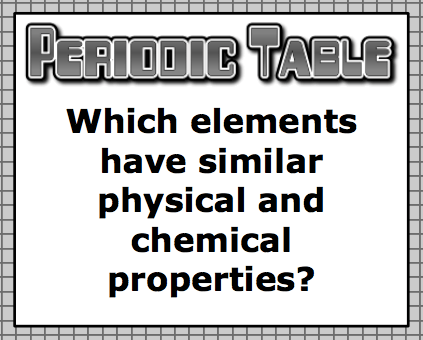
a)
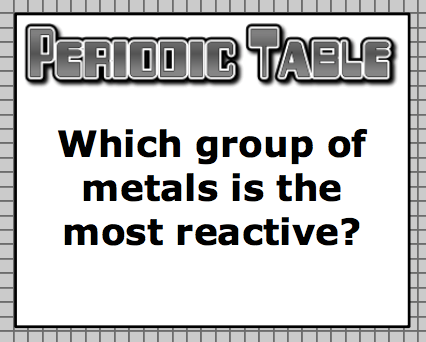
Group 1
b)
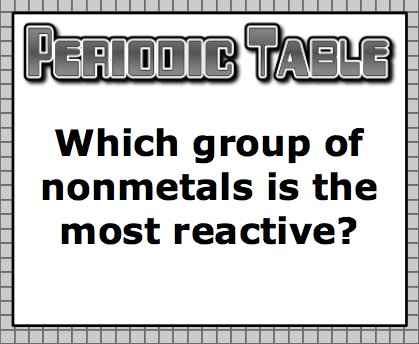
Group 17
c)
Group 2
d)
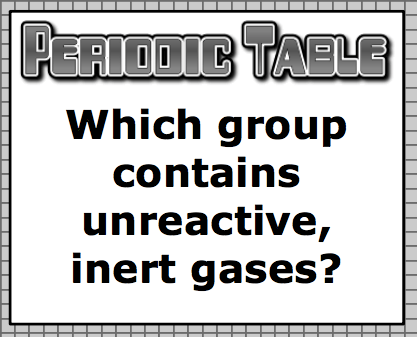
Group 18
25.
a)
Group 1
b)
Group 17
c)
Group 18
d)
Group 2
26.
a)
Group 1
b)
Group 17
c)
Group 18
d)
Group 2
27.
a)
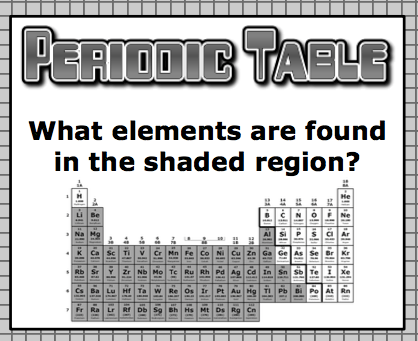
Metals
b)
Nonmetals
c)
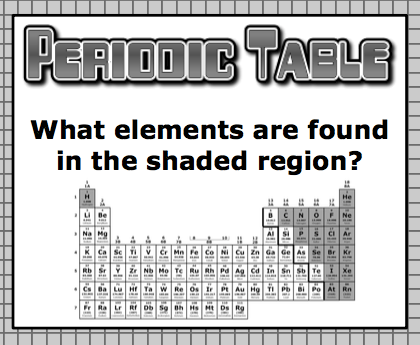
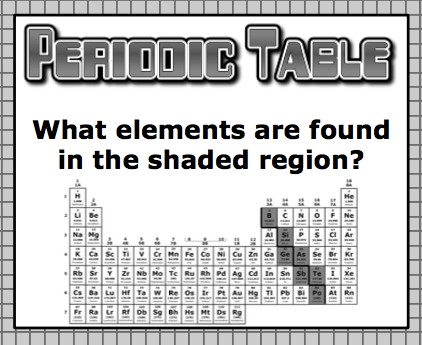
Metalloids
28.
a)
Metals
b)
Nonmetals
c)
Metalloids
29.
a)
Metals
b)
Nonmetals
c)
Metalloids
30.
a)
Metals
b)
Nonmetals
c)
Metalloids
31.
a)
Metals
b)
Nonmetals
c)
Metalloids
32.
a)
Metals
b)
Nonmetals
c)
Metalloids
33.
a)
Metals
b)
Nonmetals
c)
Metalloids
34.
a)
Metals
b)
Nonmetals
c)
Metalloids
35.

Who invented the Periodic Table?

a)

Mendeleev

b)

Bohr

c)

Lewis

d)

Democritus

36.

As you move left to right on a row or period what happens?

a)

Atomic number increases by 1

b)

Electrons decrease

c)

Number of shells decrease

d)

Nothing

37.

What happens to the number of shells as you move down a group?

a)

They decrease by 1

b)

They increase by 1

c)

Nothing

38.

The first energy shell can hold ______ electrons.

a)

2

b)

8

c)

18

39.

All elements in the same row have the same number of shells.

a)

True

b)

False

c)

Sometimes

40.

Mendeleev's genius was his ability to

a)

predict elements that were not discovered yet

b)

organize elements by their mass

c)

had an element named after himself

d)

organize elements by properties

41.

Valence means......

a)

inside

b)

outside

c)

full

42.

Elements in the same group or column have the same ...

a)

# of valence electrons

b)

# of shells

c)

# of protons

d)

Mass Number

43.

Rows on the periodic table are called ___________.

a)

Periods

b)

Sentences

c)

Fences

44.

The columns in the periodic table are called ___________.

a)

Towers

b)

Herds

c)

Groups

45.

Elements in the same group have __________

a)

Similar Properties

b)

Same number of shells

c)

Similar Mass

46.

What do all elements in the same period have?

a)

same number of shells

b)

same number of electrons

c)

belong in the same family
47.
How did Mendeleev arrange the elements?
a)
alphabetical 
b)
density
c)
melting point
d)
atomic mass
48.
Which of the following is the most metallic element in period 3?
a)
Boron (B)
b)
Sodium (Na)
c)
Argon (Ar)
d)
Silicon (Si)
49.
Which of these element is the least metallic?
a)
Potassium (K)
b)
Carbon (C)
c)
Sulfur (S)
d)
Neon (Ne)
50.
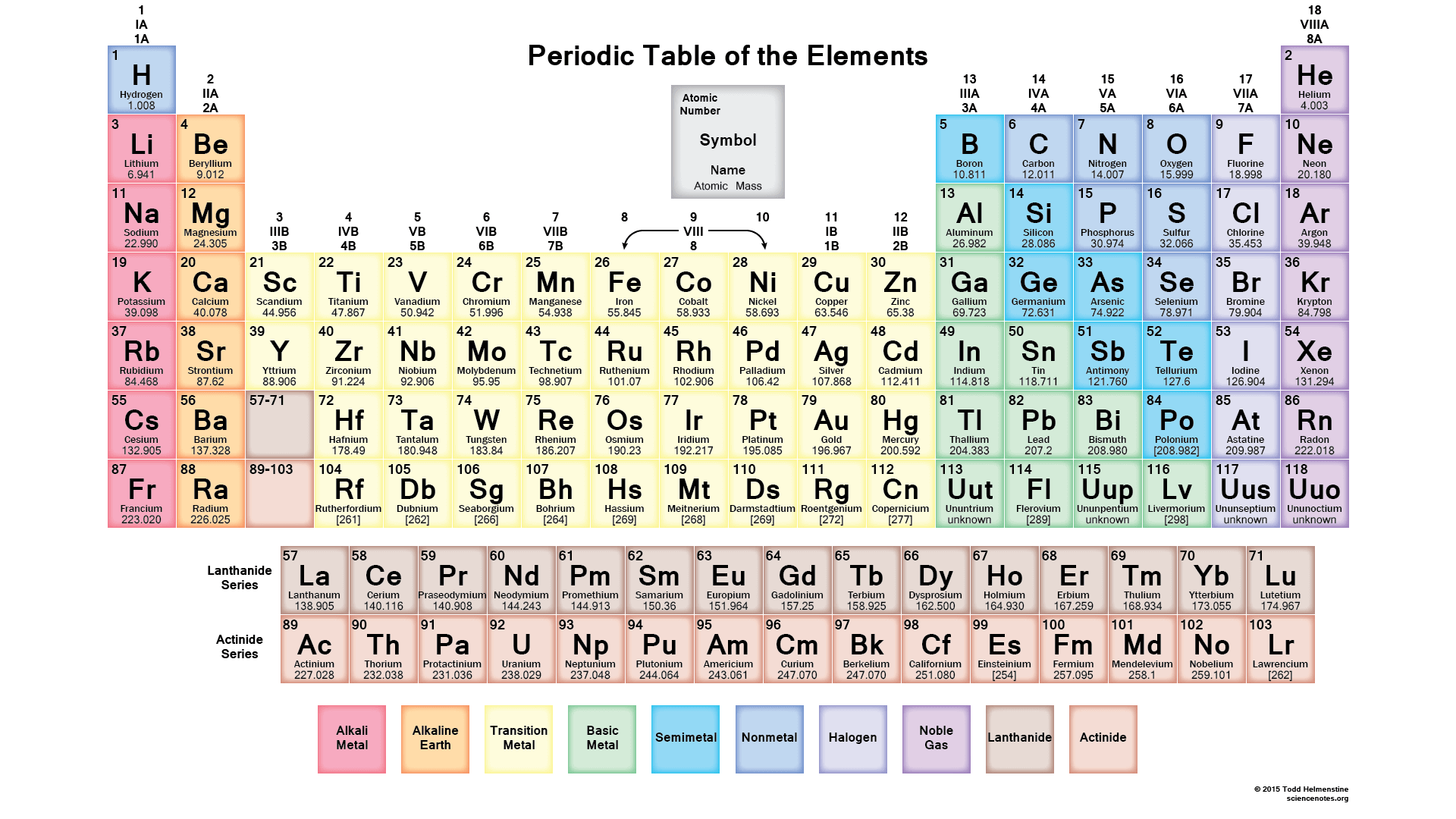
The number at the bottom of each square on the periodic table is the ...
a)
atomic number
b)
atomic mass
c)
chemical symbol
d)
element name
51.
The number at the top of each square on the periodic table is the ...
a)
atomic number
b)
atomic mass
c)
Chemical Symbol
d)
Element Name
52.
How many elements follow the periodic law?
a)
7
b)
98
c)
110
d)
All of them
53.
Pure forms of these elements are stored in oil so they won't react with oxygen and water in the air.
a)
Alkali Metals
b)
Alkaline-earth metals
c)
Halogens
d)
Noble Gases
54.
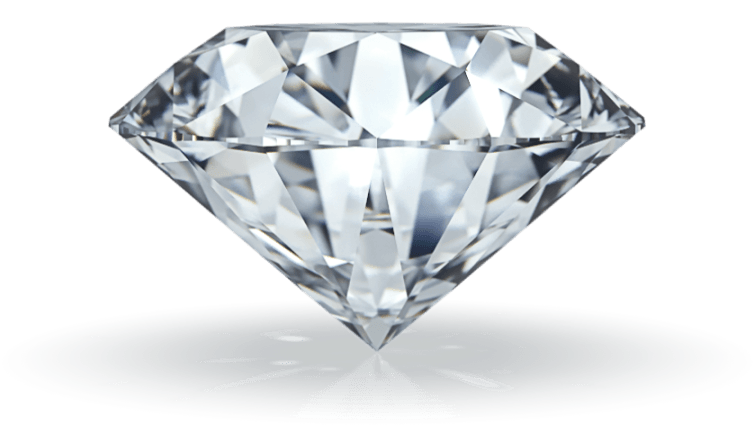
Diamonds are a pure form of what element?
a)
Carbon
b)
Oxygen
c)
Silicon
d)
Silver
55.
What group of elements don't have individual names?
a)
Alkaline-earth Metals
b)
Transition Metals
c)
Alkali Metals
d)
Halogens
56.
What element is used in light bulbs to help them last longer?
a)
Xenon
b)
Argon
c)
Helium
d)
Krypton
57.
Most of the elements on the periodic table are classified as _____.
a)
Metals
b)
Nonmetals
c)
Metalloids
d)
Periods
58.
This class of elements are sometimes called "semiconductors."
a)
Metals
b)
Nonmetals
c)
Metalloids
d)
Groups
59.
Why do some elements have 3 letter chemical symbols?
a)
There are no elements with 3 letter symbols
b)
They are named after scientists
c)
They are named after places
d)
They have a temporary name until scientists agree on a new name.
60.
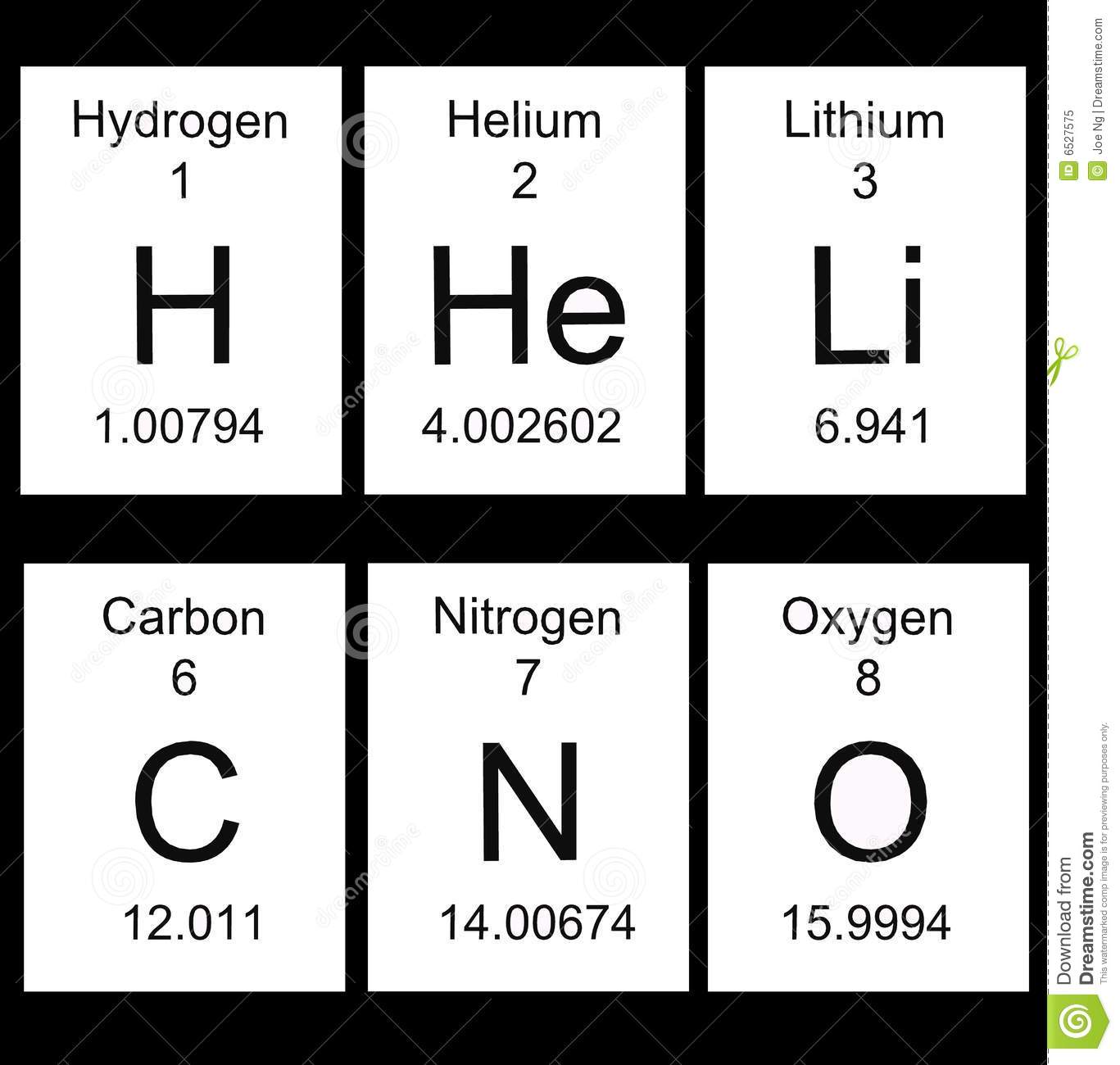
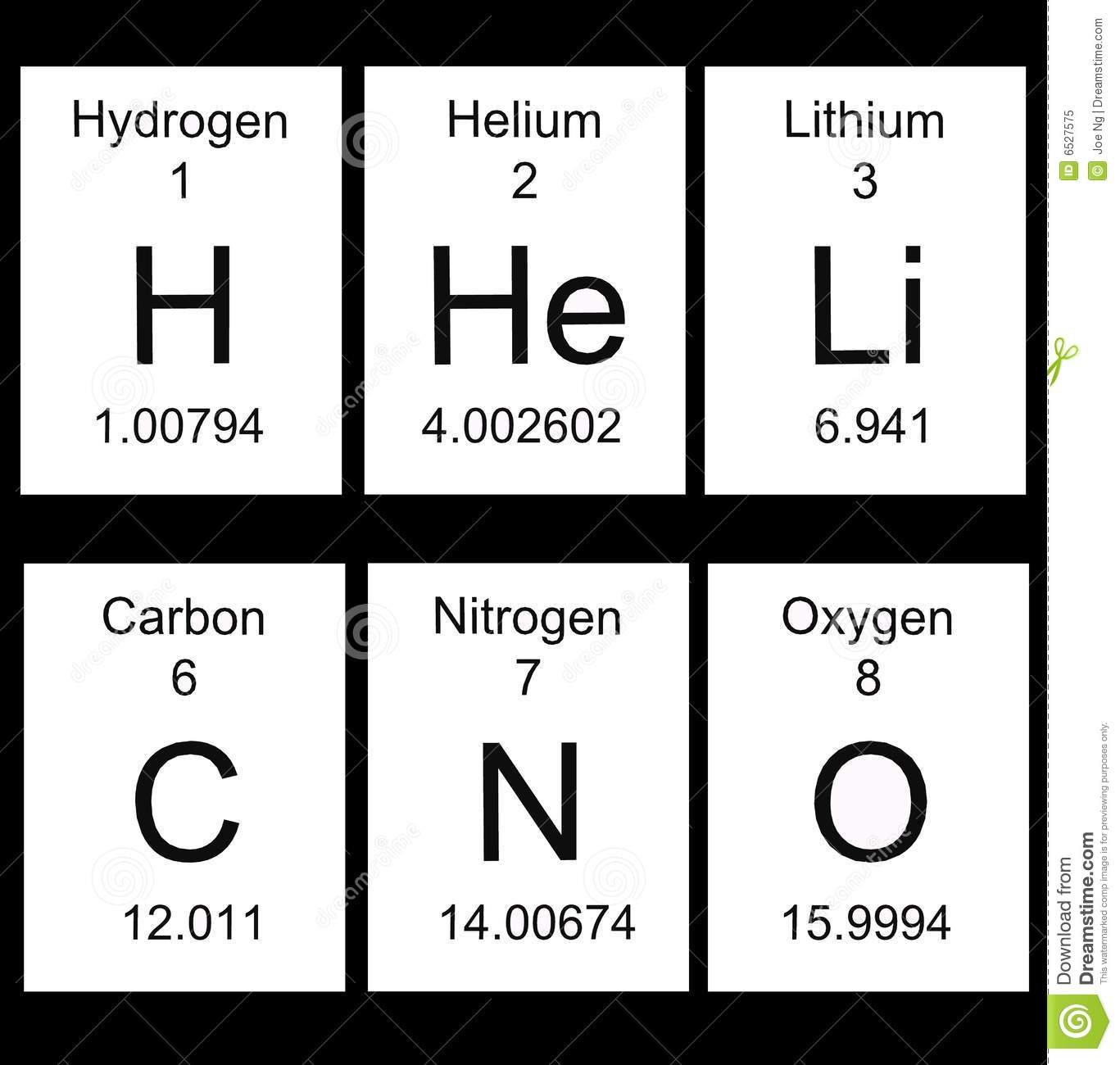
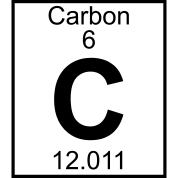
What does the 6 represent?
a)
atomic mass
b)
atomic number
c)
element name
d)
chemical symbol 
61.
What does 12.011 represent?
a)
atomic mass
b)
atomic number
c)
element name
d)
chemical symbol 
62.
What does the C represent?
a)
atomic mass
b)
atomic number
c)
element name
d)
chemical symbol 
63.
These are found on the Periodic Table.
a)
Compounds
b)
Elements
c)
Mixtures
64.

the basic structural unit of matter

a)

atom

b)

matter

c)

element

d)

nucleus

65.

a collection of atoms of one type that cannot be broken down into simpler substances by ordinary chemical or physical means

a)

element

b)

subatomic particle

c)

electron

d)

matter

66.

the positively charged subatomic particle contained in the nucleus of an atom

a)

proton

b)

neutron

c)

electron

d)

matter

67.

a subatomic particle, contained in the nucleus of an atom, having the same mass as a proton but no electrical charge

a)

proton

b)

neutron

c)

electron

d)

matter

68.

a negatively charged subatomic particle that orbits the nucleus of an atom

a)

proton

b)

neutron

c)

electron

d)

matter

69.

a unique number for each element that equals the number of protons in an atom of that element

a)

element name

b)

element symbol

c)

atomic number

d)

atomic mass

70.

the mass of an atom, calculated by adding the number of protons and neutrons in the nucleus of the atom

a)

element name

b)

element symbol

c)

atomic number

d)

atomic mass

71.
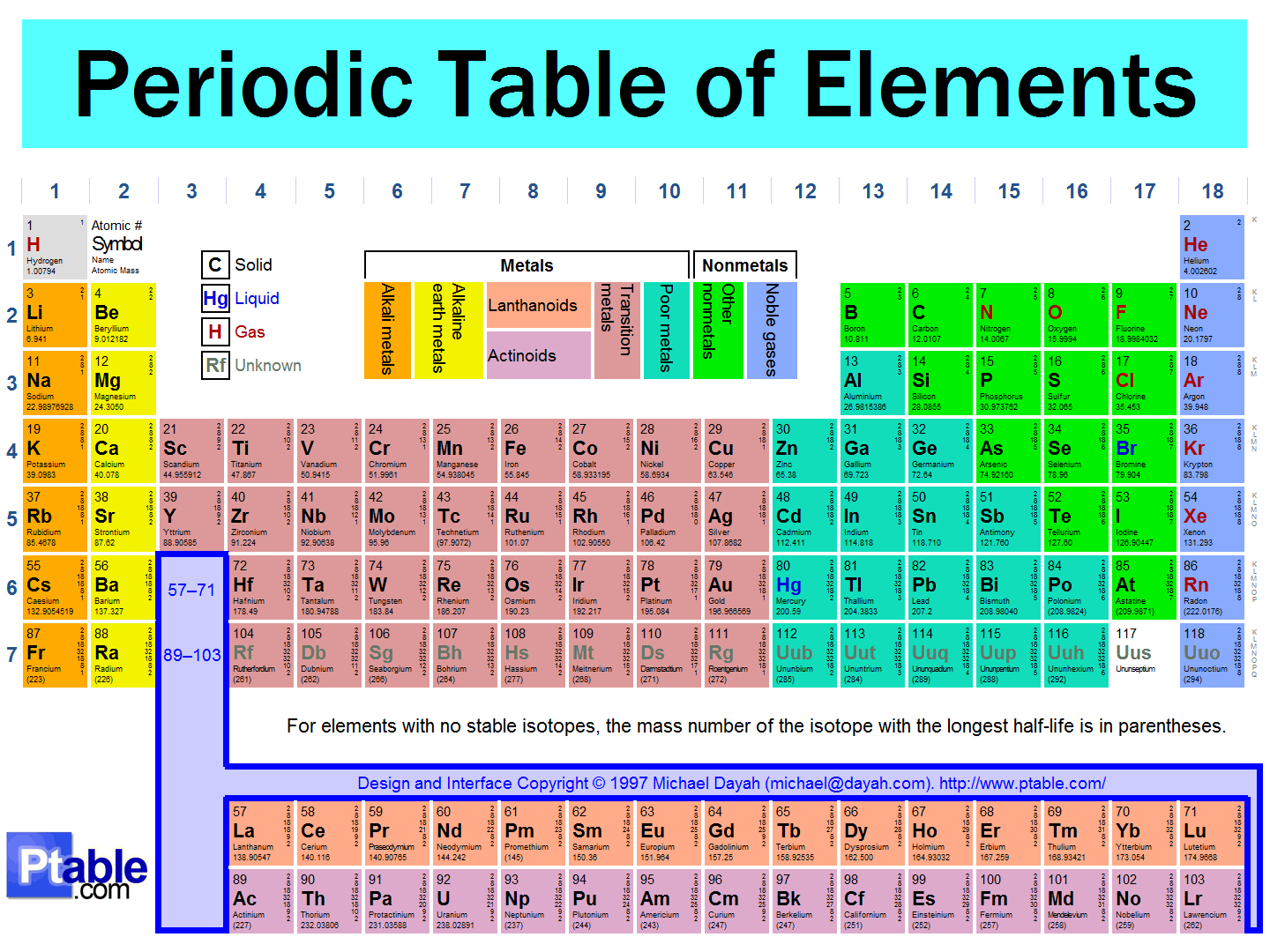
The atomic number of this pictured element is
a)
28
b)
58.6934
c)
Ni
d)
Nickel
72.
What is the atomic mass of Neon?
a)
10
b)
30
c)
10.18
d)
20.18
73.
How many protons are in this element?
a)
79
b)
196
c)
117
d)
Cannot be determined
74.
How many neutrons are in a Gold atom?
a)
79
b)
196
c)
118
d)
275
75.
The Modern Periodic Table of Elements is arranged by
a)
atomic mass
b)
atomic number
c)
valence electrons
d)
number of isotopes
76.
Sodium (Na) is found in period 
a)
3
b)
2
c)
4
d)
1
77.
Sodium (Na) is found in group 
a)
1
b)
2
c)
3
d)
4
78.
The atomic number tells you what?  READ THE ANSWERS CAREFULLY
a)
only the number of electrons
b)
 only the number of protons
c)
only the number of neutrons
d)
the number of both electrons and protons in an atom.
79.
What does the atomic mass tell you? 
a)
Basically,the number of electrons and protons
b)
The number of neutrons
c)
Basically, the number of protons and neutrons
d)
The number of protons.
80.

period

a)

Elements that occur in vertical columns on the periodic table.

b)

A horizontal row of elements in the periodic table

c)

Found in group two of the periodic table; highly reactive

d)

A subatomic particle that has a negative charge

81.

neutron

a)

A subatomic particle that has a positive charge and that is found in the nucleus of an atom

b)

not able to conduct heat or electricity, little to no metallic luster

c)

A subatomic particle that has a negative charge

d)

A small particle in the nucleus of the atom, with no electrical charge

82.

A subatomic particle that has a positive charge and that is found in the nucleus of an atom

a)

Proton

b)

elecrtron

c)

groups

d)

neutrons

83.

A subatomic particle that has a negative charge

a)

nobles gases

b)

protons

c)

electrons

d)

neutrons

84.

In 1869, Dmitri Mendeleev developed the first periodic table, organizing the elements according to atomic weight. When he ordered the elements, he noticed that there were patterns of repeating properties. The modern periodic table sequences elements from left to right by atomic number.


This was the first person to organize a periodic table.

a)

Neils Bohr

b)

Dmitri Mendeleev

c)

Democritus

d)

Ernest Rutherford

85.
Alkali metals are found in which group of the periodic table?
a)
Group 1
b)
Group 2
c)
Group 7
d)
group 8 
86.
Which of the following is the most reactive in water?
a)
Lithium
b)
Sodium
c)
Potassium
87.
What is formed when sodium reacts with water?
a)
sodium oxide and hydrogen
b)
sodium hydroxide and hydrogen
c)
sodium hydroxide and oxygen
d)
sodium hydroxide and carbon dioxide
88.
What is the symbol equation for the reaction between sodium hydroxide and water?
a)
2Na + 2H2O → 2NaOH + H2
b)
Na + H2O → NaOH + H
c)
Na + H20 → NaCl + CO2
d)
2Na + 2H2O → 2NaH2 + O2
89.
Which of the following statements is true?
a)
In a chemical reaction atoms are created
b)
In a chemical reaction atoms are destroyed
c)
In a chemical reaction the arrangement of the atoms is changed
d)
In a chemical reaction the arrangement of the atoms remains the same, but the physical state (solid,liquid,gas) changes
90.
Which of the following is NOT an alkali metal
a)
Li
b)
Cl
c)
K
d)
Cs
91.
What is another name for the elements in group 7?
a)
The Halogens
b)
The Noble gases
c)
The Oxides
d)
The Alkali Metals
92.
Which is the lightest alkali metal?
a)
Aluminium
b)
Hydrogen
c)
Lithium
d)
Potassium
93.
What is the atomic number of lithium
a)
1
b)
2
c)
3
d)
4
94.
When an alkali metal reacts with water, the hydroxide produced dissolves to form and alkaline solution, True or False?
a)
True
b)
False
95.

Alkali metals have _______ conductivity of heat and electricity.

a)

good

b)

semi

c)

poor

d)

no

96.

Alkali metals react rapidly with ____.

a)

air

b)

cold water

c)

other alkali metals

97.

Alkali metals are inert.

a)

true

b)

false

98.

The alkali metal with the smallest atom is ____.

a)

Cs

b)

Na

c)

Li

d)

K

99.

Alkali metals have ____ density than most metals.

a)

higher

b)

lower

100.

Alkali metals have ___ valence electron(s).

a)

one

b)

two

c)

seven

d)

eight

101.

The largest atom in the alkali metal group belongs to ___.

a)

Li

b)

K

c)

Cs

d)

Na

102.

What element is the most reactive alkali metal with water?

a)

sodium

b)

cesium

c)

lithium

d)

potassium

103.

How can you tell if an element is reacting with the air?

a)

A coating forms on the outside.

b)

Bubbles form.

c)

The color changes.

d)

It disappears.

104.

Which group is the Halogens

a)

5

b)

6

c)

7

d)

8

105.

Which of the following is / are not a gas at room temperature

a)

fluorine

b)

bromine

c)

iodine

d)

chlorine

106.

Which of the following is the most unreactive

a)

fluorine

b)

bromine

c)

iodine

d)

chlorine

107.

Which of the following is black

a)

fluorine

b)

bromine

c)

iodine

d)

chlorine

108.

Choose two solutions that can be reacted together to produce a colour change

a)

KBr

b)

iodine

c)

KCl

d)

chlorine

109.

Which of the following are properties of chlorine

a)

bleaching smell

b)

denser than air

c)

slight soluble in water

d)

green gas

110.

Chlorine can be tested with

a)

red litmus paper

b)

damp red litmus paper

c)

blue litmus paper

d)

damp blue litmus paper

111.

Which of the following is explosive

a)

fluorine and hydrogen

b)

chlorine and hydrogen

c)

iodine and hydrogen

d)

bromine and hydrogen

112.

What colour change is observed when solid iron (II) chloride is reacted with chlorine

a)

brown to green

b)

green to brown

c)

brown to white

d)

white to brown

113.

Which of the "Halogens" is found in liquid state at room temperature?

a)

Flourine

b)

Astatine

c)

Iodine

d)

Bromine

114.

Which of the "Halogens" has yellowish green color?

a)

Chlorine

b)

Bromine

c)

Flourine

d)

Iodine

115.

Which "Halogen" can able to displace Chlorine in Sodium Chloride?

a)

Flourine

b)

Bromine

c)

Iodine

d)

Astatine

116.

Which equation shows the displacement of bromine by chlorine?

a)

2NaBr + Cl2 → 2NaCl + Br-

b)

NaBr + Cl- → NaCl + Br2

c)

2NaBr + Cl2 → 2NaCl + Br2

d)

NaBr + 2Cl- → NaCl + 2Br-

117.

What is the trend for melting and boiling points of halogens?

a)

increases down the group

b)

decreases down the group

c)

increases up the group

d)

no change up the group

118.

What is the best prediction about the physical state and color of Astatine?

a)

Dark black solid

b)

Dark reddish brown liquid

c)

Light yellow gas

d)

Light green gas

119.
Which of these is not a noble gas?
a)
Helium
b)
Argon
c)
Nitrogen
d)
Krypton
120.

6.15: Which of these is not a property of noble gases?

a)

Colourless

b)

Odourless

c)

Flammable

d)

Gas at room temperature

121.
Which of the following is a noble gas that is heavier than air?
a)
Hydrogen
b)
Helium
c)
Argon
d)
Sodium
122.

What is the trend in boiling point for noble gases?

a)

There is no trend.

b)

Boiling point decreases down the group.

c)

Boiling point increases down the group.

d)

All the boiling points are the same.

123.

Which of these electron configurations is not that of a noble gas?

a)

2

b)

2.8

c)

2.8.8

d)

2.7

124.

Which of the following has the lowest density?

a)

Argon

b)

Krypton

c)

Xenon

d)

Helium

e)

Neon

125.
Which noble gas is found in signs or light displays?
a)
Krypton
b)
Helium
c)
Argon
d)
Neon
126.

The reason that Noble Gases do not react is because

a)

Their outer electron shell is filled

b)

Their inner electron shell is filled

c)

They are able to bond to fill their outer shell

d)

None of the above, Noble Gases are highly reactive

127.
Another term for being chemically inactive is...
a)
Inert
b)
Inbert
c)
Insert
d)
Inmert