
 Worksheets
Mixtures
Total questions: 126
Worksheet time: 1hrs 3mins

What is a mixture?
elements chemically combined
a combination of different substances
composed of one atom only
it is made of chemical


Which statement below does NOT describe a colloid?
A colloid is a type of heterogeneous mixture
A colloid is a type of solution.
The particles in a colloid do not settle like they do in a suspension.
The particles in a colloid do not dissolve – they are just too small to be seen.
How are suspensions and colloids different?
Suspensions settle out and colloids do not settle.
Colloids settle out and suspensions do not settle.
Suspensions dissolve and colloids do not.
Colloids dissolve and suspensions do not.
In a solution, it is the substance that is being dissolved.
Solute
Suspension
Colloid
Solvent
In a solution, it is the dissolving substance.
solvent
suspension
colloid
solution
_______ is a mixture in which particles will settle out.
suspension
colloid
compound
solvent
The air around is a mixture of gases.
True
False

It is a type of mixture that has the SAME COMPOSITION in every part.
Homogenous
Heterogeneous

Chocolate milk is an example of a _________________.
homogeneous mixture
heterogeneous mixture

Salad is an example of a _____________.
homogeneous mixture
heterogeneous mixture
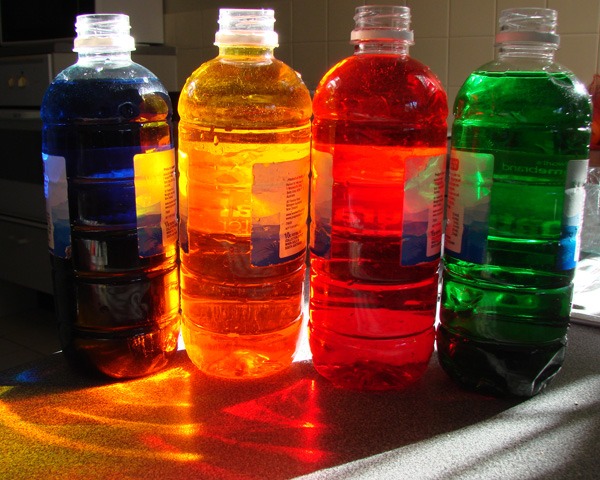
Colored water is an example of a ________.
homogeneous mixture
heterogeneous mixture

Chicken noodle soup is an example of a _____________.
homogeneous mixture
heterogeneous mixture

When two or more substances are combined so each can be separated by physical means, the result is a(n) _____.
chemical change
compounds
mixture
element
A fruit salad is a homogeneous mixture.
True
False

This is a mixture of two or more substances in which one or more of these substances (solutes) is dissolved in another substance.
compound
element
solution
heterogeneous mixture
The things that make up a mixture ________ their individual properties.
lose
share
keep
alter
What is a type of pure substance made of only one type of atom?
element
compound
Which of these are made of more than one type of atom? Please choose all that apply.
compounds
homogeneous mixtures
elements
heterogeneous mixtures
Which type of mixture can be easily separated?
homogeneous mixture
heterogeneous mixture
What type of mixture is NOT easily separated?
homogeneous mixture
heterogeneous mixture
Why is a compound different than a mixture?
In a compound, the atoms are chemically bonded together.
In a mixture, the atoms are chemically bonded together.
Kool-Aid is made from dissolving Kool-Aid powder in water. When you add the powder, the atoms mix together but are not chemically bonded together. What would Kool-Aid be classified as?
a mixture
a pure substance
Separating large marshmallows from hot chocolate powder
Filter
Sieve
Magnetism
Evaporation
Separating sugar and water (do not need to keep the water)
evaporation
sieve
magnetism
filter
Separate metal paperclips from eraser bits
Magnetism
Filter
Sieve
Evaporation
Separating water and pasta
Filter
Evaporation
Sieve
Magnetism
Separating tea leaves from a cup of tea
Evaporation
Magnetism
Sieve
Filter
Separating sand from iron filings
evaporation
sieve
magnetism
filter
Separate soil from water
magnetism
evaporation
sieve
filter
Separate pulp from orange juice
Filter
Evaporation
Magnetism
Sieve
Creating a mixture results in _____________ only.
Two parts
Chemical changes
Physical changes
Chemical reactions

Which mixture can be separated using a paper filter?
sand and iron filings
saltwater
sand and water
none of the above
Which of the following mixtures can be separated using Decantation?


Linda is cooking rice for dinner. Her mother asked her to washed the rice grain before she put it into fire. What separation of mixtures she should use?
Evaporation
Distillation
Chromatography
Decantation
Which of the following can be separated by distillation?


Which of the following is the correct setup of Filtration?


Which of the following mixtures can be separated by Evaporation?


Name the separation technique shown in the diagram
Filtration
Chromatography
Centrifugation
Distillation
Complete the sentence:
___________ allows to separate the fine flour particles from bigger impurities (lumps).
Filtration
Decantation
Sieving
Magnetism
Which of the following is a correct statement about distillation
The components of the mixture have different densities
The components of the mixture have different melting points
The components of the mixture have different boiling points
The components of the mixture form a heterogeneous mixture
What happens when sugar is mixed with water?
The sugar and water become a new compound that can be separated by crystallization
The sugar dissolves as it is a solid and can be separated by crystallization
The sugar and water become a mixture that can be separated by crystallization
The sugar and water become a mixture that can be separated by filtration
Which of the following separations cannot be carried out using a centrifuge? The separation of:
water from wet clothes
cream from milk
red blood cells from plasma
salt from sea water
Which can be separated using Magnetism?


Which of the following is not a matter?
a candle's heat
a candle
air inside a balloon
a melting ice cream
Matter is defined as:
Anything that has mass and takes up space.
Anything that produces light.
Anything that can be seen with the naked eye.
Anything that moves.
Matter can be classified into two main categories: __________ __________ and __________.
Pure substances and mixtures
Elements and compounds
Atoms and molecules
Solids and liquids
A substance made up of only one type of atom is called a(n) __________.
Element
Compound
Mixture
Solution
A pure substance made up of more than one atom, in a specific ratio, is called:
Element
Compound
Mixture
Solution
Plasma is a high-energy state of matter that often occurs in __________.
Stars (or lightning)
Oceans
Mountains
Forests
The Bose-Einstein condensate is a state of matter that forms at which temperature?
At temperatures close to absolute zero
At room temperature
At the boiling point of water
At the temperature of the sun's core
The process when a gas changes into a liquid is called:
Condensation
Evaporation
Sublimation
Deposition
The periodic table organizes and provides information about _______ ___________.
elements and their properties
chemical reactions only
types of laboratory equipment
different types of mixtures
Plasma emits what when excited, and where can we find this state of matter?
Light; in stars and neon signs
Sound; in oceans and rivers
Heat; in ice and snow
Electricity; in wood and plastic
The two scientists who predicted the Bose-Einstein condensate are:
Albert Einstein and Satyendra Nath Bose
Niels Bohr and Werner Heisenberg
Marie Curie and Max Planck
Isaac Newton and James Clerk Maxwell
The unique property of Bose-Einstein condensate that occurs near absolute zero is:
Atoms behave as a single quantum entity
Atoms move faster than light
Atoms become highly radioactive
Atoms split into smaller particles
When a gas changes directly into a solid, it is called _____________.
deposition
sublimation
condensation
evaporation
Name one practical application of Bose-Einstein condensate in the video.
Used in precision measurement devices
Used in cooking appliances
Used in sports equipment
Used in automotive paint

Element
Compound
Homogeneous Mixture
Heterogeneous Mixture

Element
Compound
Homogeneous Mixture
Heterogeneous Mixture
2 or more different elements that are bonded together is called...
A. element
B. compound
C. mixture
D. solution

a different way to say Law of Conservation of Matter
Law of Conservation of Volume
Law of Conservation of Energy
Law of Conservation of Mass
Law of Conservation of Environment
two or more atoms joined together (can be from the same element or different elements)
molecule
compound
mixture
solution
two or more atoms joined together (can be from the same element or different elements)
molecule
compound
mixture
solution
a combination of symbols that shows the element(s) in a molecule or compound and the ratio of atoms
mathematical formula
mathematical equation
chemical formula
chemical equation
a representation of a chemical reaction that uses symbols to show the relationship between the reactants and the products
mathematical formula
mathematical equation
chemical formula
chemical equation
a number in front of a chemical formula that indicates how many molecules or compounds of each reactant and product are involved in a reaction
denominator
coefficient
numerator
subscript
a substance that takes part in and undergoes change during a reaction.
coefficient
subscript
reactant
product
a substance that forms in a chemical reaction
coefficient
subscript
reactant
product
If 20g of sugar is stirred into a beaker containing 100g of water. What would the mass of the dissolved solution be after the sugar is dissolved fully?
20g
100g
80g
120g
Suppose you have 15g of baking soda and mix it with 15g of vinegar. When they are combined they bubble and fizz a lot. The final solution has a mass of 25g. What happened to the "lost" 5g?
it dissappears
it is still there just not weighted
it is in the gas that is formed
nothing happened
How many atoms of aluminum are on each side of the following equation?
4Al + 3O2 --> 2Al2 O3
2
6
4
1
How many oxygen atoms are in the products for the chemical reaction below?
4Fe + 3O2 → 2Fe2O3
2
3
5
6
H2 + O2 --> H2O
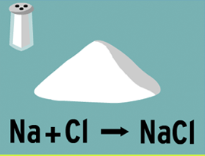
When sodium and chlorine combine to form sodium chloride, sodium chloride is the:
Originator
Reactant
Product
Produce

Which of the models of a chemical reaction best represents the Law of Conservation of Mass?
A
B
C
D

Which of the models of a chemical reaction best represents the Law of Conservation of Mass?
A
B
C
D
Based on the Law of Conservation of Matter, describe the relationship between the mass of the reactants and the mass of the products.
The mass of the products is always greater than the mass of the reactants.
The mass of the reactants is less than the mass of the products.
The mass of the reactants equals the mass of the products.
The mass of the reactants is greater than the mass of the products.
What happens to atoms in a chemical reaction?
they are destroyed
they are created
they are rearranged

Which section represents the yield sign?
A
B
C
Which section represents the products?
A
B
C
Which section represents the reactants?
A
B
C
two or more atoms joined together (can be from the same element or different elements)
molecule
compound
mixture
solution
a combination of symbols that shows the element(s) in a molecule or compound and the ratio of atoms
mathematical formula
mathematical equation
chemical formula
chemical equation
a representation of a chemical reaction that uses symbols to show the relationship between the reactants and the products
mathematical formula
mathematical equation
chemical formula
chemical equation
a number in front of a chemical formula that indicates how many molecules or compounds of each reactant and product are involved in a reaction
denominator
coefficient
numerator
subscript
a substance that takes part in and undergoes change during a reaction.
coefficient
subscript
reactant
product
a substance that forms in a chemical reaction
coefficient
subscript
reactant
product
If 20g of sugar is stirred into a beaker containing 100g of water. What would the mass of the dissolved solution be after the sugar is dissolved fully?
20g
100g
80g
120g
How many atoms of aluminum are on each side of the following equation?
4Al + 3O2 --> 2Al2 O3
2
6
4
1
How many oxygen atoms are in the products for the chemical reaction below?
4Fe + 3O2 → 2Fe2O3
2
3
5
6
Which of the models of a chemical reaction best represents the Law of Conservation of Mass?
A
B
C
D
Based on the Law of Conservation of Matter, describe the relationship between the mass of the reactants and the mass of the products.
The mass of the products is always greater than the mass of the reactants.
The mass of the reactants is less than the mass of the products.
The mass of the reactants equals the mass of the products.
The mass of the reactants is greater than the mass of the products.
Which section represents the yield sign?
A
B
C
Which section represents the products?
A
B
C
Which section represents the reactants?
A
B
C
BIG BANG significa:
Es un reloj de Londres
Origen
Gran explosión
Primera Luz
What is the current state of the universe according to the Big Bang Theory?
It is static and unchanging
It is still expanding
It is contracting
It has stopped expanding
The Cyclic Universe Theory proposes that the universe experiences:
rapid expansion from a singularity.
continuous cycles of expansion and contraction.
vibrations of strings.
collisions of branes.
One of the books of the Hebrew Bible and Christian old testament, described how God separated light from darkness, created the sky, land, sea, moon, stars, and every living creature in a span of six days.
Genesis
Luke
Peter
He believed in a primordial universe and explained that the original state of the cosmos was a primordial mixture of all its ingredients small fragments of themselves
Democritus
Ptolemy
Anaxagoras
He believed in a primordial universe and explained that the original state of the cosmos was a primordial mixture of all its ingredients small fragments of themselves
Democritus
Ptolemy
Anaxagoras
They believed in an atomic universe
Leucippus and Democritus
Stoic Philosophers
Aristotle and Ptolemy
They believed that the universe is like a giant living body, with the sun and the stars as the most important parts to which everything else was interconnected.
Leucippus and Democritus
Stoic Philosophers
Aristotle and Ptolemy
He describe the universe, matter on the large scale is uniformly distributed, and the universe is gravitationally balanced but essentially unstable
Isaac Newton
Renee Descartes
Albert Einstein
He demonstrated that the motions of celestial objects can be explained without putting Earth in the center of the universe
Aristotle
NIcolaus Copernicus
Albert Einstein

