wayground logo

Free Printable Worksheets

Font size

S
M
L
XL
Worksheets

Unit 1 Chemistry

Total questions: 130

Worksheet time: 3hrs 11mins

Name
Class
Date
1.
Find the Volume
a)
428.4 cm3
b)
412.8 cm3
c)
404.2 cm3
d)
400 cm3
2.
Find the volume of the given figure.
a)
308.9 cm3
b)
308.2 cm3
c)
312.8 cm3
d)
302.9 cm3
3.
The mass of an object is 30 g.  The volume is 5 mL.  What is the density of this object?
a)
6 g/cm
b)
6 g/mL
c)
6
4.
What is the density of an object that has a volume of 30 mL and 120 grams?
a)
40 mL
b)
4 g/mL
c)
40 g/cm3
d)
4 g 3
5.
What is the density of an object that has a volume of 223 m3 and a mass of 500 grams?
a)
2.42 g/m3
b)
2.24 g/mL
c)
2.24 m'/g
d)
2.24 g/m3
6.
The density of this material is 2 g/cm3.
There are 24 cm3  Find the total mass.
a)
12 grams
b)
48 grams
c)
12 g/cm3
d)
48 g/cm3
7.
You are given the following information: mass = 48 g; volume = 24 cm3. What is the density of this substance? 
a)
2 g/cm3
b)
1,152 g/cm3
c)
0.5 g/cm3
d)
72 g/cm3
8.
If you have a gold brick that is 2 cm by 3 cm by 4 cm and has a density of 19.3 g/cm3, what is its mass?
a)
463.2 g/cm3
b)
463.2 g
c)
0.804 kg
d)
0.804 g
9.
What units are used to measure mass of an object?
a)
cm
b)
cm3
c)
g
d)
g/cm3
10.
What is the formula to calculate density
a)
mass/volume
b)
mass x volume
c)
mass + volume
d)
mass - volume
11.
The density of this material is 2 g/cm3.
There are 24 cm3  Find the total mass.
a)
12 grams
b)
48 grams
c)
12 g/cm3
d)
48 g/cm3
12.

What is the volume of the water in this graduated cylinder?

a)

10 mL

b)

15 mL

c)

12 mL

d)

14 mL

13.

How do you measure the volume of an irregular shaped object?

a)

measure the length and width of the object

b)

measure the mass of the object

c)

use the volume displacement method

d)

measure the height of the object

14.

50 ml of water was added to the graduated cylinder. After we drop in the object, the new water level goes up to 60 ml. What is the volume of the blocks?

a)

8 ml

b)

10 ml

c)

60 ml

d)

5 ml

15.

Amy finds the volume of a graduated cylinder with a pencil in it. The volume was 37 ml. If the volume before the pencil was added was 35 ml. Then what is the volume displacement?

a)

1 millilitre

b)

1 litre

c)

2 litre

d)

2 millilitre

16.

Drake finds the volume of a graduated cylinder with a ring in it. The volume was 31 ml. If the volume before the penny was added was 23 ml. Then what is the volume displacement?

a)

11 ml

b)

8 ml

c)

14 ml

d)

9 ml

17.

What is the formula for measuring the volume of a regular solid?

a)

Length x width

b)

Length x width x height

c)

Water displacement method

d)

Width x height

18.

What is the volume of the two red spheres?

a)

4 ml

b)

6 ml

c)

2 ml

d)

8 ml

19.

What is the volume of the ring?

a)

64 ml

b)

68 ml

c)

8 ml

d)

4 ml

20.
What kind of properties can only be observed when a substance changes into a different substance?
a)
physical properties
b)
chemical properties
21.
Example of a physical property
a)
magnetism
b)
reactivity with oxygen
c)
flammability
d)
non-reactive
22.
Properties that can be observed without changing the identity of the substance.
a)
Physical
b)
Chemical
23.
Example for physical property
a)
odor
b)
burns in air
c)
reacts with water to create hydrogen gas
d)
rust
24.
Example for chemical property
a)
color
b)
hardness
c)
toxicity
d)
solubility
25.
Example for physical property
a)
reacts with an acid
b)
explodes
c)
flammibility
d)
taste
26.
Example for physical property
a)
melting point
b)
flammability
c)
reactivity 
d)
combustion
27.
Example for chemical property
a)
malleability
b)
texture
c)
combustion
d)
sour taste
28.
Example of a physical property
a)
reactivity
b)
 color
c)
combustion
d)
ability to burn
29.
Example of physical property
a)
freezing point
b)
ability to blow up
c)
toxicity
d)
radioactivity
30.
Example of a physical property
a)
flammability
b)
luster
c)
ability to rust
d)
ability to explode
31.

Determine whether the following description is a physical or chemical property:


Blue color

a)

Physical

b)

Chemical

32.

Determine whether the following description is a physical or chemical property:


flammability (burns)

a)

Physical

b)

Chemical

33.

Determine whether the following description is a physical or chemical property:


solubility (dissolves)

a)

Physical

b)

Chemical

34.

Determine whether the following description is a physical or chemical property:


reacts with acid

a)

Physical

b)

Chemical

35.

Determine whether the following description is a physical or chemical property:


helps combustion

a)

Physical

b)

Chemical

36.

Determine whether the following description is a physical or chemical property:


hardness

a)

Physical

b)

Chemical

37.

Determine whether the following description is a physical or chemical property:


reacts with air

a)

Physical

b)

Chemical

38.

`Determine whether the following description is a physical or chemical property:


reacts with water

a)

Physical

b)

Chemical

39.

What is the definition of mass?

a)

how much something weighs

b)

a measure of how much matter an object has

c)

a force of attraction between 2 objects

d)

a force gravity exerts on a body

40.

What is the definition of weight?

a)

a measure of how much matter an object has

b)

a measure of force of gravity on an object

c)

the force an objects pushes on the ground

d)

the force on an object due to its size

41.

Weight is calculated ___.

a)

mass × gravity

b)

gravity × force

c)

mass ÷ gravity

d)

gravity × acceleration

42.

The weight of an object decreases as it moves away from Earth.

a)

True

b)

False

43.

As an object’s mass increases, its gravitational pull will ___.

a)

increase

b)

decrease

c)

remain constant

44.
Weight is ________________________.
a)
the force of gravity on an object.
b)
the amount of matter in an object.
c)
neither.
d)
both.
45.
Mass is _________________________.
a)
the amount of matter in an object.
b)
the force of gravity on an object.
c)
both.
d)
neither.
46.
You get in your spaceship and head on a trip to Mars.  As you leave Earth, your mass ______________.
a)
increases
b)
decreases
c)
remains the same
47.
You get in your spaceship and head on a trip to Pluto.  As you leave Earth, your weight ______________.
a)
increases
b)
decreases
c)
remains the same
48.
On which planet would your mass be the greatest?
a)
Earth
b)
Jupiter
c)
Sun
d)
Your mass doesn't change on different planets.
49.
Something that takes up space and has mass.
a)
volume
b)
matter
c)
mass
d)
density
50.
What are the three states of matter?
a)
solid, volume, mass
b)
density, volume, mass
c)
solid, liquid, gas
d)
density, gas, volume
51.
You can measure ______ with grams.
a)
mass
b)
volume
c)
conductivity
d)
melting point
52.
What is the measure of gravity on an object?
a)
matter
b)
mass
c)
weight
d)
volume
53.
Volume is ______________.
a)
length X width
b)
height X length
c)
length X width X height
d)
width X height
54.

Which example is a compound?

a)

N2

b)

O2

c)

Cu

d)

H2O2

55.

Two or more atoms joined together for a(n)...

a)

Element

b)

Compound

c)

Molecule

d)

Mixture

56.
Salt has a chemical formula of NaCl.  Salt is a...
a)
Compound
b)
Element
c)
Mixture
d)
None of the Above
57.
What cannot be broken down into other substances?
a)
Compound
b)
Mixture
c)
Solids
d)
Element
58.
A combination of substances that are not chemically combined is called a(n)____________. 
a)
mixture
b)
compound
c)
physical
59.
An element is made up of only one kind of _____.
a)
isotope
b)
plastic
c)
atom
d)
metal
60.

An element has an atomic number of 20. This means it has:

a)

20 atoms in it.

b)

20 protons.

c)

an atomic mass of 20.

d)

20 neutrons.

61.

Scandium atoms have an atomic number of 21 and atomic mass of 45. What is NOT true about Scandium atoms?

a)

It has 24 neutrons.

b)

A neutral atoms has 21 protons and 21 electrons.

c)

It has 21 neutrons.

d)

It has 21 protons.

62.

What is the atomic number of the atom shown in the picture?

a)

13

b)

14

c)

1

d)

27

63.

Which statement is NOT true about atoms?

a)

Protons and neutrons are both found in the nucleus.

b)

Protons and neutrons are added together to find the atomic mass.

c)

Protons and electrons are both found in the nucleus.

d)

Atoms are identified by its number of protons.

64.

What is NOT true about Iron?

a)

Fe is the chemical symbol.

b)

The atomic mass is 26.

c)

The atomic number is 26.

d)

It has 30 neutrons.

65.

Where is the concentration of mass in an atom?

a)

The nucleus

b)

The electron cloud

66.
Which two subatomic particles are found in the NUCLEUS of at atom?
a)
protons & nuetrons
b)
protons & electrons
c)
neutrons & electrons
d)
electrons & protons
67.
The subatomic particle with a neutral charge is:
a)
protons
b)
electrons
c)
neutrons
d)
cloud
68.
What type of subatomic particles are found in the cloud?
a)
neutrons
b)
electrons
c)
protons
d)
reactions
69.
If an atom has 24 protons and 24 electrons, what is the atomic number of this element?
a)
24
b)
48
c)
0
d)
42
70.
How many protons does this element have?
a)
40
b)
21
c)
20
d)
41
71.
The number of protons is equal to 
a)
the atomic number
b)
the number of neutrons
c)
the energy levels
d)
the periodic table groups
72.
Rows on the periodic table are called _____ while columns are called _____.
a)
groups, families
b)
groups, periods
c)
periods, groups
d)
families, groups
73.
What does the H stand for?
a)
Hydrogen
b)
atomic number
c)
atomic mass
d)
atomic explosion
74.
What does the 1 stand for?
a)
Hydrogen
b)
atomic number
c)
atomic mass
d)
atomic explosion
75.

Which of the following is the correct symbol for sodium?

a)

S

b)

Na

c)

So

d)

N

76.

How many neutrons does Chlorine (Cl) with an atomic number of 17 and an atomic mass of 35.

a)

17

b)

18

c)

19

77.
The chart that shows the arrangement of elements in order by their atomic number
a)
Electron Cloud
b)
Periodic Table
c)
amu
d)
Atomic Mass
78.
A substance composed of two or more elements chemically bonded together.  Examples are H2O and CO2.
a)
Element
b)
Compound
c)
Electron Cloud
d)
Metalloid
79.
The part of the atom that determines the identity of the atom is the ____________.
a)
proton
b)
nucleus
c)
electron
d)
neutron
80.

Columns on the periodic table are called...

a)

periods

b)

groups or families

c)

valence

d)

energy levels

81.

Rows on the periodic table are called...

a)

groups

b)

periods

c)

families

d)

shells

82.

The negatively charge (-) of an atom.

a)

proton

b)

electron

c)

neutron

83.

The no charge (n0) particles of an atom.

a)

Proton

b)

Electron

c)

Neutron

84.

The positively charge (+) of an atom

a)

Proton

b)

Electron

c)

Neutron

85.

What is the number of electron of the element?

a)

226

b)

88

c)

138

86.

What is the number of proton of the element

a)

64

b)

35

c)

29

87.

Which of the following is the number of neutron?

a)

45

b)

35

c)

80

88.

What is the atomic mass of the element?

a)

127

b)

126

c)

53

89.

Protons and Neutrons can be found inside the nucleus.

a)

True

b)

False

90.

The three (3) sub atomic particles of an atoms are proton, electron and neutron.

a)

True

b)

False

91.
Which of these is not a noble gas?
a)
Helium
b)
Argon
c)
Nitrogen
d)
Krypton
92.

Which block on this periodic table represents the transition metals?

a)

s block

b)

d block

c)

p block

d)

f block

93.

Which of the following is not a transition metals?

a)

sodium

b)

chromium

c)

iron

d)

nickel

94.

What is an element?

a)

Two or more atoms joined together.

b)

One of over 100 types of atoms

c)

Two or more different elements joined together.

d)

A particle with no charge found in the nucleus of an atom.

95.

What is a compound?

a)

Two different elements bonded together.

b)

Two of the same elements bonded together.

c)

A mixture of different substances.

d)

Two substances stuck together with glue.

96.

Two or more atoms joined together make up a _____.

a)

atom

b)

molecule

c)

solution

97.
A substance that is made up of atoms of more than one element is a _______. 
a)
compound
b)
rust
c)
molecule
98.
What is the picture displayed?
a)
atom
b)
element
c)
molecule/compound
d)
cells
99.
Contains only one kind of atom.
a)
Element
b)
Compund
c)
Mixture
100.
Contains two or more atoms combined
a)
Elements
b)
Compounds
c)
Mixtures
101.
Is sugar (C12H22O11) an element or a compound?
a)
Element
b)
Compound
102.
Which of the following is not a compound?
a)
HCl
b)
Cl
c)
NaCl
d)
CO2
103.

diagram "a" is an example of a(n)

a)

element

b)

compound

c)

mixture

104.

diagram "b" is an example of a(n)

a)

element

b)

compound

c)

mixture

105.

diagram "c" is an example of a(n)

a)

element

b)

compound

c)

mixture

106.

diagram "d" is an example of a(n)

a)

element

b)

compound

c)

mixture

107.
What is a mixture?
a)
elements chemically combined
b)
a combination of different things
c)
it is found on the Periodic Table 
d)
it is made of chemical
108.
Type of mixture that has the SAME COMPOSITION in every part.
a)
Homogenous
b)
Heterogeneous
109.
Type of mixture that DOESN'T HAVE the same composition in every part.
a)
Homogeneous
b)
Heterogeneous
110.
Chocolate milk is an example of a
a)
homogeneous mixture
b)
heterogeneous mixture
111.
M&M's is an examples of a
a)
homogeneous mixture
b)
heterogeneous mixture
112.
Salad is an example of a
a)
homogeneous mixture
b)
heterogeneous mixture
113.
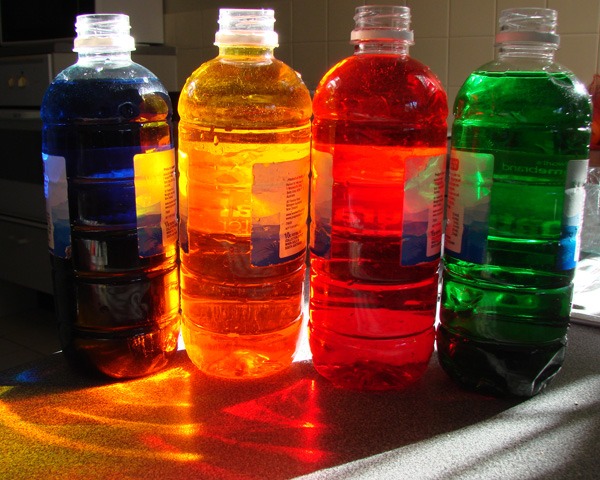
Coloured water is an example of a
a)
homogeneous mixture
b)
heterogeneous mixture
114.
Dishwasher soap is an example of a
a)
homogeneous mixture
b)
heterogeneous mixture
115.
Chicken noodle soup is an example of a
a)
homogeneous mixture
b)
heterogeneous mixture
116.

a)
b)
c)
d)
117.

a)
b)
c)
d)
118.

a)
b)
c)
d)
119.

a)
b)
c)
d)
120.

a)
b)
c)
d)
121.

a)
b)
c)
d)
122.

a)
b)
c)
d)
123.

a)
b)
c)
d)
124.

How many atoms of Carbon are in this formula? C6 H12 O6

a)

1

b)

6

c)

12

125.

How many atoms of Hydrogen are in this formula? H2 CO3

a)

2

b)

1

c)

3

d)

4

126.

Which element has the greatest number of atoms? AgNO3

a)

Silver

b)

Oxygen

c)

Gold

d)

Nitrogen

127.

a)
b)
c)
d)
128.

a)
b)
c)
d)
129.

Which of the following is the most accurate statement?

a)

everything is both a molecule and a compound

b)

nothing can be both a molecule and a compound

c)

all compounds are also molecules

d)

All molecules are also compounds

130.

Molecules and compounds are created when multiple atoms bond together, but how are they different?

a)

Compounds have to have atoms from different elements bonded together

b)

Molecules have to have atoms from different elements bonded together

c)

They are the same and there is no difference

d)

Molecules are building blocks of compounds