
 Worksheets
Biology- Cells Unit 2 SB1. Study Review
Total questions: 134
Worksheet time: 5hrs 28mins

Name the structure labeled "A" in the diagram.
Nucleus
Nucleolus
Cytoplasm
Golgi Body

This organelle provides communication between the nucleus and cytoplasm, it packages and moves materials, such as proteins and lipids around the cell. Choose the letter that labels this organelle on the diagram.
D
E
F
G
H

Name the structure labeled "F" in the diagram.
Vacuole
Nucleus
Chloroplast
Cell Wall
This structure allows certain materials into or out of the cell.
Cytoplasm
Golgi Body
DNA
Cell Membrane
Contains the cell’s DNA and controls all cell activities
Nucleus
Mitochondria
Golgi Body
Chromosome

Name the structure labeled "I" in the diagram.
Chloroplast
Lysosome
DNA
Vacuole
Jelly-like liquid that helps provide support for the organelles
Genetic Material
Digestive Enzymes
Cytoplasm
Cell Membrane

This organelle packages products from the ER to be moved out of the cell. Choose the letter that labels this organelle on the diagram.
A
B
C
D
E

Name the structure labeled "G" in the diagram.
Cell Membrane
Cell Wall
Pellicle Membrane
Micronucleus

Cell organelle where photosynthesis takes place. Choose the letter from the diagram that labels this structure.
J
K
L
M
N
This organelle contains enzymes that break down food and protect against foreign invaders.
Chloroplast
Golgi Body
White Blood Cells
Lysosomes

Name the structure labeled "A" in the diagram.
Nucleus
Nucleolus
Vacuole
Cytoplasm

This organelle breaks down food to release energy;
it is considered the powerhouse of the cell. Choose the letter from the diagram that labels this structure.
A
B
C
D
E

These structures labeled "G" in the diagram produce the proteins needed for survival.
Lysosomes
Ribosomes
Cytoplasm
Mitochondria
The structure that produces ribosomes in the cell.
Nucleus
DNA
Nucleolus
Mitochondria
This structure provides additional support and protection to plant cells.
Cell Wall
Cell Membrane
Cytoplasm
Pellicle Membrane
This organelle stores extra material such as food, water & waste. It is much larger in a plant cell than animal cell.
Lysosome
Mitochondra
Cell Wall
Vacuole

Name the structure labeled "F" in the diagram.
Cell Membrane
Cell Wall
Nucleus
Nuclear Membrane
Choose the 4 structures that ALL cells have.
DNA
Cell Membrane
Cell Wall
Cytoplasm
Ribosomes
Which structures can be found in plant cells but not in animal cells? Choose all that apply.
Nucleus
Cell Membrane
Chloroplasts
Lysosomes
Cell Wall

cell are called ____________________.
Enzymes are an example of
Lipids
Carbohydrate
Protein
Nucleic Acid
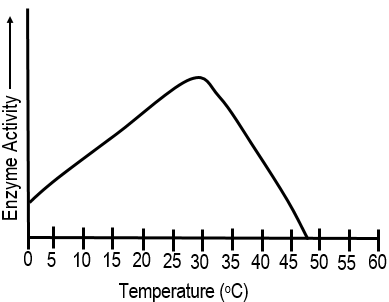


low to high
uses energy/ATP


Which of the following best describes photosynthesis?
Photosynthesis converts radiant energy into chemical energy.
Photosynthesis produces carbohydrates.
Plants need sunlight, carbon dioxide, water, nutrients, and chlorophyll to complete photosynthesis.
Plants use chlorophyll, water, and carbon dioxide to make sugar.

What is represented by "E" in this image?
ATP
NADPH
Light Energy
Glucose
Two (2) energy rich molecules created by Light Dependent Reactions of Photosynthesis are:
ATP and ADP
ATP and NADPH
ADP and FADH
ADP and NADP
Oxygen is...
needed for photosynthesis to occur.
a product of cellular respiration.
a product of photosynthesis.
deadly to humans.
Carbon dioxide is fixed in the _______that occurs in the _________.
light dependent; thylakoid
light dependent; stroma
light independent; thylakoid
light independent; stroma

The stacks of flattened sacs in the picture are called
chlorophyll.
grana.
stroma.
thylakoids.


What is the primary purpose of mitosis in multicellular organisms?
To produce gametes
To repair and replace damaged cells
To increase genetic diversity
To reduce chromosome number by half
Which of the following statements is true about meiosis?
It results in two identical daughter cells
It occurs in somatic cells
It reduces the chromosome number by half
It is a form of asexual reproduction
Explain why meiosis is important for sexual reproduction.
It ensures genetic diversity through recombination and independent assortment.
It produces identical cells for growth and repair.
It allows organisms to reproduce asexually.
It maintains the same chromosome number in offspring as in parents.
Identify a key difference between mitosis and meiosis.
Mitosis results in four daughter cells, while meiosis results in two.
Mitosis occurs in gametes, while meiosis occurs in somatic cells.
Mitosis produces genetically identical cells, while meiosis produces genetically diverse cells.
Mitosis reduces chromosome number by half, while meiosis maintains the chromosome number.
Describe one characteristic of mitosis that distinguishes it from meiosis.
Mitosis involves two rounds of cell division.
Mitosis results in haploid cells.
Mitosis produces cells with the same number of chromosomes as the parent cell.
Mitosis includes crossing over during prophase.
What is the significance of crossing over during meiosis?
It ensures that daughter cells are identical to the parent cell.
It increases genetic variation among offspring.
It reduces the chromosome number by half.
It occurs during mitosis.
How does mitosis contribute to the growth of an organism?
By producing gametes
By increasing the number of cells
By reducing the chromosome number
By creating genetic diversity
Explain the role of mitosis in maintaining genetic stability.
It produces genetically diverse cells.
It ensures that each daughter cell receives an identical set of chromosomes.
It reduces the chromosome number by half.
It allows for crossing over and recombination.
Which of the following best describes the outcome of meiosis?
Two diploid cells
Four haploid cells
Two haploid cells
Four diploid cells
Compare the importance of mitosis and meiosis in the life cycle of an organism.
Mitosis is important for sexual reproduction, while meiosis is important for growth and repair.
Mitosis produces genetically diverse cells, while meiosis produces identical cells.
Mitosis is important for growth and repair, while meiosis is important for sexual reproduction.
Mitosis reduces chromosome number, while meiosis maintains chromosome number.

In mitosis, the two resulting cells are
different from the starting cell and identical to each other.
different from the starting cell and different from each other.
identical to the starting cell and different from each other.
identical to the starting cell and identical to each other.

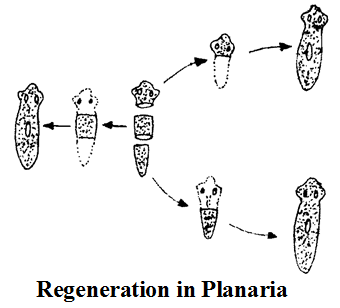
If a planaria is chopped into 3 parts, each part will grow into a new organism with identical DNA. Is planaria regeneration sexual or asexual?
sexual
asexual
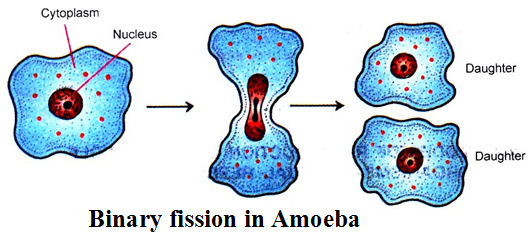
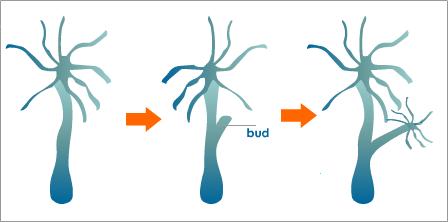
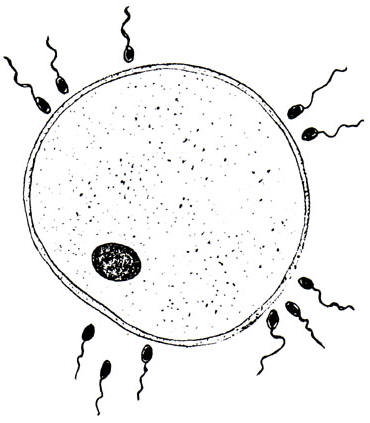
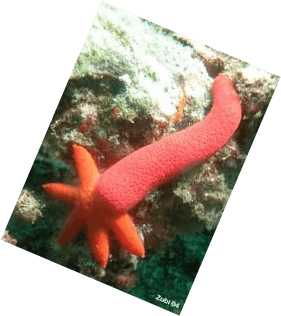
Fishermen work hard to catch and remove all the starfish that get into their favorite shell fishing beds and the “underwater farms” where they raise clams and oysters. In the past, they put the starfish into their boats, cut them up with knives, and then throw the pieces of starfish overboard. They thought this would kill the starfish. What they did not know was that each piece of starfish will grow into a whole new animal.




Redwood trees are the tallest and largest trees in the world. Like other conifers, the trees bear male and female cones that rely on the wind for pollination. New trees also sprout from large, shallow roots, generating a circle of trees identical to the parent.
Asexual
Sexual
both sexual and asexual


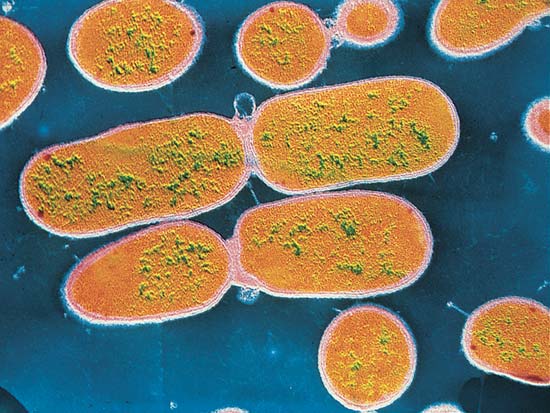


Which type of reproduction is taking place?


