
 Worksheets
SNC2D Exam Multiple choice practice
Total questions: 136
Worksheet time: 2hrs 47mins
Name
Class
Date
1.
This structure is where most of the chemical digestion takes place:
a)
esophagus
b)
small intestine
c)
anus
d)
large intestine
2.
This structure absorbs water back in the body.
a)
stomach
b)
small intestine
c)
esophagus
d)
large intestine
3.
Food travels from the mouth to the stomach through the
a)
esophagus
b)
colon
c)
large intestine
d)
small intestine
4.
Where would you expect to find hydrochloric acid?
a)
stomach
b)
small intestine
c)
liver
d)
large intestine
5.

The villi is where the digestive system connects with the __________________ system.
a)
circulatory
b)
respiratory
c)
muscular
d)
skeletal
6.

When you breathe, your lungs take in ___ and remove ___.
a)
air/oxygen
b)
oxygen/carbon dioxide
c)
carbon dioxide/waste
d)
waste/air
7.

The two main branches from the trachea (one to each lung)
a)
bronchi
b)
alveoli
c)
capillaries
d)
bronchioles
8.

The air sacs that are covered with capillaries where gas exchange takes place
a)
bronchi
b)
lungs
c)
oxygen
d)
alveoli
9.

What is the main function of the respiratory system?
a)
to provide oxygen and remove carbon dioxide from the body
b)
to bring oxygen to the body
c)
to break down food and absorb nutrients
d)
to remove oxygen from the body and deliver carbon dioxide
10.

Directs all cell activities "Brain or Control Center of cell"
a)
Lysosomes
b)
Nucleus
c)
ribosomes
d)
Mitochondria
11.
Packages the proteins made by the ribosomes so they can be sent out of the cell. The UPS store of the cell
a)
Ribosomes
b)
Vacuole
c)
Cell Membrane
d)
Golgi Body
12.
"Storage tanks" Can hold food, water or waste for the cell
a)
Ribosomes
b)
Vacuole
c)
Chloroplast
d)
Nucleolus
13.
Makes proteins for the cell, can be found attached to the endoplasmic reticulum or free in the cytoplasm
a)
Cell Wall
b)
Golgi Body
c)
Ribosome
d)
Cytoplasm
14.
Produces ribosomes and rRNA( stuff ribosomes are made of)
a)
Lysosomes
b)
Nucleolus
c)
Cell Wall
d)
Golgi Body
15.
"Stomach of the cell" Helps the cell digest food, waste and worn out cell parts
a)
Cytoplasm
b)
Cytoskeleton
c)
Cell Wall
d)
Lysosomes
16.
Stores and Transports substances from the Golgi Body to the cell membrane for export. "The UPS truck of the cell"
a)
Ribosome
b)
Lysosome
c)
Vesicle
d)
Vacuole
17.
endoplasmic reticulum that does not have ribosomes attached
a)
Cytoplasm
b)
Golgi Body
c)
Vacuole
d)
Smooth Endoplasmic Recticulum
18.
Rigid outer layer made of cellulose that supports and protects the cell (plant, fungi, and bacterial cells)
a)
Nucleolus
b)
Golgi Body
c)
Cell Wall
d)
Cytoskeleton
19.
Which one of the following nucleotide pair bonds would be found in a DNA molecule?
a)
adenine-guanine
b)
guanine-cytosine
c)
adenine-cytosine
d)
cytosine-uracil
20.
What is another word for 'body' cells?
a)
karyotypes
b)
somatic
c)
centromeres
d)
DNA
21.
This is a process used to increase cell size, make more body cells or even make new cells by way of asexual reproduction
a)
Karyotype
b)
Meiosis
c)
Synthesis
d)
Mitosis
22.
How many chromosomes total does a human have?
a)
23
b)
5
c)
46
d)
7
23.

a)
Prophase
b)
Interphase
c)
Anaphase
d)
Telophase
24.
Cytokinesis is the creation of two identical cells called _____.
a)
children cells
b)
new cells
c)
daughter cells
d)
son cells
25.

a)
Anaphase
b)
Cytokinesis
c)
Telophase
d)
Metaphase
26.
Nuclear membrane forms around chromosomes and begins to separate.
a)
Anaphase
b)
Telophase
27.

a)
Cytokinesis
b)
Interphase
c)
Anaphase
d)
Metaphase
28.

a)
Cytokinesis
b)
Anaphase
c)
Telophase
d)
Prophase
29.

a)
Anaphase
b)
Cytokinesis
c)
Telophase
d)
Metaphase
30.
What is the first phase of mitosis?
a)
prophase
b)
anaphase
c)
metaphase
d)
interphase
31.

Which phase comes NEXT?
a)
prophase
b)
metaphase
c)
anaphase
d)
telophase
32.
Stem cells are
a)
cells that grow uncontrollably
b)
undifferentiated and can be any type of cell
c)
never go through cell division
d)
only found in embryos
33.
The causes of cancer may include which of the following?
a)
poor diet & activity levels
b)
UV radiation
c)
inheritance
d)
all of these
34.
The spreading of cancerous cells is called
a)
metastasis
b)
carcinogenesis
c)
angiogenesis
d)
homeostasis
35.
The structures that hold together sister chromatids
a)
tissues
b)
chromosomes
c)
spindle
d)
centromeres
36.
Non-cancerous tumors are called _____. Cancerous tumors are called _____.
a)
metastatic ; malignant
b)
malignant ; benign
c)
benign ; malignant
d)
benign ; metastatic
37.
The main purpose of the ____________ system is to break food particles into pieces that can be used.
a)
circulatory
b)
respiratory
c)
digestive
d)
skeletal
38.
What is responsible for delivering oxygen and removing carbon dioxide from the body?
a)
cell nucleus
b)
excretory system
c)
nervous tissue
d)
respiratory system
39.
The __________ system directs the body to inner and outer changes.
a)
digestive
b)
circulatory
c)
nervous
d)
skeletal
40.
The __________ is the main organ of the nervous system.
a)
heart
b)
lungs
c)
brain
d)
skin
41.
When tissues come together, they form ___________.
a)
cells
b)
atoms
c)
organs
d)
systems
42.
In multicellular organisms, tissues are comprised of _______.
a)
organs
b)
systems
c)
cells
d)
blood
43.
Which of the following body systems work together for support, protection, and movement?
a)
respiratory and cardiovascular
b)
skeletal and muscular
c)
skeletal and integumentary
d)
digestive and respiratory
44.
This system protects the body's organs, provides support for the body.
a)
Nervous System
b)
Skeletal System
c)
Respiratory System
45.

What body system makes your body move?
a)
Circulatory
b)
Respiratory
c)
Skeletal
d)
Muscular
46.
This system includes the spinal cord, brain and nerves
a)
Nervous System
b)
Digestive System
c)
Circulatory System
47.

How many bones make up a human adult?
a)
205
b)
206
c)
207
d)
208
48.

My spinal cord helps _________ travel between my brain and the nerves in my body.
a)
Memories
b)
Blood
c)
Waste
d)
Messages
49.
What system receives oxygen and gets rid of carbon dioxide?
a)
Heart
b)
Muscular System
c)
Veins
d)
Respiratory System
50.
The heart has ___ chambers.
a)
1
b)
2
c)
3
d)
4
51.
This structure is where most of the chemical digestion takes place:
a)
esophagus
b)
small intestine
c)
anus
d)
large intestine
52.
According to the octet rule, a calcium atom has a tendency to
a)
lose one electron
b)
lose two electrons
c)
gain one electron
d)
gain two electrons
53.
The correct name for the salt with the formula CaI2 is
a)
calcium diodide
b)
calcium iodide
c)
calcium iodine
d)
dicalcium iodine
54.
The correct formula for magnesium oxide is
a)
Mg2O
b)
MgO
c)
MgO2
d)
Mg2O3
55.
If a compound forms by ionic bonding, which is NOT true?
a)
A positively charged atom or gorup of atoms attracts a negatively charged atom or group of atoms.
b)
The net charge of the compound is zero.
c)
The compound consists of just two atoms, each of opposite charge.
d)
Several ions group together in a tightly packed structure.
56.
What is the NAME of....
Na2S
Na2S
a)
sodium (II) sulfide
b)
sodium sulfide
c)
disodium sulfide
d)
sodium sulfur
57.
What is the NAME of...
CrN
CrN
a)
chromium (II) nitride
b)
chromium (III) nitride
c)
chromium nitride
d)
chromium (I) nitride
58.
What is the NAME of...
PtO2
PtO2
a)
platinum (II) oxide
b)
platinum (IV) oxide
c)
platinum oxide
d)
platinum (I) oxide
59.
What is the NAME of...
MnCl2
MnCl2
a)
Magnesium (II) chloride
b)
Manganese (II) chloride
c)
Manganese chloride
d)
Manganese (IV) chloride
60.
What is the FORMULA for...
calcium arsenide
calcium arsenide
a)
Ca3As2
b)
CaAs2
c)
Ca3As
d)
Ca3Ar2
61.
What is the FORMULA for...
vanadium (V) oxide
vanadium (V) oxide
a)
V2O5
b)
VO5
c)
V4O5
d)
V5O2
62.
What is the FORMULA for...
copper (II) oxide
copper (II) oxide
a)
Cu2O
b)
CuO2
c)
CuO
d)
Cu(II)O
63.
What is the FORMULA for....
Lead (II) iodide
Lead (II) iodide
a)
PbI
b)
PbI2
c)
Pb2I
d)
LbI2
64.
What is the FORMULA for
sodium chlorite
sodium chlorite
a)
NaClO2
b)
NaClO
c)
NaClO3
d)
NaClO4
65.
What is the FORMULA for
magnesium carbonate
magnesium carbonate
a)
Mg(CO3)2
b)
MgHCO3
c)
MgCO2
d)
MgCO3
66.
What is the NAME of K3PO4
a)
potassium phosphide
b)
potassium phosphite
c)
potassium phosphate
d)
potassium phosphine
67.
What is the NAME of RbMnO4
a)
rubidium permanganate
b)
rubidium permanganite
c)
rubidium manganate
d)
rubidium mango
68.
What is the name of
P2O5
P2O5
a)
diphosphide pentoxide
b)
diphosphorus pentoxide
c)
diphosphorus pentaxide
d)
diphosphorus pentaoxide
69.
What is the name of
S3Cl2
S3Cl2
a)
Trisulfide dichlorine
b)
Trisulfur dichloride
c)
Trisulfur chloride
d)
Sulfur trichloride
70.
What is the name of
BF3
BF3
a)
monobromine trifluoride
b)
boron trifluorine
c)
boron trifluoride
d)
monoboron trifluoride
71.
What is the name of
CI3
CI3
a)
chlorine triiodide
b)
carbon triiodide
c)
monocarbon triiodide
d)
carbon triodide
72.
What is the formula for
silicon dioxide
silicon dioxide
a)
SO2
b)
SiO2
c)
SiO
d)
Si2O2
73.
What is the formula for
hexafluorine octoxide
hexafluorine octoxide
a)
F6O
b)
F6O8
c)
F8O6
d)
F6O10
74.
What is the formula for
tricarbon heptahydride
tricarbon heptahydride
a)
C3H8
b)
C3H7
c)
CH7
d)
C7H3
75.
What is the name for
Xe5O6
Xe5O6
a)
pentaxenon nonoxide
b)
pentaxenide hexaoxide
c)
pentaxenon hexoxide
d)
pentaxenon hexoide
76.
The pH scale is a range from:
a)
1-7
b)
0-14
c)
1-14
d)
1-20
77.
A(n) ______ is a substance with a pH less than 7
a)
Acid
b)
Alkaline
c)
Base
d)
Buffer
78.
A(n) _______ is a substance with a pH greater than 7.
a)
Base
b)
Acid
c)
Buffer
d)
Water
79.
What is the only substance with a neutral pH of 7?
a)
Milk
b)
Orange Juice
c)
Water
d)
Blood
80.
Which solution releases H+ in solution?
a)
Base
b)
Acid
c)
Buffer
d)
Water
81.
A solution with a pH of 8.6 would be...
a)
Acid
b)
Base
c)
Neutral
d)
Acid and Base
82.
Which is most acidic?
a)
Baking Soda
b)
Lemon Juice
c)
Black Coffee
d)
Milk
83.
Tastes Sour
a)
Acids
b)
Bases
c)
Salts
d)
All
84.
Tastes bitter.
a)
Acids
b)
Bases
c)
Salts
d)
All
85.
Feels slippery.
a)
Acids
b)
Bases
c)
All
86.
The greenhouse effect is a naturally occurring phenomenon.
a)
true
b)
false
87.
Albedo describes:
a)
the percent of incoming solar radiation reflected.
b)
the percent of incoming solar radiation absorbed.
c)
the percent of outgoing infrared radiation.
d)
the percent of incoming UV radiation.
88.
The Coriolis effect is caused by:
a)
greenhouse gases.
b)
UV radiation.
c)
low pressure air masses.
d)
the rotation of the Earth.
89.
Due to the Coriolis effect, moving air turns ___________ in the northern hemisphere.
a)
right
b)
left
c)
upward
d)
downward.
90.
Global wind patterns are caused by the unequal heating of the Earth's atmosphere and the deflection of winds by the Coriolis effect.
a)
true
b)
false
91.
Carbon dioxide is responsible for up to 75% of the natural greenhouse effect on Earth.
a)
true
b)
false
92.
The amount of water in the atmosphere is dependent upon temperature.
a)
true
b)
false
93.
Negative feedback cycles are rare in nature, because they contribute to unstable situations.
a)
true
b)
false
94.
Carbon dioxide is makes up about __________ of the atmosphere.
a)
14%
b)
0.5%
c)
1%
d)
0.03%
95.
If the greenhouse effect did not exist, the temperature of the Earth would be approximately:
a)
15 degrees Celsius.
b)
-30 degrees Celsius.
c)
-18 degrees Celsius.
d)
18 degrees Celsius.
96.
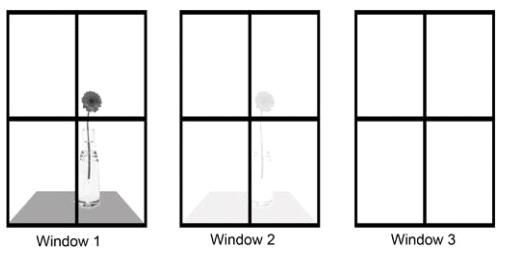
Which window is opaque?
a)
Window 1
b)
Window 2
c)
Window 3
d)
None
97.
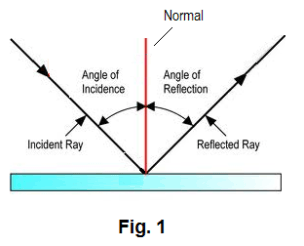
The Law of Reflection:
The angle of incidence is _________ the angle of reflection
The angle of incidence is _________ the angle of reflection
a)
bigger than
b)
the same as
c)
smaller than
98.
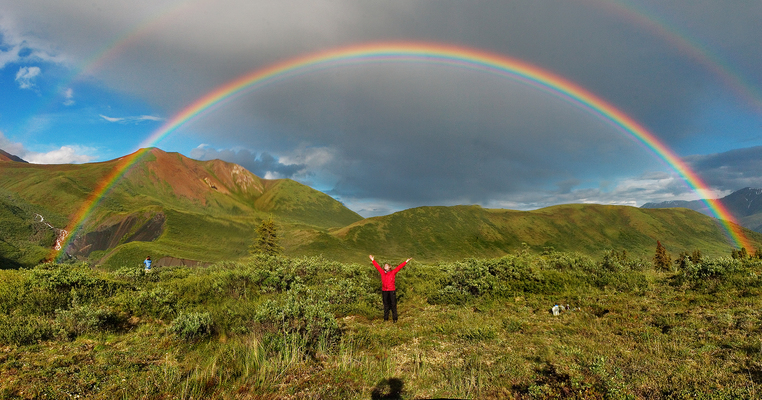
Why does white light look like a rainbow when it exits a prism?
a)
The prism adds more kinds of light.
b)
The prism changes some white light into electricity.
c)
The prism is filled with many different colors.
d)
The prism separates white light into its component colors.
99.

The full spectrum of light energy is called the__________
a)
broad spectrum
b)
electromagnetic spectrum
c)
helium spectrum
d)
natural light spectrum
100.
What happens to light when it strikes a mirror?
a)
it reflects
b)
it bounces off
c)
it absorbs
d)
it makes a shadow
101.
Visible light is ...
a)
Light bulb
b)
sun
c)
light that we can see with our natural eye
d)
fire
102.
Light travels in a straight line
a)
True
b)
False
103.
Light is a type of energy that travels as an ______________ ____________.
a)
longitudinal wave
b)
electric current
c)
electromagnetic wave
d)
magnetic wave
104.
The transfer of energy as electromagnetic waves
a)
electric field
b)
radiation
c)
magnetic field
d)
electromagnetic wave
105.
What is the time it takes for light to travel from the sun to Earth?
a)
80.3 min
b)
8.3 min
c)
3 min
d)
1 min
106.
What is the speed of light in a vacumn?
a)
300,000,000 m/s
b)
3,000,000 m/s
c)
3,000 m/s
d)
300 m/s
107.
What is the major source of energy on Earth?
a)
EM waves from the sun
b)
photosynthesis
c)
fossil fuels
d)
plants that are used as food
108.
Ultraviolet light waves are responsible for causing
a)
heat strokes
b)
blue skies
c)
interference of radio waves
d)
sunburn, and vitamin D production
109.
The part of the electromagnetic spectrum that human sees is
a)
ultraviolet light.
b)
visible light.
c)
infrared light.
d)
x-ray.
110.
True or False:
Light waves are able to travel through solids, liquids, gases, or empty space.
Light waves are able to travel through solids, liquids, gases, or empty space.
a)
True
b)
False
111.
What is the correct order of the Electromagnetic Spectrum?
(from shortest to longest wavelength)
(from shortest to longest wavelength)
a)
Radio, microwave, infrared, Visible, UV, X-ray, Gamma
b)
Gamma, X-Ray, UV, Visible, Infrared, Microwave, Radio
c)
Radio, Infrared, Visible, Microwave, UV, Gamma, X-ray
d)
X-ray, UV, Gamma, Microwave, Infrared, Visible, Radio
112.

The following is a picture of what type of mirror?
a)
Convex Mirror
b)
Concave Mirror
c)
Plane Mirror
d)
Flat Mirror
113.
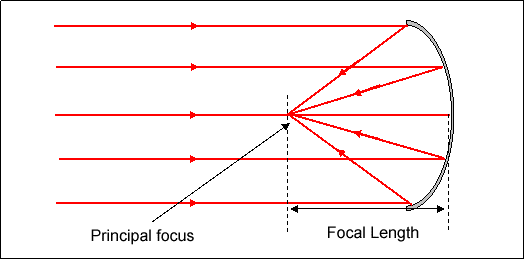
This is an example of a __________ mirror.
a)
Concave
b)
Convex
c)
Plane
d)
Magnifying
114.

This is an example of a _____________ mirror
a)
Concave
b)
Convex
c)
Plane
d)
Magnifying
115.
An image that you can see , but does not really exist is called which of the following?
a)
Real Image
b)
Fake Image
c)
Virtual Image
d)
Digital Image
116.
Convex Mirrors produce...
a)
only virtual images
b)
virtual or real images
c)
only real images
d)
inverted images
117.
An incident ray that is parallel to the principal axis...
a)
will reflect parallel to the principal axis
b)
will refract through the focal point
c)
will reflect through the center of curvature
d)
will continue along the same path through the lens
118.
Concave mirrors can create virtual and real images.
a)
True
b)
False
119.
Convex mirrors can create real images.
a)
True
b)
False
120.

a)
Real, larger image
b)
virtual, larger image
c)
Real, smaller image
d)
Real, larger image
121.
The focal length is equal to the:
a)
radius of curvature
b)
diameter of curvature
c)
half radius of curvature
d)
half diameter of curvature
122.
The inside of a spoon is same as
a)
concave mirror
b)
convex mirror
c)
plane mirror
d)
non of the above
123.

Why do you not see an image when light reflects off a rough surface?
a)
because not enough light is not reflected
b)
because the reflection is regular
c)
because the reflection is diffuse
d)
because the law of reflection does not apply
124.
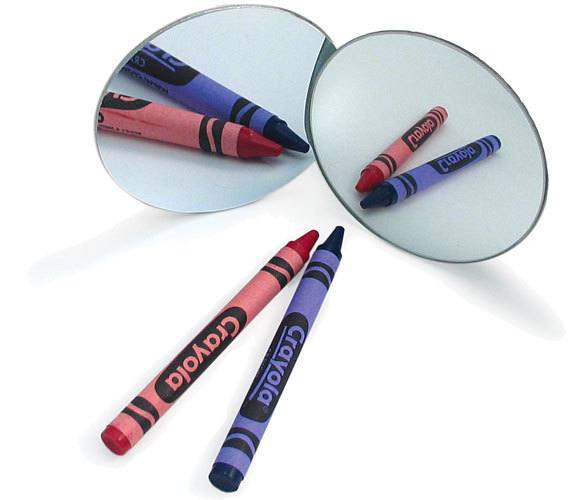
An incident ray that is parallel to the principal axis of a curved mirror...
a)
will reflect parallel to the principal axis
b)
will reflect through the focal point
c)
will reflect through the center of curvature
d)
will continue along the same path through the lens
125.
What is Nearsightedness?
a)
condition that has difficulty seeing things that are close
b)
condition that has difficulty seeing things that are far away
126.

This shows the phenomenon known as....
a)
reflection
b)
refraction
c)
mirrors
d)
focal point
127.
Light has the highest velocity in which medium?
flint glass n=1.70
barium glass n=1.60
crown glass n=1.523
water n=1.33
diamond n=2.45
flint glass n=1.70
barium glass n=1.60
crown glass n=1.523
water n=1.33
diamond n=2.45
a)
diamond
b)
water
c)
flint glass
d)
barium glass
128.
Light has the lowest velocity in which medium?
flint glass n=1.70
barium glass n=1.60
crown glass n=1.523
water n=1.33
diamond n=2.45
flint glass n=1.70
barium glass n=1.60
crown glass n=1.523
water n=1.33
diamond n=2.45
a)
diamond
b)
water
c)
flint glass
d)
barium glass
129.
According to Willebord Snell, light passing from air to glass will cause the light to
a)
maintain its original speed
b)
accelerate while it is in glass
c)
increase its speed
d)
reduce its speed
130.
Why does your pupil increase in size when you enter a dark room?
a)
To protect the eye
b)
to allow more light to enter the eye
c)
to allow less light to enter the eye
131.
When light travels from air to water it....
a)
Speeds up
b)
Slows down
c)
stays the same speed
132.
Convex lenses can produce...
a)
Real, erect images
b)
Virtual, inverted images
c)
Real, inverted images
d)
no images form
133.

An object of height 4 cm is placed 10 cm away from a concave lens of focal length 6 cm as shown below.Image is
a)
virtual.inverted
b)
virtual,upright
c)
real,inverted
d)
real,upright
134.
Which describes a convex lens?
a)
triangular in shape
b)
more transparent in the middle
c)
thicker on the edges than in the middle
d)
thicker in the middle than on the edges
135.
a real image...
a)
is produced by virtual rays and can be projected on a screen
b)
is produced by real rays and cannot be projected on a screen
c)
is produced by virtual images and cannot be projected on a screen
d)
is produced by real rays and can be projected on a screen
136.
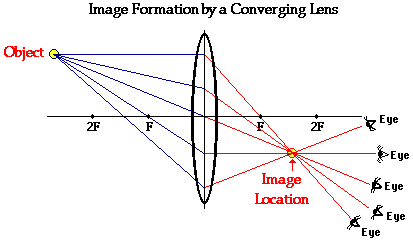
This image is.....
a)
inverted and smaller
b)
inverted and larger
c)
not inverted and smaller
d)
not inverted and larger
100 %

