
 Worksheets
Unit 7 Quiz
Total questions: 132
Worksheet time: 3hrs 30mins
What does the geocentric model of the solar system propose?
The Earth revolves around the Sun.
The Sun revolves around the Earth.
The planets revolve around the Earth.
The Earth and planets revolve around the Sun.

Who were the major historical figures associated with the geocentric model?
Isaac Newton and Albert Einstein
Galileo Galilei and Johannes Kepler
Steve Jobs and Bill Gates
Ptolemy and Aristotle

What is the fundamental difference between the geocentric and heliocentric models?
The central body of the solar system.
The speed at which planets orbit.
The number of planets in the solar system.
The presence of asteroids in the solar system.
In the heliocentric model, which celestial body is at the center of the solar system?
The Moon
The Earth
The Sun
Mars

What evidence supports the heliocentric model?
The phases of the Moon
The apparent retrograde motion of planets
The constant brightness of the Sun
The geocentric model predictions were more accurate
Who first proposed the heliocentric model in the modern era?
Aristotle
Copernicus
Ptolemy
Kepler
How did the heliocentric model impact scientific understanding?
It confirmed the accuracy of the geocentric model.
It led to the rejection of all previous astronomical models.
It initiated a shift towards observational astronomy and physics.
It decreased interest in astronomy.
What role did Galileo play in the acceptance of the heliocentric model?
He invented the heliocentric model.
His observations provided support for the model.
He disproved the model through mathematical calculations.
He had no involvement with the heliocentric model.
Which model suggests that Earth is not the center of the universe?
Geocentric
Heliocentric
Both models
Neither model

What was the Church's initial reaction to the heliocentric model?
Full support
Indifference
Opposition
Immediate acceptance

Which tool was pivotal in providing evidence for the heliocentric model?
The telescope
The compass
The astrolabe
The quadrant
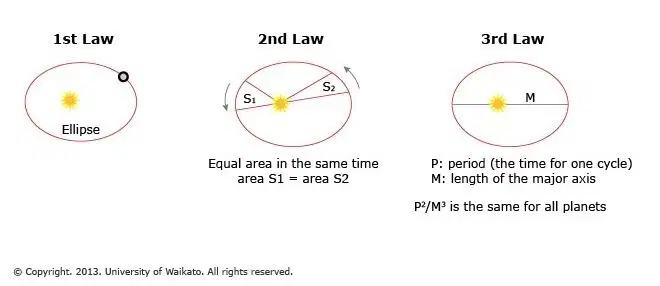
How did Kepler contribute to the heliocentric model?
By proposing it
By rejecting it
By refining it with his laws of planetary motion
By proving it incorrect
The group of inner planets are known as:
The Terrestrial Planets
The Gas Giants
The Outer Planets
The Hallow Planets
The group of outer planets are known as:
The Terrestrial Planets
The Gas Giants
The Inner Planets
The Rocky Planets
How long ago did these nebular processes start?
4.6 years ago
4.6 million years ago
5.6 billion years ago
4.6 billion years ago
Largest Planet
Neptune
Jupiter
Earth
Uranus
Saturn
The only planet we know for sure has life
Mercury
Saturn
Earth
Venus
Mars
Which Planets have NO moons (mark all that apply)
Venus
Earth
Jupiter
Mercury
Mars
What do we call Jupiter, Saturn, Uranus and Neptune?
Outer Planets
Terrestrial Planets
Inner Planets
Oort Cloud
Which of these is a "dwarf planet"
Neptune
Pluto
Mercury
Titan
Ganymede

Which planet is the hottest?
Mercury
Venus
Earth
Neptune
Io

What is a dwarf planet?
a large ball or rock and/or gas that moves around the sun, which is not spherical and has not cleared its neighborhood of debris
a large ball or rock and/or gas that moves around the sun, is nearly spherical, and has not cleared its neighborhood of debris
a large ball or rock and/or gas that moves around the sun, is nearly spherical, and has cleared its neighborhood of debris
a large ball or rock and/or gas that moves around a larger ball of gas/rock
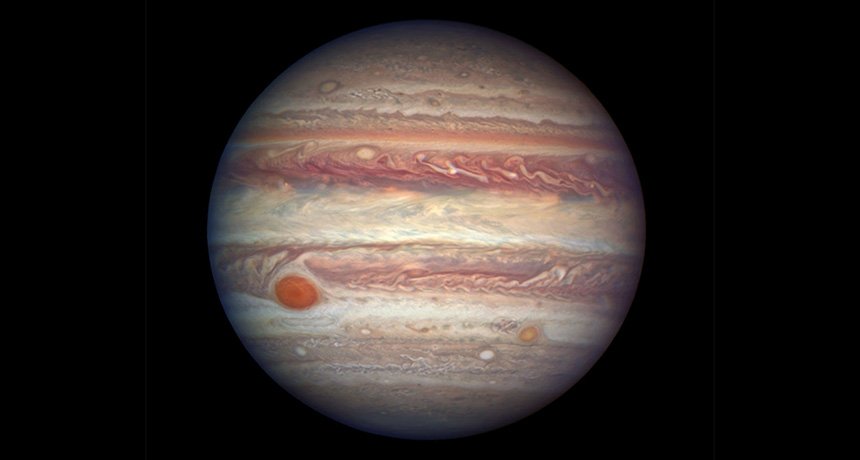
What is a planet?
a large ball or rock and/or gas that moves around the sun, which is not spherical and has not cleared its neighborhood of debris
a large ball or rock and/or gas that moves around the sun, is nearly spherical, and has not cleared its neighborhood of debris
a large ball or rock and/or gas that moves around the sun, is nearly spherical, and has cleared its neighborhood of debris
a large ball or rock and/or gas that moves around a larger ball of gas/rock
Which planet has the most extreme temperature ranges from day to night?
Mercury
Venus
Earth
Mars
This large gas giant is known for its large and complex ring system.
Jupiter
Saturn
Uranus
Neptune
What is the solar system?
The sun
The planets
The sun and planets ONLY
The sun, planets, and all other objects that orbit the sun
Which planet is the closest to our sun?
Mars
Earth
Mercury
Venus
Which planet is the farthest away from our sun?
Mars
Jupiter
Neptune
Uranus
Why do the planets orbit the sun?
They don't, the planets orbit the Earth
Because Science
The sun is so massive that it has a very large gravitational pull, which causes objects to orbit it
Because they want to

Which are the four terrestrial planets? (a) (b) (c) (d)


Earth

Mars

Saturn

Jupiter

Sun
Pluto and Ceres are both dwarf planets found in our solar system.
True
False

The largest planet in our solar system is...
Uranus
Jupiter
Neptune
Mercury


The Great Red Spot is a storm in Jupiter's atmosphere.
True: The storm has been raging for at least 400 years
False: The spot is actually a large land mass
False: The spot is a patch of frozen methane
True: The storm was first discovered long ago but has dissipated and reformed several times since
Which one is another term for the gas giants?
Jovian Planets
Jupitarian Planets
Inner Planets
Really Big Gas Planets (RBGPs)

Our galaxy is called the
The Earth Nebula
The Hubble Galaxy
The Milky Way
The Sol Nebula
Which planets have zero moons?
Uranus and Mercury
Neptune and Mars
Venus and Earth
Mercury and Venus
Mars and Mercury


Which direction do the planets rotate the sun.
All orbit Counterclockwise
All orbit Clockwise
All orbit Clockwise except for Venus which orbits Counterclockwise
All orbit Counterclockwise except for Venus which orbits Clockwise
Which direction do the planets revolve around their axis.
All rotate Counterclockwise
All rotate Clockwise
All rotate Clockwise except for Venus which rotates Counterclockwise
All rotate Counterclockwise except for Venus which rotates Clockwise
Which of these is the least dense?
Jupiter
Saturn
Mercury
Uranus
Pluto
The only planet we know for sure has life
Mercury
Saturn
Earth
Venus
Mars
Which planet has the least atmosphere
Earth
Mercury
Venus
Mars
Jupiter
Which planet has the most extreme temperature ranges from day to night?
Mercury
Venus
Earth
Mars

What is a moon?
a large ball or rock and/or gas that moves around the sun, which is not spherical and has not cleared its neighborhood of debris
a large ball or rock and/or gas that moves around the sun, is nearly spherical, and has not cleared its neighborhood of debris
a large ball or rock and/or gas that moves around the sun, is nearly spherical, and has cleared its neighborhood of debris
a large ball or rock and/or gas that moves around a larger ball of gas/rock
The sun is in the ________________________ of our solar system.
outside
center
circle
moon
How many planets are in our solar system (not including pluto)
9
8
10
7
Which is the smallest planet?
Neptune
Earth
Mercury
Jupiter
Which of these is in the correct order (Largest to Smallest)?
Uranus, Saturn, Neptune, Jupiter
Jupiter, Saturn, Neptune, Uranus
Jupiter, Saturn, Uranus, Neptune
Saturn, Jupiter, Uranus, Neptune


The unique moon with dense atmosphere is _______.
Moon
Phobos
Titan
Charon


Drag the hotspot to the location of the nucleus in the Atom featured here.

Place the elements in the correct order by LEAST (left) number of Protons to MOST (right) number of protons.
Hydrogen
Carbon
Aluminum
Potassium
Xenon
The electrons in an atom are (a) the nucleus and have a (b) charge.
outside
negative
positive
neutral
inside
sometimes inside and sometimes outside
Match the following mass amounts with the proper charge.
Protons
(+)positive
Electron
(-) negative
Neutron
(0) neutral, no charge
The charge of a proton is
positive
negative
neutral (no charge)
The mass of a proton is approximately the same as a mass of a
positron
electron
neutron
beta particle

In the diagram shown above, the green particle represents the:
Proton
Electron
Neutron
Nucleus

In the diagram shown above, the electrons are
Green
Red
Yellow
Which subatomic particle has a positive charge?
Electron
Proton
Neutron
What two particles make up the nucleus of an atom?
Proton & Electron
Electron & Neutron
Proton and Neutron
Proton Neutron and Electron

What does the 1.00794 stand for?
Hydrogen
atomic number
atomic mass
atomic explosion
What does the 1 in the upper right stand for?
Hydrogen
atomic number
atomic mass
atomic explosion
Smallest of the 3 subatomic particles
protons
neutrons
electrons

Which layer of the sun is the only layer seen from Earth because it blocks all of the other layers?
Core
Corona
Photosphere
Prominence

This is the only layer seen during a total solar eclipse?
Corona
Photosphere
Core

Which layer is blocked during a total solar eclipse?
Photosphere
Corona
Chromosphere

Label part 1
#1 Core
#1 Radiation zone
#1 Convection zone
#1 Photosphere

Nuclear fusion is when
the nuclei of two atoms join to produce lots of energy
the nuclus of a large atom splits to release lots of energy
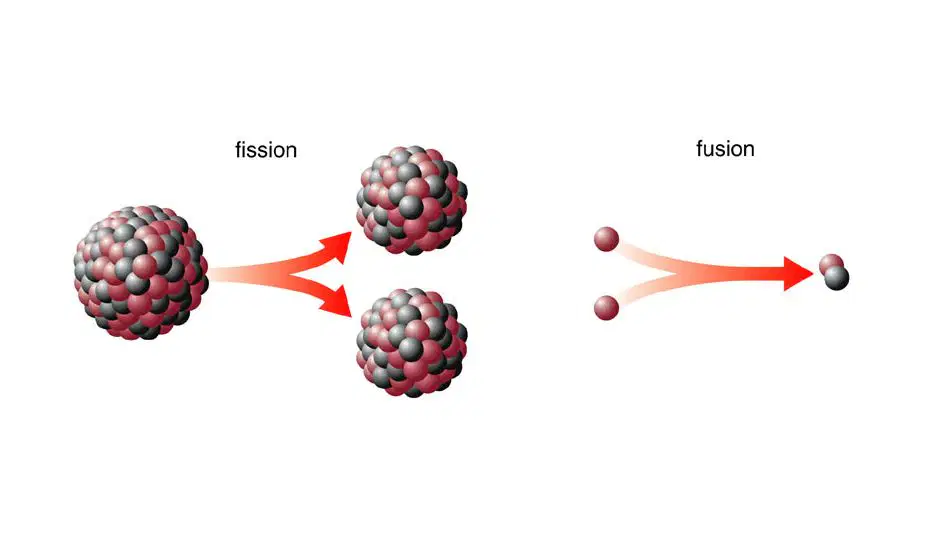
Nuclear fission is when
the nuclei of two atoms join to produce lots of energy
the nucleus of one large atom splits, releasing lots of energy

The middle layer of the sun's interior that contains very tightly packed gas is called the _____________.
photosphere
chromosphere
radiation zone
convection zone
What is the center of our Solar System?
Earth
the moon
the sun
How many planets are in our Solar System?
7
8
9
The inner planets (Mercury, Venus, Earth, and Mars) are made of--
rocks
gas
helium
The outer planets (Jupiter, Saturn, Uranus, Neptune) are made of --
gas
rocks
water
What is the third planet from the Sun?
Mercury
Venus
Earth
Which list shows the correct order of planets from the sun?
Mercury, Venus, Earth, Mars
Earth, Mars, Venus, Jupiter
Mars, Venus, Earth, Saturn
Uranus, Jupiter, Neptune, Saturn
Why does the sun seem to change position in the sky?
Earth's rotation
Earth's orbit
The sun's rotation
The sun's orbit

The picture shows a tree and its shadow at two different times of day.
Which sentence explains why the shadow changes?
As Earth rotates, the sun is lower in the sky in the morning.
As Earth rotates, the sun is higher in the sky in the morning.
As the sun rotates, it is lower in the sky in the morning.
As the sun rotates, it is higher in the sky in the morning.
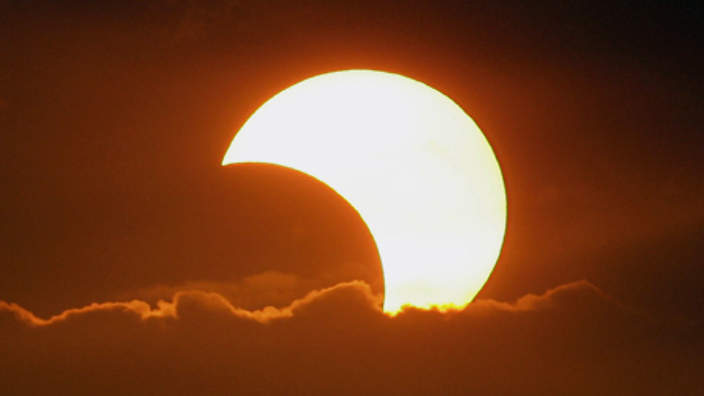
A __________ ___________eclipse occurs when the Sun’s surface is completely blocked out by the Moon.
Total Solar
Partial Solar
A _____________ _____________ eclipse occurs when only part of the Sun’s surface is blocked by the Moon.
Total Solar
Partial Solar

In the diagram a ______________ eclipse is occurring.
Solar
Lunar

What does this line on the map of the United States show about the solar eclipse?
the path of no eclipse
the path of totality
the path of the lunar eclipse

True or False: You must wear your eclipse goggles at all times except during totality due to safety reasons.
True
False

The element, Sodium has how many protons?
11
22.990
33
Impossible to know from the information given

What is the atomic mass of potassium?
19
39.098
58.098
20

What is the Atomic Number of an element equal to?
The element's number of neutrons
The elements number of nuclei
The element's mass
The elements number of protons
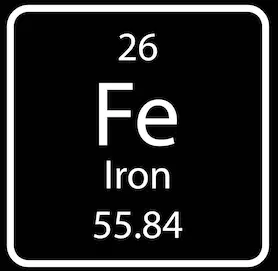
What language is used to name most of the elements (This is the reason IRON is Fe)?
English
Spanish
Latin
Gibberish

How many protons are present in this Carbon atom?
4
5
6
7
Which of the following is a form of energy?
Speed
Heat
Weight
Pressure
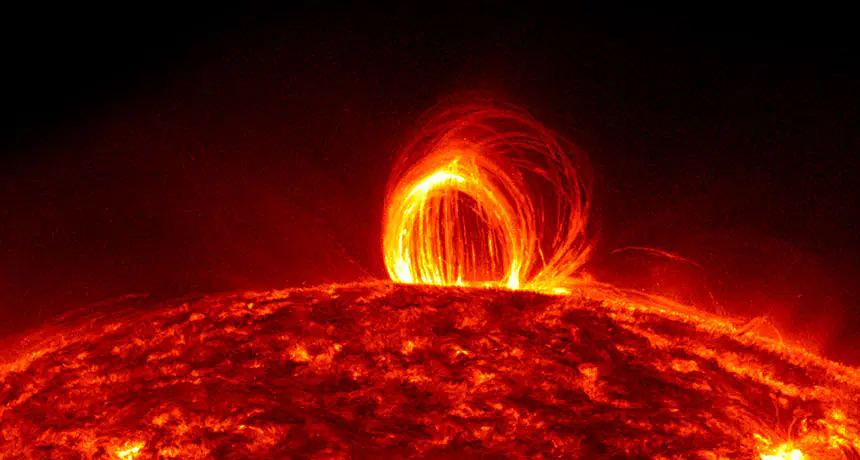
In which state of matter do particles have the highest energy (This is the state of matter of the sun)?
Solid
Liquid
Gas
Plasma
During a lunar eclipse
the Moon casts a shadow on Earth
the Earth casts a shadow on the Moon
the sun is partially blocked
a total eclipse occurs
Solar eclipses always occur on
first and last quarters
New and full moon
full moon
new moon
Lunar eclipses always occur on
first and last quarters
new and full moons
full moon
new moon
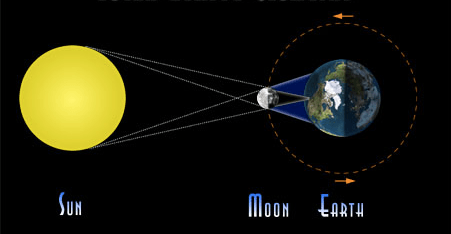
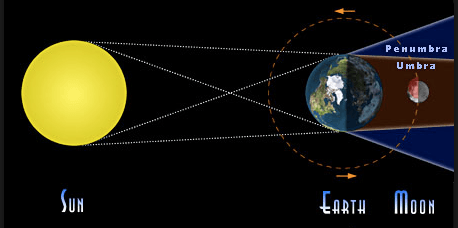

how do we call this shadow in the red circle?
(a)

How do we call the least dark shadow of an eclipse?
(a)

This is a...
Total lunar eclipse
Partial lunar eclipse

Moon, Sun, Earth


Which body has the greater effect on Earth's tides?
Sun
Saturn
Moon
Venus


Neap tides happen at _________ and _________ phases of the moon.
first quarter and new moon
last quarter and full moon
waxing and waning
1st quarter and 3rd quarter
High tides and low tides each happen _____ times per day.
4
2
1
24
During a neap tide, the sun, moon, and earth are at a ___________ angle.
360 degree
23.5 degree
45 degree
90 degree

What is a high tide?
Sea pulled TOWARD the moon where Earth is CLOSEST to the moon
Sea pulled AWAY from the moon where Earth is FARTHEST to the moon
Sea pulled AWAY from the moon where Earth is CLOSEST to the moon

Tides are caused by the difference in the gravitational force of the ________ and ________ across the ________.
earth, sun, moon
sun, mars, jupiter
sun, moon, earth
tide, water, sun

The difference in gravitational force is called _________.
Tidal Force
Fun Tides
Tidal waters
Ocean Force

