
 Worksheets
mid term revsion science grade 9
Total questions: 130
Worksheet time: 2hrs 46mins
What does the flow of energy through an ecosystem always begin with?
Primary Producers
Primary Consumers
Heterotrophs
Grass
What shows a network of feeding relationships?
Food Chain
Food Web
Pyramid of Biomass
Pyramid of Energy

What are the primary producers in this image?
Carrot
Grasshopper
Grain
Grass
Rabbit
What are the primary consumers in this image?
Owl
Grasshopper
Mouse
Bird
Rabbit
What are the secondary consumers in this image?
Owl
Fox
Mouse
Bird
Rabbit
A decomposer is
heterotroph
an organism that breaks down organic materials
autotroph
recycles nutrients

Which animal is on the top of the food chain?
Eagle
Python
Wolf
Lavendere
In an ecosystem, define; producer
Organisms that are found at the top of a food web
Chemicals and gases that are found in the atmosphere.
They are organisms that only consume plants
Organisms that use energy from the sun, water and gases from the atmosphere that chemically make their own food.
Define; food web
A singular food chain of organisms
All of the food chains in an ecosystem
A diagram that displays all herbivores in an ecosystem

What type of organism is shown in the picture?
producer
consumer
decomposer

What type of organism is shown in the picture?
producer
consumer
decomposer

What type of organism is shown in the picture?
producer
consumer
decomposer
What is the ultimate source of energy for food chains?
animals
sun
plants
mushrooms

What type of organism is shown in the picture?
detritivore
carnivore
herbivore
omnivore

What type of organism is shown in the picture?
detritivore
carnivore
herbivore
carnivore

An organism that makes its own food
Heterotroph
Autotroph

Each step in a food chain or food web
Trophic level
Adaptations
Link
Ecological pyramid
Name the Trophic Levels
Producers
Primary Consumer
Secondary Consumer
Tertiary Consumer
Quaternary Consumer
Which organism is the carnivore?


Choose THREE correct statements about electrostatic charges
Electrical charges are produced through friction
A substance loses an electron become negatively charged
A substances loses and electron becomes positively charged
The repulsion and attraction produce a force
Two same charges attract each other
The two same charges will _________ each other
attract
repel
opposite
The two different charges will ___________ each other.
repel
attract
opposite
Only ____________________ can move from one another object to another object when rubbed.
neutron
electron
proton
There are two types of electrical charges :
positive charge
negative charge
neutral
non-moving charge
Which following instrument is required to detect static electrical charges.
Voltmeter
Galvanometer
Ammeter
Electroscope
Choose the correct reason why the hair stand and attracted to the balloon when the balloon is rubbed to the hair?
Both balloon and hair are neutral
Both balloon and hair are same charged
The balloon is negatively charged and hair is neutral
The balloon and hair are different charged
A Van de Graff generator is applied to ________________________
produce same charges
produce different charges
generate electrical charges

When two different types of insulators are rubbed together, ____________ electric charges are produced.
mobile
static
no
some

A glass rod becomes positively charged when it is rubbed with silk. This is because the glass rod
gains protons
loses protons
gains electrons
loses electrons

When a negatively charged plastic rod is brought near the brass cap of the electroscope, what can be observed?
The gold leaf collapses.
The gold leaf diverges.
The gold leaf diverges than collapses.
The position of the gold leaf remains unchanged.
If one bulb goes out in a series circuit, the remaining bulbs...
also go out
get brighter
get dimmer
explode, leaving shards of glass everywhere
Current is measured in
Volts
Watts
Seconds
Amps

If the switch was opened, what would happen?
the ammeter would measure a current flowing
current would no longer flow, so everything would be off
the bulbs would stay on because they're connected to the cell
the bulbs would burn out and catch fire
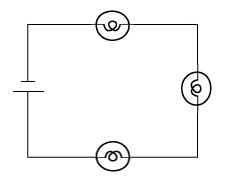

This is an example of a _______ circuit
open
series
parallel
switch
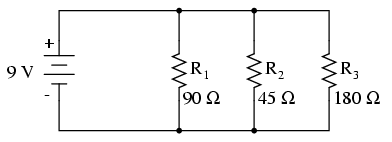


What component does the picture above represent?
Battery
Light bulb
Ammeter
Resistor
What is a Conductor?
A Parallel circuit
A material that allows heat and electricity to flow through it
The pathway through which electric current (electron) flows.
A series current
What is Voltage?
The energy available to move charges through a circuit
A material that allows heat and electricity to flow through it
A material that stops heat and electric current from flowing
Rubber, styrofoam, cotton
What is a Battery?
Rubber, styrofoam, cotton
The energy available to move charges through a circuit
The flow of electrons in a circuit
The device that provides electrical energy
The rate of flow of electrons through a wire is known as __________ and is measured using __________.
resistance, Ohms
voltage, Volts
current, AMPS
The tendency for materials to oppose the flow of electricity is known as __________ and is measured using ___________.
resistance, Ohms
current, AMPS
voltage, Volts
How much energy or pushing force available to move electrons through a circuit is known as __________ and is measured using __________.
Resistance, Ohms
Voltage, Volts
Current, AMPS
Current can be measured using ............
ammeter
light bulb
resistor
voltmeter
Measured using a Voltmeter
Voltage
Current
Resistance

An double A (AA) alkaline battery functions using....
Strong Nuclear Forces
Electromagnetism
Friction
A Chemical Reaction
Cells are connected in series in order to
Increase the voltage rating
Increase the current rating
Increase the life of the cells
None of the above

Identify the above symbol.
battery
Electric cell
AC source
DC source
How many terminals do each cell have?
3
4
2
Cells connected in series have a higher voltage.
False
True
Conductors have some resistance.
True
False
A thicker conductor has what type of resistance?
High resistance
Low resistance
Fixed resistance
Variable resistance
Where do plants get the energy for photosynthesis to take place?
nutrients in the soil
the sun
chlorophyll
bee pollination
What part of the plant soaks up water for photosynthesis?
roots
petals
leaf
stem
The process of photosynthesis takes place in the:
Leaves of the Plant.
Stem of the plant.
Roots of the plant.
All of the above.
Complete the equation for photosynthesis
carbon dioxide +___________ ------> Glucose + oxygen
helium
nitrogen
water
hydrogen
The reactants to photosynthesis are...
glucose and oxygen
carbon dioxide and water
Pigment in green plants that captures the energy in sunlight is called __________.
pigment
chlorophyll
stomata
green thing
Where does photosynthesis take place in the plant cell?
Nucleus
cytoplasm
Chloroplasts
Mitochondria

This is the chemical formula for a molecule of...
oxygen
carbon dioxide
Glucose
Water

The openings that are found in the leaves of plants are called:
stomata
chlorophyll
Xylem
Chloroplast
Which of these are limiting factors for Photosynthesis?Choose three..
Carbon dioxide concentration
light intensity
Water
temperature

Which is a function of the roots?
reproduce
supports the plant
absorbs water and mineral salts from the soil
Which part of the vascular system moves nutrients such as soluble sugars, proteins, hormones, and dissolved minerals and salts from leaves to other portions of the plant?
Spongy mesophyll cells
Phloem
Upper Layer
Xylem
Is the xylem vessel a one-way or two way flow system?
One-way
Two-way
Is the phloem vessel a one-way or two-way flow system?
Two-way
One-way
Choose the correct combo-
xylem-water, phloem -sugar
xylem- sugar, phloem -water

Mark noticed that the leaves of his poinsettia plant are turning yellowish, as shown. What could be wrong?
magnesium deficiency
carbon dioxide deficiency
glucose deficiency
starch deficiency

Which mineral we need to add to soil if leaves curl?
Potassium
Nitrogen
Sulfur
Phosphorus

Which mineral is deficient in this plant?
Magnesium
Potassium
Nitrogen
Phosphorus

What minerals need to be added to this plant?
Potassium
Manganese
Magnesium
Phosphorus
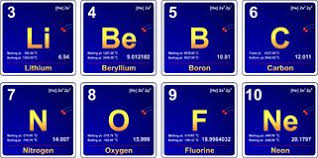
Subatomic particles with a negative charge
Electrons
Neutrons
Protons
Quarks
All matter is made of
energy
atoms
air
chemistry


The Atomic number is known as the _______
Number of electrons in an atom
Number of Protons in an atom
Number of neutrons in an atom
Number of Protons and electrons in an atom
What is Atomic Mass Number ?
Number of Protons
Number of Neutrons
Number of Protons and Neutrons
Number of Protons and Electrons
The number of electrons in an atom is equal to the...
Atomic number
Protons
Atomic Mass
Neutrons
The formula used to calculate the number of neutrons is:
Mass Number - Atomic Number
Protons + Electrons
Atomic Number - Mass Number
Protons x2
How many periods are on the periodic table?
5
6
7
8
Elements in the same group have : (2 correct answers)
Similar chemical properties
Similar names
Same number of outer (valence) electrons)
The same number of protons
Who created the periodic table?
John Dalton
Marie Curie
Dmitri Mendeleev
The periodic table is arranged in order of...
increasing atomic number
increasing atomic mass
decreasing atomic mass
decreasing atomic number

What is the name of the element? (Periodic table will be needed)
sodium
magnesium
vanadium

How many protons and electrons does nickel have?
28
58.69


Proposed that electrons move around the nucleus in specific layers, or shells.
Bohr
Rutherford
Chadwick
Thomson


What is the correct order of scientists in order of their work related to the atomic theory from earliest to most recent?
Neils Bohr, Ernest Rutherford, JJ Thomson, John Dalton, & Democritus
JJ Thomson, John Dalton, Neils Bohr, Ernest Rutherford, & Democritus
Democritus, John Dalton, JJ Thomson, Ernest Rutherford, and Neils Bohr
John Dalton, Neils Bohr, JJ Thomson, Democritus, & Ernest Rutherford
Which one is a very reactive nonmetal?
Halogen
Noble gas
Metalloid
Transition metal
Which group are alkali metals in?
1
2
17
18
Element Z has the following properties:
1. It has a low boiling point.
2. It does not react with other elements.
What is element Z?
alkali metal
halogen
noble gas
transition metal
Metals and acids react to form .....
Salt and hydrogen
Salt and water
Carbon dioxide, salt and water
Hydrogen only
Magnesium + hydrochloric acid-->
Magnesium chloride + water
Magnesium chloride + hydrogen
Magnesium hydrochloride + hydrogen
Magnesium chloride + water + carbon dioxide
Zinc + sulfuric acid -->
Zinc sulfide + hydrogen
Zinc sulfate + hydrogen
Zinc sulfate + Water +Carbon dioxide
Zinc sulfide + water
Iron + hydrochloric acid -->
Iron chloride + hydrogen
Iron chloride + carbondioxide
Iron hydroxide + acid
Iron chloric + hydrogen
Metal carbonates react with acid to form....
Salt, carboxylic acid and water
Salt, carbon dioxide and water
Salt and carbonated water
Salt and hydrogen
Copper carbonate + hydrochloric acid -->
Copper chloride + hydrogen
Copper chloride + water
Copper chloride + water + hydrogen
Copper chloride + water + carbondioxide
What gas is always produced when a metal reacts with acid?
Oxygen
Hydrogen
Carbon dioxide
Nitrogen

