
 Worksheets
Pre-Fall Break Review (AME) (Units 1, 2, 3)
Total questions: 125
Worksheet time: 3hrs 16mins
To change kilometers to meters, move the decimal place...
3 to the right.
3 to the left.
2 to the right.
1 to the left.
To change cm to m, move the decimal place...
3 to the right.
3 to the left.
2 to the left.
1 to the right.
Convert 323 m to km.
0.323 km
3.23 km
323,000 km
3,230 km
Convert 0.75 L to mL.
750 mL
75 mL
75,000 mL
0.0075 mL
240 cm = ___________ m
2400
24
2.4
0.24
1000 m = ___________ km
100
10
1
0.1

2,804 mg = ___________ g
0.2804
2.804
28.04
280.4
0.932 g = ___________ mg
9.32
93.2
932
9,320
56 L = ___________ mL
560
5,600
56,000
560,000
Which units are the BASE units in the metric system? Check all that apply.
Meters
Liters
Grams
Inches
Miles
What scientific tool is used to measure volume of liquids, such as water and chemicals?
Meter Stick
Ruler
Graduated Cylinder
Triple Beam Balance
Which units below are NOT part of the metric system? Check all that apply.
Inches
Feet
Meters
Grams
Which unit below is the largest?
Kilogram
Gram
Centigrams
Milligrams
Which unit below is the SMALLEST?
Kilometer
Millimeters
Meters
Centimeters

The mass of an atom, calculated by adding the number of protons and neutrons in the nucleus of the atom
element name
element symbol
atomic number
atomic mass
the basic structural unit of matter
atom
matter
element
nucleus
a subatomic particle, contained in the nucleus of an atom, having the same mass as a proton but no electrical charge
proton
neutron
electron
matter
a negatively charged subatomic particle that orbits the nucleus of an atom
proton
neutron
electron
matter
a grouping of elements based on similar properties, arranged by columns in the periodic table; also known as a group
family
period
row
isotope
a row on the Periodic Table of Elements
family
period
row
isotope
Which substance has the weakest intermolecular forces?
Substance A, boiling point of 75 °C
Substance B, boiling point of 105 °C
Substance C, boiling point of 25 °C
Substance d, boiling point of 45 °C
The weaker the intermolecular forces of a substance the _____________ the boiling point
higher
lower
________________________ have the strongest intermolecular forces of attraction.
Dipole- Dipole
Dispersion
Hydrogen Bonds
Intermolecular forces are attractions between ______.
Cations and anions
Atoms within a molecule
Neighboring molecules
Protons and electrons
The chemical bond between a metal and a non-metal will be a _____ bond.
metal
ionic
covalent
polar
Carbon and Oxygen will make a ___________ bond.
ionic
covalent
metallic
Nitrogen and Oxygen will make a ____________ bond
ionic
covalent
metallic
A type of strong chemical bond in which two atoms share one or more pairs of valence electrons.
Covalent bond
Hydrogen bond
Ionic Bond
Water Bond
Na Br
9 meters = ___________cm
900 cm
90 cm
0.9 cm
0.09 cm
8 kilometers equals how many meters?
800 m
80,000 m
8,000 m
0.008 m
The base metric unit of measurement for length is the:
gram
liter
meter
cm
abbreviation
millimeter
m
mm
me
mt
abbreviation
decimeter
dm
dam
d
dcm
abbreviation
dekagram
dag
dg
dkg
dgm
abbreviation
hectoliter
hL
hcL
htL
L
What are the 6 main metric prefixes in order from largest to smallest?
kilo, hecto, deka, deci, centi, milli
milli, centi, deci, deka, hecto, kilo
kilo, deka, deci, milli, centi, hecto
milli, deka, hecto, kilo, deci, centi
Water freezes at
0 degrees Celsius
32 degrees Celsius
100 degrees Celsius
212 degrees Celsius
Which object has a mass of about one gram?
a paper clip
a book
a chair
a car
Water boils at
0 degrees Celsius
32 degrees Celsius
100 degrees Celsius
212 degrees Celsius
The amount of matter in something is its'
mass
volume
length
density
Put these in order from smallest to BIGGEST
millimeter, centimeter, meter, kilometer
centimeter, millimeter, kilometer, meter
meter, millimeter, centimeter, kilometer
kilometer, meter, centimeter, millimeter
Put these in order from smallest to BIGGEST
milliliter, centiliter, liter, kiloliter
centiliter, milliliter, kiloliter, liter
liter, milliliter, centiliter, kiloliter
kiloliter, liter, centiliter, milliliter
Put these in order from BIGGEST to smallest
milligram, centigram, gram, kilogram
centigram, milligram, kilogram, gram
gram, milligram, centigram, kilogram
kilogram, gram, centigram, milligram
An electron located in the outermost shell (valence shell) of the atom, that can be transferred to or shared with another atom.
Ionic bond
Valence electrons
Ion
Anion
Bond formed by the transferring of electrons. Occurs between a metal (loses electrons) and a nonmetal (gains electrons).
Ionic bond
Ion
Product
Molecule
A rule stating that atoms lose, gain, or share electrons in order to have 8 valence electrons.
Reactant
molecule
Oxidation number
Octet rule
Which of the following pair of elements is most likely to form an ionic compound?
Magnesium and fluorine
Nitrogen and sulfur
Oxygen and chlorine
Sodium and aluminum
Al3+ O2-
Cr3+ O2-
Calcium Fluoride has a chemical formula of CaF2. What does the chemical formula tell you?
There are 2 Calcium ions for every 1 Fluoride ion in the crystal
There is 1 Calcium ion for every 2 Fluoride ions in the crystal
Which of the following gases is not a noble gas?
Helium
Oxygen
Neon
Intermolecular forces are attractions between ______.
Cations and anions
Atoms within a molecule
Neighboring molecules
Protons and electrons
The weaker the intermolecular forces of a substance the _____________ the boiling point
higher
lower
In an endothermic reaction, heat is ...
taken in
given out
O2(g) + 2 H2 (g) → 2 H2O (g) + Energy
endothermic
exothermic
6 CO2+ 6 H2O + Energy → C6H12O6 + 6 O2
endothermic reaction
exothermic reaction
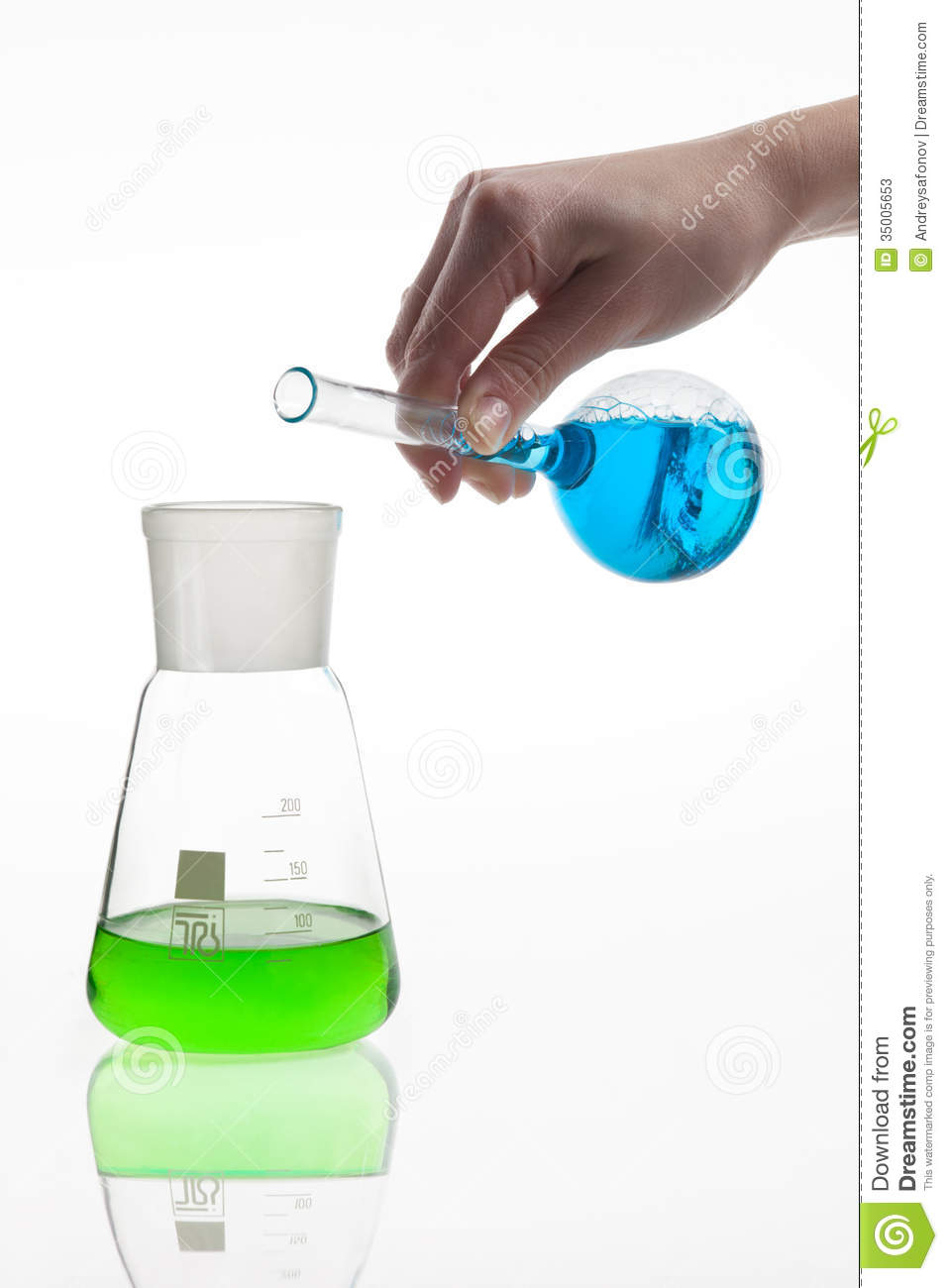
A student mixed two chemicals to allow them to react. The temperature before the reaction was 25 ° C. The temperature after the reaction was 18° C. Which of the following is true?
It is an exothermic reaction
It is an endothermic reaction
When an _____ reaction occurs, the reactants are at a lower energy.
endothermic
exothermic
In a laboratory, a student combines vinegar and baking soda into a beaker. The initial temperature is 28 degrees Celsius and the final temperature reading two minutes later is 20 degrees Celsius. Was energy absorbed from or released to the surroundings?
absorbed from
released to

