wayground logo

Free Printable Worksheets

Font size

S
M
L
XL
Worksheets

Matter. Unit 7 Quiz. Physical Science

Total questions: 120

Worksheet time: 2hrs 4mins
Name
Class
Date
1.
everything that has mass and takes up space.
a)
Matter
b)
Mass
c)
Volume
d)
Substance
2.
the amount of matter in an object.
a)
Matter
b)
Mass
c)
Volume
d)
Substance
3.
the amount of space an object takes up.
a)
Matter
b)
Mass
c)
Volume
d)
Substance
4.
a matter which has a specific composition and specific properties.
a)
Matter
b)
Mass
c)
Volume
d)
Substance
5.
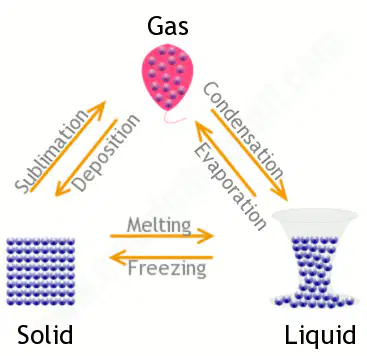
rapid (fast) change from a liquid to a gas.
a)
Boiling
b)
Evaporating
c)
Condensing
d)
Particle Diagram
6.
slow change from a liquid to a gas on the surface.
a)
Boiling
b)
Evaporating
c)
Condensing
d)
Particle Diagram
7.
change from a gas to a liquid.
a)
Boiling
b)
Evaporating
c)
Condensing
d)
Particle Diagram
8.
an illustration of the arrangement of atoms or molecules in a phase of matter.
a)
Boiling
b)
Evaporating
c)
Condensing
d)
Particle Diagram
9.
a mixture in which different materials can be distinguished easily (different parts together).
a)
Heterogeneous Mixture
b)
Solution
c)
Solvent
d)
Solute
10.
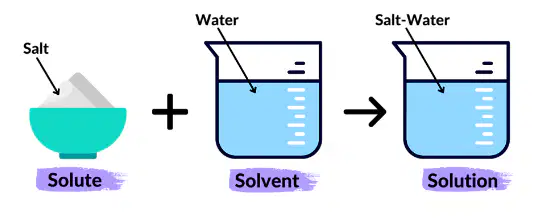
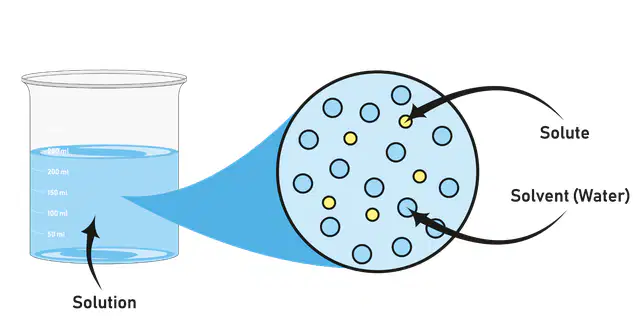
a homogeneous mixture of one or more solutes dissolved in a solvent.
a)
Heterogeneous Mixture
b)
Solution
c)
Solvent
d)
Solute
11.
the substance in which a solute dissolves to produce a homogeneous mixture.
a)
Heterogeneous Mixture
b)
Solution
c)
Solvent
d)
Solute
12.
the substance that dissolves in a solvent to produce a homogeneous mixture.
a)
Heterogeneous Mixture
b)
Solution
c)
Solvent
d)
Solute
13.
one of the three forms that matter can exist in (solid, liquid, gas).
a)
States of Matter
b)
Temperature
c)
Melting
d)
Freezing
14.
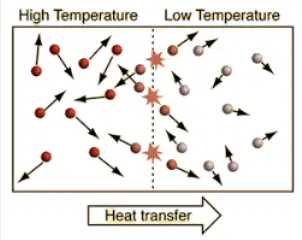
a measure of the average kinetic energy of motion of the particles of a substance.
a)
States of Matter
b)
Temperature
c)
Melting
d)
Freezing
15.
change from a solid to a liquid.
a)
States of Matter
b)
Temperature
c)
Melting
d)
Freezing
16.
change from a liquid to a solid.
a)
States of Matter
b)
Temperature
c)
Melting
d)
Freezing
17.
a usually reversible change in the physical properties of a substance.
a)
Physical Change
b)
Chemical Change
c)
Atom
d)
Molecule
18.
a substance is changed into a different substance; this change cannot be reversed.
a)
Physical Change
b)
Chemical Change
c)
Atom
d)
Molecule
19.
the smallest unit of matter that retains all of the chemical properties of an element and cannot be broken down chemically.
a)
Physical Change
b)
Chemical Change
c)
Atom
d)
Molecule
20.
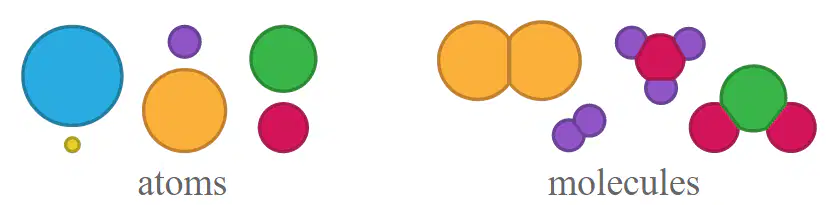
a group of two or more atoms held together by attractive forces known as chemical bonds.
a)
Physical Change
b)
Chemical Change
c)
Atom
d)
Molecule
21.
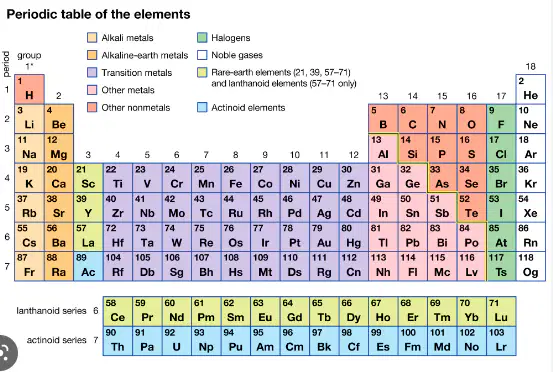
a chart that shows all the elements in order by atomic number.
a)
Periodic Table
b)
Chemical Formula
c)
Subscript
d)
Solid
e)
Liquid
22.
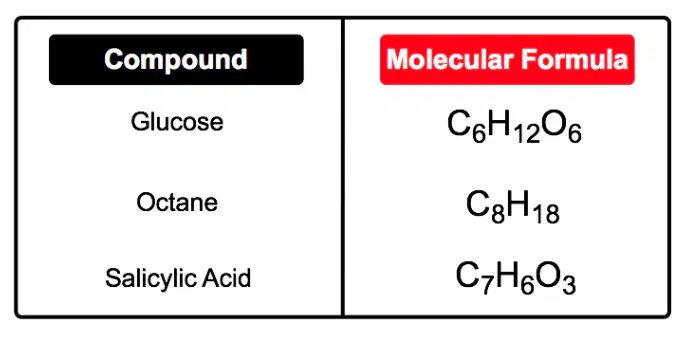
the name of a substance spelled with number and letter symbols.
a)
Chemical Formula
b)
Periodic Table
c)
Subscript
d)
Solid
e)
Liquid
23.
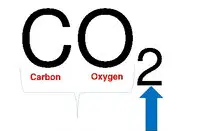
a type of lettering form written lower than the things around it.
a)
Subscript
b)
Periodic Table
c)
Chemical Formula
d)
Solid
e)
Liquid
24.
has a definite shape and volume.
a)
Solid
b)
Periodic Table
c)
Chemical Formula
d)
Subscript
e)
Liquid
25.
has a definite volume but it takes the shape of a container.
a)
Liquid
b)
Periodic Table
c)
Chemical Formula
d)
Subscript
e)
Solid
26.
fills the entire volume of a container.
a)
Gas
b)
Periodic Table
c)
Chemical Formula
d)
Subscript
e)
Solid
27.
a mixture in which substances are evenly distributed throughout the mixture (all the same throughout).
a)
Homogeneous Mixture
b)
Physical Property
c)
Density
d)
Chemical Property
28.
a characteristic of a pure substance that can be observed without changing it into another substance.
a)
Homogeneous Mixture
b)
Physical Property
c)
Density
d)
Chemical Property
29.
a physical property that measures of how tightly packed matter is; the amount of mass contained in a given volume
a)
Homogeneous Mixture
b)
Physical Property
c)
Density
d)
Chemical Property
30.
a property of matter that describes a substance's ability to participate in chemical reactions.
a)
Homogeneous Mixture
b)
Physical Property
c)
Density
d)
Chemical Property
31.
matter that always has exactly the same composition.
a)
Pure Substance
b)
Element
c)
Compound
d)
Mixture
32.
something that cannot be broken into something simpler, a pure substance.
a)
Pure Substance
b)
Element
c)
Compound
d)
Mixture
33.
two or more elements put together.
a)
Pure Substance
b)
Element
c)
Compound
d)
Mixture
34.
two or more substances together that do not change their identity; not chemically combined; you can see the individual parts.
a)
Pure Substance
b)
Element
c)
Compound
d)
Mixture
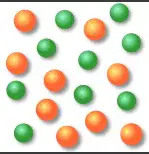
35.
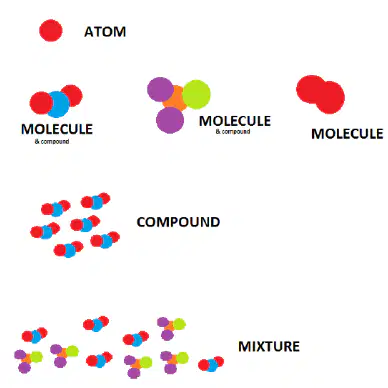
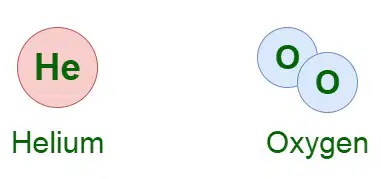
This picture represents:
a)
Element
b)
Compound
c)
Mixture of Elements
d)
Mixture of Compounds
36.
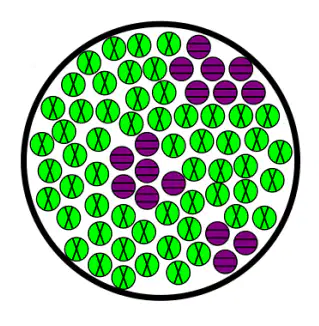
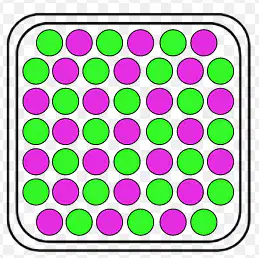
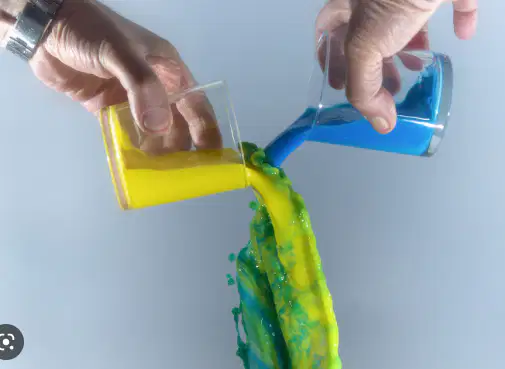
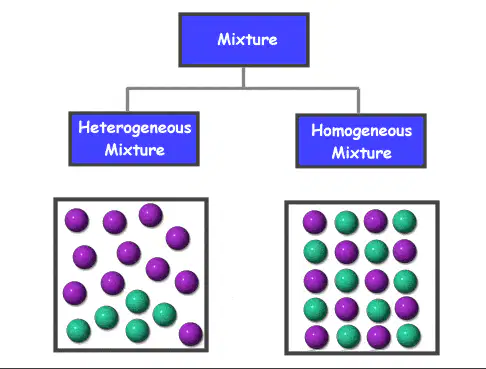
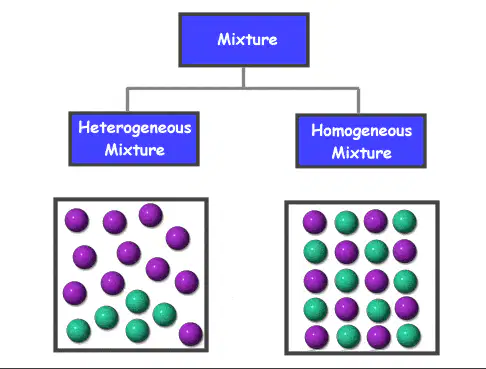
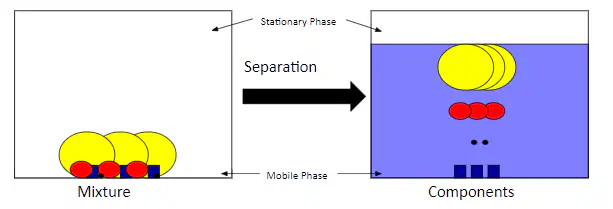
What type of mixture is this?
a)
homogenous mixture
b)
chemical
c)
heterogeneous mixture
d)
solid mix
37.
A substance with two or more elements that are combined in a fixed proportion.
a)
colloid
b)
compound
c)
element
d)
solution
38.
A substance in which all the atoms are the same.
a)
colloid
b)
homogeneous mixture
c)
solution
d)
element
39.
A mixture in which different materials can be identified easily
a)
element
b)
heterogeneous mixture
c)
homogeneous mixture
d)
solution
40.
A mixture that contains two or more substances blended evenly throughout
a)
heterogeneous mixture
b)
homogeneous mixture
c)
suspension
d)
colloid
41.
Which of the following is an element?
a)
Sugar
b)
Salt
c)
Water
d)
Oxygen
42.
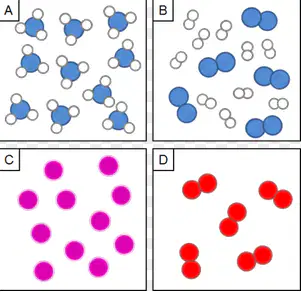
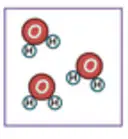
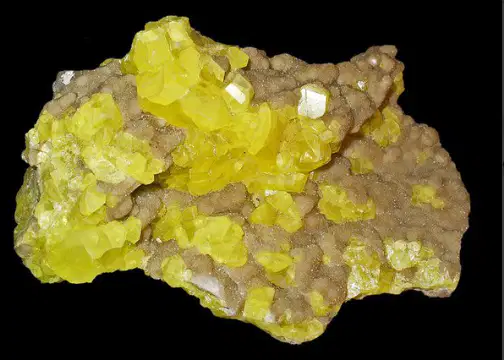
This picture represents which of the following?
a)
element
b)
compound
c)
mixture
43.
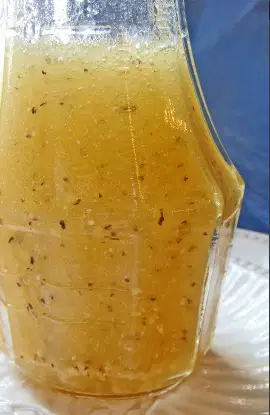
Italian Salad Dressing is a . . .
a)
heterogeneous mixture
b)
homogeneous mixture
c)
Pure Substance
d)
Compound
44.
Can usually be separated in your kitchen (by physical means)
a)
Element
b)
Compound
c)
Homogeneous Mixture
d)
Heterogeneous Mixture
45.
A mixture that is so evenly mixed you can't see the parts. Such as Kool-Aid
a)
Homogeneous Mixture
b)
Heterogeneous Mixture
c)
Pure Substance
46.
A combination that can be separated by physical processes is a .....
a)
Pure Substance
b)
Glucose
c)
Element
d)
Mixture
47.
A mixture that is NOT evenly distributed is called ....
a)
Compounded
b)
Homogenous
c)
Heterogenous
d)
Salty
48.
If you change a substance into a new substance...
a)
Partial Change
b)
Physical Change
c)
Chemical Change
d)
Freezing
49.
Changing the phase, size or shape of something....
a)
Chemical change
b)
Physical Change
c)
Suspension
d)
Colloid
50.
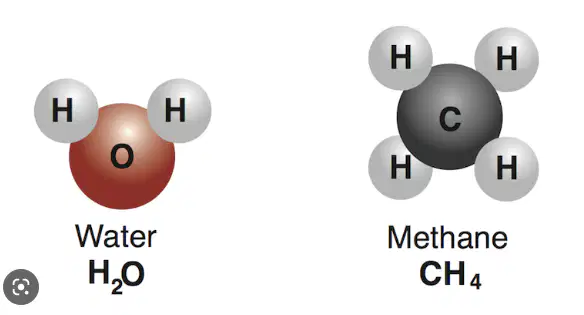
This picture represents:
a)
Element
b)
Compound
c)
Mixture of Elements
d)
Mixture of Compounds
51.
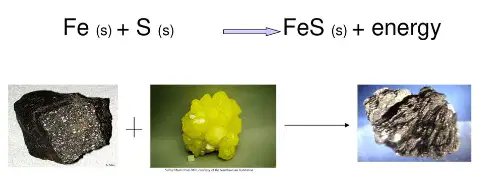
Which is NOT a chemical change?
a)
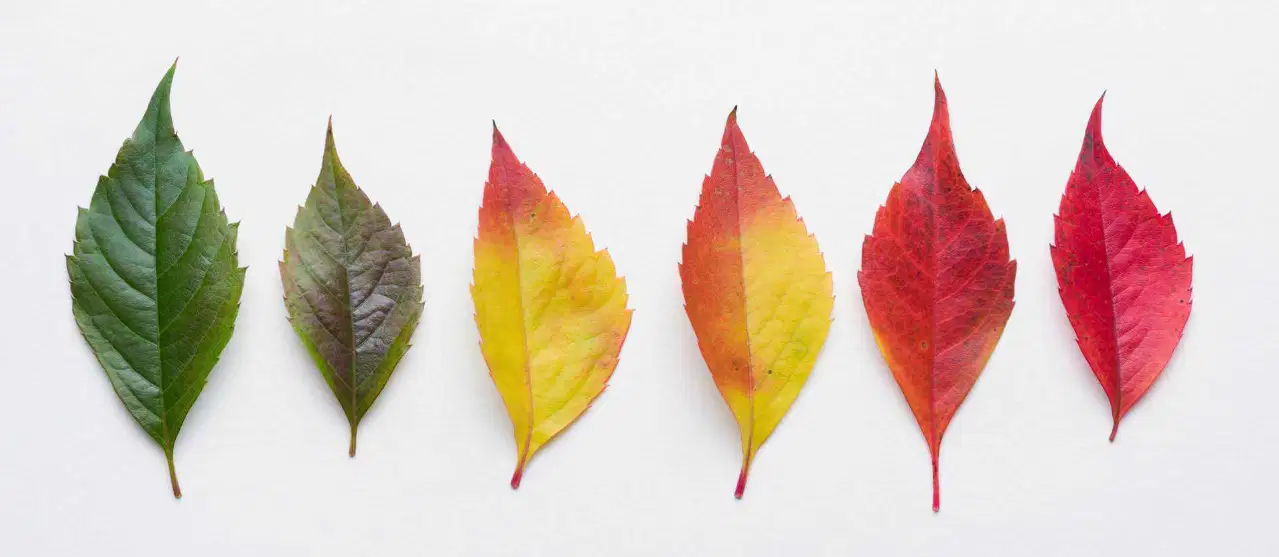
Leaves changing colors in the fall
b)
Iron rusting
c)
Digesting Lunch
d)
Ice Melting
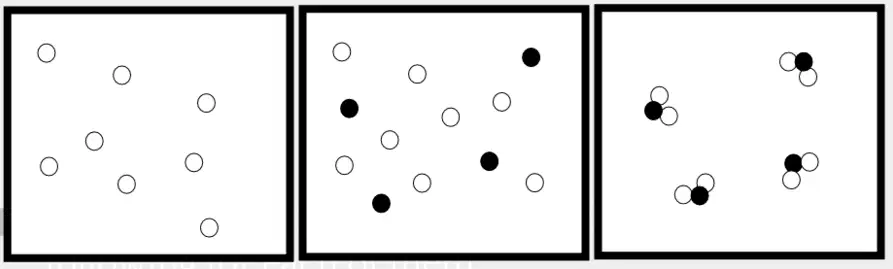
52.
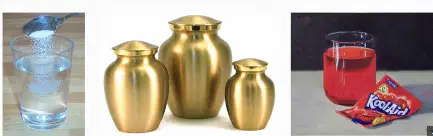
Which one of these pictures represents a mixture?
a)
1
b)
2
c)
3
d)
1, 2 and 3
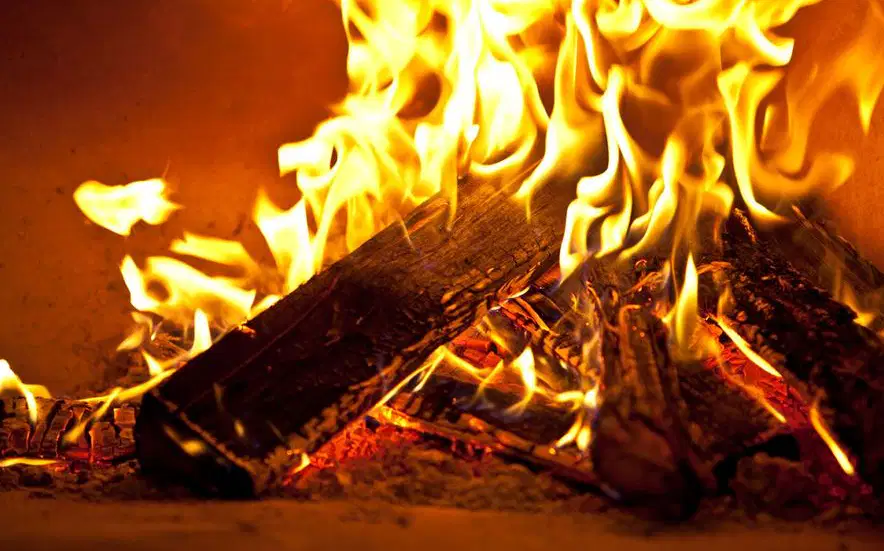
53.
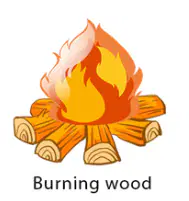
Is burning wood a chemical or physical change?
a)
chemical
b)
physical
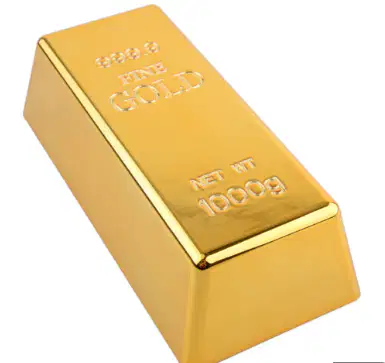
54.
A gold bar is an example of a.....
a)
pure element
b)
pure compound
c)
heterogeneous mixture
d)
homogeneous mixture
55.
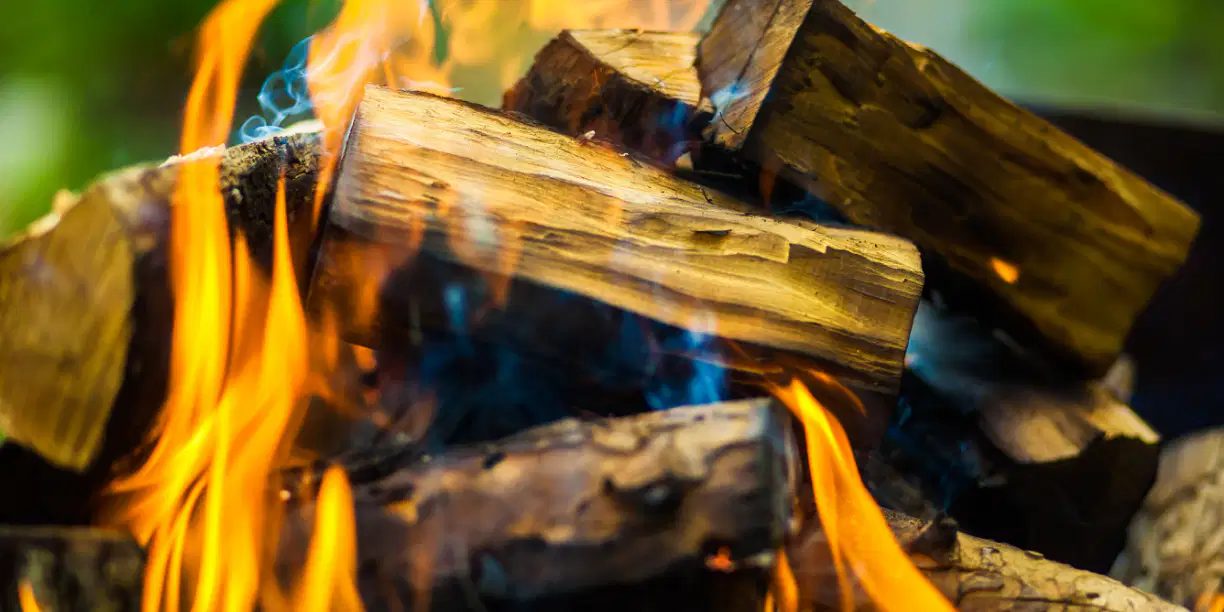
Burning Wood
a)
Physical Property
b)
Chemical Property
c)
Physical Change
d)
Chemical Change
56.
Melting Ice into Water
a)
Physical Property
b)
Chemical Property
c)
Physical Change
d)
Chemical Change
57.
Baking Cookies
a)
Physical Property
b)
Chemical Property
c)
Physical Change
d)
Chemical Change
58.
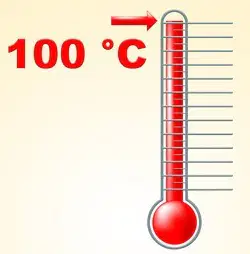
Boiling Point
a)
Physical Property
b)
Chemical Property
c)
Physical Change
d)
Chemical Change
59.
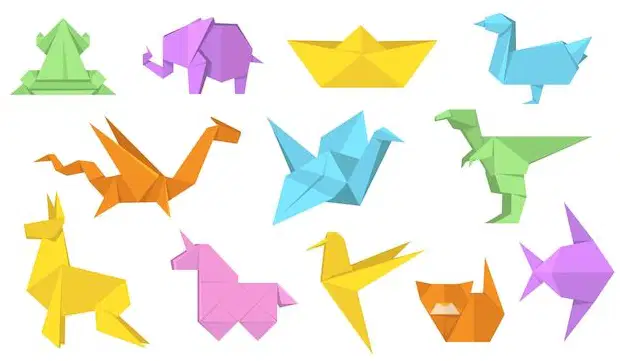
Folding Origami
a)
Physical Property
b)
Chemical Property
c)
Physical Change
d)
Chemical Change
60.
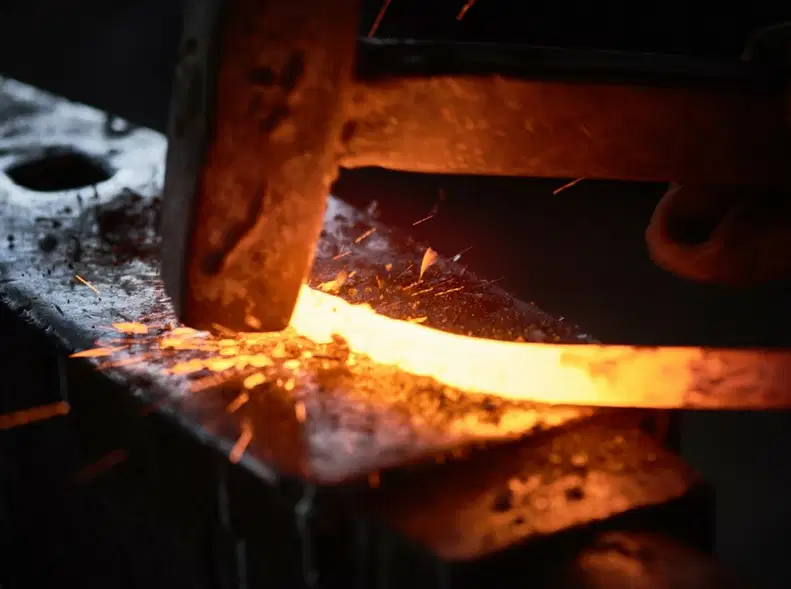
Malleability
a)
Physical Property
b)
Chemical Property
c)
Physical Change
d)
Chemical Change
61.
Flammable
a)
Physical Property
b)
Chemical Property
c)
Physical Change
d)
Chemical Change
62.
Hardness
a)
Physical Property
b)
Chemical Property
c)
Physical Change
d)
Chemical Change
63.
Changing color (usually)
a)
Physical Property
b)
Chemical Property
c)
Physical Change
d)
Chemical Change
64.
Explosion of fireworks.
a)
Physical Property
b)
Chemical Property
c)
Physical Change
d)
Chemical Change
65.
Evaporation of water
a)
Physical Property
b)
Chemical Property
c)
Physical Change
d)
Chemical Change
66.
Getting a haircut
a)
Physical Property
b)
Chemical Property
c)
Physical Change
d)
Chemical Change
67.
Taste
a)
Physical Property
b)
Chemical Property
c)
Physical Change
d)
Chemical Change
68.
Odor
a)
Physical Property
b)
Chemical Property
c)
Physical Change
d)
Chemical Change
69.
A solid forms when two liquids are mixed.
a)
Physical Property
b)
Chemical Property
c)
Physical Change
d)
Chemical Change
70.
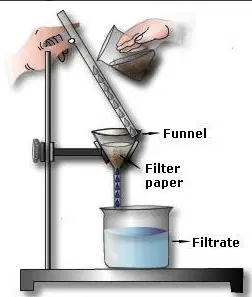
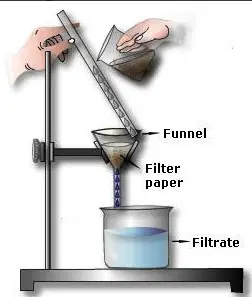
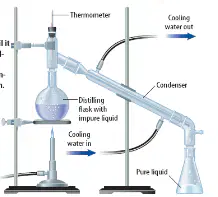
Name the separation technique shown in the diagram.
a)
evaporation
b)
distillation
c)
filtration
71.
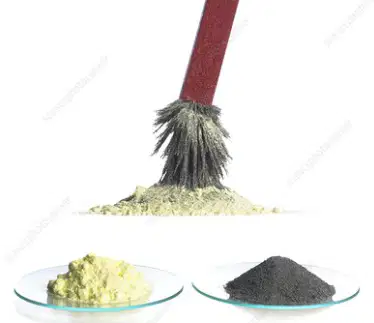
Which one of the following would you use to separate sand from iron filings?
a)
a bar magnet
b)
filter paper
c)
chromatography paper
d)
aluminum
72.
To separate a mixture of soil and water what separation method is used?
a)
Filtration
b)
Distillation
c)
Chromatography
d)
Magnet
73.
To separate a mixture of salt and water what separation method is used?
a)
Filtration
b)
Magnet
c)
Chromatography
d)
Evaporation
74.
The separation technique that involves heating a solution until the liquid changes into a gaseous state, leaving behind a solid is known as
a)
decanting
b)
evaporation
c)
loading
d)
chromatography
75.
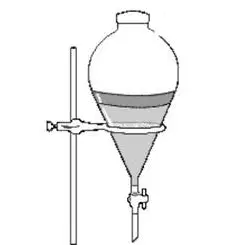
Liquids that do not mix may be separated by using..
a)
an evaporating dish
b)
a separating funnel
c)
a loading
d)
a sedimentation
76.
This method is used to separate metals from nonmetals.
a)
use of magnet
b)
physical manipulation
c)
sieving
d)
chromatography
77.
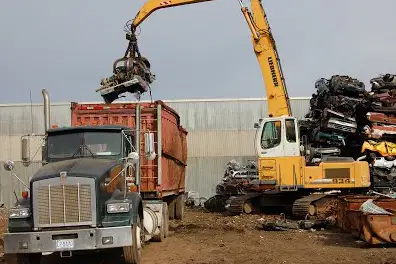
This method is utilized in industries like junkyards to remove metal scraps from other materials.
a)
chromatography
b)
hand separation
c)
use of magnet
d)
distillation
78.
Two or more substances mingled together, but not chemically combined are known as a
a)
residue
b)
solution
c)
distillate
d)
mixture
79.
What kind of mixture is a combination of substances that has uniform composition and appearance?
a)
colloid
b)
heterogeneous
c)
homogeneous
d)
suspension
80.
Which statement describes a heterogeneous mixture?
a)
A chemical reaction takes place.
b)
It has a uniform composition and appearance.
c)
It does not have a uniform composition and appearance.
81.
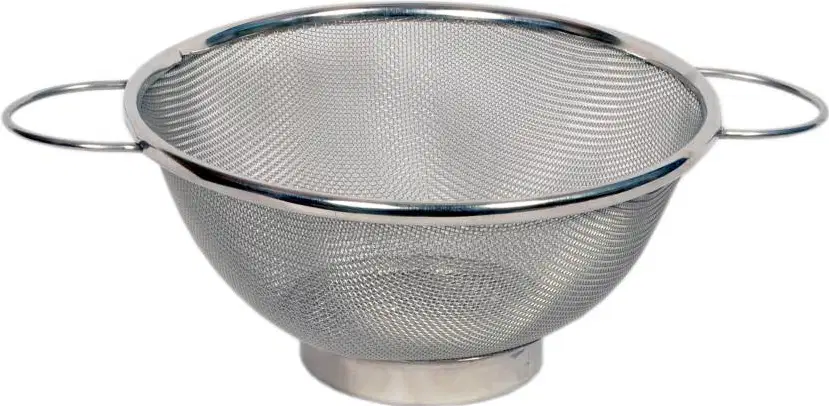
What mixture could you use this tool to best separate that mixture?
a)
Sugar and Salt
b)
Sand and rocks
c)
Apples and grapes
82.
Type of mixture that has the SAME COMPOSITION in every part.
a)
Homogenous
b)
Heterogeneous
83.
Type of mixture that DOESN'T HAVE the same composition in every part.
a)
Homogeneous
b)
Heterogeneous
84.
If I have a mixture of wooden blocks and metal blocks. What is a fast way to separate them?
a)
relative density (put them in water)
b)
filter
c)
sieve
85.
To pour off a liquid, leaving another liquid or solid behind. Takes advantage of differences in density.
a)
Magnetism
b)
Hand separation
c)
Decanting
d)
Sifting or sieving
86.
Used when separating a solid substance from a fluid (a liquid or a gas) by passing a mixture through a porous material such as a type of filter.
a)
Distillation
b)
Hand separation
c)
Decanting
d)
Filtration
87.
Used to separate dissolved substances in a solution from each other.
a)
Distillation
b)
Chromatography
c)
Evaporation
d)
Decanting
88.
This depends on a difference in the boiling points of the parts of the mixture. Example: alcohol and water separation.
a)
Hand separation
b)
Decanting
c)
Distillation
d)
Extraction
89.
The compound cannot be separated by a physical separation. It could only be separated if another chemical reaction were to occur.
a)
True
b)
False
90.
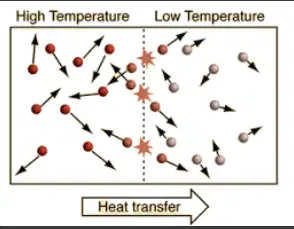
At higher temperatures
a)
particles in an object have less energy
b)
particles in an object move faster
c)
a gas contracts
91.
A gas
a)
has a definite shape but no definite volume
b)
has a definite volume but no definite shape
c)
has fast-moving particles
92.
Freezing
a)
Solid to gas
b)
Liquid to solid
c)
Gas to solid
93.
Boiling
a)
liquid to gas
b)
gas to solid
c)
gas to liquid
94.
Which state of matter has a definite shape?
a)
solid
b)
liquid
c)
gas
95.
The state of matter that has no definite size or shape is
a)
Solid
b)
Liquid
c)
Gas
96.
Particles in a ______________________ move quickly and are far apart.
a)
gas
b)
solid
c)
liquid
97.
The slower the particles in a substance move,
a)
the colder it is.
b)
the warmer it is.
c)
the more energy it has.
98.
The temperature of a substance increases as___.
a)
the substance expands
b)
the average kinetic energy of its particles increases
c)
the substance's volume increases
d)
the substance's mass increases
99.
Liquid to Gas
a)
Condensation
b)
Evaporation
c)
Sublimation
100.
Particles move relative to each other, but remain in contact with each other.
a)
solid
b)
liquid
c)
gas
101.
Basic state of matter with the greatest amount of energy.
a)
solid
b)
liquid
c)
gas
102.
What happens to particles when their temperature increases?
a)
The particles move slower
b)
The particles move faster
c)
The particles lose mass
d)
The particles gain mass
103.
The amount of space something takes up is its...
a)
Mass
b)
Volume
c)
Thermal Energy
d)
Temperature
104.
The energy of MOTION is...
a)
chemical energy
b)
radiant energy
c)
potential energy
d)
kinetic energy
105.
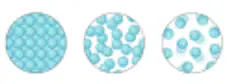
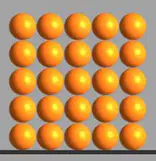
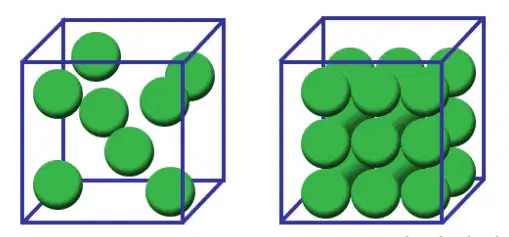
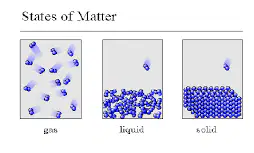
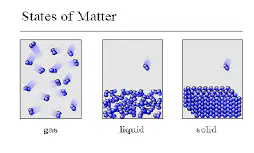
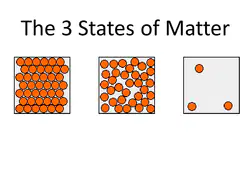
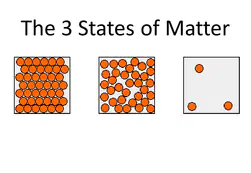
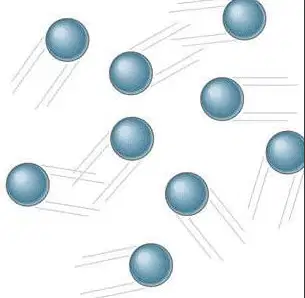
Which state of matter is represented by the particles in this image?
a)
Solid
b)
Liquid
c)
Gas
106.
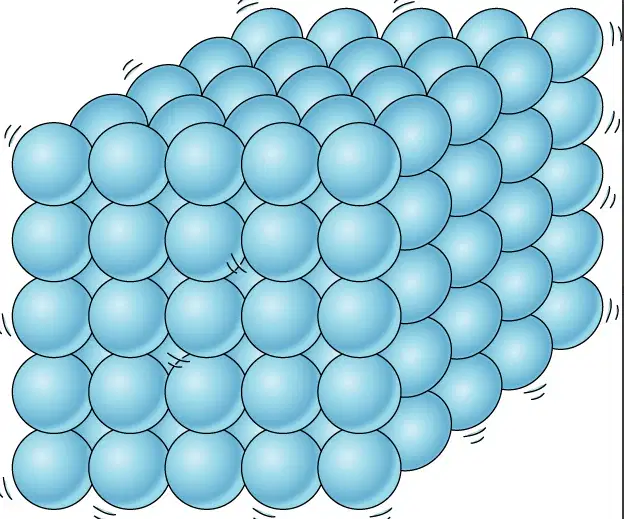
Which state of matter is represented by the particles in this image?
a)
Solid
b)
Liquid
c)
Gas
107.
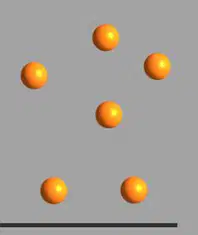
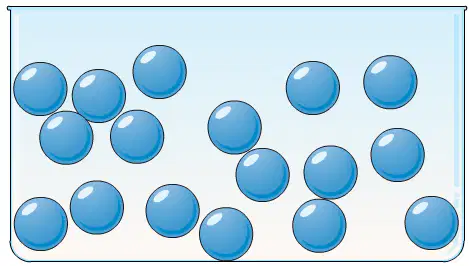
Which state of matter is represented by the particles in this image?
a)
Solid
b)
Liquid
c)
Gas
108.
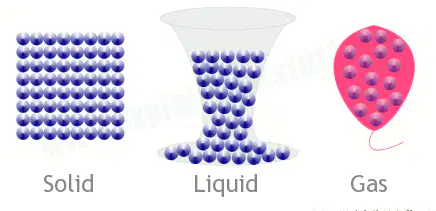
What are the three states of matter?
a)
solid, matter, liquid
b)
liquid, matter, solid
c)
solid, liquid, gas
d)
matter, liquid, gas
109.
A mixture is made when two or more substances are combined, but they are not combined chemically. General properties of a mixture: The components of a mixture can be easily separated. The components each keep their original properties. The proportion of the components is variable. A mixture is the combination of two or more substances that can be easily separated. True or False?
a)
True
b)
False
110.
The smallest amount you can have of one element is a(n)
a)
Molecule
b)
Compound
c)
Atom
d)
Sprinkle
111.

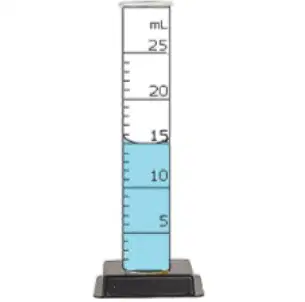
What is the correct value?

a)

5 mL

b)

15 mL

c)

20 mL

d)

25 mL

112.

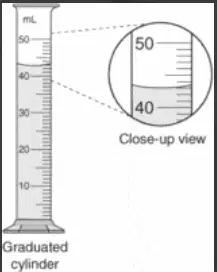
What is the volume of liquid in this graduated cylinder?

a)

40.0 mL

b)

40.3 mL

c)

43.0 mL

d)

44.0 mL

113.

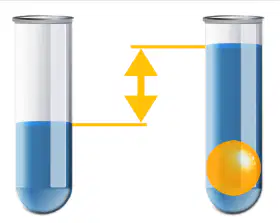
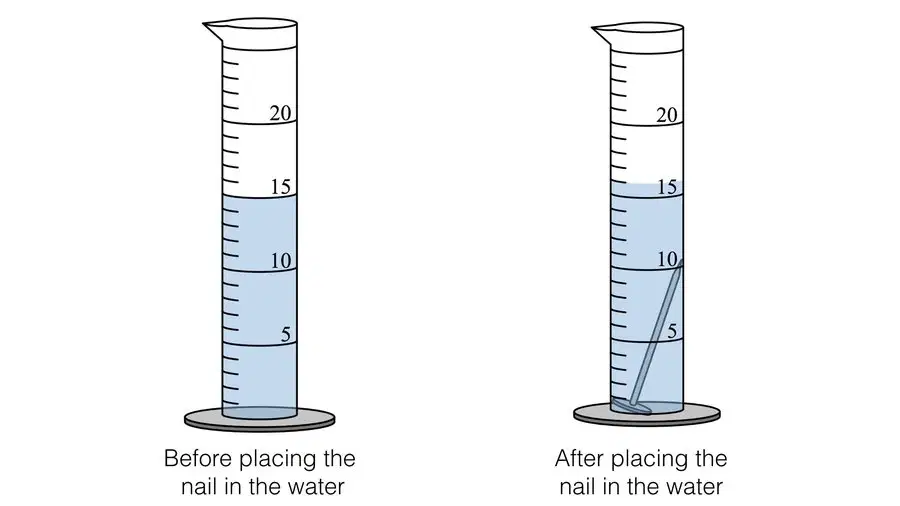
What is the volume of the nail?

a)

15 mL

b)

16 mL

c)

1 mL

d)

2 mL

114.

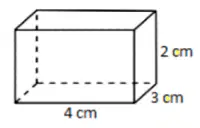
What is the volume of the regular solid in this diagram?

a)

24 cm3

b)

20 cm3

c)

30 cm3

115.

What units is volume measured in?

a)

grams

b)

degrees

c)


milliliters or cm3

d)

pounds

116.

What is the formula for finding volume of a box?

a)

V = l + w + h

b)

V = l x w x h

c)

V = l x h

117.

Frank has a paper clip. It has a mass of 9g and a volume of 3cm3. What is its density? (D=m/V)

a)

3 g/cm3

b)

1/3 g/cm3

c)

27 g/cm3

d)

39 g/cm3

118.

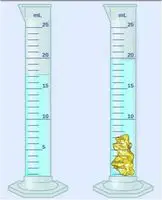
An irregularly shaped piece of gold was lowered into a graduated cylinder holding a volume of water equal to 17 ml. The height of the water rose to 20 ml. If the mass of the gold was 27 g, what was its density?

a)

9 g/mL

b)

10.5 g/mL

c)

6.5 g/mL

d)

8 g/mL

119.

Find the volume if a substance has a density of 19.3g/cm³ and a mass of 10g. (V = m/D)

a)

0.52 cm³

b)

193 cm³

c)

1.93 cm³

d)

29.3 cm³

120.

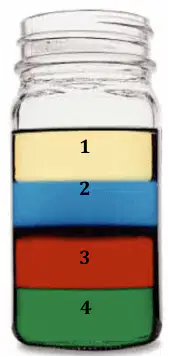
Put the liquids in order from most dense to least dense?

a)

4, 3, 2, 1

b)

1, 2, 3, 4

c)

3, 4, 2, 1

d)

4, 3, 1, 2