wayground logo

Free Printable Worksheets

Font size

S
M
L
XL
Worksheets

PSci Unit 2 Review

Total questions: 120

Worksheet time: 2hrs 0mins

Name
Class
Date
1.

Which will heat up faster?

a)

copper

b)

granite

c)

iron

d)

basalt

2.

Which will heat up slower?

a)

water

b)

lead

c)

granite

d)

iron

3.

Which of the following best explains why the sand at the beach is hotter than the water?

a)

Sand has a higher specific heat than water.

b)

Sand has a lower specific heat than water.

c)

There is more water than sand at the beach.

d)

There is more sand than water at the beach.

4.
When a  piece of aluminum foil is taken out of the oven and cools from 100° to 50°, What is the change in temperature?
a)
50°
b)
c)
100°
d)
150°
5.
How does heat flow?
a)
Always from cold to warm
b)
Always from warm to cold
c)
Both warm to cold & cold to warm
d)
It depends on the temperature
6.

The amount of energy required to raise the temperature 1ºC for every gram is called____?

a)

Thermal Energy

b)

Specific Heat

c)

Temperature

d)

Kinetic Energy

7.
What unit do you use to measure Thermal Energy?
a)
J/Kg ºC
b)
Kg
c)
ºC
d)
J
8.
The symbol for specific heat is .......
a)
c
b)
Q
c)
m
d)
t
9.
A high specific heat means...
a)
It heats up quickly with energy added
b)
It requires more energy to change temperature
10.
What  is the formula to calculate heat energy required to raise the temperature of any substance?
a)
Q=mc∆t
b)
Q=mc
c)
Q= ½mv
d)
m=QC
11.

The specific heat of platinum is 0.133 J/g°C. How much heat(Q) is released when a 10 g piece of platinum cools from 100°C to 50°C?

a)

66.5 J

b)

665 J

c)

0.0266 J

d)

0.665 J

12.
What is the symbol for Thermal Energy in the specific heat formula?
a)
Q
b)
t
c)
m
d)
C
13.
What unit do you use to measure Thermal Energy?
a)
J/Kg ºC
b)
Kg
c)
ºC
d)
J
14.
A high specific heat means...
a)
It requires less energy to change temperature
b)
It requires more energy to change temperature
c)
It heats up very quickly
15.
The specific heat of aluminum is 0.21 cal/g°C.  How much heat(Q) is released when a 10 g piece of aluminum foil is taken out of the oven and cools from 100° to 50°?
a)
105 J
b)
10.5 J
c)
1.05 J
d)
50 J
16.
If 200 grams of water is to be heated from 24.0° C to  100.0° C to make a cup of tea, what is the mass and what is the change in temperature?
a)
m=100g,  ∆t= 224 C
b)
m=200g,  ∆t=124 C
c)
m=100g,  ∆t=24 C
d)
m=200g,  ∆t=76 C
17.
There are 2 pans of water, one has 100 mL in it and one has 1000mL. You add 4000 joules of energy,  which one has the bigger change in temperature?
a)
100 mL
b)
1000 mL
c)
They the same material so they both heat to the same temperature
d)
They both will cool down.
18.
20 g of water. specific heat of water is 4.18 J/g°C.  temperature changes from 25° C to 20° Chow much heat energy (Q) moves from the water to the surroundings?
a)
418 Joules
b)
209 J
c)
83 J
d)
4.18 J
19.
The specific heat(c) of copper is 0.39 J/g °C. What is the temperature change(∆t) when 100 Joules of heat(Q) is added to 20 grams of copper?
a)
12.82 °C
b)
24.12°C
c)
351 °C
20.
lowest possible temperature on the Kelvin scale
a)
boiling point
b)
insulation
c)
absolute zero
d)
heat
21.

Which of the following is not a form of heat transfer?

a)

Convection

b)

Conduction

c)

Insulation

d)

Radiation

22.

Which of the following are examples of heat transfer through conduction? You may choose more than one.

a)

Using hand warmers to warm up your hands

b)

Hot air balloon rising

c)

Burning your hand on a curling iron

d)

Spoon getting hot while sitting in hot tea

23.

Which of the following are examples of heat transfer through convection?

You may choose more than one.

a)

Hot air balloon rising

b)

The second floor of a house is warmer than the first floor

c)

Boiling water on the stove

d)

Sitting around a campfire and feeling the heat from the flames

24.

Which of the following are examples of heat transfer through radiation? You may choose more than one.

a)

Feeling the heat from a candle

b)

The water at the top of the pool feels warmer than the deep end

c)

The sun warming the Earth

d)

A space heater warming the room

25.

Convection, conduction or radiation?

Smoke rising in a room due to a fire

(a)  

26.

Convection, conduction or radiation?

Chocolate melting in your hand

(a)  

27.

Convection, conduction or radiation?

A hot air balloon rising in the sky

(a)  

28.

Convection, conduction or radiation?

The heat a snake feels from the lamp above him

(a)  

29.

Convection, conduction or radiation?

The reason heating vents are usually placed in the floor of homes in the North.

(a)  

30.

Convection, conduction or radiation?

The reason you use an oven mitt to get a cookie sheet out of the oven.

(a)  

31.
Boyle's Law shows the relationship between between which two factors of a gas?
a)
volume and pressure 
b)
temperature and pressure 
c)
pressure and temperature 
d)
Volume and mass
32.
Charles's law shows the relationship between which two factors of a gas ?
a)
volume and temperature 
b)
volume and pressure 
c)
pressure and volume
d)
volume and mass
33.
Directly proportional means that as one value increases ....................
a)
the other stays the same 
b)
the other increases as well
c)
the other decereases
d)
the other goes to zero
34.
Inversely proportional means as one value increases the other............. 
a)
increases 
b)
decreases 
c)
stays the same 
d)
goes to zero
35.
The word inverse means.......
a)
the same
b)
opposite 
36.
Boyle's law shows the volume and pressure of a gas are always ........
a)
inversely proportional 
b)
directly proportional 
37.
Charles's law shows that the temperature and volume of a gas are always........
a)
inversely proportional 
b)
directly proportional 
38.
Temperature describes  the ______________ of particles.
a)
volume
b)
mass
c)
motion
d)
conductivity
39.
The word inverse means.......
a)
the same
b)
opposite 
40.
When a basketball is left outside in the cold it goes flat because the volume of air inside the ball has been reduced. What  gas law does this represent?
a)
Boyle's Law
b)
Charles's Law
41.
If you push down the plunger of a bicycle pump the chamber's volume is decreased. When that happens pressure in the chamber increases and the air then rushes out of the pump and into your flat tire. What gas law does this represent?
a)
Charles's law
b)
Boyle's law
c)
Newtons laws
d)
Coulombs laws
42.
a)
this is a graph representing Boyle's law
b)
this is a graph representing Charles's law
43.
a)
This is an example of Charles's law
b)
This is an example of Boyle's law
44.
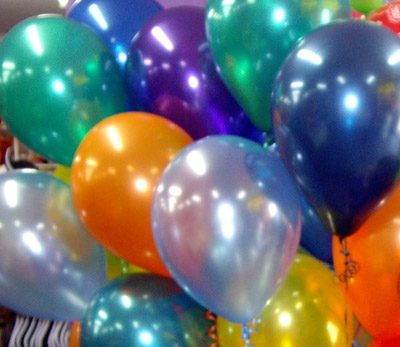
If a balloon is cooled what will happen to the volume?
a)
Volume will increase
b)
Volume will decrease
c)
Volume will not change
45.
Gases have...
a)
A definite shape and volume
b)
A definite shape but no definite volume
c)
No definite shape but a definite volume
d)
No definite shape or volume
46.

A neutron has what charge?

a)

Positive

b)

Negative

c)

It has no charge (it is neutral)

47.

A proton has what charge?

a)

Positive

b)

Negative

c)

It has no charge (it is neutral)

48.

An electron has what charge?

a)

Positive

b)

Negative

c)

It has no charge (it is neutral)

49.

What is the atomic # of iron?

a)

55

b)

56

c)

26

d)

2

50.

How many protons does krypton have?

a)

84

b)

36

c)

48

d)

8

51.

How many electrons does oxygen have?

a)

8

b)

16

c)

2

d)

15

52.

How many neutrons does lithium have?

a)

3

b)

4

c)

6

d)

7

53.

How many neutrons are in magnesium?

a)

12

b)

24

c)

25

d)

36

54.

What is the atomic number of silicon?

a)

14

b)

28

c)

42

d)

7

55.

What is the best mass number for silver?

a)

47

b)

107

c)

108

d)

154

56.

What is the symbol for arsenic?

a)

A

b)

As

c)

33

d)

75

57.

How many neutrons does beryllium have?

a)

4

b)

5

c)

9

d)

13

58.

How many electrons does helium have?

a)

2

b)

4

c)

6

d)

8

59.

Which particles are found in the nucleus of an atom?

a)

protons only

b)

neutrons only

c)

protons & electrons

d)

protons & neutrons

60.

How do you find the number of neutrons in an atom?

a)

It's the same as the atomic #

b)

It's the same as the mass number

c)

Subtract the atomic # from the mass number

d)

Add the mass number and the atomic #

61.

What is the lightest subatomic particle?


(a)  
Choose from the below words
electron
proton
neutron
62.

What two subatomic particles have approximately the same mass?

a)

electrons & neutrons

b)

protons & electrons

c)

neutrons & protons

63.

What subatomic particles are coloured green in this image?


(a)  
Choose from the below words
electrons
protons
neutrons
64.

What subatomic particle is coloured red in this image?

a)

proton

b)

neutron

c)

electron

65.

Which particles are found in the nucleus of an atom?

a)

protons only

b)

neutrons only

c)

protons & electrons

d)

protons & neutrons

66.
How many neutrons does Oxygen have?
a)
8
b)
10
c)
16
d)
11
67.
How many Protons does Neon have?
a)
18
b)
20
c)
2
d)
10
68.
How many neutrons does Cobalt have?
a)
32
b)
27
c)
31
d)
59
69.
What is the Atomic Mass of Barium?
a)
56
b)
137
c)
54
d)
131
70.
How many Electrons does Mercury have?
a)
80
b)
200
c)
201
d)
81
71.
What is the Atomic mass of Manganese?
a)
54
b)
24
c)
25
d)
55
72.
How many Electrons does 
Potassium have?
a)
19
b)
20
c)
18
d)
39
73.
What is the Atomic Number of Silicon? 
a)
3
b)
28
c)
14
d)
16
74.
What is the Atomic Mass of Gold?
a)
197g
b)
11g
c)
196g
d)
47g
75.
How many Protons does Chlorine have?
a)
17
b)
35
c)
18
d)
39
76.
How many Protons does the element Titanium have?
a)
47
b)
22
c)
4
d)
48
77.
Radon has how many Electrons?
a)
86
b)
222
c)
18
d)
6
78.
How many Electron shells does Nickel have?
a)
10
b)
4
c)
2
d)
28
79.

On the periodic table, Groups are

a)

Horizontal rows

b)

Vertical columns

80.

On the periodic table, Periods are

a)

Horizontal rows

b)

Vertical columns

81.

What is a valence electron?

a)

Electrons in the first energy shell

b)

Electrons in the second energy shell

c)

Electrons in the outer shell

d)

Total number of electrons

82.

The innermost energy level has a maximum of how many electrons?

a)

1

b)

2

c)

6

d)

8

83.

What does the Bohr Model represent?

a)

The structure of molecules

b)

The structure of the Solar System

c)

The structure of an atom

d)

The structure of East Hills

84.

Which element is this?

a)

Nickel

b)

Neon

c)

Sodium

d)

Nitrogen

85.

Name this element.

a)

Argon

b)

Chlorine

c)

Aluminum

d)

Boron

86.

Name this element.

a)

Neon

b)

Magnesium

c)

Sodium

d)

Manganese

87.

What is the atomic number of this atom?

a)

2

b)

4

c)

6

d)

8

88.

What is the mass number of this atom?

a)

1

b)

3

c)

4

d)

7

89.

How many valence electrons?

a)

2

b)

3

c)

4

d)

5

90.

How many valence electrons?

a)

2

b)

3

c)

4

d)

5

91.

How many valence electrons?

a)

2

b)

4

c)

6

d)

8

92.

What group does this element belong to?

a)

1

b)

2

c)

17

d)

18

93.

How many valence electrons?

a)

2

b)

5

c)

6

d)

8

94.

Elements in Group number 17 are known as

a)

Alkai Metals

b)

Alkaline Metals

c)

Halogens

d)

Noble Gases

95.

Which group includes non-reactive gasses that have a full outer electron shell?

a)

Alkai Metals

b)

Alkaline Metals

c)

Halogens

d)

Noble Gases

96.

Which group includes soft, highly reactive metals with one electron in their outer shell?

a)

Alkai metals (group 1)

b)

Alkaline metals (group 2)

c)

Halogens (group 17)

d)

Noble gasses (group 18)

97.
The Modern Periodic Table of Elements is arranged by
a)
atomic mass
b)
atomic number
c)
valence electrons
d)
number of isotopes
98.
Sodium (Na) is found in period 
a)
3
b)
2
c)
4
d)
1
99.
Sodium (Na) is found in group 
a)
1
b)
2
c)
3
d)
4
100.
What does the atomic mass tell you? 
a)
Basically,the number of electrons and protons
b)
The number of neutrons
c)
Basically, the number of protons and neutrons
d)
The number of protons.
101.
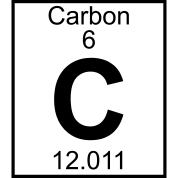
What does the 6 represent?
a)
atomic mass
b)
atomic number
c)
element name
d)
chemical symbol 
102.
What does 12.011 represent?
a)
atomic mass
b)
atomic number
c)
element name
d)
chemical symbol 
103.
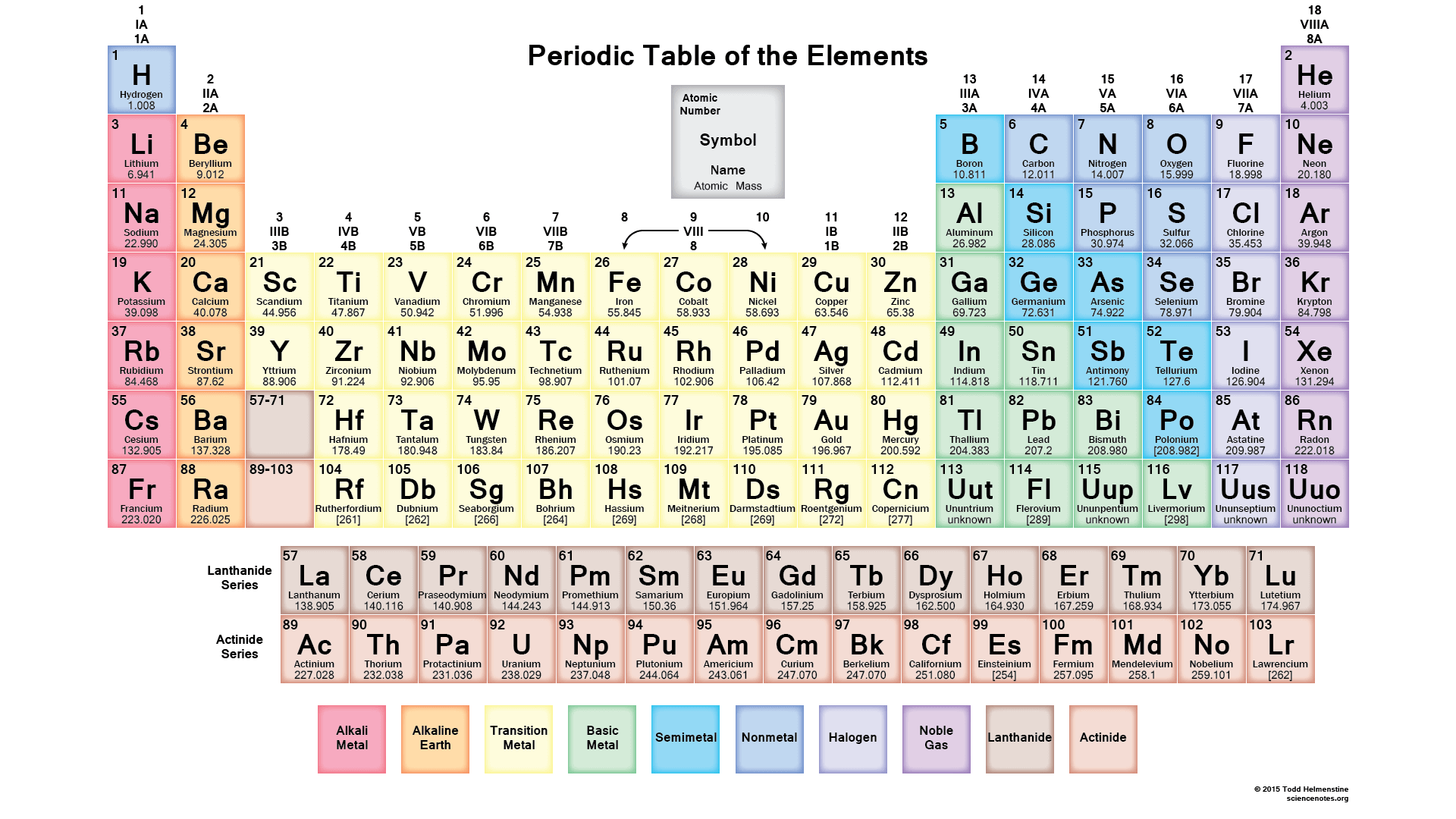
These are found on the Periodic Table.
a)
Compounds
b)
Elements
c)
Mixtures
104.

A subatomic particle that has a positive charge and that is found in the nucleus of an atom

a)

Proton

b)

elecrtron

c)

groups

d)

neutrons

105.
a)
energy levels
b)
valence electrons
c)
protons
d)
neutrons
106.
a)
energy levels
b)
valence electrons
c)
protons
d)
neutrons
107.
a)
Same group
b)
Same period
108.
a)
Group 1
b)
Group 17
c)
Group 2
d)
Group 18
109.
a)
Group 1
b)
Group 17
c)
Group 18
d)
Group 2
110.
a)
Group 1
b)
Group 17
c)
Group 18
d)
Group 2
111.
a)
Metals
b)
Nonmetals
c)
Metalloids
112.
a)
Metals
b)
Nonmetals
c)
Metalloids
113.
a)
Metals
b)
Nonmetals
c)
Metalloids
114.
a)
Metals
b)
Nonmetals
c)
Metalloids
115.
a)
Metals
b)
Nonmetals
c)
Metalloids
116.
a)
Metals
b)
Nonmetals
c)
Metalloids
117.
a)
Metals
b)
Nonmetals
c)
Metalloids
118.
a)
Metals
b)
Nonmetals
c)
Metalloids
119.

Metalloids are most used for what property?

a)

Shiny

b)

Semi-conductor

c)

Low melting point

d)

High boiling point

120.

Rings in a Bohr model correspond to the ________________ on the periodic table which is equivalent to ______________________.

a)

periods, energy levels

b)

groups, valence electrons

c)

groups, energy levels

d)

periods, valence electrons