
 Worksheets
REVIEW: Introduction to Astronomy
Total questions: 122
Worksheet time: 2hrs 43mins
Define Vacuum:
A vacuum is a type of star that has collapsed in upon itself and exploded violently outward
Which two (2) are reasons humans need space suits:
Provide oxygen
Protect from extreme conditions
Define Karman Line:
Define Low Earth Orbit:
Area around Earth where airplanes fly, ranging from 5,000 km to 10,000 km above the Earth's surface.
The troposphere, where weather occurs and most commercial flights take place
A region between Earth and the orbit of the moon
Radiation
Space Debris
Temperature Extremes
Isolation
Earth's Atmosphere
Ocean Currents
Forest Fires
Volcanic Eruptions
Which of the these is not a danger associated with current space travel:
Encountering extraterrestrial life
Microgravity effects: muscle loss, bone density decrease
Space debris collisions with space craft
Isolation: mood disorders
Which of these would occur to a human in outer space without a space suit:
A space entirely devoid of matter, specifically a space containing no air or other gas:
solar particles
cosmic rays
particles trapped in Earth's magnetic field
alpha particles
muons
neutrinos
Identify two (2) potential health risks associated with radiation exposure during space travel:
Degenerative diseases
What is being done to mitigate radiation exposure damage to astronauts?
Astronauts are shielded with spacecraft materials and use radiation detectors
Identify two (2) issues associated with spending time in microgravity:
Bone density decrease
exercise routines
dietary considerations
medical training programs
monitoring for potential health issues
space tourism marketing campaigns
zero-gravity fashion shows
interstellar music festivals
space junk art installations
What determines the temperature at which liquids boil?
Atmospheric pressure
Explain why it is easier for liquids to boil in outer space:
Define ebullism:
How does evaporation cause cooling?
It doesn't.
What is the furthest that a human being has been from Earth?
70 light years (4.11E14 miles)
Where is the furthest location a manned spacecraft has travelled from Earth?
Which "item" represents gamma rays:
Which "item" represents x-rays:
Which "item" represents ultraviolet radiation:
Which "item" represents visible light:
Which "item" represents infrared light:
Which "item" represents microwaves:
Which "item" represents radiowaves:
Which "item" represents the electromagnetic radiation with the highest energy:
Which "item" represents the electromagnetic radiation with the lowest energy:
Which "item" represents the electromagnetic radiation that humans can see:
A term is used to collectively describe gamma rays, x-rays, UV light, visible light, infrared radiation, microwaves, and radio waves?
(a)
Identify each part of the electromagnetic spectrum:
A form of energy that acts like both a wave and a particle. It travels at the speed limit of the universe (180,000 miles per second)
(a)
What light was just beyond the red end of the light spectrum?
(a)
What is the light beyond the violet end of the spectrum?
(a)
Identify the wave of light with the highest energy and the wave of light with the lowest energy.
Identify the wave of light with the highest frequency and the wave of light with the lowest frequency.
Highest frequency
Lowest frequency
The Sun's actual color is:
Explain why the Sun appears Yellow from Earth?
How do astronomers use light to learn about out universe?
Define Constellation:
Where did the constellation names originate from?
What are constellations named after?
Why do we still use constellations today?
In which constellation can the Crab Nebula be found:
In which constellation can Horsehead Nebula be found:
Describe the relationship between the Greek alphabet and star brightness's in constellations:
Which star is brighter:
Alpha Centauri
Beta Centauri
Gamma Centauri
Delta Centauri
Epsilon Centauri
Which star is dimmest:
Alpha Centauri
Beta Centauri
Gamma Centauri
Delta Centauri
Epsilon Centauri
The two (2) brightest stars in the constellation Orion:
How many constellations are recognized today:
Define Zodiac Constellations:
A group of 13 specific star patterns found along the ecliptic
Define Ecliptic:
Which of the following is NOT a zodiac constellation:
Cancer
The most recently added zodiac constellation is:
Which best explains the difference between Astronomy and Astrology:
Define Circumpolar Constellations:
Which star do circumpolar constellations circle?
Which of the following is not a circumpolar constellation in the Northern Hemisphere:
Camelopardalis
Ursa Major
Ursa Minor
Cassiopeia
Draco
Aries
Taurus
Gemini
Cancer
Which of these pictures shows the constellation Draco:


Study of celestial objects
Observation of stars and planets
Exploration of outer space
Use of telescopes and satellites
Horoscope predictions
Zodiac signs and meanings

Identify the pictured constellation:
Ursa major
Orion
Draco
Cassiopeia
Gemini

Which constellation is this?
Scorpius
Canis Major
Pisces
Orion
Draco

Which constellation is this?
Leo
Canis Major
Orion
Ursa Major
Ursa Minor
An astronomical unit is...
The average distance between the Earth and the Sun
The average distance between the Sun and Neptune
The diameter of the sun
The time it takes light to travel across our solar system
Astronomical units are used for
Distances within a solar system
Distances between solar systems
Distances within galaxies
Distances between galaxies
How far away is the Moon from Earth?
~238,000 miles
~500,000 miles
~342,000 miles
1.5 million miles
How far away is the Sun from Earth?
1 million miles
10 million miles
58 million miles
93 million miles
208 million miles
What is the speed of light?
21,000 miles per hour
1.6 billion miles per hour
186,000 miles per second
506,000 million miles per second
300,000 miles per second
How long does it take light from the Sun to reach Earth?
10 seconds
43 seconds
5 minutes
8 minutes
32 minutes
The distance that light can travel in a year is called....
A light second
A light minute
A light month
A light year
How close is Proxima Centauri, the next closest star to Earth?
1 light year
4 light years
7 light years
10 light years
41 light years
If aliens that lived 10,000 light years away looked at Earth through a telescope, what might they see?
Egyptians building the pyramids
The first atomic bomb exploding
Dinosaurs roaming the Earth
Wooly mammoths roaming the Earth
_______________ would be the best unit to use to measure the distance between the asteroid belt and Pluto
Astronomical units
Light seconds
Light years
Parsecs
_______________ would be the best unit to use to measure the distance between the our sun and Betelgeuse, a large star in the constellation Orion?
Astronomical units
Light seconds
Light years
Telescopes are designed to collect (a) .
What moon phase occurs during a solar eclipse?
Full moon
new moon
1st quarter
waxing gibbous

What type of eclipse is this?
Solar Eclipse
Lunar Eclipse

What type of eclipse is this?
Solar eclipse
Lunar eclipse
During a solar eclipse, the ______________ is blocked by the moon.
New
Sun
Full
Moon
A solar eclipse can only happen during a ___________ moon.
First quarter
New
Full
Waning gibbous
Waxing crescent
A lunar eclipse can only be viewed __________.
during the day
from the North pole
at night
at the equator
on Sundays
The order during a solar eclipse is:
Sun, Earth, Moon
Sun, Moon, Earth
A lunar eclipse can only happen during a ____________ moon.
Day
Full
New
Night
The _________________ is the lighter shadows during an eclipse.
Partial
Umbra
Penumbra
Corona
A ________________ eclipse is when the sun or moon is fully blocked.
Partial
Penumbral
Total
Annular
The order during a lunar eclipse is:
Sun, Moon, Earth
Sun, Earth, Moon
The _________________ is the darkest part of the shadows during an eclipse.
Moon
Corona
Penumbra
Umbra
A ______________ eclipse is when only part of the sun or moon is blocked.
Penumbral
Annular
Total
Partial
A ________________ eclipse is when the moon passes through Earth's penumbra and simply gets dimmer.
Penumbral
Partial
Total
Annular
During a lunar eclipse, the _______________ is blocked by the earth's shadow.
Moon
Corona
Umbra
Sun
A solar eclipse happens during the ______________.
Night
Sun
Day
Moon
During a lunar eclipse, the _______________ is blocked by the earth's shadow.
Moon
Corona
Umbra
Sun
During a lunar eclipse, what color does the moon appear?
Black
Red-orange
Yellow-green
White
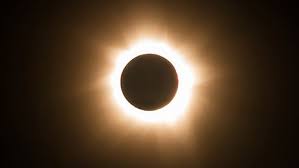
During a solar eclipse...
The sun is blocked by the moon
The Earth is blocked moon
The moon is blocked by the sun
You are blocked
Which of the following is NOT true about a total solar eclipse?
It can be viewed from every spot on earth
It is dangerous to look at without the proper device
When it happens, the moon blocks all of the sun except the corona
You must be within the moon's umbra to see it

We do NOT have a solar or lunar eclipse each month because...
The tilt of the moon's orbit is at 5 degrees
The moon is too small
The moon's orbital distance changes
All choices

Where does the moon get it's light?
The moon generates it's light from its core
The moon is illuminated by the neighboring stars
The moon is illuminated by the suns rays
The moon is illuminated by the light from the earth
Why do we see different phases of the moon?
We see different amounts of the illuminated half of the moon because the moon moves to different positions around the Earth.
We see different phases of the moon due to the colored rocks we see from Earth.
We see different amounts of the Moon due to how close it is to the sun.
We don't see different phases of the moon.
What is the orientation of the Sun, Moon, and Earth, during a new moon?
The Moon is between the Sun and the Earth
The Earth is between the Moon and the Sun
The Sun is between the Moon and the Earth
What is the orientation of the Sun, Moon, and Earth, during a full moon?
The Moon is between the Sun and the Earth
The Earth is between the Moon and the Sun
The Sun is between the Moon and the Earth

Identify the moon phase:
New moon
Waxing crescent
First quarter
Third quarter
Waning crescent

Identify the moon phase:
Waxing crescent
New moon
First quarter
Third quarter
Waning crescent

Identify the moon phase:
First quarter
New moon
Waxing crescent
Third quarter
Waning crescent

Identify the moon phase:
Waxing gibbous
New moon
Waxing crescent
First quarter
Third quarter

Identify the moon phase:
Full moon
New moon
Waxing crescent
First quarter
Third quarter

Identify the moon phase:
Waning gibbous
New moon
Waxing crescent
First quarter
Third quarter

Identify the moon phase:
Third quarter
New moon
Waxing crescent
First quarter
Waning crescent

Identify the moon phase:
Waning crescent
New moon
Waxing crescent
First quarter
Third quarter

Identify Item #2?
highlands (mountains)
crater
maria
Identify Item #1?
highlands (mountains)
crater
maria
Identify Item #3?
highlands (mountains)
crater
maria
Identify the features of the Moon:

This picture represents (a)
Lunar Eclipse
Solar Eclipse
Terra eclipse
The Moon phase during a solar eclipse is _____
New Moon
Full Moon
Waxing Crescent
Waning Crescent
Third quarter
The Moon phase during a lunar eclipse is _____
New Moon
Full Moon
Waxing Crescent
Waning Crescent
First quarter
Define Waxing
Moon is increasing and light part appears to be growing
Completely illuminated
dark side is facing earth
Moon is decreasing and light part appears to be shrinking
Define Gibbous
Less than half of moon visible
More than half of moon visible
All of moon visible
None of moon visible

What moon feature is this?
highlands (mountains)
crater
maria

What moon feature is this? It formed when material was thrown up after the crater was made.
highlands (mountains)
crater
maria
Dark flat areas on the moon made from lava flows 3 to 4 billion years ago.
crater
mare
highland
mountains
Light colored surface features on the moon that were created by material that was ejected from meteoroid impacts.
craters
highlands
mare
maria

