
 Worksheets
APES Semester Exam Fall 2021
Total questions: 120
Worksheet time: 4hrs 0mins


Fragmenting one large park or preserve into many small parks with human habitation in between them is most likely to lead to which of the following?
Reduction in species diversity
Stabilization of microclimates
Decrease in the proportion of edge habitat
Increase in population size of carnivores
The factor that likely poses the greatest threat of extinction of species worldwide is
black market trade in endangered species
aggressive collecting of specimens by museums and zoos
increasing loss of habitat
weakening of environmental legislation
Characteristics that tend to increase the risk of a species becoming endangered include which of the following?
Having a very limited distribution
Being a specialist at the end of a long food chain
Having a small population size
All of these are correct
In general, which of the following is the best long-term method of preventing extinctions?
Protecting the habitats of endangered species
Paying people not to kill endangered species
Removing predators from areas that contain endangered species
Providing food to endangered species in the wild
Gradual transition over time from one type of biological community to another.
Symbiosis
Law of tolerance
Ecological succession
Energy pyramid
The theory of island biogeography suggests that species richness is affected by which of the following factors?
Island distance from mainland
How the island is formed
Island size
All of these are correct
Beginning at the lowest trophic level, arrange the following food chain found on the Serengeti Plain of Africa in the correct sequence.
Shrubs–decomposers–gazelles–cheetahs
Gazelles–decomposers–cheetahs–shrubs
Shrubs–gazelles–cheetahs–decomposers
Decomposers–cheetahs–shrubs–gazelles
According to the first law of thermodynamics
energy can never leave or enter the system.
energy can never change form.
energy is not created or destroyed.
none of these are correct
Which of the following is the approximate efficiency of the energy transfer as energy flows through the food chain?
1 percent
90 percent
50 percent
10 percent
Which best describes the concept of gross primary production?
Total amount of energy available to primary consumers
Total amount of cellular respiration conducted within an ecosystem
Total amount of energy available within an ecosystem
Total amount of solar energy that producers capture via photosynthesis
After a forest fire, a badly damaged ecosystem recovered rapidly. This ecosystem has
high resistance.
low resistance.
high resilience.
low resilience.
In an acre of grassland, net primary productivity is best measured as
carbon taken up by plants in sunlight plus carbon released by plants in the dark
carbon taken up by plants in sunlight
aboveground biomass of plants
aboveground and belowground biomass of plants
carbon taken up by plants in sunlight minus carbon released by plants in the dark
Ocean acidification represents a key component of the
nitrogen cycle
hydrologic cycle
phosphorus cycle
carbon cycle
sulfur cycle
Which environment is characterized by frequent fires?
Desert
Grassland
Temperate Forest
Tundra


What is a species that is critical for the overall health of an ecosystem?
endangered species
invasive species
keystone species
native species


Less than 3% of the water on earth is
salt water
freshwater
ice
polluted
Which is true of invasive species?
They are defined as species that come from other countries
by definition, all exotic species are invasive
all invasive species spread rapidly
invasive species most come from another continent


The trout is a source of food for the human and the eagle. When there are more than one organism vying for the same source we call this____?

If there is 1000 Kcal for the producers, how much energy would be transferred to the Primary Consumers?
10 Kcal
1 Kcal
100 Kcal
1000 Kcal


Estimate the carrying capacity.
100 deer
80 deer
60 deer
40 deer
Which factor below is least likely to affect birth and fertility rates today?
number of people 60 or older
cost of raising and educating children
religious beliefs
educational and employment opportunities for women
average age at marriage
A metropolitan region of 100,000 people has 2000 births, 500 deaths, 200 emigrants, and 100 immigrants over a 1-year period. Its population growth rate is
1.2 percent.
1.4 percent
1.6 percent.
1.8 percent.
2.0 percent.
Which of the following pairs of indicators best reflects the availability of health care in a country?
Crude death rate and growth rate
Crude death rate and crude birth rate
Growth rate and life expectancy
Infant mortality rate and life expectancy
Infant mortality rate and crude death rate
At current growth rates, which country will probably be the most populous in the world after 2050?
China
Brazil
India
Indonesia
United States
Using the rule of 70, a population growing at 10% would double in
7 years
10 years
17 years
15 years
not enough information to tell



Which trophic level would be able to feed the most people?
producers
primary consumers
secondary consumers
tertiary consumers
Which of the following variables increase population size?
Deaths
Emigration
Immigration
Small populations that lead to a greater likelihood of harmful alleles spreading in a population is a result of
metapopulation
genetic inbreeding
k-selected communities
This type of species puts energy into reproduction not survival.
r-selected
k-selected
s-selected
j-selected
This type of species has many offspring with little to no parental care.
k-selected
r-selected
s-selected
j-selected
Which type of survivorship curve represents an r-selected species?
Type I survivorship curve
Type II survivorship curve
Type III survivorship curve
Which type of survivorship curve represents an k-selected species?
Type I survivorship curve
Type II survivorship curve
Type III survivorship curve
Bacteria, algae, and dandelions are an example of
r-selected species
k-selected species
s-selected species
This type of species population remains close to carrying capacity (k) over long periods of time.
r-selected
k-selected
s-selected
This type of species population is controlled by density-dependent factors
r-selected
k-selected
j-selected
Which type of survivorship curve represents animals that have constant mortality?
Type I
Type II
Type III
As a population reaches carrying capacity what happens to mortality
increases
decreases
The replacement-level fertility rate is ____ for developed countries and ____ for developing countries.
1.6; 1.9
2.5; 2.0
2.0; 2.5
2.1; 2.5
1.8; 2.1
The text suggests that one key demographic statistic is the percentage of people in a region that are under 15 years of age. Why is this statistic important?
Young people buy lots of goods and services
Young people will be the leaders of the future
Young people will feel the effects of global warming.
Young people are reckless and impulsive
Young people are poised to move into their prime reproductive years.
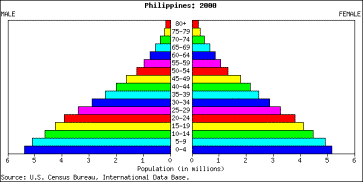
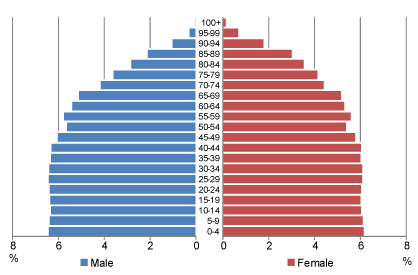
Populations whose age structure diagrams are narrower at the bottom than at the top have
high death rates
the same proportion of individuals in each age group
a declining population
a high growth rate
all of the above
Population size can be estimated using the formula
CBR + Immigration + CDR + Emigration
CBR + Immigration – CDR – Emigration
CBR + Immigration + CDR – Emigration
CBR – Immigration – CDR – Emigration
CBR – Immigration + CDR – Emigration
Which of the following statements about total fertility rate is correct
TFR is equal to the crude birth rate minus the crude death rate.
TFR is the average number of children each woman must have to replace the current population.
TFR is generally higher in developed countries than in developing countries
TFR is equal to the growth rate of a country
TFR is the average number of children each woman will give birth to during her childbearing years.
I. women's education
II. increased income
III. advertising campaigns
Have the highest birth rates
urbanization
developed countries
least-developed countries
arable land
Freshwater is ____,
equal in amount to saltwater, on Earth.
found in oceans and seas.
a major source for drinking water

When nitrogen gas is turned in to a form that plants and animals can use is called...
Combustion
Photosynthesis
Decomposition
Nitrogen Fixation
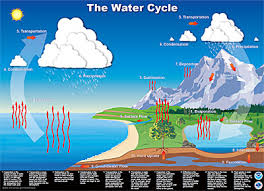
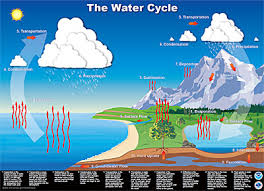
Plants take in carbon dioxide & release oxygen
Carbon/Oxygen Cycle
Nitrogen Cycle
Water Cycle

What type of age structure diagram represents a population with negative growth rate?


Countries undergoing rapid populations growth include which of the following?
I only
II only
III only
II and III
I, II, and III

Represents the biotic potential of the species
A
B
C
D
E

Represents the maximum number of individuals that can be supported by a particular ecosystem on a long-term basis
A
B
C
D
E
The current global human population is about 6.1 billion and is growing at an annual rate of 1.35 percent. If world population were to grow at this rate for the next year, approximately how many people would be added?
8 × 10⁵
8 × 10⁶
8 × 10⁷
8 × 10⁸
8 × 10⁹
If a country has a crude birth rate of 24 per 1,000 and a crude death rate of 8 per 1,000, the natural annual percent increase of its population is
0.6%
1.6%
3%
16%
32%
Members of an r-selected species characteristically
grow slowly
produce few offspring
reach sexual maturity quickly
have long life spans
are very protective of their offspring

Which of the following characteristics in the table best supports the claim that:
Country A is a more developed country and that Country
B is a less developed country?
population size
land area
infant mortality rate
net migration rate
The crude growth rate, r , of a population is calculated by
multiplying the existing population size by life expectancy
dividing the crude birth rate by 2
dividing the doubling time by 70
adding the crude birth rate to the crude death rate
subtracting the crude death rate from the crude birth rate

Cycads are gymnosperms that were diverse and abundant during the Mesozoic era. Extant species of cycads share many traits with those from the Mesozoic era. Cycads bear cones, are long-lived with slow growth rates, show late reproductive maturity, and have very few offspring. Based on this description, the cycads are
K-strategists with a Type I survivorship curve.
r-strategists with a Type III survivorship curve.
K-strategists with a Type III survivorship curve.
r-strategists with a Type II survivorship curve.
If the population of a country grows at a rate of approximately 5 percent per year, the number of years required for the population to double is closest to
5 years
10 years
15 years
25 years
35 years
What is a generalist species?
Species with a broad range of tolerance
Species with a narrow range of tolerance
an evolutionary event in which a significant percentage of a population or species is killed or otherwise prevented from reproducing
population bottleneck
mutation
genetic resistance
differential reproduction
genetic recombination

Which biome is best represented by this climatograph?
Tundra
Desert
Tropical rainforest

Which biome is best reresented by this climatograph?
Tundra
Desert
Tropical rainforest
The two different states of the Intertidal Zone include:
Low tide and the splash zone
Low tide and medium tide
Low tide and high tide
High tide and the splash zone
Ecosystems provide the conditions for growing food.
Provisioning
Regulating
Supporting
Cultural
Habitats provide everything that an individual plant or animal needs to survive: food; water; and shelter.
Provisioning
Regulating
Supporting
Cultural
Ecosystems and biodiversity play an important role for many kinds of tourism which in turn provides considerable economic benefits and is a vital source of income for many countries.
Provisioning
Regulating
Supporting
Cultural
Insects and wind pollinate plants and trees which is essential for the development of fruits, vegetables and seeds.
Provisioning
Regulating
Supporting
Cultural

