wayground logo

Free Printable Worksheets

Font size

S
M
L
XL
Worksheets

Science Bowl 2025 S1 - MLIS Xi'an - Grade 10 - Round 1

Total questions: 125

Worksheet time: 1hrs 8mins

Name
Class
Date
1.
Which type of bond is formed by the transfer of electrons from one atom to another?
a)
Covalent bond
b)
Ionic bond
c)
Metallic bond
d)
Hydrogen bond
2.
What type of bond is most likely to form between two chlorine atoms?
a)
Covalent bond
b)
Ionic bond
c)
Metallic bond
d)
Hydrogen bond
3.
Which is true about the elements in the same group of the periodic table?
a)
They have similar physical properties.
b)
They have the same number of protons.
c)
They have similar chemical properties.
d)
They have the same atomic mass.
4.
Which of the following is a correct about ionic bonding?
a)
Transfer electrons
b)
Share electrons
c)
Get electrons
d)
Lose electrons
5.
Which of the following occurs in an ionic bond?
a)
Oppositely charged ions attract.
b)
Two atoms share two electrons.
c)
Two atoms share more than two electrons.
d)
Like-charged ions attract.
6.
What is the atomic number of an element?
a)
The number of protons in the nucleus
b)
The number of neutrons in the nucleus
c)
The total number of protons and neutrons
d)
The number of electrons in the nucleus
7.
Which compound name is correct for NaCl?
a)
Sodium chloride
b)
Sodium chlorate
c)
Sodium chlorite
d)
Sodium chloroide
8.
A Lewis diagram is best used for demonstrating:
a)
Atomic mass
b)
How large is the nuclear forces
c)
Electron sharing or transfer
d)
Number of electron orbit
9.
Which of the following is a chemical change?
a)
Melting of ice
b)
Boiling of water
c)
Rusting of iron
d)
Dissolving sugar in water
10.
What is the term for a substance undergoing a chemical change?
a)
compound
b)
reactant
c)
product
d)
catalyst
11.
What do you call a particle composed of two nonmetal atoms?
a)
monoatomic ion
b)
diatomic molecule
c)
polyatomic ion
d)
covalent bond
12.
What is the term for a digit in front of a chemical formula that helps to balance a chemical equation?
a)
subscript
b)
coefficient
c)
superscript
d)
exponent
13.
In the chemical formula H₂O, what does the 2 represent?
a)
subscript
b)
coefficient
c)
superscript
d)
exponent
14.
Which of the following compounds is ionic?
a)

H2O

b)

CO2

c)
NaCl
d)

CH4

15.
A type of reaction in which a more active metal displaces a less active metal from a solution?
a)
combination
b)
double displacement
c)
decomposition
d)
single replacement
16.
Which gas is released during the process of photosynthesis?
a)
Carbon dioxide
b)
Oxygen
c)
Nitrogen
d)
Methane
17.
In the periodic table, elements in the same group have:
a)
The same atomic number
b)
Similar chemical properties
c)
The same number of neutrons
d)
The same number of protons
18.
Which of the following elements is a noble gas?
a)
Oxygen
b)
Hydrogen
c)
Neon
d)
Nitrogen
19.

What type of reaction is represented by the equation: 2H2 + O2 → 2H2O?

a)
decomposition reaction
b)
neutralization reaction
c)
single-replacement reaction
d)
synthesis reaction
20.
Which of the following is a diatomic molecule?
a)

H2O

b)

O2

c)

CO2

d)

CH4

21.
What is the charge of electron?
a)
Positive
b)
Negative
c)
Neutral
d)
Variable
22.
What is the charge of proton?
a)
Positive
b)
Negative
c)
Neutral
d)
Variable
23.
What is the charge of neutron?
a)
Positive
b)
Negative
c)
Neutral
d)
Variable
24.
Which of the following is a property of metals?
a)
Brittle
b)
Poor conductor of heat
c)
Malleable
d)
Dull in appearance
25.
Which of the following is a property of non-metals?
a)
Good conductor of electricity
b)
Malleable
c)
High melting point
d)
Dull in appearance
26.
Which of the following equations is not balanced?
a)

2H2​+O2​→2H2O

b)

N2​+3H2​→2NH3​

c)

2KClO3​→2KCl+3O2​

d)

CH4​+O2​→CO2​+2H2​O

27.

What is the correct coefficient for O2 in the balanced equation: C3​H8​+ O2​→CO2​+H2​O?

a)
3
b)
4
c)
5
d)
10
28.

What is the coefficient of ammonia gas after balancing the following equation : __N2(g) + __H2(g) → __NH3(g) ?

a)
2
b)
4
c)
1
d)
3
29.

What type of chemical reaction is illustrated in the following example: Sr(s) + H2O(l) → Sr(OH)2(aq) + H2(g)

a)
decomposition reaction
b)
neutralization reaction
c)
single-replacement reaction
d)
double-replacement reaction
30.
What is the formula of the predicted product from heating magnesium metal and nitrogen gas?
a)
MgN
b)

MgN2

c)

Mg3N2

d)

Mg2N3

31.
What is the correct name for NaCl?
a)
Sodium chloride
b)
Sodium carbon
c)
Nitrogen chloride
d)
Sodium chlorine
32.
What is the formula for dinitrogen pentoxide?
a)

NO2

b)

N2​O5

c)

N2​O3

d)

NO5​

33.
Which of the following suffixes is typically used for the name of an anion derived from a single element?
a)
-ate
b)
-ite
c)
-ide
d)
-ous
34.
Specialized structures that work together inside a cell are called ____.
a)
organelle
b)
prokaryotes
c)
eukaryotes
d)
cucleus
35.
Which of the following is a network of proteins that supports and gives shape to a cell?
a)
cilia
b)
mitochondria
c)
cytoplasm
d)
cytoskeleton
36.
Which cells are generally larger and more complex, containing. A variety of internal organeeles?
a)
prokaryotic
b)
eukaryotic
c)
bacteria
d)
protists
37.
Composed of cellulose, this gives plant cells stability.
a)
cell membrane
b)
cell wall
c)
cytoplasm
d)
rough ER
38.
What is the primary function of the chloroplast in plant cells?
a)
Cellular respiration
b)
Digestion
c)
Protein synthesis
d)
Photosynthesis
39.
Which organelle is known as the "powerhouse of the cell"?
a)
Nucleus
b)
Chloroplast
c)
Golgi apparatus
d)
Mitochondrion
40.
A platform where the specimen is mounted for examination.
a)
base
b)
aslide
c)
stage
d)
diaphram
41.
It holds two or more objective lenses and can be rotated to change power.
a)
eyepiece
b)
adjustment knob
c)
diaphram
d)
nosepiece
42.
It is located on the side of the frame, which is use to adjuct the focus of the microscope.
a)
adjustment knob
b)
nosepiece
c)
eyepiece
d)
objectives
43.
It is located on the stage and adjusts the amount of lisht passing into the slide.
a)
stage clips
b)
diagphram
c)
onjectives
d)
arm
44.
What part of the microscope is used to adjust the focus?
a)
Objective lens
b)
Eyepiece
c)
Coarse adjustment knob
d)
Stage
45.
What is the first step in using a microscope?
a)
Turn on the light source
b)
Place the slide on the stage
c)
Adjust the coarse focus knob
d)
Select the lowest power objective lens
46.
Which microscope component controls the amount of light reaching the specimen?
a)
Objective lens
b)
Diaphragm
c)
Fine adjustment knob
d)
Coarse adjustment knob
47.
What is the correct way to clean the lenses of a microscope?
a)
With a paper towel
b)
With lens paper
c)
With a cloth rag
d)
With your shirt
48.
What property of water allows it to dissolve many substances?
a)
Nonpolar nature
b)
High density
c)
Polar nature
d)
Low surface tension
49.
Water molecules stick to other water molecules. This property is called
a)
surface tension
b)
adhesion
c)
cohesion
d)
polarity
50.
What is the magnification of a microscope with an eyepiece lens of 10x and an objective lens of 40x?
a)
10x
b)
40x
c)
400x
d)
4000x
51.
What type of bond forms between the hydrogen and oxygen atoms within a single water molecule?
a)
Ionic bond
b)
Hydrogen bond
c)
Covalent bond
d)
Metallic bond
52.
What property of water helps regulate Earth's climate?
a)
High specific heat
b)
Low boiling point
c)
Low density
d)
High surface tension
53.
Which property of water allows insects to walk on its surface?
a)
High specific heat
b)
Low boiling point
c)
Low density
d)
High surface tension
54.
Which term describes the ability of water molecules to stick to other substances?
a)
Cohesion
b)
Adhesion
c)
Surface tension
d)
Solubility
55.
Which property of water is primarily responsible for the transport of water from the roots to the leaves in plants?
a)
Low density in solid form
b)
Cohesion and adhesion
c)
High density
d)
Low boiling point
56.
Why does ice float on water?
a)
Ice is denser than liquid water.
b)
Ice is less dense than liquid water.
c)
Ice has a lower specific heat than liquid water.
d)
Ice has a higher specific heat than liquid water.
57.
Which biomolecule is the primary source of energy for living organisms?
a)
Carbohydrates
b)
Proteins
c)
Lipids
d)
Nucliec Acid
58.
Which biomolecule serves as the main structural component of cell membranes?
a)
Carbohydrates
b)
Proteins
c)
Lipids
d)
Nucliec Acid
59.
Which of the following is NOT a part of the cell theory?
a)
All living organisms are composed of one or more cells
b)
The cell is the basic unit of life
c)
All cells arise from pre-existing cells
d)
Cells can spontaneously generate from non-living matter
60.
Which of the following is an example of a carbohydrate?
a)
DNA
b)
Cholesterol
c)
Hemoglobin
d)
Glucose
61.
Which of the following biomolecules serves as the primary source of energy for cells?
a)
Proteins
b)
Nucleic acids
c)
Carbohydrates
d)
Lipids
62.
Which biomolecule stores genetic information in cells?
a)
Proteins
b)
Lipids
c)
Carbohydrates
d)
Nucliec Acid
63.
Which biomolecule is composed of amino acids?
a)
Carbohydrates
b)
Nucliec Acid
c)
Proteins
d)
Lipids
64.
What is the main function of nucleic acids?
a)
Energy storage
b)
Structural support
c)
Information storage and transfer
d)
Hormone regulation
65.
Which biomolecule contains phospholipids?
a)
Nucliec Acid
b)
Lipids
c)
Proteins
d)
Carbohydrates
66.
Which biomolecule is primarily involved in long-term energy storage?
a)
Carbohydrates
b)
Proteins
c)
Lipids
d)
Nucleic acids
67.
What is the main structural component of cell membranes?
a)
Phospholipids
b)
Proteins
c)
Carbohydrates
d)
Nucleic acids
68.
Which food is a rich source of protein?
a)
Apples
b)
Chicken
c)
Carrots
d)
Rice
69.
What is the definition of displacement in kinematics?
a)
The total distance traveled
b)
The rate of change of velocity
c)
The change in position of an object
d)
The speed of an object in a specific direction
70.
Which of the following quantities is a vector?
a)
Speed
b)
Distance
c)
Time
d)
Velocity
71.
An object moves 10 meters north, then 5 meters south. What is the total displacement?
a)
5 meters north
b)
15 meters north
c)
15 meters south
d)
5 meters south
72.
If an object is accelerating at 3 m/s2, how much will its velocity increase after 5 seconds?
a)
15 m/s
b)
10 m/s
c)
5 m/s
d)
3 m/s
73.
What is the resultant vector of two vectors that are added together called?
a)
Scalar
b)
Sum vector
c)
Resultant
d)
Difference vector
74.
When two vectors are added using the parallelogram method, what geometric shape is formed?
a)
Triangle
b)
Circle
c)
Square
d)
Rectangle
75.
Two vectors have magnitudes of 5 units and 12 units, respectively. If they are perpendicular to each other, what is the magnitude of their resultant vector?
a)
13 units
b)
17 units
c)
7 units
d)
15 units
76.
An object moves with a constant velocity of 10 m/s for 3 seconds. What is the total displacement?
a)
20 m
b)
30 m
c)
40 m
d)
50 m
77.
A cyclist starts from rest and accelerates uniformly at 2 m/s2. What is the distance covered in 10 seconds?
a)
50 m
b)
100 m
c)
150 m
d)
200 m
78.
What is the acceleration due to gravity on the surface of the Earth?
a)
9.8 m/s2
b)
8.9 m/s2
c)
7.8 m/s2
d)
6.9 m/s2
79.
If two forces, 8 N to the right and 6 N to the left, act on an object, what is the net force on the object?
a)
2 N to the left
b)
2 N to the right
c)
14 N to the right
d)
14 N to the left
80.
If you push against a wall with a force of 10 N, what force does the wall exert on you?
a)
0 N
b)
5 N
c)
10 N
d)
20 N
81.
What is the resultant force of two perpendicular forces, 6 N and 8 N?
a)
10 N
b)
12 N
c)
14 N
d)
16 N
82.
What type of energy is stored in an object due to its position or height?
a)
Kinetic energy
b)
Thermal energy
c)
Potential energy
d)
Chemical energy
83.
What type of energy does a moving object possess?
a)
Kinetic energy
b)
Thermal energy
c)
Potential energy
d)
Chemical energy
84.
Which law states that energy cannot be created or destroyed, only transformed from one form to another?
a)
Law of Inertia
b)
Law of Acceleration
c)
Law of Conservation of Energy
d)
Law of Universal Gravitation
85.
A 2 kg object is lifted to a height of 5 meters. What is its potential energy at this height?
a)
10 J
b)
49 J
c)
98 J
d)
196 J
86.
What type of energy transformation occurs in a battery-powered flashlight?
a)
Chemical to electrical to light
b)
Electrical to chemical to light
c)
Chemical to thermal to light
d)
Electrical to mechanical to light
87.
Which of the following is an example of kinetic energy ?
a)
A stretched bow
b)
A moving car
c)
A compressed spring
d)
A charged battery
88.
If a 1 kg ball is traveling at a speed of 10 m/s, what is its kinetic energy?
a)
10 J
b)
50 J
c)
100 J
d)
500 J
89.
What type of energy is stored in the bonds of molecules and released during chemical reactions?
a)
Nuclear energy
b)
Mechanical energy
c)
Chemical energy
d)
Thermal energy
90.
What is the unit of force
a)
Joule
b)
Newton
c)
Pascal
d)
Watt
91.
Which of the following describes acceleration?
a)
The rate of change of distance
b)
The rate of change of velocity
c)
The rate of change of time
d)
The rate of change of mass
92.
If a force of 15 N is applied to an object with a mass of 3 kg, what is the acceleration of the object?
a)
3 m/s2
b)
5 m/s2
c)
15 m/s2
d)
45 m/s2
93.
Which of the following is an example of a scalar quantity?
a)
Displacement
b)
Velocity
c)
Force
d)
Temperature
94.
What type of energy transformation occurs in a toaster when it is used to toast bread?
a)
Electrical energy to chemical energy
b)
Chemical energy to thermal energy
c)
Electrical energy to thermal energy
d)
Mechanical energy to electrical energy
95.
A 10 kg object is lifted to a height of 5 meters. How much work is done?
a)
50 J
b)
98 J
c)
490 J
d)
980 J
96.
A car of mass 1500 kg is moving at a speed of 20 m/s. What is its kinetic energy?
a)
150,000 J
b)
300,000 J
c)
450,000 J
d)
600,000 J
97.
Which sphere contains all of Earth's water, including oceans, lakes, rivers, and glaciers?
a)
Lithosphere
b)
Hydrosphere
c)
Atmosphere
d)
Biosphere
98.
Which sphere includes the solid outer layer of the Earth, including the crust and upper mantle?
a)
Geosphere
b)
Hydrosphere
c)
Atmosphere
d)
Biosphere
99.
Which sphere encompasses all living organisms on Earth?
a)
Geosphere
b)
Hydrosphere
c)
Atmosphere
d)
Biosphere
100.
Which of the following is an example of a secondary consumer?
a)
Grass
b)
Rabbit
c)
Snake
d)
Hawk
101.
Which trophic level would have the highest biomass in a stable ecosystem?
a)
Primary producers
b)
Primary consumers
c)
Secondary consumers
d)
Tertiary consumers
102.
What role do decomposers play in a food web?
a)
They are primary producers
b)
They consume primary consumers
c)
They break down dead organisms and recycle nutrients back into the ecosystem
d)
They are at the top of the food pyramid
103.
Which of the following correctly describes a trophic level?
a)
The physical environment of an ecosystem
b)
The position an organism occupies in a food chain
c)
The total biomass of all living organisms
d)
The diversity of species in an ecosystem
104.
Which type of organism is most likely to be found at the base of an ecological pyramid?
a)
Herbivores
b)
Primary producers
c)
Secondary consumers
d)
Tertiary consumers
105.
What happens to the biomass as you move up an ecological pyramid from primary producers to apex predators?
a)
Biomass increases
b)
Biomass decreases
c)
Biomass remains constant
d)
Biomass fluctuates
106.
How much energy is typically transferred from one trophic level to the next?
a)
0.01
b)
0.1
c)
0.5
d)
0.9
107.
What is a food web?
a)
A series of interconnected food chains
b)
A single linear path of energy flow
c)
The total amount of energy in an ecosystem
d)
The distribution of biomass across trophic levels
108.
Which of the following best describes an omnivore?
a)
An organism that eats only plants
b)
An organism that eats only animals
c)
An organism that eats both plants and animals
d)
An organism that decomposes organic material
109.
In a food chain, what does an arrow typically represent?
a)
The amount of energy
b)
The direction of energy flow
c)
The size of the organism
d)
The speed of the organism
110.
Which of the following is a biotic factor in an ecosystem?
a)
Temperature
b)
Water
c)
Plants
d)
Soil
111.
Which of the following is an abiotic factor in an ecosystem?
a)
Bacteria
b)
Fungi
c)
Sunlight
d)
Animals
112.
Which of the following factors can be classified as both biotic and abiotic?
a)
Temperature
b)
Water
c)
Rocks
d)
Shells
113.

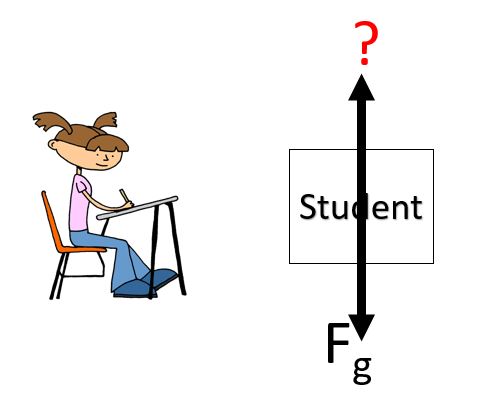
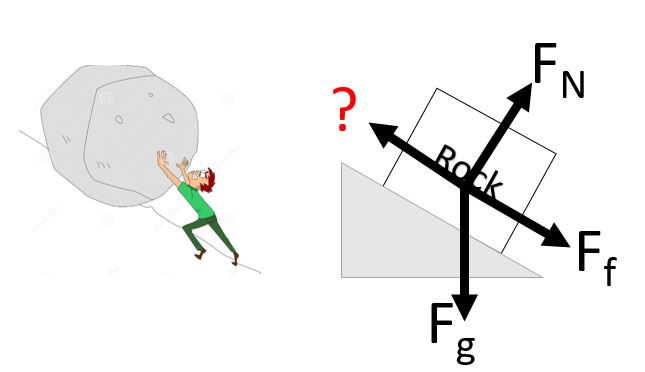
Name the missing force.

a)

Weight force

b)

Normal force

c)

Frictional force

d)

Tension force

114.

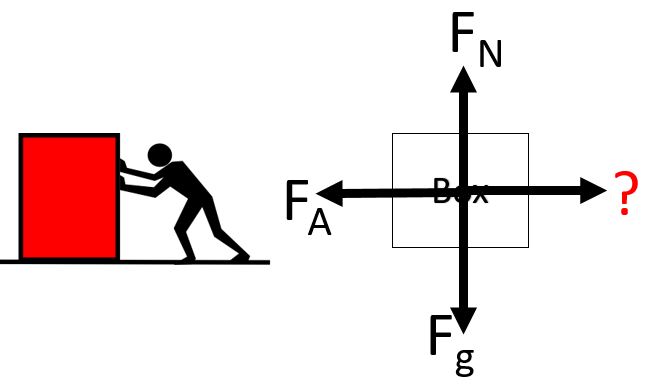
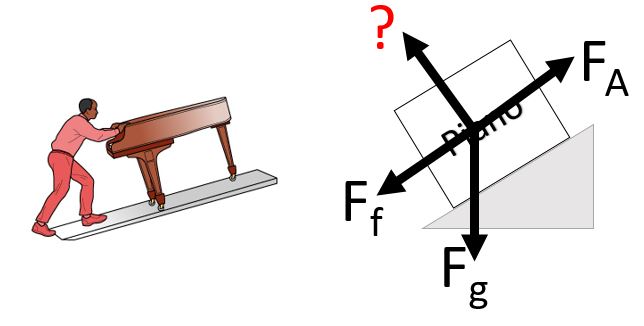
Name the missing force...

a)

Frictional force

b)

Weight force

c)

Thrust

d)

Buoyant force

115.

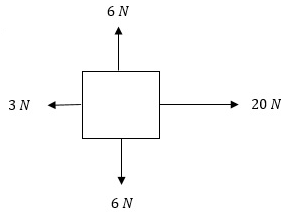
What is the net force of this diagram?

a)

17 N, right

b)

17 N, left

c)

23 N, right

d)

12 N, up

116.

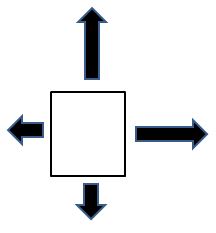
This object could be moving in which directions? (pick all that are correct):

a)

Up

b)

Down

c)

Left

d)

Right

117.
Name the missing force...
a)
applied force
b)
weight force
c)
lift
d)
normal force
118.
Name the missing force...
a)
normal force
b)
applied force
c)
frictional force
d)
tension force
119.

The force exerted by ropes and chains is called

a)

tension

b)

normal

c)

elastic

d)

mechanical

120.

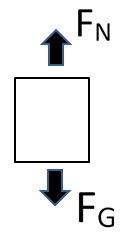
Which of the following is true about this free-body diagram?

a)

the forces are are balanced

b)

the object is free-falling

c)

the object is moving upward

d)

the forces are unbalanced

121.
How many electrons does potassium K contain? (click to see image)
a)
19
b)
39
c)
20
d)
40
122.

What is a drawing of an atom that shows all of the particles?

a)

Lewis Dot Model

b)

Dalton Model

c)

Thompson Model

d)

Bohr Model

123.

According to the octet rule most elements need _______ valence electrons.

a)

2

b)

8

c)

6

d)

18

124.

What element is represented in this Bohr Model?

a)

Carbon

b)

Hydrogen

c)

Aluminum

d)

Lithium

125.

What is the mass number of this atom of Chlorine?

a)

17

b)

18

c)

35

d)

35.453