wayground logo

Free Printable Worksheets

Font size

S
M
L
XL
Worksheets

Review: Rock Classification and the Rock Cycle

Total questions: 127

Worksheet time: 2hrs 36mins

Name
Class
Date
1.

__________ sedimentary rocks form when chemicals in water come out of the water and form solids.

a)

Chemical (or nonclastic)

b)

Clastic

c)

Metamorphic

d)

Igneous

2.

The root word "______" means change.

a)

meta

b)

beta

c)

alpha

d)

rock

3.
Crystallization is the process by which _______ cools and hardens.
a)
magma
b)
lava
c)
rock
d)
mineral
4.
Obsidian is an example of _______________ rock.
a)
intrusive
b)
extrusive
5.
Pumice is an example of a ______________ rock.
a)
intrusive
b)
extrusive
6.
Granite is an example of a ___________ rock.
a)
intrusive
b)
extrusive
7.
Marble is an example of a ___________ rock.
a)
metamorphic
b)
sedimentary
c)
igneous
8.
Natural gas and petroleum are found in ___________ rock layers.
a)
sedimentary
b)
igneous
c)
metamorphic
d)
all
9.
Limestone becomes _________ when temperature and pressure increase!
a)
marble
b)
granite
c)
sandstone
d)
feldspar
10.

_________ metamorphism occurs when magma or lava comes in contact with, or touches, surrounding rock.

a)

Contact

b)

Pressure

c)

Regional

11.
Clastic rocks are classified by the size of the __________ that form them.
a)
sediments
b)
metamorphic rocks
c)
plates
d)
igneous rocks
12.

The two main types of sedimentary rocks are ___________ and _________.

a)

chemical (nonclastic), clastic

b)

sedimentary, metamorphic

c)

igneous, metamorphic

d)

heat, pressure

13.
Once magma is exposed at Earth's surface, it is called __________.
a)
lava
b)
magma
c)
deposition
d)
sediments
14.
This type of igneous rock has medium to large crystals when it forms.
a)
Intrusive
b)
Extrusive
15.
This type of igneous rock has little or no crystals when it forms.
a)
Extrusive
b)
Intrusive
16.

Extrusive igneous rocks cool on Earth's _____________.

a)

surface

b)

interior

c)

mantle

d)

core

17.
The rock obsidian has a ____________ appearance.  Be careful!
a)
glassy
b)
dull
c)
bumpy
18.
The word clastic comes from a Greek word meaning "________."
a)
broken
b)
fixed
c)
needs repaired
d)
perfect
19.
Limestone often contains ___________.
a)
fossils
b)
gold
c)
diamonds
d)
feldspar
20.
At one time people used ___________ to clean their teeth!
a)
pumice
b)
granite
c)
dirt
d)
feldspar
21.
What are the 3 major types of rocks?
a)
Igneous, Metamorphic, Sedimentary
b)
Metamorphic, Igneous, Cementation
c)
Brown, Red, Gray
d)
Streak, Hardness, Breakage
22.
A natural mixture of minerals.
a)
erosion
b)
magma
c)
alloys
d)
rock
23.
Scientists divide rocks into groups based on how they form.
a)
True
b)
false
24.
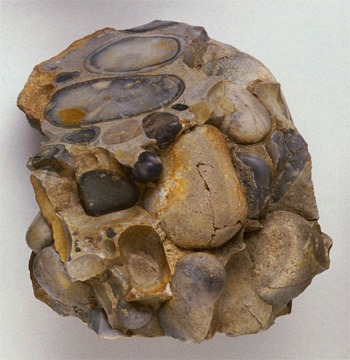
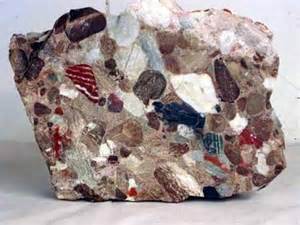
This rock formed when bits of other rocks became pressed into a solid. What type of rock is it?
a)
Sedimentary Rock
b)
Metamorphic Rock
c)
Igneous Rock
25.
This rock was formed when magma cooled very slowly inside the Earth. What specific type of rock is it?
a)
Intrusive Igneous Rock
b)
Extrusive Igneous Rock
c)
Foliated Metamorphic Rock
d)
Clastic Sedimentary Rock
26.
Extreme Heat and Pressure creates a _________ rock.
a)
Igneous
b)
Metamorphic
c)
Sedimentary
d)
Mineral
27.
Lava that is low in silica usually forms _____ colored rocks.
a)
dark
b)
light
28.
One common use for the igneous rock obsidian is...
a)
building material
b)
cutting tools
c)
abrasion in polishing
d)
cement
29.
What property of rock is being observed when looking for whether or not it scratches other minerals?
a)
cleavage
b)
luster
c)
hardness
d)
streak
30.
One common use for the igneous rock granite is...
a)
building material
b)
cutting tools
c)
abrasion in polishing
d)
cement
31.
High or Low Silica?
a)
high
b)
low
32.
This rock was found near the mouth of a volcano. What type of rock is this?
a)
Sedimentary
b)
Igneous
c)
Metamorphic
33.
What property of rock is being observed when looking at its hue or shade?
a)
streak
b)
hardness
c)
color
d)
luster
34.
The thickest layer of Earth is the ___ where it is so hot that the rock there is soft.
a)
inner core
b)
crust
c)
outer core
d)
mantle
35.
This rock was formed by smaller pieces of rock that settled at the bottom of a lake millions of years ago. What type of rock is this?
a)
Sedimentary
b)
Igneous
c)
Metamorphic
36.

What property of rocks and minerals is being observed when looking for whether it is shiny?

a)

luster

b)

hardness

c)

streak

d)

color

37.
The remains of living things that died long ago are often found in what type of rock?
a)
igneous rocks
b)
sedimentary rock
c)
metamorphic rock
d)
all rocks
38.
What property of rock is being observed when looking for what color is left after scratching it on a ceramic plate?
a)
hardness
b)
color
c)
cleavage
d)
streak
39.
What property of rock is being observed when looking for how easily it breaks or splits evenly?
a)
cleavage
b)
luster
c)
hardness
d)
streak
40.
The earth is made up of mostly ...
a)
sand
b)
fossils and soil
c)
rocks
d)
grass
41.
Once magma reaches the earth's surface, it is called __________.
a)
a vent
b)
minerals
c)
igneous rocks
d)
lava
42.
Large rocks can be broken down into smaller rocks by wind and water.  These small rocks can break down into very tiny pieces called _______.
a)
minerals
b)
pebbles
c)
sediments
d)
chalk
43.
A person who studies the properties of rocks to tell how the rocks may have been formed are ____________.
a)
mineralists
b)
geologists
c)
rock stars
d)
rockologists
44.
1. What will happen if an igneous rock is put under an extreme amount of heat and pressure?
a)
it will melt into lava
b)
it will weather and erode
c)
it will become a metamorphic rock
d)
it will become a sedimentary 
45.

What is the name of this rock?

a)

Diorite

b)

Shale

c)

Basalt

d)

Coal

46.

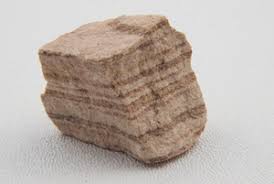
What type of rock is this?

a)

Igneous

b)

Metamorphic

c)

Sedimentary

d)

Mineral

47.

There might be gold hidden within these rocks!

a)

Limestone

b)

Granite

c)

Quartz

d)

Sandstone

48.

What type of rock is this?

a)

Igneous

b)

Metamorphic

c)

Sedimentary

d)

Mineral

49.

What is the name & type of this rock?

a)

Pumice, Sedimentary

b)

Basalt, Igneous

c)

Pumice, Igneous

d)

Basalt, Sedimentary

50.

What is the name of this rock?

a)

Shale

b)

Slate

c)

Obsidian

d)

Basalt

51.

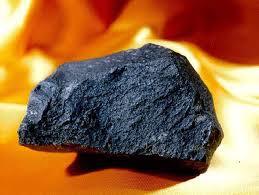
What is the name of this mineral?

a)

Manganese

b)

Magnetate

c)

Magnetite

d)

Magnetica

52.

Which rock is not an Igneous rock?

a)
b)
c)
d)
53.

When molten rock undergoes crystallization above ground, what type of rock results?

a)

Intrusive igneous rock

b)

Extrusive igneous rock

c)

Metamorphic rock

d)

Sedimentary rock

54.

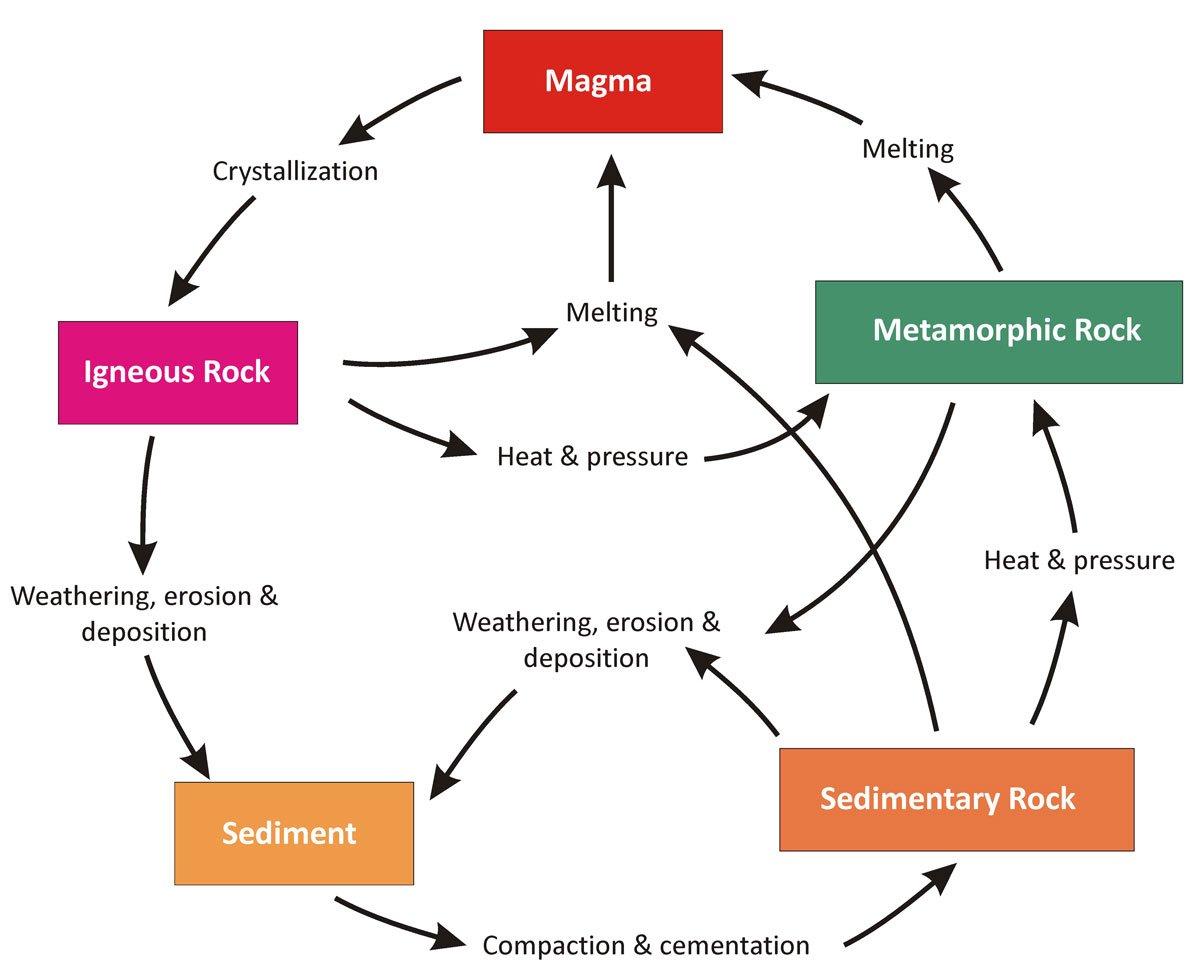
What combination of processes can transform a metamorphic rock to sediments?

a)

Erosion, crystallization, and melting.

b)

Heating, pressure, and lithification.

c)

Melting, crystallization, and compaction.

d)

Exposure, weathering, and erosion.

55.

What sequence of events could lead to magma becoming soil?

a)

Erosion and deposition followed by exposure to heat and pressure.

b)

Compression and lithification followed by erosion and deposition.

c)

Crystallization followed by exposure and weathering.

d)

Crystallization followed by increased heat and pressure.

56.

According to the rock cycle, which of the following transitions are possible? Assume an unlimited number of steps.

a)

An intrusive igneous rock becomes a sedimentary rock.

b)

A sedimentary rock becomes soil.

c)

A metamorphic rock becomes an extrusive igneous rock.

d)

All of the above are possible.

57.

If you examine a rock sample and observe fossils in it, what type of rock does the sample represent?

a)

Igneous

b)

Metamorphic

c)

Sedimentary

d)

Fossils are found in several of the types listed above.

58.

Which of the following is a sample of igneous rock?

a)

Sample A

b)

Sample B

c)

Sample C

d)

Sample D

59.

The location marked by the black rectangle is characterized by high temperature and pressure. What rock type would most likely be formed in this location?

a)

Igneous

b)

Metamorphic

c)

Sedimentary

d)

None of the above

60.

Where would the rock sample shown be formed in the diagram below?

a)

Location A

b)

Location B

c)

Location C

d)

Location D

61.

Which of the rock samples below is most likely to be a metamorphic rock?

a)

Sample A

b)

Sample B

c)

Sample C

d)

Sample D

62.
Sedimentary rocks are formed by
a)
Cooling of lava or magma
b)
Heat and pressure
c)
Compacting and cementing
63.
What is the breaking down of rocks?
a)
Weathering
b)
Clastic
c)
Vesicular
64.
What is deposition?
a)
Pieces of sediment come to rest on a surface
b)
Movement of sediment
c)
Breaking down of sediment 
65.
Small pieces of rock are also called
a)
sediment
b)
coal
c)
organic matter
d)
erosion
66.
Wind, water, ice and gravity carry sediments away
a)
weathering*
b)
deposition
c)
erosion
d)
cementation
67.
When the weight of new  sediment layers is deposited on top of older layers
a)
erosion
b)
compaction
c)
pressure
d)
weathering
68.
The process of layers become stuck together forming sedimentary rocks
a)
sticking
b)
pressuring
c)
cementation
d)
deposition
69.
Classify each sedimentary rock as either Clastic, Organic, or Chemical. 
Sandstone
a)
Clastic 
b)
Organic
c)
Chemical
70.
Classify each sedimentary rock as either Clastic, Organic, or Chemical.
Limestone made from shells
a)
Clastic
b)
Organic
c)
Chemical
71.
Classify each sedimentary rock as either Clastic, Organic, or Chemical. 
Conglomerate
a)
Clastic
b)
Organic
c)
Chemical
72.
Classify each sedimentary rock as either Clastic, Organic, or Chemical. 
Coal
a)
Clastic
b)
Organic
c)
Chemical
73.
Classify each sedimentary rock as either Clastic, Organic, or Chemical.  
Breccia
a)
Clastic
b)
Organic
c)
Chemical
74.
Classify each sedimentary rock as either Clastic, Organic, or Chemical. 
Shale
a)
Clastic
b)
Organic
c)
Chemical
75.
Which of the following clastic sedimentary rocks has the largest sediment grains.
a)
Conglomerate
b)
Breccia
c)
Siltstone
d)
Shale
76.
Which of the following clastic sedimentary rocks has the smallest sediment grains.
a)
Conglomerate
b)
Breccia
c)
Siltstone
d)
Shale
77.

What must happen to a metamorphic rock before it becomes a sedimentary rock rock?

a)

It must be broken down into sediment

b)

It must be melted into magma

c)

Its minerals must dissolve in water

d)

It must be exposed to high temperature and pressure

78.

A geologist is studying three layers of sedimentary rock in an area. The layers have not shifted from their original positions. The geologist records the relative ages of the rocks. What did the geologist use to determine the relative ages of the rocks?

a)

Radioactive dating

b)

Mineral content

c)

Absolute dating

d)

The Law of Superposition

79.

Based on the law of superposition, what is the order of these rock layers, from oldest to youngest?

a)

1, 2, 3, 4

b)

2, 1, 4, 3

c)

3, 2, 1, 4

d)

4, 3, 2, 1

80.

Which of these statements describes what happens during radioactive decay?

a)

A stable isotope interacts with an unstable isotope

b)

An unstable isotope bonds with a stable isotope

c)

An unstable isotope breaks down and becomes stable

d)

A stable isotope breaks down and becomes unstable

81.

The age of a rock sample can be determined by finding the relative amount of a parent isotope that has changed into a daughter isotope within the sample. Which property of radioactive decay allows the age of the rock to be determined in years?

a)

releases energy

b)

releases energy

c)

happens in all rocks

d)

happens at a set rate

82.

Rachel is trying to solve this problem:


What are the pH levels of different types of fruit?


What is the Independent Variable?

a)

pH

b)

amount of fruit

c)

the pH probe

d)

the type of fruit

83.

Which is the correct order of the scientific method?

a)

Hypothesis, Conclusion, Experiment, Question, Analyze data, Observations

b)

Experiment, Question, Conclusion, Analyze data, Observations, Hypothesis

c)

Analyze data, Observations, Hypothesis, Question, Conclusion, Experiment

d)

Question, Hypothesis, Experiment, Observations, Analyze data, Conclusion

84.

Leo does an experiment to test how the type of water affects the growth of a plant. Which of the following is NOT a constant?

a)

amount of water

b)

type of plant

c)

type of soil

d)

type of water

85.

Each atom has a half-life that is:

a)

The same for all atoms

b)

Unique and happens at a set rate

c)

Different depending on the amount

d)

Half-life is not a real thing

86.

These rocks are often foliated, meaning they have layers.

a)

Sedimantary

b)

Sediment

c)

Metamorphic

d)

Igneous

87.
The dropping off of sediment is...
a)
Deposition
b)
Weathering
c)
Erosion
d)
Publication
88.
The Appalachian Mountains used to be pointed like the Rockies. What process lead to the roundness of their peaks?
a)
Weathering
b)
Deposition
c)
Lightning Strikes
d)
Mining of the rock
89.
Fossil fuels are formed in which type of rock?
a)
Sedimentary
b)
Igneous
c)
Metamorphic
d)
Hard Rock
90.
The oldest layer in sedimentary rock can be found where?
a)
At the top
b)
At the bottom
c)
In the middle
d)
In France
91.
Which of these is needed to create fossil fuels?
a)
Lots of pressure
b)
Heat from within the Earth
c)
Millions of years
d)
All of these
92.
Which of these is not a fossil fuel?
a)
Coal
b)
Oil
c)
Olive Oil
d)
Natural Gas
93.
Fossil fuels come from...
a)
Ancient aliens
b)
Ancient organisms
c)
Ancient Rocks
94.
The top layer of sediments in a sedimentary rocks is...
a)
The newest and youngest layer.
b)
The oldest layer.
c)
The only layer that is made from pebbles.
d)
The second layer of sediments.
95.
If an igneous rock cools off slowly UNDERNEATH the Earth's surface, then its mineral crystals will be...
a)
Small mineral crystals that you can barely see.
b)
Large crystals that are easy to see.
c)
No crystals, it will have bits of plant and bones.
d)
No crystals, it will contain sand. 
96.
Which of the following are associated with volcanoes?
a)
Sediments and soil
b)
Crystals and sand
c)
Magma and lava
d)
Mica and granite
97.
Which of the following is technically not a sediment?
a)
Bits of sand
b)
Crushed pieces of bone
c)
Shells
d)
Tiny pieces of dried leaves
98.
The way a mineral splits is called?
a)
hardness
b)
layers
c)
bands
d)
cleavage
99.
A __________ is a natural, nonliving substance that makes up rocks. 
a)
Sedimentary rock
b)
Igneous Rock
c)
Mineral
d)
Sediment
100.
How does an intrusive igneous rock form?
a)
The deep ocean cools and hardens the rock.
b)
The rock cools and hardens deep below Earth's surface.
c)
The rock cools on land after a volcano erupts.
d)
The air cools the rock on land when lava flows down a volcano.
101.
The way a mineral reflects light describes which of the following?
a)
Cleavage
b)
Streak
c)
Luster
d)
Hardness
102.
Formed by heat and pressure
a)
Sedimentary
b)
Metamorphic
c)
Extrusive Igneous
d)
Intrusive Igneous
103.
Formed by cooling & solidification of magma
a)
Sedimentary
b)
Metamorphic
c)
Extrusive Igneous
d)
Intrusive Igneous
104.
Formed by compacting & cementing of sediments
a)
Sedimentary
b)
Metamorphic
c)
Extrusive Igneous
d)
Intrusive Igneous
105.
Formed by weathering & erosion
a)
magma
b)
sediments
c)
sedimentary rock
d)
intrusive igneous
106.
Formed by melting
a)
magma
b)
sediments
c)
sedimentary rock
d)
intrusive igneous
107.
Has large crystals because of slow cooling
a)
sedimentary rock
b)
metamorphic rock
c)
intrusive igneous rock
d)
extrusive igneous rock
108.
Has small or no crystals because of rapid cooling
a)
sedimentary
b)
metamorphic
c)
extrusive igneous
d)
intrusive igneous
109.
Has wavy bands.
a)
sedimentary rock
b)
metamorphic rock
c)
extrusive igneous rock
d)
intrusive igneous rock
110.
Contains fossils. 
a)
sedimentary rocks
b)
metamorphic rocks
c)
extrusive igneous rocks
d)
intrusive igneous rocks
111.
A metamorphic rock in which the grains line up in parallel bands is a
a)
Clastic Rock
b)
Nonclastic Rock
c)
Nonfoliated Rock
d)
Foliated Rock
112.
If heat and pressure inside the Earth cause a rock to melt, the material that formed would be
a)
Metamorphic
b)
Magma
c)
Sedimentary
d)
Igneous
113.
You find a rock in which the grains are arranged in parallel bands of white and black crystals.  The rock is probably a(n)
a)
Igneous rock
b)
Sedimentary rock
c)
Metamorphic rock
d)
Extrusive rock
114.
As lava cools and crystallizes, what type of rock will form?
a)
Sedimentary
b)
Metamorphic
c)
Extrusive Igneous
d)
Intrusive Igneous
115.
The parent rock of Gneiss is
a)
Marble
b)
Granite
c)
Obsidian
d)
Biotite
116.
Which of the following is not a rock
a)
Pumice
b)
Lava
c)
Halite
d)
Sandstone
117.
The three groups of rocks are classified by
a)
How they form
b)
Color
c)
Grain size
d)
Chemical Composition
118.
Fossils are only found in
a)
Sedimentary rocks
b)
Foliated Metamorphic rocks
c)
Igneous Rocks
d)
Nonfoliated Metamorphic rocks
119.
This rock was formed by smaller pieces of rock that settled at the bottom of a lake millions of years ago. What type of rock is this?
a)
Sedimentary
b)
Igneous
c)
Metamorphic
120.
When sediments are pressed together tightly, this is called ____________.
a)
Compaction
b)
Cementation
c)
Weathering
d)
Erosion
121.
The process in which dissolved minerals crystallize and glue sediment together.
a)
compaction
b)
deposition
c)
organic rock
d)
cementation
122.
The process when rocks break into smaller pieces due to exposure to natural elements is called
a)
erosion
b)
weathering
c)
sediments
123.
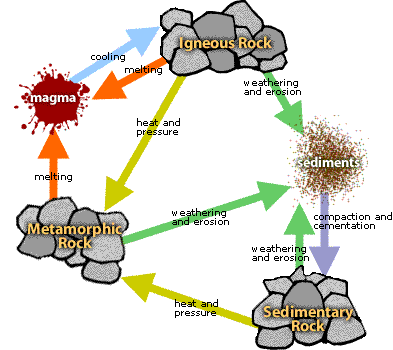
Each rock type can follow only one pathway of the rock cycle.
a)
True
b)
False
124.
Cooling & crystalization produce
a)
igneous rocks
b)
metamorphic rocks
c)
sedimentary rocks
125.
Deposition & lithification or compacting & cementing produce
a)
sedimentary rocks
b)
igneous rocks
c)
metamorphic rocks
126.
True or False: Once a rock is sedimentary, it cannot become an igneous rock.
a)
True
b)
False
127.

The root wood "igni-" or "ign-" means

a)

air

b)

change

c)

fire

d)

water