
 Worksheets
Physical Science Final Revision
Total questions: 128
Worksheet time: 2hrs 52mins
Energy is defined as
power
food
ability to produce heat
ability to do work or cause change
Thermal energy is associated with
kinetic and potential energy of particles
position or shape
chemical reactions
chemical bonds

The diagram above represents a thermometer. Which of the following best explains how the thermometer works?
Liquid changes to a gas when heated.
Gas changes to a liquid when heated.
Liquids expand when heated and contract when cooled.
Liquids contract when heated and expand when cooled.
The three scales used to measure temperature are
metric, American and wrong
Celsius, Fahrenheit, and Calvin
Celsius, Fahrenheit, and Kelvin
This phase of matter has the most thermal energy
gas
liquid
solid
Heat always moves
in convection currents
by radiation
from hot to cold
from cold to hot

Base your answer to the question on the diagram above, which shows insulated styrofoam cups of water connected by an aluminum bar. The thermometers show the temperatures of the cups A and B at the beginning of a heat flow experiment. Over the next 15 minutes, which changes would most likely occur?
The temperature in cup A will decrease and the temperature in cup B will increase.
The temperature in cup A will decrease and the temperature in cup B will decrease.
The temperature in cup A will increase and the temperature in cup B will increase
The temperature in cup A. will increase and the temperature in cup B will decrease.

The reason the temperature in the cups in the experiment above changes is because aluminum is
thermally expanding
a conductor
an insulator
a nonmetal

The diagram above shows a Bunsen burner heating a beaker of water on a beaker stand. The arrows represent the transfer of heat energy in the water. Which process is primarily responsible for the transfer of heat in the beaker as indicated by the arrows in the diagram?
conduction
radiation
convection
condensation
Water’s specific heat is 4,180 and iron’s is 450. Which will heat up faster?
water
iron
oil
air
The measure of the average kinetic energy of particles in an object is its
temperature
heat
thermal energy
hotness
A material that allows heat to pass through it well, unlike wool, is called a
insulator
conductor
metal
thermal expander
The energy needed to heat up 1kg of a substance by 1K, is its
temperature
heat
specific heat
thermal heat
Temperature scale starting with absolute zero at 0 is the
coldness scale
Farenheit scale
Celcius scale
Kelvin scale
When heat is passed on by direct contact of particles, this occurs
conduction
condensation
convection
radiation
Transfer of energy by electromagnetic waves is called
conduction
convection
radiation
infrared proton rays (sounds cool, but I made it up so don't pick this one)
The metric scale of temperature measurement that the world uses is
Farenheit scale
Celcius scale
Kelvin scale
A material that doesn’t allow heat to pass through it easily is a/an
conductor
insulator
metal
rock
Movement that transfers heat in a fluid is called
conduction
convection
radiation
specific heat
The movement of thermal energy from hot to cold is called
temperature
heat
specific heat
thermal energy
A wave is a disturbance that transfers ________ from one place to another.
Matter
Mass
Energy
What types of waves can travel through empty space AND mediums?
Longitudinal
Mechanical
Electromagnetic
Which 2 types of waves require a medium to travel?
Electromagnetic
Mechanical
Light
Sound
Which of the following is a mechanical wave?
X-ray
Infrared
Radio waves
Sound
What medium do sound waves travel fastest through?
Solids
Liquids
Gases

The height of a wave from its resting point (B).
Frequency
Wave speed
Wavelength
Amplitude
The length of a wave, from crest to crest or trough to trough. (D)
Frequency
Wave speed
Wavelength
Amplitude
The number of waves passing a given point each second is:
Frequency
Wave speed
Wavelength
Amplitude
What is the correct formula for wave speed?
Wave speed = frequency x wavelength
Wave speed = amplitude x wavelength
Wave speed = amplitude x period
Wave speed = frequency x period
As wavelength decreases, the crests of the wave:
become wider
become shorter
get closer together
get farther apart
If a wave has a long wavelength, it will have __________ energy.
High
Medium
Low
If a wave has a short wavelength, it will have __________ energy.
High
Medium
Low
If a wave has a high frequency, it will have __________ energy.
High
Medium
Low
If a wave has a high amplitude, it will have __________ energy.
High
Medium
Low


The lower the frequency the ______ the energy.
higher
lower
neither, stays the same

Wavelength Not Frequency

Wavelength Not Frequency

Wavelength Not Frequency

Wavelength Not Frequency

Wavelength Not Frequency

Wavelength Not Frequency

Wavelength Not Frequency

Wavelength Not Frequency


The movement of electrically charged _____ is called electric _____
particles, transport
particles, current
ions, current
ions, transport
To have a complete electric circuit, the path must be _____
small
big
closed
open
Turning off an electric light creates a(n) _____ path
open
continuous
divided
broken
The flow of electrons is counted _____ and is referred to as the _____
in quantities, ampere
one by one, ampere
in quantities, SI unit
one by one, SI unit
Within a circuit, the number of electrons flowing from a power source is _____ the number of _____ returning to the source
much less than, paths
much less than, electrons
the same as, electrons
the same as, paths
An electric current is made up of _____ charged electrons
neutral
positive
negative
balanced
Can DC be converted into AC?
True
False
Batteries and power plants are examples of ______________.
energy conduction
energy source
energy transformation
energy discharge
______________ are materials such as rubber that do not allow charges to flow.
conductors
insulators
circuits
semiconductors

A complete, unbroken path that charges can flow through is called an __________________.
conductor
electric current
electric circuit
insulators
All electrical devices contain electric ________________.
acid
circuits
gears
motors
Metals such as copper and aluminum are good ______________.
insulators
circuits
conductors
charges
Potential energy can be converted into _________________.
food & waste
water & light
heat & light
heat & food
A circuit with only one path for the current to flow is a __________________.
parallel circuit
device
series circuit
mini circuit
Circuits often include a _____________ to control the flow of current.
switch
voltage
conductor
current
__________________ is the continuous flow of electric charges through a material.
electric current
voltage
resistance
static discharge

This symbol represents a
electric cell (battery)
wire
bulb
power station
If a positive terminal of one cell is connected to the negative terminal of the next cell it is known as
electric current
element
battery
fuse
The direction of current flow is taken from
negative to positive terminal
Positive to negative terminal
Both
What makes up an electric circuit?
bulb and battery
bulb, battery and wire
bulb, battery and switch


What makes an electromagnet stronger?
greater number of loops
smaller number of loops
decreasing the current
decreasing the voltage

Once a paperclip touches a magnet and becomes a magnet itself, does a paperclip STAY that way? Or does it stop being a magnet?
stay that way forever
stop being a magnet
stay that way for a short time
When iron touches a magnet, it becomes a magnet too.
True
False
Magnets can pull on things without touching them.
True
False
A type of magnet that has temporary magnetic effect when electric current flows through it.
This refer to
Electric
Electronic
Electrostatic
Electromagnet


What charge is the proton?
positive
no charge (neutral)
negative
Senaida-charged
What charge is the electron?
Logan-charged
negative
positive
no charge (neutral)

When we throw anything in air it always falls down because of _____
Friction
Gravity
Solid
motion
If negative charge is developed on two objects they will__
attract each other
repel each other
Protons have a ________ charge.
Positive
Negative
No charge
Electrons have a _________ charge.
Negative
Postive
No Charge
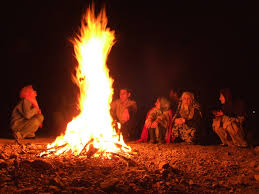

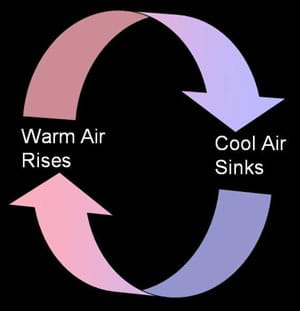
Near the ceiling of a room the air is warmer. The warm air rises because of
conduction
convection
radiation

A huge rock at the state park gets so hot during the day because of
conduction
convection
radiation

In heat transfer, heat always flows from the _______________ substance to the _______________ substance.
Hotter to colder
Colder to hotter
Hotter to hotter
Colder to colder
The cause of weather systems on earth is ...
Conduction
Radiation
Convection
A material that reduces the flow of heat is a(n)
conductor
insulator
metal
radiator
Which is an example of heat being transferred by conduction?
a furnace heating the air in a school
an ice cube melting in a person’s hand
a pot of water on a stove boiling
the sun heating water in a swimming pool

Near the ceiling of a room the air is warmer. The warm air rises because of ________.
conduction
convection
radiation

The type of heat transfer that creates currents in water is called ________.
conduction
convection
radiation

The heat transferred from the Sun to the Earth by waves is called ________.
conduction
radiation
convection

What form of heat transfer circulates the warm and cool air in a house?
Conduction
Radiation
Convection

