
 Worksheets
CBA2 Review
Total questions: 133
Worksheet time: 33hrs 15mins
Elements that are mostly shiny, silver or gray in color, malleable, ductile, and good conductors of heat and electricity are referred to as _______________.
Metals
Nonmetals
Metalloids
Conductor
A(n) _______________ is a material that allows electricity and heat to pass through it easily.
Ductility
Nonmetals
Conductor
Insulator
Chlorine (Cl) is a yellow-green gas at room temperature. Based only on this information, where would you expect to find this element on the Periodic Table?
Left side
Right side
At the top
At the bottom

Which of the following elements could be the possible identity of Mystery Element 2?
Aluminum (Metal)
Fluorine (Non-Metal)
Germanium (Metalloid)
none
Which of the following elements could be the possible identity of Mystery Element 1?
Magnesium (Metal)
Carbon (Non-Metal)
Boron (Metalloid)
none

Which element is a metalloid?
Titanium
Selenium
Potassium
Polonium
Which elements are found on the right side of The Periodic Table?
Metals
Nonmetals
Metalloids
Water
How do metals differ from nonmetals?
metals are shiny, nonmetals are dull
metals are good insulators, nonmetals are good conductors
metals are powdery
nonmetals are shiny
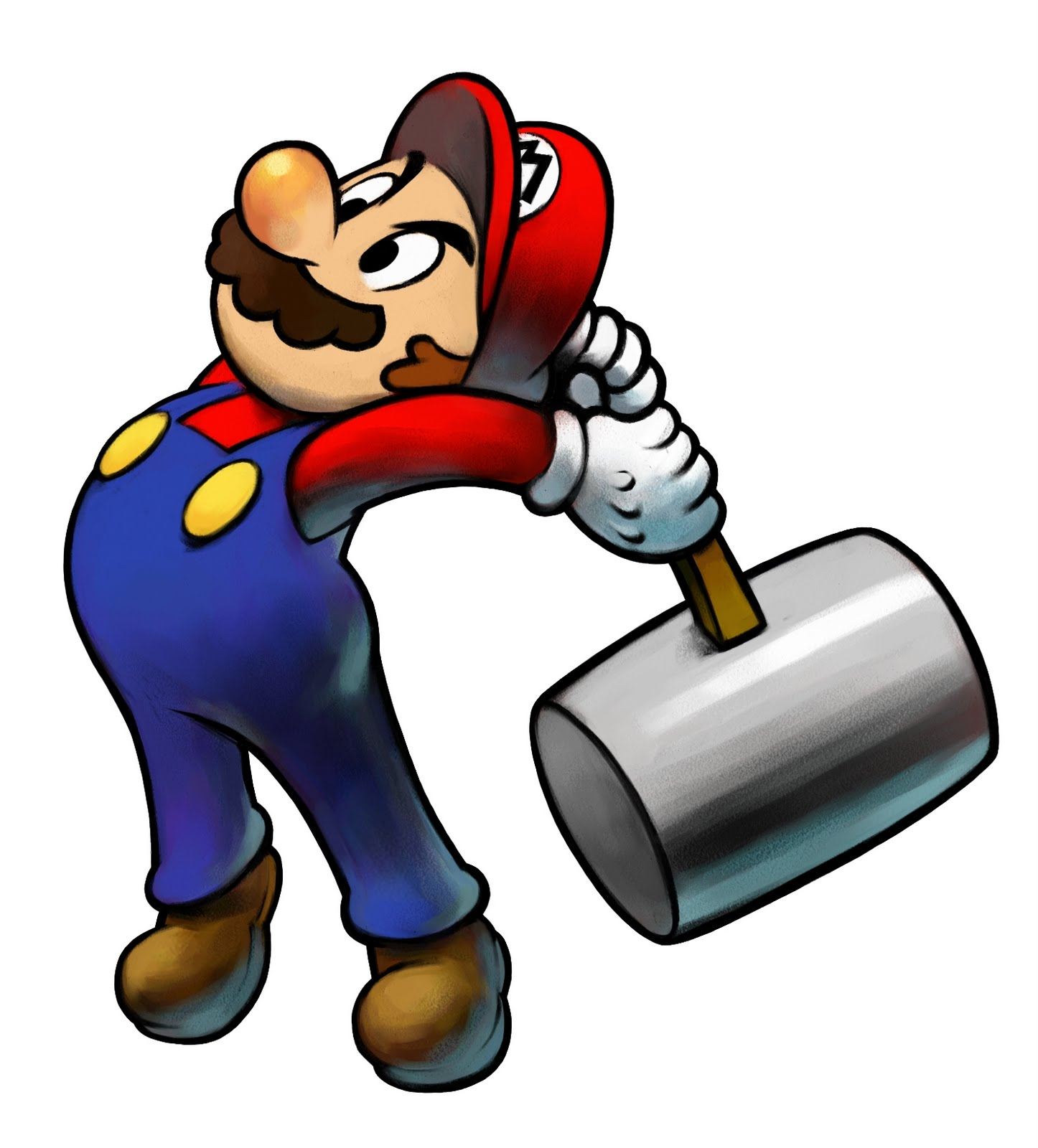
When an object changes shape when struck by a hammer it is said to be...
luster
malleable
brittle
ductile
Metalloids _____________
have no properties of metals.
have no properties of nonmetals.
have some properties of both metals and nonmetals.
none of the above
Iron is a good conductor, malleable and magnetic. What type of element is Iron?
Metal
Nonmetal
Metalloid
Pretty
Which of the following is a property of a non-metal?
Conducts electricity and heats well
Can be hammered into thin sheets
Is brittle and breaks easily
Has a shiny, metallic luster
A student tests an unknown substance that he or she believes to be a metal. Which of the following observations would indicate that the unknown substance is a metal?
It is a good conductor of electricity
It is very brittle and breaks easily
It can easily float in water
It is brown and dull.
Arsenic is a metalloid. Which of the following best describes arsenic?
Arsenic is like a nonmetal because it is a gas at room temperature but like a metal because it is not malleable.
Arsenic is like only a nonmetal because it is a good conductor and is reflective.
Arsenic is like only a metal because it is not ductile and is a gas at room temperature.
Arsenic is like a nonmetal because it is brittle but like a metal because it conducts heat and electricity well
Metalloids such as silicon and boron
Always conducts electricity.
May contain characteristics of metals and nonmetals.
Always have a metallic luster and are malleable.
Are all brittle and ductile.
Metalloids tend to be
Good semiconductors only when they are mixed with nonmetals.
Good semiconductors.
Poor semiconductors only when they are mixed with metals.
Poor semiconductors
What does the number 3 represent in 4NH3?
Subscript
Superscript
Coefficient
What does the number 4 represent in 4NH3?
Subscript
Superscript
Coefficient

How many Nitrogen (N) atoms are in 4NH3?
4
1
3
12

How many Hydrogen (H) atoms are in 4NH3?
4
1
3
12

In the equation shown, what are the reactant(s)?
N2 + H2
NH3
In the equation shown, what are the product(s)?
N2 + H2
NH3

Is this equation balanced?
Yes
No

Is this equation balanced?
Yes
No

Is this equation balanced?
Yes
No

To balance an equation you should:
ONLY change subscripts.
ONLY change coefficients.
Change BOTH subscripts and coefficients.

Is this equation balanced?
yes
no
Not enough information
No new substance is formed in a physical change.
True
False
Chemical channges are ______________ chnages.
Temporary
Permanent
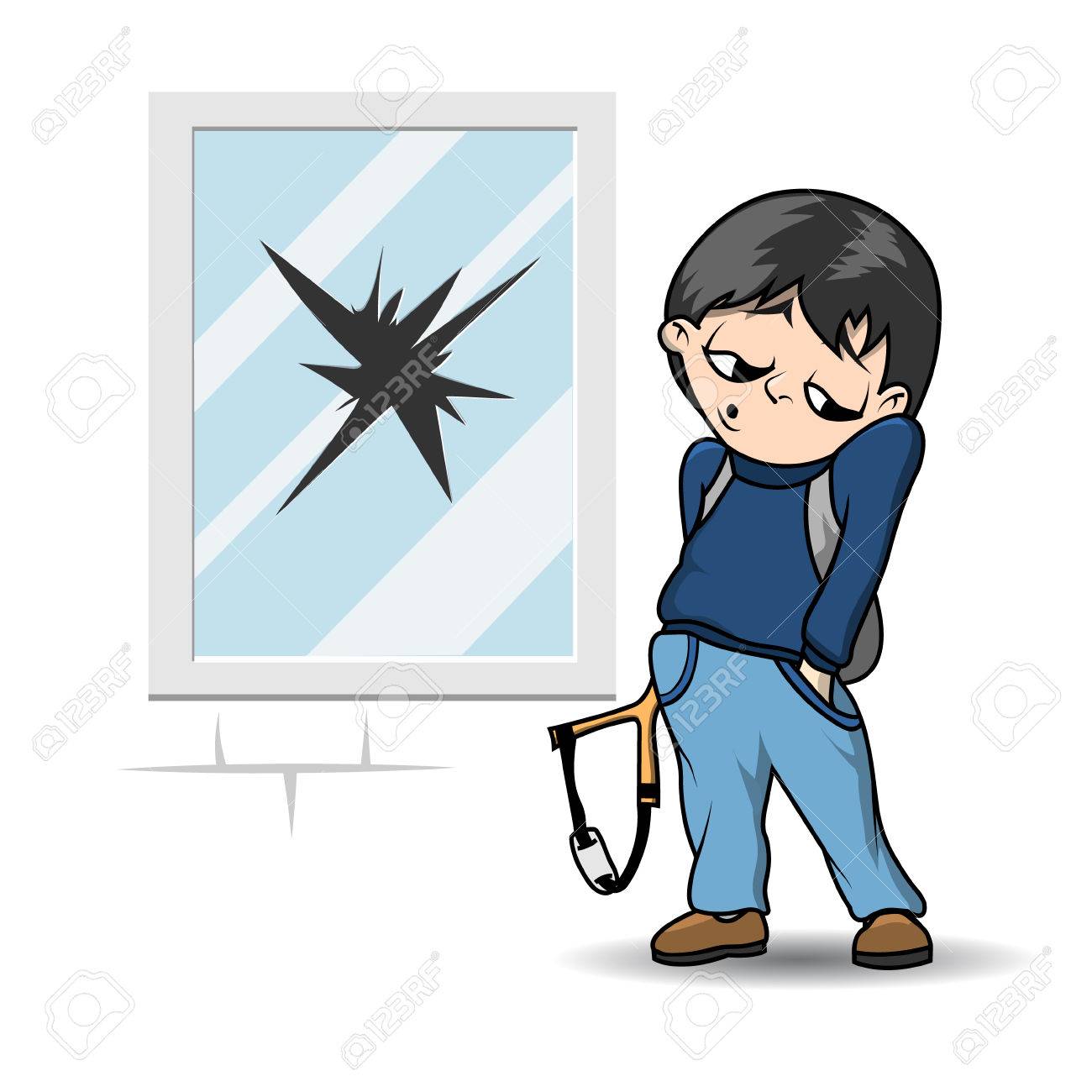
What kind of change is breaking a window?


Is sour milk a physical or chemical change?
Physical
Chemical

Is melting iron a physical or chemical change?
Physical
Chemical
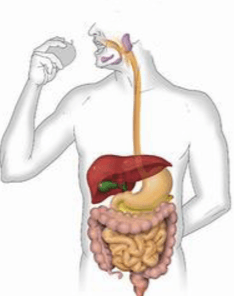
Is digesting your food a physical or chemical change?
Physical
Chemical

What kind of change is crushing a soda can?
Is ice melting a physical or chemical change?
Chemical
Physical
Is frying an egg a chemical or physical change
Chemical
Physical
A chemical change
changes the physical properties of an object, but does not create a new substance.
creates a new substance and cannot be undone.

Is this an example of a physical or chemical change?
physical
chemical

Is this an example of a physical or chemical change?
physical
change

Is this an example of a physical or chemical change?
physical
chemical
Which of the following options provides evidence of a CHEMICAL change?
Wood is burned releasing ash and smoke
Rocks separate when soil is sifted
Boiling water bubbles when heated
Salt dissolves in water
Which observations prove a chemical change occurred
Dissolving and expected color change
Mixing and dissolving
State of matter change and boiling water bubbles
Unexpected color change and temperature change

How will this object move?
It won't move.
It will move to the right.
It will move to the left.
It will move in both directions.

Forces that have a net force of zero ( the object is still).
Balanced force
Unbalanced force

Balanced or unbalanced?
balanced
unbalanced

A ____________ is a push or a pull on an object.
friction
force
magnet
gravity
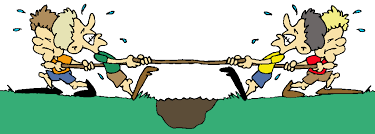
If these teams are pulling with the same amount of force what will happen?
The boy in blue will win.
They will not move at all.
The boy in red will win.
Both will fall down.

Are the forces acting on the rope balanced or unbalanced?
Balanced
Unbalanced

The forces balance each other.
true
false
There is ___
motion
no motion
When forces are acting in the same direction they should be added together.
True
False
Forces that are acting in opposite directions should be subtracted from each other.
True
False

The net force acting on the object is acting
to the right
up
down
to the left

The net force acting on the object is (a) N.

Is it balanced?
Yes
No

The net force is (a) N.

What force holds the planets in motion around the sun?
magnetic
electrical
graviational
air resistance
If there are two forces going in the same direction how would you find net force?
subtract
add
neither
multiply
With unbalanced forces, the object will move in the direction of the _________ force.
larger
smaller
equal
What is a force?
the motion the object creates
the object hitting one another
the push or pull of an object
really going fast
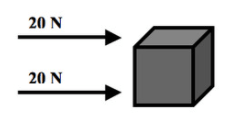
What is the net force?
20 N
0 N
400 N
40 N

What is the net force and direction?
4 N to left
4 N to right
0 n to left
4 N
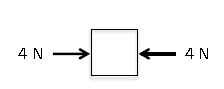
What is the net force and direction?
4 N to left
4 N to right
0 N
0 N to right

What is the net force and direction?
4 N to left
4 N to right
0 N
0 N to right

What is the net force and direction?
3 N to left
3 N
0 N
3 N to right

What is the net force and direction?
5 N to left
7 N
2 N to right
5 N to right

What is the net force and direction?
1 N to left
5 N to left
1 N to right
4 N to right
Which law of motion says that you must push or pull objects harder if they have more mass?
1st
2nd
3rd
4th
Which law of motion says that for anything to move you must apply an unbalanced force to it?
1st
2nd
3rd
5th
Which is newtons first law states
An object at rest will remain at rest unless a force is applied
An object is moving
An object has stopped
An moving object will keep going when a force is applied to it
Which is newtons 3rd law
for every thing there is reaction
for every reaction there is a unusual action
For every reaction there is an equal and opposite reaction
for every reaction there is an good action
Newton's third law states that any action will have a(n) _______ and ______ reaction
equal and same
equal and opposite
equal and equal to
The tendency of objects to resist a change in motion is called:
Friction
Inertia
Gravity
Velocity




Bob ran the 50 meter dash. It took him 6.3 seconds. What was his average speed in meters/second?
7.9 m/s
0.1 m/s
50 m/s
Match the description to the graph:
"The car is traveling at a constant speed."


Segment A-B The bus is _________________.
at rest
returning (to original position)
moving forward

Which is faster?
walking
skating
biking

Which scene matches the graph?
Jonathon walked to his girlfriends house - stayed a while then walked home
Justice rode her bike to the mall
Yeshua walked home from school
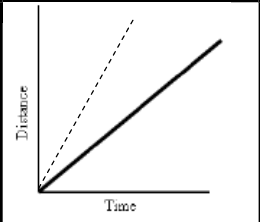
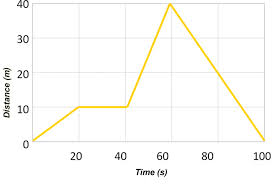

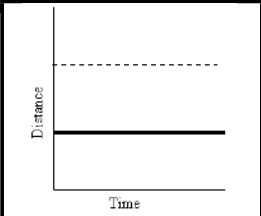
Match the description to the graph:
"The car is stopped."

Match the description to the graph:
"The car is traveling at a constant speed."
Match the description to the graph:
"The car is coming back."
Segment A-B The bus is _________________.
at rest
returning (to original position)
moving forward
Segment C-D The bus is _________________.
at rest
returning (to original position)
moving forward
Which of the graphs shows that one of runners started in the same place?


In which of the following graphs below did one runner overtake (run past) the other?


Match the description to the graph:
"The car is slowing down."

Describe the motion in the graph:
Constant Speed (positive slope)
Stopped (at rest)
Acceleration (increasing speed)
Return Home (negative slope)

Describe the motion in the graph:
Constant Speed (positive slope)
Stopped (at rest)
Acceleration (increasing speed)
Return Home (negative slope)
A measurement of how fast an object is moving with direction
Velocity
Speed
Vector
Acceleration

What was occurring from point B to point C?
Which is faster?
walking
skating
biking
Which of these graphs do not show the object staying still?


Which scene matches the graph?
A boy walked to his girlfriends house - stayed a while then walked home
Justice rode her bike to the mall
Yeshua walked home from school


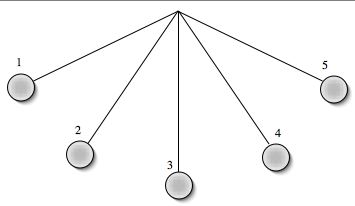
Choose the BEST answer that is an example of an energy transformation from potential energy to kinetic energy.
a ball standing still then rolling down a ramp
a picture hanging on the wall
a swing swaying back and forth
a coat hanging on a hook


