wayground logo

Free Printable Worksheets

Font size

S
M
L
XL
Worksheets

8th Grade End of Year Review

Total questions: 137

Worksheet time: 3hrs 42mins

Name
Class
Date
1.

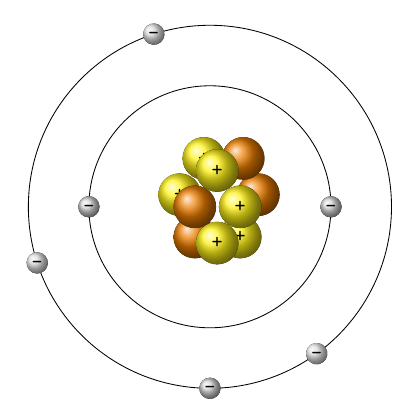
What is this subatomic particle that has positive charge?

a)

Electron

b)

Neutron

c)

Proton

d)

Megatron

2.

What is this subatomic particle that has negative charge?

a)

Electron

b)

Neutron

c)

Proton

d)

Megatron

3.

What is this subatomic particle that has no charge?

a)

Electron

b)

Neutron

c)

Proton

d)

Megatron

4.

What is the smallest particle of an ELEMENT, and it has also all the properties of it?

a)

Molecules

b)

Nucleus

c)

Subatomic particle

d)

Atoms

5.

What is the small, DENSE REGION consisting of protons and neutrons at the CENTER of an atom?

a)

Molecules

b)

Nucleus

c)

Subatomic particle

d)

Atoms

6.
True or False - Protons and Neutrons have about the same mass.
a)
True - They have about the same mass
b)
False - They do not have about the same mass
7.
Which two subatomic particles make up the nucleus of an atom?
a)
Protons and Electrons
b)
Neutrons and Electrons
c)
Electrons and Protons
d)
Protons and Neutrons
8.
Where are the Electrons found in the structure of an atom?
a)
In the nucleus
b)
In spaces around the nucleus
9.
How many protons does this atom have?
a)
3
b)
6
c)
4
d)
2
10.

At what part of the atom is the arrow pointing?

a)

nucleus

b)

energy level

c)

electron

d)

proton

11.

The mass of an atom is

a)

equal to the number of protons

b)

the protons + electrons

c)

the protons + neutrons

d)

the protons + neutrons + electrons

12.

In a neutral atom,

a)

protons = electrons

b)

protons = neutrons

c)

neutrons = electrons

d)

protons = neutrons = electrons

13.

What does the subscript in a chemical formula tell you? (a)  

Choose from the below words
How many molecules are present
How many atoms are present
How many elements are present
How many neutrons are present
14.

How many elements are in this chemical formula?

H2SO4H_2SO_4  

a)

1

b)

2

c)

3

d)

4

15.

How many atoms of Carbon are in this formula? C6 H12O6C_{6\ }H_{12}O_6  

a)

6

b)

1

c)

12

16.

What is the total number of atoms in this formula? H2O2H_2O_2  

a)

2

b)

4

c)

3

17.

Which of the following elements is least likely to form a compound?

a)

Hydrogen

b)

Sodium

c)

Argon

d)

Potassium

18.

Is this an element or a compound? CaSO4CaSO_4  

a)

Element

b)

Compound

19.

What is the total number of atoms in this chemical formula? C8H3NaBr12C_8H_3NaBr_{12}  

a)

18

b)

12

c)

25

d)

24

20.

What are the vertical columns on the periodic called?

a)

groups

b)

periods

c)

nonmetals

d)

metals

e)

metalloids

21.

What do the vertical columns on the periodic table tell us?

a)

The number of orbitals

b)

The number of valence electrons (electrons on the outer most shell)

22.

What are the horizontal rows on the periodic table called?

a)

periods

b)

groups

c)

metals

d)

nonmetals

e)

metalloids

23.

What do the horizontal rows on the periodic table tell us?

a)

The number of orbitals

b)

The number of valence electrons (the electrons on the outer most shell)

24.

What is the name of the element? (Periodic table will be needed)

a)

sodium

b)

magnesium

c)

vanadium

25.

What group and period does this element belong in? *

a)

period 1 and group 3

b)

period 3 and group 1

c)

period 2 and group 3

d)

period 3 and group 2

26.

How many valence electrons does the element have?

a)

1

b)

2

c)

3

d)

4

27.

How many protons and electrons does nickel have?

a)

28

b)

58.69

28.

This element has two valence electrons and two energy levels?

a)

Beryllium (Be)

b)

Lithium (Li)

c)

Zinc (Zn)

29.
The substances listed on the right side of a chemical equation are the
a)
Yields
b)
Reactants
c)
Products
d)
Precipitates
30.

The process by which one or more substances change to produce one or more different substances

a)

Chemical Process

b)

Reactant

c)

Chemical Reaction

31.
In the equation,          2Mg + O2 ---> 2MgO, which are the reactants?
a)
Mg and O
b)
MgO
c)
Mg and MgO
d)
O and MgO
32.

Determined whether the following equation is balanced or unbalanced. Ag + O2 ---> 2Ag2O

a)

Balanced

b)

Unbalanced

33.

Determine whether the following equations is balanced or unbalanced. H4 + O2 ---> 2H2O

a)

Balanced

b)

Unbalanced

34.

In order for an equation to be balanced, there must be ...

a)

an equal amount of atoms on both sides

b)

a greater mass on the product side

c)

a greater mass on the reactant side

d)

elements with the same atomic # on both sides

35.
Hot air rises because...
a)
it is less dense
b)
it is heavier
c)
it is more dense
d)
it contains Helium
36.
The process the causes plate tectonics, wind, and ocean currents is known as...
a)
Radiation
b)
Conduction
c)
Nuclear Energy
d)
Convection
37.
Which type of weather is Dallas, Texas, likely experiencing?
a)
Thunderstorms
b)
Clear skies
c)
Cold temperatures
d)
Gentle precipitation for days
38.
What type of weather usually goes with this symbol?
a)
Clear, sunny skies
b)
Cloudy skies
c)
Hot temperature
d)
Thunderstorms
39.
What type of weather will occur with this symbol?
a)
Thunderstorms, cooler temperatures
b)
Gentle precipitation, warmer temperatures
c)
Sunny skies, warmer weather
d)
Cloudy skies, cooler weather
40.
____________ air sinks/falls because it is ____________dense.
a)
Cold, More
b)
Warm, Less
c)
Cold, Less
d)
Warm, More
41.
Which type of front is near Seattle?
a)
cold front
b)
warm front
c)
occluded front
d)
stationary front
42.
This is the symbol for a... 
a)
Occluded Front
b)
Stationary Front
c)
Warm Front
d)
Cold Front 
43.
What does a Primary Consumer eat?
a)
Tertiary Consumers
b)
Secondary Consumers
c)
Producers
44.
In a food web, arrows point at:
a)
who gets energy.
b)
who gets eaten.
45.
Which organism recieves the least amount of energy from the producer?
a)
Owl
b)
Grasshopper
c)
Lilypad
d)
Mouse
46.
What are animals called in a food chain?
a)
Producers
b)
Consumers
c)
Decomposers
d)
Plants
47.

What Seasons is position A?

a)

Northern Hemisphere (Summer)/ Southern Hemisphere (Winter)

b)

Northern Hemisphere (Fall)/ Southern Hemisphere (Winter)

c)

Northern Hemisphere (Spring)/ Southern Hemisphere (Fall)

d)

Northern Hemisphere (Winter)/ Southern Hemisphere (Summer)

48.

What Seasons is position B?

a)

Northern Hemisphere (Summer)/ Southern Hemisphere (Winter)

b)

Northern Hemisphere (Fall)/ Southern Hemisphere (Spring)

c)

Northern Hemisphere (Spring)/ Southern Hemisphere (Fall)

d)

Northern Hemisphere (Winter)/ Southern Hemisphere (Summer)

49.

Which part of the Earth is receiving the most direct Sunlight?

a)

Northern Hemisphere

b)

Southern Hemisphere

c)

Polar Hemisphere

d)

MidAtlantic Hemisphere

50.

What happens during the Summer Solstice?

a)

Most direct sunlight

b)

Least direct sunlight

c)

Moderate sunlight

d)

temperate sunlight

51.

What happens during the Winter Solstice?

a)

shortest day

b)

longest day

c)

easy day

d)

slow day

52.

What happens during the Autumnal/Vernal Equinoxes?

a)

Equal day and Night

b)

Longer Days, shorter nights

c)

Shorter Days, longer nights

d)

Indirect sunlight

53.

The REVOLUTION around the Sun and the TILT on the Earth's axis cause what?

a)

Seasons

b)

Rain

c)

Tidal Waves

d)

Moon Phases.

54.

What causes day and night and spins on it's own access?

a)

Rotation

b)

Revolution

c)

Orbit

d)

Moon Phases

55.

What causes the moon's phases

a)

Where you are standing on Earth

b)

the amount of sunlight reflected onto the moon from the sun

c)

The tilt of Earth

d)

how fast the moon is moving

56.
Define Waxing
a)
Moon is increasing and light part appears to be growing
b)
Completely illuminated
c)
dark side is facing earth
d)
Moon is decreasing and light part appears to be shrinking
57.
As the moon's shape appears to get smaller, we say that the moon is _.
a)
swelling
b)
waxing
c)
waning
d)
disappearing
58.
The cycle of the moon lasts about a _.
a)
day
b)
year
c)
week
d)
month
59.
If the last full moon was on April 4th, when can you expect to see the next full moon? 
a)
April 29th
b)
July 4th
c)
May 4th
d)
September 12th
60.

What is the missing phase?

a)
b)
c)
d)
61.

What is the missing phase?

a)
b)
c)
d)
62.

What causes the moon's phases

a)

Where you are standing on Earth

b)

the amount of sunlight reflected onto the moon from the sun

c)

The tilt of Earth

d)

how fast the moon is moving

63.
Define Waxing
a)
Moon is increasing and light part appears to be growing
b)
Completely illuminated
c)
dark side is facing earth
d)
Moon is decreasing and light part appears to be shrinking
64.
How many phases does the moon go through?
a)
4
b)
8
c)
10
d)
16
65.
As the moon's shape appears to get smaller, we say that the moon is _.
a)
swelling
b)
waxing
c)
waning
d)
disappearing
66.
The cycle of the moon lasts about a _.
a)
day
b)
year
c)
week
d)
month
67.

The spinning of the earth on its axis that causes day and night is called

a)

orbit.

b)

axis.

c)

rotation.

d)

revolution.

68.

The path of an object in space around another object is a(n)

a)

orbit.

b)

axis.

c)

rotation.

d)

revolution.

69.
If the last full moon was on April 4th, when can you expect to see the next full moon? 
a)
April 29th
b)
July 4th
c)
May 4th
d)
September 12th
70.

What is the missing phase?

a)
b)
c)
d)
71.

What is the missing phase?

a)
b)
c)
d)
72.

What moon phase comes after this?

a)
b)
c)
d)
73.

True or False: The moon is always half lit by the sun.

a)

True

b)

False

74.
A ______ is when the side of the Moon facing Earth appears lite. 
a)
New Moon
b)
Crescent Moon
c)
Full Moon 
d)
Moon Phases
75.
A ______ is when the side of the Moon facing Earth appears to be not lit. 
a)
New Moon
b)
Crescent Moon
c)
Full Moon
d)
Moon Phases
76.
A ________ is when a small section of the Moon facing Earth is lighted. 
a)
New Moon
b)
Crescent Moon
c)
Full Moon
d)
Moon Phases
77.
Which of the following choices has the moon phases in the correct order? 
a)
Full moon, new moon, waxing gibbous, first quarter, waxing crescent, waning gibbous, waning cresent, last quarter
b)
waxing gibbous, new moon, first quarter, waxing crescent, full moon, waning crescent, third/last quarter, waning gibbous
c)
New Moon, Waxing Crescent, First Quarter, Waxing Gibbous, Full Moon, Waning Gibbous, Third/last quarter, Waning Crescent
d)
New Moon, Waning Crescent, First Quarter, Waning Gibbous, Full Moon, Waxing Gibbous, Third/Last Quarter, Waxing Cresecent 
78.
A large body made of gas or rock that orbits around a star.
a)
planet
b)
moon
c)
star
d)
super nova
79.
A __________________________ is a huge collection of stars, gases, and dust that is classified by shape.
a)
galaxy
b)
Big Bang Theory
c)
light-year
80.
An event that occurs when one object in space passes through the shadow of another object in space.
a)
galaxy
b)
refraction
c)
moon
d)
eclipse
81.

A celestial body that consist primarily of ice and dust and often develops a long tail

a)

asteroid

b)

moon

c)

galaxy

d)

comet

82.
A __________________________ is a huge collection of stars, gases, and dust that is classified by shape.
a)
galaxy
b)
Big Bang Theory
c)
light-year
83.
As a whole, Giants are considered hotter than White Dwarfs.
a)
True
b)
False
84.
In the diagram given, what happens as we move to the left?
a)
Stars Get larger
b)
Stars get colder
c)
Stars get hotter
d)
Stars get brighter
85.
Which star is the coldest?
a)
Yellow Star
b)
Red Star
c)
Orange Star
d)
Blue Star
86.
Which group or  category does our Sun belong to?
a)
White Dwarfs
b)
Supergiants
c)
Main Sequence
d)
Giants
87.
Which of these stars is hottest?
a)
Red Star
b)
Yellow Star
c)
Orange Star
d)
Blue Star
88.
What is found on the x axis of an H-R diagram?
a)
Luminosity
(or brightness)
b)
Temperature
c)
Star Size
d)
Distance
89.
Which star has the lowest temperature?
a)
A
b)
B
c)
C
d)
D
90.
What determines the color of a star? 
a)
It's size
b)
It's temperature
c)
It's composition
d)
They are all the same color 
91.
As you move from the bottom to the top of the H R diagram the __________ changes.
a)
Temperature
b)
Luminosity or Brightness
92.

Cell phones (also have microwaves) and televisions use this type of EM wave. It has the longest wavelength with the lowest frequency.

a)

Radio Wave

b)

TV Wave

c)

Gamma wave

d)

Ultraviolet Wave

93.

Which portion of the electromagnetic spectrum includes the range of light that can be detected by the human eye?

a)

ultraviolet light

b)

visible light

c)

infrared light

d)

x-rays

94.

If the wavelength of an electromagnetic wave is increasing, what is true about the energy?

a)

Energy is increasing

b)

Energy is decreasing

c)

Energy is not dependent on wavelength.

d)

energy is cancelled out

95.

Which part of the electromagnetic spectrum has high enough energy to cause sunburn?

a)

infrared light

b)

visible light

c)

ultraviolet light

d)

microwaves

96.

The type of wave with the shortest wavelength and highest frequency. This type of wave is extremely harmful.

a)

radio

b)

infrared

c)

gamma

d)

x ray

97.
What type of tides would this arrangement of earth-moon-sun create?
a)
neap tide
b)
spring tide
c)
new moon tide
d)
full moon tide
98.
What type of tide would this arrangement of earth-moon-sun create?
a)
full moon tide
b)
new moon tide
c)
neap tide
d)
spring tide
99.
Which body has the greater effect on Earth's tides?
a)
Sun
b)
Saturn
c)
Moon 
d)
Venus
100.
If tides alternate from high to low and there are two of each type of tide a day, about how many hours will generally be between each different tide?
a)
2 hours
b)
6 hours
c)
12 hours
d)
24 hours
101.
With unbalanced forces, the object will move in the direction of the _______ force.
a)
larger 
b)
smaller 
c)
equal 
102.
Force pair that has a net force of zero.
a)
Balanced force
b)
Unbalanced force
103.
What is the net force?
a)
5000 N right
b)
4000 N right
c)
40 N left
d)
4000 N left
104.
What is the magnitude (size) and direction of the net force?
a)
15 N to the left
b)
15 N to the right
c)
1 N to the left
d)
1 N to the right
105.
According to Newton's second law, if you increase the force applied to an object :
a)
it accelerates more
b)
it doesn't move
c)
you get more inertia
d)
it decelerates
106.
A 20 kg bike accelerates at 10 m/s2.  What was the force?
a)
25 Newtons
b)
20 Newtons
c)
200 Newtons
d)
10 Newtons
107.
According to Newton’s first law of motion, a moving object that is not acted on by an unbalanced force will
a)
remain in motion.
b)
eventually come to a stop.
c)
change its momentum.
d)
accelerate.
108.
What law?
a)
1st
b)
2nd
c)
3rd
109.
This person bought coffee and put it on the seat next to them. If they stopped quickly and the coffee spilled which law would that represent?
a)
Newton's 1st Law
b)
Newton's 2nd Law
c)
Newton's 3rd Law
110.

During which interval is the object speeding up?

a)

A to B

b)

B to C

c)

D to E

d)

E to F

111.
What is happening at E?
a)
Stationary
b)
Accelerating
c)
Fast steady speed; moving away from the starting position
d)
Steady speed; returning to start position
112.
Which runner won the race?
a)
A
b)
B
c)
C
113.
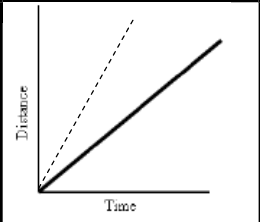
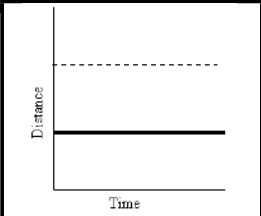
What does this graph represent?
a)
Constant Speed
b)
Acceleration
c)
Not moving
114.
What does this graph represent?
a)
Constant speed
b)
Acceleration
c)
Not moving
115.

In which of the following graphs below are both runners moving at the same speed?

a)
b)
c)
d)
116.

Object is...

a)

(1) speeding up,

(2) constant speed,

(3) speeding up

b)

(1) constant speed.

(2) stopped,

(3) constant speed

117.

Object ...

a)

accelerates... then goes constant speed... then accelerates again

b)

goes constant speed... stops... goes constant speed

118.
What type of boundary is shown at A?
a)
transform
b)
convergent
c)
divergent
d)
subduction
119.
What is happening at point B?
a)
subduction
b)
a divergent boundary
c)
convection
d)
an earthquake
120.
A fault forms at a _________ boundary.
a)
transform
b)
divergent
c)
horizontal
d)
convergent
121.
Mountains form at a ___________ boundary.
a)
transform
b)
divergent
c)
convergent
d)
subduction
122.
A trench forms at a _________ boundary.
a)
convergent
b)
divergent
c)
transform
d)
vertical
123.
A rift valley occurs at a ____________ boundary.
a)
divergent
b)
convergent
c)
transform
d)
horizontal
124.
What forms at a convergent boundary between a continental plate and an oceanic plate?
a)
volcanoes
b)
rift valleys
c)
faults
d)
mid-ocean ridges
125.
What forms at a divergent boundary between two oceanic plates?
a)
rift valley
b)
mountain
c)
mid-ocean ridge
d)
trench
126.
If contour lines are close together, then the slope is
a)
gentle
b)
steep
c)
flat
d)
going up and down
127.
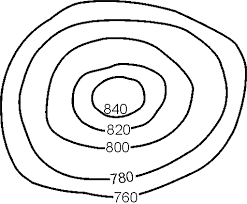
Determine the contour interval:
a)
5 m
b)
10 m
c)
15 m
d)
20 m
128.
What do contour lines that are farther apart represent?
a)
waterfall
b)
steep area
c)
gentle slope
d)
river
129.

The distance between contour lines is called...

a)

Contour interval

b)

Contour line

c)

Colors

d)

Mountains

130.

What is the function of carbohydrates?

a)

provides quick energy

b)

stores energy

c)

helps with growth and repair of tissues

d)

stores genetic information

131.

What is the function of lipids?

a)

provides quick energy

b)

stores energy

c)

helps with growth and repair of tissues

d)

stores genetic information

132.

What is the function of proteins?

a)

provides quick energy

b)

stores energy

c)

helps with growth and repair of tissues

d)

stores genetic information

133.

What is the function of nucleic acid?

a)

provides quick energy

b)

stores energy

c)

helps with growth and repair of tissues

d)

stores genetic information

134.

What is the monomer for carbohydrates?

a)

Monosaccarides

b)

Fatty Acids

c)

Amino Acids

d)

Nucleotides

135.

What is the monomer for Lipids?

a)

Monosaccarides

b)

Fatty Acids

c)

Amino Acids

d)

Nucleotides

136.

What is the monomer for proteins?

a)

Monosaccarides

b)

Fatty Acids

c)

Amino Acids

d)

Nucleotides

137.

What is the monomer for nucleic acid?

a)

Monosaccarides

b)

Fatty Acids

c)

Amino Acids

d)

Nucleotides