wayground logo

Free Printable Worksheets

Font size

S
M
L
XL
Worksheets

Physical Science Midterm study guide

Total questions: 135

Worksheet time: 2hrs 27mins

Name
Class
Date
1.
This variable in an experiment is the one being deliberately changed by the scientist. 
a)
dependent variable
b)
independent variable
c)
data
d)
control group
2.
A possible explanation to a problem that has not yet been tested. 
a)
data
b)
theory
c)
hypothesis
d)
fact
3.
There are two types of data. Which type of data involves numbers that are obtained by counting or measuring?
a)
quantitative
b)
qualitative
4.
Convert from meters to cm:  9 meters
a)
900 cm
b)
90 cm
c)
0.9 cm
d)
0.09 cm
5.
Convert 300 cm to m:
a)
3 m
b)
30 m
c)
0.3 m
d)
0.03 m
6.
490,000 g =____ kg
a)
490
b)
49
c)
4,900
d)
0.49
7.
5,000 mg = ____ g
a)
50
b)
5
c)
500
d)
5,000
8.
Which unit is the smallest?  
a)
km
b)
mm
c)
m
d)
cm 
9.
.79 Km = ______m
a)
79
b)
790
c)
0.79
d)
7,900
10.

What unit is 1000 times bigger than a mm?

a)

cm

b)

km

c)

m

d)

kg

11.
An experiment is performed on plants to see how different liquids affect plant growth. Each plant in the experiment is given a different liquid; water, apple juice, or milk. Each plant has the same amount of soil, sunlight, and listens to the same music. In this investigation, what are the controlled variables?
a)
Type of plant, amount of music, and sunlight
b)
Water, apple juice, milk
c)
Plant growth
12.
An experiment is performed on plants to see how different liquids affect plant growth. Each plant in the experiment is given a different liquid; water, apple juice, or milk. Each plant has the same amount of soil, sunlight, and listens to the same music. In this investigation, what is the dependent variable?
a)
Type of plant
b)
Water, apple juice, milk
c)
Plant growth
13.
What temperature does the thermometer show?
a)
31° C
b)
35° C
c)
32° C
d)
39° C
14.
What temperature does the thermometer show?
a)
15° C
b)
11° C
c)
18° C
d)
-15° C
15.
What property is a balance used to measure?
a)
Size of an object
b)
Mass of an object
c)
Flexibility of an object
d)
Weight of an object
16.
Read this scientific tool to the nearest millimeter.
a)
7.1 mm
b)
7.0 cm
c)
71 mm
d)
71 cm
17.
Many tools measure liquid. What would be the most accurate to measure the volume in a sea shell?
a)
Beaker
b)
Test tube
c)
Measuring cup
d)
Graduated cylinder
18.
Jack has a rock. The rock has a mass of 14g and a volume of 2cm3. What is the density of the rock?
a)
7 mL
b)
7 g/cm3
c)
28 g/cm3
d)
1/7 g/cm3
19.

What is the volume of Object X?

a)

90.0 cm3

b)

30.0 cm3

c)

65.0 cm3

d)

25.0 cm3

20.
Identify the equipment shown here:
a)
graduated cylinder
b)
Erlenmeyer flask
c)
beaker
d)
volumetric flask
21.
Identify the equipment shown here:
a)
beaker
b)
Erlenmeyer flask
c)
Florence flask
d)
volumetric flask
22.
Which item measures more precisely?
a)
test tube
b)
beaker
c)
graduated cylinder
23.

You bought an aquarium for your pet Blobfish. You measured the tank and found its dimensions to be 25cm wide, 35 cm tall and 40 cm deep. You need to fill it with salt water. How many liters of salt water will you need?

a)

35000L

b)

35000mL

c)

35000cm^3

d)

350.00L

e)

35.00L

24.

Lisa is working on a science project. Her task is to answer the question: "Does Rogooti (which is a commercial hair product) affect the speed of hair growth". Which is the independent variable?

a)

Hair growth

b)

Rogooti (hair product)

25.
___hg = 18kg
a)
18,000
b)
180
c)
1,800
d)
1
26.
A scientist has four different liquids and pours them all into a bottle.  The silver liquid sinks to the bottom, the red liquid settles on top of the silver one, and the pink liquid stays at the surface. Which liquid has the smallest density?
a)
the pink liquid
b)
the silver liquid
c)
the red liquid
d)
the water
27.
Which particle has a positive charge?
a)
electron
b)
orbital
c)
proton
d)
neutron
28.
Choose the particle that has no charge.
a)
nucleus
b)
neutron
c)
proton
d)
electron
29.
This particle determines what element you have - the elements identity.
a)
electron
b)
proton
c)
neutron
d)
valence shell
30.
What is the mass of a proton and a neutron?
a)
1amu
b)
2grams
c)
13amu
d)
10cm
31.
This causes the mass of the nucleus to increase.
a)
adding an electron
b)
adding a neutron
c)
more orbitals
d)
adding negatively charged particles
32.
Has a mass of 1/200th the mass of a proton.
a)
electron
b)
neutron
c)
nucleus
d)
electron cloud
33.
An electron has a _____ charge.
a)
negative
b)
positive
c)
neutral
34.
Describe an Electron Cloud?
a)
the mist outside of an atom
b)
home of the protons
c)
where electrons are located
d)
nucleus
35.
Which particles make up the nucleus of an atom?
a)
protons and neutrons
b)
electrons and protons
c)
electrons, protons, and neutrons
d)
electrons and neutrons
36.
The particles of the atom you can find by knowing the atomic number.
a)
neutrons
b)
protons and electrons
c)
protons and neutrons
d)
atomic mass
37.
The subatomic particle that determines the identity of an element.
a)
neutron
b)
proton
c)
electron
d)
outer shell
38.
What charge does the nucleus have and why?
a)
positive - the neutrons do not have a charge
b)
positive - the neutrons and protons are positively charged particles
c)
neutral - the neutral charge dominates the positive charge
d)
neutral - electrons cancel out the positive charge of the atom
39.
What is the mass number and name of an element with 8 protons and 8 neutrons?
a)
16 - Carbon
b)
16 - Oxygen
c)
24 - Oxygen
d)
8 - Neon
40.
An element with a mass number of 10 and an atomic number of 6 has how many protons?
a)
5
b)
8
c)
6
d)
10
41.
An element with a mass number of 11 and an atomic number of 5 has how many neutrons?
a)
11
b)
5
c)
6
d)
16
42.
An atom has 10 protons, 15 neutrons and 10 electrons what is its mass number.
a)
20
b)
10
c)
5
d)
25
43.
Elements on the periodic table increase by...
a)
atomic mass
b)
size
c)
mass number
d)
atomic #
44.
Most of the mass of an atom is contained here.
a)
electron orbitals 
b)
nucleus
c)
shells
d)
atomic #
45.
What is the difference between the atomic mass and the mass number?
a)
the atomic mass is always a whole number
b)
the atomic mass equals the atomic #
c)
mass number is the rounded atomic mass - always a whole number
d)
electrons
46.
Who believed that electrons were scattered amongst positively charged material.
a)
JJ Thomson
b)
Ernest Rutherford
c)
John Dalton
d)
Niels Bohr
47.
Believed that atoms are small, hard particles that were "indivisible"
a)
Democritus
b)
Aristotle
c)
Schrodinger
d)
Greek Philosophers
48.
Did experiments to show that atoms form compound in set ratios.
a)
John Dalton
b)
Schrodinger
c)
Niels Bohr
d)
JJ Thomson
49.
Discovered that the atom has a small, dense, positively charged nucleus.
a)
Ernest Rutherford
b)
Heisenberg
c)
Democritus
d)
JJ Thomson
50.
Believed that all atoms of the same element would be the same.
a)
John Dalton
b)
JJ Thomson
c)
Niels Bohr
d)
Modern Atomic Theory
51.
How many protons does an atom with an atomic number of 28 and a mass number of 40 have?
a)
28
b)
68
c)
12
d)
40
52.
The following element has _____________ electrons.
a)
114
b)
289
c)
175
d)
403
53.
The following element has _______________ neutrons.
a)
15
b)
16
c)
31
d)
46
54.
Ernest Rutherford discovered that atoms were mostly _________________. 
a)
negatively charged
b)
positively charged
c)
electrons
d)
empty space. 
55.
Who discovered the nucleus of an atom?
a)
JJ Thomson
b)
Ernest Rutherford
c)
John Dalton
d)
Democritus
56.
An electron has a _____ charge.
a)
negative
b)
positive
c)
neutral
57.

The symbol for chlorine is C.

a)

true

b)

false

58.

The number of protons in the nucleus of an atom is the same as the

a)

atomic mass

b)

atomic number

c)

atomic mass number

d)

mass number

59.
a)
energy levels
b)
valence electrons
c)
protons
d)
neutrons
60.
a)
energy levels
b)
valence electrons
c)
protons
d)
neutrons
61.
a)
Same group
b)
Same period
62.
a)
Group 1
b)
Group 17
c)
Group 2
d)
Group 18
63.
a)
Group 1
b)
Group 17
c)
Group 18
d)
Group 2
64.
a)
Group 1
b)
Group 17
c)
Group 18
d)
Group 2
65.
a)
Metals
b)
Nonmetals
c)
Metalloids
66.
a)
Metals
b)
Nonmetals
c)
Metalloids
67.
a)
Metals
b)
Nonmetals
c)
Metalloids
68.
a)
Metals
b)
Nonmetals
c)
Metalloids
69.
How did Mendeleev arrange the elements?
a)
alphabetical 
b)
density
c)
melting point
d)
atomic mass
70.
The horizontal row on the periodic table is called a
a)
group
b)
family
c)
period
d)
atomic number
71.
A vertical column is called...
a)
group
b)
tower
c)
period
d)
crew
72.
Which of these element is the least metallic?
a)
Potassium (K)
b)
Carbon (C)
c)
Sulfur (S)
d)
Neon (Ne)
73.
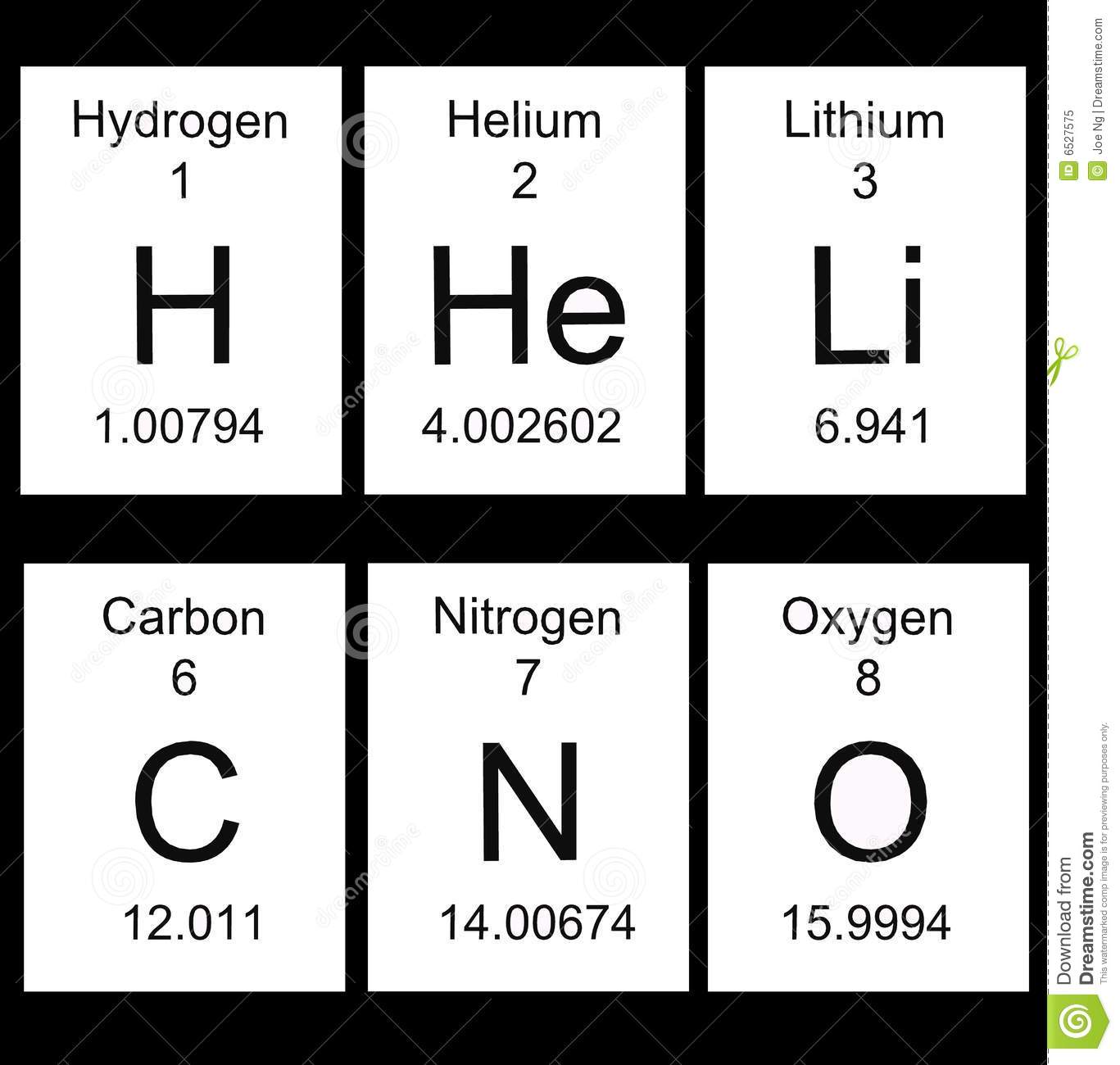
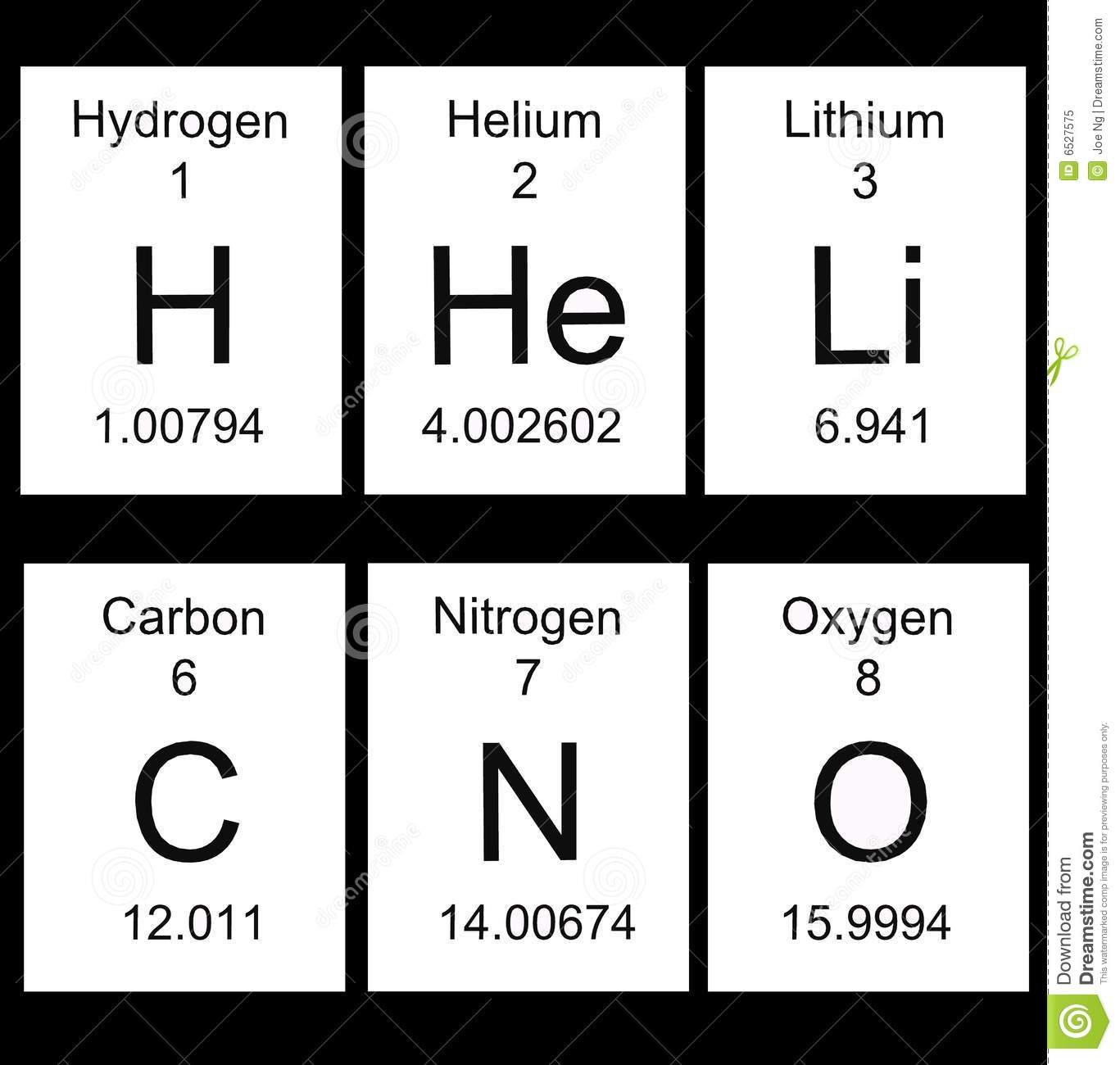
The number at the bottom of each square on the periodic table is the ...
a)
atomic number
b)
atomic mass
c)
chemical symbol
d)
element name
74.
The number at the top of each square on the periodic table is the ...
a)
atomic number
b)
atomic mass
c)
Chemical Symbol
d)
Element Name
75.
Pure forms of these elements are stored in oil so they won't react with oxygen and water in the air.
a)
Alkali Metals
b)
Alkaline-earth metals
c)
Halogens
d)
Noble Gases
76.
What group of elements don't have individual names?
a)
Alkaline-earth Metals
b)
Transition Metals
c)
Alkali Metals
d)
Halogens
77.
Which is an alkali metal?
a)
Magnesium
b)
Iron
c)
Sodium
d)
Europium
78.
How many Valance electrons does Iodine Have?
a)
6
b)
16
c)
7
d)
17
79.
The periodic table has __ periods.
a)
18
b)
8
c)
2
d)
7
80.
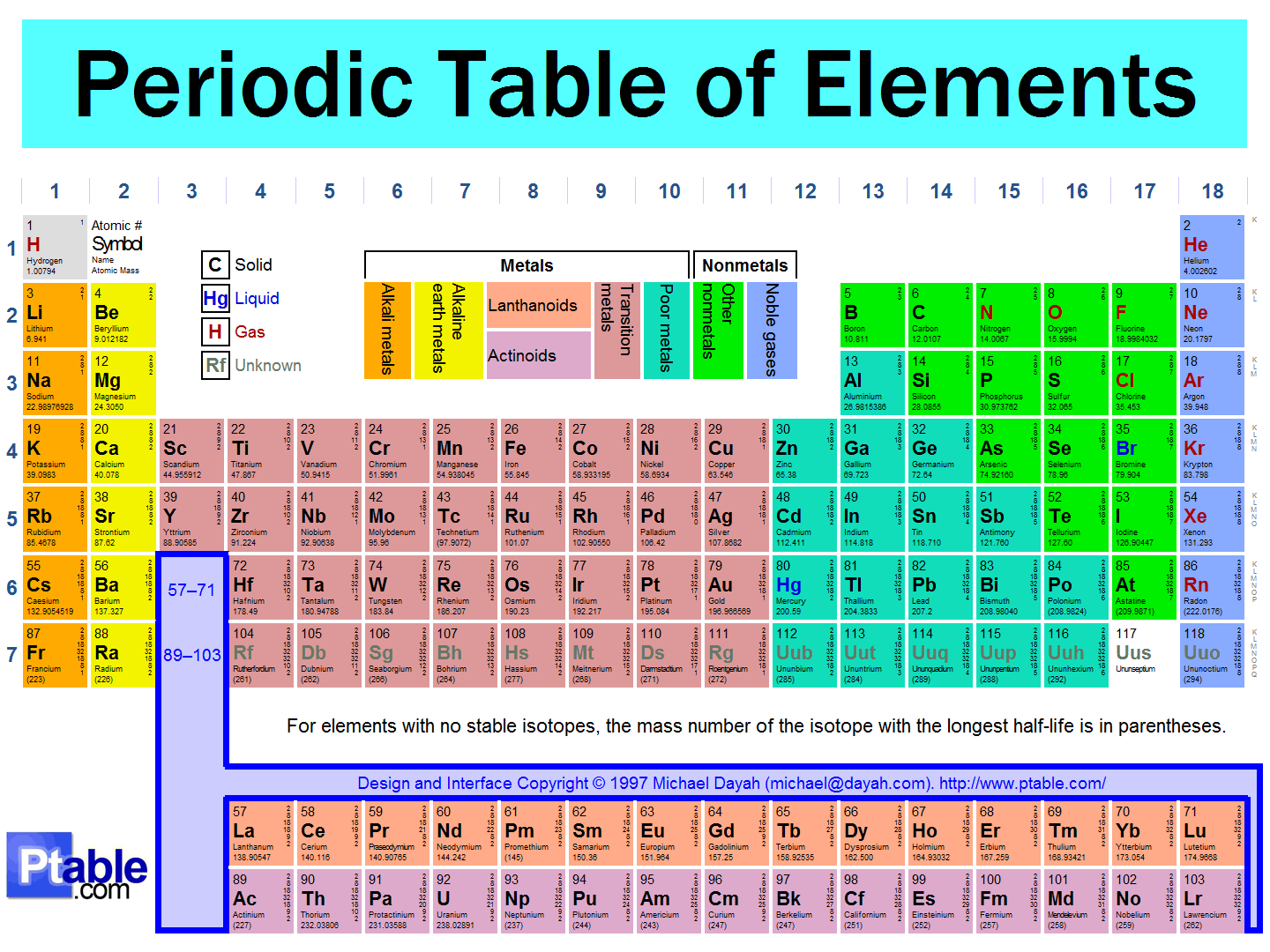
What period and group is Silver (Ag)? 
a)
Period 2, Group 1
b)
Period 3, Group 16
c)
Period 5, Group 11
d)
Period 2, 14
81.
What section is the least reactive? 
a)
yellow
b)
red
c)
dark blue
d)
orange
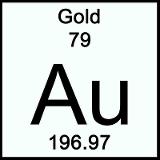
82.
Which number is the atomic mass?
a)
79
b)
196.97
83.
If a material can easily be drawn into the shape of a wire, it is
a)
Ductile
b)
Magnetic
c)
Malleable
d)
Reactive
84.
Elements which are considered semiconductors are 
a)
metal
b)
nonmetal
c)
metalloid
d)
nonexistent
85.

Which of the following describes a metal?

a)

Hard, lustrous, malleable, ductile and readily conduct electricity and heat.

b)

Easily break, cannot be hammered and molded without breaking

c)

Insulators

86.
Which is a halogen?
a)
Helium
b)
Chlorine
c)
Oxygen
d)
Neptune
87.
Which element that starts with a B is an Alkaline Earth Metal?
a)
Barium
b)
Boron
c)
Bread
d)
Bromine
88.

Which of the following is NOT a property of ionic compounds?

a)

They conduct electricity when molten

b)

They conduct electricity when in solution

c)

They have high boiling points

d)

They are insoluble in water

89.
What is the charge on a chloride ion?
a)
-1
b)
1
c)
+2
d)
+1
90.
What is the charge of Neon?
a)
0
b)
+1
c)
-1
d)
1
91.
A(n) _________ is an ion with a positive (+) charge.
a)
anion
b)
cation
c)
ion
d)
solute
92.
Magnesium bromide is an ionic compound with the chemical formula MgBr₂.  What does the "2" tell you?
a)
There are 2 bromide ions for every magnesium ion
b)
Bromide has a 2- charge
c)
Bromide has a 2+ charge
d)
There are 2 magnesium ions to every bromide ion
93.
In the chemical formula for an ionic compound, which item is written first?
a)
positive ion
b)
negative ion
c)
subscript
d)
the female
94.
In what form can an ionic compound conduct electricity?
a)
when dissolved in water
b)
as a solid
c)
as a crystal
d)
when warmed slightly
95.
A charged particle that has gained at least one electron is called a(n) _____.
a)
Anion
b)
Cation
c)
Anonion
d)
chemistry cat
96.
What will be the compound name of the following chemical formula?
NaCl
a)
Potassium Chloride
b)
Sodium Chloride
c)
Calcium Chloride
d)
Sodium Chlorine
97.
Which is the correct name for CaBr2?
a)
Calcium Bromine
b)
Bromine Calcium
c)
Calcium Bromide
d)
Carbon and Bromine
98.
What is the formula of calcium oxide?
a)
CaO2
b)
CaO
c)
Ca2O
d)
CO
99.
Which of the following is a characteristic property of ionic compounds?
a)
They form hard, brittle crystals with characteristic shapes
b)
They have low melting points
c)
They have low boiling points
d)
They contain no charged particles
100.
Covalent compounds
a)
Share electrons
b)
transfer electrons
c)
contain a sea of electrons
d)
conduct electricity
101.
What elements generally make an ionic bond?
a)
metal and nonmetal
b)
2 or more nonmetals
c)
metal
d)
none of the above
102.
Predict the bond that will form between Sr and S.
a)
Ionic
b)
Covalent
103.
How many valence electrons in this structure?
a)
6
b)
5
c)
4
d)
7
104.
Which of the following gives the correct chemical formula for the compound created by the combination of Magnesium and Phosphorus?
a)
Mg2P3
b)
MgP
c)
Mg3P2
d)
MgP2
105.
What type of compound is CaF2?
a)
covalent
b)
ionic
c)
polar
d)
metallic
106.
Multiple bonding occurs with all of the following atoms except
a)
C
b)
F
c)
N
d)
O
107.

A compound that is a poor conductor and has low melting and boiling points is most likely

a)

ionic

b)

metallic

c)

covalent

108.
How many electrons are shared in a triple bond?
a)
6
b)
3
c)
6 pairs
d)
5
109.
The correct Lewis-dot structure for Iodine ( I ) would have how many valence electrons?
a)
2
b)
4
c)
7
d)
8
110.
What is the correct formula for this molecule?
a)
NH
b)
N3H
c)
NH3
d)
NH4
111.
A molecule with a single covalent bond is....
a)
HCl
b)
SO
c)
CO
d)
SO2
112.

Which covalent structure is CO2?

a)
b)
c)
d)
e)

None of these

113.
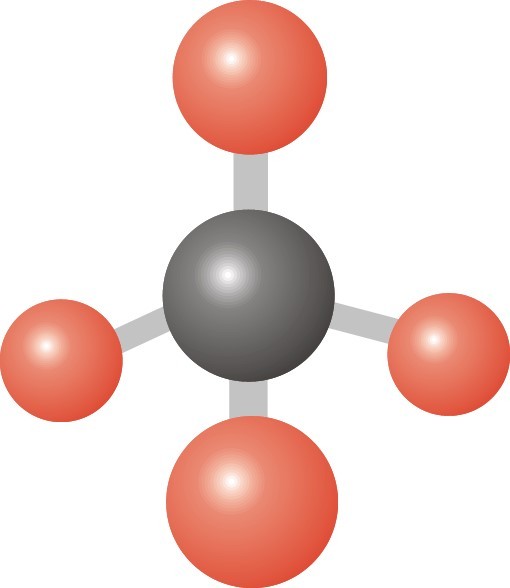
What molecule could be?
a)
CH4
b)
CO2
c)
PCl5
d)
BF3
114.
Which of the following is the correct Lewis dot structure for the molecule fluorine (F2)?
a)
A
b)
B
c)
C
d)
D
115.
What is a substance that is dissolved in another substance? 
a)
solution
b)
solute
c)
solvent
d)
compound
116.
What is a solvent?
a)
The substance that does the dissolving in a solution.
b)
The substance that is being dissolved in a solution.
c)
The mixing of different substances.
d)
The process in which neutral molecules lose or gain electrons
117.
This is the part of a solution that dissolves
a)
Solute
b)
Solvent
c)
Solution
d)
Mixture 
118.
The concentration of a mixture can be increased in which of the following ways?
a)
Heating the mixture
b)
Adding more water “solvent”
c)
Adding more powder “solute”
d)
Stirring the mixture
119.
In the above picture, a powder is about to be poured into the liquid. Which of the following should be done to make this powder dissolve faster?

a)
stir the powder in the liquid
b)
freeze the mixture
c)
add more powder to the liquid
d)
store the mixture in a dark place
120.
A solution that is considered dilute would be....
a)
Dark in color
b)
Have a strong scent
c)
Have a large amount of solute
d)
Have a small amount of solute
121.
Another name for a homogeneous mixture is 
a)
an element.
b)
a solution.
c)
a compound.
122.
Kool-Aid - Powder, sugar, and water
Identify the solvent 
a)
water
b)
powder
c)
sugar
d)
powder and sugar
123.
When a certain amount of solvent cannot hold any more solute it is called a ________ solution.
a)
Diluted
b)
Saturated
124.
When Koolaid mix is light colored and tastes watery it is a _______ solution.
a)
saturated 
b)
diluted
125.
When a Koolaid mix in water is dark in color and very sweet it is a __________ solution.
a)
concentrated 
b)
Diluted
126.
To make a solute dissolve more quickly i n a solvent which would you do?
a)
Put it in cold water and stir it
b)
Put it in warm water and stir it
127.
This type of mixture contains two or more substances that are visibly distinguishable. 
a)
homogeneous
b)
heterogeneous
c)
solution
d)
colloid
128.
Pepsi
a)
Heterogeneous mixture
b)
homogeneous mixture
129.
Which of the following word pairs correctly completes the sentence below?
_______ are corrosive substances characterized as having a strong smell, a sour taste, and a _______.
a)
Acids; pH less than 7
b)
Acids; pH greater than 7
c)
Bases; pH greater than 7
d)
Bases; pH less than 7
130.
The esophagus is the tube that connects the mouth to the stomach. Heartburn occurs when some of the stomach juices flow backwards up the esophagus. To help relieve heartburn, a person should take medicine that is
a)
neutral
b)
basic
c)

acidic or basic.
d)
acidic
131.
If an acid is combined with a base of equal strength, the result will most likely be
a)
a neutral solution.
b)
a stronger acid.
c)
impossible to tell without testing the pH.
d)
a stronger base
132.
Holly has an unknown substance in a beaker. She wants to determine the relative pH of the unknown substance. She places a piece of blue litmus paper into the substance, and the litmus paper stays blue.
The substance in the beaker
a)
is a base.
b)
has a neutral pH.
c)
is an acid.
d)
does not have a pH.
133.
The pH of a solution is tested, and it is found to be a basic solution. Of the following choices, what could the pH have been?
a)
3
b)
9
c)
7
d)
5
134.
Human blood has a pH between 7.35 and 7.45. Which of the following best describes human blood?
a)
strongly acidic
b)
slightly acidic
c)
strongly basic
d)
slightly basic
135.
Many cleaning solutions are bases. Which of the following is a property of most bases?
a)
feels slippery
b)
white color
c)
can only be liquid
d)
tastes sour