wayground logo

Free Printable Worksheets

Font size

S
M
L
XL
Worksheets

Science 7 Final Review #3 (random!)

Total questions: 130

Worksheet time: 2hrs 9mins

Name
Class
Date
1.
How much weight is on this triple beam balance?
a)
272 g
b)
272.5 g
c)
270 g
d)
372 g
2.
How much water is in the graduated cylinder
a)
40
b)
30
c)
35
d)
36
3.
What is this?
a)
Balance
b)
Triple beam balance
c)
Mass
d)
Graduated cylinder
4.
What is the length of the straw?
a)
8 cm 
b)
0 cm 
c)
7 cm 
d)
1 cm 
5.
The boy is in the water.
a)
inference
b)
observation
6.
The weather is cold.
a)
inference
b)
observation
7.
The tree branch is broken.
a)
inference
b)
observation
8.
If the boy crawled out of the water, the goat would push him in.
a)
inference
b)
observation
9.

Using any of your 5 senses to describe the world around you.

a)

Observation

b)

Inference

c)

Quantitative Observation

d)

Logical Theory

10.

Using observations to make a logical theory or good guess.

a)

Observation

b)

Inference

c)

Measuring

d)

Qualitative Observation

11.
This variable in an experiment is the one being deliberately changed by the scientist. 
a)
dependent variable
b)
independent variable
c)
data
d)
control group
12.
The part of the experiment that remains the same for the control and experimental group.
a)
constants
b)
control
c)
independent
d)
dependent
13.
In a controlled experiment, how many variables can be worked with at a time? 
a)
one
b)
none
c)
two or more
d)
how ever many makes sense.
14.
Mr. S. sets up an experiment to see how the mass of a ball affects the distance it rolls off a ramp.  Identify the independent variable.
a)
distance traveled by the ball
b)
height of the ramp
c)
mass of the ball
d)
weight of the ball
15.
A student is planning an experiment to find out how the height from which he drops a ball affects how high the ball bounces. The dependent variable is the _____.
a)
Diameter of the ball
b)
Force acting on the ball
c)
Height that the ball bounces
d)
Height from which the ball is dropped
16.
When experimenting with the growth of a plant, a scientist uses three (of the same type of) plants, two different fertilizers, equal light, and equal water. What type of variable is the fertilizer?
a)
Dependent
b)
Independent
c)
Control
d)
Compound
17.
A student is planning an experiment to find out how the height from which he drops a ball affects how high the ball bounces. The dependent variable is the _____.
a)
Diameter of the ball
b)
Force acting on the ball
c)
Height that the ball bounces
d)
Height from which the ball is dropped
18.
When experimenting with the growth of a plant, a scientist uses three (of the same type of) plants, two different fertilizers, equal light, and equal water. What type of variable is the fertilizer?
a)
Dependent
b)
Independent
c)
Control
d)
Compound
19.
An experiment is performed on plants to see how different liquids affect plant growth. Each plant in the experiment is given a different liquid; water, apple juice, or milk. Each plant has the same amount of soil, sunlight, and listens to the same music. In this investigation, what is the dependent variable?
a)
Type of plant
b)
Water, apple juice, milk
c)
Plant growth
d)
Color of the plant's leaves
20.
Steve wanted to see if the type of fertilizer made sunflowers grow larger. What is the independent variable 
a)
Type of fertilizer
b)
Size of sunflower
c)
type of sun flower
21.
Steve wanted to see if the type of fertilizer made sunflowers grow larger. What is the dependent variable 
a)
Type of fertilizer
b)
Size of sunflower
c)
Type of sunflower
22.
Molly investigated if the age of students caused them to be better drivers. What is the independent variable?
a)
Type of car
b)
Skill of driving
c)
Age of student
23.
Members of a species in a defined area
a)
Ecosystem
b)
community
c)
biodiversity
d)
population
24.
Consumer that eats plants
a)
heterotroph
b)
herbivore
c)
producer
d)
community
25.
Series of steps in which organisms transfer energy by eating and being eaten
a)
foodweb
b)
consumer
c)
food chain
d)
omnivore
26.
Organisms that relies on other organisms for food; consumer
a)
herbivore
b)
decomposer
c)
heterotroph
d)
species
27.
All the organisms in a particular location, including their nonliving environment
a)
ecosystem
b)
carnivore
c)
niche
d)
population
28.
What may happen if the snowshoe hare was removed from the food web pictured?
a)
The insects in the habitat would increase.
b)
The shrew population would decrease due to being only hawk food source.
c)
The willow tree population would decrease.
d)
Foxes would dies due to no food source. 
29.
In the energy pyramid here, how much of the energy in the producers gets passed to the herbivores?
a)
10%
b)
20%
c)
80%
d)
90%
30.

Which of these is the foundation of the Food Web and Energy Pyramid?

a)

Photosynthesis

b)

Plants

c)

Decomposers

d)

Omnivores

31.

Which of these is the main source of energy on Earth?

a)

The Sun

b)

Producers/Plants

c)

Consumers/Animals

d)

Decomposers/Fungi

32.

Which organisms have the ability to use the sun's energy to PRODUCE glucose?

a)

Snakes/Mice

b)

Grass/ Trees

c)

Hawks/Eagles

d)

Fungi/Bacteria

33.
Which organelle performs PHOTOSYNTHESIS?
a)
Chloroplast
b)
Mitochondria
34.
Which of the following is the correct equation for PHOTOSYNTHESIS?
a)
CO+ light + H2O --> O+ Sugar
b)
CO+ sugar + H2O --> O+ light
c)
O2 + light + H2O --> CO+ Sugar
d)
CO+ O2 + H2O --> Light+ Sugar
35.
What is the ultimate ORIGINAL source of energy for living things
a)
Sugar
b)
Sun
c)
Moon
d)
Carbon Dioxide
36.
What is the pigment in chloroplasts that performs photosynthesis?
a)
Chlorosynthesis
b)
Chlorophyll
c)
ADP
d)
Electron Transport
37.
Which gas is removed from the atmosphere during photosynthesis?
a)
hydrogen
b)
oxygen
c)
nitrogen
d)
carbon dioxide
38.
What are the products of photosynthesis?
a)
water and carbon dioxide
b)
oxygen and glucose
c)
oxygen and carbon dioxide
d)
oxygen and water
39.
Plants need ________ for photosynthesis
a)
oxygen
b)
soil
c)
carbon dioxide
d)
sugar
40.
What is the pigment in chloroplasts that performs photosynthesis?
a)
Chlorosynthesis
b)
Chlorophyll
c)
ADP
d)
Electron Transport
41.
What process is the diagram representing?
a)
Photosynthesis
b)
Soil development
c)
Plant reproduction
d)
Nitrogen Cycle
Nitrogen cycle
42.
What is the function of ATP in living things?
a)
provides energy for cells
b)
stores genetic information
c)
provides structure in the nucleus
43.
Autotroph or Heterotroph?
a)
Autotroph
b)
Heterotroph
44.
All living things do which of the following?
a)
Chemosynthesis
b)
Respiration
c)
photosynthesis
d)
all of the answers
45.
C6H12O6 + O2→ ATP+CO2+H2O
What process is this?
a)
Cell respiration
b)
Photosynthesis
c)
Biology
d)
Carbon Cycle
46.
What is released as our body performs cell respiration?
a)
Oxygen
b)
Carbon Dioixde
c)
Poop
d)
Sunlight
47.
A mite lives in the base of the eyelashes of people who use mascara. It feeds on the mascara; it does not seem to harm people. What type of symbiotic relationship is this?
a)
mutualism
b)
commensalism
c)
parasitism
d)
predation
48.
A coyote captures, kills, and eats a rabbit. What type of symbiotic relationship is this?
a)
mutualism
b)
commensalism
c)
parasitism
d)
predation
49.
A tapeworm lives in the intestines of a dog. It absorbs food the dog has eaten and grows larger in the process. The dog becomes weaker from malnutrition. What type of symbiotic relationship is this?
a)
mutualism
b)
commensalism
c)
parasitism
d)
predation
50.
The flower of the yucca plant provides the only location where the yucca moth can lay her eggs. In the process, the moth pollinates the yucca flower. What type of symbiotic relationship is this?
a)
mutualism
b)
commensalism
c)
parasitism
d)
predation
51.
Cleaner shrimp living in the ocean eat ectoparasites (parasites on the outer surface of the animal) off of fish. What type of symbiotic relationship is this?
a)
mutualism
b)
commensalism
c)
parasitism
d)
predation
52.
Bacteria that live on the surface of our teeth require sugar from our food to survive. A by-product of their metabolism (body processes) decays the enamel of teeth. What type of symbiotic relationship is this?
a)
mutualism
b)
commensalism
c)
parasitism
d)
predation
53.
Nematodes (a round worm) live in plants and gain nourisment from the plant but do not seem to harm it. What type of symbiotic relationship is this?
a)
mutualism
b)
commensalism
c)
parasitism
d)
predation
54.
The _________ holds the dna for the cell
a)
vacuole
b)
smooth ER
c)
rough ER
d)
nucleus
55.
This organelle is stores food, water and waste.
a)
Ribosome
b)
Cytoplasm
c)
Vacuole
d)
Mitochondria
56.
What gives instructions to the cells?
a)
DNA
b)
PNA
c)
MBA
d)
NBA
57.
Ribosomes make....
a)
coffee
b)
lunch
c)
protein
d)
other cells
58.
Which type of cell has a true membrane-bound nucleus?
a)
eukaryotic
b)
prokaryotic
59.

which cell is more complex

a)

Eukaryotic

b)

Prokaryotic

60.

Plant cells contain what organelle that animal cells do not?

a)

Chloroplast

b)

nucleus

c)

ER

d)

mitochondria

61.

What is D pointing at?

a)

Flagellum

b)

Pilia

c)

Cell Membrane

d)

Nucleus

62.

Powerhouse

a)

Endoplasmic Reticulum

b)

Cell Wall

c)

Chloroplast

d)

Mitochondria

63.
The outside layer of a cell that controls what goes in and out of the cell.
a)
Chloroplast
b)
Cell membrane
c)
Vacoule
64.
A thick, strong layer that runs outside the membrane of a plant cell that provides extra support.
a)
Nucleus
b)
Cell Membrane
c)
Cell wall
65.
Organelles are.....
a)
Basic unit of all living things
b)
Special structures that do jobs inside the cell 
c)
What all living things are made up of 
d)
Come from other cells 
66.
TT,tt,PP,pp,SS,ss are examples of alleles that are?
a)
homozygous
b)
heterozygous
c)
different
d)
homologous 
67.
shows even if only one parent passes on the gene
a)
recessive
b)
regulatory gene
c)
dominant
68.
the physical look of a trait
a)
phenotype
b)
genotype
c)
recessive
69.
If T=Tall & t=short, what is the genotypic ratio?
a)
1:3
b)
3:1
c)
1:2:1
d)
2:2
70.
B = brown fur  b = white fur
In the Punnett square, what is the probability for white fur
a)
0%
b)
25%
c)
50%
d)
75%
71.
In the Punnett square shown, what must the genotype of the missing parent be?
a)
BB
b)
Bb
c)
bb
d)
Tt
72.
B - black, b - brownTwo black mice mate and have some black and some brown mice.  What is the genotype of the parents?
a)
BB x Bb
b)
BB x bb
c)
Bb x Bb
d)
Bb x bb
73.
What are the possible genotypes for this cross?
(Click the picture to see it without the text)
a)
TT = 25% Tt= 50% tt=25%
b)
all tall
c)
TT= 75% tt = 25%
d)
Tt = 100%
74.
Any change in the sequence of DNA is...
a)
transgenic shift
b)
Single Genotype
c)
Monohybrid Trait
d)
Mutation
75.
What mutation has occurred here? 
T-G-A-C-C-A
T-G-A-G-C-A
a)
Substitution
b)
Deletion
c)
Insertion
d)
Frameshift 
76.
DNA molecule segment is : TTACGCAAG
The mutated DNA segment is TTCGCAAG. This is an example of ___ mutation.
a)
Substitution
b)
Deletion
c)
Insertion
d)
Inversion
77.
Who is considered the "father" of modern genetics?
a)
Einstein
b)
Mendel
c)
Disney
d)
Trump
78.

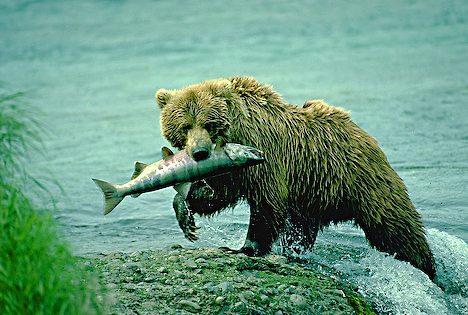
A grizzly bear survives because he is well-adapted to his environment. When he reproduces he passes on those traits to his offspring. this process is called

a)

Natural Selection

b)

Selective Breeding

c)

Random mutations

d)

Variations in a species

79.
What was the name of the scientist who had the theory of evolution?
a)
Lamarck
b)
Einstein
c)
Washington
d)
Darwin
80.
Why are advantageous traits more likely to be passed onto offspring?
a)
Because they are more likely to survive and reproduce.
b)
Because they come from dominant alleles.
c)
Because they come from recessive alleles.
d)
Because the trait is an acquired phenotype.
81.
The diagram below shows fossils in different rock layers. Which of these statements about the age of these fossils is most likely correct?
a)
Fossil 1 and 3 are the same age.
b)
Fossil 2 is older than fossil 3.
c)
Fossils 2 and 4 are the same age.
d)
Fossil 4 is older than fossil 3.
82.
What provided information on the history of life? 
a)
Fossils 
b)
Speciation 
c)
Adaptation 
d)
Evaluation 
83.
Where does an off spring get its traits in asexual reproduction?
a)
From both parents
b)
From only one parent
c)
From neither parent
d)
There are no traits handed down
84.

Reproducing asexually will produce offspring ...

a)

genetically different from each other

b)

genetically identical to the parent

85.

A mode of reproduction by which an organism arises from a single organism and inherit the identical genes of that parent

a)

Asexual Reproduction

b)

Sexual Reproduction

c)

Genetic Variation

d)

Alleles

86.

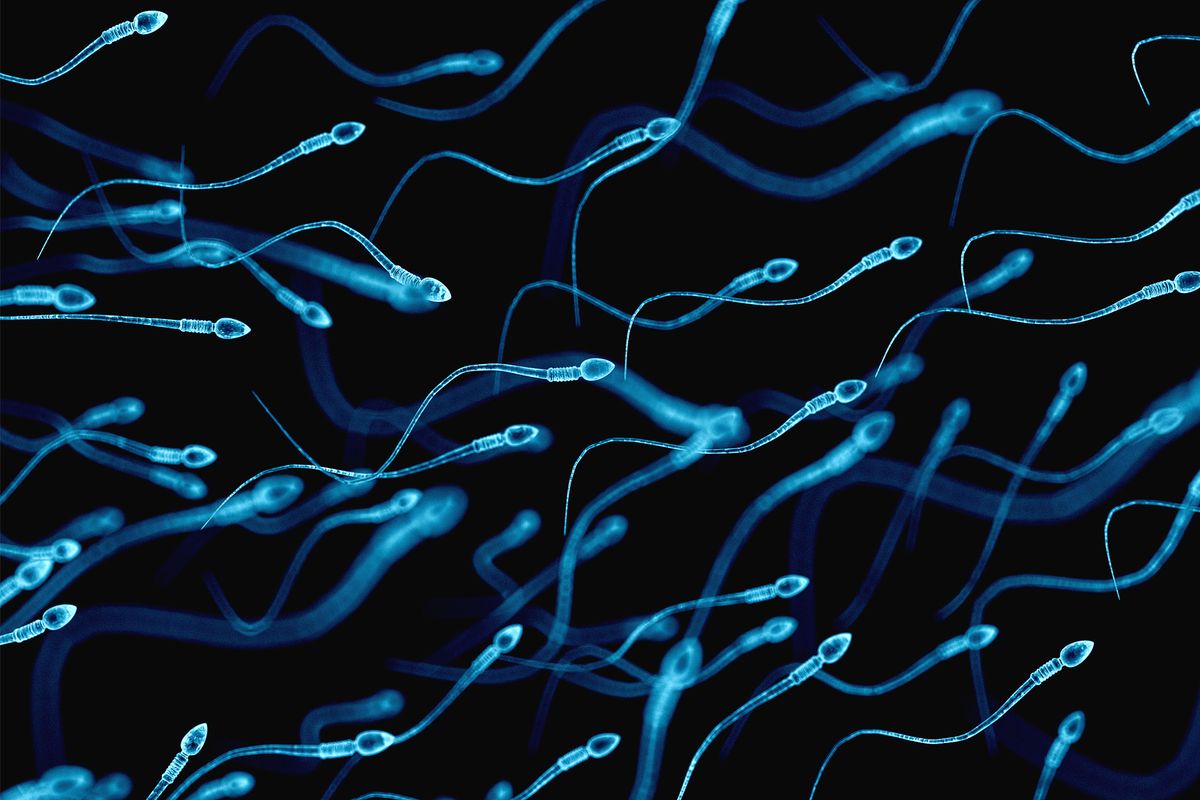
In sexual reproduction the male produces ___ cells.

a)

Malex

b)

Quack

c)

Egg

d)

Sperm

87.

In sexual reproduction the female produces ___ cells.

a)

Femalex

b)

Quack

c)

Egg

d)

Sperm

88.
The correct order of classification from the BROADEST group to the most narrow is:
a)
Species, Genus, Family, Order, Class, Phylum, Kingdom
b)
Kingdom, Phylum, Class, Family, Order, Genus, Species
c)
Kingdom, Family, Order, Phylum, Class, Genus, Species
d)
Kingdom, Phylum, Class, Order, Family, Genus, Species
89.
Using this dichotomous key, identity the name of the circled fish.
a)
band-tail puffer
b)
spotted goat fish
c)
peacock flounder
d)
trumpet fish
90.
From the table, which two animals are MOST CLOSELY related
a)
House Cate and Red Fox
b)
Red Fox and Dog
c)
Dog and Wolf
d)
Wolf and Gopher
91.
The scientific name for an organism is made from the:
a)
class and family name
b)
genus and species name
c)
domain and kingdom name
d)
kingdom and phylum name
92.
The table shows some characteristics of four kingdoms.
Which characteristics would a taxonomist use to classify organisms as Archaebacteria or as Eubacteria?
a)
the internal organization of the cell
b)
the number of cells in an individual
c)
the chemical composition of the cell wall
d)
the nutritional requirements of the organism
93.
What is taxonomy?
a)
The study of DNA and RNA
b)
The study of how organisms are related
c)
The study of classifying and describing organisms
d)
The study of organisms in their habitat
94.
What do you call the protective part of the seed
a)
testa
b)
seed coat
c)
cotelydon
d)
embryo
95.
What part of the seed serves as food for the plant?
a)
embryo
b)
radicle
c)
cotelydon
d)
epicotyl
96.

What does it mean to germinate?

a)

to begin to grow or sprout

b)

to cough on people

c)

A flower that is not opened up or fully grown

d)

None of the above

97.
What part of a plant helps it to stay upright?
a)
leaf
b)
flower
c)
roots
d)
stem
98.
Which organ belongs to the digestive system?
a)
heart
b)
stomach
c)
femur
d)
brain
99.
Which organ belongs to the endocrine system?
a)
pancreas
b)
small intestine
c)
gluteus maximus
d)
spinal cord
100.
Which organ system does the brain belong to?
a)
Reproductive
b)
Cardiovascular
c)
Integumentary
d)
Nervous
101.
Which organ belongs to the muscular system?
a)
femur
b)
humerus
c)
biceps brachii
d)
cranium
102.
Which organ belongs to the reproductive system?
a)
gluteus maximus
b)
humerus
c)
radial artery
d)
testes
103.
Which body system is responsible for producing offspring?
a)
reproductive
b)
respiratory
c)
digestive
d)
skeletal
104.
The respiratory system works together with the ____ system so that all cells of the body receive oxygen. 
a)
nervous
b)
endocrine
c)
circulatory
d)
integumentary
105.
This system provides the body with support, shape, and it helps to protect vital organs. 
a)
nervous
b)
unrinary
c)
skeletal
d)
muscular
106.
This system regulates the metabolism and works with other systems to regulate horomones.  The thyroid gland is an organ of this system.  
a)
nervous
b)
reproductive
c)
digestive
d)
endocrine
107.
 What might the immune system protect our body from?
a)
sugars, fats, and carbs.
b)
viruses, bacteria, fungi, other parasites
c)
viruses, bacteria, fungi, other parasites, carbs, sugars
d)
Cold & Flu
108.
The parts of an ecosystem that are currently living or that have once lived.
a)
Biotic Factor
b)
Abiotic Factor
c)
Species
d)
Biome
109.
Which of the following is not an abiotic factor?
a)
sun
b)
temperature
c)
soil
d)
grass
110.
Which of the following is not a biotic factor?
a)
mushroom
b)
air
c)
elephant
d)
coyote
111.
Is a fern an abiotic or biotic factor? 
a)
abiotic
b)
biotic
112.
Is sunlight an abiotic or biotic factor? 
a)
abiotic
b)
biotic
113.
Which is the longest?
a)
meter
b)
kilometer
c)
centimeter
d)
milimeter
114.
What would you use to measure the liquid in a coffee cup?
a)
liter
b)
mililiter
c)
gallon
115.
gram and kilogram measures
a)
capacity
b)
length
c)
time
d)
mass
116.
What is the abbreviation for milliliters?
a)
ML
b)
Ml
c)
mL
d)
ml
117.
What is the appropriate unit of measurement for the amount of water in a lake?
a)
L
b)
mL
c)
cm
d)
m
118.
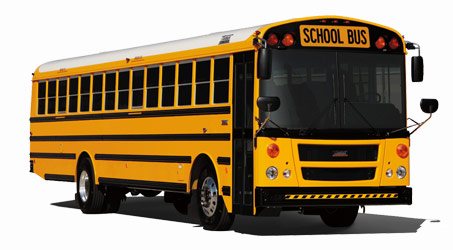
I would measure this bus in
a)
centimeters
b)
milimeters
c)
kilometers
d)
meters
119.
The thickness of a penny is about 
a)
1 milimeter
b)
2 grams
c)
1 centimeter
d)
2 mililiters
120.
When is it OK to eat or drink in the lab?
a)
Always
b)
Never
121.
What should you do if you break glass in the lab?
a)
Tell the teacher.
b)
Sweep up the glass.
c)
Pick up the glass with your hands.
d)
Ignore it; the teacher will clean it up when she sees it later.
122.
When should you tie back long hair or baggy clothing?
a)
When working with chemicals
b)
When working with a Bunsen burner
c)
When doing dissections.
d)
Any time you are working in the lab.
123.
I must follow all instructions, written and verbal, about the laboratory procedures given by the teacher.
a)
True
b)
False
124.
When in the lab...
a)
long sleeves and loose clothing should be rolled up
b)
closed toe shoes should be worn
c)
long hair should be pulled back
d)
all of the above
125.

Puppies are born blind and deaf

a)

False

b)

True

126.

Dalmatian puppies are born with spots

a)

True

b)

False

127.

The average adult dog has how many teeth?

a)

25

b)

32

c)

42

d)

50

128.

A dog's sense of hearing is how many times farther than a human's?

a)

2 times the distance

b)

4 times the distance

c)

10 times the distance

d)

20 times the distance

129.

Which of the following is the fastest dog breed?

a)

Border Collie

b)

German Shepard

c)

Great Dane

d)

Grey Hound

130.

A dog's nose print is one of a kind, like fingerprints

a)

True

b)

False