wayground logo

Free Printable Worksheets

Font size

S
M
L
XL
Worksheets

Unit 9 Interdependence Study Quiz

Total questions: 132

Worksheet time: 2hrs 6mins

Name
Class
Date
1.
What would best explain the decrease in primary producers?
a)
an increase in solar energy
b)
a decrease in O2 levels in the H2O
c)
a decrease in the population of tertiary consumers
d)
an increase in the population of primary consumers
2.
What would likely be the result if a pesticide is used to reduce the # of harvester ants?
a)
an increase in snakes & a decrease in hawks
b)
a decrease in snakes & an increase in hawks
c)
a decrease in mesquite bushes & an icnrease in horned lizards
d)
an increase in mesquite bushes & a decrease in horned lizards
3.
Which of these factors is most important for reestablishing plants & trees on an abandoned farm?
a)
sunlight & CO2
b)
O2 and CO2
c)
glucose & N
d)
ATP and xylem
4.
A decrease in the frog population would MOST likely lead to an increase in the population of which organisms?
a)
owl
b)
grass
c)
snake
d)
grasshopper
5.
To reduce erosion in an area, an exotic fast-growing vine is introduced into the area without any growth control.  How will the new plant most likely have an effect on the ecosystem?
a)
The vine will provide protection for the native plants
b)
The vine will provide more CO2 to all of the other species
c)
The vine will compete with native plants for resources
d)
The vine will compete with native animals for food, water, and minerals
6.
In Southern California, the intentional reduction of the coyote population has led to a decrease in the types of song birds in that area.  Which is a likely explanation why song bird populations have decreased?
a)
Coyotes feed on animals that prey on song birds.
b)
Coyotes protect nests built by bird songs.
c)
Song birds are killed by diseases carried by coyotes.
d)
Song birds feed on animal matter killed by coyotes.
7.
A farmer plows a field of grass to plant crops.  Which population of animals will MOST likely be impacted the greatest from the habitat change?
a)
deer that feed on field plants
b)
birds that nest in forest trees
c)
moles that burrow in shallow soil
d)
insects whose larva feed on dead animals
8.

Reorder the following from simple to complex.

a)

cell

b)

tissue

c)

organ

d)

organ system

e)

organism

1)
2)
3)
4)
5)
9.

Match the following

a)

heterozygous

1.

genes are different

b)

homozygous

2.

genes are the same

c)

offspring

3.

children

d)

phenotype

4.

physical characteristics

e)

genotype

5.

genetic material (DNA)

10.
Eats plants and animals (example: humans)
a)
Herbivore
b)
Carnivore
c)
Omnivore
d)
Decomposer
11.
Breaks down dead organisms (example: bacteria and fungi)
a)
Herbivore
b)
Carnivore
c)
Omnivore
d)
Decomposer
12.

A student observing animals in a park records ways they interact with living and nonliving parts of their environment. All of the following are ways animals interact with nonliving parts of their environment except:

a)

A turtle suns itself on a hollow log.

b)

A bird reacts to morning sunlight by singing.

c)

A rabbit eats grass near the edge of a pond.

d)

A spider crawls under a rock for protection.

13.
An organism that is hunted for food
a)
Predator
b)
Gather
c)
Prey
d)
Hunter
14.
Eats plants and animals (example: humans)
a)
Herbivore
b)
Carnivore
c)
Omnivore
d)
Decomposer
15.
Breaks down dead organisms (example: bacteria and fungi)
a)
Herbivore
b)
Carnivore
c)
Omnivore
d)
Decomposer
16.

A relationship between two organisms in which one organism benefits and the other is not affected...

a)

Mutualism

b)

Competition

c)

Parasitsm

d)

Commensalism

17.

A relationship between two organisms in which both organisms benefit

a)

Mutualism

b)

Competition

c)

Parasitsm

d)

Commensalism

18.

A relationship between 2 organisms in which one organism benefits and the other is harmed

a)

commensalism

b)

parasitism

c)

mutualism

d)

predation

19.

How much energy (as a percentage) moves up an energy pyramid/food chain from one trophic level to the next? Use only numbers in your answer- NO % sign.

(a)  

20.

Producers are also known as (a)   . They are plants that make their own food.

21.

Consumers are also know as (a)   . They get their energy from eating producers or other consumers.

22.

What is the symbiotic relationship where one organism benefits and the other is harmed?

(a)  

23.

What is the symbiotic relationship where both organisms benefit?

(a)  

24.

What is the symbiotic relationship where one organism benefits and the other is not affected?

(a)  

25.

What percentage of the energy available on a trophic level is used by the organism to live (find food, maintain homeostasis, make offspring, etc.)? Use only numbers in your answer- NO % sign.

(a)  

26.

Which one of these is a producer?

a)

Mushroom

b)

Bear

c)

Sloth

d)

Sunflower

27.

Photosynthesis is the process where plants use energy from sunlight to ____________________.

a)

stay

b)

grow

c)

make food

d)

store water

28.

Which living organism is considered a decomposer?

a)

racoon

b)

mushroom

c)

reeds

d)

hawk

29.

How does energy move in this food chain?

a)

frog, marsh grass, dragonfly, sun

b)

marsh grass, sun, dragonfly, frog

c)

frog, marsh grass, dragonfly, sun

d)

sun, marsh grass, dragonfly, frog

30.

A living organism that only eats plants is called a _______________.

a)

omnivore

b)

carnivore

c)

herbivore

d)

producer

31.

Which organism is NOT a consumer?

a)

large fish

b)

shark

c)

seaweed

d)

small fish

32.
The relationship between ALL the organisms in a community showing who eats whom is called a ___________________________.
a)
Food Web
b)
Food Chain
c)
Abiotic Factors
d)
Biotic Factors
33.
One path that energy could take through an ecosystem is called a ________________________.
a)
Food Web
b)
Food Chain
c)
Abiotic Factors
d)
Biotic Factors
34.
Where does the energy that travels through an ecosystem originally come from?
a)
Earth's Core
b)
Water
c)
Plants
d)
The Sun
35.
An animal that only eats other animals is a _______________.
a)
carnivore
b)
omnivore
c)
herbivore
d)
decomposer
36.
In the food web shown, the snail would be considered...
a)
primary consumer
b)
secondary consumer
c)
tertiary consumer
d)
producer
37.
Which best describes what a food chain shows you?
a)
Energy flowing through an ecosystem
b)
Food flowing through an ecosystem
c)
Consumers eating other organisms
38.
What is the role of decomposers in a food chain?
a)
Use sunlight to make food
b)
Eat other organisms to gain energy
c)
Make the food for the whole food chain
d)
Break down dead organisms and add nutrients to the soil
39.
Temperature, light, air, water, and soil are all  _____  parts of the environment
a)
alive
b)
biotic 
c)
abiotic
d)
living
40.
Is a deer an abiotic or biotic factor? 
a)
abiotic
b)
biotic
41.
Is a weather an abiotic or biotic factor? 
a)
abiotic
b)
biotic
42.
A living or once-living organisms in an ecosystem is a
a)
population
b)
biotic factor
c)
abiotic factor
d)
community
43.
Is sunlight an abiotic or biotic factor? 
a)
abiotic
b)
biotic
44.
Which of the following is not a biotic factor?
a)
mushroom
b)
air
c)
elephant
d)
coyote
45.
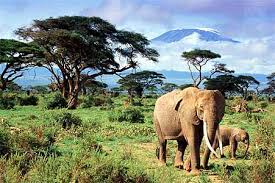
What are the biotic factors in this image?
a)
sunlight, elephants, and grasses
b)
sunlight, water,  and air
c)
elephants, plants, trees 
46.
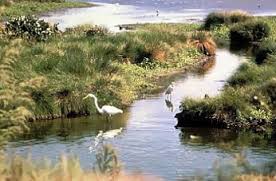
What are the abiotic factors in this image? 
a)
water, sunlight, dirt, air
b)
birds and plants
c)
water, plants, and birds 
47.
A certain plant needs moisture, carbon dioxide, oxygen, light, and minerals to survive. This scenario shows that this particular living organism depends on .
a)
Biotic and Abiotc Factors
b)
Biotic Factors 
c)
Abiotic Factors 
d)
None of the Above
48.
What is it called when a group of the same organisms living together in the same place at the same time?
a)
An organism
b)
A population
c)
A community
d)
A biome
49.
What are groups of different populations living togther in the same place at the same time called?
a)
An organism
b)
A population
c)
A community
d)
A biosphere
50.
What is it called when you have groups of different populations along with their abiotic factors?
a)
An organism
b)
A population
c)
A community
d)
An ecosystem
51.
When all the ecosystems on Earth are combined it is called...
a)
a community.
b)
a biome.
c)
a biosphere.
d)
an Earthsphere.
52.

Jacob is going out to his grandparents farm. On the farm is a stream that he likes to fish at. When he is fishing he sees many different species of fish as well as maple and oak trees and dragonflies. What Jacob is seeing is an example of what level of organization?

a)

organism

b)

population

c)

community

d)

ecosystem

53.
What are the ecological levels of organization from smallest to the largest?
a)
organism, population, community, ecosystem, biome, biosphere
b)
organism, community, population, ecosystem, biome, biosphere
c)
organism, population, community, biome, ecosystem, ecosphere.
d)
organism, community, population, biome, ecosystem, ecosphere
54.
An organism that is hunted for food
a)
Predator
b)
Gather
c)
Prey
d)
Hunter
55.
Eats plants and animals (example: humans)
a)
Herbivore
b)
Carnivore
c)
Omnivore
d)
Decomposer
56.
Breaks down dead organisms (example: bacteria and fungi)
a)
Herbivore
b)
Carnivore
c)
Omnivore
d)
Decomposer
57.

A student observing animals in a park records ways they interact with living and nonliving parts of their environment. All of the following are ways animals interact with nonliving parts of their environment except:

a)

A turtle suns itself on a hollow log.

b)

A bird reacts to morning sunlight by singing.

c)

A rabbit eats grass near the edge of a pond.

d)

A spider crawls under a rock for protection.

58.
Which of these living organisms is interacting with another living organism in the environment?
a)
A mole digs a tunnel in a forest meadow.
b)
A hummingbird drinks nectar from a flower.
c)
An white hare burrows in the snow for camouflage.
d)
A pelican skims the ocean surface.
59.
What would best explain the decrease in primary producers?
a)
an increase in solar energy
b)
a decrease in O2 levels in the H2O
c)
a decrease in the population of tertiary consumers
d)
an increase in the population of primary consumers
60.
What would likely be the result if a pesticide is used to reduce the # of harvester ants?
a)
an increase in snakes & a decrease in hawks
b)
a decrease in snakes & an increase in hawks
c)
a decrease in mesquite bushes & an icnrease in horned lizards
d)
an increase in mesquite bushes & a decrease in horned lizards
61.
A decrease in the frog population would MOST likely lead to an increase in the population of which organisms?
a)
owl
b)
grass
c)
snake
d)
grasshopper
62.
To reduce erosion in an area, an exotic fast-growing vine is introduced into the area without any growth control.  How will the new plant most likely have an effect on the ecosystem?
a)
The vine will provide protection for the native plants
b)
The vine will provide more CO2 to all of the other species
c)
The vine will compete with native plants for resources
d)
The vine will compete with native animals for food, water, and minerals
63.

How does energy move in this food chain?

a)

frog, marsh grass, dragonfly, sun

b)

marsh grass, sun, dragonfly, frog

c)

frog, marsh grass, dragonfly, sun

d)

sun, marsh grass, dragonfly, frog

64.

Which organism is NOT a consumer?

a)

large fish

b)

shark

c)

seaweed

d)

small fish

65.
The relationship between ALL the organisms in a community showing who eats whom is called a ___________________________.
a)
Food Web
b)
Food Chain
c)
Abiotic Factors
d)
Biotic Factors
66.
One path that energy could take through an ecosystem is called a ________________________.
a)
Food Web
b)
Food Chain
c)
Abiotic Factors
d)
Biotic Factors
67.
In the food web shown, the snail would be considered...
a)
primary consumer
b)
secondary consumer
c)
tertiary consumer
d)
producer
68.
Which best describes what a food chain shows you?
a)
Energy flowing through an ecosystem
b)
Food flowing through an ecosystem
c)
Consumers eating other organisms
69.

Rabbit eats the grass and the fox eats the rabbit, so the fox is

a)

prey

b)

primary consumer

c)

secondary consumer

d)

omnivores

70.

A living thing that can manufacture its own food such as plants is known as

a)

herbivores

b)

producer

c)

consumer

d)

carnivores

71.

Plants need which of the following in order to photosynthesis?

a)

Water, light and nutrients

b)

Water, warmth and oxygen

c)

Light, food and warmth

72.

The green pigment in plants called chlorophyll, enables plants to trap sunlight energy

a)

True

b)

False

73.

Which of the following do plants compete for?

a)

Light

b)

Space

c)

Mates

74.

Which of the following do animals compete for?

a)

Food

b)

Light

c)

Mates

75.

How much energy (as a percentage) moves up an energy pyramid/food chain from one trophic level to the next? Use only numbers in your answer- NO % sign.

(a)  

76.

Producers are also known as (a)   . They are plants that make their own food.

77.

Consumers are also know as (a)   . They get their energy from eating producers or other consumers.

78.

What percentage of the energy available on a trophic level is used by the organism to live (find food, maintain homeostasis, make offspring, etc.)? Use only numbers in your answer- NO % sign.

(a)  

79.

Which one of these is a producer?

a)

Mushroom

b)

Bear

c)

Sloth

d)

Sunflower

80.

Photosynthesis is the process where plants use energy from sunlight to ____________________.

a)

stay

b)

grow

c)

make food

d)

store water

81.

Which living organism is considered a decomposer?

a)

racoon

b)

mushroom

c)

reeds

d)

hawk

82.

How does energy move in this food chain?

a)

frog, marsh grass, dragonfly, sun

b)

marsh grass, sun, dragonfly, frog

c)

frog, marsh grass, dragonfly, sun

d)

sun, marsh grass, dragonfly, frog

83.

A living organism that only eats plants is called a _______________.

a)

omnivore

b)

carnivore

c)

herbivore

d)

producer

84.

Which organism is NOT a consumer?

a)

large fish

b)

shark

c)

seaweed

d)

small fish

85.
The relationship between ALL the organisms in a community showing who eats whom is called a ___________________________.
a)
Food Web
b)
Food Chain
c)
Abiotic Factors
d)
Biotic Factors
86.
One path that energy could take through an ecosystem is called a ________________________.
a)
Food Web
b)
Food Chain
c)
Abiotic Factors
d)
Biotic Factors
87.
Where does the energy that travels through an ecosystem originally come from?
a)
Earth's Core
b)
Water
c)
Plants
d)
The Sun
88.

An animal that only eats other animals is a (a)   .

89.
In the food web shown, the snail would be considered...
a)
primary consumer
b)
secondary consumer
c)
tertiary consumer
d)
producer
90.
Which best describes what a food chain shows you?
a)

Energy flowing through an ecosystem

b)

Food flowing through an ecosystem

c)

Consumers eating other organisms

91.
What is the role of decomposers in a food chain?
a)

Use sunlight to make food

b)

Eat other organisms to gain energy

c)

Make the food for the whole food chain

d)

Break down dead organisms and add nutrients to the soil

92.

Match the following energy terms with their definition.

a)

Organisms that eat producers. Trophic Level 2

1.

Primary Consumer

b)

Fungi and bacteria that convert organic matter into small elements and molecules that can be recycled back into the ecosystem.

2.

Decomposers

c)

Secondary Consumers. Examples: woodpeckers, foxes, humans (sometimes!), salmon

3.

Trophic Level 3

d)

A complex model of how energy and matter move between trophic levels.

4.

Food Web

e)

The sequence of consumption from producers through tertiary consumers.

5.

Food chain

93.
Question Image

Match the following from this food web

a)

Producer

1.

Phytoplankton

b)

Primary Consumer

2.

Zooplankton

c)

Secondary Consumer

3.

Coral

d)

Tertiary Consumer

4.

Parrotfish

e)

TOP predator

5.

Shark

94.

Aardvarks eat termites. Aardvarks are termites' ______.

a)

consumers

b)

producers

c)

prey

d)

predators

95.

Producers ( (a)   )- Captures energy from sunlight or chemicals and use that energy to produce food.

96.

(a)   (Heterotrophs)- Organisms that rely on other organisms for their energy and food supply.

97.
An organism that is hunted for food
a)
Predator
b)
Gather
c)
Prey
d)
Hunter
98.
Eats plants and animals (example: humans)
a)
Herbivore
b)
Carnivore
c)
Omnivore
d)
Decomposer
99.
Breaks down dead organisms (example: bacteria and fungi)
a)
Herbivore
b)
Carnivore
c)
Omnivore
d)
Decomposer
100.

A student observing animals in a park records ways they interact with living and nonliving parts of their environment. All of the following are ways animals interact with nonliving parts of their environment except:

a)

A turtle suns itself on a hollow log.

b)

A bird reacts to morning sunlight by singing.

c)

A rabbit eats grass near the edge of a pond.

d)

A spider crawls under a rock for protection.

101.
Which of these living organisms is interacting with another living organism in the environment?
a)
A mole digs a tunnel in a forest meadow.
b)
A hummingbird drinks nectar from a flower.
c)
An white hare burrows in the snow for camouflage.
d)
A pelican skims the ocean surface.
102.
What would best explain the decrease in primary producers?
a)
an increase in solar energy
b)
a decrease in O2 levels in the H2O
c)
a decrease in the population of tertiary consumers
d)
an increase in the population of primary consumers
103.
What would likely be the result if a pesticide is used to reduce the # of harvester ants?
a)
an increase in snakes & a decrease in hawks
b)
a decrease in snakes & an increase in hawks
c)
a decrease in mesquite bushes & an icnrease in horned lizards
d)
an increase in mesquite bushes & a decrease in horned lizards
104.
A decrease in the frog population would MOST likely lead to an increase in the population of which organisms?
a)
owl
b)
grass
c)
snake
d)
grasshopper
105.
To reduce erosion in an area, an exotic fast-growing vine is introduced into the area without any growth control.  How will the new plant most likely have an effect on the ecosystem?
a)
The vine will provide protection for the native plants
b)
The vine will provide more CO2 to all of the other species
c)
The vine will compete with native plants for resources
d)
The vine will compete with native animals for food, water, and minerals
106.

How much energy (as a percentage) moves up an energy pyramid/food chain from one trophic level to the next? Use only numbers in your answer- NO % sign.

(a)  

107.

What is the symbiotic relationship where one organism benefits and the other is harmed?

(a)  

108.

What is the symbiotic relationship where both organisms benefit?

(a)  

109.

What is the symbiotic relationship where one organism benefits and the other is not affected?

(a)  

110.

How does energy move in this food chain?

a)

frog, marsh grass, dragonfly, sun

b)

marsh grass, sun, dragonfly, frog

c)

frog, marsh grass, dragonfly, sun

d)

sun, marsh grass, dragonfly, frog

111.

Which organism is NOT a consumer?

a)

large fish

b)

shark

c)

seaweed

d)

small fish

112.
The relationship between ALL the organisms in a community showing who eats whom is called a ___________________________.
a)
Food Web
b)
Food Chain
c)
Abiotic Factors
d)
Biotic Factors
113.
One path that energy could take through an ecosystem is called a ________________________.
a)
Food Web
b)
Food Chain
c)
Abiotic Factors
d)
Biotic Factors
114.
In the food web shown, the snail would be considered...
a)
primary consumer
b)
secondary consumer
c)
tertiary consumer
d)
producer
115.
Which best describes what a food chain shows you?
a)
Energy flowing through an ecosystem
b)
Food flowing through an ecosystem
c)
Consumers eating other organisms
116.

Rabbit eats the grass and the fox eats the rabbit, so the fox is

a)

prey

b)

primary consumer

c)

secondary consumer

d)

omnivores

117.

A living thing that can manufacture its own food such as plants is known as

a)

herbivores

b)

producer

c)

consumer

d)

carnivores

118.

Plants need which of the following in order to photosynthesis?

a)

Water, light and nutrients

b)

Water, warmth and oxygen

c)

Light, food and warmth

119.

Food chains always begin with a -----------------------------

(a)  

120.

Which of the following do plants compete for?

a)

Light

b)

Space

c)

Mates

121.

Which of the following do animals compete for?

a)

Food

b)

Light

c)

Mates

122.

Decomposers do NOT need energy to live.

a)

True

b)

False

123.

How does the food chain start?

a)

Plant life uses energy from the sun to make food.

b)

Insects like grasshoppers eat plant life.

c)

Animals like rats eat insects.

d)

Humans eat large animals and plant life.

124.

What do we call an animal that gets eaten in a food chain?

a)

prey

b)

predator

c)

producer

d)

consumer

125.

An animal cannot be both a predator and prey.

a)

True

b)

False

126.

Which of the following are producers?

a)

plants

b)

humans

c)

snakes

d)

birds

127.

What is the role of decomposers in the food chain?

a)

to consume plants and animals

b)

to produce food using energy from the sun

c)

to eat decaying matter and return nutrients to the soil

d)

to hunt prey

128.

Seals eat fish. What would happen to the seal population if almost all of the fish died?

a)

The population would grow.

b)

The population would shrink.

129.

Lions eat zebras. What would happen to the zebra population if all the lions died?

a)

The population would grow.

b)

The population would shrink.

130.

Aardvarks eat termites. Aardvarks are termites' ______.

a)

consumers

b)

producers

c)

prey

d)

predators

131.

How do consumers get energy to live?

a)

They make their own food from the soil.

b)

They break down decaying matter.

c)

They make their own food from the sun.

d)

They eat other plants and animals.

132.

Match the following

a)

population

1.

a group of organisms of one species that live in an area at the same time.

b)

community

2.

different populations in an area

c)

ecosystem

3.

all the living and nonliving things in an area and their interactions

d)

habitat

4.

a place that provides all the things an organism needs to live

e)

niche

5.

the role an organism has in an ecosystem