
 Worksheets
Cells
Total questions: 136
Worksheet time: 2hrs 13mins
These are the smallest unit of life
(a)
All cells come from
other cells
spontaneous generation
the aether
all of these
This person first described cells
Virchow
Hooke
Schleiden
Schwann
This is a structure in a cell which has a specific job
tissue
organ
organelle
plasma
these organisms have cells without organelles
prokaryotes
eukaryotes
These organisms have cells with organelles
prokaryotes
eukaryotes
the organelle where respriation occurs
(a)
This organelle is the control centre of a cell
(a)
This gives plant cells their structure and support
(a)
The organelle where photosynthesis occurs
nucleus
mitochondria
vacuole
chloroplast
A reactant for photosynthesis
oxygen
carbon dioxide
glucose
sunlight
A product of photosynthesis
carbon dioxide
glucose
sunlight
water
This is needed to study cells
(a)
The part of the microscope that you put the slide
eye piece
stage
focus knob
objective lens
You add this to a cell to make it more contrasted when preparing a slide
water
dye
salt
solute
The part of the microscope that you look through
objective lens
eye piece
stage
focus knob
If the eye piece is x 10 magnification, and the selected objective lens is x 40 magnification, the total magnification is
100 x
200 x
400 x
20 x
To make something appear bigger you need to (a) it
This is the ability to distinguish two points clearly
enlargement
magnification
resolution
specimen
This is a reactant for respiration
water
oxygen
carbon dioxide
lipids
Movement of a fluid from high concentration to a region of low concentration
ventricle
osmosis
diffusion
flow
Movement of water through a semi-permeable membrane, from a region of low solute to a region of high solute concentration
diffusion
osmosis
The part of a solution that dissolves
solute
solvent
The part of a solution that causes the solute to dissolve
solvent
solute
All plant cells have chloroplasts, even the root hair cells
true
false
All plants are multicellular
true
false
These are prokaryotes
plants
animals
bacteria
fungi
All animal cells have a cell wall
true
false
All plant cells have a cell wall
true
false



Eyepiece = 10X
Objective lens = 55X


Every living thing is made up of:
cells
microscopes
environment

What is the name of part 1?
Arm
Eye piece
Objective lens
Stage

What is the name of part 4?
Base
Eye piece
Light source
Objective lens
Cell theory states that...
cells are the basic building block of life
cells are cool
cells are microscopic
cells cannot be destroyed
Which of the following is the LEAST complex level of organization?
Tissue
Organism
Cell
Organ
Which of the following is the MOST complex level of organization?
Organism
Organ System
Cell
Tissue
What is a group of several organs working together to perform a function?
Organ System
Cell
Atom
Organ
What is the most you can magnify with our in class microscopes?
40x
10x
4x
400x


Match the following types of cells with their examples
Prokaryotic
Bacteria (like E. Coli)
Eukaryotic (animal)
Humans
Eukaryotic (plant)
Fruit (like mangos)
Reorder the following levels of organization from smallesr to biggest
cells
tissue
organs
organ systems
organism
The most ancient and simple type of cell is the (a)
Match the following cell type to something about it
No nucleus
Prokaryotic
Has chloroplasts for photosynthesis
Eukaryotic (plant)
Has microtubules
Eukaryotic (animal)
A certain microscope has an eyepiece with 10x magnification and an objective lens with 8x magnification. What is the total magnification?
80x
18x
40x
10x
How confident do you feel on this material so far?
Very confident
Confident
Not confident
Not very confident at all
What is a cell
Cells are the smallest living thing
they are fundamental units of life
and in all living things
cells make up tissue
What is a prokaryotic cell
less complex than Eukaryotic cells
no nuclear bound organelles
genetic material is in cytoplasm
unicellular
What is cytoplasm?
jelly like substance
supports organelles
helps the cell hold its shape
only in plant cells
What is a vacuole
membrane bound
stores materials and waste
stores ATP energy
maintains pressure in cells
What are the 3 parts of the cell theory
(a)
what is an organelle?
its a prokaryote
another name for a living thing
Small membrane bound structures that are specialized to do a special function
organelles are pointless
What is a cell wall?
Only in a plant cell
it gives extra support/ structure
only in animal cell
controls what comes in and out
What is a Eukaryote ?
Larger more complex
-genetic material is in nucleus
Simpler
genetic material floats around
-2 different types
-genetic material is in nucleus
What are the 2 types of eukaryotic cells
(a)
What is the cell membrane?
Surrounds and protects cell
controls what goes in and out
provides structure
lets anything pass through
What is a mitochondria?
holds genetic material
there is only one mitochondria in every cell
does photosynthesis
Converts stored energy into food for the cell
What is a unicellular cell?
single cell
many cells together
eukaryotic
my name is bob
What is a chloroplast?
Captures energy from sunlight into food
makes sugar
in all cells
in plant cells
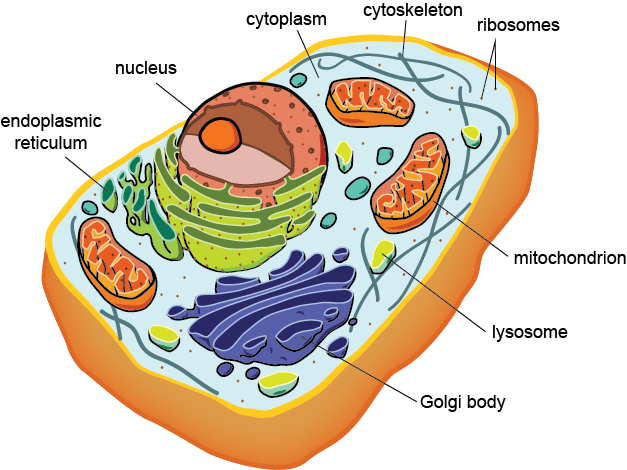

The organelle that is the control center of the cell and contains nearly all of the cell’s DNA:
Ribosome
Centriole
Nucleus
Rough Endoplasmic Reticulum

The organelle where lipids are synthesized along with proteins and other materials that are exported from the cell:
Endoplasmic Reticulum
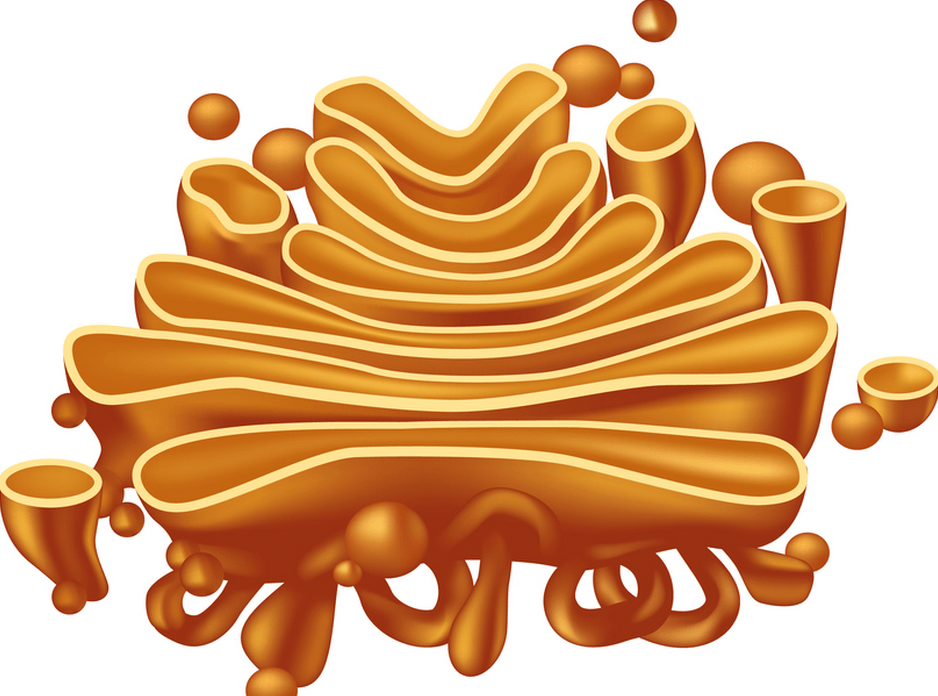
Golgi Apparatus
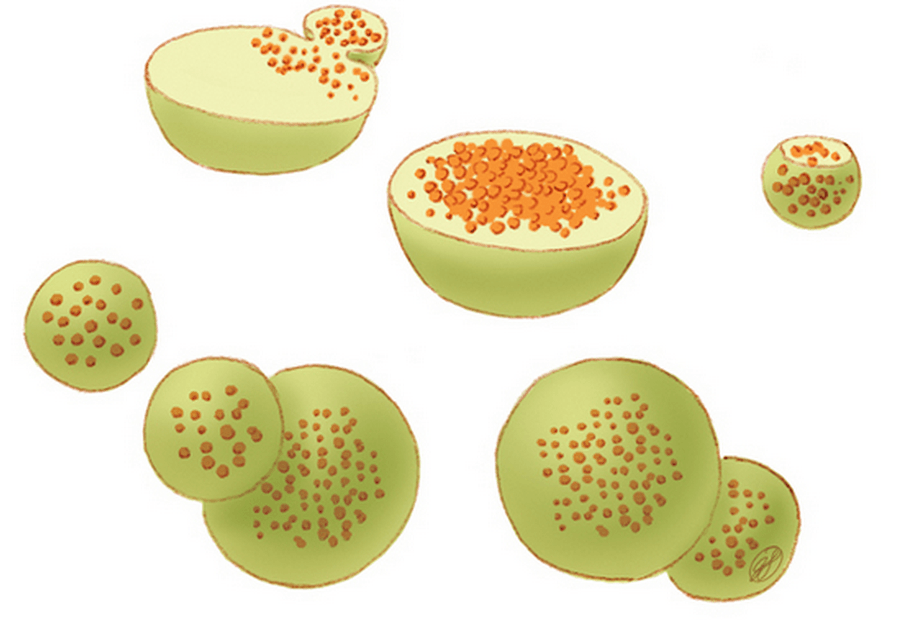
Vacuoles & vesicles
Nucleus

The organelle that modifies, sorts, and packages proteins and other materials from the ER for storage in the cell or release from the cell:
Endoplasmic Reticulum
Golgi Apparatus
Vacuoles and Vesicles
Ribosome

The organelle that assembles proteins in the cytoplasm:
Ribosome
Nucleus
Mitochondrion
Rough Endoplasmic Reticulum

The organelles that store materials like water, salts, proteins, and carbohydrates, and the other one that stores and moves materials between cell organelles, as well as to and from the cell surface:
Cytoskeleton
Lysosomes
Chloroplast
Vacuoles and Vesicles

The organelle that breaks down lipids, carbohydrates, and proteins into small molecules that can be used by the rest of the cell:
Lysosome
Cytoskeleton
Golgi Apparatus
Chloroplast

The organelle that captures the energy from sunlight and converts it into chemical energy stored in food during photosynthesis:
Chloroplast
Mitochondrion
Cell Wall
Nucleus

The organelle that converts the chemical energy stored in food molecules into compounds that are more convenient for the cell to use:
Cell Wall
Cell Membrane
Mitochondrion
Centrioles

The organelle that regulates materials entering and leaving the cell, as well as supporting and protecting it:
Cell Wall
Cell Membrane
Centrioles
Cytoskeleton

The organelle that organizes cell division:
Nucleus
Centrioles
Cytoskeleton
Ribosome
Which of the following structures is ALWAYS found in both eukaryotic and prokaryotic cells?
nucleus
mitochondria
ribosomes
cell wall
Which of the following is only found in EUKARYOTIC cells?
nucleus
DNA
cell membrane
ribosomes
PROKARYOTIC cells do NOT have
membrane bound organelles
cell membrane
DNA
ribosomes

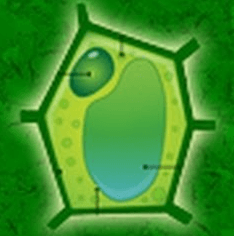
Identify this type of cell.
animal
plant
protist
bacteria

