
 Worksheets
Science 7 - Big Idea Test #1 Review
Total questions: 138
Worksheet time: 3hrs 0mins

Bacteria and fungi are ………………………...
help prevent erosion of the soil
animals that help aerate the soil
decomposers
What would happen if farmers did not rotate their crops each year?
Nothing would happen- everything would be fine
More water would stay in the field
Soil would run out of nutrients
Plants would remain healthy

How does water flow through a plant (from entry to exit)?
stem-root-leaves
leaves-stem-root
root-stem-leaves
root-leaves-stem

Which of the following describe transpiration best?
Water enters the leaves of a plant as a liquid.
Water exits the leaves of a plant as liquid.
Water enters the leaves of a plant as a gas.
Water exits the leaves of a plant as a gas.
Which statement is correct?
The xylem carries water, while the phloem carries glucose.
The xylem carries glucose, while the phloem carries water.
The xylem carries oxygen, while the phloem carries carbon dioxide.
The xylem carries carbon dioxide, while the phloem carries oxygen.

What plant process occurs in the chloroplasts (located in the leaf) and allows a plant to make its own food?
Respiration
Photosynthesis
Transpiration
Capillary Action

What are the raw materials needed for photosynthesis to occur?
Carbon Dioxide (CO2)
Water (H2O)
Radiant energy
Chlorphyll
All of the above

What substances exit the leaf through the stomata? Select all that are correct
Water (H2O) as a gas
Oxygen (O2)
Glucose (C6H12O6)
Carbon Dioxide (CO2)

Which substance(s) enter the leaf as an ingredient for photosynthesis?
Glucose
Oxygen
Water
Carbon Dioxide
What part of the plant is the main support and anchor and helps absorb water?
Tap Root
Lateral Roots
Root Hairs
Stem
Which part is how most plants reproduce and is where seeds are usually found?
Flower
Axillary Bud
Fruit
Leaf Blade
Which part of the plant attracts bees and other insects to aid in pollination?
Flower
Fruit
Leaf Blade
Node

What are the functions of the roots of plants?
To absorb water and nutrients for the plant. To provide support for the plant to grow.
To enable the plant to grow taller. To transport materials around the plant.
To make seeds for the plant in order to help plants reproduce.
To make fruits and vegetables for the plant in order to help plants sexually reproduce.
To hold the DNA and nutrients for a plants so it can reproduce and form a new plant.

What are the functions of the stem of plants?
To absorb water and nutrients for the plant. To provide support for the plant to grow.
To enable the plant to grow taller. To transport materials around the plant.
To make seeds for the plant in order to help plants reproduce.
To make fruits and vegetables for the plant in order to help plants sexually reproduce.
To make food for the plant through the process of photosynthesis.

What are the functions of the leaves in plants?
To absorb water and nutrients for the plant. To provide support for the plant to grow.
To enable the plant to grow taller. To transport materials around the plant.
To hold the DNA and nutrients for a plants so it can reproduce and form a new plant.
To make fruits and vegetables for the plant in order to help plants sexually reproduce.
To make food for the plant through the process of photosynthesis.

What are the functions of seeds?
To absorb water and nutrients for the plant. To provide support for the plant to grow.
To enable the plant to grow taller. To transport materials around the plant.
To hold the DNA and nutrients for a plants so it can reproduce and form a new plant.
To make seeds and fruits/vegetables for the plant in order to help plants sexually reproduce.
To make food for the plant through the process of photosynthesis.

Which part produces ovules?
3
4
5
7
Jamie wanted to grow tomato plants. He placed five seeds in the soil and watered them. A few days later he noticed that the seeds were beginning to break open, and a plant was emerging. What process did Jamie most likely observe?
pollination
fertilization
germination
condensation
Combining of egg and sperm
Asexual Reproduction
Sexual Reproduction
Diverse
Uniform
Involves only one parent
Asexual Reproduction
Sexual Reproduction
Diverse
Uniform
What can we make from plants?
cars
thread
computers
fridges
Paper comes from
the trunk of trees
the leaves of trees
the roots of trees
the flowers of trees
It is the process of growing plants and raising animals for food, clothing, and other useful products.
Agriculture
Animal Science
Agricultural Engineering
Agricultural Science
What is the term used when plant of the same kind are grown and cultivated at one place on a large scale?
farming
vegetable farming
crop
plant
It is the artificial application of water to the land or soil.
Irrigation
Propagation
Revegetation
Soil consolidation
Selective breeding is...
a process to create an organism with desired traits from parents with those desired traits to benefit humans
natural method of producing offspring with desired traits
creating a new species
making organisms reproduce during times of stress

When selective breeding food crops what might a farmer select for? (Select all that apply.)
The plant the produced the most grain
The plant the produced the largest sized grain
The plant that was the most disease resistant
The plant that was the smallest
The smelliest plant

This is an example of a ________________________ volcano.
shield
composite
cinder cone
None of these are correct

This is an example of a _________________________ volcano.
cinder cone
shield
composite
None of these are correct

This is an example of a _____________________ boundary.
transform
convergent
divergent
Subduction

Sea Floor Spreading would be considered a type of ___________________ boundary.
divergent
convergent
subduction
transform
A seismograph measures _________________________.
earthquake intensity
volcanic intensity
sea spreading distance
lava density
One of the clues that scientists used to discover which continents used to be connected to each other were _______________________.
fossils
mountain ranges
shape of continents
All of these are correct
The oldest time period listed below is the _________________.
Precambrian period
Cenozoic Era
Mesozoic Era
Paleozoic Era
Volcanoes surrounding the Pacific Ocean region are called the ______________________.
Ring of Fire
Lava Flows
Magma Mountains
Tsunami Fields
Who is the scientist associated with the theory of Continental Drift?
Alfred Wegener
Ben Franklin
Nikolas Tesla
Charles Darwin
Tectonic plates shift around Earth at an extremely fast rate.
True
False
A divergent boundary
Where two tectonic plates collide
Where two tectonic plates separate
Where two tectonic plates slide past each other
A convergent boundary is
Where two tectonic plates collide
Where two tectonic plates separate
Where two tectonic plates slide past each other
… is the breaking down of rocks by physical, chemical or biological means.
(a)
Acid rain is an example of which type of weathering?
Physical/ Mechanical
Chemical
Biological
None of the above
A plant breaking ground rock apart with its roots is an example of which type of weathering?
Physical/ Mechanical
Chemical
Biological
None of the above



What type of fossils provide evidence of the activities of ancient organisms?
molds and casts
petrified fossils
trace fossils
carbon films
Which of the following substances is not able to preserve entire organisms?
sticky tar
water
amber
ice


The hardest of all minerals is...
iron.
diamond.
talc.
quartz.
The property of minerals that describes the shine of a mineral is:
hardness.
streak.
cleavage.
luster.
The property of minerals that describes how a mineral breaks is:
cleavage.
luster.
hardness.
density.
The color of a mineral in powder form is called the mineral's
hardness.
specific gravity.
luster.
streak.
During which process does layer upon layer of sediment build up, exerting pressure on the layers below?
Erosion
Compaction
Conglomerate
Heat and ____________ can change sedimentary rock into metamorphic rock.
Pressure
Melting
Coolig
Igneous rocks form from the __________ of magma or lava.
Pressure
Cooling
Heat
Mutualism, commensalism and parasitism are all examples of:
Symmetry
Relationships
Species interdependence
Symbiosis

This is an example of:
Mutualism
Parasitism
Commensalism

This is an example of:
Mutualism
Parasitism
Commensalism
Which is not a basic need?
Meat
Habitat
Gas exchange
Water
An adaptation is passed through generations because it helps an organism
have fun
survive in its environment
have an easier life
reproduce
Clearing a plot of land to build a mall is an example of how
our needs impact the needs of nature
our wants impact the wants of nature
our wants impact the needs of nature
Which is an example of a biotic factor?
Tapeworm
Water
Soil
Dead tree
Something able to sustain itself using energy from the sun
Predator
Consumer
Producer
Herbivore

The fish in this photo represents:
Predator
Prey
Consumer
A good example of an omnivore is:
Grizzly Bear
Rabbit
Deer
Lion

This image shows:
Biomass
Pyramid of numbers
Food chain
Food web
Scavengers are organisms who:
Prey on dead organic matter
Are often top predators
Grow on or live in decaying organic matter
Are types of mushrooms or fungi
A non-living part of an ecosystem
biotic factor
abiotic factor
terrestrial
producer
A community of living and nonliving things in their natural environment
Community
Oxygen
Biotic
Ecosystem
An organism that is often harmed in a symbiotic relationship with another organism.
parasite
competition
host
symbiosis
Why are indicator species used to measure the health of ecosystems?
They are the strongest species
There are lots of them
They exist all over the world
They are most sensitive to change
Tracking the changes of the number of organisms would be an example of which type of monitoring?
Biological
Chemical
Physical
Environmental

If the snake population decreases (there are fewer snakes), what will happen to the mouse population?
increase
decrease
stay the same
The desert is a very hot and dry climate with very little water. In order to survive, many plants have thick leaves that hold lots of water. This is an example of a (an):
niche
producer
commensalism
adaptation
Which of the following removes carbon from the atmosphere and stores it in living matter?
Combustion
Respiration
Photosynthesis
Death
Carbon moves from fossil fuels to the atmosphere when fuels are burned.
True
False
How is the carbon cycle similar to the water cycle?
Both involve liquid substances falling to the Earth from the atmosphere?
Neither process works at low temperature.
Both involve the transfer of substances between animals, plants, and the Earth.
Both involve the transfer of substances between the earth and outer space.

In this energy pyramid, what organism would most likely be in level 2?
producer
herbivore
carnivore
apex predator

As you go up the levels of the trophic pyramid, which of the following is true?
There are more organisms and more energy
There are more organisms and less energy
There are less organisms and more energy
There are less organisms and less energy
Before herbivores can move into an ecosystem...
There must be a stable population of predators
There must be a stable population of producers
There must be a stable population of decomposers
There must be a stable population of heterotrophs
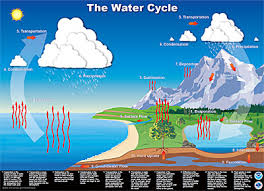

In which organism would biomagnification be the most concentrated? (Remember the lab: Rabbits eat the grass, the snake eats the rabbit, the hawk eats the snake--the hawk is the apex predator)
grass
rabbit
snake
hawk
Toxin concentrations _____________ as you go up the food chain.
do not change
increase
decrease
What is the main reason for the toxic concentration of DDT in organisms at the top of the food chain?
Bioaccumulation
Bioremediation
Biomagnification
Biodegradation
What is a food chain?
The flow of energy from one thing to another
The way animals eat each other
The way the sun makes everything
How the plants grow



