wayground logo

Free Printable Worksheets

Font size

S
M
L
XL
Worksheets

Semester Exam QuizIzz

Total questions: 138

Worksheet time: 2hrs 37mins
Name
Class
Date
1.
This variable in an experiment is the one being deliberately changed by the scientist. 
a)
dependent variable
b)
independent variable
c)
data
d)
control group
2.
An experiment is performed on plants to see how different liquids affect plant growth. Each plant in the experiment is given a different liquid; water, apple juice, or milk. Each plant has the same amount of soil, sunlight, and listens to the same music. In this investigation, the independent variable is ...
a)
The type of plant
b)
The amount of sunlight
c)
The type of music
d)
The type of liquid
3.
An experiment is performed on plants to see how different liquids affect plant growth. Each plant in the experiment is given a different liquid; water, apple juice, or milk. Each plant has the same amount of soil, sunlight, and listens to the same music. In this investigation, what are the controlled variables?
a)
Type of plant, amount of music, and sunlight
b)
Water, apple juice, milk
c)
Plant growth
4.
An experiment is performed on plants to see how different liquids affect plant growth. Each plant in the experiment is given a different liquid; water, apple juice, or milk. Each plant has the same amount of soil, sunlight, and listens to the same music. In this investigation, the independent variable is ...
a)
The type of plant
b)
The amount of sunlight
c)
The type of music
d)
The type of liquid
5.
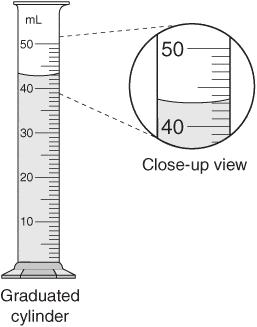
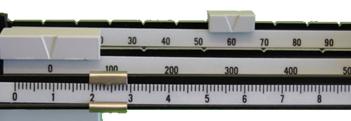
What unit should be used with this instrument?
a)
gram
b)
milliliter
c)
centimeter
d)
millimeter
6.
What measurement is taken with this instrument?
a)
weight
b)
mass
c)
volume
d)
distance
7.
This variable in an experiment is the one being deliberately changed by the scientist. 
a)
dependent variable
b)
independent variable
c)
data
d)
control group
8.
Mr. S. sets up an experiment to see how the mass of a ball affects the distance it rolls off a ramp.  Identify the independent variable.
a)
distance traveled by the ball
b)
height of the ramp
c)
mass of the ball
d)
weight of the ball
9.
Mr. S. sets up an experiment to see how the mass of a ball affects the distance it rolls off a ramp.  Identify the dependent variable.
a)
height of the ramp
b)
 distance traveled by the ball
c)
mass of the ball
d)
weight of the ball
10.
When experimenting with the growth of a plant, a scientist uses three (of the same type of) plants, two different fertilizers, equal light, and equal water. What type of variable is the fertilizer?
a)
Dependent
b)
Independent
c)
Control
d)
Compound
11.
A process where one cell forms two identical daughter cells is called...
a)
cell cycle
b)
cell division (mitosis)
c)
interphase
d)
cytokinesis
12.
During interphase the cell ___________.
a)
divides into two cells
b)
divides its nucleus
c)
replicates its DNA
d)
replicates the organelles within the cell
13.
The following describes ________  during mitosis. The chromosomes line up along the center of the cell and the spindle fibers attach to each chromosome at the centromere.
a)
prophase
b)
metaphase
c)
anaphase
d)
telophase
14.
The following describes _________ during mitosis. The spindle fiber splits the centromere and the chromatids move to opposite sides of the cell.
a)
prophase
b)
metaphase
c)
anaphase
d)
telophase
15.

This is what phase of Mitosis?

a)

Interphase

b)

Prophase

c)

Metaphase

d)

Anaphase

e)

Telophase

16.

What phase of mitosis is in the picture?

a)

Interphase

b)

Prophase

c)

Metaphase

d)

Anaphase

e)

Telophase

17.

Which phase of mitosis is the picture showing?

a)

Interphase

b)

Prophase

c)

Anaphase

d)

Telophase

18.

Cells created at the end of Mitosis are identical to each other.

a)

True

b)

False

19.
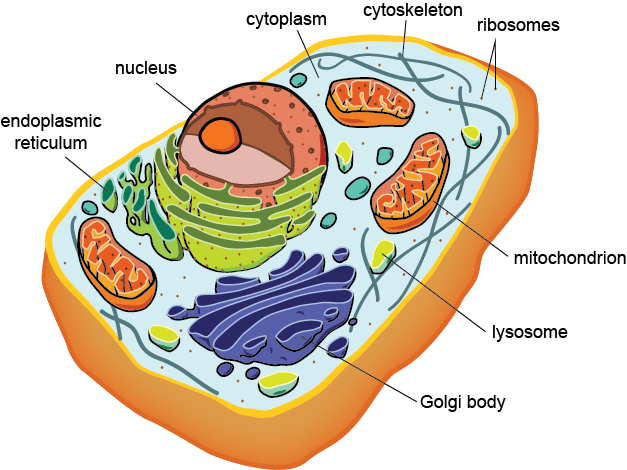
Where are proteins made?
a)
Golgi body
b)
Mitoichondria
c)
Chromosomes
d)
Ribosomes
20.

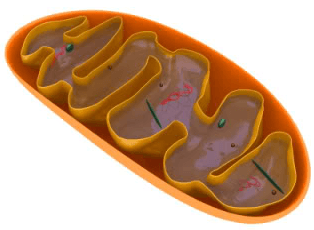
This organelle takes food and turns it into ENERGY for plant and animal cells. "POWER HOUSE"

a)

Chloroplast

b)

Mitochondria

c)

Lysosome

d)

Ribosome

21.
The site of photosynthesis
a)
ribosome
b)
mitochondria
c)
chloroplast
d)
nucleus
22.

What are tiny organelles that convert glucose into ENERGY (ATP)? "POWER HOUSE"

a)

Ribosomes

b)

Vesicles

c)

Cytoskeleton

d)

Mitochondria

23.

A rigid layer that lies outside the cell's membrane that gives plant cell's support and structure is...

a)

Cytoskeleton

b)

Cilia

c)

Cell Wall

d)

Flagella

24.
What organelle is called the "powerhouse" of a cell?

a)
Endoplasmic Reticulum
b)
Nucleus
c)
Mitochondria
d)
Nucleolus
25.
What is the gel-like substance inside of cells called?

a)
photoplasm
b)
photosynthesis
c)
cytoskeleton
d)
cytoplasm
26.
Which of the following statements is not part of the cell theory?
a)
Cells are the basic unit of structure and function in all living things.
b)
All cells are produced from other cells.
c)
Only animal cells are composed of cells.
d)
All living things are composed of cells.
27.
Which statement reflects one of the major components of the cell theory?
a)
All living things are multi-cellular.
b)
Organs are the basic unit of structure and function for all living things.
c)
All cells come from previously existing cells.
d)
Every organism has a reproductive system to ensure survival of the species.
28.
In what part of the plant cell does the process of photosynthesis take place?
a)
nucleus
b)
mitochondria
c)
chloroplasts
d)
vacuoles
29.

The types of cells that have membrane bound structures?

a)

prokaryotic

b)

eukaryotic

c)

prolipid

d)

bacteria

30.
True or False:  Regulating what enters and leaves the cell helps the cell maintain homeostasis. 
a)
True
b)
False
31.

The jelly like substance in the cell is called --

a)

cytoplasm

b)

lysosomes

c)

chromosomes

d)

cytokinesis

32.

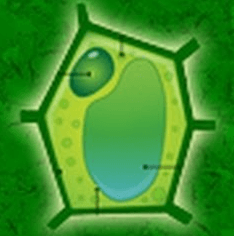
Identify which number is the chloroplast? (ANA)

a)

4

b)

6

c)

8

d)

10

33.
What are tiny organelles that convert glucose into ATP?
a)
Ribosomes
b)
Vesicles
c)
Cytoskeleton
d)
Mitochondria
34.
The nucleus ______ the cell's activities. 
a)
feeds
b)
reproduces 
c)
disregards
d)
controls
35.

The muscle contraction that takes place in the digestive tract is called _______.

a)

fiber

b)

peristalsis

c)

mechanical movement

d)

breathing

36.

Attaches bone to bone at the joint

a)

Tendon

b)

Ligament

c)

Periosteum

37.
Attaches muscle to bone 
a)
Tendon
b)
Ligament 
c)
Periosteum
38.
Which one of these IS a function of the skeletal system?
a)
Vitamin D production
b)
Heat Production
c)
Movement
d)
Digestive
39.
What is a joint?
a)
a place where two muscles come together
b)
a place where a bone and a muscle come together
c)
a place where two or more bones come together
40.
Which of the following is NOT a type of muscle tissue?
a)
Cardiac
b)
Skeletal
c)
Smooth
d)
Synovial
41.

Which of the following muscle types is involved in peristalsis (muscle contraction in digestive system)?

a)

Smooth

b)

Skeletal

c)

Cardiac

d)

All of the these choices.

42.
What type of muscles are attached to bones?
a)
cardiac
b)
smooth
c)
skeletal
43.
What type of muscle is found in the heart?
a)
smooth
b)
cardiac
c)
skeletal
44.
At a joint the ends of the bones are covered in .......
a)
cartilage
b)
fluid
c)
muscles
d)
tendons
45.

Muscles work in _______.

a)

pairs

b)

single sets

c)

rhythm with your heart

46.

"Small organs" of the cell that carry out specific functions

a)

Organelles

b)

Organs

c)

Cell Wall

d)

Cell

47.

supports, gives shape, and protects the cell; only in plant cells

a)

Cell Window

b)

Cell Wall

c)

Cell Membrane

d)

Cover

48.

Control center of cell, contains instructions for everything the cell does.

a)

Ribosomes

b)

Nucleus

c)

Endoplasmic Reticulum

d)

Mitochondria

49.

builds proteins, each cell contains thousands, found on ER and floating throughout cell

a)

Ribosomes

b)

Nucleus

c)

Vacuole

d)

Golgi Body

50.

moves materials around in the cell, two types: smooth and rough

a)

Cytoplasm

b)

Nucleus

c)

Vacuole

d)

Endoplasmic Reticulum

51.

packages proteins to move throughout the cell

a)

Cell Theory

b)

Golgi Body

c)

Vacuole

d)

Endoplasmic Reticulum

52.

smallest unit of life

a)

Human

b)

Cell Wall

c)

Cell

d)

Plants

53.
What creates the protein for the cell?
a)
Cytoplasm
b)
Nucleus
c)
Golgi bodies
d)
Ribosomes
54.
Animal cells have chloroplasts for photosynthesis
a)
True
b)
False
55.
Which level of organization is in order from smallest to largest?
a)
Cells, organs, tissues,organ systems
b)
Tissues, cells, organ systems, organs
c)
Organ system, organs, tissues, cells
d)
cells, tissues,organs, organ systems
56.
I am the "cleaner" because I break down food. Which organelle am I?
a)
Lysosomes
b)
Mitochondria
c)
Nucleus
d)
Cyto
57.

Which organelle gets rid of worn-out cell parts?

a)

Lysosomes

b)

Vesicles

c)

Cell Membrane

d)

Nucleus

58.

Who said that "all cells come from other cells?"

a)

Hooke

b)

Schlieden

c)

Schwann

d)

Virchow

59.

Who gave cells their name when he looked at cork?

a)

Hooke

b)

Van Leeuwenhook

c)

Schlieden

d)

Schwann

60.

The idea that all living things are composed of cells, the cell is the basic unit of structure and function, and all cells come from cells is known as the

a)

Theory of relativity

b)

Agenda Theory

c)

Cell Theory

d)

Theory of naturalization

61.
Which excretory organ eliminates water and some chemical wastes in perspiration?
a)
lungs
b)
skin
c)
liver
d)
kidneys
62.
The outer layer of skin is called the...
a)
Hypodermis
b)
Dermis
c)
Epidermis
63.
Sweating and shivering are your body's way of regulating _________.
a)
Water loss
b)
Temperature
c)
Hair growth
d)
Vitamin D absorption
64.
Name this bone aka "skull"
a)
coccyx
b)
cranium
c)
clavicle
65.
Name this bone.
a)
scapula
b)
clavicle
c)
sternum
66.
Name this bone.
a)
sternum
b)
xyphoid process
c)
coccyx
67.

It makes up you lower jaw, what is the bone colored green in this picture?

a)

Patella

b)

Cranium

c)

Zygomatic

d)

Mandible

68.
Name this bone.
a)
femur
b)
humerus
c)
tibia
69.
Name this bone.
a)
femur
b)
radius
c)
tibia
70.
Name this bone.
a)
radius
b)
ulna
c)
humerus
71.

In this picture, what would you call the section colored in blue?

a)

Phalanges

b)

Carpals

c)

Tarsals

d)

Meta-Tarsals

72.

The functions are the skeletal system are

a)

To support the body, protect the organs, store calcium, and produce blood cells

b)

to regulate the composition of body fluids by removing metabolic wastes and retain the balance of water, salt, and other nutrients

c)

to regulate and maintain bodily functions by producing hormones and releasing them into the blood stream

d)

to enable the diffusion of oxygen into the bloodstream and the removal of carbon dioxide from the bloodstream

73.

Where is new blood cells created?

a)

In the scapula

b)

In bone marrow, located inside the bone

c)

In the patella

d)

In bone marrow, located inside the muscle tissue

74.

What is cartilage?

a)

joints that connect bone to tissue

b)

Connective tissue that acts as balance for the body

c)

Connective tissue near joints that act as a shock absorber

d)

a piece of tissue that is attached to the scapula

75.

What bone is also known as your shoulder blade?

a)

Sternum

b)

Scapula

c)

Thorax

d)

Vertebrae

76.
Identify the muscle.
a)
Quadriceps
b)
Bicep
c)
Pectorals
d)
Gastrocnemius
77.
Identify the muscle.
a)
Hamstring
b)
Pectorals
c)
Abdominals
d)
Quadriceps
78.
Identify the muscle.
a)
Bicep
b)
Tricep
c)
Deltoid
d)
Trapezius
79.
Identify the muscle.
a)
Gluteus Maximus
b)
Quadriceps
c)
Hamstrings
d)
Deltoids
80.
Identify the muscle.
a)
Hamstrings
b)
Gastrocnemius
c)
Abdominals
d)
Pectorals
81.

Which bone is shown here?

a)

Radius

b)

Ulna

c)

Humerus

d)

Sternum

82.

Which bone is shown here?

a)

Pelvis

b)

Ribs

c)

Spine

d)

Sternum

83.

Which bone is shown here?

a)

Ulna

b)

Radius

c)

Humerus

d)

Phalanges

84.

Which bone is shown here?

a)

Fibula

b)

Tibia

c)

Patella

d)

Femur

85.

Which bone is shown here?

a)

Fibula

b)

Tibia

c)

Patella

d)

Femur

86.

Which bone is shown here?

a)

Fibula

b)

Tibia

c)

Patella

d)

Femur

87.

What muscle is this?

a)

Deltoid

b)

Trapezius

c)

Triceps Brachii

d)

Abdominals

88.

What muscle is this?

a)

Trapezius

b)

Triceps Brachii

c)

Latissimus Dorsi

d)

Obliques

89.

What muscle is this?

a)

Rectus abdominis

b)

Deltoids

c)

External Obliques

d)

Quadricep

90.

What muscle is this?

a)

Triceps brachii

b)

Biceps brachii

c)

Deltoids

d)

Trapezius

91.

What muscle is this?

a)

Tibialis Anterior

b)

Gastrocnemius

c)

Biceps femoralis

d)

Hamstrings

92.

What muscle is this?

a)

Gluteus Maximus

b)

Hamstrings

c)

Quadriceps

d)

Gluteus Medius

93.

What muscle is this?

a)

Triceps Brachii

b)

Biceps Brachii

c)

Tibialis Anterior

d)

Brachioradialis

94.

What are the two types of Digestion?

a)

Chemical digestion & Mechanical digestion

b)

Mechanical digestion & Muscular Digestion

c)

Chemical digestion & Muscular digestion

d)

Dermal digestion & Muscular digestion

95.

An organ that stores bile after it is produced by the liver.

a)

Pancreas

b)

Small intestine

c)

Gallbladder

d)

Large intestine

96.

Which organ absorbs water and in the last stage of the digestive process?

a)

Liver

b)

Small intestine

c)

Pancreas

d)

Large intestine

97.

The tiny little structures that line the small intestine are called

a)

Bronchi

b)

Villi

c)

Bile

d)

Enzymes

98.

 Bile is a chemical that helps break down

a)

Proteins

b)

Carbohydrates

c)

Glucose

d)

Fats

99.

The muscles in your esophagus act like a giant wave. That is what moves food or drinks down to your stomach. This wave action is called ____________.

a)

Appendix

b)

Peristalsis

c)

Enzymes

d)

Muscular tube

e)

None

100.

What body system has structures called the mouth, stomach, and intestines?

a)

Digestive System

b)

Skeletal System

c)

Respiratory System

d)

Muscular System

101.

The first part of the digestive system, where saliva helps break down food is ....

a)

mouth

b)

stomach

c)

esophagus

d)

intestines

102.

Which part of digestive system produces acids and enzymes to chemically break down food into a liquid mixture?

a)

mouth

b)

stomach

c)

intestines

d)

esophagus

103.

It takes nutrients from the food and distributes it into the bloodstream. What is it?

a)

small intestine

b)

large intestine

c)

mouth

d)

esophagus

104.

Look at the picture. What is the function of "B"?

a)

produces acid and mixes the food

b)

absorbs water and releases waste

c)

absorbs nutrients

d)

produces saliva

105.

What is the name of the structure labeled C?

a)

small intestine

b)

large intestine

c)

anus

d)

stomach

106.

Where the water from the remaining food is absorbed and waste is transferred to the rectum?

a)

small intestine

b)

large intestine

c)

stomach

d)

mouth

107.

What is the name of tube that carries food from your pharynx to the stomach?

a)

windpipe

b)

esophagus

c)

lungs

d)

saliva

108.
What happens to unused food materials in the digestive system?
a)
They are stored in the rectum and released through the anus
b)
They are recycled back to the stomach to get reprocessed
c)
There are no unused materials, the digestive system absorbs all food nutrients
d)
They are stored in the large intestine until we need them
109.

What part of the digestive system is marked "X"?

a)

Large intestine

b)

Small intestine

c)

Stomach

d)

Appendix

110.

What part of the digestive system is marked "X"?

a)

Esophagus

b)

Stomach

c)

Saliva

d)

Mouth

111.

What part of the digestive system is marked "X"?

a)

Esophagus

b)

Mouth

c)

Small Intestine

d)

Stomach

112.

What part of the digestive system is marked with "X"?

a)

Anus

b)

Large intestine

c)

Stomach

d)

Small intestine

113.
What is the definition for digestion?
a)
Breaking down food into smaller nutrients
b)
Getting rid of waste products
c)
Getting food into our bodies
d)
Getting nutrients into our bloodstream, so that our cells can use them
114.
Where does the digestion of starch begin?
a)
esophagus
b)
small intestine
c)
stomach
d)
mouth
115.
Enzymes and acids are examples of 
a)
mechanical digestion
b)
chemical digestion
116.

What enzyme is found in saliva that starts digesting carbohydrates?

a)

amylase

b)

chyme

c)

pepsin

d)

bile

117.

What are the rhythmic muscular contractions of your esophagus called to help food move along?

a)

swallowing

b)

peristalsis

c)

inertia contractions

d)

paralysis

118.

What are the rhythmic muscular contractions of your esophagus called to help food move along?

a)

swallowing

b)

peristalsis

c)

inertia contractions

d)

paralysis

119.

The organ which secretes bile for fat digestion is the ___________.

a)

liver

b)

pancreas

c)

small intestine

d)

stomach

120.

Digestion begins in the ________.

a)

stomach

b)

large intestine

c)

mouth

d)

small intestine

121.

Which organ produces Bile?

a)

The stomach.

b)

The pancreas.

c)

The liver.

d)

The intestine.

122.

What part of the digestive system is highlighted?

a)

Gall Bladder

b)

Small intestine

c)

Pancreas

d)

Liver

123.

What part of the digestive system is highlighted?

a)

Small intestine

b)

Large intestine

c)

Stomach

d)

Liver

124.

What part of the digestive system is highlighted?

a)

Stomach

b)

Pancreas

c)

Liver

d)

Gall bladder

125.

What part of the digestive system is highlighted?

a)

Anus

b)

Rectum

c)

Large Intestine

d)

Small intestine

126.

What part of the digestive tract follows the mouth?

a)

esophagus

b)

pharynx

c)

stomach

d)

large intestine

127.

What part of the digestive tract follows the large intestine?

a)

small intestine

b)

anus

c)

stomach

d)

rectum

128.

The _____ prevents us from choking when we swallow food or drink.

a)

esophagus

b)

tongue

c)

small intestine

d)

epiglottis

129.

Which of the following neutralizes acid in the chyme as it moves into the small intestine?

a)

pepsin

b)

bile

c)

bicarbonate

d)

amylase

130.

Bicarbonate is produced by the gall bladder

a)

True

b)

False

131.

The waste material that is not digested or absorbed becomes waste known as _______.

a)

chyme

b)

saliva

c)

feces

d)

mucus

132.

The pancreas produces what hormone that controls sugar levels in the body?

a)

bicarbonate

b)

insulin

c)

pepsin

d)

amylase

133.

The stomach only carries out chemical digestion.

a)

True

b)

False

134.
Mass is measured in
a)
grams
b)
liters
c)
meters
d)
g/cm3
135.
The tool used to precisely measure liquid volume is the
a)
beaker
b)
flask
c)
graduated cylinder
136.
The dip that you use to measure liquid volume is called the
a)
dip
b)
meniscus
c)
patella
d)
hibiscus
137.
Which is a unit of mass?
a)
ml
b)
g
c)
cm
d)
lb
138.

What unit of measure is used for time in the SI system?

a)

meter

b)

second

c)

minute

d)

inch