wayground logo

Free Printable Worksheets

Font size

S
M
L
XL
Worksheets

Finals Review (6th Grade)

Total questions: 143

Worksheet time: 2hrs 50mins

Name
Class
Date
1.

The energy of moving particles is called _____.

a)

sound energy

b)

heat or thermal energy

c)

light energy

d)

mechanical energy

2.

When particles are heated they begin to ____.

a)

move faster

b)

mover slower

c)

move up

d)

jump out of the pot

3.
A barefoot student steps on a hot concrete surface. Most of the heat transferred to the student’s skin by this contact is by the process of—
a)
convection
b)
conduction
c)
vaporization
d)
radiation
4.

The energy of moving particles is called _____.

a)

sound energy

b)

heat or thermal energy

c)

light energy

d)

mechanical energy

5.

When particles are heated they begin to ____.

a)

move faster

b)

mover slower

c)

move up

d)

jump out of the pot

6.
A barefoot student steps on a hot concrete surface. Most of the heat transferred to the student’s skin by this contact is by the process of—
a)
convection
b)
conduction
c)
vaporization
d)
radiation
7.
The diagram to the right shows a solid iron bar that is being heated in a flame. The primary method of heat transfer in the solid iron bar is—
a)
convection
b)
conduction
c)
absorption
d)
radiation
8.
A student opens the top window and the bottom window in a hot room. What statement best describes the heat transfer occurring in the room?
a)
conduction
b)
radiation
c)
convection
d)
evaporation
9.
what is conduction?
a)
direct touch
b)
air or liquids
c)
heat waves/ light waves
d)
drinking hot coffee
10.
what is convection
a)
direct touch
b)
air or liquids
c)
heat waves or light waves
d)
sunbathing outside
11.
what is radiation?
a)
direct touch
b)
air or liquids
c)
heat waves/ light waves
d)
touching the cookies out of the oven
12.
How does air travel?
a)
they don't travel
b)
hot to cold
c)
cold to hot
d)
All of the above
13.

When air is heated, its density ___________.

a)

increases

b)

decreases

c)

remains the same

14.

Convection can take place in ____________.

a)

solids only.

b)

liquids only.

c)

liguids and gases only.

d)

solids, liquids and gases.

15.
In an ocean, warm water moves __________ and cold water moves ____________.
a)
Down, Up
b)
Up, Down
16.
What two types of measurements make up DENSITY
a)
Mass and Volume
b)
Temperature and Mass
c)
Grams and Centimeters
d)
Volume and Weight
17.
Helium balloons rise on earth because
a)
helium is less dense than air
b)
helium is more dense than air
c)
helium is cooler than air
d)
helium is warmer than air
18.
True or False:  The density of a specific type of material never changes.  
a)
True
b)
False
19.

When do particles move faster?

a)

In hot water

b)

In cold water

20.

Why does ice float?

a)

Due to convection currents

b)

It is more dense than water.

c)

It is less dense than water.

21.

What is an example of a convection current?

a)

Touching a hot spoon that was in a soup bowl.

b)

Feeling the suns rays on a nice summer day.

c)

Touching an iron skillet after cooking and feeling the heat.

d)

Movement of gas in a hot air balloon.

22.

Radiation, conduction, and convection are three ways that heat is transferred or moves.


True or False

a)

false

b)

true

23.

Heat from a lamp is an example of _____________.


radiation, convection or conduction

a)

radiation

b)

convection

c)

conduction

24.
What kind of energy is in a moving skateboard?
a)
Potential
b)
Kinetic
25.
What kind of energy is in a rock at the edge of a cliff?
a)
Potential
b)
Kinetic
26.
What kind of energy is in a stretched rubber band?
a)
Potential
b)
Kinetic
27.
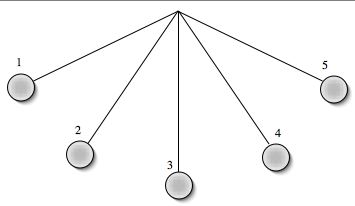
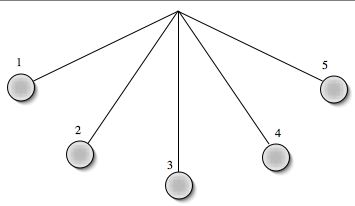
When a pendulum swings, at which point is kinetic energy highest?
a)
1
b)
2
c)
3
d)
4
28.
When a pendulum swings, at which point is potential energy at its greatest?
a)
1
b)
2
c)
3
d)
4
29.
What is kinetic energy?
a)
energy of work
b)
energy of motion
c)
energy of gravity
d)
energy of power
30.
Which is the best example that something has kinetic energy?
a)
a. a car parked on a steep hill 
b)
b. a tennis ball rolling across the court
c)
c. a picture hanging on the wall 
d)
d. a piece of coal before it's burned 
31.
The faster an object moves, the ________ kinetic energy it has. 
a)
more
b)
less
c)
none of the above
d)
all of the above 
32.
What would have the greatest kinetic energy?
a)
A car driving down a hill.
b)
A person running down a hill. 
c)
A ball rolling down a hill. 
33.
The measure of motion. It can increase, decrease or stay the same. We call this _____ .
a)
force
b)
kinetic energy
c)
gravity
d)
speed
34.
Click to look at the picture. 
The picture is an example of _____ .
a)
gravity
b)
potential energy
c)
kinetic energy
d)
friction
35.
Click to look at the picture.
The picture is demonstrating an example of ______ . 
a)
gravity
b)
speed
c)
kinetic energy
d)
potential energy
36.
What kind of energy is in a person climbing a ladder?
a)
Potential
b)
Kinetic
c)
Both
37.
Explain what happens to the potential energy of a rock as it falls off the side of a cliff.
a)
The kinetic energy decreases as the potential energy increases.
b)
The kinetic energy decreases as the potential energy decreases.
c)
The potential energy decreases as the kinetic energy increases.
d)
The potential energy decreases as the kinetic energy decreases. 
38.
When riding a roller coaster, you go up and down many hills. When do you have the maximum (most) kinetic energy?
a)
At the top of each hill.
b)
As you go down each hill.
c)
At the bottom of each hill.
d)
As you go up each hill.
39.

What two factors affect an object's kinetic energy?

a)

area and volume

b)

mass and weight

c)

weight and height

d)

mass and speed

40.

Where would this tossed baseball have the least amount of kinetic energy?

a)

point W

b)

point X

c)

point y

d)

point z

41.

Where would this tossed baseball have the greatest amount of kinetic energy?

a)

point W

b)

point X

c)

point y

d)

point z

42.

Increasing an object's mass will increase its kinetic energy.

a)

true

b)

false

43.

Increasing an object's speed will increase its kinetic energy.

a)

false

b)

true

44.

An apple rolling on a table

a)

potential

b)

kinectic

45.

An apple sitting on the edge of the table.

a)

Potential

b)

Kinetic

46.

What kind of energy is stored energy?

a)

Potential

b)

Kinetic

c)

None of the above

d)

All of the above

47.

The faster an object moves, the ________ kinetic energy it has.

a)

more

b)

less

c)

none of the above

d)

same

48.

At which point is potential energy greatest?

a)

W

b)

X

c)

Y

d)

Z

49.
What units are used to measure mass?
a)
g
b)
cm3
c)
g/cm3
d)
cm3/g
50.
Jack has a rock. The rock has a mass of 14g and a volume of 2cm3. What is the density of the rock?
a)
7 mL
b)
7 g/cm3
c)
28 g/cm3
d)
1/7 g/cm3
51.
If an object has a density of .6 g/mL and you put it into water, will it sink or float?  
a)
sink
b)
float
52.
If an object has a density of 3.6 g/mL and you put it into water, will it sink or float?  
a)
sink
b)
float
53.
What is the formula for density?
a)
density = mass x volume
b)
density = mass / volume
c)
density = mass + volume
d)
density = mass - volume
54.
Frank has an eraser. It has a mass of 4g, and a volume of 2cm3. What is its density?
a)
8 g/cm3
b)
2 g/cm3
c)
1/2 g/cm3
d)
24 g/cm3
55.
Calculate the density of the cube.
a)
2 g/cm3
b)
4 g/cm3
c)
6 g/cm3
d)
8 g/cm3
56.
True or False:  The density of a specific type of material never changes.  
a)
True
b)
False
57.
Helium balloons rise on earth because
a)
helium is less dense than air
b)
helium is more dense than air
c)
helium is cooler than air
d)
helium is warmer than air
58.
Look at this image.  Which object has the LOWEST density in water? How
a)
The Ping Pong Ball because it floats to the top 
b)
The bolt because it has sunk to the bottom
c)
The soda cap because it is not just full of air like the Ping Pong ball
59.
What two types of measurements make up DENSITY
a)
Mass and Volume
b)
Temperature and Mass
c)
Grams and Centimeters
d)
Volume and Weight
60.
Which of the following represents an element?
a)
H2O
b)
H2
c)
NaCl
d)
CaCO3
61.
How many elements are represented in the compound?
Na2CO3
a)
1
b)
2
c)
3
d)
4
62.
Is water an element or a compound?
a)
Element
b)
Compound
63.
A compound consists of two or more elements bound together.
a)
True
b)
False
64.
Is Iron (Fe) an element or a compound?
a)
Element
b)
Compound
65.
Is sugar (C12H22O11) an element or a compound?
a)
Element
b)
Compound
66.
These contain only one kind of atom. 
a)
element 
b)
compound 
c)
mixture 
d)
water 
67.
Carbon Dioxide is a ______ 
a)
compound 
b)
element 
c)
mixtures 
d)
Battle of Bunker Hill 
68.

What is the difference between Co and CO?

a)

CO is an element but Co is a compound

b)

Nothing is different. They are the same thing.

c)

CO is two elements and Co is only one element

d)

Co is not a pure substance

69.

Which is the best description of an element?

a)

A substance that cannot be broken down into simpler substances

b)

A collection of atoms that have different abilities when joined together

c)

A man-made mineral

d)

A mixture of substances

70.

How many elements are in this compound?

a)

13

b)

6

c)

4

d)

3

71.

The chemical symbol of an element always matches the element's name.

a)

Agree

b)

Disagree

72.

Represented by an unique chemical symbol

a)

Elements

b)

Compounds

c)

Both

73.

Located on the Periodic Table

a)

Elements

b)

Compounds

c)

Both

74.

Cannot be broken down into a simpler substance

a)

Elements

b)

Compounds

c)

Both

75.

Both elements and compounds are pure substances.

a)

Agree

b)

Disagree

76.

Carbon is considered an element, while carbon dioxide is considered a compound. This is because carbon dioxide is ---

a)

a gas at room temperature.

b)

made of two different elements.

c)

given off by green plants.

d)

useful to human beings

77.

A section of the Periodic Table is shown. What is the Chemical Symbol for Magnesium?

a)

12

b)

Magnesium

c)

24.31

d)

Mg

78.

Compounds are different than elements because compounds are ---

a)

combinations of two or more elements.

b)

not able to be broken down into parts.

c)

made from the same type of atoms.

d)

a pure substance; elements are not.

79.

The smallest particle of any particular type of matter is known by which of the following terms?

a)

Element

b)

Chemical

c)

Atom

d)

Compound

80.
Which of these is a property of metals?
a)
It's malleable
b)
It can't conduct electricity
c)
They are used in food
d)
It's very brittle
81.
Which of these grouping of elements could have the characteristic of brittle?
a)
Metal
b)
Nonmetal
82.
Which of the following is a good conductor of heat?
a)
Metal
b)
Nonmetal
c)
Metalloid
83.
Some characteristics of a metal are that it is malleable and ductile.
a)
TRUE
b)
FALSE
84.
If a material can easily be drawn into the shape of a wire, it is
a)
Ductile
b)
Magnetic
c)
Malleable
d)
Reactive
85.
Iron is a good conductor, malleable and magnetic. What type of element is Iron? 
a)
Metal
b)
Nonmetal
c)
Metalloid
d)
Pretty
86.
Which elements are found on the left to middle of The Periodic Table? 
a)
Metals
b)
Nonmetals
c)
Metalloids
d)
Candles
87.
Silicon is a semiconductor and has properties of both metals and nonmetals. What type of element is Silicon? 
a)
Metal
b)
Nonmetal
c)
Metalloid
d)
Pretty
88.
Which elements are found on the right side of The Periodic Table?
a)
Metals
b)
Nonmetals
c)
Metalloids
d)
Water
89.
All of these properties describe metals except...
a)
malleable
b)
conductors
c)
brittle 
d)
shiny
90.
Which element is a metalloid?
a)
Titanium
b)
Selenium
c)
Potassium
d)
Polonium
91.
Which of the following is a good conductor of heat?
a)
Metal
b)
Nonmetal
c)
Metalloid
92.
One property of a nonmetals is that it is a good conductor of electricity?
a)
true
b)
false
93.
All of the following would classify an element as a metal except?
a)
Dull
b)
Luster
c)
Malleable
d)
Hard
94.
Non-metals are good conductors of heat and electricity. 
a)
TRUE
b)
FALSE
95.
Metalloids are weak conductors of heat and electricity. 
a)
TRUE
b)
FALSE
96.

Physical or Chemical Change? Iron rusting

a)

Physical Change

b)

Chemical Change

97.

Physical or Chemical Change? Cutting an orange

a)

Physical Change

b)

Chemical Change

98.

Physical or Chemical Change? Making a paper airplane

a)

Physical Change

b)

Chemical Change

99.

Melting ice cream

a)

physical change

b)

chemical change

100.

Glass breaking

a)

physical change

b)

chemical change

101.

Frying an egg

a)

physical change

b)

chemical change

102.

Is this a physical or chemical change?

a)

Physical

b)

Chemical

103.

Sugar is:

a)

Liquid

b)

Solid

c)

Gas

104.

An apple is:

a)

Liquid

b)

Solid

c)

Gas

105.

Milk is:

a)

Liquid

b)

Solid

c)

Gas

106.

Smoke is:

a)

Liquid

b)

Solid

c)

Gas

107.

Wood is:

a)

Soild

b)

Liquid

c)

Gas

108.

The air we breathe

a)

SOLID

b)

LIQUID

c)

GAS

109.

Water

a)

SOLID

b)

LIQUID

c)

GAS

110.

This is a:

a)

Physical Change

b)

Chemical Change

111.

__________is heat transfer or movement by direct contact and usually is through solids.


conduction or convection

a)

Conduction

b)

Convection

112.

Heat that is transferred or moved in circle currents through liquids or gases is __________________.


radiation or convection

a)

radiation

b)

convection

113.

In convection currents, cold air rises and hot air sinks.


True or false

a)

true

b)

false

114.

Heat from a lamp is an example of _____________.


radiation, convection or conduction

a)

radiation

b)

convection

c)

conduction

115.

Cooking pancakes in a skillet is as example of _____________.


radiation, conduction, convection

a)

radiation

b)

conduction

c)

convection

116.
When you iron a shirt, the shirt gets warm.  This type of heat transfer is an example of
a)
condensation
b)
conduction
c)
convection
d)
radiation
117.
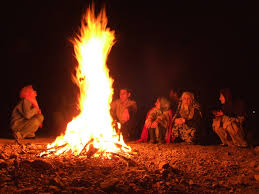
A group of friends gather around a fire to stay warm.  This is an example of
a)
conduction
b)
convection
c)
radiation
118.
A huge rock at the state park gets hot during the day. The rock was warmed from the Sun by
a)
conduction
b)
convection
c)
radiation
119.
You lay on a hot rock and keep warm from the rock by
a)
conduction
b)
convection
c)
radiation
120.
Which statement is true?
a)
The quicker a molecule moves, the colder it is.
b)
The slower a molecule moves, the warmer it is.
c)
The quicker a molecule moves, the warmer it is
d)
The movement of a molecule doesn't affect its temperature
121.
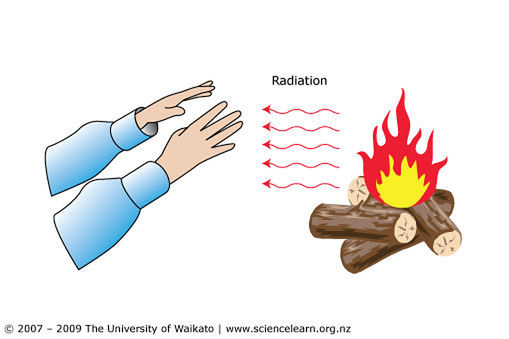
The picture shows heat transfer by
a)
Conduction
b)
Convection
c)
Radiation
122.
What is a substance that DOES conduct heat well?
a)
Conductor
b)
Insulator
c)
Convector
d)
Radiator
123.
What is a substance that does NOT conduct heat well?
a)
Conductor
b)
Insulator
c)
Convector
d)
Radiator
124.
What is the energy of the movement of particles in a substance?
a)
Potential energy
b)
Kinetic energy
c)
Thermal energy
d)
Temperature
125.
In heat transfer, heat always flows from the _______________ substance to the _______________ substance.
a)
Hotter to colder
b)
Colder to hotter
c)
Hotter to hotter
d)
Colder to colder
126.

Which of the following best describe a vacuum?

a)

Hot

b)

Cold

c)

Shiny

d)

Empty

127.

Yeti and Hydroflask use double-walled vacuums because...

a)

No molecules = No heat transfer by conduction and convection

b)

Many molecules = No heat transfer by conduction and convection

128.

Even though metals are good conductors, they block...

a)

Conduction

b)

Convection

c)

Radiation

129.

What are renewable resources?

a)

Resources that are limited and that cannot be replaced in our lifetimes

b)

Resources that can be replaced in our lifetime through natural processes

130.

Sunlight __________

a)

is very bright

b)

will eventually run out

c)

is a renewable resource

d)

is a nonrenewable resource

131.

Coal, oil, and natural gas are a group of non-renewable resources called ________________

a)

Fossils

b)

Energy

c)

Resources

d)

Fossil fuels

132.

Energy that cannot be replenished or replaced in our lifetimes.

a)

Nonrenewable Energy

b)

Renewable Energy

c)

Geothermal Energy

d)

Alternative Energy

133.

Energy that is made by moving air is called ____________

a)

Wind

b)

Solar

c)

Oil

d)

Coal

134.

To use a resource wisely and help to prevent waste is called ____________

a)

Conservation

b)

Renewable Energy

c)

Solar

d)

Hydroelectric

135.

What are the 3 fossil fuels?

a)

coal, oil, uranium

b)

coal, hydroelectric, oil

c)

natural gas, oil, coal

136.

Coal is a __________ energy resource.

a)

Renewable

b)

Non-renewable

137.

Solar Power is a __________ energy resource.

a)

Renewable

b)

Non-renewable

138.

Wind is a __________ energy resource.

a)

Renewable

b)

Non-renewable

139.

Fossil fuels are nonrenewable because ________________

a)

they are used to produce heat

b)

they take a long time to form

c)

they can be found underground

140.

What is a natural resource?

a)

Resources we get from our house

b)

Resources we get from people

c)

Resources we get from nature

141.

True or false?

Coal is a nonrenewable resource.

a)

True

b)

False

142.

Which renewable resource gets its direct energy from the sun?

a)

Geothermal

b)

Solar

c)

Wind

d)

Hydrogen

143.

Natural resources form in nature. Which of the following is not a natural resource?

a)

oil

b)

coal

c)

plastic

d)

water