
 Worksheets
National 5 Unit 2 Revision
Total questions: 140
Worksheet time: 12hrs 40mins
Which of these does not belong to the same homologous series?
pentane
cyclopropane
propane
hexane
Which of these is a use for alkanes?
to make plastics
fuels
solvent
to make alcohols
What is the general formula of an alkane?
CnH2n+1
CnH2n-1
CnH2n
CnH2n+2
What is the general formula of an alkene?
CnH2n+1
CnH2n-1
CnH2n
CnH2n+2
What is the general formula of cycloalkane?
CnH2n+1
CnH2n-1
CnH2n
CnH2n+2
What does this describe 'substances with the same molecular formula but different structural formula'
homologous series
hydrocarbon
isomer
none of these
What does this describe 'a family of compounds with the same general formula and similar chemical properties' ?
homologous series
hydrocarbon
isomer
none of these
What does this describe 'a substance that contains only hydrogen and carbon' ?
homologous series
hydrocarbon
isomer
none of these
What do you call an alkene with 2 carbons?
ethane
ethene
propane
propene
What would an alkane with 8 carbons be called?
octene
heptene
heptane
octane
Which alkane has 8 hydrogens?
octane
propane
pentane
hexane
If an alkene has 20 carbons, how many hydrogens would it have?
20
40
41
42
If an alkene had 20 hydrogens, how many carbons would it have?
8
10
40
42
If an alkane had 20 carbons, how many hydrogens would it have?
10
8
40
42
When bromine is added to an alkene it makes ....
a dihaloalkane
an alcohol
an alkane
a cycloalkane
What type of reaction occurs when hydrogen is added to an alkene?
hydration
halogenation
hydrogenation
none of these
Which of these reactions would make an alcohol?
hydration
hydrogenation
halogenation
none of these

What is the name of this alkane?
2,3-dimethylpropane
3,4-dimethylpropane
2,3-dimethylpentane
3,4-dimethylpentane.
The shortened structural formula for an organic compound is CH3CH(CH3)CH(OH)C(CH3)3
Which of the following is another way of representing this structure?


Which of these does not belong to the same homologous series?
pentane
cyclopropane
propane
hexane
Which of these is a use for alkanes?
to make plastics
fuels
solvent
to make alcohols
What is the general formula of an alkane?
CnH2n+1
CnH2n-1
CnH2n
CnH2n+2
What is the general formula of an alkene?
CnH2n+1
CnH2n-1
CnH2n
CnH2n+2
What is the general formula of cycloalkane?
CnH2n+1
CnH2n-1
CnH2n
CnH2n+2
What does this describe 'substances with the same molecular formula but different structural formula'
homologous series
hydrocarbon
isomer
none of these
What does this describe 'a family of compounds with the same general formula and similar chemical properties' ?
homologous series
hydrocarbon
isomer
none of these
What does this describe 'a substance that contains only hydrogen and carbon' ?
homologous series
hydrocarbon
isomer
none of these
What do you call an alkene with 2 carbons?
ethane
ethene
propane
propene
What would an alkane with 8 carbons be called?
octene
heptene
heptane
octane
Which alkane has 8 hydrogens?
octane
propane
pentane
hexane
If an alkene has 20 carbons, how many hydrogens would it have?
20
40
41
42
If an alkene had 20 hydrogens, how many carbons would it have?
8
10
40
42
If an alkane had 20 carbons, how many hydrogens would it have?
10
8
40
42
When bromine is added to an alkene it makes ....
a dihaloalkane
an alcohol
an alkane
a cycloalkane
What type of reaction occurs when hydrogen is added to an alkene?
hydration
halogenation
hydrogenation
none of these
Which of these reactions would make an alcohol?
hydration
hydrogenation
halogenation
none of these
What is the name of this alkane?
2,3-dimethylpropane
3,4-dimethylpropane
2,3-dimethylpentane
3,4-dimethylpentane.
The shortened structural formula for an organic compound is CH3CH(CH3)CH(OH)C(CH3)3
Which of the following is another way of representing this structure?

Three members of the cycloalkene homologous series are shown.
Which of the following is the general formula for this homologous series?
CnH2n—4
CnH2n+2
CnH2n
CnH2n—2
Which of the following compounds belongs to the same homologous series as the compound with the molecular formula C3H8?


The systematic name for the structure shown is
1,2-dimethylpent-1-ene
2,3-dimethylpent-1-ene
3,4-dimethylpent-4-ene
3,4-dimethylpent-1-ene

Two isomers of butene are shown.
Which of the following structures represents a third isomer of butene?


Which of the following could be the molecular formula for an alkane?
C7H16
C7H14
C7H12
C7H10

A student added bromine solution to compound X and compound Y. These are shown in the picture. Which substance(s) would decolourise bromine solution?
Compound X only
Compound Y only
Compound X and Y
Neither compound X nor Y
Which of these does not belong to the same homologous series?
pentane
cyclopropane
propane
hexane
What is the general formula of an alkane?
CnH2n+1
CnH2n-1
CnH2n
CnH2n+2
What is the general formula of an alkene?
CnH2n+1
CnH2n-1
CnH2n
CnH2n+2
What is the general formula of cycloalkane?
CnH2n+1
CnH2n-1
CnH2n
CnH2n+2
What does this describe 'substances with the same molecular formula but different structural formula'
homologous series
hydrocarbon
isomer
none of these
What does this describe 'a family of compounds with the same general formula and similar chemical properties' ?
homologous series
hydrocarbon
isomer
none of these
What does this describe 'a substance that contains only hydrogen and carbon' ?
homologous series
hydrocarbon
isomer
none of these
What do you call an alkene with 2 carbons?
ethane
ethene
propane
propene
What would an alkane with 8 carbons be called?
octene
heptene
heptane
octane
Which alkane has 8 hydrogens?
octane
propane
pentane
hexane
If an alkene has 20 carbons, how many hydrogens would it have?
20
40
41
42
If an alkene had 20 hydrogens, how many carbons would it have?
8
10
40
42
If an alkane had 20 carbons, how many hydrogens would it have?
10
8
40
42
When bromine is added to an alkene it makes ....
a dihaloalkane
an alcohol
an alkane
a cycloalkane
What type of reaction occurs when hydrogen is added to an alkene?
hydration
halogenation
hydrogenation
none of these
Which of these reactions would make an alcohol?
hydration
hydrogenation
halogenation
none of these
What is the name of this alkane?
2,3-dimethylpropane
3,4-dimethylpropane
2,3-dimethylpentane
3,4-dimethylpentane.
Three members of the cycloalkene homologous series are shown.
Which of the following is the general formula for this homologous series?
CnH2n—4
CnH2n+2
CnH2n
CnH2n—2
Which of the following compounds belongs to the same homologous series as the compound with the molecular formula C3H8?
The systematic name for the structure shown is
1,2-dimethylpent-1-ene
2,3-dimethylpent-1-ene
3,4-dimethylpent-4-ene
3,4-dimethylpent-1-ene
Two isomers of butene are shown.
Which of the following structures represents a third isomer of butene?
Which of the following could be the molecular formula for an alkane?
C7H16
C7H14
C7H12
C7H10
A student added bromine solution to compound X and compound Y. These are shown in the picture. Which substance(s) would decolourise bromine solution?
Compound X only
Compound Y only
Compound X and Y
Neither compound X nor Y

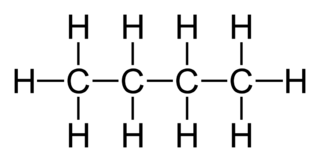
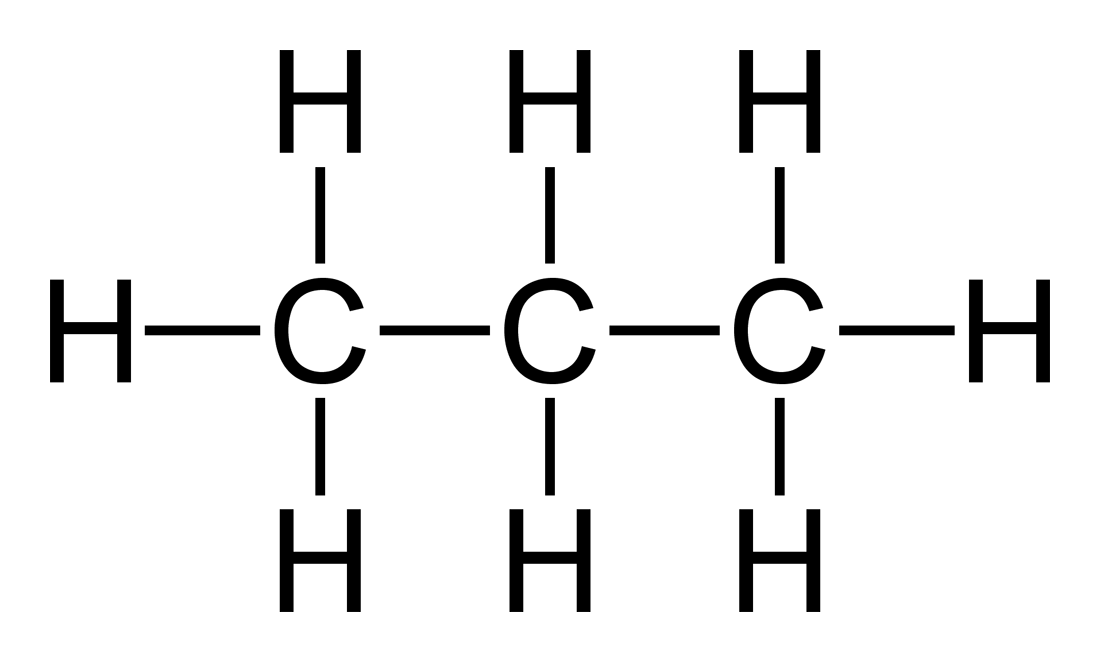
Organic compound in the same homologous series have the following characteristic, except ....
Same general formula
Same functional group
Similar chemical properties
Same physical properties
Ethene and propene are alkene in the same homologous series. Complete the following sentence about a homologous series using words from the list below.
A homologous series is a family of similar ……….. with similar….. properties due to the same ….. group.
LIST
alcohols
functional
chemical
mixtures
compounds
physical
elements
The right words to complete the sentence respectively are ….
alcohols, chemicals, compounds
functional, chemical, mixtures
compounds, chemical, functional
mixtures, chemical, compound
The molecular formula below which shown the alkanes compound is ….
C2H4
C3H7
C4H10
C5H8

The name for this compound is ....
2-ethylpropane
1,1-dimethylpropane
2-methylbutane
3-methylbutane

The structure of some hydrocarbon are shown above. The hydrocarbon that classified into saturated compound are ....
F, G, H
F, G, I
G, I, K
F & G
Is the name of single bonded, saturated hydrocarbons.
Alkanes
Alkenes
Alkynes
Tanins
Is the name of doubled bonded, unsaturated hydrocarbons.
Alkanes
Alkenes
Allkynes
Tanins
is the alkene with 3 carbons in its chain.
Ethene
Propene
Methene
Decene
Is the simplest alkane
Ethane
Methane
Propane
Decane
How many chemical bonds can each carbon atom form?
one
two
three
four
What prefix do we use for alkanes that are arranged in a loop?
ring-
cyclic-
cyclo-
What is the molecular formula for cyclopropane?


What is the molecular formula of cyclopentane?


Name this molecule
nonane
decane
cyclodecane
cyclooctane

Name this molecule
methylhexane
methylcyclohexane
1-methylhexane
1-methylcyclohexane

Name this molecule
cyclohexane
1,2-dimethylcyclohexane
1,2-methylcyclohexane
1,6-dimethylcyclohexane
What happens during an addition reaction in terms of bonding? Tick two.
Carbon-carbon double bond remains the same.
Carbon-carbon double bonds open up.
The two carbon atoms bond to atoms of another molecule.
Only one carbon bonds with another molecule.

What type of reaction is shown?
Polymerisation
Bromination
Hydrogenation
Hydration

What type of reaction is shown?
Polymerisation
Hydrogenation
Hydration
Bromination
When an alkane is added to bromine water it remains orange. Why?
There is reaction is taking place.
There is no reaction taking place.

What functional group is -OH
Hydroxyl
Carboxyl
Amino
Carbonyl Ketone

what is the name of this molecule?
2-methoxypropane
2-methylpropan-2-ol
2-methylpropan-1-ol
trimethylmethanol

What is the name of this molecule?
propan-1-ol
propantriol
3-hydroxypropan-1,2-diol
propan-1,2,3-triol

Name this branched alcohol
propanol
2-methylpropan-1-ol
2-methylpropan-2-ol
butanol

Name the compound
hexane
hexanol
propoxypropane
3-hexanol
Which one of the following compounds is not an isomer of the others?


Name the compound
2-methylbutan-3-ol
Butan-2-ol
3-methylbutan-2-ol
3-ethylbutan-2-ol
What is the functional group of alcohols?
–NH2
–COOH
–CHO
–OH
–NO2
Which of these reactions would make an alcohol?
hydration
hydrogenation
halogenation
none of these
The shortened structural formula for an organic compound is CH3CH(CH3)CH(OH)C(CH3)3
Which of the following is another way of representing this structure?

This compound is 2-ethyl-3-methylbutane
True
False

Name this compound
2-methylpent-2-ene
hex-2-ene
2-methylpent-3-ene
4-methylpent-3-ene
hex-3-ene
The name for this compound is ....
2-ethylpropane
1,1-dimethylpropane
2-methylbutane
3-methylbutane

The name for the compound is ....
2,3-dimethylpropane
3,4-dimethylpropane
2,3-dimethylpentane
3,4-dimethylpentane

How many propyl groups are on the following molecule?
1
2
3
4

How many carbons are in the longest chain?
Be careful - It's a bent molecule!
7
8
9
10
How many carbons are in the longest chain?
Be careful - It's a bent molecule!
7
8
9
10

What is the correct name for the following compound?
3,4-dimethylheptane
4-methyl-5-ethylhexane
3-methyl-4-propylpentane
Which is the structures with IUPAC nomenclature
2,2,4-trimethylpentane
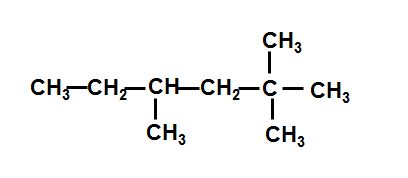
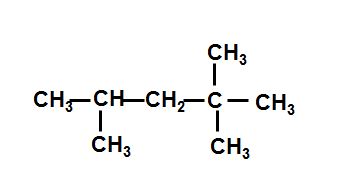
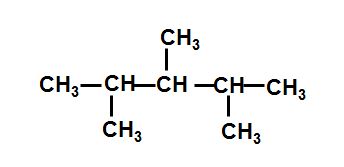
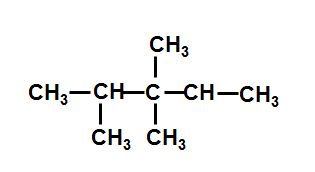
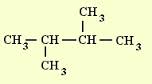


The name for this compound is ....
2-ethylpropane
1,1-dimethylpropane
2-methylbutane
3-methylbutane
The name for the compound is ....
2,3-dimethylpropane
3,4-dimethylpropane
2,3-dimethylpentane
3,4-dimethylpentane

The systematic name for the structure shown is
1,1-dimethylpropane
2-methylbutane
3-methylbutane
2-methylpentane
Compounds that are composed of the same number and type of atoms but have them arranged in different ways are ___________.
isomers
isotopes
polymers
alkanes
What type of reaction is shown?
Polymerisation
Bromination
Hydrogenation
Hydration
What type of reaction is shown?
Polymerisation
Hydrogenation
Hydration
Bromination

What type of reaction is shown?
Polymerisation
Hydration
Hydrogenation
Bromination

Given the formula representing a compound:
Which formula represents an isomer of this compound?


Which formulas represent compounds that are isomers of each other?


Given a formula representing a compound:Which formula represents an isomer of this compound?


Given the structural formulas:
Which two formulas represent compounds that are isomers of each other?
A and B
A and C
B and D
C and D
Which structural formula represents a molecule that is not an isomer of pentane?


Which compound has an isomer?



