
 Worksheets
Yr 8 Chemistry Revision
Total questions: 137
Worksheet time: 2hrs 17mins
When a solid changes straight to a gas.
condensation
sublimation
deposition
freezing
When a gas turns straight to solid.
sublimation
melting
deposition
evaporation


At which point does the substance finish boiling
B
C
E
F
D
If you have a sample of water that is 144 °C, what state is it in?
solid
liquid
gas
What happens to particles during changes of state between solid and liquid.
Particles move so fast they break from their fixed position.
Particles melt and become a liquid.
Particles find a circular orbit around an atom's nucleus.
Particles stop vibrating and change into their liquid form.
Which of the following describes the process of freezing?
Freezing occurs when the particles of a solid vibrate so fast that they break free.
Freezing occurs when the temperature drops enough a gas turns into a solid.
Freezing occurs when the particles in a liquid slow down and take fixed positions.
Freezing occurs when the temperature of a substance drops to 0 degrees Celsius.

What properties do gases have?
definite shape and volume
no definite shape and a definite volume
no definite shape and no definite volume

When thermal energy is increased in a liquid, what change in state is happening?
Melting
Evaporation
Condensation
Freezing
What two changes of state occur when thermal energy is taken away/decreased in a substance?
Freezing
Condensation
Melting
Evaporation
What happens to the arrangement of particles as thermal energy is removed from a substance?
The particles get farther apart.
The particles get closer together.
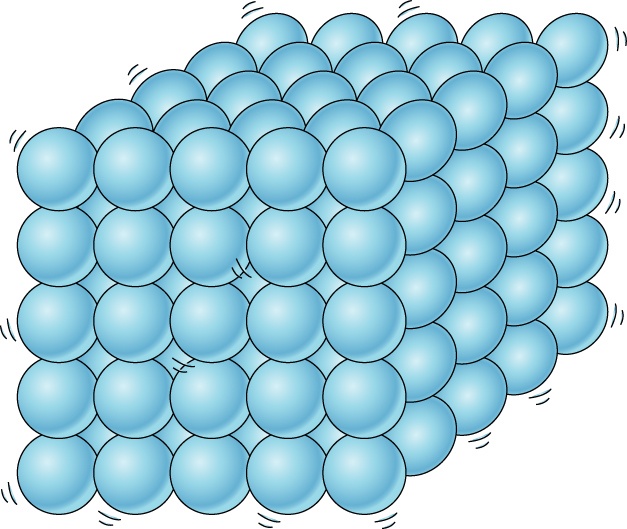
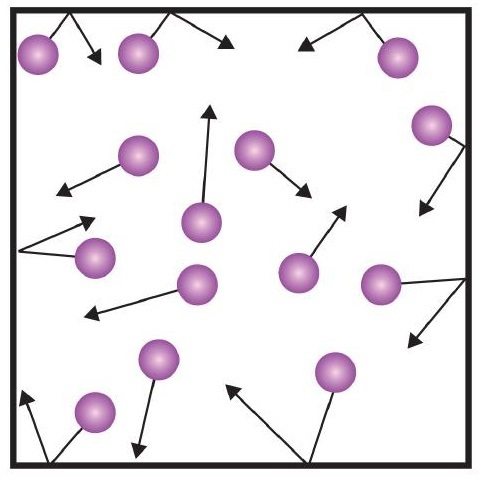
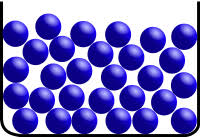
Choose the correct statements on effects of heating on matter.
Matter expands
Particles in matter is closer to one another
Particles are further apart from each other
Particles vibrate or move faster
Distance between particles decrease
Choose the correct statements of effects on cooling of matter.
Particles are closer to each other
Matter expands
Matter contracts
Distance between particles decreases
Particles vibrates or move faster
An inflated balloon will _____________ when put inside basin full of ice.
contract
burst
no change
expand
What subatomic particle has a negative charge and is found outside of the nucleus?
Electron
Proton
Nucleus
Neutron
Which subatomic particle has a positive charge and is found inside the nucleus?
Electron
Proton
Neutron
Nucleus
Which subatomic particle has a neutral charge and is found inside the nucleus?
Electrons
Protons
Neutrons
Nucleus
What is the smallest unit of matter that still has the properties of an element?
Atom
Proton
Neutron
Electron

How many protons does Helium (He) have?
1
2
3
4
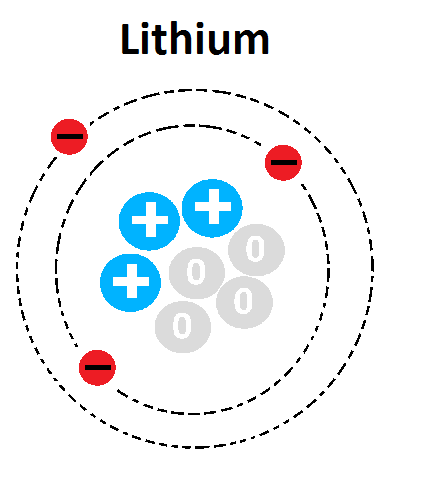
What is the atomic number of this atom?
1
3
4
7
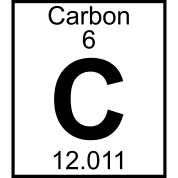

What does the 6 represent?
Atomic mass
atomic number
chemical symbol
element name
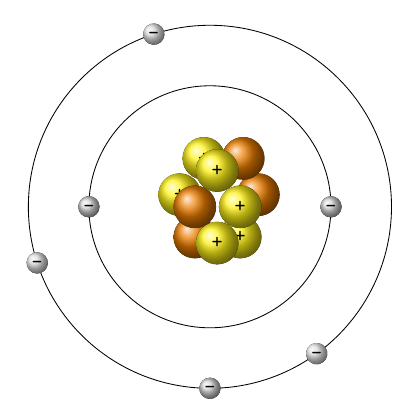
How many electrons does this atom have?
2
4
6
10

What mass does a neutron have?
1 amu
0 amu
-1 amu
+2 amu
How many protons does an aluminum atom have?
27
14
40
13
How many electrons does a sodium atom have?
23
11
12
34


How many protons does sulfur have?
32
16
48
12

How many electrons does the first shell hold?
1
2
4
8
How many electrons can be in the 2nd energy level hold?
1
2
4
8
an arrangement of the elements according to their atomic numbers so that elements with similar properties are in the same column and properties repeat from row to row
Periodic Table of Elements
Atomic Theory
Isotopes
Subatomic Particles
one or two letters that represent the name of an element
element name
element symbol
atomic number
atomic mass
a row on the Periodic Table of Elements
family
period
row
isotope
The vertical columns of the periodic table are called...
Periods
Families
Chemical Symbols
Groups

Atoms are mostly...
Tightly packed
Empty space


What is water (H2O)?
Element
Compound
Mixture
What is table salt (NaCl)?
Element
Compound
Mixture
What is salt water?
Element
Compound
Mixture
What is air?
Element
Compound
Mixture

What is a compound?
A substance that is made up of one type of atom and can't be reduced to simpler substances.
A substance made of two or more different atoms chemically bonded to one another. They can only be destroyed by chemical processes.
A material containing two or more elements or compounds that are in close contact and are mixed in any proportion. They can be separated by physical means.

What is a mixture?
A substance that is made up of one type of atom and can't be reduced to simpler substances.
A substance made of two or more different atoms chemically bonded to one another. They can only be destroyed by chemical processes.
A material containing two or more elements or compounds that are in close contact and are mixed in any proportion. They can be separated by physical means.

What is an element?
A substance that is made up of one type of atom and can't be reduced to simpler substances.
A substance made of two or more different atoms chemically bonded to one another. They can only be destroyed by chemical processes.
A material containing two or more elements or compounds that are in close contact and are mixed in any proportion. They can be separated by physical means.

What does this illustrate
Elements
Compunds
Mixture of Elements and Compunds
Mixture of Compounds

What does this pic illustrate?
Element
Mixture of Compunds
Mixture of elemets
Compounds
A compound has different physical properties to the elements that it is formed from.
True
False
This number tells the number of atoms present.
This number tells how many molecules are in a chemical equation.
How many Hydrogen atoms are present?
How many Oxygen atoms are present?
How many H2O molecules are present?
Which is an example of a diatomic molecule?
NaCl
H20
O2
CO3

What is chemical reactivity?
the ability of a substance to undergo a chemical reaction, either by itself or with other materials
the ability of a substance to undergo a physical change either by itself or with other materials
the ability to be hammered or rolled into thin sheets
magnetism
malleability
ductility
electrical conductivity
Choose the one that is a chemical property
Magnetism
Size
Color
Reactivity with water
Flammability is the ability of a substance to _________
Burn
Transfer heat
Transfer electricity
Cook
What is the outcome of observing a chemical property?
Nothing
A new substance is formed with different properties
NaCl
A rise in thermal conductivity
Which option best describes the difference between a physical and chemical property?
There is no difference between a physical and chemical properties?
Physical properties are usually room temperature but chemical properties are very hot
Observing a chemical property results in the creation of a new substance while observing a physical change does not change the substance
The difference between physical and chemical properties are the states of matter
The correct equation for photosynthesis is...
carbon dioxide + oxygen -> glucose + water
Oxygen + water -> glucose + carbon dioxide
glucose + water -> carbon dioxide + oxygen
carbon dioxide + water -> glucose + oxygen
How many iron (Ag) atoms are reactants in this equation?
4Ag + 3O2 → 2Ag2O
4
2
3
0

