
 Worksheets
Earth Science Standards
Total questions: 132
Worksheet time: 4hrs 35mins
Based on the most current radiometric dating data, about how old is Earth?
40 billion years old
20 billion years old
4.6 billion years old
4.6 million years old

According to the diagram, what is the most recent event?
B
I
R
H
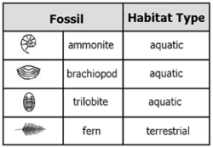
Rain and wind cause _____________________ on top of the Earth's crust.
intrusion
erosion
have no effect
heat

Erosion would be occurring on the_______
bottom layer of rock strata
top layer of rock strata
middle layers of rock strata
none of the rock strata
Which of the following is a requirement of index fossils?
Lived over a vast time period but found only in one location
lived only for a short time but was found all over the world
Not a prevalent species at any time
Still alive today
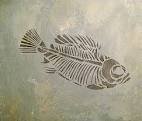
Which process slowly changes Earth's surface by breaking rocks and soil into smaller pieces?
weathering
landslide
erosion
eruption
What Era are we currently in?
Paleozoic
Mesozoic
Cenozoic
Triassic
Which Era was dominated by dinosaurs?
Paleozoic
Mesozoic
Cenozoic
Cambrian
Which statement is true?
The oldest layers of rock and soil are closest to the surface of the earth
The youngest layers of rock and soil are farther away from the surface of the earth.
inclusions are younger than the layers they are found in
Absolute dating and relative dating are two methods used by scientists to determine the age and sequence of geologic events.

90% of Earth’s history occurred during which era?
Precambrian
Paleozoic
Mesozoic
Cenozoic


What were 2 kinds of evidence were used to prove that the seafloor spread?
rock formations, WWII shipwrecks
magnetic seafloor stripes, WWII ship logs
magnetic seafloor stripes, age of rocks


The movement of the tectonic plates is caused by
the rotation of the Earth.
convection currents in the Asthenosphere
the gravity of the iron-nickel core.
the Moho discontinuity.
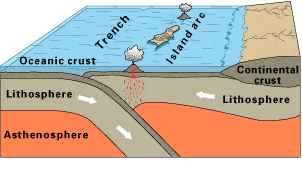
Observe this diagram of a plate boundary. One statement BEST describes what is happening. It is that
the oceanic crust is melting.
the denser ceanic crust is subducting under the less dense oceanic crust
volcanic islands are forming.
the tectonic plates are moving away from each other.


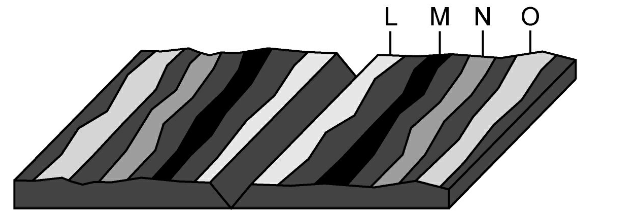
Below is a picture of sea-floor spreading. How are the ocean crusts moving?
Converging
Diverging
Sliding
No movement

A seismograph tells us what information about an earthquake?
How deep within the earth the earthquake occurred.
How far a tsunami will travel
How much damage the earthquake caused
How strong the earthquake is

The picture here shows a landslide. What can you infer from the picture?
Landslides are a destructive process that break apart the surface of the earth.
Landslides are a constructive process that build new mountains and dams on the surface of the earth.
Landslides are caused by volcanic eruptions,
Landslides are helpful to road crews.

Sand dunes can be viewed in the picture. What is the best way to simulate the formation of sand dunes?
Use a hair dryer to blow sand into piles showing how wind can deposit sand in new locations.
Use ice to move sand from one place to another the way that a glacier would on the earth's surface.
Use water and sand to show how water can move sand from one place to another through the process of erosion.
Use sand and a shaky table to show how earthquakes can move parts of the earths surface.
How can plants cause the weathering of rocks?
roots can grow into or near rocks causing the rocks to break down over a period of time.
plants can chemically break down rocks using photosynthesis
plant roots can use the rocks as a source of nutrients and break them down over time
plants can release water vapor into the air that causes the rocks to break down over time.
What are the warning signs of an impending volcanic eruption?
Rising sea levels
Observing ground deformation, increased seismic activity, changes in gas emissions, and changes in water and ground temperature
Increased bird activity
Changes in cloud formations

What is letter E?
Heat and pressure
Melting
Deposition, Compaction, Cementation
Weathering and erosion
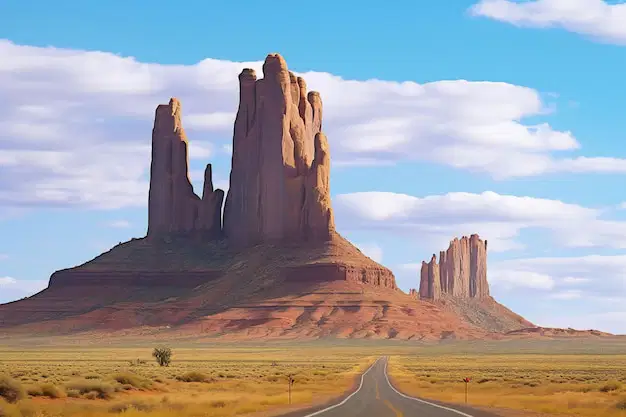
Name the type of force working on the rocks in the picture.
Slow constructive
Quick constructive
Quick destructive
Slow destructive
What are the different categories of tornadoes based on their intensity?
Enhanced Fujita (EF) scale
Beaufort scale
Saffir-Simpson scale
Richter scale

A geologist identifies the identical index fossils in rock layers from two different areas. Which conclusion is best supported by this discovery?
The deposition rate of the two rock layers was identical.
The fossil organism evolved independently in the two separate areas.
The two rock layers were deposited at approximately the same time.
The index fossil will also occur in sediment deposited on top of these rock layers.
Warmer material in the convection current rises because it is (a) dense.
Heat rises because it is _________.
more dense
less dense
cold sinks because it is___________.
more dense
less dense
What is one way mass extinctions have affected the process of evolution?
A. They slow down the rate of evolution permanently.
B. They create new environments where species must adapt.
C. They prevent new species from developing.
D. They cause all life forms to disappear permanently.
What are Natural Resources that take millions of years to replenish?
nonrenewable resources
renewable resources
A wheel or rotor made to revolve by a fast moving flow of water, steam, gas, air, or other fluid.
nuclear fission
turbine
water
carbon cycle
a form of energy that harnesses the power of moving water, such as water over a waterfall
geothermal energy
solar energy
hydroelectric energy
fossil fuels
When heat is trapped and absorbed in the Earth's atmosphere by greenhouse gases
global dependency
climate change
geothermal energy
solar energy
What are three examples of fossil fuels?
acid rain, coal, oil
land, uranium, oil
coal, oil, natural gas
uranium, oil, carbon dioxide
Which of the following answer choices is a disadvantage of using fossil fuels?
low cost
leads to climate change
oil producing gasoline
can be stored and transported

What prevents water from seeping out under an aquifer?
The Mantle
Bedrock that is impermeable
Permeable limestone and sandstone
Topsoil
Which species has the greatest ability to impact our environment?
Humans
Cattle
Elephants
Whales
Which is not true about fossil fuels
They are limited
We are using them up faster than nature can produce them
They are more expensive that renewable energy
They produce carbon dioxide when burned
Which of the following is a source of air pollution? (Select all that apply)
Coal
Nuclear
Solar
Biomass
Which is NOT a way to conserve natural resources?
Run the dishwasher only when it's full
Take longer showers
Unplug small electronics when they're done charging
Use reusable containers when possible
Coal is a solid fossil fuel formed from
the remains of animals
rocks
decaying plant remains
hardened lava
Energy conservation means
slowing down a chemical change
burning a fuel to release energy
using fossil fuels to produce electricity
reducing energy use
What is deforestation?
Cutting down trees in a forest.
Planting new trees on empty land.
Using trees to produce oxygen.
Looking for new types of medicine in a forest.

Electronic devices are made from renewable resources
true
false
Which is the process that breaks up rock on Earth’s surface?
deposition
melting
compaction
weathering

Rocks that form from colling magma inside Earth?
Igneous intrusive
Igneous extrusive
Metamorphic foliated
Metamorphic nonfoliated
The movement or transportation of sediment from one location to another. This is a destructive process.
Weathering
Erosion
Deposition
Grooves
Dropping off sediment to a new location. This is a constructive process.
Weathering
Erosion
Deposition
Grooves
Which of the following is created by a constructive force? *More than one answer*
landslide
sinkhole
delta
sand dune
canyon

Destructive forces are processes…
build up the earth's surface
tearing down the earth's surface
both answers are correct
no correct answer

What are constructive forces?
add sediment to existing areas of land
build up Earth's crust,
destroys all landforms
create new landforms,

Name a way that tectonic forces can be constructive at a
Convergent boundary ?
when they tear down sand dunes
When they form mountains
when they destruct volcanoes with violent eruption
when rock is weathered

THE CREATION OF CRUST AT A MID OCEAN RIDGE IS CONSIDERED TO BE WHAT KIND OF A FORCE
CONSTRUCTIVE
DESTRUCTIVE
JEDI
HORSE
Which of the following building techniques would be most appropriate if you needed to protect
a home from the effects of flooding?
a. No basements in homes
b. Steel beams
c. Heated sidewalks
d. Storm shelter
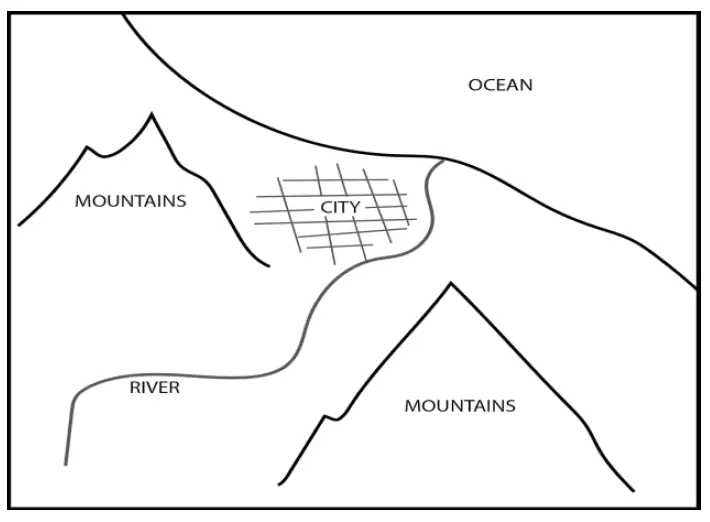
You live in the city here located on the banks of a river between a mountain and an ocean shore. Based on this location, which of these hazards might be the greatest risk for this city?
a. Flooding
b. Tornado
c. Sinkholes
d. Drought
Which of the following effects of a volcanic explosion would be globally catastrophic?
a. A landslide wiping out animals within 1 mile of the explosion
b. The mountains underneath the volcano collapsing
c. The temperature increasing in the nearby town
d. The ash cloud spreading through the atmosphere
What SCALE measures the total amount of energy that is released by an earthquake in the US?
A. Mercalli Scale
B. Fujita Scale
C. Saffir-Simpson Scale
D. Richter Scale
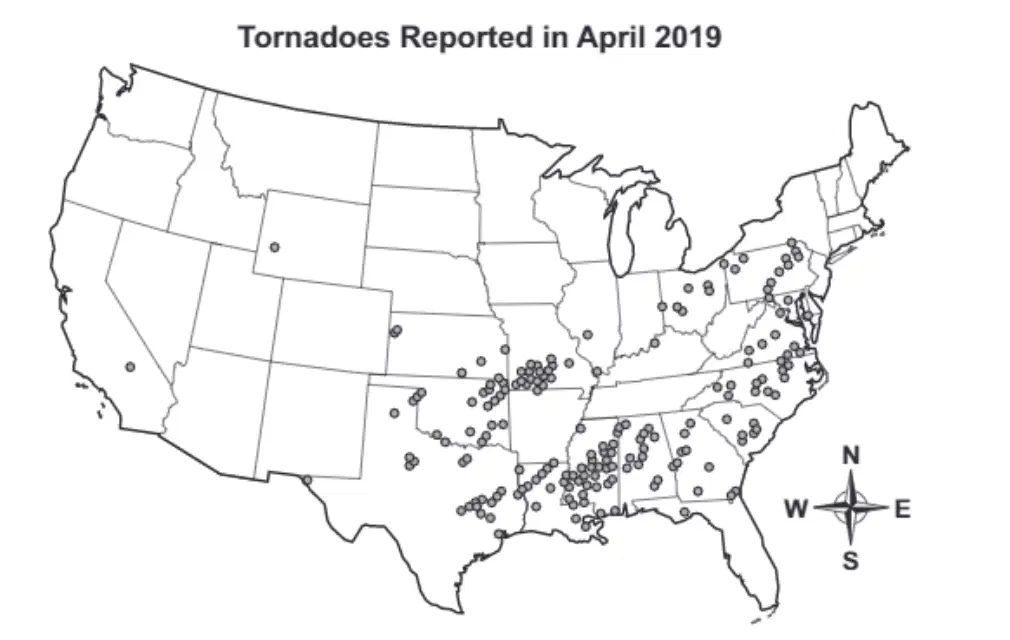
A student observes the map showing the tornadoes that were reported in April of 2019. Which impact would the student most likely observe in locations with reported tornadoes?
increased soil loss and desertification
increased damage to buildings, structures, and trees
decreased access to water storage and water bodies
decreased amount of dry land near rivers and streams
A region experiences frequent earthquakes that result in property damage. Engineers
are designing a building for the region that can better withstand the effects of
earthquakes. Which is an essential feature that the engineers should include in their building
design?
A The building should be large to stop earthquake waves when they approach.
B The building should be tall to withstand ground shaking for a long period of time.
C The building should be flexible to move when the ground shakes to absorb energy.
D The building should be built with a deep foundation to help redirect earthquake waves.
Which of the following natural hazards is easiest to detect and alert the public in advance?
Hurricanes because they can often be seen from satellite images as they form and move towards land.
Tornadoes because they can be seen from the ground and generally move in very predictable patterns.
Wildfires because they often move across areas very slowly and can be easily managed to prevent spread.
Land subsidence and sinkholes because it is easy to tell when and where they are likely to occur.
Which statement best explains why wildfires are difficult to effectively predict?
Wildfires often occur accidentally from human activity and can spread quickly due to the wind.
Wildfires generally occur at night and are difficult to see and identify before they are out of control.
Wildfires cannot be seen from aerial views and satellite images and they often go unseen.
Wildfires are most often caused by lightning storms and it is difficult to predict where lightning will strike.
How many seismograph stations are needed to determine the exact epicenter of an earthquake?
One
Two
Three
Four
A teacher asks the class to research how seismometers and GPS technologies differ in predicting earthquakes. What is the key difference between the two?
GPS tracks ground movement over time, and seismometers forecast weather patterns.
GPS predicts the exact time of an earthquake, and seismometers forecast weather patterns.
GPS tracks ground movement over time, and seismometers record the shaking of the ground.
GPS records the shaking of the ground, and seismometers predict the exact location of an earthquake.
Which technology used to predict natural hazards provides the greatest warning time before the hazard occurs?
Doppler radar for tornadoes
seismographs for earthquakes
computer modeling systems for hurricanes
water level and rainfall simulators for floods
What is the significance of the discovery of Mesosaurus fossils in both South America and Africa, which are separated by the Atlantic Ocean?
The Mesosaurus could fly across the oceans.
South America and Africa were once joined together.
A type of Mesosaurus species could swim long distances.
South America and Africa had Mesosaurus evolve at the same time.
How does the discovery of similar rocks of the same age on different continents provide evidence for plate tectonics?
It indicates an equal rate of erosion and deposition across the planet.
It implies that meteorite impacts struck multiple continents at the same time.
It suggests that widespread volcanic eruptions occurred in the past across multiple continents.
It supports the idea that continents were once joined together and have since drifted apart over time.
Which geological feature supports that tectonic plates have spread apart over time?
Deep sea trenches
Mid-ocean ridges
Mountain ranges
Volcanic islands

The image shows two tectonic plates moving away from each other. What must have caused the plates to move apart from each other?
the gravitational pull of the Moon
convection currents in the mantle
increase in the Earth's magnetic field
decrease in the weight of the tectonic plate
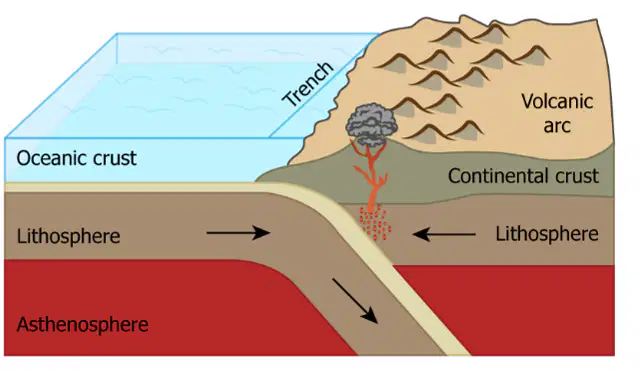
What causes the formation of oceanic trenches?
the presence of salt in ocean water
the movement of fish and other marine life activities
the weight of water pushing down on the ocean floor
the movement of tectonic plates that are driven by convection currents
A mid-ocean RIDGE is located at the boundary of two tectonic plates. Which diagram correctly models the relative plate motion on each side of a mid ocean ridge?


This landform can occur at a divergent plate boundary.
ocean trench
mid-ocean ridge
tall mountains
transform fault

Which of these events can ONLY happen on a DIVERGENT BOUNDARY?
Rift Valley
Mountain
A peninsula
An Insanely complex, long answer that you will click out of instinct.
The upper most part of the mantle and the crust together form a hard layer colled the...
Lithosphere
Trench
Mid-ocean ridge
Asthenosphere

The diagram shows a model of the movement of two tectonic plates. When the plates collide, on plate often moves below the other plate. The rising magma that can result from this type of plate movement may produce-
fossil layers
volcanic islands
deep-sea sediment
seafloor spreading



Which of the following would fill the space marked "X"
Igneous Rock
Metamorphic Rock
Magma
Sedimentary Rock

Which of the following best completes the space marked "X"
Sedimentary Rock
Metamorphic Rock
Igneous Rock
Magma

Which of the following best completes the space marked "X"
Sedimentary Rock
Metamorphic Rock
Igneous Rock
Magma

At which location is new crust formed?
X
Y

At which location is the crust being recycled?
X
Y

Which rock layers are most likely the same age?
5 and 9
1 and 7
3 and 8
2 and 6
Which statement best explains the reason for Pangaea breaking apart?
Solar radiation from the sun and meteor impacts caused the cracks to form in Pangaea
Convection in the Earth's interior caused Pangaea to break apart into several different landmasses
Weathering and erosion caused earthquakes that broke the earth's crust
Forces from within the Earth resulted in some areas sinking below sea level and others rising upward

Convection currents happen in the ______ of the earth
core
mantle
crust

Which letter represents the layer of earth where convection occurs?
X
Z
Y

What process is happening at #2
Evaporation
Condensation
Precipitation
Transpiration

What is the process happening at #3
Evaporation
Precipitation
Condensation
Transpiration
True or False: The more pores in the ground, the less ground water is stored there.
True
False


Wave energy from the ocean can be harnessed to power generators to make electricity. Energy from ocean tides can also be used to make electricity. How would you categorize these two sources of energy?
Both are nonrenewable.
Wave energy is nonrenewable. Tidal energy is renewable.
Both are renewable.
Wave energy is renewable. Tidal energy is nonrenewable.


Students are studying fossilized animals from the bottom of an ancient lake. The students make drawings of the fossilized animals.
One student claims that the fossilized animals are related to living animals. Which statement best supports the student’s claim?
The fossilized animals have body sizes that are similar to the body sizes of living animals.
The fossilized animals are made of rocky materials that are similar to those in the bones of living animals.
The fossilized animals have body shapes and parts that are similar to the body shapes and parts of living animals.
The fossilized animals show signs of having once lived in habitats that are similar to the habitats of living animals.
There have been 5 mass extinctions in Earth's history. Which of the following answer choices was a cause of these extinctions?
increased carbon dioxide (CO2) levels in the atmosphere
an asteroid impact
melting of glaciers and rising sea levels
widespread volcanic activity
All of them
What impact did the asteroid that caused the extinction of the dinosaurs have on Earth's climate?
It caused a significant cooling period.
It had no impact on the climate.
It caused global warming.
It triggered an ice age.
In order for magma to be converted to igneous rock, which actions must occur?
melting and cooling
heating and pressure
weathering and erosion
crystallization and cooling


The process that formed and changed Earth from its beginning to the present
Earth's Evolution
B.C.
Geologic Dating
Conspiracy

