
 Worksheets
Types of Land & Ocean Forms
Total questions: 135
Worksheet time: 3hrs 35mins
What type of landform is a mid-ocean ridge?
Underwater mountain range
Deep ocean trench
Coastal cliff
Desert plateau
Which tectonic plate boundary is responsible for forming mid-ocean ridges?
Convergent boundary
Divergent boundary
Transform boundary
Subduction zone
Which of the following landforms can also form at divergent plate boundaries besides mid-ocean ridges?
Rift valleys
Fold mountains
Ocean trenches
Volcanic arcs
What type of rock primarily forms at mid-ocean ridges when magma cools?
Granite
Basalt
Limestone
Sandstone
How long is the global mid-ocean ridge system approximately?
10,000 km
25,000 km
65,000 km
100,000 km
Which famous mid-ocean ridge runs down the center of the Atlantic Ocean?
East Pacific Rise
Mid-Atlantic Ridge
Juan de Fuca Ridge
Gakkel Ridge
What happens to the seafloor as new crust forms at a mid-ocean ridge?
It sinks deeper into the mantle
It spreads outward, widening the ocean basin
It remains stationary
It forms mountain ranges on land
Why is the seafloor near mid-ocean ridges elevated compared to older ocean floor?
Because of sediment accumulation
Due to hotter, less dense newly formed crust
Because of underwater landslides
Due to coral reef growth
Which of these landforms can form from volcanic activity at mid-ocean ridges and eventually rise above sea level?
Islands
Fjords
Atolls
Sand dunes
What is the main driving force behind the movement of tectonic plates at mid-ocean ridges?
Gravity pulling plates down
Mantle convection currents pushing plates apart
Earth’s rotation
Ocean currents

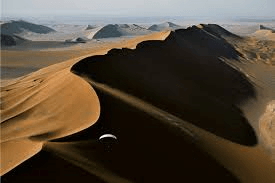
Hills formed by the wind blowing or depositing sand are called
dunes
rivers
lakes
mountains
Which image shows a coastline?


Which of these shows a valley?
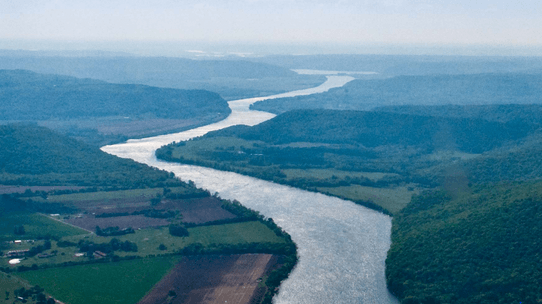
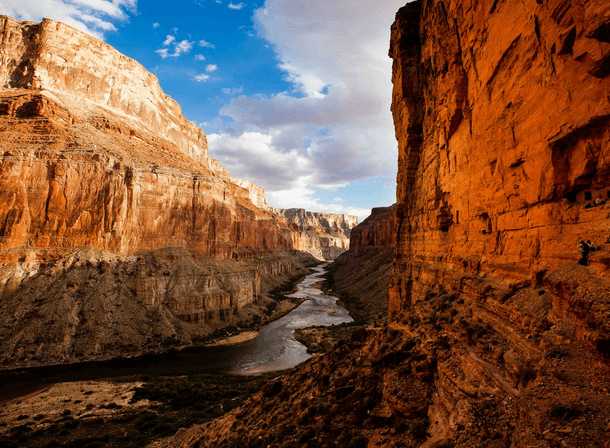
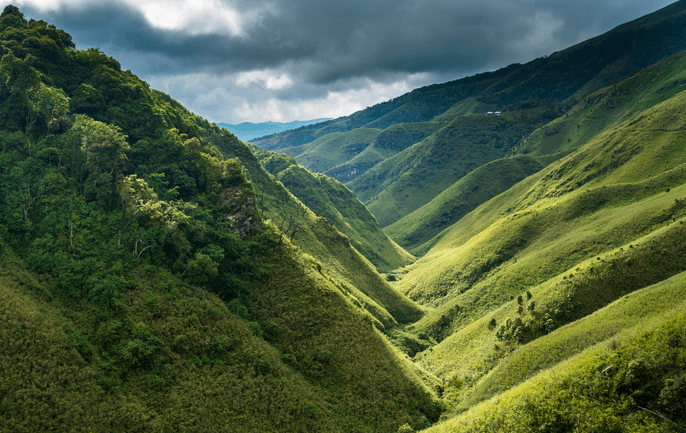
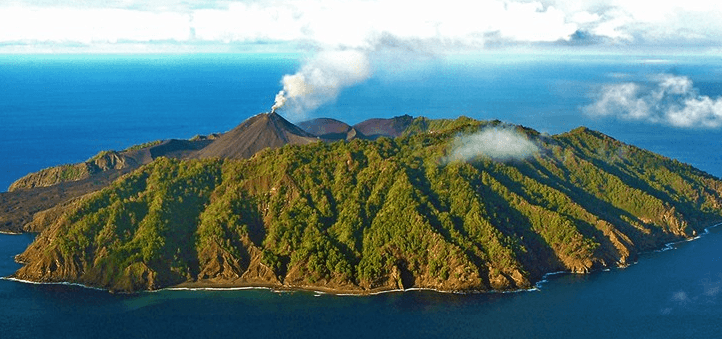
What is one way islands are formed?
hurricanes
tornadoes
volcanoes
Which of these is a river?
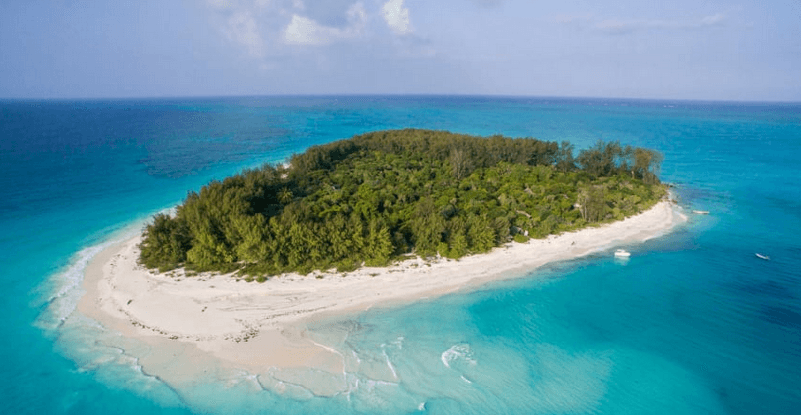
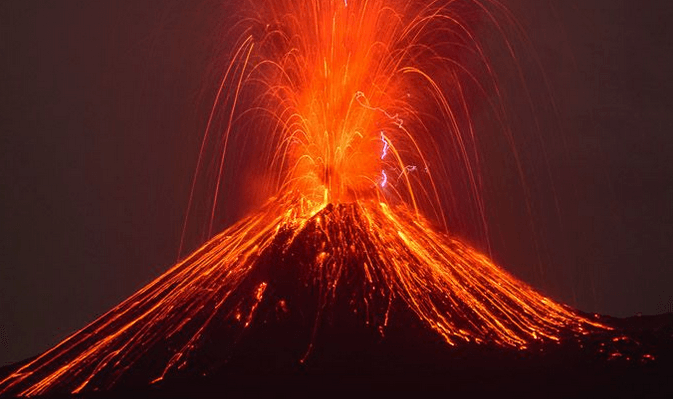
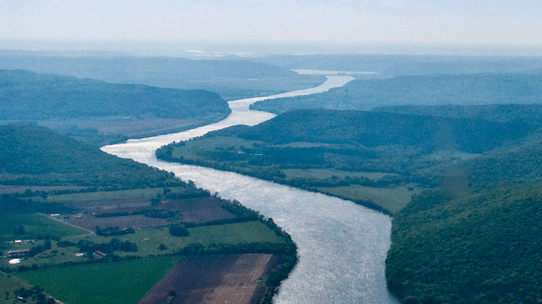
Which of these is a lake?
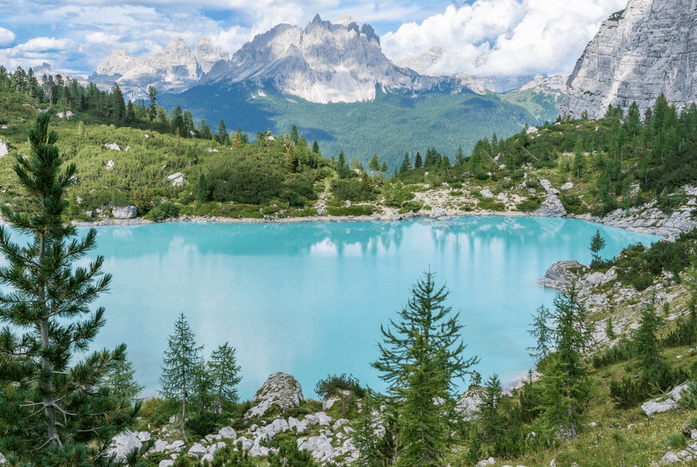
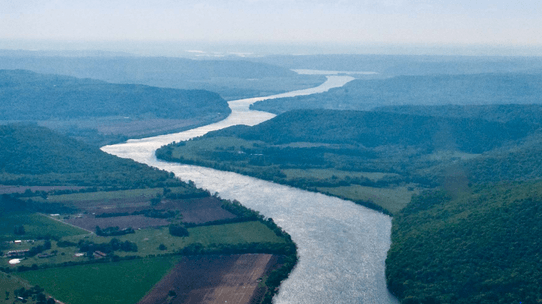
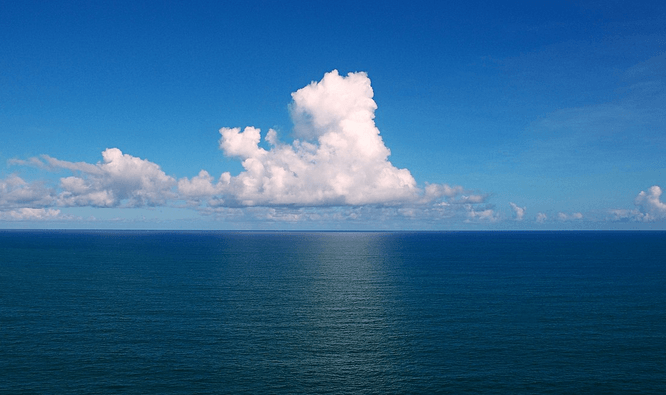
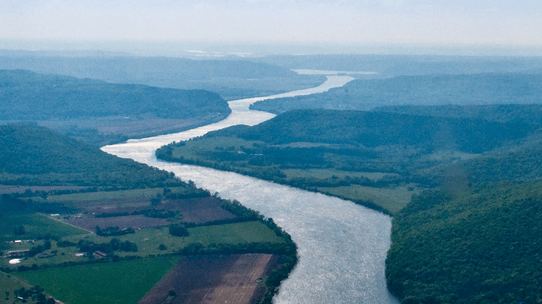
Which of these is an ocean?
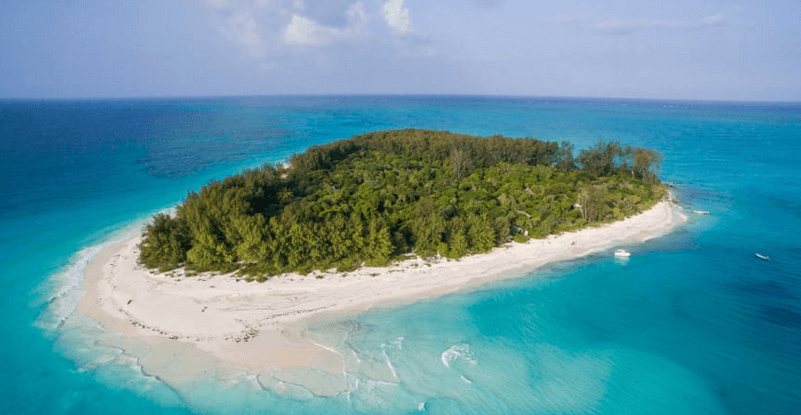
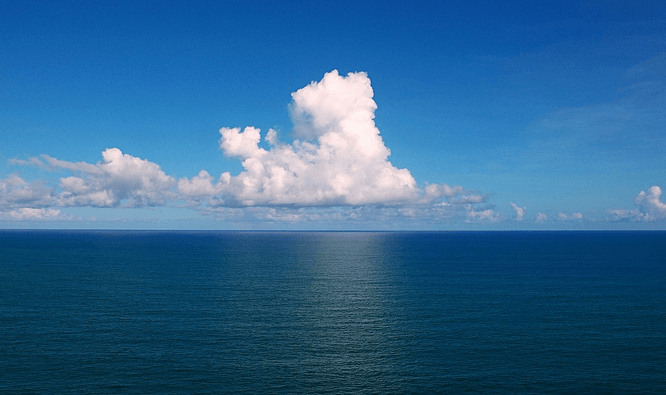
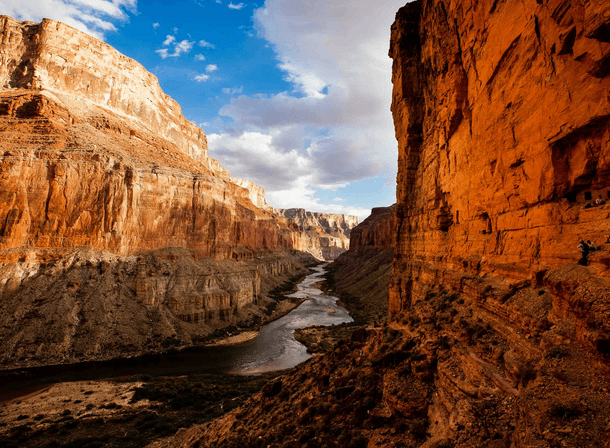
What is it called when a river cuts a deep path through land?
river
mountain
canyon
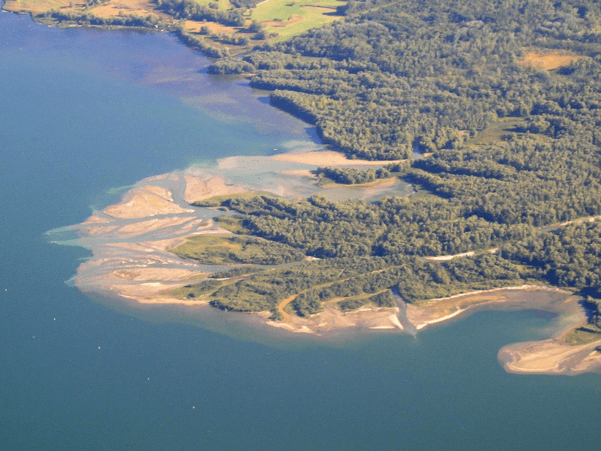
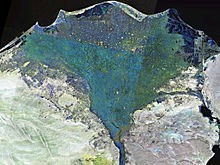
What is a delta?
a huge mass of ice that formed from accumulated and compacted snow that slowly moves down a slope
a wide body of slowly moving water; a natural flow of water that follows a path into another body of water
a triangle-shaped (deposit) landform at the mouth of a river as it empties into another body of water
The outline or shape of a coast or the boundary between land and a lake or ocean
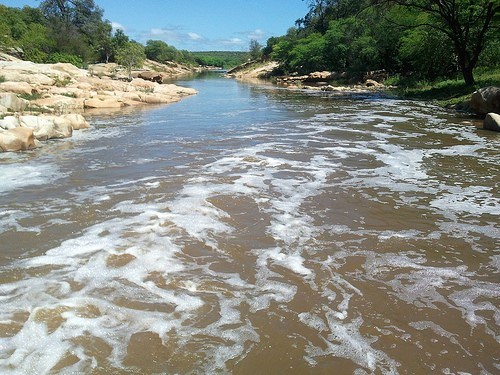
What is a river?
a natural physical feature on Earth's surface
The outline or shape of a coast or the boundary between land and a lake or ocean
a wide body of slowly moving water; a natural flow of water that follows a path into another body of water
a huge mass of ice that formed from accumulated and compacted snow that slowly moves down a slope
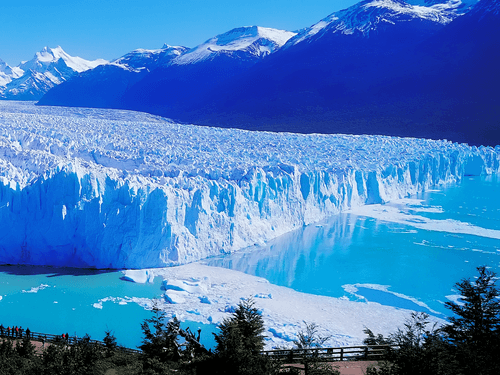
What is a glacier?
hills formed by the wind blowing sand
a huge mass of ice that formed from accumulated and compacted snow that slowly moves down a slope
A large body of water with land all around it
The outline or shape of a coast or the boundary between land and a lake or ocean
Examples of Disruptions include:
Convergent
Divergent
Transform
Earthquakes
Volcanic Eruptions
Tsunamis
Mountains
Ridges
Trenches
Examples of Landforms include:
Convergent
Divergent
Transform
Earthquakes
Volcanic Eruptions
Tsunamis
Mountains
Ridges
Trenches
Disruptions and Landforms are both (a) that happen (b) .
But Disruptions are (c) while Landforms are (d) .
changes to the geosphere
at plate boundaries
temporary
permanent
Mountains mostly form at ____ boundaries.
Convergent
Divergent
Transform
Which landform would we expect when two continental plates converge?
Mountain
Trench
Ridge
Match the diagram to the landform.

Trench

Ridge

Mountain
Match the description to the landform.
New rock formed by cooling magma underwater.
Ridge
Rock rises up when two plates push together and fold.
Mountain
A deep hole formed by one plate sinking below the other.
Trench
Match the boundary to the landform.
Converging of Continental-Continental.
Mountain
Converging of Continental-Oceanic.
Trench
Diverging of Oceanic-Oceanic.
Ridge

What is this a picture of?
Delta
Valley
Canyon
Peninsula
Mountain

What is this a picture of?
Delta
Valley
Cave
Peninsula
Alluvial fan

What is this a picture of?
Delta
Mountain
Cave
Peninsula
Alluvial fan

What is this a picture of?
Delta
Valley
Canyon
Peninsula
Mountain

What is this a picture of?
Valley
Sea arch
Canyon
Cave
Mountain

What is this a picture of?
Valley
Sea stack
Canyon
Cave
Mountain

What is this a picture of?
Valley
Sand Dunes
Canyon
Cave
Mountain

What is this a picture of?
River
Sand Dunes
Lake
Cave
Ocean

What is this a picture of?
River
Sand Dunes
Lake
Cave
Ocean

What is this a picture of?
River
Sand Dunes
Lake
Cave
Ocean

What is this a picture of?
U-shape valley
Sand Dunes
Alluvial fan
Cave
Sinkhole

What is this a picture of?
U-shape valley
Sand Dunes
Alluvial fan
Cave
Sinkhole

What is this a picture of?
U-shape valley
Sand Dunes
Alluvial fan
Cave
Sinkhole

What is this a picture of?
V-shape valley
Sand Dunes
Alluvial fan
Cave
Sinkhole

What is this a picture of?
Mountain
Sand Dunes
Valley
Cave
Sinkhole

What is this a picture of?
Mountain
Sand Dunes
Valley
Cave
Sinkhole

What is this a picture of?
Mountain
Coastline
Valley
Delta
Sinkhole

What is this a picture of?
Sand Dunes
Canyon
Valley
Delta
Sinkhole

What is this a picture of?
Sand Dunes
Canyon
Valley
Delta
Sinkhole

What is this a picture of?
Sand Dunes
Canyon
Valley
Delta
Sinkhole
Which of the following appropriately describes volcanoes?
Volcanoes can destroy previously existing landforms and vegetation, but they can also build new land once the magma hardens.
Volcanoes destroy islands and landforms, but they can build new oceans and rivers.
Volcanoes are only destructive; they do not create new land.
Volcanoes are only constructive; they do not destroy any previously existing landforms.

A flat area of land at a high elevation
Spring
Cave
Plateau
Mountian

What type of landform is this?
Cliff
Beach
Volcano
Plateau

Which type of landform is this
Mountain
Hill
Glacier
Valley

delta

What Landform?
Volcano
Mountain
Canyon
Hill

What landform?
Valley
Mountain
Plain
Hills

What land form is this?
valley
plain
volcano
canyon

When two oceanic plates collide, which THREE of the following would likely happen?
Trench
Subduction Zone
Volcanic Island Arc
Rift Valley

At the Mid-Ocean Ridges you can find:
underwater trees and bushes
deep sea trenches
the oldest crust
the newest crust
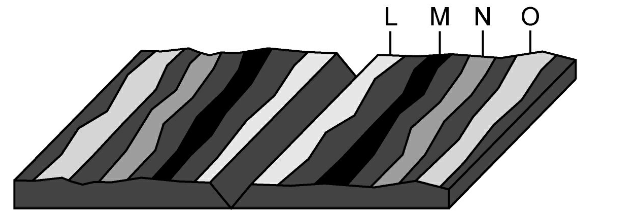
The image shows a diagram of the ocean floor near a mid-ocean ridge. Where would the oldest rock be found?
Put the repeating steps of seafloor spreading in order.
Magma MOVES to the SURFACE
Magma FLOWS from the CRACKS
Magma COOLS to form new SEAFLOOR
What is the Mid-Ocean Ridge?
It is an undersea mountain chain that is part of long system of mountains. These mountains winds beneath Earth’s oceans for almost 65,000 kilometers.
Rocks on both sides of the mid ocean ridges with magnetic polarity and reversed
New ocean floor is hot and lighter as it moves away from mid ocean ridge, it cools and becomes more dense.
Deep underwater troughs on the seafloor.
Explain the process of Subduction.
The sea floor spreads apart along both sides of a mid ocean ridge as new crust is added. This makes ocean floor move like a conveyer belt, carrying the continents along with them.
The fossils of plant Glossopteris has been discovered from South America, Africa, India, Antarctica, and Australia.
Continents are in constant motion on the surface of the Earth.
At deep ocean trench, the ocean floor bends downwards and sinks back into the mantle. New ocean floor is hot and lighter as it moves away from mid ocean ridge, it cools and becomes more dense. Gravity pulls this older, denser ocean floor down beneath the trench.
What are Deep Ocean Trenches?
The sea floor spreads apart along both sides of a mid ocean ridge as new crust is added
An undersea mountain chain that is part of long system of mountains.
Newer rock found near the mid-ocean ridges and older rocks are found near the trenches.
Deep underwater troughs on the seafloor.
What is Plate Tectonics?
States that Earth’s surface is made of rigid slabs of rock, or plates, that move with respect to each other, or in relation to each other.
It is an undersea mountain chain that is part of long system of mountains. These mountains winds beneath Earth’s oceans for almost 65,000 kilometers.
Helped prove the theory of continental drift.
The theory that the continents are in constant motion on the surface of the Earth.

What kind of plate boundary is shown on the picture?
divergent
convergent
transform
trench
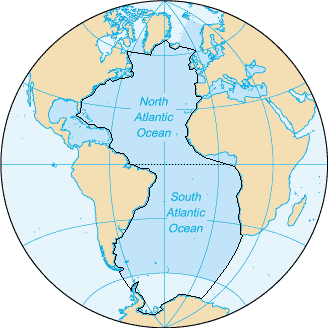
In the Atlantic ocean, where is the youngest seafloor located?
Towards the edges, near the eastern and western continents
Towards the middle of the ocean at ocean ridges
Towards the north and south poles
Young seafloor is located randomly throughout the ocean
In sea-floor spreading, molten material rises from the mantle and erupts
in deep-ocean trenches
along the edges of all the continents
along mid-ocean ridges
at the north and south plate

What is formed at the subduction zone?
mountain ranges
deep-sea trenches
oceanic ridge
hills and valleys

What confirms that the process of seafloor spreading is occuring?
Older sediment is farther away
parallel magnetic stripes
more heat leaves Earth from the abyssal plain
sediment is thicker

What is the term for the state in which magnetized objects will orient themselves to point north?
magnetic field
magnetic reversal
normal polarity
reversed polarity

What happens as the seafloor spreads apart?
The older oceanic crust folds into the mid-ocean ridge
The newer oceanic crust is pushed under the mid-ocean ridge
The older oceanic crust moves away from the mid-ocean ridge
The new oceanic crust moves toward the mid-ocean ridge

Which plate boundary involves the shearing of rock- rock will snap apart due to stress.
Divergent
Convergent (Continental/Oceanic)
Transform
Convergent (Oceanic/Oceanic)

Which definition below matches the concept of sea-floor spreading?
Mid-ocean ridges where oceanic plates pull apart and rising magma creates new oceanic crust.
The coastlines of South America and Africa fit together like pieces of a puzzle.
One plate of rock slides underneath another plate of rock and melts in the mantle.
A rock snaps under stress and pressure.

Folded mountains are a feature found at which type of plate boundary?
Divergent
Convergent (Continental/Continental)
Convergent (Oceanic/Oceanic)
Transform

What evidence supports sea-floor spreading?
Rocks get older moving away from mid-ocean ridges.
Alternating bands or magnetized rocks.
Fossils have been found in South America.
The coastlines of South America and Africa fit together like puzzle pieces.

Which type of plate boundary has the movement where one plate slides underneath other (subduction)?
Convergent (Continental / Continental)
Convergent (Continental / Oceanic)
Divergent
Transform
What is A long chain of undersea mountains called?
mid ocean ridge
sea floor spreading
oceanic plates

Label the diagram
Abduction
Tornado
Mountain Formation
Subduction
Fossilization

At subduction zones, plates (a) and (b)
Where does subduction occur?

The process where oceanic crust slides under another plate and is melted is called (a) . The oceanic crust is (b) so it will go under the continental plate.
Subduction
Divergence
Convergence
Transform
At subduction zones, plates (a) and (b)
The process where oceanic crust slides under another plate and is melted is called (a) . The oceanic crust is (b) so it will go under the continental plate.
seafloor spreading
continental drift
recycling
subduction
more dense
less dense
What feature results from the oceanic plate being subducted under the continental plate?
Subducting Plate
Volcanic mountains
Trench
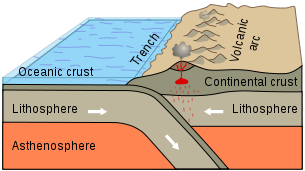
Look at the image and click where you see volcanic islands as two oceanic plates collide.
Look at the image and click where you see magma moving upward as the plates are moving apart.
Match the following
hot, melted rock within the earth
magma
texture of magma
runny or sticky
what builds inside a volcano, causing the eruption
pressure
magma once it reaches Earth's surface
lava
this creates layers of rock that grow overtime
cooling lava

Convergent Boundary

Divergent Boundary

Transform Boundary

Describe the most likely relationship between these mountains and nearby tectonic plates.
The mountains are probably formed by earthquakes
The mountains are probably formed by the movement of glaciers
The mountains are probably located near the edge of 2 tectonic plates.
The mountains are probably formed by running water.

When a continental plates collide what may be formed?
islands
mountains
volcanoes
rift valleys
Label the parts of the plate boundary
Label each plate boundary.

Match the following
thicker, less dense, forms landmasses, composed mostly of granite, generally older than oceanic crust
Continental crust
thinner, more dense, located under oceans and seas, composed mostly of basalt, generally younger than continental crust
Oceanic crust
Boundary where two tectonic plates meet
Plate boundary
Drag the labels to the correct the locations on the diagram.
convergent boundary
Mid-ocean Ridge
slab pull
trench
divergent boundary

This image shows the formation of a mountain range. At this (a) plate boundary, colliding plates are a (b) .
Place the labels correctly!
Old Rocks
Young Rocks

A plate boundary where two tectonic plates slide horizontally past one another
Transform boundary
process in which two lithospheric plates of different densities converge and the denser one sinks into the mantle beneath the other
Subduction
A plate boundary where two tectonic plates move apart from each other
Divergent boundary
A plate boundary where two tectonic plates move toward each other and collide
Convergent boundary
The process by which a continent is pulled apart at a divergent plate boundary
Continental rifting
Label the parts of this mid-ocean ridge correctly!
Molten Material
Oceanic Crust
New Rock
Where is the North American Plate located?
Where is the South American Plate located?
Drag the labels to the correct the locations on the diagram.
convergent boundary
Mid-ocean Ridge
slab pull
trench
divergent boundary

Which of the following statements regarding dome mountains is TRUE?
Volcanoes are created when they are formed, but are typically dormant
Magma does not push through the surface of Earth when they are formed
They occur most frequently at the boundaries of continental plates
The Andes are one of the best-known examples of dome mountains

What is orogeny?

How are fold mountains formed?

Which of the following describes the process of subduction?
One plate sinks below another due to differences in density
Theses are created where two or more of Earth's tectonic plates are pushed together.
Dome
Fold
Volcano
These are formed from magma rising & pushes overlying sedimentary rock upward to form a “dome” shape
Dome
Block
Volcano
Unlike a volcano, the magma typically does not reach the Earth's surface.
Dome
Block
Fold
Examples Karakoram Mountains and Cape Fold Range are of
Volcano Mountain
Fold Mountain
Fault Block Mountain
Formed when tension causes large blocks of Earth’s crust to drop down relative to other blocks
Block
Dome
Volcano
Mountains that have sharp, jagged peaks
Block
Dome
Fold
What is Magma ?
Molten rock under the earth's surface
Molten rock on the earth's surface
Which process does NOT build mountains?
folding & faulting
compression & uplift
weathering & erosion
Folded mountains form as a result of
shear
tension
compression
Which process acts on rock to form fault-block mountains?
shear
tension
compression
Uplifted mountains are mountains that form when
lava builds up to form cones
rock moves up or down along faults
large areas move up or down with little deformation

pilot mountain is a...
dome mountain
folded mountain
block mountain
Volcanic mountains

Himalayas is an example of
Dome mountains
folded mountains
Block mountains
Volcanic mountains
low ridge between two mountain peaks
Saddle
Valley
Base
Alpine
long steep slope/the edge of a plateau
Mountain
Saddle
Foothills
Escarpment
How do mountains primarily form?
Through the accumulation of sediment
Due to plate tectonic movement
By erosion of landmasses
From volcanic eruptions
Which type of mountain is formed by the collision of two continental plates?
Volcanic mountains
Fold mountains
Fault-block mountains
Dome mountains
What is the primary process responsible for mid-ocean spreading?
Subduction
Erosion
Sea-floor spreading
Weathering
Which of the following is an example of a trench found in the ocean?
The Andes Trench
The Mariana Trench
The Himalayan Trench
The Rocky Trench
What evidence supports the theory of mid-ocean spreading?
The presence of mountain ranges on continents
The symmetrical pattern of magnetic stripes on the ocean floor
The existence of deep ocean trenches
The occurrence of earthquakes along fault lines
Which type of mountain is formed by volcanic activity?
Fold mountains
Fault-block mountains
Volcanic mountains
Dome mountains
What is the primary force driving plate tectonics?
Gravitational pull from the moon
Solar radiation
Convection currents in the mantle
Wind erosion
Which type of mountain is formed when large blocks of the Earth's crust are tilted or lifted?
Fold mountains
Fault-block mountains
Volcanic mountains
Dome mountains
What is the term for the process where one tectonic plate is forced under another?
Subduction
Divergence
Convergence
Transformation
Which of the following best describes a dome mountain?
Formed by the folding of rock layers
Created by volcanic eruptions
Formed by the uplifting of rock layers without folding
Created by the collision of tectonic plates

