
 Worksheets
🚀8.18 (Climb)
Total questions: 140
Worksheet time: 1hrs 28mins

What is the length of the colored line above? Answer using centimeters
(a)

What is the length of the colored line above? Answer using centimeters
(a)

What is the length of the colored line above? Answer using centimeters
(a)


How many centimeters did the rocket fly?
5.10cm
510cm
50.1cm
5100cm

What is the length of the eraser?
3 cm
2 cm
5 cm
7 cm

What is the measurement on this centimeter ruler?
32.0 cm
32.1 cm
33.1 cm
33.2 cm

Which of the following represents the measurement for letter D?
5.5 centimeters
5.3 centimeters
53 centimeters
5.3 millimeters

What is the length of the object in centimeters?
3.4 cm
4.3 cm
3.5 cm
1 1/4 inches

What is the mass of this object?
615.3 grams
516 grams
165.3 grams
165.3 inches

What is the mass of this object?
421.5 grams
241.5 grams
1.524 grams
421.5 inches

What is the mass of this object?
58 grams
85 grams
185 grams
80.5 grams

What is the mass of this object?
328 grams
300.2.8 grams
333 grams
302.8 grams

What is the mass of this object?
320.5 grams
321 grams
231.5 grams
230.5 grams

What is the mass of this object?
111.5 grams
1.5 grams
2 grams
1 gram

What is the mass of this object?
1 gram
0 grams
0.1 gram
1.1 gram

What is the mass of this object?
(a)

What is the mass of this object?
(a)

What is the mass of this object? (Tricky!!)
(a)

What is the volume of water in this graduated cylinder in ml?
(a)

What is the volume of water in this graduated cylinder in ml?
(a)

What is the volume of water in this graduated cylinder in ml?
(a)

What is the volume of water in this graduated cylinder in ml?
(a)

What is the volume of water in this graduated cylinder in ml?
(a)

What is the volume of water in this graduated cylinder in ml?
(a)

What is the volume of water in this graduated cylinder in ml?
(a)

What is the volume of water in this graduated cylinder in ml?
(a)

What is the volume of water in this graduated cylinder in ml?
(a)

What is the volume of water in this graduated cylinder in ml?
(a)

Who is the person MOST responsible for your academic success?🥰
(a)

Non-Verbal Cues.
Match each of these non-verbal cues with the correct meaning.

Permission to speak

Quiet Please, Classmate.

Restroom

Tissue

Water
Non-Verbal Cues.
Match each of these non-verbal cues with the correct meaning.
Permission to speak
Quiet Please, Classmate.
Restroom
Tissue
Water

Multi-Select: Select the activities that will NEGATIVELY impact your learning success.


Running in the Halls
Multi-Select: Select the activities that will POSITIVELY impact your learning success.


Multi-Select: Select the activities that will POSITIVELY impact your learning success.


Multi-Select: Which of these Rules do we incorporate in our Class Environment?


Multiple Choice: Who's the person MOST responsible for your academic success?
My Teacher(s)
My Parent(s)
My Principal(s)
Me
Multi-Select: Select the activities that will POSITIVELY impact your learning success.
Multi-Select: Select the activities that will POSITIVELY impact your learning success.
Multi-Select: Select the activities that will POSITIVELY impact your learning success.


Community Snacks - Class Distractions
Multiple Choice: Unless otherwise instructed, where is your laptop supposed to be during class?
Next to my chair.
On top of my desk.
Under my seat.
Open and ready to use.

Multiple Choice: What percentage should be your MINIMAL goal for all homework, activities and assessments in Science?
75%
80%
85%
100%
Multiple Choice: Who's the person MOST responsible for your academic success?
My Teacher(s)
My Parent(s)
My Principal(s)
Me
Which of these statements is TRUE (Select all that apply)?
There is no need to read the experiment/activity instructions.
My teacher will explain all experiment/activity instructions.
It is smart to horseplay in the lab area.
I should know the location of all safety equipment in my room.
I should do my part to maintain a clean area - at my desk and in the lab area.
Which of these statements is TRUE (Select all that apply)?
Follow all experiment/activity instructions, exactly.
It is fine to change the instructions of any assignment in class.
Eating and drinking during a lab activity or experiment is allowed.
If there's a spill, or break in the classroom or lab area, I should tell Ms. Hickson, immediately.
I should do my part to maintain a clean area - at my desk and in the lab area.

Positively RIGHT vs. Negatively WRONG
Classify each of these items as a RIGHT choice or a WRONG choice.


Being Respectful of EVERYONE

Pushing YOUR SEAT under the Table after use.


Talking when the Teacher Talks.
Positively RIGHT vs. Negatively WRONG
Classify each of these items as a RIGHT choice or a WRONG choice.
Being Respectful of EVERYONE
Pushing YOUR SEAT under the Table after use.
Talking when the Teacher Talks.
Asking Ms. Hickson for Permission to Speak.


Positively RIGHT vs. Negatively WRONG
Classify each of these items as a RIGHT choice or a WRONG choice.
Talking when the Teacher Talks.
Asking Ms. Hickson for Permission to Speak.


Coming to School Everyday.


NOT having a CHARGED Laptop.

Match each of these Lab Tools with the measurement units it represents.
Measures: Mass
Units: g, Kg
Triple Beam Balance
Measures: Length
Units: mm, cm
Metric Ruler
Measures: Volume
Unit: mL
Graduated Cylinder
Measures: Magnifiaction
Units: 4x, 10x, 40x, 100x
Microscope
Measures: Weight
Unit: N
Spring Scale

Match each of these terms with its definition.
The amount of atoms in an object.
Mass
The amount of space something takes up.
Volume
The distance measured between two points.
Length
A description of matter.
Property
An action of matter.
Change

Match each of the following with its function.
Used to transport a small measured amount of liquid.
Pipette
Used to "house" or "grow" (culture) cells, bacteria, or viruses.
Petri Dish
Measures Mass.
Triple Beam Balance
Used to protect eyes from irritation.
Goggles
Used to carry or contain liquids and substances.
Beaker
Match each of the following with its function.
Measures Length.
Metric Ruler
Measures Volume of Liquids or Irregular-shaped Solids.
Graduated Cylinder
Measures Mass.
Triple Beam Balance
Magnifies extremely small objects, allowing for larger viewing.
Microscope
Used to carry or contain liquids and substances.
Beaker
Match each of the following with its function.
Measures Length.
Metric Ruler
Measures Volume of Liquids or Irregular-shaped Solids.
Graduated Cylinder
Measures Mass.
Triple Beam Balance
Magnifies extremely small objects, allowing for larger viewing.
Microscope
Used to carry or contain liquids and substances.
Beaker

Match each lab tool with its name.

Goggles

Petri Dish

Triple Beam Balance

Pipette

Graduated Cylinder
Match each lab tool with its name.

Microscope

Graduated Cylinder
Triple Beam Balance

Flask

Metric Ruler
Match each lab tool with its name.

Test Tube
Petri Dish
Triple Beam Balance

Beaker
Metric Ruler
Which of these statements is TRUE (Select all that apply)?
Follow all experiment/activity instructions, exactly.
It is fine to change the instructions of any assignment in class.
Eating and drinking during a lab activity or experiment is allowed.
If there's a spill, or break in the classroom or lab area, I should tell Ms. Hickson, immediately.
I should do my part to maintain a clean area - at my desk and in the lab area.
Which of these statements is TRUE (Select all that apply)?
There is no need to read the experiment/activity instructions.
My teacher will explain all experiment/activity instructions.
It is smart to horseplay in the lab area.
I should know the location of all safety equipment in my room.
I should do my part to maintain a clean area - at my desk and in the lab area.
Multiple Choice: Who's the person MOST responsible for your academic success?
My Teacher(s)
My Parent(s)
My Principal(s)
Me
Multiple Choice: What percentage should be your MINIMAL goal for all homework, activities and assessments in Science?
75%
80%
85%
100%

Multiple Choice: Identify which represents, "Laptop under desk, unless teacher permission is granted"?


Multiple Choice: Identify which represents, "10 minutes Note Review - 20 minutes Homework Practice"?
Multiple Choice: Identify which represents, "Water"?


Multiple Choice: Identify which represents, "Restroom"?
Multiple Choice: Identify which represents, "Please Be Quiet, Classmate"?
Multiple Choice: Identify which represents, "Permission to Speak"?
Multi-Select: Select the activities that will POSITIVELY impact your learning success.
Community Snacks - Class Distractions
Multi-Select: Select the activities that will POSITIVELY impact your learning success.
Multi-Select: Select the activities that will POSITIVELY impact your learning success.
Non-Verbal Cues.
Match each of these non-verbal cues with the correct meaning.
Permission to speak
Quiet Please, Classmate.
Restroom
Tissue
Water


For each of these concepts match its corresponding meaning.
Density
The amount of mass per unit of volume of an object
Mass
The amount of atoms in an object.
Volume
The amount of space an object takes up.
Gravity
A measurement of the pull on an object's mass.
Water Displacement
Method used to determine the volume of an irregularly shaped object - uses graduated cylinder.

Match each of these terms with its definition.
Description of Matter.
Property
Action of Matter.
Change
Description of matter, indicates features of a sample of matter
Physical Property
Description of matter, depicts the ability of a sample of matter to participate in a reaction.
Chemical Property
Action of matter, results in the creation of a new substance.
Chemical Change

Match each of these parts with its corresponding part.
Outline of an object.
Shape
Amount of space something takes up.
Volume
Amount of amounts in an object.
Mass
Anything with mass and volume.
Matter
Exactly Measurable.
Definite


Match each of these terms with its definition.
Description of Matter.
Property
Action of Matter.
Change
Description of matter, indicates features of a sample of matter
Physical Property
Description of matter, depicts the ability of a sample of matter to participate in a reaction.
Chemical Property
Action of matter, results in the creation of a new substance.
Chemical Change


Which of these is a physical property (Select all that apply)?
state of matter

Which of these is a chemical property (Select all that apply)?
reactivity

Which of these is a physical property (Select all that apply)?
size

Which are chemical properties (Select all that apply)?
flammability

odor change


Match each of these terms with its definition.
Description of Matter.
Property
Action of Matter.
Change
Description of matter, indicates features of a sample of matter
Physical Property
Description of matter, depicts the ability of a sample of matter to participate in a reaction.
Chemical Property
Action of matter, results in the creation of a new substance.
Chemical Change

Identify which letter represents the correct length.
B
29mm
C
42mm
E
66mm
F
81mm
G
120mm
Identify which letter represents the correct length.
A
1.5cm
C
4.2cm
D
5.3cm
F
8.1cm
G
12cm
Identify which letter represents the correct length.
A
1.5cm
C
4.2cm
D
5.3cm
F
8.1cm
G
12cm

Match each of these TBB measurements with its correct mass.

536.8g

37.3g

105.6g

290.2g

263.5g

Match each of these terms with its definition.
Measuring Tool used to determine mass (mg, g).
TBB
Measuring Tool used to determine volume (mL).
Graduated Cylinder
Measuring tool used to determine length (mm, cm).
Metric Ruler
Anything with mass and volume.
Matter
Amount of atoms in an object.
Mass
Multiple Choice: Who's the person MOST responsible for your academic success?
My Teacher(s)
My Parent(s)
My Principal(s)
Me

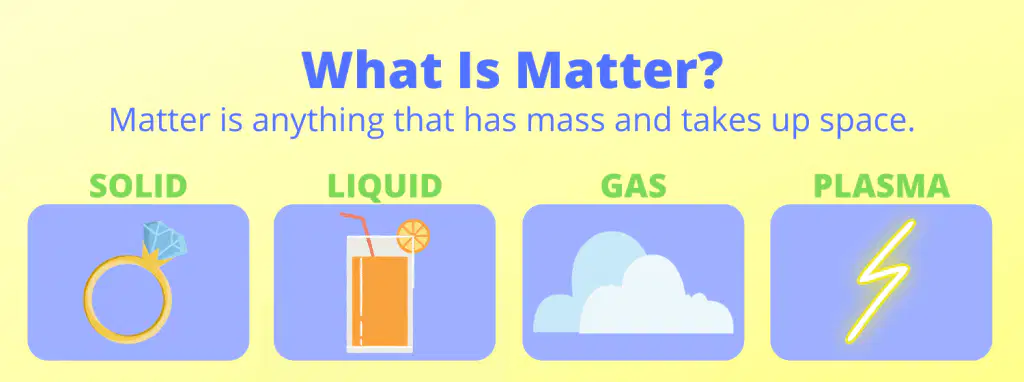
What are the three states of matter?
solid, volume, mass
density, volume, mass
solid, liquid, gas
density, gas, volume
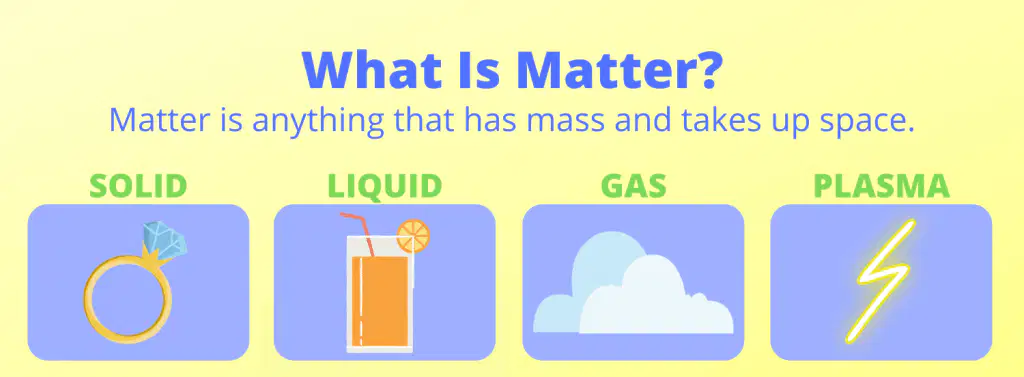

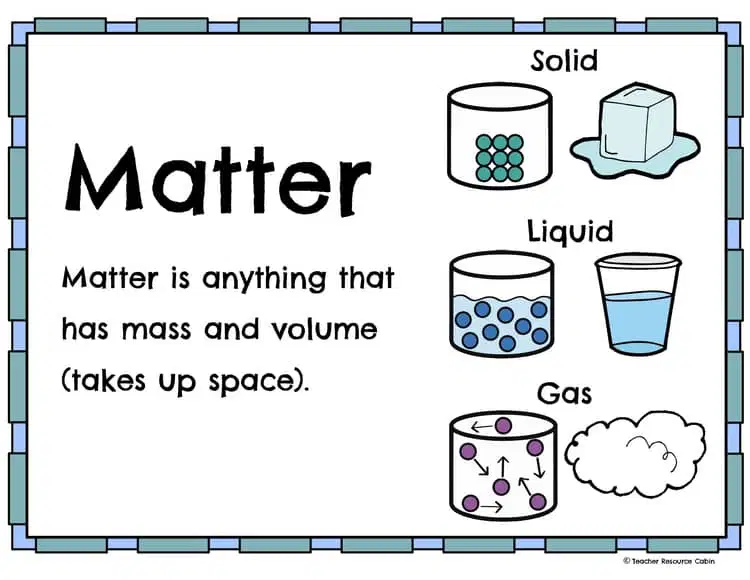
The amount of space something takes up.
Matter is made of _________.
solids
gases
atoms
nutrients


A physical property can be observed with your ___.

An example of a physical property is ___ (select all that apply).
shape

Changing the way matter looks without changing it into NEW matter is a ___.

A property of matter that describes its ability to change into entirely new substances is called a(n)___.


Example for chemical property. (select all that apply)
flammability

Example for physical property. (select all that apply)
smell
state of matter

Example for chemical property. (select all that apply)
combustibility
corrosiveness

Example of a physical property. (select all that apply)
combustibility
flammability
measurement

Which category does density belong to?

When you observe a physical change, the substance ___.
changes its chemical composition.
gives off heat.
does not change in composition.
changes in color.

Which of the following is NOT a physical change?
Freezing water to make ice cubes
Melting gold to make jewelry
Burning gasoline in a lawnmower
Boiling water for soup

The process when a solid turns into a liquid ___.
Evaporation
Sublimation
Freezing
Melting

The process when a gas turns into a liquid ___.
Condensation
Sublimation
Freezing
Evaporation

The process when a liquid turns into a gas ___.
Evaporation
Melting
Condensation
Deposition

The process when a solid turns into a gas ___.
Sublimation
Deposition
Evaporation
Melting

The process when a gas turns into a solid ___.
Deposition
Weathering and Erosion
Super freezing
Sublimation

Is this an example of a physical or chemical change?
physical
chemical

Is this an example of a physical or chemical change?
physical
chemical

Is this an example of a physical or chemical change?
physical
chemical

Is this an example of a physical or chemical change?
physical
chemical
Which of the following can be signs that a chemical change has occurred?
color change
formation of a gas (bubbles)
energy change
All of the above
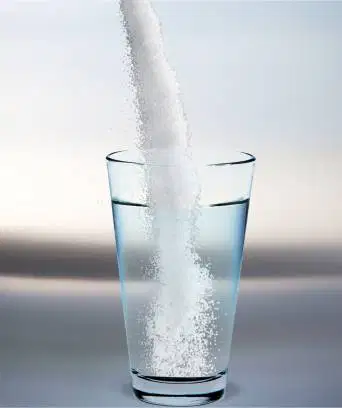
Is dissolving sugar a physical or chemical change?
Physical Change
Chemical Change

Is exploding fireworks a physical or chemical change?

Identify what is happening in the picture as a chemical or physical change.
Chemical change
Physical change
Both

At daybreak, a wet field is warmed by the sun. What phase change is occurring in this photo?
evaporation
freezing
condensation
melting

