wayground logo

Free Printable Worksheets

Font size

S
M
L
XL
Worksheets

Science 7 LT4 Revision

Total questions: 145

Worksheet time: 2hrs 49mins
Name
Class
Date
1.
What two elements make up water?
a)
Helium and oxygen
b)
Hydrogen and oxygen
c)
helium and carbon
d)
oxygen and carbon
2.
Why does ice float?
a)
As water freezes, it expands and its density decreases.
b)
As water freezes, it takes up more hydrogen from the atmosphere, causing it to have a greater buoyancy.
c)
As water freezes, air becomes trapped between the hydrogen bonds of water molecules.
d)
As water freezes, it takes up more oxygen from the atmosphere, causing it to have a greater buoyancy.
3.

Water is a universal solvent because it...

a)

It can be found anywhere

b)

It freezes when it gets cold

c)

Floats when frozen

d)

Dissolves more substances than anything else

4.
Lakes freeze from the top down due to...
a)
surface tension
b)
ice is less dense than liquid water
c)
heat capacity
d)
hockey and ice skating
5.

Water vapor leaves a plant in the biosphere and goes into the atmosphere through

a)

transpiration

b)

respiration

c)

precipitation

d)

evaporation

6.

When is energy absorbed during the water cycle?

a)

during evaporation

b)

during transpiration

c)

during condensation

d)

during precipitation

7.

____ happens when liquid turns into a gas on Earth's surface

a)

evaporation

b)

condensation

c)

respiration

d)

transpiration

8.

How does energy from the Sun drive evaporation?

a)

it slows down the water molecules and breaks their bonds

b)

it makes the water molecules too big

c)

it speeds up the water molecules and breaks their bonds

d)

it speeds up the water molecules and creates new bonds

9.

Evaporation adds water to the

a)

biosphere

b)

atmosphere

c)

lithosphere

d)

geosphere

10.

When water falls from clouds in liquid or solid form

a)

precipitation

b)

condensation

c)

accumulation

d)

evaporation

11.

Water than flows downward on land

a)

runoff

b)

transpiration

c)

evaporation

d)

condensation

12.

water vapor given off by plants

a)

runoff

b)

transpiration

c)

evaporation

d)

condensation

13.

When water vapor turns into a liquid

a)

condensation

b)

runoff

c)

transpiration

d)

evaporation

14.

Which of the following is associated with transpiration

a)

plants

b)

animals

c)

rocks

d)

humans

15.

What do water droplets form?

a)

condensation

b)

humidity

c)

clouds

d)

runoff

16.
What is the energy source for the water cycle?
a)
the sun
b)
the earth
c)
water
d)
the moon
17.
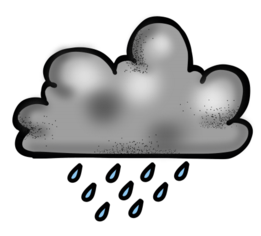
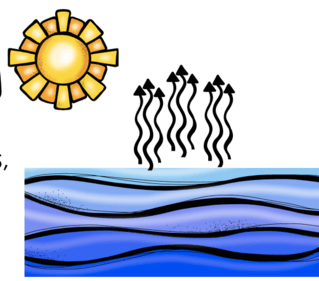
What part of the water cycle does this picture show?
a)
condensation
b)
precipitation
c)
evaporation
18.
What part of the water cycle does this picture show?
a)
condensation
b)
precipitation
c)
evaporation
19.
How much of Earth's freshwater is available for use?
a)
97%
b)
3%
c)
2%
d)
1%
20.
What is the energy source for the water cycle?
a)
the sun
b)
the earth
c)
water
d)
the moon
21.
What part of the water cycle does this picture show?
a)
condensation
b)
precipitation
c)
evaporation
22.
What part of the water cycle does this picture show?
a)
condensation
b)
precipitation
c)
evaporation
23.
What is evaporation?
a)
The part of the water cycle when the sun heats up water, turning it from a liquid into water vapor or steam. It rises from the ground into the air.
b)
The part of the water cycle when the water vapor in the air gets cold. The water turns back into a liquid and forms clouds.
c)
The part of the water cycle when clouds get heavy and can no longer hold the liquid water. This causes the water to fall from the sky to the earth as rain, snow, sleet, or hail.
24.
What is condensation?
a)
The part of the water cycle when the sun heats up water, turning it from a liquid into water vapor or steam. It rises from the ground into the air.
b)
The part of the water cycle when the water vapor in the air gets cold. The water turns back into a liquid and forms clouds.
c)
The part of the water cycle when clouds get heavy and can no longer hold the liquid water. This causes the water to fall from the sky to the earth as rain, snow, sleet, or hail.
25.
What is precipitation?
a)
The part of the water cycle when the sun heats up water, turning it from a liquid into water vapor or steam. It rises from the ground into the air.
b)
The part of the water cycle when the water vapor in the air gets cold. The water turns back into a liquid and forms clouds.
c)
The part of the water cycle when clouds get heavy and can no longer hold the liquid water. This causes the water to fall from the sky to the earth as rain, snow, sleet, or hail.
26.
When water condenses, the water vapor in the air gets ___________ and changes back into liquid.
a)
cold
b)
hot
c)
warm
d)
solid
27.
Which is the opposite of condensation?
a)
runoff
b)
evaporation
c)
precipitation
d)
transpiration
28.
Which best explains why runoff is important?
a)
It returns water to other locations on Earth
b)
It increases the chance of flooding
c)
It makes evaporation occur faster
d)
It increases condensation
29.
What is it called when plants give off water vapor as a waste product?
a)
condensation
b)
evaporation
c)
sublimation
d)
transpiration
30.
When water _________, dew forms.
a)
Melts
b)
Evaporates
c)
Condenses
d)
Precipitates
31.
What is a layer of rock or sediment that holds water?
a)
glacier
b)
well
c)
aquifer
d)
natural spring
32.
How much of our planet is estimated to be covered with water?
a)
68%
b)
50%
c)
97%
d)
75%
33.
How much of our planet's water is saltwater?
a)
75%
b)
1%
c)
99%
d)
97%
34.
Which best explains why runoff is important?
a)
It returns water to other locations on Earth
b)
It increases the chance of flooding
c)
It makes evaporation occur faster
d)
It increases condensation
35.
When water _________, dew forms.
a)
Melts
b)
Evaporates
c)
Condenses
d)
Precipitates
36.
How much of our planet is estimated to be covered with water?
a)
68%
b)
50%
c)
97%
d)
75%
37.
How much of our planet's water is saltwater?
a)
75%
b)
1%
c)
99%
d)
97%
38.

How water flows and changes within the Earth system

a)

Water Cycle

b)

Carbon Cycle

c)

Rock Cycle

d)

Atmospheric Cycle

39.

How is acid rain formed

a)

When polluted air mixes into the atmosphere mixing with hydrogen

b)

When sulfur and nitrogen oxides dissolve in rain

c)

It is cause by carbon dioxide, creating the strongest acid

40.

How does acid rain affect buildings/ monuments?

a)

It dissolves it

b)

It creates holes in them

c)

It roughens the surface

d)

All of the above

e)

None of these

41.

what is the maximum pH rain should have to be considered acid rain?

a)

6.0

b)

5.0

c)

7.0

d)

9.0

42.

What is an effect caused by acid rain?

a)

Dissolve monuments and buildings

b)

Contaminants water

c)

Ruins animal habitats

d)

All of the above

e)

None of these

43.

Acid rain caused by

a)

Water pollution

b)

Air pollution

c)

Soil pollution

d)

Noise pollution

44.

The measure of substance's acidity is called

a)

pH

b)

Neutral

c)

Corrosion

d)

Pollution

45.

Which of these is a MAJOR cause of acid rain?

a)

spraying pesticides on crops

b)

burning fossil fuels for energy

c)

dumping sewage in river systems

d)

creating recycling programs in cities

46.

What is another form of acid rain?

a)

Smoke

b)

Air

c)

Fog

d)

Earth

47.

When trees are chopped down, they release_____ into the atmosphere.

a)

oxygen

b)

carbon dioxide

c)

methane

d)

nitrous oxide

48.

Which of the following is not a greenhouse gas:

a)

oxygen

b)

carbon dioxide

c)

methane

d)

water vapor

49.

The pH of pure water

a)

5.6

b)

7.0

c)

8.1

d)

0.0

50.

What is the meaning of the above hazard warning symbol?

a)

Corrosive

b)

Explosive

c)

Toxic

d)

Radioactive

51.

Acid in our stomach:

a)

Hydrochloric acid

b)

Sulfuric acid

c)

Acetic acid

d)

Carbonic acid

52.

Acid in vinegar:

a)

Hydrochloric acid

b)

Sulfuric acid

c)

Acetic acid

d)

Carbonic acid

53.

Which substance is alkali?

a)

Toothpaste

b)

Vinegar

c)

Lemon juice

d)

Soft drink

54.

The color of litmus in acid:

a)

Red

b)

Blue

c)

Purple

d)

Green

55.

The color of litmus in alkali:

a)

Red

b)

Blue

c)

Purple

d)

Green

56.

The color of litmus in neutral solution:

a)

Red

b)

Blue

c)

Purple

d)

Green

57.

The color of universal indicator in pure water:

a)

Red

b)

Blue

c)

Purple

d)

Green

58.

Rain water is slightly acidic. What is its pH?

a)

1.0

b)

5.6

c)

7.0

d)

8.2

59.

Indigestion can be treated by drinking ....

a)

water

b)

antacid

c)

vinegar

d)

sodium hydroxide

60.

Reaction between acid and alkali producing salt and water:

a)

Combustion

b)

Neutralization

c)

Precipitation

d)

Decomposition

61.

Something that can be used to identify acid/alkali:

a)

Indicator

b)

Oxidator

c)

Reductor

d)

Terminator

62.

The color of universal indicator in hydrochloric acid:

a)

Red

b)

Blue

c)

Purple

d)

Green

63.

pH of alkali:

a)

0

b)

7

c)

below 7

d)

above 7

64.
What colour is universal indicator in strong acid?
a)
Green
b)
Orange
c)
Purple
d)
Red
65.

Acid + Alkali --> Salt + Water

a)

neutralization reaction

b)

synthesis

c)

decomposition

d)

single displacement

66.
A neutralization reaction will always produce...
a)
water & salt
b)
water
c)
salt
d)
water & carbon
67.

Acids are source of

a)

hydrogen ions

b)

hydroxide ions

68.

Alkalis are source of

a)

hydrogen ions

b)

hydroxide ions

69.

The reaction between acid and alkali known as

a)

Titration

b)

Neutralisation

c)

Halogenation

d)

Addition

70.

.............................. + sodium hydroxide --> sodium chloride + water

a)

Nitric acid

b)

Sulphuric acid

c)

Hydrochloric acid

d)

Ethanoic acid

71.

Complete the word equation below:

Acid + alkali --> ............... + water

a)

water

b)

salt

c)

gold

d)

metal

72.

Excess acids in stomach can be neutralized using ............

a)

antacid

b)

vinegar

c)

slaked lime

d)

hydrochloric acid

73.

Bee sting contain ............................ and can be neutralize using bicarbonate soda.

a)

alkali

b)

acid

c)

vinegar

d)

soda

74.

Toothpaste contain .................. that neutralize acid formed by bacteria.

a)

alkali

b)

acid

c)

antacid

d)

slaked lime

75.
Pure water has a pH of 7. Pure water _______.
a)
is a base
b)
is a neutral substance
c)
could be either an acid or a base
d)
is an acid
76.
What is a smaller earthquake that follows a larger earthquake?
a)
Aftershock
b)
Liquefaction
c)
Seismic Gap
d)
Tsunami
77.
What is a large ocean wave that results from an underwater earthquake, landslide, or volcanic eruption?
a)
Aftershock
b)
Liquefaction
c)
Seismic Gap
d)
Tsunami
78.

The place where the earthquake is felt on the Earth's surface is called the...

a)

Epicenter

b)

Hypocenter (focus)

c)

Surface

d)

Crust

79.

What is the instrument used to measure earthquakes?

a)

Seismograph

b)

Sling Psychrometer

c)

Spring Scale

d)

Balance

e)

Anemometer

80.
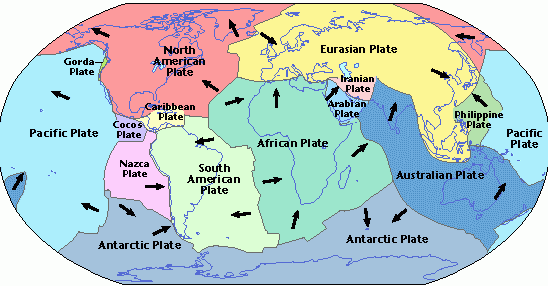
Many earthquakes happen along the borders of...
a)
Countries
b)
Tectonic Plates
c)
Climate Zones
d)
None of the above.
81.
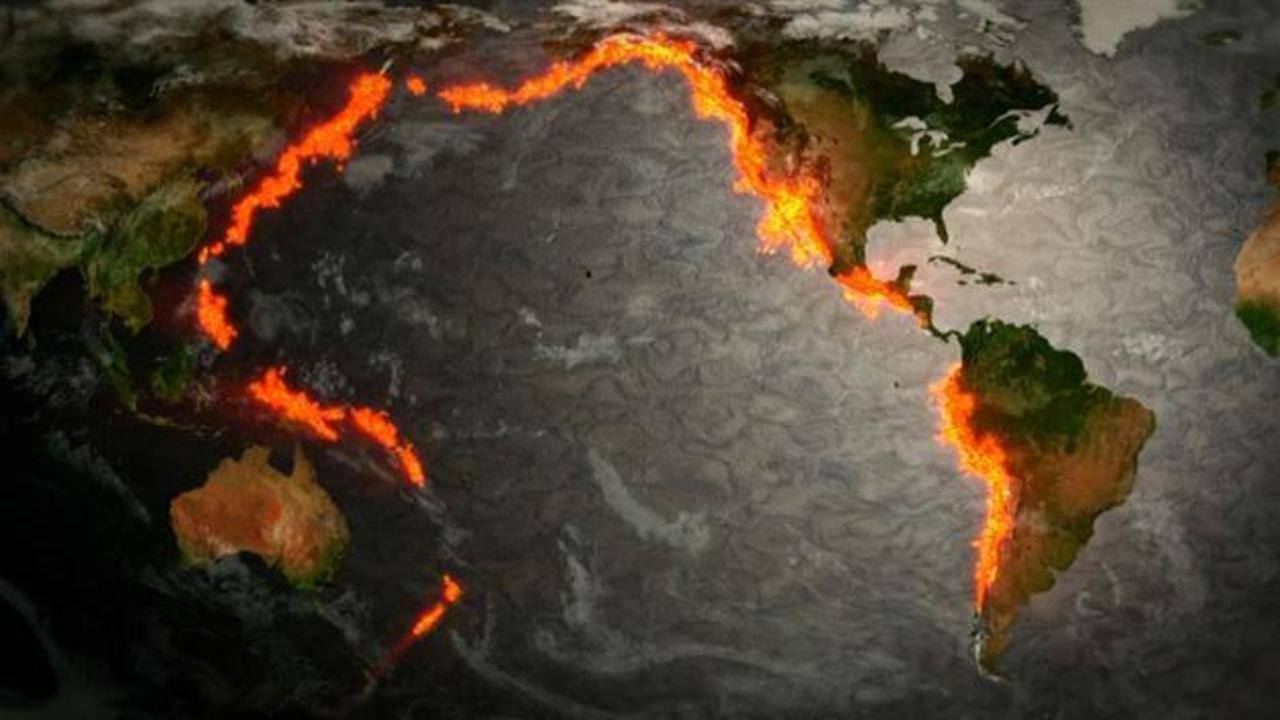
Which ocean in the world is also known as the "Ring of Fire"
a)
Atlantic
b)
Indian
c)
Arctic
d)
Pacific
82.
Earthquakes happen every day. Most are too small for humans to notice.
a)
True
b)
False
83.

Tectonic plates make up Earth's _______________.

a)

Outer core

b)

Inner core

c)

Asthenosphere

d)

Lithosphere

84.
Where is the point at which the first movement occurs during an earthquake?
a)
Epicenter
b)
Focus
c)
Fault
d)
Plate
85.
What is the term for Earth being in the center?
a)
geocentric
b)
heliocentric
c)
sun centered
d)
Galileo
86.
Whose heliocentric model is seen as the first step in the development of the modern models of the solar system?
a)
Galileo
b)
Copernicus
c)
Ptolemy
d)
Kepler
87.
A model of the solar system in which Earth and the other planets revolve around the SUN.
a)
Heliocentric
b)
Geocentric
88.
A model of the universe in which Earth is at the center of the revolving planets and stars. This includes the sun revolving around the Earth. This model is no longer supported.
a)
Geocentric
b)
Heliocentric
89.
The Word "Helio" Refers To?
a)
Earth
b)
Mars
c)
Sun
d)

Jupiter

90.
The Word "Geo" Means?
a)
Sun
b)
Earth
c)
Milky way
d)
Back
91.

What layer of the Earth is labeled A?

a)

inner core

b)

outer core

c)

mantle

d)

crust

92.

Which layer is liquid?

a)

crust

b)

mantle

c)

outer core

d)

inner core

93.

Which layer is the HOTTEST?

a)

Crust

b)

Mantle

c)

Outer Core

d)

Inner Core

94.

What layer of the Earth is labeled B?

a)

inner core

b)

outer core

c)

mantle

d)

crust

95.

According to scientific data, which layer of Earth is the thickest?

a)

Crust

b)

Inner Core

c)

Mantle

d)

Outer Core

96.

What is the thinnest layer?

a)

Crust

b)

Mantle

c)

Outer Core

d)

Inner Core

97.

path of each planet around the sun

a)

axis

b)

solar system

c)

orbit

d)

Daytona 500

98.

imaginary line running through the center of Earth

a)

equinox

b)

axis

c)

orbit

d)

revolution

99.

day with the most hours of sunlight in the Northern Hemisphere

a)

Summer Solstice

b)

Winter Solstice

c)

Fall Equinox

d)

Spring Equinox

100.

a day when day and night are of equal length

a)

solstice

b)

equinox

c)

first day of summer

d)

leap year

101.

What is Earth's complete circuit around the son called?

a)

rotation

b)

leap year

c)

orbit

d)

revolution

102.

How many planets are in our solar system?

a)

10

b)

7

c)

8

d)

9

103.

Why can we see a comet even though it is not a source of light? This is because

a)

It reflects sunlight

b)

It produces its own light

c)

It is opaque

104.

It is warmer during summer because

a)

the Earth's axis is tilted away from the Sun in that hemisphere

b)

the Earth's axis is tilted towards the Sun in that hemisphere

c)

the Earth's axis is not tilted

105.

The Earth completes one rotation about its axis every ___________. This period is known as a day.

a)

28 days

b)

24 hours

c)

365.25 days

106.

The astronomer that made the geocentric model popular is

a)

Ptolemy

b)

Copernicus

c)

Kepler

107.
Why is the Equator warmest?
a)
Because it is closest to the sun.
b)
Because it receives the most direct sunlight
c)
Because no clouds form here.
d)
Because it is far from the sun
108.
CHOOSE THE CORRECT MOON PHASE
a)
FULL MOON
b)
NEW MOON
c)
WAXING GIBBOUS
d)
WAXING CRESCENT
109.
CHOOSE THE CORRECT MOON PHASE
a)
NEW MOON
b)
FULL MOON
c)
WAXING GIBBOUS
d)
NONE OF THE ABOVE
110.
CHOOSE THE CORRECT MOON PHASE
a)
CRESCENT MOON
b)
NEW MOON
c)
FULL MOON
d)
WANING GIBBOUS
111.
THE WORD "WANING" MEANS TO
a)
APPEAR TO GROW
b)
APPEAR TO GET SMALLER
112.
THE WORD "WAXING" MEANS TO
a)
APPEAR TO GROW
b)
APPEAR TO GET SMALLER
113.
lighter, outer part of the shadow
a)
penumbra
b)
umbra
114.
darkest, innermost part of the shadow
a)
penumbra
b)
umbra
115.
What type of eclipse occurs when the earth's shadow is cast on a full moon?
a)
solar
b)
lunar
116.
What moon phase occurs during a solar eclipse?
a)
Full moon
b)
new moon
c)
1st quarter
d)
waxing gibbous
117.
What moon phase occurs during a lunar eclipse?
a)
full moon
b)
new moon
c)
3rd quarter
d)
waxing crescent
118.
What type of eclipse is this?
a)
Solar eclipse
b)
Lunar eclipse
119.
What type of eclipse is this?
a)
Solar Eclipse
b)
Lunar Eclipse
120.

A revolution takes one _____.

a)

Year

b)

Month

c)

Day

121.

What is the Science word for spin?

a)

revolve

b)

rotate

122.
As the Earth travels around the sun, this tilt causes different areas of the Earth’s surface to get different amounts of daylight at different times of the year. The angle of the Sun’s rays to the surface also causes areas to have more or less of the Sun’s energy. This causes the ________.
a)
months
b)
day and night
c)
seasons
d)
years
123.
How often do tides typically occur each day?
a)
1
b)
2
c)
3
d)
4
124.
The extreme tides, spring tides, occur during what two phases of the Moon?
a)
New Moon and Full Moon
b)
1st Quarter and 3rd Quarter
c)
Waning Crescent and Waxing Crescent
d)
Waning Gibbous and Waxing Gibbous
125.
What affects the seasons?
a)
rotation on axix
b)
orbit around Sun
c)
The Earth's tilt and revolution
d)
The Moon's orbit around Earth
126.

What is magma made of?

a)

solid rock

b)

melted rock

c)

small pieces of sediment

127.

How long does it take the Earth to revolve once?

a)

24 hours

b)

365 hours

c)

24 days

d)

365 days

128.

A giant ball of hot gases, made mostly of hydrogen and helium:

a)

Constellation

b)

Asteroid

c)

Meteor

d)

Star

129.

A pattern or group of stars, sometimes named for people or animals:

a)

Solar system

b)

Planet

c)

Constellation

d)

Star

130.

The moon orbits around the _________.

a)

earth

b)

sun

c)

stars

131.
Because the earth spins on its axis, we experience:
a)
seasons
b)
weather
c)
day and night
d)
revolution
132.
The tilt of the earths axis:
a)
5 degrees
b)
10.2 degrees
c)
23.5 degrees
d)
365.25 degrees
133.
How long does it take the moon to rotate on its axis?
a)
24 hours
b)
23 days
c)
365.25 days
d)
28 days
134.
How long does it take the moon to rotate on its axis?
a)
24 hours
b)
23 days
c)
365.25 days
d)
28 days
135.
What are meteors sometimes called?
a)
shooting stars
b)
moons
c)
satellites
d)
falling asteroids
136.
When a meteor hits Earth, what is it called?
a)
meteorite
b)
meteroid
c)
meteor
137.
What are meteors made of?
a)
chunks of rocks and minerals
b)
ice
c)
iron
d)
lava
138.
I am a rock entering a planet's atmosphere.
a)
meteor
b)
meteorite
c)
asteroid
d)
comet
139.
Objects made of ice, gas and dust and orbit our sun are called:
a)
Asteroids
b)
Comets
c)
Meteroids
d)
Meteors
140.
Asteroids "hang out" in our solar system in a place called:
a)
The Kupier Belt
b)
The Oort Cloud
c)
The Planetary Rings
d)
The Asteroid Belt
141.
One similarity between asteroids, comets and meteoroids is that they all:
a)
are made of rock
b)
come from the Asteroid Belt
c)
come from the Oort Cloud
d)
orbit the sun
142.
When objects strike the surface of a planet or moon, they leave a deep impression on the surface called a:
a)
Pothole 
b)
Crater
c)
Canyon
d)
Plateau
143.
What is a meteor called when it's in space?
a)
meteroid
b)
meteor
c)
meteorite
144.
where are asteroids found?
a)
between earth and venus
b)
between Jupiter and Saturn
c)
between Saturn and Uranus
d)
between Mars and Jupiter
145.
What is the composition of most comets?
a)
rock, ice, salt, carbon
b)
rock, ice, magma, frozen gases
c)
ice, dust, rock, frozen gases
d)
ice, dust, rock, soil