
 Worksheets
Test - Earth Science
Total questions: 150
Worksheet time: 2hrs 26mins
Used to describe the timing and relationships between events that have occurred throughout Earth's history
absolute age
geologic time scale
classification
A geological time that is a subdivision of an eon. It is divided into periods. Examples are Cenozoic, Mesozoic, and Paleonzoic
epoch
era
period
The most recent era of geologic time, from 65 million years ago to the present.
Paleozoic
Triassic
Cambrian
Cenozoic
A preserved remain of an organism that gives us a history of the Earth.
geologist
epoch
fossil
States that in any undisturbed sequence of rocks deposited in layers, the youngest layer is on top and the oldest on bottom.
stratigraphy
classification
Law of Superposition
A person who studies fossils.
paleontologist
dinosaurologist
oceanologist
Noting or pertaining to the earliest era of earth history, ending 570 million years ago, during which the earth's crust formed and life first appeared in the seas.
cenozoic time
mesozoic time
precambrian time
How old do Paleontologists believe the Earth is?
2015 years old
3.6 billion years old
4.6 billion years old

The disappearance of a species.
Evolution
Extinction
Migration

What type of event usually marks the end of an Era
A Mass Extinction
A Volcanic Eruption
An earthquake
The time that it takes 50% of an element to decay is called what?
radioactive decay
superposition
half-life
Index fossils are used by geologists to
match rocks of the same age in different regions
determine the relative age of rocks in one place
determine why some organisms became extinct

Mammals are a dominant group in which era?
Cenozoic
Mesozoic
Paleozoic
Cambrianozoic

What era did the formation of the earth occur?
Paleozoic
Precambrian
Cenozoic
Cambrian

What are the four eras in order from OLDEST to NEWEST?
Pre-Cambrian, Paleozoic, Mesozoic, Cenozoic
Pre-Cambrian, Mesozoic, Paleozoic, Cenozoic
Cenozoic, Mesozoic, Paleozoic, Pre-Cambrian

What era did trilobites, fishes, and other marine organisms dominate?
Precambrian
Paleozoic
Mesozoic
Cenozoic

Which era is the most recent, the one that we are currently in?
Mesozoic
Paleozoic
Cenozoic
Precambrian

Scientists chose where units of geologic time began and ended based on the appearance or disappearance of life.
true
false

The dinosaurs and reptiles were dominant in which Era?
Precambrian
Mesozoic
Paleozoic
Cenozoic

At the end of this era, multi-cellular organisms like sponges, jellyfish and worms filled the oceans.
Precambrian Era
Paleozoic Era
Mesozoic Era
Cenozoic Era
What is the purpose of a geological timeline?
The geological timeline was created by scientists to genetically engineer new organisms in the ecosystem
The geological timeline was created by engineers to predict which organisms will die soon
The geological timeline was created by scientists who studied rocks and fossils in order to organize Earth's 4.6-billion-year-old history
Which of the following statements about the fossil record is true?
all organisms become fossils
organisms having soft body parts make up most of the fossils
the fossil record is incomplete
The Geologic Time Scale is a record of what?
old geologists
sweet geology music
the known history of rocks and fossils
The Law of Superposition helps scientists to determine what?
The absolute age of rock layers
The age of fossils
The relative age of rock layers

Pangea broke up in the
Paleozoic
Mesozoic
Cenozoic

We think our atmospheric oxygen came from
asteroids
comets
cyanobacteria

Where would you find the oldest fossils?
at the top
at the bottom
in the middle

Which fossil is oldest?
the crab
the fish
the frog

The idea that the oldest fossils are at the bottom is called ____________.
The Law of Superposition
The Law of the Land
Relative Dating

Fossils that were common but lived for only a short time are used as ____________
toothpicks
hammers
index fossils

Index fossils are used to _____________
fill up big holes in the ground.
help scientists figure out how old other rocks and fossils are.
hold open doors.

Knowing whether a fossil is older or younger than another fossil is _____________.
just being smart.
Absolute Dating.
Relative Dating.

Which period is older than the Triassic?
Jurassic
Archean
Paleocene

Scientists do not find trilobite fossils in rock layers newer than the Permian period. This means...
trilobites are extinct.
trilobites are hiding.
Mrs. Weiland has a pet trilobite named Wiggly.

A bug stuck in amber is an example of what type of fossil?
preserved remains
mold
trace
When the last of its kind dies, a species is _________________.
endangered
extinct
fossil
The remains or traces of a plant or animal that lived long ago is a _____________________.
fossil
mass extinction
mold
An event that results in the dying off of many species is called _______________________________
threatened species
mass extinction
molds
An impression of an organism, formed when sediment hardens around the organism is called a _________________________.
cast
mold
fossil
A model of an organism, formed when sediment fills a mold and hardens, is a
cast
mold
fossil
A fossil is a type of organism that lived in many places during a relatively short time span is called a(n) ____________________________.
trace fossil
extinct
index fossil
Not every animal or plant becomes a fossil when it dies. Which event BEST helps a fossil form?
Sediment quickly buries the dead organism
Animals eat the soft tissues
Wind blows the dead organism away
Josh read about a land animal whose fossils were found in similar rock layers in Africa and South America. What can he conclude from his discovery?
Animal fossils all look alike.
The landmasses were once joined.
The animals swam across the ocean.
Suppose you found fossils of sharks and other fish in a nearby forest. What could you infer about the area from these discoveries?
The area was once a desert.
The area was once an ocean.
The area was once a forest.
Dinosaurs lived in parts of the US over 70 million years ago. What most likely caused the dinosaurs to become extinct?
The environment changed.
The food became poisonous
The number of plants increased.
Common dinosaur fossils have body parts that look like wings. What might you conclude about these animals, based on the fossil evidence?
These dinosaurs could fly.
These dinosaurs lived in the ocean.
These dinosaurs ate plants.
What is a "living fossil"?
a fossil that is easily identified
a living organism that looks similar to its ancient ancestors
a fossil that is well known in the scientific community

Study the rock layers in the diagram. Which rock layer is probably the oldest?
D
B
C
In what kind of rock can fossils be found?
Sedimentary Rocks
Igneous Rocks
Metamorphic Rocks
How are fossils created?
Traces of organisms get turned into stone.
Dead organisms are quickly buried for millions of years.
Animals get trapped.
All of the above

Which layer formed first?
Rock Layer W
Rock Layer X
Rock Layer Z
Sedimentary rocks form when broken bits of other rock are deposited and then -
buried and squeezed and cemented together
melted by the heat of the Earth's core
completely dissolved in the salt water of the ocean
Fossils give us evidence about which of the following?
plants and animals that lived long ago
how weathering and erosion break down rocks
the other planets in our solar system
Finding the fossils of trees in an area that is currently a desert without much life might tell us that the area, millions of years ago -
was heavily eroded by strong winds
received enough rain to support a forest
suffered very powerful earthquakes
Several wooly mammoth fossils have been found. Mammoths, which lived hundreds of thousands of years ago, were covered with thick fur. Based on the evidence, mammoth fossils tell us that the area in which they are found -
has too many humans
no longer has large animals
was, at one time, very cold
Finding fossils in an area can help us learn what about that location?
The kinds of organisms that lived there long ago
The effect of the climate on the formation of the soil
How modern plants and animals interact there
An area is currently a forest. What evidence would best indicate that this area was covered by water millions of years ago?
An increase in rainfall in the forest over time
The presence of plants in the forest that need water to live
Fossils of fish discovered in rock below the forest
Herbivores are animals that eat plants. Finding many fossils of large herbivores in rocks that are millions of years old would lead to what conclusion about the ancient environment of the area? A reasonable conclusion is that the area was once a -
rocky seashore
thriving grassland
frozen lake

The breakdown of rock into smaller particles from the effects of wind, water and ice
erosion
weathering
pressure

Wind, water, ice and gravity carry sediments away
weathering
deposition
erosion

What type of tides would this arrangement of earth-moon-sun create?
neap tide
spring tide
new moon tide

What type of tide would this arrangement of earth-moon-sun create?
full moon tide
new moon tide
neap tide
During which two moon phases do Spring Tides take place?
New and Full
1st and 3rd Quarters
Waxing and Waning

Name the moon phase
waning crescent
waxing crescent
waning gorilla
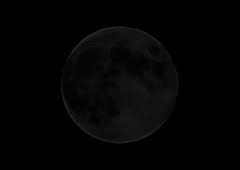
Name the moon phase
First Quarter
Full Moon
New Moon
Waxing means...
Growing
Moving
Losing light

Which season is taking place in the Northern Hemisphere in Position 4?
Winter
Spring
Summer
Fall

Name the phase of the moon for letter a
First Quarter
Last Quarter


What happens when the area in which you live tilts away from the sun?
It is summer.
It is spring.
It is winter.
Why do we experience the changing of the season on the earth?
distance from the sun
rotation of the earth
tilt of the earth's axis
Period of 24 hours or the time it takes Earth to make one complete spin on its axis
Rotation
Compass
Movement

Why does the area around the equator stay the same temperature all year?
The equator rotates slower than the poles.
The equator remains the same distance from the sun.
The equator always receives direct sunlight.
Relating to the Moon
Solar
Lunar
Seasons
The spinning of the Earth on its axis
Rotation
Revolution
Orbit
The path of an object as it revolves around another object
gravity
rotation
orbit
The movement of one object around another
revolution
rotation
orbit
Because of the tilt of the Earth, as it revolves around the sun, this happens
seasons
Gravity
Neap Tides
The amount of light you see on the moon as it goes around the Earth
Spring Tides
Neap Tides
Moon Phases
Partial or total blocking of one object in space
gravity
Orbit
Eclipse
Highest tides when the Earth, sun and moon are lined up in a row
Spring Tides
Neap Tides
Eclipse
The force that attracts a body toward the center of the earth, or toward any other physical body having mass
Gravity
Tides
Moon Phases
Relating to the sun
gravity
lunar
solar
The rise and fall of ocean water
Neap Tides
Spring Tides
Tides
choose 2 things that cause seasons
Moon Phases
Tilt of the Earth
Revolution of the Earth around the sun

Which type of Eclipse is shown in the picture?
Lunar
Solar

Which type of Eclipse is shown in the picture?
Lunar
Solar
What is the governing force in the solar system when it comes to movement?
energy
size
gravity
How does size of an object impact gravity?
The larger the mass, the more gravity it has.
Size does not impact gravity.
The smaller the mass, the more gravity it has.
What force causes tides?
friction
gravity
magnetic
What is a tide?
an extreme pull from the gravity of the Sun
a continual rise and fall of water in seas and oceans
a cyclical pattern of temperatures in seas and oceans
When the Moon and the Sun are on opposite sides of the Earth, they work together to form an extremely high tide. What is this tide called?
neat tide
spring tide
neap tide
Which of these is true about how often tides occur?
High tides and low tides occur twice a day, and neap and spring tides occur twice a month
High tides and low tides occur twice a month, and spring tides and neap tides occur twice a year.
Tides have no pattern
What is the difference between waxing and waning?
Waxing comes after a full moon and waning comes after a new moon.
Waxing means that there is no light and waning means that there is light.
The light is getting bigger when it is waxing and smaller when it is waning.
What characteristics of inner planets are correct?
Terrestrial, smaller, few or no Moons
gas, smaller, few or no moons
gas, larger, man moons
Inner planets have ___ orbits and outer planets have ___ orbits.
longer, shorter
shorter, longer
square, circular
What is the hottest planet in the solar system due to its thick atmosphere which traps greenhouse gases?
Venus
Earth
Mars
The surface of Jupiter and Saturn are composed of what two materials?
rock and metal
liquid and gas
ice and gas
The planet with the most moons (satellites) is
Neptune
Jupiter
Saturn
The distance between the outer planets is ___ compared to the distance between the inner planets.
greater
less
similar

Which type of eclipse is shown in this diagram?
Lunar Eclipse
Solar Eclipse

What type of eclipse is happening in this picture?
Lunar Eclipse
Solar Eclipse

What type of eclipse is happening in this picture?
Lunar Eclipse
Solar Eclipse

Why do we have seasons?
The sun is tilted on its axis.
The Earth is tilted on its axis.
Earth revolves around the sun.

How many degrees is the Earth's axis tilted?
0
23.5
50

What is the moon phase during a solar eclipse?
Full Moon
New Moon
1st Quarter

What is the moon phase during a lunar eclipse?
Full Moon
New Moon
3rd Quarter

Under what conditions will an eclipse take place?
Only when the sun and earth are directly lined up
Only when the moon and earth are directly lined up
Only when the moon, sun and earth are directly lined up

Although the moon is much smaller than the sun, it looks about the same size when viewed from Earth? Why?
The moon is farther from Earth than the sun.
Earth is closer to the sun than the moon.
The moon is closer to Earth than the sun.
A solar eclipse happens during wich moon phase?
waning
full moon
new moon
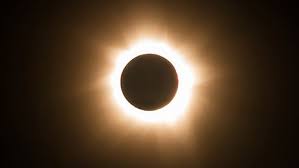
During a solar eclipse...
The sun is blocked
The Earth is blocked
The moon is blocked
During a lunar eclipse
Earth's shadow covers the moon
the sun's shadow covers the moon
the moon covers the sun
Since some light will still illuminate the moon, it will appear
red
green
blue
The reason there isn't a lunar eclipse every month is because
the moon's tilted orbit doesn't put it in Earth's shadow very often.
the moon gets frightened after an eclipse and stays away from Earth, but it forgets soon.
there isn't enough planets and moons in the solar system for it to happen more.
to represent each one. She painted each one a different color. Then, she placed the Moon
and Earth close together and the Sun much further away.What is one limitation of the student's model?
Which planet in our solar system is closest to the Sun?
Earth
Jupiter
Mercury
Which of the following is an accurate model of how the Sun, Earth, and Moon move?
Sun and moon orbit Earth
Earth and moon orbit Sun
Earth orbit's the Sun and the moon orbits Earth
What planet is eighth in the Solar System?
Mars
Jupiter
Neptune

The moon is a natural ______ of Earth.
comet
axis
satellite
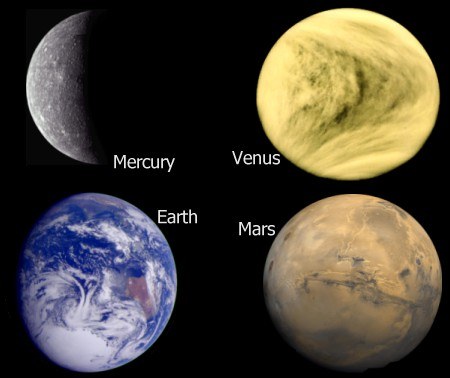
Earth and the other planets closest to the Sun are made mostly of _______
gas
rock
water

The __________ has planets, moons, comets, and asteroids.
solar system
earth
rotation
One of the main differences between the outer and inner planets is __________.
The inner planets all have water
the inner planets are much bigger than the outer planets
the outer planets are gas planets
Where is the asteroid belt found?
between earth and mars
Between Uranus and Neptune
Between Mars and Jupiter
Why does Earth have different seasons?
because of the distance between Earth and the sun
because of the tilt of Earth on its axis as it moves around the sun
because of the amount of light blocked by the moon on its axis
Which is the largest object in our solar system?
Sun
Jupiter
Pluto
A ball of ice and dust with a tail of gas and dust pointing away from the sun.
Asteroid
Comet
Meteor
A small rocky object orbiting the sun.
Asteroid
Comet
Meteor

This planet appears to roll when rotating on its 90 degree axis...
Neptune
Saturn
Uranus

Which planet is 4th from the Sun and contains iron oxide in its soil?
Mars
Venus
Earth
Which of the following movements produces night and day on Earth?
revolution
rotation
tilt of the axis
Which of the following rotates in the opposite direction from Earth?
Venus
Jupiter
Mars

The tail of a comet usually faces
toward the sun.
away from the Earth.
away from the Sun.

A meteorite is DIFFERENT from a comet mainly because
a meteorite has a tail of ice and gas.
a meteorite is made of rock and snow.
a meteorite enters the Earth's atmosphere.
We appear as a streak in the sky.
asteroid and comet
comet and meteor
asteroid and meteor
I usually burn up in Earth's atmosphere.
meteor
asteroid
comet
This is the last test I will take in science as a 7th grader.
True
False

