
 Worksheets
Atoms and the Periodic Table
Total questions: 151
Worksheet time: 2hrs 4mins
Name
Class
Date
1.
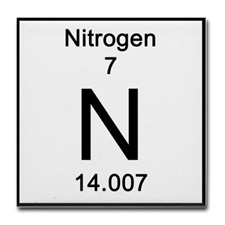
What is the number of protons that the element in this image contain?
a)
14
b)
7
c)
15
d)
18
2.
The first energy level can hold up to how many electrons?
a)
8
b)
4
c)
2
d)
5
3.

What is the atomic mass of "F"
a)
9
b)
18
c)
17
d)
19
4.
all matter is made of what
a)
energy
b)
atoms
c)
electrons
d)
compounds
5.
The positive particles of an atom are
a)
electrons
b)
positrons
c)
neutrons
d)
protons
6.
the central region of an atom where its neutrons and protons are is its
a)
nucleus
b)
electron cloud
c)
core
d)
center
7.
an atom with atomic number 6 would have how many protons
a)
6
b)
12
c)
3
d)
cannot be determined
8.
Particles in an atom that are neutral and have no charge are
a)
negatrons
b)
electrons
c)
neutrons
d)
protons
9.
Which of the following is a negatively charged subatomic particle?
a)
Electron
b)
Proton
c)
Neutron
d)
Quark
10.
All matter is made of what?
a)
energy
b)
atoms
c)
electrons
d)
compounds
11.
The particles that are found in the nucleus of an atom are
a)
neutrons and electrons
b)
electrons only
c)
protons and neutrons
d)
protons and electrons
12.
The atomic number of an elements is the total number of which particles in the nucleus?
a)
neutrons
b)
protons
c)
electrons
d)
protons and electrons
13.
Which of the following is a positively charged subatomic particle found in the nucleus of an atom?
a)
Electron
b)
Proton
c)
Neutron
d)
Quark
14.
Which of the following is a subatomic particle with no charge that is found in the nucleus of an atom?
a)
Electron
b)
Proton
c)
Neutron
d)
Quark
15.
Where are electrons of an atom found?
a)
Nucleus
b)
Electron Cloud
c)
Some are in the nucleus and some in the electron cloud.
d)
They are moving everywhere.
16.
electrons have this type of charge?
a)
negative
b)
positive
c)
neutral
17.
"C" is the element symbol for which element?
a)
calcium
b)
carbon
c)
chlorine
d)
cadmium
18.
What is the atomic symbol for sodium?
a)
Na
b)
So
c)
NaCl
d)
S
19.
What is the atomic number for an element with three protons?
a)
2
b)
1
c)
3
d)
6
20.
A particle that moves around the nucleus is a(n)...
a)
Proton
b)
Neutron
c)
Electron
d)
Quark
21.
Most of the mass in an atom is concentrated in the...
a)
electrons
b)
nucleus
c)
protons
d)
empty space
22.
What does the nucleus consist of?
a)
Protons + Electrons
b)
Neutrons + Electrons
c)
Atoms
d)
Protons + Neutrons
23.
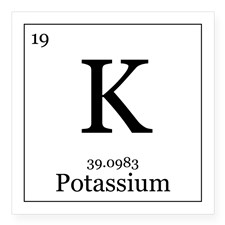
How many neutron are in the atom "K"?
a)
7
b)
2
c)
39
d)
12
24.

What is the number of protons that the element in this image contain?
a)
14
b)
7
c)
15
d)
18
25.

What the number of eletrons that this carbon have?
a)
10
b)
12
c)
6
d)
14
26.
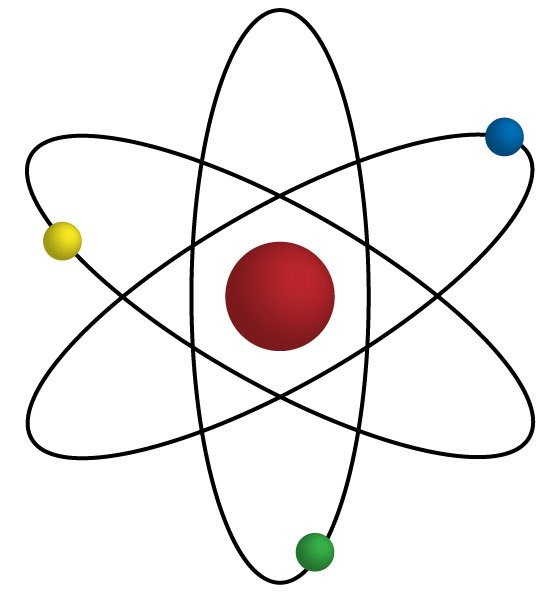
What are the 3 particles that make-up the atom?
a)
protons, neutrons, and isotopes
b)
neutrons, isotopes, and electrons
c)
positives, negatives, and electrons
d)
protons, neutrons, and electrons
27.
What is the atomic number for an element with three protons?
a)
2
b)
1
c)
3
d)
6
28.
What is the atomic symbol for sodium?
a)
Na
b)
So
c)
NaCl
d)
S
29.
True or False? Isotopes are atoms of the same element that differ in mass number and number of neutrons
a)
True
b)
False
30.
True or False? Neutrons have a negative charge
a)
True
b)
False
31.
An atom's mass number equals the number of...
a)
protons plus the number of electrons
b)
protons plus the number of neutrons
c)
protons
d)
neutrons
32.
Which statement about the atomic nucleus is correct?
a)
The nucleus is made of protons and neutrons and has a negative charge
b)
The nucleus is made of protons and neutrons and has a positive charge
c)
The nucleus is made of electrons and has a positive charge
d)
The nucleus is made of electrons and has a negative charge
33.
Which statement best describes an electron?
a)
Smaller mass than a proton and a negative charge
b)
Smaller mass than a proton and a positive charge
c)
Greater mass than a proton and a negative charge
d)
Greater mass than a proton and a positive charge
34.
A particle that moves around the nucleus is a(n)...
a)
Proton
b)
Neutron
c)
Electron
d)
Quark
35.
Atoms have no electric charge because they...
a)
have an equal number of charged and non charged particles
b)
have neutrons in their nuclei
c)
have an equal number of electrons and protons
d)
have an equal number of neutrons and protons
36.
Most of the mass in an atom is concentrated in the...
a)
electrons
b)
nucleus
c)
protons
d)
empty space
37.
What does the nucleus consist of?
a)
Protons + Electrons
b)
Neutrons + Electrons
c)
Atoms
d)
Protons + Neutrons
38.
Matter always has mass.
a)
true
b)
false
39.
What is the smallest?
a)
worm
b)
molecule
c)
galaxy
d)
atom
40.
Electrons are___________
a)
Extremely small even in comparison to protons.
b)
part of the nuclues.
c)
Super Positive, like cheerleaders!
d)
very large
41.
What charge does a Proton have?
a)
Negative
b)
Positive
c)
Neutral
d)
Contrated
42.
What charge does an Electron have?
a)
Negative
b)
Positive
c)
Neutral
d)
Complicated
43.
How many Hydrogen atoms are in Water (H2O)
a)
1
b)
2
c)
3
d)
4
44.
Anything that has mass and takes up space is called
a)
heterogeneous
b)
homogeneous
c)
matter
d)
density
45.
Which particle has a similar mass to a proton?
a)
Electron
b)
Neutron
c)
Photon
d)
Marble
46.
Which subatomic particle has a neutral charge?
a)
Proton
b)
Neutron
c)
Electron
47.
The smallest part of an element is known as the
a)
Periodic Table
b)
Atom
c)
Group
d)
Period
48.
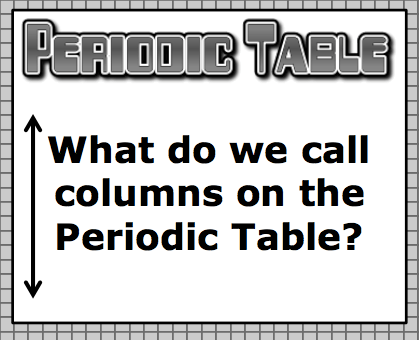
a)
Periods
b)
Groups
49.
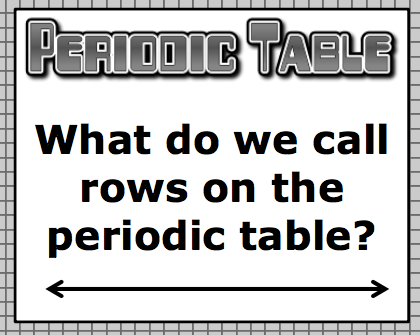
a)
Periods
b)
Groups
50.

a)
energy levels
b)
valence electrons
c)
protons
d)
neutrons
51.
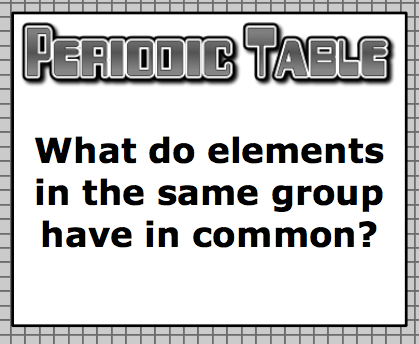
a)
energy levels
b)
valence electrons
c)
protons
d)
neutrons
52.
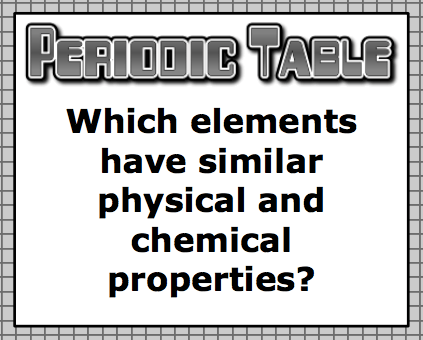
a)
Same group
b)
Same period
53.
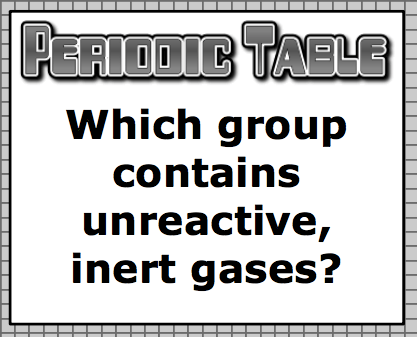
a)
Group 1
b)
Group 17
c)
Group 2
d)
Group 18
54.
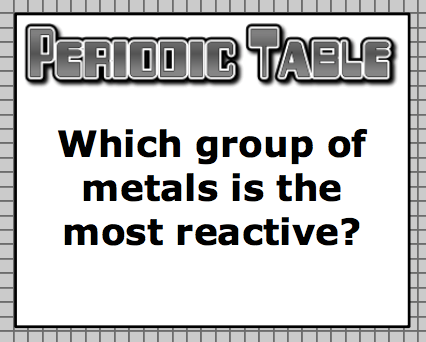
a)
Group 1
b)
Group 17
c)
Group 18
d)
Group 2
55.
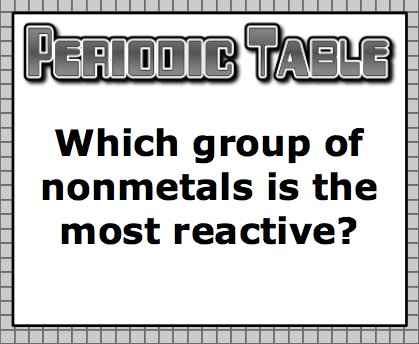
a)
Group 1
b)
Group 17
c)
Group 18
d)
Group 2
56.
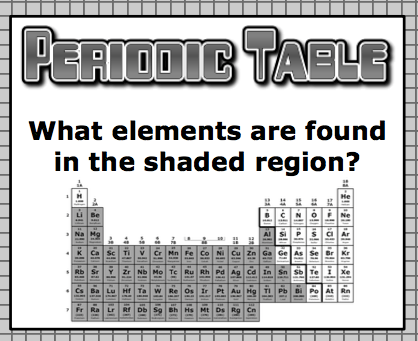
a)
Metals
b)
Nonmetals
c)
Metalloids
57.
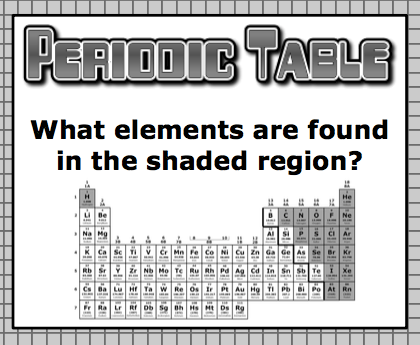
a)
Metals
b)
Nonmetals
c)
Metalloids
58.
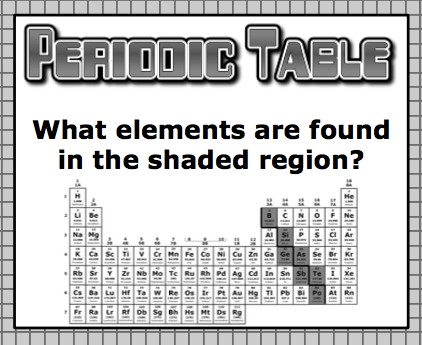
a)
Metals
b)
Nonmetals
c)
Metalloids
59.
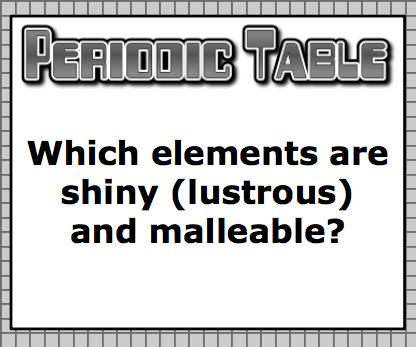
a)
Metals
b)
Nonmetals
c)
Metalloids
60.
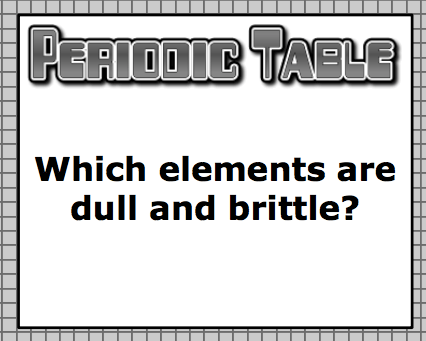
a)
Metals
b)
Nonmetals
c)
Metalloids
61.
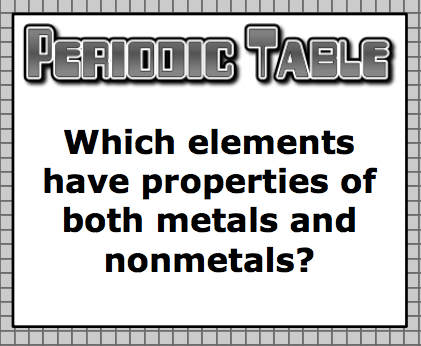
a)
Metals
b)
Nonmetals
c)
Metalloids
62.
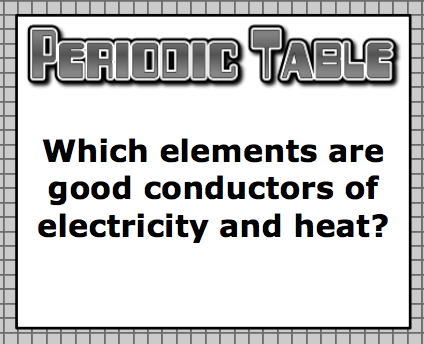
a)
Metals
b)
Nonmetals
c)
Metalloids
63.
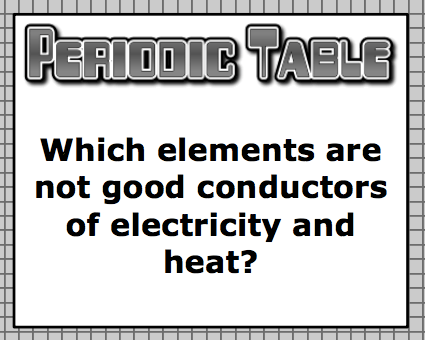
a)
Metals
b)
Nonmetals
c)
Metalloids
64.

How did Mendeleev arrange the elements?
a)
alphabetical
b)
density
c)
melting point
d)
atomic mass
65.
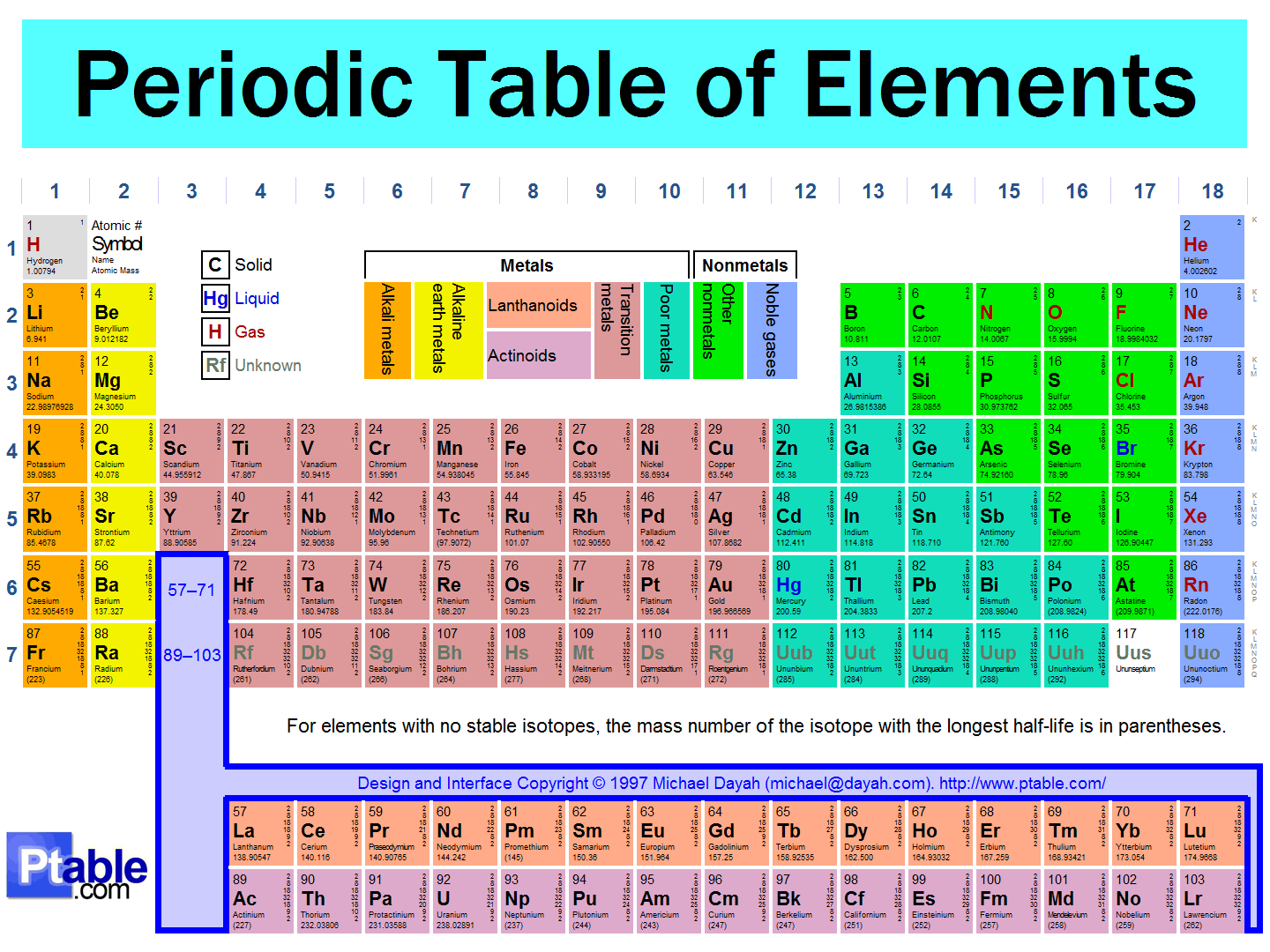
The horizontal row on the periodic table is called a
a)
group
b)
family
c)
period
d)
atomic number
66.

Dimitri found that there was a pattern of properties that repeated every ____ elements.
a)
2
b)
4
c)
5
d)
7
67.
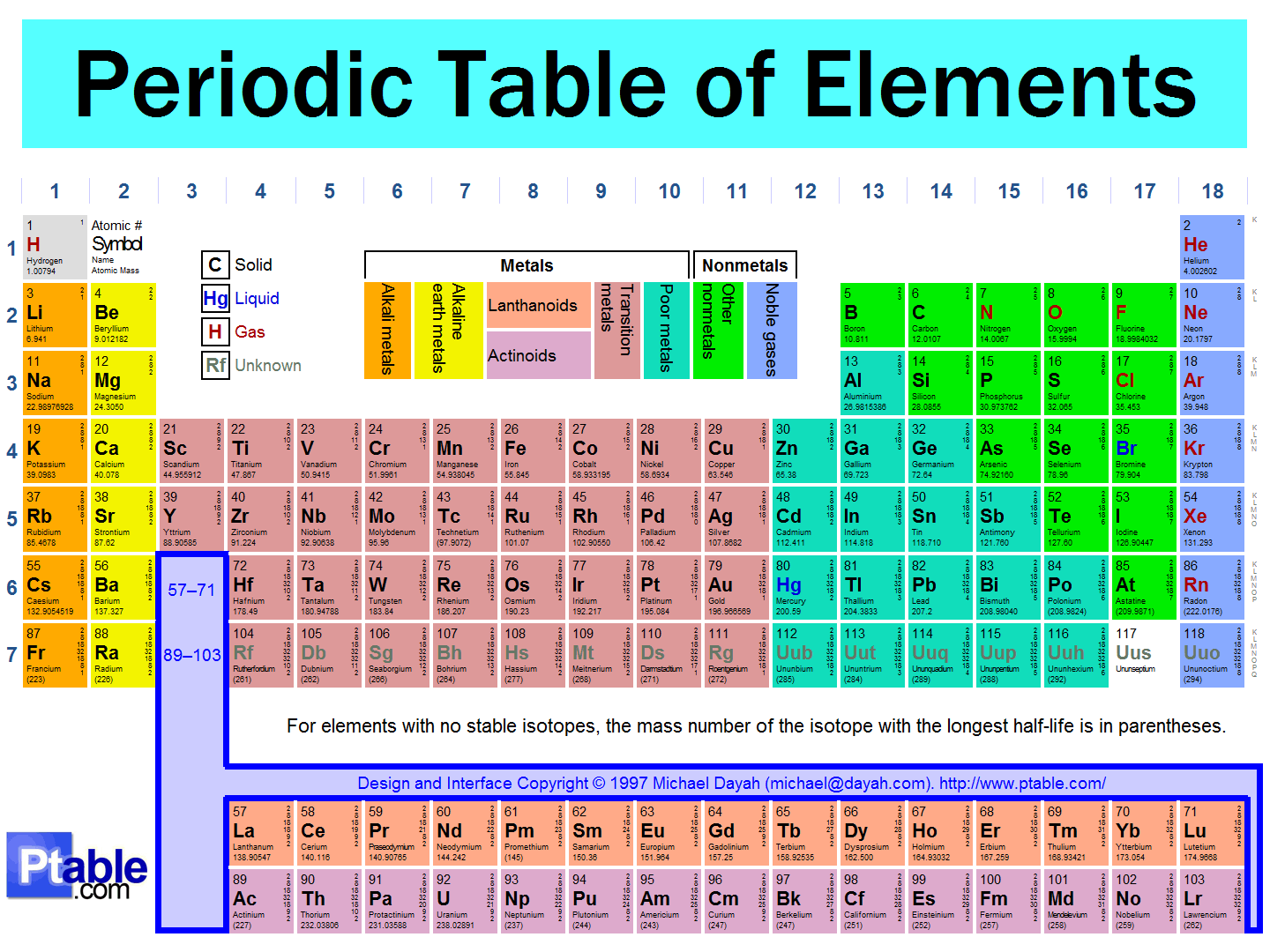
A vertical column is called...
a)
group
b)
tower
c)
period
d)
crew
68.

Which of the following is the most metallic element in period 3?
a)
Boron (B)
b)
Sodium (Na)
c)
Argon (Ar)
d)
Silicon (Si)
69.

Which of these element is the least metallic?
a)
Potassium (K)
b)
Carbon (C)
c)
Sulfur (S)
d)
Neon (Ne)
70.
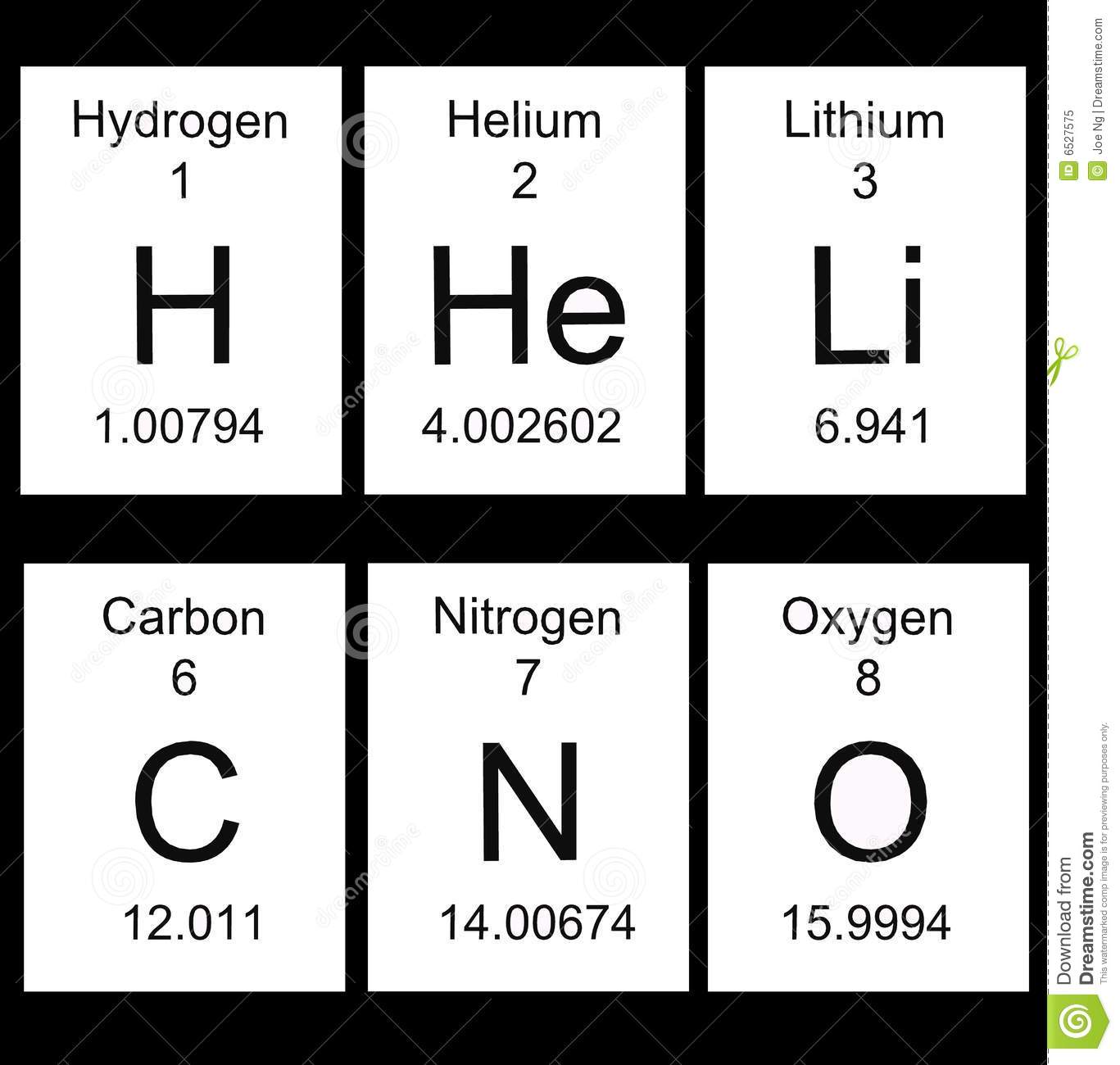
The number at the bottom of each square on the periodic table is the ...
a)
atomic number
b)
atomic mass
c)
chemical symbol
d)
element name
71.
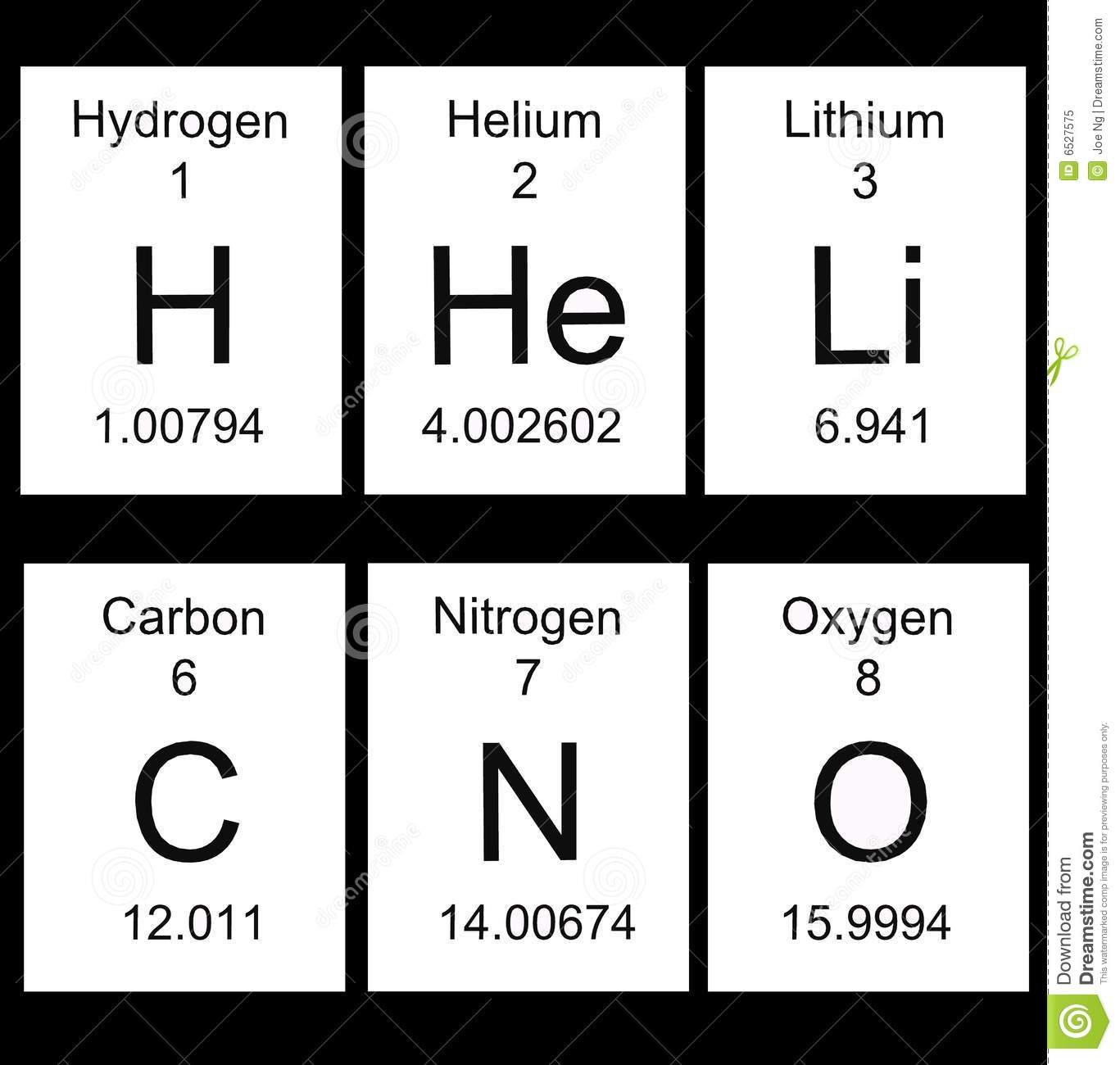
The number at the top of each square on the periodic table is the ...
a)
atomic number
b)
atomic mass
c)
Chemical Symbol
d)
Element Name
72.
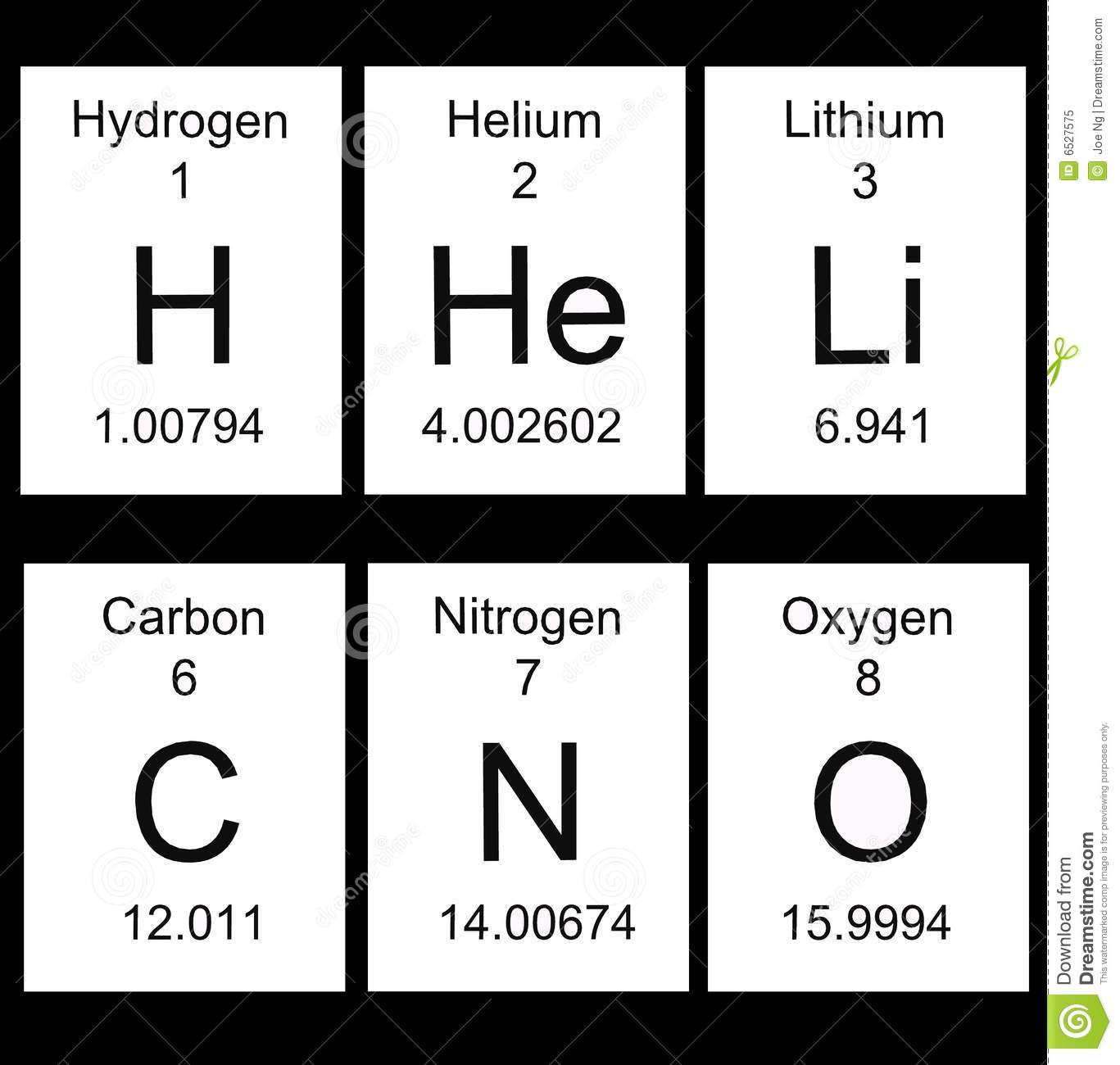
What is the chemical symbol for Lithium?
a)
H
b)
He
c)
Li
d)
N
73.

How many elements follow the periodic law?
a)
7
b)
98
c)
110
d)
All of them
74.

Most of the elements on the periodic table are classified as _____.
a)
Metals
b)
Nonmetals
c)
Metalloids
d)
Periods
75.
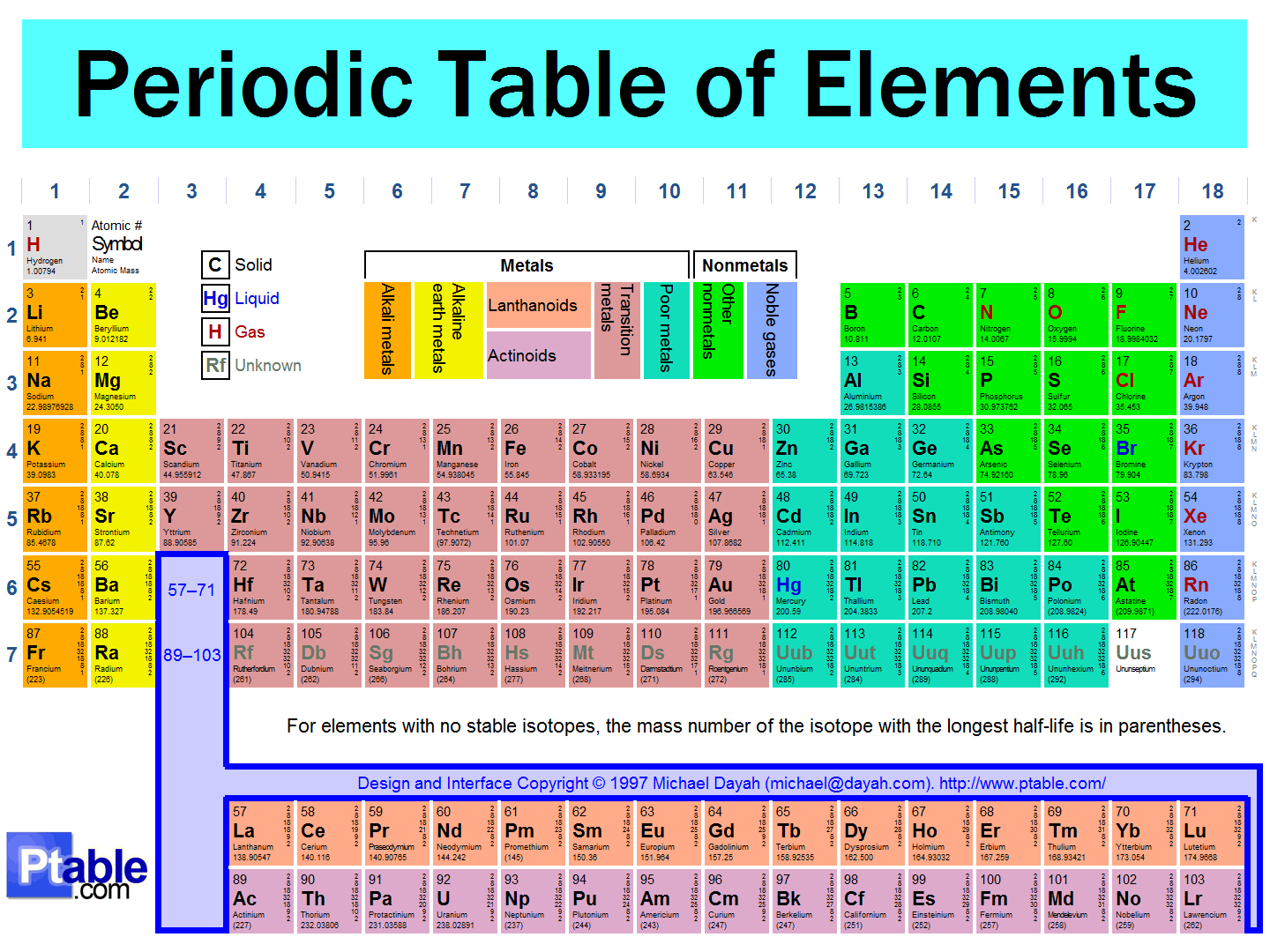
This class of elements are sometimes called "semiconductors."
a)
Metals
b)
Nonmetals
c)
Metalloids
d)
Groups
76.
Each column in the periodic table is called a
a)
period
b)
group
c)
cluster
d)
unit
77.
Which group of the periodic table is composed of inert (not reactive) gases?
a)
alkali metals
b)
alkaline earth metals
c)
halogens
d)
noble gases
78.
Which element is not a metal?
a)
H
b)
Re
c)
Al
d)
B
79.

The atoms along the staircase are called
a)
metals
b)
nonmetals
c)
metalloids
d)
noble gases
80.
Which is a halogen?
a)
Helium
b)
Chlorine
c)
Oxygen
d)
Neptune
81.
Which is an alkali metal?
a)
Magnesium
b)
Iron
c)
Sodium
d)
Europium
82.
Metalloids can be described as...
a)
same as nonmetals
b)
bad conductors
c)
characteristics of metals and nonmetals
d)
same as metals
83.
True or False: Elements in a group have the same number of electrons in their outer shell.
a)
true
b)
false
84.

In what section would Transition Metals be found?
a)
orange
b)
light blue
c)
blue
d)
white
85.

Which section are the metals in?
a)
dark blue
b)
light blue
c)
purple
d)
pink
86.

What section is the least reactive?
a)
yellow
b)
red
c)
dark blue
d)
orange
87.
What happens to the atomic number of elements as you move left to right, up to down on the Periodic Table?
a)
Increases
b)
Decreases
88.

The atomic number of this pictured element is
a)
28
b)
58.6934
c)
Ni
d)
Nickel
89.
A negatively charged particle that moves around the nucleus is a(n)
a)
proton
b)
neutron
c)
electron
d)
quark
90.
How many electrons do atoms need to be stable?
a)
1
b)
2
c)
6
d)
8
91.
Which of the 4 major groups is the largest? (4.4)
a)
Metals
b)
Semimetals
c)
Nonmetals
d)
Inert/Noble Gases
92.
Cations are
a)
positive
b)
negative
c)
on the right side of the periodi table.
d)
nonmetals
93.
Which of the following would produce an anion?
a)
Ca
b)
Al
c)
K
d)
F
94.
Cations are _______ that form ____________ ions and __________ electrons.
a)
nonmetals, positive, lose
b)
nonmetals, negative, gain
c)
metals, positive, gain
d)
metals, positive, lose
95.
Anions are _______ that form ____________ ions and __________ electrons.
a)
nonmetals, positive, lose
b)
nonmetals, negative, gain
c)
metals, positive, gain
d)
metals, positive, lose
96.
Valence electrons are:
a)
Electrons farthest away from the nucleus
b)
Electrons closest to the nucleus
c)
Electrons that just come and go - they don't stay with the atom
97.
Which is most likely to form a negative ion?
a)
an element from group 17
b)
a metal
c)
an element from group 1
d)
an element with atoms that have eight valence electrons
98.
Which is most likely to form a negative ion?
a)
an element from group 17
b)
a metal
c)
an element from group 1
d)
an element with atoms that have eight valence electrons
99.
When an atom loses a valence electron, it becomes a(n) _____________ ion.
a)
positive
b)
negative
c)
neutral
d)
polyatomic
100.
The atomic number tells you what?
a)
number of electrons
b)
number of protons
c)
number of neutrons
d)
both electrons and protons in an atom.
101.
Elements which are shiny, conduct electricity and heat are called
a)
metal
b)
nonmetal
c)
metalloid
d)
nonexistent
102.

How many neutrons are in a Gold atom?
a)
79
b)
196
c)
118
d)
275
103.

How many electrons does a Copper atom have?
a)
63
b)
29
c)
92
d)
34
104.

What does the 1.00794 stand for?
a)
Hydrogen
b)
atomic number
c)
atomic mass
d)
atomic explosion
105.
Particles in an atom that are neutral and have no charge are
a)
negatrons
b)
electrons
c)
neutrons
d)
protons
106.
The electrons of an atom are found...
a)
in the outer "cloud" surrounding the atom.
b)
in the nucleus of the atom.
c)
in the cloud and in the nucleus.
107.
What is the atomic mass equal to?
a)
the number of protons
b)
the number of protons and neutrons
c)
the number of neutrons
d)
the number of protons and electrons
108.
In the modern periodic table elements are arranged by:
a)
atomic mass
b)
atomic number
c)
valence electrons
d)
number of isotopes
109.
Which is a halogen?
a)
Helium
b)
Chlorine
c)
Oxygen
d)
Neptune
110.
In what section would Transition Metals be found?
a)
orange
b)
light blue
c)
blue
d)
white
111.
Which section are the metals in?
a)
dark blue
b)
light blue
c)
purple
d)
pink
112.
The atomic number of this pictured element is
a)
28
b)
58.6934
c)
Ni
d)
Nickel
113.
How many electrons do atoms need to be stable?
a)
1
b)
2
c)
6
d)
8
114.

What is the atomic mass of Neon?
a)
10
b)
20.18
c)
10.18
d)
20.18
115.

How many protons are in Beryllium?
a)
4
b)
9
c)
5
d)
2
116.

How many electrons does a Copper atom have?
a)
63
b)
29
c)
92
d)
34
117.

What is the atomic mass of Gold?
a)
79
b)
196.9665
c)
117
d)
275
118.

What is the atomic weight of Helium
a)
4
b)
2
c)
6
d)
1
119.

What is the atomic mass of Hydrogen?
a)
1
b)
2
c)
3
d)
0
120.

How many neutrons does a Hydrogen atom have?
a)
1
b)
2
c)
3
d)
0
121.

How many electrons does an Iodine atom have?
a)
53
b)
126
c)
73
d)
179
122.

How many electrons are in a gold atom?
a)
79
b)
196
c)
117
d)
275
123.

What is the atomic weight of Iron?
a)
26
b)
55.845
c)
56
d)
30
124.

How many electrons does an atom of Krypton have?
a)
36
b)
83.80
c)
47.80
d)
119.80
125.

What number is circled?
a)
Number of Neutrons
b)
Number of Protons
c)
Atomic Mass
d)
Number of Electrons
126.

How many electrons does a Hydrogen atom have?
a)
1
b)
2
c)
3
d)
0
127.

How many neutrons does an Oxygen atom have?
a)
8
b)
16
c)
24
d)
7.999
128.

What is the number highlighted?
a)
Atomic number
b)
Atomic mass
c)
Number of protons
d)
Number of electons
129.

What is this number representing?
a)
Number of protons
b)
Number of Protons and Electrons
c)
Number of Protons and Neutrons
d)
Number of Electrons, Protons and Neutrons
130.

What does this number represent?
a)
Number of protons
b)
Number of neutrons
c)
Number of electrons
d)
Number of protons and neutrons
131.

What is the atomic mass of Sodium?
a)
11
b)
22.9898
c)
33.9898
d)
11.9898
132.

What is the atomic number of this nucleus?
a)
1
b)
3
c)
4
d)
7
133.
What is the mass number?
a)
the number of protons
b)
the number of protons and neutrons
c)
the number of neutrons
d)
the number of protons and electrons
134.

What is the mass number of this nucleus?
a)
1
b)
3
c)
4
d)
7
135.
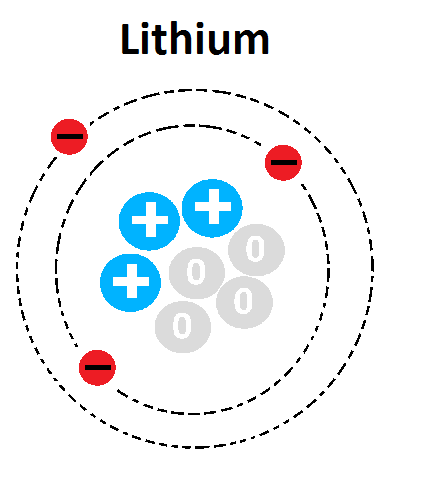
What is the atomic number of this atom?
a)
1
b)
3
c)
4
d)
7
136.
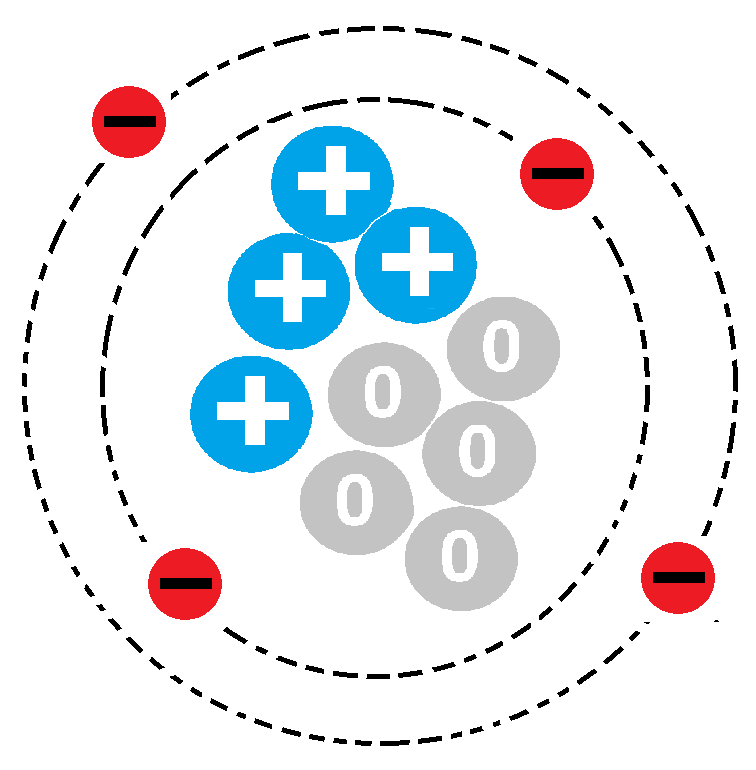
What is the atomic number of this atom?
a)
4
b)
5
c)
9
d)
none of the above
137.

What is the mass number of this atom?
a)
4
b)
5
c)
9
d)
none of the above
138.

What is the atomic number of this atom?
a)
7
b)
14
c)
21
d)
none of the above
139.

What is the mass number of this atom?
a)
7
b)
14
c)
21
d)
none of the above
140.
What is the atomic number of Nickel?
a)
110
b)
28
c)
46
d)
78
141.
What is the atomic number of Potassium?
a)
11
b)
19
c)
22.98
d)
39.09
142.
This particle is found in the nucleus and has a positive charge
a)
Electron
b)
Proton
c)
Neutron
143.
This particle is found in the nucleus and has a positive charge
a)
Electron
b)
Proton
c)
Neutron
144.
This is a negatively charged particle found outside the nucleus
a)
Electron
b)
Proton
c)
Neutron
145.
This contains most of the mass of an atom
a)
Electron Cloud
b)
Nucleus
c)
Electron
146.
The first person to ever talk about an atom was
a)
Democritus
b)
Rutherford
c)
Dalton
147.

Place the following scientists in order, from earliest to latest:
A) Ernest Rutherford
B) J.J. Thomson
C) John Dalton
A) Ernest Rutherford
B) J.J. Thomson
C) John Dalton
a)
B,C,A
b)
C,A,B
c)
A,C,B
d)
C,B,A
148.

J.J. Thomson provided evidence that an atom...
a)
is the smallest particle of matter
b)
contains negatively charged particles
c)
has an overall negative charge
d)
has an overall positive charge
149.
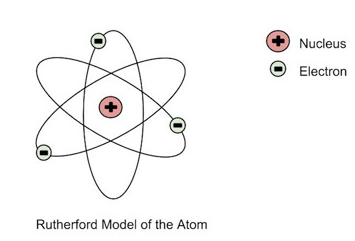
Rutherford's gold foil experiment provided evidence that...
a)
negative and positive charges are spread evenly throughout the atom.
b)
alpha particles have a positive charge.
c)
gold is not a dense as previously thought.
d)
there is a dense positively charged nucleus at the center of an atom.
150.
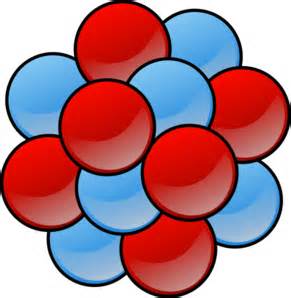
What does the nucleus of an atom contain?
a)
Electrons and neutrons
b)
Protons and neutrons
c)
Neutrinos and positrons
d)
DNA and RN
151.
The atomic number for Oxygen is 8, so
a)
there are 8 protons in the atom
b)
the atomic mass is less than 8
c)
the mass of the atom is 8
d)
the atom is decaying
100 %

