wayground logo

Free Printable Worksheets

Font size

S
M
L
XL
Worksheets

8 science mid-year exam revision

Total questions: 150

Worksheet time: 2hrs 58mins

Name
Class
Date
1.
All matter is made of what?
a)
energy 
b)
atoms 
c)
electrons 
d)
compounds 
2.

Which of the following is a correct description for solids?

a)

closely arranged and in fixed positions

b)

closely arranged and vibrate in fixed positions

c)

closely arranged and can move around

3.

Which statement about the molecules in the gas carbon dioxide is correct?

a)

The molecules are close together.

b)

The molecules are diatomic.

c)

The molecules move randomly.

d)

The molecules all move with the same speed.

4.

When something goes from gas to liquid, it is called...

a)

Evaporation

b)

Condensation

c)

Deposition

d)

Freezing

5.

Something that goes from liquid to gas is...

a)

Evaporation

b)

Melting

c)

Freezing

d)

Sublimation

6.

Which of the following sentences are true about solids?

a)

Solids are rigid, have a fixed shape but not a fixed volume

b)

Solids are not rigid, have a fixed shape and no fixed volume

c)

Solids are rigid, have a fixed shape and a fixed volume

7.
Which of the following statements about the particle of a gas is true?
a)
Gases can be compressed because their particles are smaller than those of liquids or solids.
b)
Gases can be compressed because there is plenty of space between their particles.
c)
Gases can be compressed because they have low boiling points.
d)
Gases can be compressed because their particles are more elastic than those of liquids or solids.
8.
An inflated balloon is placed in a refrigerator. Which statement describes the movement of the gas particles in the balloon?
a)
The particles move more slowly and become closer together.
b)
The particles move more slowly and become further apart.
c)
The particles move faster and become closer together.
d)
The particles move faster and become further apart. 
9.
Which of the following statements about the kinetic particle theory is not true?
a)
The particles of a gas move faster than those of a liquid.
b)
The particles of a solid have more kinetic energy than those of a gas.
c)
The particles that make up matter are always moving.
d)
The forces of attraction between the particles of a solid are very strong.
10.
What happens when water evaporates?
a)
Particles of the water vapour lose energy to their surroundings.
b)
Particles of the water vapour are spaced further apart.
c)
The speed of the particles of the water increases.
d)
The temperature of the remaining water rises.
11.
The graph below shows part of the cooling curve of a substance. Which row correctly identifies P, Q and R?
a)
P: Gas, Q: Gas and Liquid, R: Liquid
b)
P: Liquid, Q: Gas and Liquid, R: Gas
c)
P: Gas, Q: Liquid, R: Solid
d)
P: Solid, Q: Liquid, R: Gas
12.
A solid compound X was heated steadily for 20 minutes. The graph below shows the change in temperature of X with time. At what temperature did X melt?  
a)
20°C
b)
40°C
c)
90°C
d)
100°C
13.
A solid compound X was heated steadily for 20 minutes. The graph below shows the change in temperature of X with time. What is the boiling point of X?
a)
20°C
b)
40°C
c)
90°C
d)
100°C
14.
What is/are the physical state(s) of X at 100°C?
a)
Solid
b)
Solid and liquid
c)
Gas
d)
Liquid and gas
15.
A substance Y has a melting point of –7ºC and a boiling point of 63ºC. At which temperature is Y a liquid?
a)
A
b)
B
c)
C
d)
D
16.
Which of the following statements about the particle of a gas is true?
a)
The particles of a gas vibrate about fixed positions.
b)
The particles of a gas are packed close together in a disorderly arrangement.
c)
The particles of a gas are far apart and move in all directions.
d)
The particles of a gas are stationary in an orderly arrangement.
17.

Particles are always moving.

a)

True

b)

False

18.

Particles always ________________ each other, this gets stronger as the particles get ___________________.

a)

attract, farther apart

b)

attract, closer together

c)

repel, farther apart

d)

repel, closer together

19.

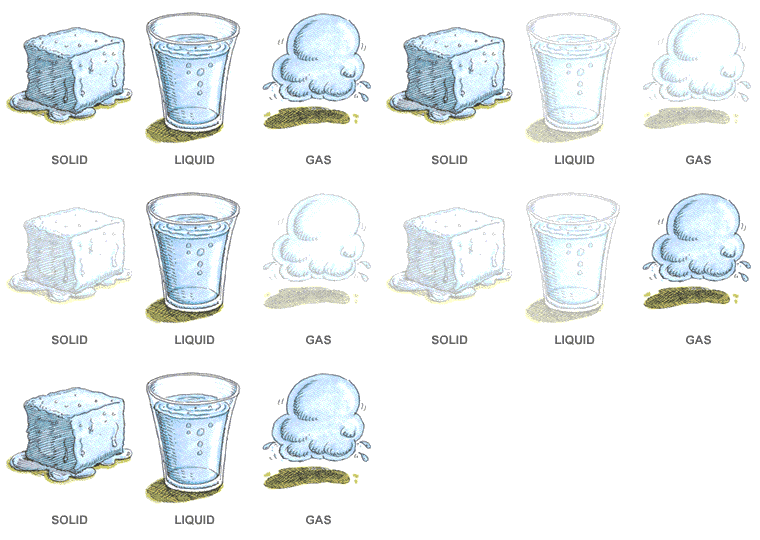
This diagram represents particles in a ______________ state.

a)

Solid

b)

Liquid

c)

Gas

20.

In which state of matter will there be the LARGEST space between molecules?

a)

Solid

b)

Liquid

c)

Gas

21.
At higher temperatures
a)
particles in an object have less energy
b)
particles in an object move faster
c)
a gas contracts
22.
Which has particles that travel faster?
a)
gas
b)
solid
23.
In the above diagram, "State of Matter B" is a liquid. This means that it has:

a)
definite shape and volume.
b)
no definite shape or volume.
c)
definite volume, but changing shape.
d)
definite shape, but changing volume.
24.
What does the particle diagram show?
a)
solid
b)
liquid
c)
gas
d)
plasma
25.

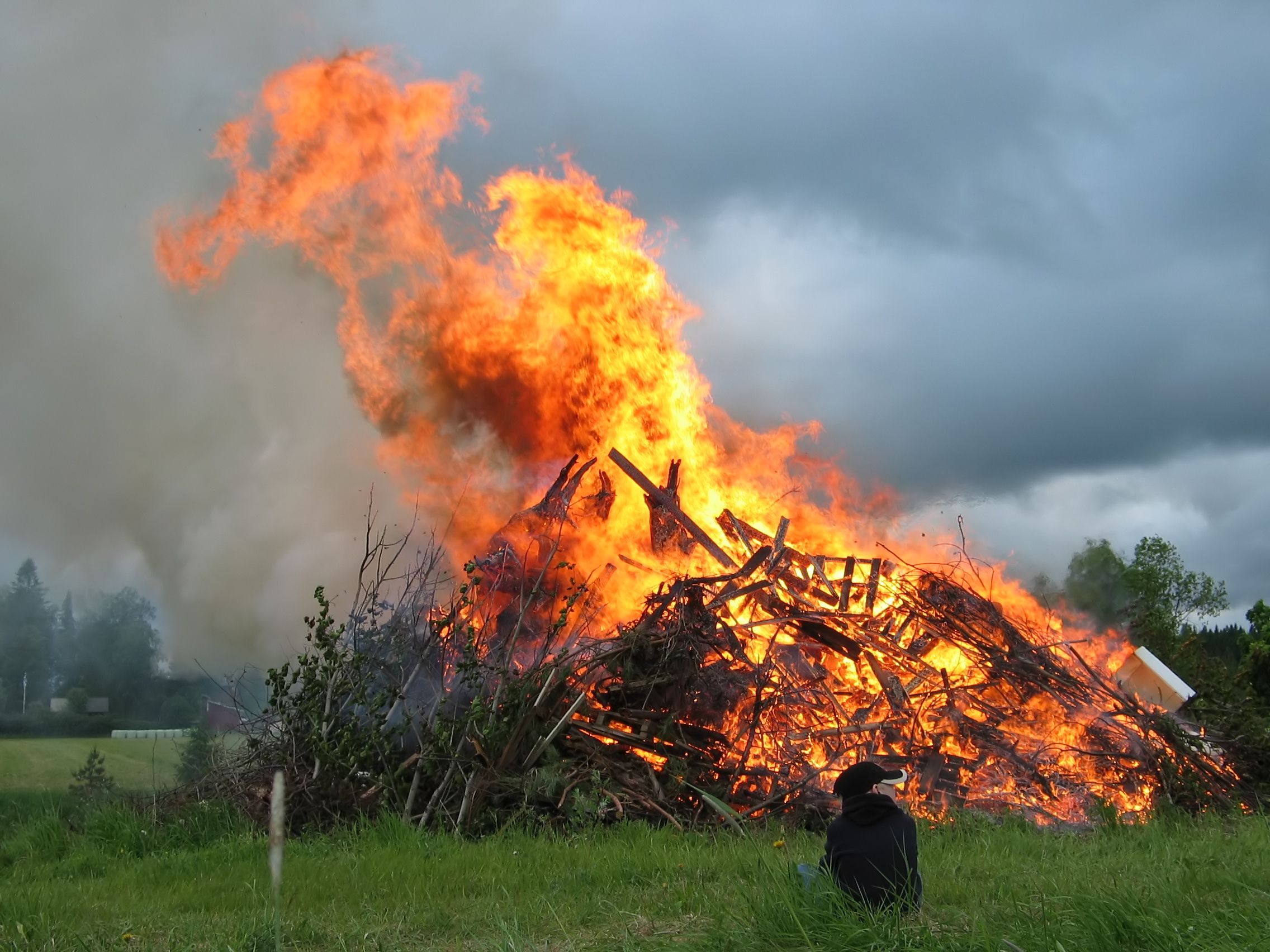
Wood that is burning in a brush pile has heat, and produces ashes.

a)

Physical

b)

Chemical

26.

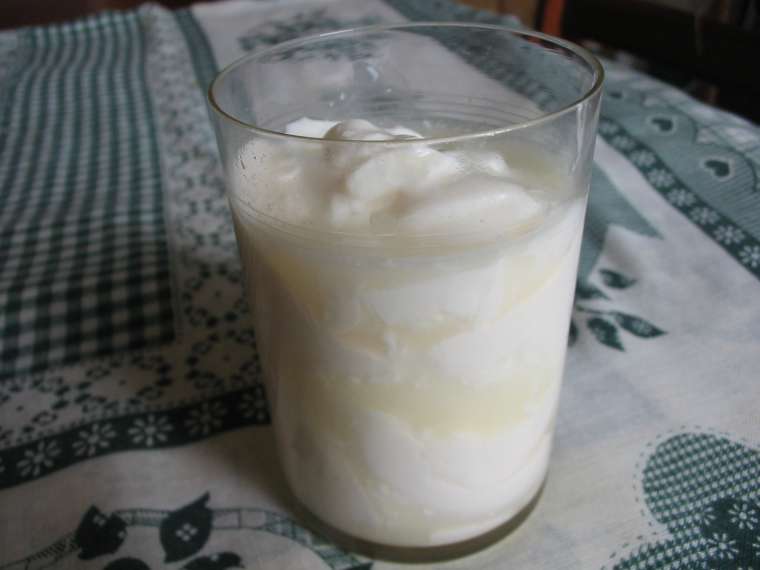
Is milk going sour a physical or chemical change?

a)

Physical

b)

Chemical

27.
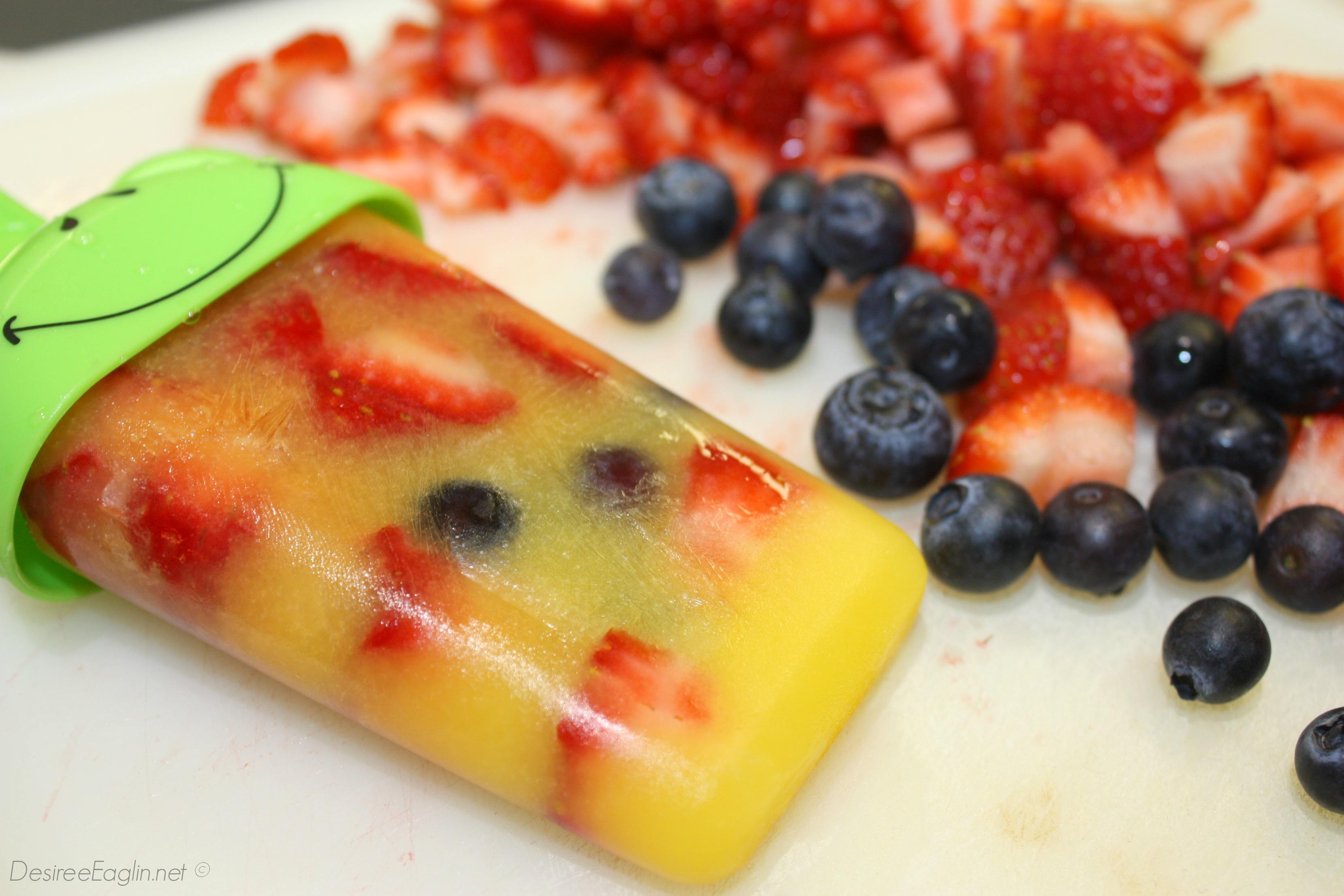
Is freezing juice a physical or chemical change?
a)
Physical Change
b)
Chemical Change
28.
Is this an example of a physical or chemical change? 
a)
Physical because it is a mixture.
b)
Chemical because the parts have changed shape.
29.
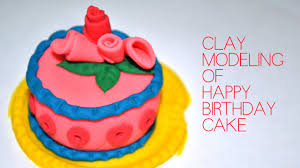
Why is this a physical change?
a)
The shape of the clay has been changed.
b)
The clay can be put back into a ball shape instead of a birthday cake.
c)
The clays has not changed chemically.
d)
All are true
30.
A __________ is a mixture that is formed when a solid is dissolved in a liquid.
a)
Chemical compound
b)
Solution
c)
Endothermic reaction
d)
Exothermic reaction
31.
In which of these do particles move slowest?
a)
matter
b)
gas
c)
liquid
d)
solid
32.
What is a mixture?
a)
Pennies
b)
2 or more different things combined.
c)
Ice
d)
Marbles
33.

Which of the following would be considered a physical change?

a)

Cutting paper

b)

pH test

c)

Burning marshmellow

d)

Roasting a Turkey

34.
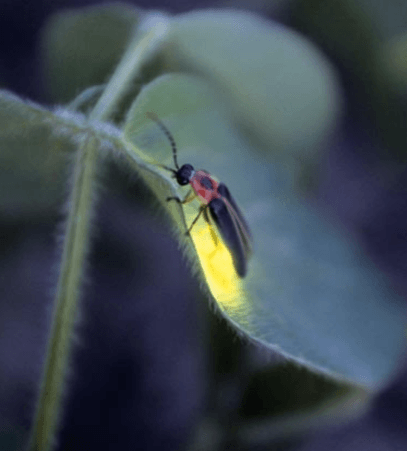
Is a firefly lighting up a physical or chemical change?
a)
Physical
b)
Chemical
35.
Is water melting a physical or chemical change?
a)
Physical
b)
Chemical
36.
Is salt dissolving in water a physical or chemical change?
a)
Physical
b)
Chemical
37.
Is digesting your food a physical or chemical change?
a)
Physical
b)
Chemical
38.
Is melting iron a physical or chemical change?
a)
Physical
b)
Chemical
39.
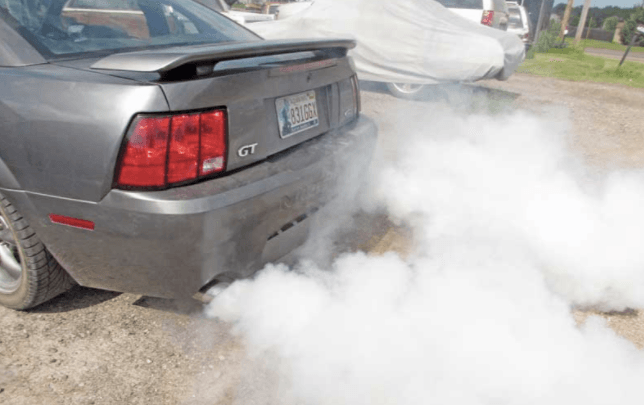
Is a car using fuel a physical or chemical change?
a)
Physical
b)
Chemical
40.
What is the definition of chemical change?
a)
any change that results in the formation of new chemical substances. 
b)
changing of only the appearance of the object
c)
matter cannot be created or destroyed, only change form
d)
changes affecting the form of a chemical substance, but not its chemical composition.
41.
Which of the following is NOT a clue that a chemical reaction has taken place?
a)
Changing size
b)
Changing color
c)
A gas being formed
d)
Formation of a precipitate
42.
Which of the following IS a clue that a chemical change has occurred? 
a)
State of matter change
b)
Size Change
c)
Change in temperature
d)
Shape change
43.
What happens in ALL chemical changes?
a)
Change in state of matter
b)
A new substance is formed
c)
Bubbles are produced
d)
An explosion
44.
Changes that reorder atoms to form new molecules, such as the reaction between sodium and chlorine ions to form sodium chloride, are known as ________
a)
State changes
b)
endothermic changes
c)
chemical changes
d)
physical changes
45.
When iron fillings are mixed with sand, the iron can be removed using a magnet.  This is evidence that the change that occurred when the two were mixed was....
a)
physical
b)
chemical
c)
irreversible
d)
molecular
46.
Changes to a substance that do not involve a permanent reordering of atoms are know as 
a)
irreversible changes
b)
exothermic changes
c)
chemical changes
d)
physical changes
47.

Why would you wear goggles in the lab?

a)

to prevent eye strain

b)

to improve your vision

c)

for protection from UV rays

d)

for protection from chemicals, heat, or glassware

48.

If you do not understand a direction or part of a lab procedure, you should

a)

figure it out as you do the lab

b)

try several methods until something works

c)

ask the instructor before proceeding

d)

skip it and go on to the next part

49.

After completing an experiment, all chemical wastes should be

a)

left at your lab station for the next class

b)

disposed of according to your instructor's directions

c)

dumped in the sink

d)

taken home

50.

You are heating a substance in a test tube. Always point the open end of the tube

a)

toward yourself

b)

toward your lab partner

c)

toward another classmate

d)

away from all people

51.
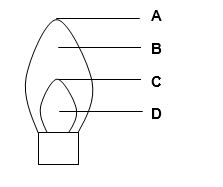
Which part of the Bunsen flame is the hottest?
a)
A
b)
B
c)
C
d)
D
52.

The gas should be turned on ____________ lighting the match.

a)

Before

b)

After

53.
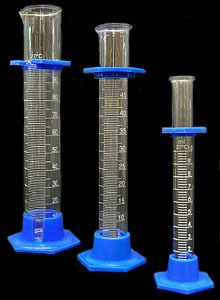
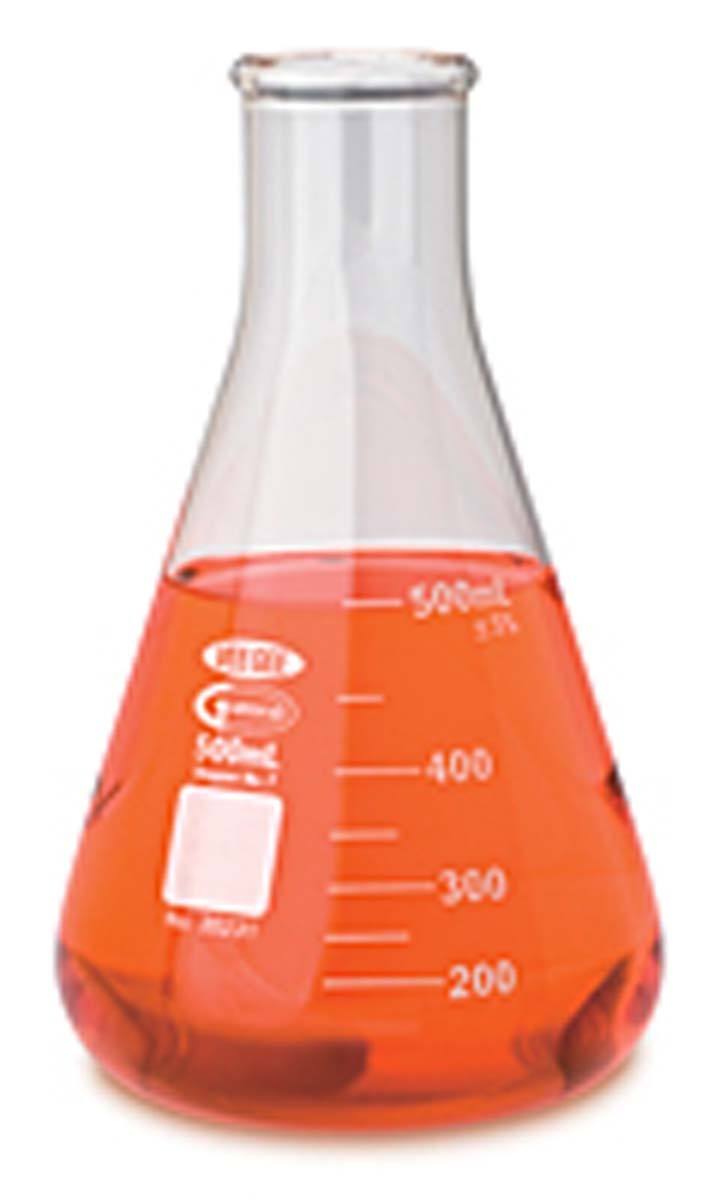
What are these?
a)
flasks
b)
test tubes
c)
graduated cylinders
d)
beakers
54.
A possible explanation for a set of observations or answer to a scientific question is called a(n)
a)
prediction
b)
hypothesis
c)
theory
d)
law
55.
In a scientific experiment, the one variable that is purposely changed to test a hypothesis is called the ____________ variable.
a)
independent
b)
dependent
c)
controlled
d)
responding
56.

When the air hole is closed, what color is the flame?

a)

Blue/Yellow/Orange

b)

Dark and Light Blue

57.

What is used to measure, heat, and mix large amounts of liquids?

a)

Beaker

b)

Flask

c)

Test Tube

d)

Graduated Cylinder

58.

What is used to swirl, mix, or store chemicals?

a)

Beaker

b)

Flask

c)

Test Tube

d)

Graduated Cylinder

59.
What is used to measure the volume of liquids more precisely in milliliters?
a)
Beaker
b)
Flask
c)
Graduated Cylinder
d)
Test tubes
60.
What is used to hold test tubes?
a)
Test tube rack
b)
Magnifying glass
c)
Petri dish
d)
Funnel
61.

What is used to pick up items?

a)

Clamps

b)

Tongs

c)

Hand lens

d)

Pipette

62.

What is used to transfer small amounts of liquid?

a)

Graduated Cylinder

b)

Medicine Dropper/Pipette

c)

Beaker

d)

Flask

63.

What is used to measure temperature?

a)

Triple Beam Balance

b)

Graduated Cylinder

c)

Stopwatch

d)

Thermometer

64.

What are the constant variables?

a)

what we are changing or testing

b)

what we are observing or measuring

c)

what we keep the same to make the experiment fair

65.
If plants are exposed to sunlight, then they will grow taller.
What part of the scientific method is this an example of?

a)
Procedure
b)
Hypothesis
c)
Question
d)
Results
66.
The summary at the end of an experiment that explains the results. 
a)
conclusion
b)
procedures
c)
materials
d)
hypothesis
67.
Observations made during an experiment are considered:
a)
data
b)
problems
c)
conclusions
d)
questions
68.
What is a hypothesis?
a)
an educated guess stating what you believe will be the result of your experiement
b)
a random guess
c)
a statement of the outcome of your experiment
d)
step by step directions for your experiment
69.
The independent variable is the ONE thing you _____.
a)
change on purpose
b)
control or keep constant
c)
measure
70.
Anything that can change in an experiment.  There are three types of these in an experiment.
a)
variables
b)
constant
c)
independent
d)
dependent
71.
The variable that is being measured or observed is called the _______________. Hint: this is the variable that is the result or effect 
a)
independent variable
b)
dependent variable
c)
control variable
72.
An experiment is performed on plants to see how different liquids affect plant growth. Each plant in the experiment is given a different liquid: water, apple juice, or milk. What variables should be kept constant/controlled? 
a)
type of plant, flower pot,  soil, and amount of sunlight
b)
water, apple juice, milk
c)
only the amount of sunlight
d)
type of plant only
73.
Why do we want to test one variable at a time?
a)
Because it is hard to setup a data table with more
b)
To know what is causing the changes. This helps us understand cause and effect.
c)
It is what has always been done
74.
What is a constant/control in an experiment?
a)
Things that do not change inana experiment.  It's the variable that stays the same.  You can have many variables stay the same.
b)
It's the variables that the scientist changes in the experiment
c)
It's the variables that are being measured in an experiment
75.
What is being changed in this experiment?
a)
ramp height
b)
the speed that the ball rolls
c)
type of ball
76.
What is being measured or the result/effect of this experiment?
a)
ramp height
b)
the speed that the ball rolls
c)
type of ball
77.
What is being kept constant?
a)
ramp height
b)
speed of the ball rolling
c)
type of ball
78.
What is being changed in this experiment?
a)
temperature of the stove
b)
how fast the water boils
c)
amount of water
79.
What is being measured or the result/effect of this experiment?
a)
how fast the water boils
b)
amount of water
c)
temperature of stove
80.
What is being kept constant?
a)
how fast the water boils
b)
amount of water
c)
temperature of stove
81.
Which type of cell has no nucleus?
a)
Eukaryote
b)
Prokaryote
c)
Animal
d)
Plant
82.
Are prokaryotes multicellular or unicellular? 
a)
Multicellular
b)
Unicellular
83.
Which type of cell?
a)
Prokaryote
b)
Eukaryote
c)
Mixed
84.
Which type of cell?
a)
Prokaryote
b)
Eukaryote
85.
Has cytoplasm
a)
Prokaryote
b)
Eukaryote
c)
both
d)
yes
86.
a rigid supporting layer that surrounds the cells of plants and some other organisms
a)
cell membrane
b)
cell wall
c)
 nucleus
d)
cytoplasm
87.
In cells a large oval organelle that contains the cells genetic material in the form of DNA and controls many of the cells activities
a)
organelle
b)
ribosome
c)
cell wall
d)
nucleus
88.
the thick fluid region of a cell located inside the cell membrane or between the cell membrane and nucleus
a)
cytoplasm
b)
cell wall
c)
organelle
d)
golgi apparatus
89.
an organelle in a cell that receives proteins and other newly formed materials from the endoplasmic retiulum packages them and distributes them to other parts of the cell
a)
vacuole
b)
chloroplast 
c)
ribosome
d)
golgi apparatus
90.
a sac like organelle that stores water, food, and other matter
a)
vacuole
b)
lysosome
c)
cytoplasm
d)
cell wall
91.
a small grain shaped organelle found in the cytoplasm of a cell or on the R-ER that produced proteins
a)
cytoplasm
b)
ribosome
c)
cell membrane
d)
mitochondria
92.
an organelle in the cells of plants and some other organisms that captures energy from sunlight and changes it to an energy from that cells can use in making food
a)
vacuole
b)
chloroplasts
c)
cytoplasm
d)
mitochondria
93.
What is found in both plant and animal cells but is much larger in plant cells?
a)
Nucleus
b)
Mitochondrion
c)
Chloroplast
d)
Vacuole
94.
Which of the following is found in eukaryotic cells but NOT prokaryotic cells?
a)
Cell membrane
b)
Mitochondria
c)
Ribosomes
d)
DNA
95.
Directs all cell activities through the DNA located there.
a)
Lysosomes
b)
Nucleus
c)
ribosomes
d)
Mitochondria
96.
Which organelle is only found in a plant cell? 
a)
nucleus
b)
chloroplast
c)
mitochondria
d)
cell membrane
97.
Where are proteins made?
a)
Golgi body
b)
Mitoichondrion
c)
Chromosomes
d)
Ribosomes
98.
What makes the endoplasmic reticulum rough?
a)
Vessicles
b)
Vacuoles
c)
Ribosomes
d)
Chromosomes
99.
What is the name of the genetic material that is inside the nucleus?
a)
ER
b)
ATP
c)
YOLO
d)
DNA
100.
Microscopic single-cells that do not have a nucleus or other membrane-bound organelles. 
a)
DNA
b)
RNA
c)
Eukaryotes
d)
Prokaryotes
101.
Which organ belongs to the digestive system?
a)
heart
b)
stomach
c)
femur
d)
brain
102.
Which organ belongs to the endocrine system?
a)
pancreas
b)
small intestine
c)
gluteus maximus
d)
spinal cord
103.
Which organ system does the brain belong to?
a)
Reproductive
b)
Cardiovascular
c)
Integumentary
d)
Nervous
104.
Which organ belongs to the reproductive system?
a)
ovaries
b)
spleen
c)
large intestine
d)
liver
105.
Which organ belongs to the reproductive system?
a)
gluteus maximus
b)
humerus
c)
radial artery
d)
testes
106.
Which organ belongs to the respiratory system?
a)
biceps brachii
b)
humerus
c)
stomach
d)
right lung
107.
Which organ belongs to the respiratory system?
a)
left lung
b)
small intestine
c)
spleen
d)
pancreas
108.
The veins of the body belong to which organ system?
a)
nervous
b)
lymphatic
c)
digestive
d)
circulatory
109.
Which of the following is a part of the skeletal system
a)
femur
b)
humerus
c)
cranium
d)
All of these
110.
Which of the following is NOT part of the skeletal system?
a)
humerus
b)
appendix
c)
femur
d)
cranium
111.
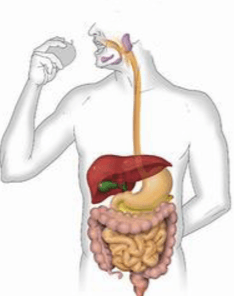
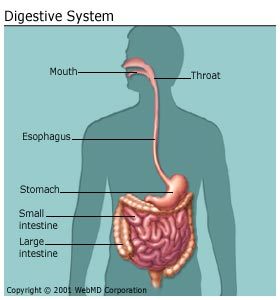
What is this?
a)
mouth
b)
colon 
c)
stomach
d)
liver 
112.
The highlighted organ is the
a)
liver
b)
large intestine
c)
small intestine
d)
stomach
113.
The digestive process starts in the
a)
stomach
b)
mouth
c)
esophagus
d)
bathroom
114.
The red organ is
a)
stomach
b)
small intestine
c)
large intestine
d)
liver
115.
The ___________ is the basic unit of life
a)
organ
b)
cell
c)
atom
d)
tissue
116.
Organs and tissues that perform the same function is called _____________?
a)
cells
b)
tissues 
c)
organ system
d)
organs
117.
A group of tissues that perform a similar function is called_____. (Examples include the heart, lungs or stomach)
a)
cells
b)
tissues
c)
organs
d)
organ system
118.
When many organ systems work together it can form...
a)
organ
b)
cells
c)
organ system
d)
organism 
119.
What is the correct order of organization
a)
tissues-cells-organs-organ systems-organism
b)
cell-tissue-organs-organ systems-organism
c)
organism-cells-tissues-organ systems-organism
d)
tissues-cells-organs-organ sytems-organism
120.
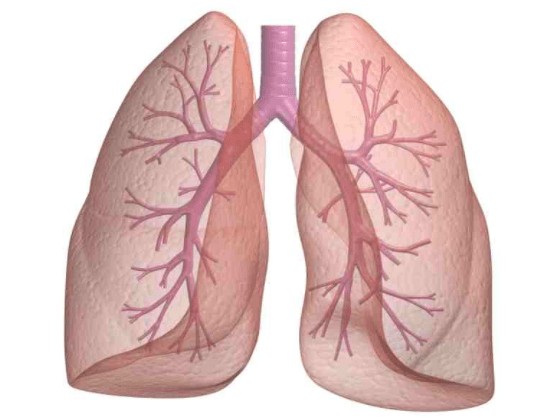
This is a example of........ 
a)
organ system
b)
cells
c)
organ
d)
tissue
121.
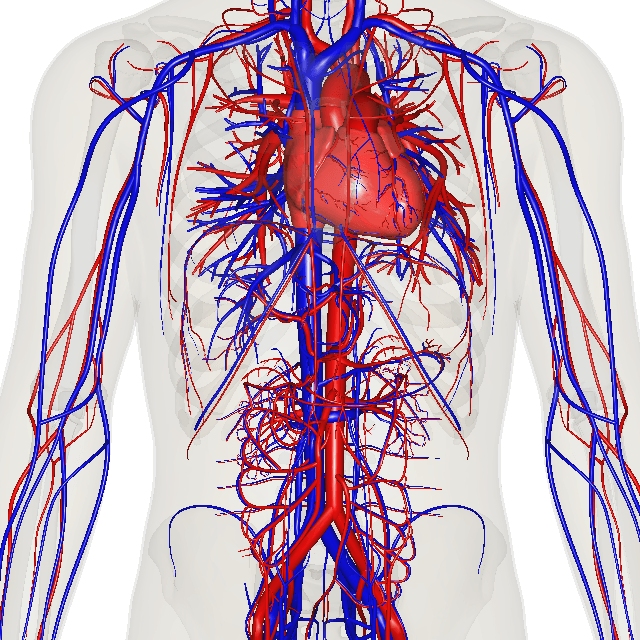
This is a example of ........
a)
cell
b)
tissue
c)
organ 
d)
organ system
122.
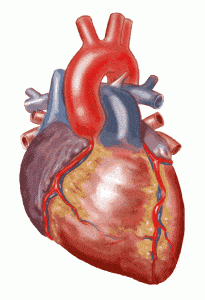
This is a example of ........
a)
cell
b)
organ system
c)
organ
d)
tissue
123.
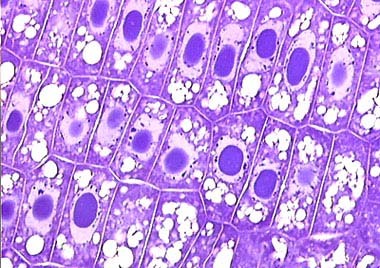
This is a example of ........
a)
organ
b)
organ system
c)
tissue
d)
cell
124.
A group of similar cells that come together to perform a specific function is a/an
a)
organ
b)
organism
c)
organ system
d)
tissue
125.
The cell is the building block of all living things.
a)
True
b)
False
126.
What is the difference between a cell and a tissue?
a)
cell is basic unit of life; tissue is group of cells that work as one
b)
cell is group of tissues; tissue is basic unit of life
c)
cell is basic unit of life; tissue is groups of different cells
d)
cell is group of organs; tissue is group of different cells
127.

Which system takes oxygen into the body and eliminates carbon dioxide?

a)

endocrine

b)

nervous

c)

respiratory

d)

circulatory

128.
Which system provides shape and support, enables you to move, protects your internal organs, and stores minerals?
a)
skeletal
b)
muscular
c)
digestive
d)
nervous
129.
Which system takes food into the body, breaks down food, and absorbs the digested materials?
a)
respiratory
b)
circulatory
c)
digestive
d)
excretory
130.
Which system includes bones, cartilage, and ligaments?
a)
nervous
b)
muscular
c)
skeletal
d)
excretory
131.

Which system produces hormones in your body?

a)

endocrine

b)

circulatory

c)

lymphatic/immune

d)

digestive

132.
Which system includes the mouth, esophagus, and the small and large intestines?
a)
nervous
b)
excretory
c)
respiratory
d)
digestive
133.
Which system carries needed materials to the body cells and carries wastes away from the body cells?
a)
Circulatory
b)
Digestive
c)
Nervous
d)
Excretory
134.
Which system includes the heart and blood vessels?
a)
respiratory
b)
circulatory
c)
nervous 
d)
skeletal
135.
Which system includes the brain, spinal cord, eyes, ears, and skin?
a)
Muscular
b)
Nervous
c)
Respiratory
d)
Skeletal
136.
Which two body systems deliver oxygen to your cells and take away carbon dioxide?
a)
respiratory and nervous
b)
circulatory and nervous
c)
circulatory and excretory
d)
Respiratory and circulatory
137.

Which three body systems allow you to move?

a)

muscular, skeletal, digestive

b)

nervous, respiratory, digestive

c)

nervous, muscular, skeletal

d)

Muscular, skeletal, circulatory

138.
Which two body systems work together to break down food and get rid of wastes?
a)
digestive and excretory
b)
digestive and circulatory
c)
excretory and respiratory
d)
nervous and digestive
139.
1. Which system are the lungs in?
a)
respiratory
b)
digestive
c)
excretory
d)
muscular
140.
 Which system is the stomach in?
a)
respiratory
b)
digestive
c)
nervous
d)
excretory
141.
 Which system is the esophagus in?
a)
digestive
b)
urinary
c)
integumentary
d)
skeletal
142.
 What is the main function of the respiratory system?
a)
take in oxygen and exhale waste like carbon dioxide
b)
move nutrients throughout the body
c)
take in carbon dioxide and exhale oxygen
143.
 What is the main job of the digestive system? 
a)
break down foods into nutrients that can be used by the body
b)
take in oxygen and exhale waste like carbon dioxide
c)
pump blood throughout the body
d)
makes the body hungry
144.
This system breaks down food and allows nutrients to enter the bloodstream.
a)
Lymphatic
b)
Digestive
c)
Endocrine
d)
Skeletal
145.
This system provides support for the weight of the body.
a)
Endocrine
b)
Reproductive
c)
Urinary
d)
Skeletal
146.
This system allows the body to move by itself and to move things around it.
a)
Muscular
b)
Integumentary
c)
Urinary
d)
Respiratory
147.
This system circulates blood throughout the body to carry oxygen to cells.
a)
Endocrine
b)
Digestive
c)
Lymphatic
d)
Circulatory
148.

This system provides a way for the body to take in oxygen from the surrounding environment and to exhale carbon dioxide from the body.

a)

Reproductive

b)

Lymphatic

c)

Endocrine

d)

Respiratory

149.
What is the function of the muscular system?
a)
Works with the skeletal system to help you move.
b)
It pumps blood through the blood vessels
c)
These are the skin, hair and nails that protect the underlying tissue.
d)
It returns leaked fluid to blood vessels and helps to get rid of bacteria and viruses.
150.

What is the function of the Respiratory system?

a)

It helps the body absorb oxygen and release carbon dioxide

b)

It pumps blood through the blood vessels

c)

These are the skin, hair and nails that protect the underlying tissue.

d)

It provides a frame to support and protect body parts.