
 Worksheets
Nervous System Review
Total questions: 148
Worksheet time: 2hrs 52mins

what controls your balance ?!
thalamus
cerebellum
basal ganglia
frontal lobes

what controls your reading and writing ?!
parietal lobes
brainstem
thalamus
motor strip

what controls your heart rate ?
motor stip
sensory strip
cerebellum
brainstem

what controls your sight ?
occipital lobes
temporal lobes
parietal lobes
brainstem
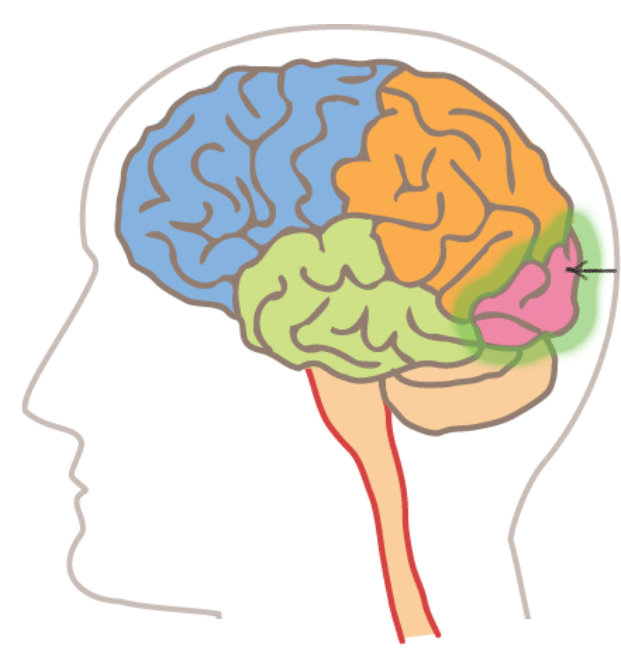
Identify the lobe of the brain highlighted.
Frontal lobe
Parietal lobe
Occipital lobe
Temporal lobe
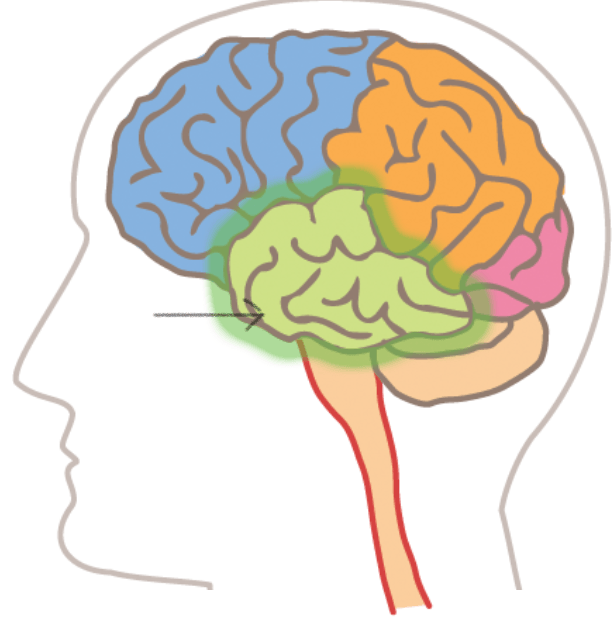
Identify the lobe of the brain highlighted.
Frontal lobe
Parietal lobe
Occipital lobe
Temporal lobe
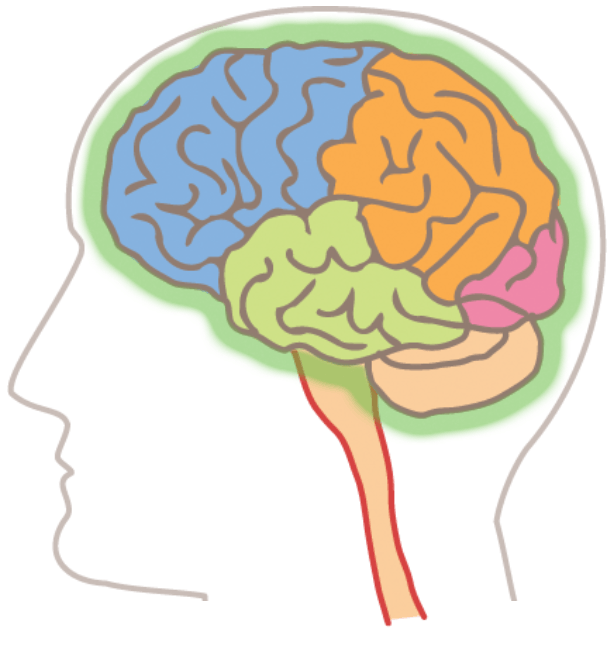
Identify the area of the brain highlighted.
Frontal lobe
Cerebrum
Cerebellum
Hypothalamus
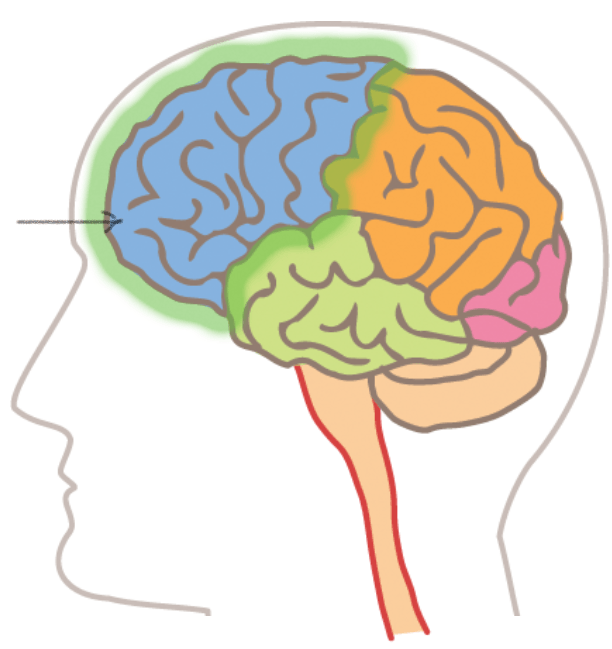
Identify the area of the brain highlighted.
Frontal lobe
Parietal lobe
Cerebellum
Cerebrum
What lobe is in charge of problem solving?
Parietal
Temporal
Frontal
Occipital
Shelton fell off of a ladder while cleaning the windows. He can not stand up without assistance and is unable to catch a ball. Which is the most likely affected part of the brain?
Cerebellum
Cerebrum
Cerebral Cortex
Corpus Callosum
A person has a stroke on her occipital lobe. What might happen to her?
reduced planning abilities
deafness
coma
blindness
Brain’s sensory switchboard, receiving & relaying sensory information except for smell.
Auditory Cortex
Thalamus
Occipital Lobe
Hypothalamus

This part of the brain is responsible for the sensation of touch.
A
B
C
D
E
The basic structural and functional unit of brain is
Spinal Cord
Nephron
Neuron
Nerve
The part of the brain that is used for functions such a memory, problem-solving, emotions, etc.
Frontal Lobe
Temporal Lobe
Parietal Lobe
Occipital Lobe
The Medulla does all of these except?
breathing
swallowing
thinking
digestion
Responsible for integrating sensory information, including touch, temperature, pressure and pain.
Frontal lobe
Parietal lobe
Occipital lobe
Temporal lobe
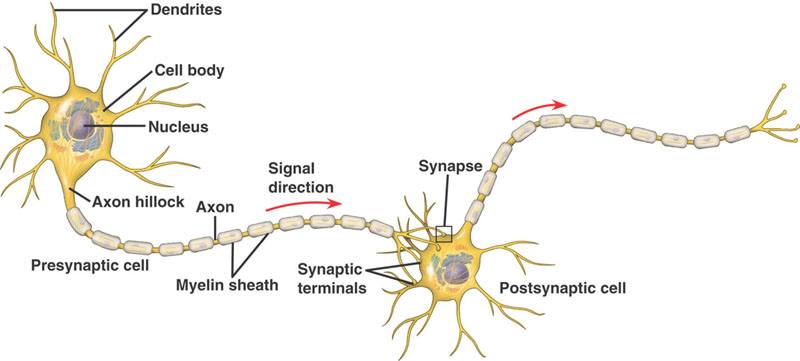
These send electrical impulses to neighbouring neurons.
Synapses
Axon
Dendrites
Nucleus
Receive electrical impulses from the neighbouring neurons.
Dendrites
Axon
Soma
Nucleus

What part of the BRAIN STEM is this?
Pons
Medulla
Midbrain
Vertebral Arteries

What part of the BRAIN STEM is this?
Pons
Medulla
Midbrain
Vertebral Arteries

What part of the BRAIN STEM is this?
Pons
Medulla
Basilar Artery
Vertebral Arteries
What is “fluid contained in the brains ventricles, intracranial spaces, and central canal of the spinal cord”
Cerebrospinal fluid
Meninges
Myelography
Neurotransmitter
What does “CNS” mean?
Cranial and spinal nerves
Little stroke
X-ray that reconstructs sectional slices oft the body
Brain and spinal cord
What does “PNS” mean?
Brain and spinal cord
Little stroke
Cranial and spinal nerves
Mad cow disease

What is “A”
Dendrite
Cell body
Pons
Axon

What is “C”
Cell body
Dendrite
Axon
Pons

What is “B”
Cell body
Axon
Dendrite
Pons

What is “G”
Cortex
Midbrain
Hypothalamus
Thalamus

What is “J”
Cortex
Pons
Cerebellum
Thalamus

What is “E”
Thalamus
Pons
Corpus colossum
Midbrain

What is “H”
Corpus callosum
Pons
Thalamus
Cortex

What is “A”
Cerebellum
Pineal body
Thalamus
Corpus callosum

What is “B”
Midbrain
Pineal body
Cortex
Medulla oblongata

What is “F”
Hypothalamus
Medulla oblongata
Corpus callosum
Pons

Which lobe is shown in red-
Frontal
Parietal
Occipital
Temporal
Which lobe is shown in blue-
Frontal
Parietal
Occipital
Temporal
Which lobe is shown in yellow-
Frontal
Parietal
Occipital
Temporal
Which lobe is shown in green-
Frontal
Parietal
Occipital
Temporal

Which structure is shown by number 1
Cerebellum
Cerebrum
Pons
Medulla Oblongata
Which structure is shown by number 2
Cerebellum
Cerebrum
Pons
Medulla Oblongata

The pons and medulla oblongata make up the-
brain stem
cerebrum
frontal lobe
cerebellum

The PONS is shown in which color
purple
blue
green
brown
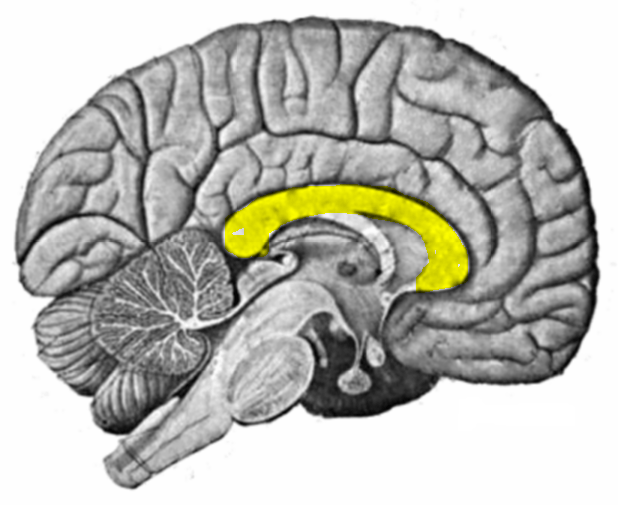
which lobe plays a part in decision making?
Frontal
Temporal
Parietal
Occipital

What lobe is related to articulate speech? (hint: Brocha's area)
FRONTAL
PARIETAL
TEMPORAL
OCCICPITAL
The brain's "sensory switchboard": directs sensory messages to proper area of the brain
thalamus
hypothalamus
hippocampus
reticular formation
Connects the left and right hemispheres of the brain
Cerebellum
Hypothalamus
Medulla Oblongata
Corpus Callosum
Thinking, problem solving, "executive functioning," happen here.
cerebellum
cerebrum
amygdala
hypothalamus
Known as the "Little brain" and is in charge of balance and coordinating movements:
Thalamus
Reticular Formation
Hypothalamus
Cerebellum
Which of the following structures assists with sensation, higher order thinking, and motor control?
Cerebrum
Diencephalon
Midbrain
Brainstem
The basic structural and functional unit of brain is
Spinal Cord
Nephron
Neuron
Nerve
The part of the brain that is used for functions such a memory, problem-solving, emotions, etc.
Frontal Lobe
Temporal Lobe
Parietal Lobe
Occipital Lobe
The Occipital Lobe is responsible for what?
(check all that apply)
Emotions
Creative thinking
Sensory functions
Visual information
Responsible for integrating sensory information, including touch, temperature, pressure and pain.
Frontal lobe
Parietal lobe
Occipital lobe
Temporal lobe
Which brain part helps regulate body temp., controls water balance, and regulates metabolism?
Cerebellum
Thalamus
Occipital Lobe
Hypothalamus
Which part of the brain controls heart rate, regulates blood pressures, and is involved in breathing, swallowing, and vomiting?
Medulla Oblongata
Thalamus
Midbrain
Cerebellum
hearing
frontal lobe
parietal lobe
occipital lobe
temporal lobe
balance
cerebellum
brain stem
hypothalamus
hippocampus
long-term memory
cerebellum
brain stem
hypothalamus
hippocampus


This area of the brain includes the thalamus and the hypothalamus; also known as the interbrain.
Diencephalon
Occipital lobes
Meninges
Temporal lobe

These are three protective membranes that surround the brain and spinal cord.
Meninges
Pons
Fissures
Cerebellum

Which vital functions does the pons help to regulate?
Breathing
Heart Rate
Blood Pressure
Digestion
What are the parts of the Central Nervous system?
Brain
Axons
Spinal cord
Microglia
Match the following Lobes to their Functions
Frontal
Personality, Thought, Thinking
Occiptial
major visual processing centre in the brain
Temporal
processing sensory information, particularly important for hearing
Parietal
sensory information, including touch, temperature, pressure and pain.
Brain Stem
Autonomous Functions of the body like breathing and heartbeats
What structure in the brain makes cerebrospinal fluid (CSF)?
Ventricles
Meninges
Pons
Diencephalon
Which of the following best describes a Gyrus?
A ridge in the cerebrum
A shallow groove in the cerebrum
A deep groove that can separate lobes of the brain
What sense does the insula help interpret?
Taste
Sight
Touch
Hearing
Before your occipital lobe can process the colors on this computer screen, what structure in the brain does it pass through before in order for the information to be directed to the correct lobe?
Thalamus
Hypothalamus
Cerebellum
Medulla Oblangata
Sensory information will pass through the _____ before reaching the cerebrum to be interpreted.
Meninges
Ventricles
Medulla Oblangata
Cerebellum
Insula
The frontal lobe produce motor outputs that travel through the PNS to stimulate muscles. What region of the brain will the motor output pass through first before it goes through the spinal cord?
Parietal Lobe
Midbrain
Thalamus
Temporal lobe
Hypothalamus
After a traumatic brain injury a patient has trouble talking but can still understand language, what region of the brain was most likely affected?
Broca's area of the frontal lobe
Wernicke's area of the Temporal lobe
Somatosensory cortex of the parietal
Hippocampus of the occipital lobe
After a traumatic brain injury a patient has can make sounds with their mouth but they are unable to produce words that make sense. Which area was most likely damaged?
Thalamus of the diencephalon
Wernicke's area of the Temporal lobe
Somatosensory cortex of the parietal
Hippocampus of the occipital lobe
Broca's area of the frontal lobe
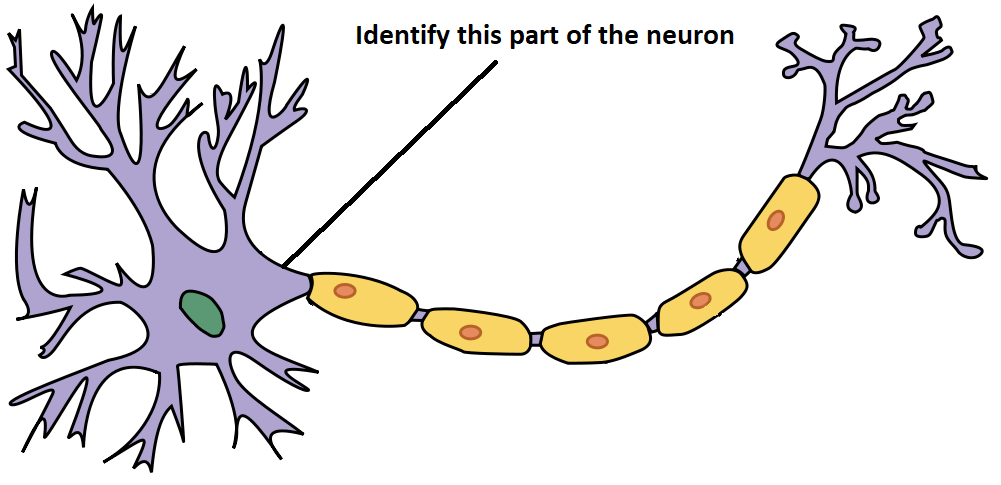
Nucleus
Cell Body
Axon
Node of Ranvier
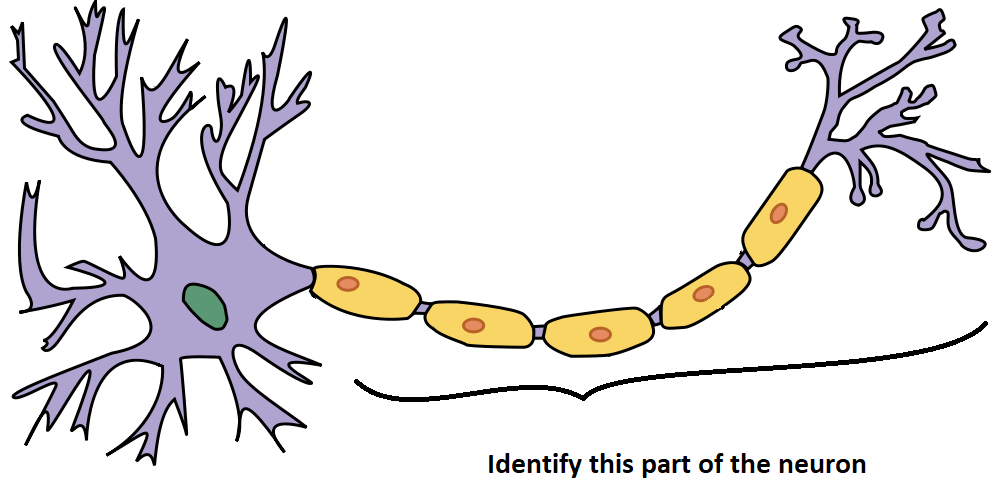
Nucleus
Cell Body
Axon
Node of Ranvier
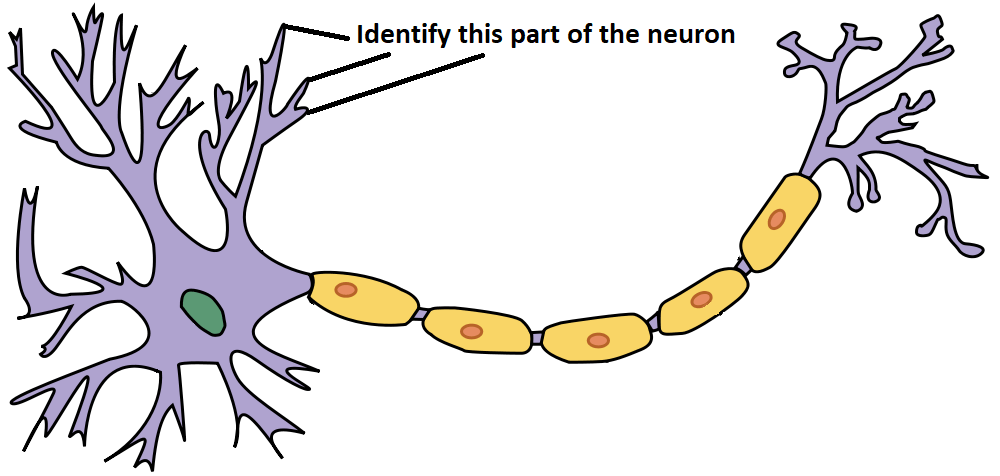
Dendrites
Axon Terminals
Myelin Sheath
Schwann Cells
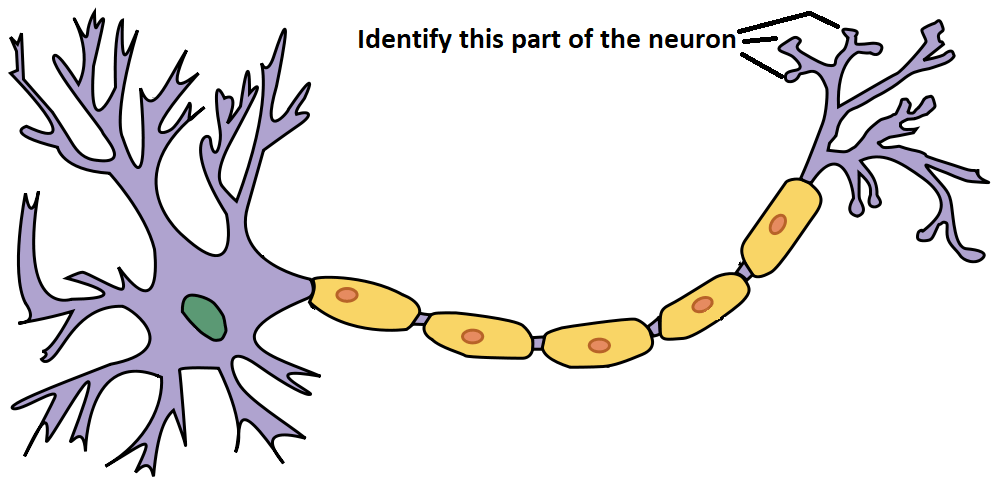
Dendrites
Axon Terminals
Myelin Sheath
Schwann Cells
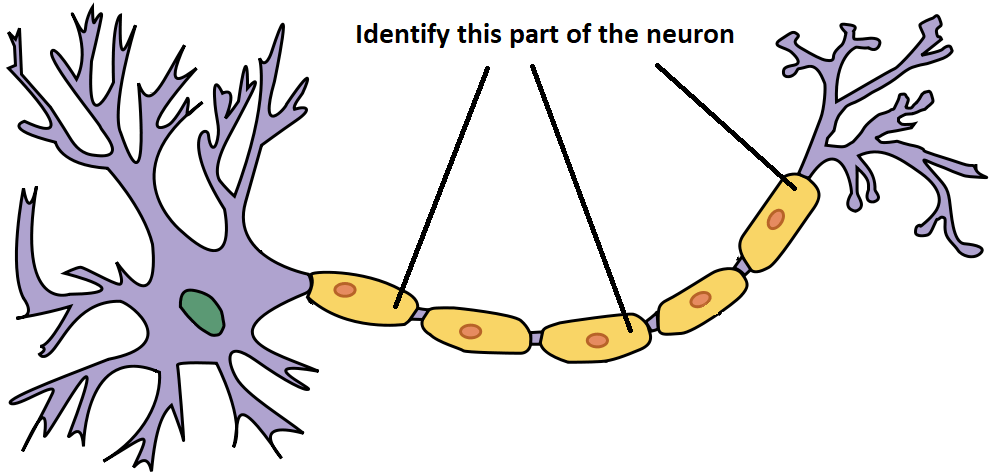
Dendrites
Axon Terminals
Myelin Sheath
nuclei
What does the neuron's Myelin Sheath do?
Controls the actions of the neuron
Produces food for the neuron
Carries information from the cell body to other neurons
Surrounds and insulates the axon
What do Dendrites do?
Receives information from other neurons via neurotransmitters
Produces fatty tissue for the Myelin Sheath
Sends information to the next cell
Controls the speed of electrical signal through the axon
What do Axon Terminals do?
Receives information from other neurons
Produces fatty tissue for the Myelin Sheath
Sends information to the next cell
Controls the speed of electrical signal through the axon
The space between the axon terminal of the sending neuron and the dendrite or cell body of the receiving neuron.
axon
synapse
dendrite
cell body
Neurotransmitters are released from the
Dendrites
Post-synaptic neuron
Presynaptic neuron
Schwann Cells
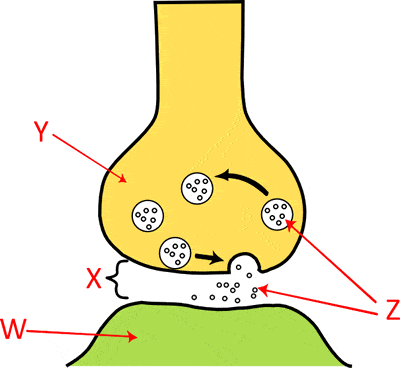
Synaptic knob

Synaptic knob
Z
Axon Terminal Button
Neurotransmitters
Dendrite
Synapse
Gaps between Schwann cells that increase the speed of the transmission of the signal down the neuron are called
axon terminals
dendrites
myelin
nodes of Ranvier
Type of neuron that carries messages from the brain/spinal cord to the body
Afferent/Sensory
Efferent/Motor
Neuroglia that produce myelin on axons in the peripheral nerves are
schwann cells
astrocytes
oligodendrocytes
microglia
Type of neuron that perceive information about your environment.
Motor Neuron
Interneuron
Sensory Neuron
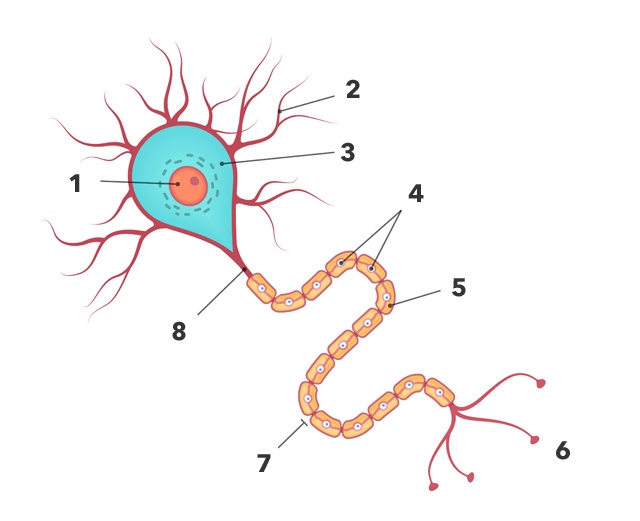
Identify #4
Nucleus
Axon
synapse
Scwann Cells of Myelin sheath
Which of these is your peripheral nervous system?
Motor Neurons
Interneurons
Spinal Cord
Cerebellum
Label the Neuron Cell
Nerve Ending
Axon
Dendrite
Mylein Shealth
Schwann Cell
Label the parts of a neuron and the flow of action potential
Which part of the brain is primarily responsible for coordinating voluntary movements and maintaining posture?
Medulla oblongata
Frontal Lobe
Thalamus
Cerebellum
What is the main function of the occipital lobe?
Touch sensation
Speech production
Vision
Hearing
Which structure connects the left and right hemispheres of the brain?
Hypothalamus
Midbrain
Corpus callosum
Pons
Results from opening of gated Na channels
polarized
depolarized
hyperpolarized
Results from opening of gated K channels
polarized
depolarized
hyperpolarized
Ions move through open gated channels due to
diffusion
active transport
pumps
osmosis
Ions move through leak channels due to
diffusion
active transport
pumps
osmosis

Which channels open FIRST at time #2?
leak channels only
gated Na channels
gated K channels
none
Which channels are open at time #1?
leak channels only
gated Na channels
gated K channels
none
Which channels open SECOND at time #2?
leak channels only
gated Na channels
gated K channels
none
Which term best describes time #4
polarized
depolarization
repolarization
hyperpolarization
ATP is required to run
Na/K pumps
leak channels
gated channels
myelin sheaths
Which is the correct order/sequence of the parts of a neuron in a neural impulse?

Myelin would be which color of structure?
the red one
the blue one
the green one
the purple one



The brain stem is where?
In the spine
at the base of the brain
in the middle of the brain
The amygdala is linked to what emotions?
fear and anger
fear and adrenaline
anger and pleasure
happiness and pleasure
Which part of your brain controls logical thinking; sizing up risks vs. rewards?
limbic system
prefrontal cortex
What is the primary function of the limbic system?
Motor control
Sensory perception
Emotional regulation
Speech production
Which of the following structures is NOT a part of the limbic system?
Hippocampus
Amygdala
Cerebellum
Thalamus
The limbic system plays a significant role in which of the following functions?
Language processing
Memory formation
Blood circulation
Temperature regulation
Which structure in the limbic system is critical for the formation of new long-term memories?
Hypothalamus
Amygdala
Hippocampus
Cortex
Damage to the limbic system can result in which of the following?
Altered emotional regulation
Enhanced memory retention
Improved emotional regulation
Increased creativity
In limbic system, hypothalamus plays a crucial role in the regulation of
Hormone production
Auditory processing
Taste perception
Balance and coordination

Which part of the limbic system is called the RELAY CENTER of the brain from sense organs to the cerebral cortex.
Amygdala
Hypothalamus
Thalamus
Cortex
Click on the parts of the central nervous system

