
 Worksheets
Pre AICE Sem 1 Review HCPS
Total questions: 143
Worksheet time: 2hrs 48mins
Which of the following apparatus is used to measure temperature in a laboratory?
Thermometer
Burette
Measuring cylinder
Gas syringe
Which apparatus would you use to accurately measure the volume of a liquid?
Volumetric pipette
Stop-watch
Thermometer
Balance
What is the main difference between physical and chemical changes?
Physical changes do not alter the chemical composition, while chemical changes do.
Physical changes always produce heat, while chemical changes do not.
Chemical changes are always reversible, while physical changes are not.
Physical changes only occur at high temperatures.
Which of the following best describes a compound?
A substance made of two or more elements chemically combined
A mixture of two or more substances physically combined
A pure element in its natural state
A solution of gases
Which method would you use to separate a mixture of soluble coloured substances?
Chromatography
Filtration
Simple distillation
Crystallization
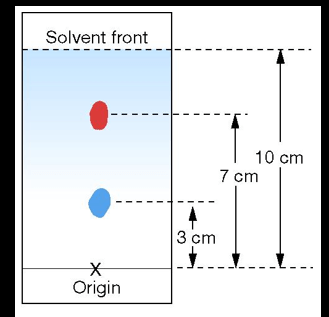
In paper chromatography, what does the Rf value represent?
The ratio of the distance travelled by the substance to the distance travelled by the solvent
The time taken for the solvent to evaporate
The mass of the substance separated
The temperature at which separation occurs
Which separation technique is most suitable for obtaining pure water from salt water?
Simple distillation
Filtration
Chromatography
Crystallization
A student wants to separate sand from a mixture of sand and water. Which method should they use?
Filtration
Chromatography
Fractional distillation
Crystallization
Why is it important to use a suitable solvent in paper chromatography?
To ensure the substances dissolve and move up the paper for separation
To increase the temperature of the experiment
To measure the mass of the substances
To prevent evaporation of the solvent
Which of the following is NOT an apparatus used for measuring volume?
Stop-watch
Volumetric pipette
Measuring cylinder
Burette
Which subatomic particles are found in the nucleus of an atom?
Electrons and neutrons
Protons and neutrons
Protons and electrons
Neutrons and photons
What is the relative charge of a proton?
-1
0
+1
+2
How is the atomic number of an element defined?
The total number of neutrons in the nucleus
The total number of electrons in the atom
The number of protons in the nucleus
The sum of protons and neutrons
What does the mass number (nucleon number) of an atom represent?
The number of electrons in the atom
The total number of protons and neutrons in the nucleus
The number of neutrons only
The number of protons only
Which electron configuration corresponds to an element with proton number 11?
1s2, 2s2, 2p6, 3s1
1s2, 2s2, 2p6, 3s2
1s2, 2s2, 3s1
[Ne] 3s1
Group VIII noble gases have which of the following characteristics?
One electron in their outer shell
A full outer shell
Two electrons in their outer shell
No electrons in their outer shell
How is the number of occupied electron shells in an atom related to its position in the periodic table?
It is equal to the group number
It is equal to the atomic number
It is equal to the period number
It is equal to the mass number
What is an isotope?
An atom with a different number of electrons
An atom with the same number of protons but different numbers of neutrons
An atom with a different number of protons
An atom with the same number of neutrons but different numbers of protons
Why do isotopes of the same element have the same chemical properties?
Because they have different numbers of neutrons
Because they have the same number of electrons and the same electronic configuration
Because they have different numbers of protons
Because they have different atomic masses
Which cation can be identified using a flame test?
Chloride, Cl-
Lithium, Li+
Sulfate, SO42−
Nitrate, NO3-
A student is given two samples of the same element. One sample has a mass number of 35 and the other has a mass number of 37. What can the student conclude about these samples?
They are different elements.
They are isotopes of the same element.
They have different numbers of protons.
They have different chemical properties.
If an element is in Group V of the periodic table, how many outer shell electrons does it have?
2
5
7
8
A scientist calculates the relative atomic mass of an element using the masses and abundances of its isotopes. Which skill is the scientist applying?
Recalling the definition of atomic number
Interpreting and using symbols for atoms
Calculating using data and evidence
Identifying cations using flame tests
Which of the following ions can be identified using a flame test?
Sodium, Na+
Chloride, Cl-
Sulfate, SO42−
Nitrate, NO3-
Which of the following best describes the arrangement of elements in the Periodic Table?
Elements are arranged in alphabetical order.
Elements are arranged in order of increasing atomic mass.
Elements are arranged in periods and groups in order of increasing proton number/atomic number.
Elements are arranged based on their color.
What general trend is observed in Group I alkali metals as you move down the group?
Decreasing density
Decreasing reactivity
Decreasing melting point
Decreasing atomic number
Which of the following is a property of transition elements?
They are always colorless.
They have low melting points.
They often act as catalysts in compounds.
They are always gases at room temperature.
Which statement correctly describes the change in character across a period in the Periodic Table?
Elements change from non-metallic to metallic character.
Elements change from metallic to non-metallic character.
Elements remain the same throughout the period.
Elements become less reactive.
Which of the following best describes Group VII noble gases?
Highly reactive, diatomic gases
Unreactive, monatomic gases
Reactive, colored solids
Unreactive, diatomic gases
Which of the following is the correct appearance of chlorine at room temperature and pressure (r.t.p.)?
A grey-black solid
A red-brown liquid
A pale yellow-green gas
A colorless gas
What is the term for positive ions?
Anions
Cations
Neutrons
Protons
Given information about elements in a group, what can you predict using the Periodic Table?
The boiling point of water
The properties of other elements in the group
The number of neutrons in an atom
The color of all metals
Which of the following is NOT a general trend observed in Group VII halogens as you go down the group?
Increasing density
Decreasing reactivity
Increasing reactivity
Change in physical state
Transition elements can have ions with variable oxidation numbers. Which of the following is an example?
Sodium (Na+)
Iron(II) and iron(III)
Chloride (Cl-)
Potassium (K+)
Which of the following best describes an ionic bond?
A strong electrostatic attraction between oppositely charged ions
A sharing of electrons between two atoms
A weak force between molecules
A metallic attraction between atoms
What is a property of ionic compounds?
High melting points and boiling points
Low melting points and boiling points
High electrical conductivity when solid
Poor electrical conductivity when aqueous
Describe the electrical conductivity of ionic compounds when they are solid.
Poor electrical conductivity
Good electrical conductivity
Excellent electrical conductivity
Moderate electrical conductivity
What is the arrangement in the giant lattice structure of ionic compounds?
Regular arrangement of alternating positive and negative ions
Random arrangement of atoms
Layers of covalent bonds
Sea of delocalized electrons
Which statement best describes a covalent bond?
A pair of electrons is shared between two atoms leading to noble gas electronic configurations
A strong electrostatic attraction between oppositely charged ions
A force between metal atoms
A weak attraction between molecules
Which of the following is a property of simple molecular compounds?
Low melting points and boiling points
High melting points and boiling points
Good electrical conductivity
Malleability and ductility
Why do simple molecular compounds have low melting and boiling points?
Due to weak intermolecular forces
Due to strong ionic bonds
Due to metallic bonding
Due to giant covalent structures
What is a use of graphite based on its structure?
As a lubricant and as an electrode
In cutting tools
As a food additive
As a building material
Diamond is commonly used in which application due to its structure?
Cutting tools
Lubricants
Electrodes
Insulation
What is metallic bonding?
Electrostatic attraction between positive ions in a giant metallic lattice and a ‘sea’ of delocalized electrons
Sharing of electrons between two atoms
Attraction between molecules
Electrostatic attraction between oppositely charged ions
Which property is associated with metals due to their structure and bonding?
Good electrical conductivity
Poor electrical conductivity
Low melting points
Brittle nature
What property of metals allows them to be shaped without breaking?
Malleability and ductility
High melting points
Poor electrical conductivity
Weak intermolecular forces
What does the molecular formula of a compound represent?
The number and type of different atoms in one molecule.
The arrangement of atoms in a crystal lattice.
The total mass of the compound.
The color and state of the compound.
How is the empirical formula of a compound defined?
As the simplest whole number ratio of the different atoms or ions in a compound.
As the total number of atoms in a molecule.
As the arrangement of atoms in a molecule.
As the number of electrons in a compound.
Which of the following is required to deduce the formula of an ionic compound?
The relative numbers of the ions present in a model or diagrammatic representation, or the charges on the ions.
The melting point of the compound.
The color of the compound.
The boiling point of the compound.
If you were given a diagram showing the relative numbers of atoms in a simple compound, what can you deduce from it?
The formula of the compound.
The boiling point of the compound.
The color of the compound.
The density of the compound.
If you are given the charges on the ions in an ionic compound, what can you determine?
The formula of the ionic compound.
The melting point of the compound.
The solubility of the compound.
The color of the compound.
Which of the following is a distinguishing property of solids, liquids, and gases?
Their color
Their particle separation, arrangement, and motion
Their taste
Their electrical charge
What happens to a substance during boiling?
It turns from a gas to a solid
It turns from a liquid to a gas
It turns from a solid to a liquid
It turns from a gas to a liquid
How does increasing temperature generally affect the volume of a gas, according to kinetic particle theory?
The volume decreases
The volume remains the same
The volume increases
The volume turns into a solid
Which of the following is NOT a type of chemical reaction mentioned in the material?
Synthesis
Decomposition
Photosynthesis
Redox
What is the purpose of constructing word equations and symbol equations in chemistry?
To show how reactants form products, including state symbols
To measure temperature changes
To identify colors of chemicals
To calculate electrical conductivity
Relative atomic mass is described as:
The sum of all atomic numbers in a molecule
The average mass of the isotopes of an element
The total number of electrons in an atom
The mass of a single proton
Which property is common to metals but not to non-metals?
High electrical conductivity
Low melting points
Poor thermal conductivity
Brittle structure
If you are given a chemical reaction and its symbol equation, what skill is required to deduce the symbol equation with state symbols for the reaction?
Recall
Application of concepts
Guessing
Memorization only
Why is relative formula mass (Mr) used for ionic compounds?
Because ionic compounds have no mass
Because ionic compounds are made of molecules
Because ionic compounds consist of ions, not discrete molecules
Because ionic compounds are always gases
A student is given the relative atomic masses of elements in a compound. What should they do to calculate the relative molecular mass (Mr)?
Add up the relative atomic masses of all atoms in the molecule
Multiply the atomic number by the mass number
Subtract the smallest atomic mass from the largest
Divide the total mass by the number of atoms
Which property makes aluminum suitable for use in the manufacture of aircraft?
High density
Low density
Poor electrical conductivity
High reactivity
Brass is an alloy made from which two metals?
Iron and carbon
Copper and zinc
Iron and nickel
Zinc and silver
Why are alloys generally harder and stronger than pure metals?
Because alloys are always lighter
Because different sized atoms in alloys prevent layers from sliding easily
Because alloys are always magnetic
Because alloys contain only one type of atom
Which metal is commonly used in food containers due to its resistance to corrosion?
Iron
Copper
Aluminum
Zinc
Arrange the following metals in order of reactivity from most reactive to least reactive: potassium, copper, gold, magnesium.
Gold, copper, magnesium, potassium
Potassium, magnesium, copper, gold
Magnesium, potassium, copper, gold
Copper, gold, potassium, magnesium
Which of the following is a common barrier method to prevent rusting?
Heating
Painting
Freezing
Electrolysis
How does galvanizing with zinc protect iron from rusting?
By making iron heavier
By acting as a sacrificial metal that corrodes instead of iron
By making iron magnetic
By increasing the iron’s density
Which reaction occurs in the blast furnace to extract iron from hematite?
Reduction of iron(III) oxide by carbon monoxide
Oxidation of iron by oxygen
Electrolysis of iron ore
Dissolving iron ore in water
Explain, using evidence from the reactivity series, why magnesium reacts with steam but not with cold water.
Magnesium is less reactive than potassium and sodium, so it needs more energy to react
Magnesium is more reactive than gold, so it reacts with everything
Magnesium is a non-metal and does not react with water
Magnesium reacts with cold water but not with steam
Why does aluminum appear unreactive despite being high in the reactivity series?
It is always covered by a protective oxide layer
It is a non-metal
It is very dense
It is magnetic
Which of the following is the main ore of aluminum?
Hematite
Bauxite
Galena
Magnetite
Which of the following is a correct symbol equation for the extraction of iron from hematite?
Fe2O3 + 3CO → 2Fe + 3CO2
CaCO3 → CaO + CO2
C + O2 → CO2
CaO + SiO2 → CaSiO3
What is the role of cryolite in the extraction of aluminum from purified bauxite?
Acts as a reducing agent
Lowers the melting point of aluminum oxide
Provides oxygen for the reaction
Acts as a catalyst
Why do the carbon anodes need to be regularly replaced during the extraction of aluminum?
They evaporate during the process
They react with oxygen and get consumed
They dissolve in the electrolyte
They become magnetic
Which chemical is used to test for the presence of water?
Anhydrous copper(II) sulfate
Sodium chloride
Potassium iodide
Silver nitrate
What is one reason distilled water is used in practical chemistry rather than tap water?
Distilled water is cheaper
Distilled water contains fewer chemical impurities
Distilled water tastes better
Distilled water is more acidic
Which of the following substances found in natural water sources is beneficial for aquatic life?
Dissolved oxygen
Plastics
Nitrates from fertilizers
Sewage
Which of the following substances in water is potentially harmful to aquatic life?
Dissolved oxygen
Some metal compounds
Nitrates and phosphates
Essential minerals
Which process is used to remove solids from domestic water supply?
Chlorination
Sedimentation and filtration
Boiling
Distillation
What is the approximate composition of clean, dry air by volume?
50% nitrogen, 30% oxygen, 20% other gases
78% nitrogen, 21% oxygen, remainder noble gases and carbon dioxide
60% oxygen, 30% nitrogen, 10% carbon dioxide
90% nitrogen, 5% oxygen, 5% other gases
What is the main source of carbon dioxide as an air pollutant?
Photosynthesis in plants
Complete combustion of carbon-containing fuels
Evaporation of water
Decomposition of plastics
Which of the following is a source of methane as an air pollutant?
From the decomposition of vegetation and waste gases from digestion in animals
From the combustion of fossil fuels containing sulfur compounds
From the incomplete combustion of carbon-containing fuels
From car engines
What is a major adverse effect of carbon monoxide as an air pollutant?
Toxic gas
Acid rain
Photochemical smog
Global warming
Which strategy can help reduce climate change?
Planting trees
Increasing livestock farming
Burning more fossil fuels
Using high-sulfur fuels
What is the word equation for photosynthesis?
Carbon dioxide + water -> glucose + oxygen
Oxygen + glucose -> carbon dioxide + water
Carbon dioxide + oxygen -> glucose + water
Glucose + water -> carbon dioxide + oxygen
How do greenhouse gases like carbon dioxide and methane contribute to global warming?
By absorbing, reflecting, and emitting thermal energy
By increasing acid rain
By causing photochemical smog
By directly producing oxygen
Which of the following is a method to reduce acid rain?
Use of catalytic converters in vehicles
Increasing the use of high-sulfur fuels
Planting more crops
Increasing livestock farming
Describe the process of photosynthesis.
It is the reaction between carbon dioxide and water to produce glucose and oxygen in the presence of chlorophyll and using energy from light.
It is the breakdown of glucose to produce energy.
It is the absorption of oxygen to produce carbon dioxide.
It is the reaction of nitrogen and oxygen to form oxides of nitrogen.
What is the symbol equation for photosynthesis?
6CO2 + 6H2O -> C6H12O6 + 6O2
C6H12O6 + 6O2 -> 6CO2 + 6H2O
6CO2 + 6O2 -> C6H12O6 + 6H2O
6H2O + 6O2 -> 6CO2 + C6H12O6
How do oxides of nitrogen form in car engines?
By the reaction of carbon monoxide and nitrogen oxide
By the reaction of carbon dioxide and water
By the reaction of methane and oxygen
By the reaction of sulfur dioxide and oxygen
Which pollutant is responsible for acid rain?
Sulfur dioxide
Methane
Carbon monoxide
Glucose
Calculate the molar mass of Ba(C2H3O2)2
255.3 g/mol
237.3 g/mol
228.3 g/mol
196.3 g/mol
What is the molar mass of the diatomic element nitrogen?
7 g/mol
14 g/mol
28 g/mol
Calculate the molar mass of NH4NO2
50 g/mol
60 g/mol
64 g/mol
78 g/mol

Ink can be separated by a method of -----------------------------------------------
distillation
filtration
chromatography
sedimentation
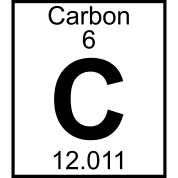
An element has the following configuration: 1s22s22p5
How many total electrons does this element have?
5
9
14
20
An element has three isotopes. Given the abundances and relative masses, calculate the average atomic mass and determine (from the periodic table) which element it is.
Abundances | Relative masses
0.005% | 234.04 amu
0.720% | 235.04 amu
99.275% | 238.05 amu
Uranium (#92, Atomic Mass: 238.03 amu)
Fluorine (#9, Atomic Mass: 19.00 amu)
Mercury (#89, Atomic Mass: 200.59 amu)
Polonium (#84 209 amu)
Rubidium has two naturally occurring isotopes, 85Rb (relative mass 84.9118 amu) and 87Rb (relative mass 86.9092 amu). The abundance of 87Rb is 27.8%, If rubidium has an average atomic mass of 85.47 amu, what is the % abundance of 85Rb (in percent)?
27.9%
72.1%
74.63%
34.29%
How many neutrons are in an atom of carbon-14?
6
8
10
14

How many protons does this isotope of titanium have?
22
26
48
70

Which of the following halogens has the greatest electronegativity?
Chlorine (Cl)
Bromine (Br)
Iodine (I)
Astatine (At)

What is the amount of energy required to remove an electron from an atom?
atomic energy
ionization energy
ionic energy
electron energy

What is a vertical (up and down) column in the periodic table?
group or family
period
periodic law
octet rule
The name of FeCl₂ is
iron chloride
iron (II) chloride
iron (I) chloride
iron dichloride
Which of these combinations is an ionic compound made of?
Metal and Metal
Nonmetal and Nonmetal
Metal and Nonmetal
Cation and Cation
When naming ionic compounds with transition metals you need to include roman numerals to show the _____ of the metal..
atomic number
mass number
charge
ionization energy
When naming a compound, which of these is written first?
Metal
Nonmetal
Anion
Cation
The name of the compound Ca3(PO4)2
calcium phosphate
tricalcium diphosphate
calcium phosphorus oxide
calcium phosphide
Which following is a covalent compound?
Which of the following would have 2 valence electrons
Alkali metals
Alkaline earth metals
Halogens
Noble Gasses
Correct diagram for HF


Which statements compare ionic compounds and covalent compounds correctly?
ionic compounds are made up of ions while covalent compounds are made up of molecules
ionic compounds contains strong intermolecular forces while covalent compounds contain weak electrostatic forces.
ionic compounds conducts electricity when solid state while covalent compounds cannot conduct electricity.
ionic compounds transfer electrons while covalent compounds share electrons.

Where are the transition metals located on the periodic table?
blue square
red square
yellow square
C7H14 + O₂ → CO₂ + H₂O
Decomposition
Single Replacement
Double Replacement
Combustion
Neutralization
Cl2 + 2 SnI4 → I2 + SnCl4
Single Replacement
Decomposition
Double Replacement
Synthesis
Combustion
The metal ions in two compounds switch.
Synthesis
Combustion
Single Replacement
Double Replacement

The Law of Conservation of Mass states that the total mass of the reactants should be
More than the mass of the products
Equal to the mass of the products
Ignored during the reaction
Less than the mass of the products

