
 Worksheets
Unit 7 Ecology Test
Total questions: 140
Worksheet time: 2hrs 17mins
A group of eagles living around Lake Tahoe would be considered a(n)
abiotic factor
population
community
ecosystem
Fish, their predators, and the water, sunlight, and plants that they rely on would be considered a(n)
abiotic factor
population
community
ecosystem
Which of the following is NOT a characteristic of all living things?
has the ability to move around
uses energy for metabolism
contains cells
has the ability to reproduce
A field of sunflowers facing towards the sun is an example of
metabolism
response to stimuli
growth
asexual reproduction
If an organism divides and produces an exact copy of itself, the organism
has reproduced sexually
has reproduced asexually
must have a virus and be infects its own cells
has reproduced through the process of meiosis
The role or job of a species in a community.
habitat
diet
niche
ecosystem
Living factors or organisms that affect an ecosystem...
abiotic factors
species
trophic level
biotic factors
Which of the following is not an example of a biological process in a biogeochemical cycle?
Transpiration
Nitrogen fixation by bacteria
Erosion
Birds eliminating waste
Carbon dioxide is returned to the atmosphere primarily by
consumption by animals
combustion and cellular respiration by consumers
elimination of waste by animals
photosynthesis by producers
Carbon cycles through the biosphere in all of the following processes except
photosynthesis
transpiration
burning of fossil fuels
decomposition of plants and animals
Nitrogen fixation is carried out mainly by
humans
plants
animals
bacteria
Which of the following steps of the water cycle is the only step that has to have living organisms in order to happen?
Transpiration
Condensation
Evaporation
Precipitation
What is one biotic factor that affects the size of a population in an ecosystem?
local geography
number of predators present
average yearly temperature
average yearly precipitation
Organisms, such as plants or phytoplankton that carry out photosynthesis, would case a decrease of which gas in the atmosphere?
Oyxgen
Carbon Dioxicde
Water
Ozone
In the carbon cycle, decomposers return carbon to the soil. Which of the following is not something that decomposers can break down?
Waste products like urine or feces
The bodies of dead plants and animals
Carbon dioxide found in the air
Scraps of discarded food
Human increase carbon dioxide in the atmosphere, and contribute to the carbon cycle by
combustion from driving cars
planting trees to improve photosynthesis
conserving energy with alternative energies
using more solar power electricity
Nitrogen in the air must be "fixed" before it can be used by plants. Atmospheric nitrogen is "fixed" by
plants
bacteria and insects
bacteria
bacteria and fungi (decomposers)
When deforestation (cutting down trees) occurs in an area, what immediate effect does this have on the water cycle?
More water is returned to the atmosphere by transpiration.
There is less runoff water, but more transpiration.
More photosynthesis occurs, and carbon dioxide begins decreasing.
Less is returned to the air by transpiration.
The main result of photosynthesis is
decreased atmospheric nitrogen
carbon dioxide is removed and captured by plants
absorbing nitrogen for the plant to use
global warming caused by carbon dioxide being removed
Bacteria are involved in many steps of the biogeochemical cycles. Which of the following steps is bacteria not involved in?
Decomposition
Transpiration
Nitrification
Nitrogen Fixation
Which of the following is common to the carbon cycle, the nitrogen cycle, and the water cycle?
The substances are rearranged into different types of molecules as they move through their cycles.
The substances must pass through organisms in order to complete their cycles.
The largest reserves of these substances are always in organisms.
These substances are required by all living things and are involved in many processes that occur in all living things.
Water can be returned to the atmosphere through the leaves of plants by
evaporation
condensation
precipiation
transpiration
For the carbon cycle and the nitrogen cycle to function properly, which organisms must always be present?
decomposers
herbivores
parasites
predators
Decomposition is involved in which of the following biogeochemical cycles? Select all that apply.
Water
Carbon
Nitrogen
None of the cycles are correct.
Which biogeochemical cycle has matter cycling through living and nonliving components of the ecosystem? Select ALL that apply.
Water
Carbon
Nitrogen
Which biogeochemical has stages that occur underground? Select ALL that apply.
Water
Carbon
Nitrogen
Which biogeochemical has matter taking on different chemical forms as it cycles? Select ALL that apply.
Water
Carbon
Nitrogen
Which biogeochemical cycle is completely driven by the sun? Select ALL that apply.
Water
Carbon
Nitrogen

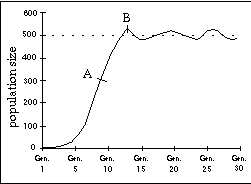


Natural disasters can be considered limiting factors.
true: density independent limiting factors
false; natural disasters are not limiting factors
true: density dependent limiting factors
false: because Mrs. Schaffer said
A lion and a cheetah attempt to occupy the same niche. The more aggressive lion survives; the cheetah does not.
Density-Dependent: Competition
Density-Independent: Competition
Density-Dependent: Predator-Prey
Density-Independent: Predator-Prey
Coyotes cross the winter pack ice and enter Newfoundland. The moose population starts to decline.
Density-Dependent: Competition
Density-Independent: Competition
Density-Dependent: Predator-Prey
Density-Independent: Predator-Prey
A severe frost wipes out 50% of the coffee crop in Brazil.
Density-Dependent
Density-Independent
Due to severe overcrowding in an Asian village, many children do not survive to reach adulthood.
Density-Dependent: Disease
Density-Independent: Disease
Since lynx prey on hares, an increase in the hare population causes an increase in the lynx population.
Density-Dependent: Competition
Density-Independent: Competition
Density-Dependent: Predator-Prey
Density-Independent: Predator-Prey
A severe flood in the Red River Valley causes a decline in the deer population.
Density-Dependent
Density-Independent
Due to stress, large numbers of female lemmings miscarry their young and fail to reproduce.
Density-Dependent
Density-Independent
Travelers who visit a crowded African village become infected with a disease caused by parasites.
Density-Dependent
Density-Independent
Many fish die due to a change in the winds and the appearance of the El Nino ocean current off the coast of Peru and Chile.
Density-Dependent
Density-Independent
Fish on a coral reef stake out their territory and chase away any younger fish that try to live there.
Density-Dependent
Density-Independent
An extensive drought in the Serengeti Plain threatens wildebeest, giraffe, zebra, and springbok populations.
Density-Dependent
Density-Independent
Which of the following is true of density-dependent limiting factors?
They have a larger impact on big populations
They have a larger impact on small populations
They impact big and small populations equally.
They tend to be caused by abiotic factors
A population of mice occupies a tree stump. For ten years, the population has been stable. Which of the following would likely cause the number of mice to begin to decrease?
An increase in predators (who eat them)
A decrease in disease
A decrease in competition between the mice
An increase in mating season
What pattern of growth will a population with limited resources show?
Exponential
Logistic
Density-dependent
Density-independent
Conditions in the environment that impact the size of the population are called
limiting factors
populations
habitats
niches.
Which factor is a density-dependent limiting factor on the population of a species?
Predation
Unusual weather
Natural disasters
Seasonal variation

Based on the chart, which of these events would have the biggest immediate impact on the Georgia Black Bear population?
large scale forest fires
damming lakes and rivers
introduction of the bald eagle
restriction on humans hunting bears

What type of population growth is shown?
exponential
logistic
density-dependent
density-independent
What is the amount of yeast when the population levels off?
10 hours
9 MG/CC
19 MG/CC
8 hours
What is the name for the maximum amount of yeast?
exponential growth
carrying capacity
yeast maximum
population ecology
What would happen to the yeast population if more sugar (food) was added to the solution? Select all that apply.
It would increase the amount of time it took to reach carrying capacity
It would increase the carrying capacity for the yeast population.
It would decrease the carrying capacity for the yeast population.
It would have no effect on the yeast population.

Which of the following is NOT a threat to biodiversity?
Pollution
Deforestation
Invasive Species
Ecological Succession

Which of the following is NOT a possible result of decreasing biodiversity?
increased ecosystem stability
extinctions
loss of natural resources
loss of potential foods & medicines
Which of the following results when levels of CO2 in the atmosphere increase due to the burning of fossil fuels?
ecological succession
acid rain
ozone depletion
global warming
The tall wetland plant, purple loosestrife, was brought from Europe to the United States in the early 1800s as a garden plant. The plant's growth is now so widespread across the United States that it is crowding out a number of native plants. This situation is an example of
an unintended effect of adding a species to an ecosystem
the results of the use of pesticides
the recycling of nutrients
the flow of energy present in all ecosystems
What is an invasive species?
An organism that is new to an environment that has positive effects on the environment.
An organism that is native to an environment that has negative effects on the environment.
An organism that is new to an environment that has negative effects on the environment.
An organism that is native to an environment that has positive effects on the environment.
Causes of Climate Change are
only human activity
a combination of natural and human forces
only natural forces
What pattern of growth is shown by humans on Earth, whose population is growing out of control?
Exponential
Logistic
Carrying Capacity
Population Crash
One negative result of our need for energy would include
inventing engines that can run on energy from the sun
an oil tanker spills and destroys the habitats of many animals
the creation of cleaner fuel sources
. decreased runoff from deforestation
A renewable resource is one that
is used faster than it is replenished
is replenished as fast as it is used
is used like fossil fuels
can be recycled
The development of nuclear power has provided electricity for less money, but with a tradeoff. What may be considered a negative impact of nuclear power?
Large amounts of energy are produced very cheaply.
It takes a lot of energy to run a nuclear power plant.
Nuclear power plants provide new jobs for a community.
The radioactive waste is unsafe and hard to store safely.

Examine the diagram to the right and the trend seen by the two lines. Global temperature has been closely linked with the buildup of CO2 in the atmosphere. Which of the following statements is most likely true based on the graph?
Since 1880, carbon dioxide has caused a temperature increase of 10° Fahrenheit.
Since 1880, adding carbon dioxide has caused the global temperature to decline
Since 1880, carbon dioxide has caused the temperature to increase by about 1.2 degrees
Since 1880, carbon dioxide has no effect on the global temperature
What human activity would have the most significant effect on the temperature of the earth?
deforestation
water pollution
solar panels
burning fossil fuels
Temperatures on Earth may continue to increase because
decomposers essential to recycling matter are being destroyed
increasing carbon dioxide in the atmosphere will trap more heat.
too much oxygen is now given off by plants.
Earth tilts toward the sun in the summer
What is the effect of humans relying on Earth for all of our resources?
Animals are displaced and their habitats destroyed
Too much nitrogen can cause algae blooms that harm aquatic ecosystems
There may be none left for future generations
The world population will increase to 10 billion before it stabilizes
Cause: New technology allows oil drilling in extreme places
Effect?
Animals are displaced and their habitats destroyed
Too much nitrogen can cause algae blooms that harm aquatic ecosystems
There may be none left for future generations
The world population will increase to 10 billion before it stabilizes
Cause: Fertilizers increase crop yield.
Effect?
Animals are displaced and their habitats destroyed
Too much nitrogen can cause algae blooms that harm aquatic ecosystems
There may be none left for future generations
The world population will increase to 10 billion before it stabilizes
Cause: More people are living longer than ever before in our history
Effect?
Animals are displaced and their habitats destroyed
Too much nitrogen can cause algae blooms that harm aquatic ecosystems
There may be none left for future generations
The world population will increase to 10 billion before it stabilizes

A climax community is reached
at the beginning of succession
in the middle of succession
at the end of succession
when an ecosystem is destroyed
A volcano erupts and covers the entire island it is on with lava. Once it eventually hardens, primary succession begins to occur. Which of the following lists the correct order in which plant growth would occur?
shrubs -> mosses -> coconut trees -> sea grasses
volcanic rock -> lichen -> mosses -> grasses -> coconut trees
volcanic rock -> shrubs -> coconut trees -> sea grasses
volcanic rock -> sea grasses -> coconut trees -> shrubs
A logger clears a forest and the forest re-grows over many subsequent years. Which type of succession represents the regrowth of this forest?
Primary succession
Secondary succession
Pioneer species
Climax community
After a natural disaster, like a hurricane, what will happen to the damaged ecosystem?
Nothing; it will remain uninhabited.
A new, completely different ecosystem will evolve
An ecosystem like the previous one will be re-established.
No one really knows what to expect after a natural disaster
Organisms that are the first to move into an area, and begin forming soil for an ecosystem, are known as
pioneer species
endemic species
a climax community
invasive species
Which of the following statements is not true of secondary succession?
moss and lichens must be present
occurs after a distrubance
begins with soil
ends in a climax community
The first organisms to move into an ecosystem are known as __________, such as mosses.
invasive species
pioneer species
climax community
origin species
When succession reaches its final stage, it is known as a ____________, and will exist until it is destroyed by a disturbance.
pioneer species
invasive species
climax community
native species
What is an example of an area that is likely to undergo primary succession?
Glaciers melt and leave exposed rock
Plants die from drought and decompose
Land is bulldozed and soil remains
What is the main difference between primary and secondary ecological succession?
Primary begins WITHOUT soil; Secondary begins WITH soil
Primary is the first state and secondary is the second stage
Primary builds plant community; secondary builds animal community
Primary begins WITH soil; Secondary begins WITHOUT soil
What type of disturbance can be beneficial to ecosystems and communities?
Volcanic Eruption
Fire
Invasive Species
Flood
Which is faster: Primary or Secondary Succession?
Primary Succession
Secondary Succession
Both Take The Same Amount of Time

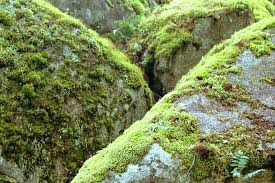
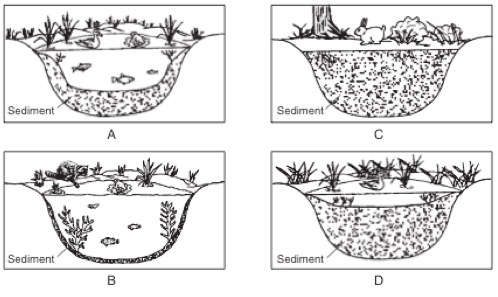
Which experiences the least change over time?
Pioneer Species
Primary Succession
Aquatic Succession
Climax Community
Which of the following best describes primary succession?
Volcano wipes out ecosystem that gradually grows back from ash covered soil
Volcano creates a new island of rock that must break down to form an ecosystem
Forest fire burns down forest that must bounce back over time
Tornado destroys a crop that must slowly grow back over time.
If farmers use a controlled burn to prevent forest fires, what would most likely be the first plants to return?
trees
shrubs
mosses
grasses

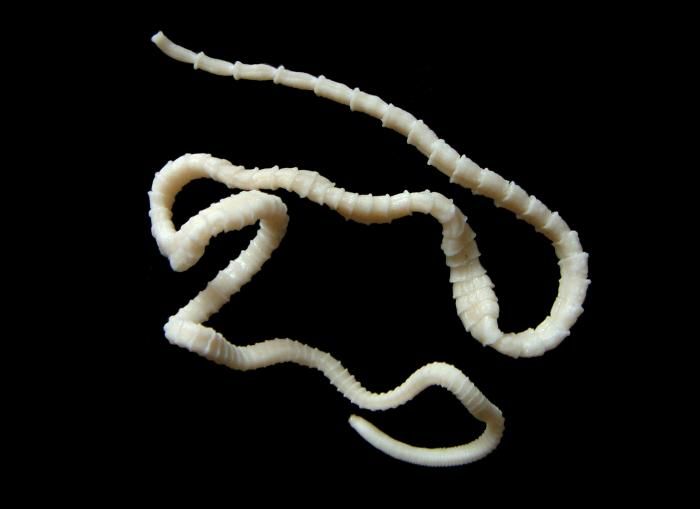
A tapeworm lives in the intestine of a cat absorbing nutrients through its skin. A tapeworm and a cat have this type of relationship.
mutualism
parasitism
commensalism
competition
A relationship between two organisms in which one organism benefits and the other is neither helped nor harmed.
Competition among members of the same species.
intraspecific competition
interspecific competition
Competition between members of different species.
intraspecific competition
interspecific competition
Tapeworms feed off of their host organism. This makes them a __________.
competitor
predator
host
parasite
An insect gathers pollen and nectar for food, but at the same time is aiding in the plant’s reproduction by spreading pollen to other flowers it visits. What does this relationship demonstrate?
Predation
Commensalism
Mutualism
Parasitism
In natural ecosystems, predators will tend to lower the prey population, meaning less _________________ between members of the prey population.
competition
infestation
parasitism
symbiosis
Grazing cows disturb grass and cause insects to fly around the cows as they eat. In turn, birds swoop in and eat the insects. This type of feeding relationship between the birds and the insects is an example of
commensalism
mutualism
parasitism
predation

The graph shows the populations of wolves and mountain lions in five different counties in Montana. Wolves and mountain lions compete for the same kinds of food. In Clay county,
mountain lions depend on wolves to survive
mountain lions probably outcompete wolves for food.
mountain lions and wolves have a mutualistic relationship
mountain lions and wolves survive independent of each other.
If the niches of two organisms overlap,
the two organisms will always form a symbiotic relationship
both organisms will disappear from the habitat
one organism usually migrates to a new habitat.
All answer choices are true
Bluebirds and cardinals, two different bird species, live in a small wooded area. The cardinals are very aggressive and eventually take over the nests of the bluebirds. This is an example of
intraspecific competition
commensalism
competitive exclusion
predation

In the graph, what type of relationship is occurring between the fungus and the plant?
commensalism
parasitism
mutualism
predation
One difference between parasitism and predation is that parasites
do very little harm to their hosts
keep their hosts alive for a period of time
attack the host only from the inside
are not very big

The non-living part of the natural environment where an animal, plant or other organism lives…
niche
habitat
community
ecosystem
biosphere

Hermit Crabs live in shells made and then abandoned by snails.
Commensalism
Parasitism
Competition
Which symbols best describe mutualism?
Which symbols best describe commensalism?

Which conclusion is supported by the graphs given?
Competition benefited P. Aurelia
Competition only negatively affected P. caudatum
Competition negatively affected both species but negatively affected P. caudatum more

Which of the following can be inferred from the graph showing the populations of different species of Paramecia grown in individual cultures (no competition)?
P. aurelia outcompeted P. caudatum for the resources
The carrying capacity for P. aurelia is higher than the carrying capacity for P. caudatum
Both species of paramecia are competing for the exact same resource and being successful
A niche ________________.
is the function that an organism performs in the food web of that community.
includes everything else the organism does and needs in its environment.
is specific to each individual animal and plant.
All of the above.

What is a keystone species?
A species that helps to hold an ecosystem together
A species that lives in or around rocks
Keys and stones have nothing to do with ecology
A keystone isn't a living thing, it's just a stone
Why are some sharks considered a keystone species?
Because they are a top predator
They scare off smaller fish that may overgraze an area of sea grass
They are tertiary consumers
They are cartilaginous

