
 Worksheets
SYSTEMS QUIZ REVIEW
Total questions: 139
Worksheet time: 2hrs 50mins
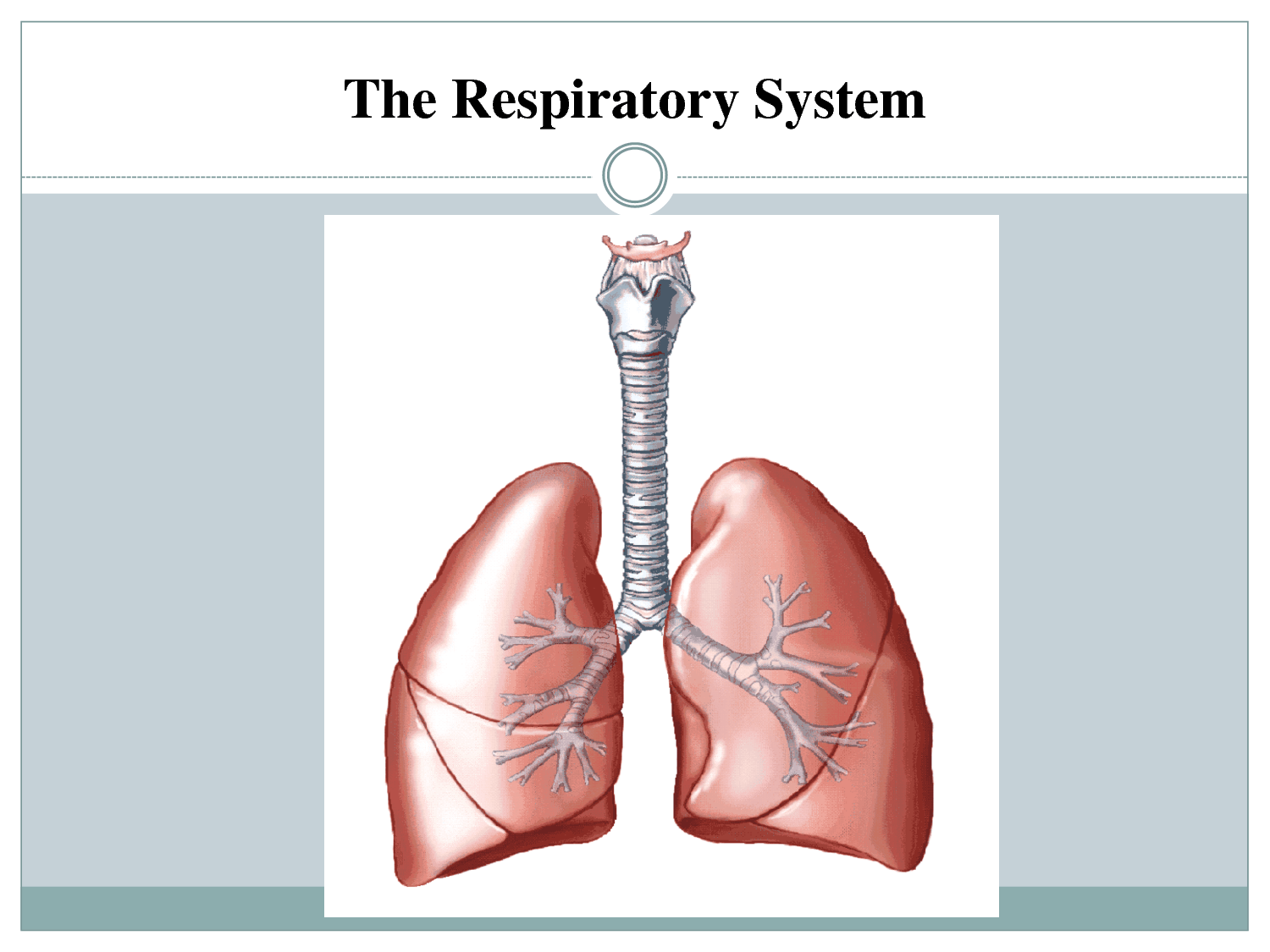

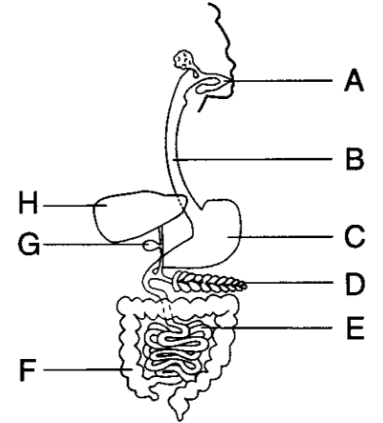
What is A pointing to?
trachea
diaphragm
bronchi
nasal cavity
What is B pointing to?
trachea
diaphragm
pharynx
nasal cavity
What is C pointing to?
trachea
diaphragm
pharynx
nasal cavity
What is D pointing to?
trachea
bronchi
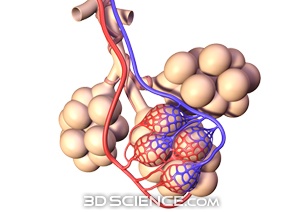
alveoli
nasal cavity
What is E pointing to?
trachea
bronchi
alveoli
bronchioles
What is F pointing to?
trachea
bronchi
alveoli
bronchioles
What is G pointing to?
trachea
diaphragm
pharynx
nasal cavity

In diagram A, the diaphragm is contracted. The volume of the rib cage will ___ & the pressure will ___causing you to ___ .
increase, decrease, inhale
decrease, increase, inahle
increase, decrease, exhale
decrease, increase, exhale
In diagram B, the diaphragm is relaxed. The volume of the rib cage will ___ & the pressure will ___causing you to ___ .
increase, decrease, inhale
decrease, increase, inahle
increase, decrease, exhale
decrease, increase, exhale
What does your nasal cavity do to the air as it goes to the lungs?
warms
moistens
filters
expands

Oxygen is in ___ concentration in the alveoli & ___ concentration in the blood capillary. This causes oxygen to move by ___.
low, high, active transport
high, low, osmosis
high, low, diffusion
Carbon dioxide is in high concentration in the _____ & low concentration in the ____. This causes carbon dioxide to move by ___.
alveoli, capillary, active transport
capillary, alveoli, osmosis
capillary, alveoli, diffusion
Put the steps to transporting Oxygen from the air to your body cells in order.
Start with the Trachea
Trachea
Bronchi
Alveoli (Air Sacs)
Blood
Cells
What happens to carbon dioxide during exhalation?
It is transported throughout the body
It is unloaded into the lungs
It is expelled from the body
It is converted into oxygen
What is the function of red blood cells in the respiratory system?
Transporting oxygen
Producing red blood cells
Where does the vital exchange of gases occur in the lungs?
Bronchioles
Alveoli
Trachea
Bronchi

What happens to the diaphragm during inhalation?
Diaphragm contracts
Diaphragm relaxes
Which system is responsible for breathing?
Circulatory system
Digestive system
Respiratory system
Nervous system
What is the function of breathing?
Transporting oxygen to the body's cells
Clearing the system of carbon dioxide
Keeping the body alive
All of the above
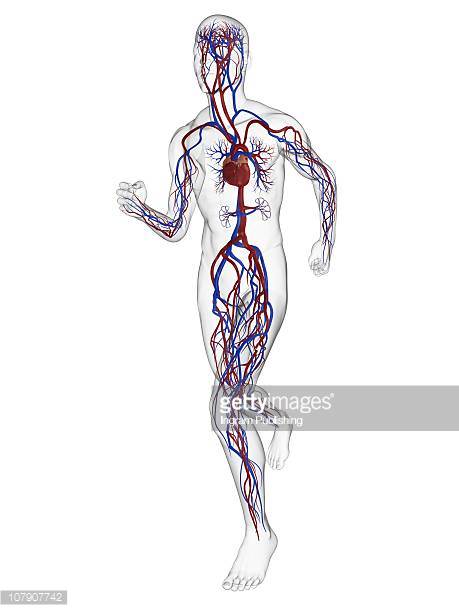
What is the main organ of the circulatory system?
small intestine
bone
lungs
heart
Arteries carry oxygen rich blood away from the heart.
True
False
Veins carry oxygen poor blood back to the heart.
False
True
The job of the heart is to . . .
pump blood around the body.
send food to the small intestines.
break down food.
give energy to the body.
The heart is about the size and shape of your . . .
head
fist
hand
foot
The FREQUENCY of heart contractions is...
heart rate
blood pressure
respiratory rate
voluntary muscle contraction

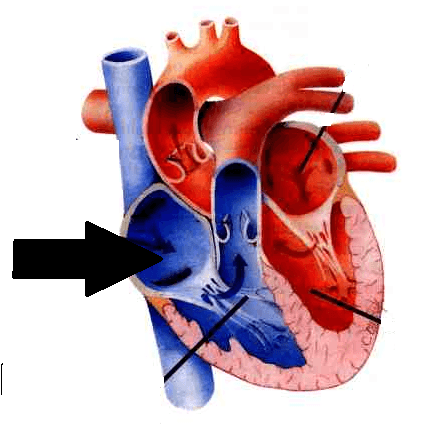
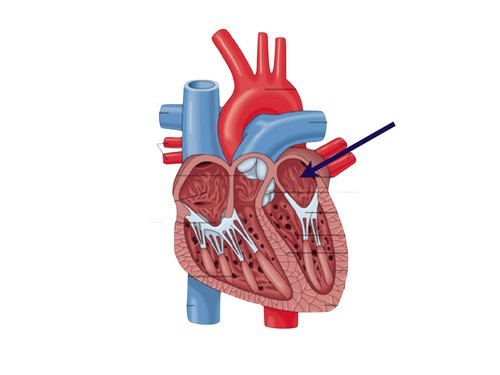
This chamber of the heart RECEIVES oxygen rich blood back from the lungs
Right Atrium
Left Atrium
Right Ventricle
Left Ventricle
This chamber of the heart pumps the blood from the heart to the lungs through the pulmonary artery
Right Atrium
Left Atrium
Right Ventricle
Left Ventricle
This chamber of the heart pumps the blood back out to the body cells through the Aorta
Right Atrium
Left Atrium
Right Ventricle
Left Ventricle
What is the main organ of the circulatory system?
small intestine
bone
lungs
heart
The job of the heart is to pump blood around the body.
pump blood around the body.
send food to the small intestines.
break down food.
give energy to the body.
The heart is about the size and shape of your . . .
head
fist
hand
foot
______________ are the smallest blood vessels.
Arteries
Veins
Capillaries
tubes
The circulatory system works with the ___________ system to provide our body with oxygen.
respiratory
digestive
muscular
skeletal
The main function of the circulatory system is
To give the body structure and support
Excrete waste
Transport blood, nutrients, and gases throughout the body
To transport messages from the body to the brain
The FREQUENCY of heart contractions is...
heart rate
blood pressure
respiratory rate
voluntary muscle contraction
The heart has ___ chambers.
1
2
3
4
What is the Circulatory System also known as?
The heart
Cardiovascular System
Nervous System
Aorta
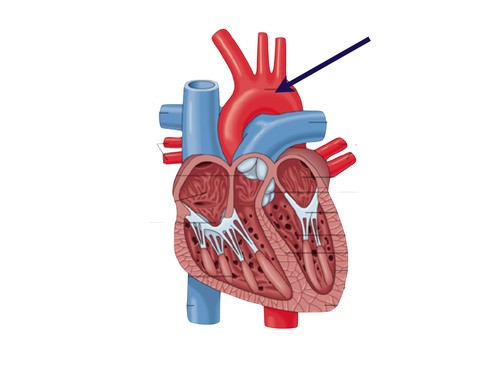
Identify
Left atrium
Right atrium
Left ventricle
Right ventricle
Identify
Pulmonary veins
Pulmonary artery
Aorta
Vena cava
Identify
Left atrium
Right atrium
Left ventricle
Right ventricle
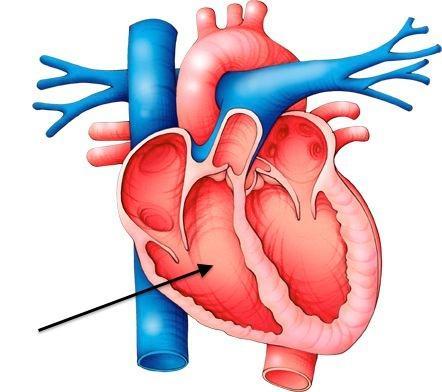
Identify
Left atrium
Right atrium
Left ventricle
Right ventricle
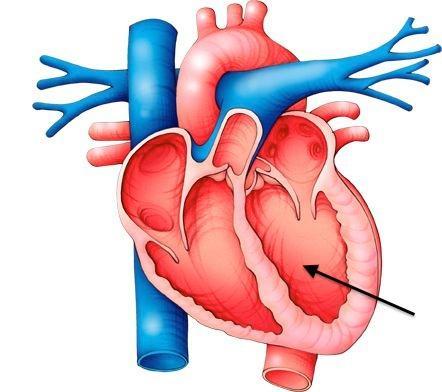
Identify
Left atrium
Right atrium
Left ventricle
Right ventricle
This chamber of the heart RECEIVES blood returning from the body
Right Atrium
Right Ventricle
Left Atrium
Left Ventricle
This chamber of the heart RECEIVES oxygen-rich blood back from the lungs
Right Atrium
Left Atrium
Right Ventricle
Left Ventricle
This chamber of the heart pumps the blood from the heart to the lungs through the pulmonary artery
Right Atrium
Left Atrium
Right Ventricle
Left Ventricle
This chamber of the heart pumps the blood back out to the body cells through the Aorta
Right Atrium
Left Atrium
Right Ventricle
Left Ventricle
The organ system that consists of the heart and blood vessels and that moves blood through the body.
circulatory system
endocrine system
digestive system
respiratory system

The function of the circulatory system is to? What is the main organ it includes?
Break down food. stomach
Help the body move. muscles
Send and receive messages. brain
Pump blood around the body. heart
What is the function of the valves in the heart?
To produce blood cells
To pump blood
To prevent the backflow of blood
To connect arteries and veins
How does exercise affect the circulatory system?
Decreases heart rate
Increases risk of heart diseases
Improves circulation and strengthens the heart
Has no effect on the circulatory system
How does the heart work?
It pumps blood first to the lungs, back to the heart and then around the rest of the body.
It pumps blood first to the rest of the body, back to the lungs and then to the heart.
It pumps blood around the rest of the body, back to the heart and then to the lungs,
Which of the following does the circulatory not consist of?
Heart
Lungs
Blood
Blood vessles
A _____ is a blood vessel that carries blood TO the heart:
blood vessel
artery
vein
capillary
What does the blood pick up from the body?
nutrients
carbon dioxide
nitrogen
energy
The two narrower tubes branching from the trachea that leads into the lungs
nose
bronchi
lungs
alveoli
The large muscle that contracts and relaxes and moves air in and out of the lungs.
epiglottis
alveoli
diaphragm
trachea

What is the name of structure 8?
nose
lung
mouth
trachea
What is the name of structure 4?
nose
lung
mouth
trachea
What is the name of structure 9?
bronchi
lung
mouth
trachea
What is the name of structure 10?
bronchi
lung
bronchiole
trachea
What is the name of structure 11?
bronchi
lung
alveoli
trachea
___________ carry blood away from heart; mostly oxygen-rich.
Arteries
Veins
Capillaries
Blood is made up of: (check all that apply)
Red Blood Cells
White Blood Cells
Platelets
Plasma
_______ carry blood back to the heart.
Arteries
Veins
Capillaries

Number 7 on the diagram represents the
left ventricle
left atria
right ventricle
aorta

Blood from which part of the body flows through # 1 on the diagram.
From the lungs
The lower part of the body
The upper part of the body
from the aorta

Where does the blood go after it leaves # 6?
to the right and left lungs
to the pulmonary valve
out to the body
to the left ventricle
Arteries carry blood...
to the heart
away from the lungs
to the lungs
away from the heart
The upper chambers of the heart are called...
ventricles
atria
valves
vena cava

Name # 9 on the diagram which is the vein that carries dexoygenated blood away from the heart
superior vena cava
aorta
pulmonary
inferior vena cava

Number 10 on the diagram represents the
aorta
pulmonary artery
pulmonary vein
inferior vena cava

Which valve is represented by #12 on the diagram?
aortic valve
mitral valve
tricuspid valve
pulmonary valve

Which number represents the tricuspid valve?
16
5
11
2

Number 3 on the diagram represents
right ventricle
left atrium
right atrium
left ventricle

The bottom chambers of the heart are called
arteries
atria
ventricles
valves
Absorption
The movement of molecules from the small intestine into the bloodstream.
The process of absorbing and using nutrients in the body.
Uses digestive juices and enzymes to break down food at the molecular level.
The removal of waste from the body as feces.
Chemical digestion
The movement of molecules from the small intestine into the bloodstream.
The process of absorbing and using nutrients in the body.
Uses digestive juices and enzymes to break down food at the molecular level.
The removal of waste from the body as feces.
Ingestion
Taking food into the mouth.
The physical breakdown of food into smaller pieces through chewing or churning in the stomach.
The chemicals which are found in food that the body needs for growth and repair of tissues.
smooth muscular movements which push the food along the digestive tract
Mechanical digestion
Taking food into the mouth.
The physical breakdown of food into smaller pieces through chewing or churning in the stomach.
The chemicals which are found in food that the body needs for growth and repair of tissues.
Smooth muscular movements which push the food along the digestive tract.
Peristalsis
Taking food into the mouth.
The physical breakdown of food into smaller pieces through chewing or churning in the stomach.
The chemicals which are found in food that the body needs for growth and repair of tissues.
Smooth muscular movements which push the food along the digestive tract.
Which organ is the primary site for nutrient absorption?
Stomach
Small intestine
Large intestine
Liver
Which structure in the digestive system is primarily involved in the reabsorption of water?
Small intestine
Stomach
Large intestine
Liver
What carries food from the pharynx to the stomach?
larynx
trachea
esophagus
bronchioles
Where does the process of digestion begin?
mouth
esophagus
stomach
small intestine
What enzyme is found in saliva that starts digesting carbohydrates?
amylase
chyme
pepsin
bile

What is organ R?
(a)

What is this organ?
The liver produces:
bile
ptyalin
hydrochloric acid

What is this organ?
What are the functions of the digestive system? Select ALL that apply:
What are the two types of Digestion?
Chemical digestion & Mechanical digestion
Mechanical digestion & Muscular Digestion
Chemical digestion & Muscular digestion
Dermal digestion & Muscular digestion

The tiny little structures that line the small intestine are called
Bronchi
Villi
Bile
Enzymes
lipase
digestive juices

What part of the digestive system is highlighted?
Esophagus
Appendix
Small Intestine
Stomach

What part of the digestive system is highlighted?
Small Intestine
Large intestine
Stomach
Liver
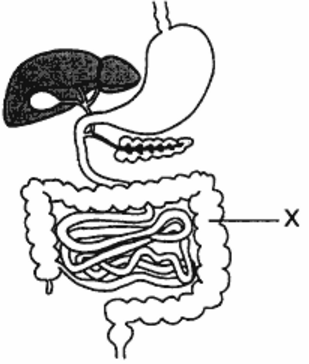

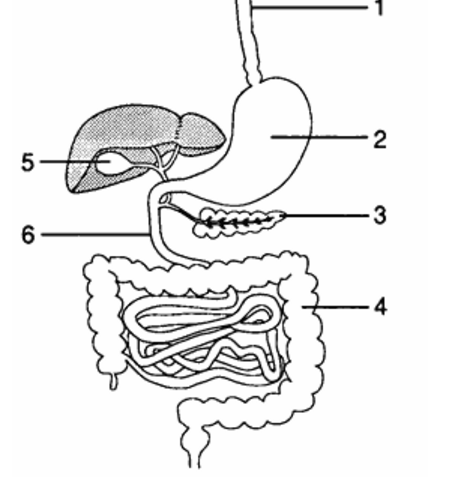
Reorder the following. Put these in order that food follows as it passes through the digestive system.
mouth
esophagus
stomach
small intestine
large intestine

The (a) sits just under the liver and stores bile.
The (a) is an organ that helps with the digestion of fats by producing a greenish liquid called bile.
The (a) is a ball of food that moves through the digestive system.
The (a) is a sac-like organ with strong muscular walls that holds food and secretes acid and powerful enzymes that continue the process of breaking down food.
What makes the small intestine have such a large surface area?
21 feet long
villi
microvilli
all answers contribute
What part of the digestive system mechanically and chemically breaks down food?
mouth
stomach
both the mouth and stomach
What chemically breaks down food into smaller molecules?
teeth
muscles of the stomach
enzymes
What is the main function of the salivary glands in the digestive system?
Absorb nutrients
Store bile
Begin digestion and lubricate food
Produce insulin
Amylase helps to speed up the breakdown of carbohydrates. Amylase would be an example of which group of important biological molecules?
lipids
enzymes
carbohydrates
hormones
Lipase is produced by the pancreas to help digest fat. Lipase breaks down the fats into fatty acids.
What role does the lipase play in this reaction?
substrate
enzyme
substrate-enzyme complex
product
What are the contents in your stomach called after mechanical and chemical digestion?
Bolus
Chyme
Food
Feces
Which enzyme digest proteins in the stomach?
amylase
pepsin
gastric lipase
tyrpsin

