
 Worksheets
ES 1 First Semester Review
Total questions: 140
Worksheet time: 1hrs 12mins
1. The type of rock formed from cooling Lava is:
Sedimentary rock
Igneous rock
Metamorphic rock
Limestone
Which type of rock is formed from the leftover pieces of organisms (like shell pieces) that are cemented together?
Igneous rock
Sedimentary rock
Metamorphic rock
Volcanic rock
The general term for an intrusion of magma into other rock layers that later cools into igneous rock is called:
Sill
Dyke
Batholith
Laccolith
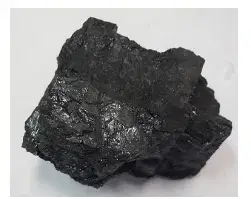
Bituminous Coal is an example of which type of rock?
Igneous rock
Sedimentary rock
Metamorphic rock
Volcanic rock
6. The type of rock formed from the smallest (silt sized) pieces of rock that are cemented together is:
Sandstone
Conglomerate
Shale
Limestone
Pumice is an example of which type of rock?
Sedimentary rock
Igneous rock
Metamorphic rock
Limestone
Which type of metamorphic rock would have Limestone as a parent rock?
Marble
Slate
Quartzite
Schist
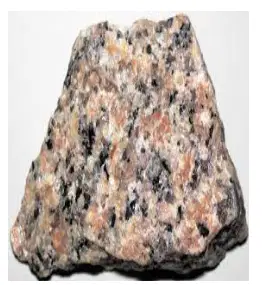
10. Based on the picture, what type of igneous rock do you think this would be?
Granite
Basalt
Obsidian
Pumice
The difference between Breccia and Conglomerate is:
Breccia has angular fragments, while Conglomerate has rounded fragments.
Breccia and Conglomerate both have rounded fragments.
Breccia is formed from volcanic activity, while Conglomerate is formed from sedimentary processes.
Breccia contains only organic material, while Conglomerate contains minerals.
12. The type of rock that has a high concentration of Iron and Magnesium, giving them a darker color, is:
Sedimentary rock
Igneous rock
Metamorphic rock
Basaltic rock
What type of rock is formed from other rocks that come into contact with heat from Magma?
Sedimentary rock
Igneous rock
Metamorphic rock
Volcanic rock
Part of an explosive eruption that hurls ash, gases, cinders, and bombs from the main vent. These then rush down the side of the volcano at high speeds.
Pyroclastic flow
Lava flow
Crater formation
Magma chamber
An opening in the volcano through which the lava flows is called:
Crater
Vent
Magma chamber
Caldera
This common type of volcano is made up of alternating layers of ash and lava.
Stratovolcano (or composite volcano)
Shield volcano
Cinder cone volcano
Lava dome
One of the defining features of a shield volcano is:
its broad, gently sloping sides
its steep, conical shape
its explosive eruptions
its formation from pyroclastic material
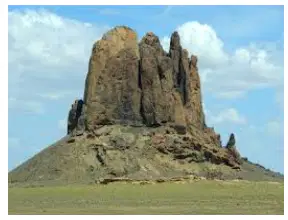
This formation is left over from an extinct volcano. The rock around the magma chamber has all eroded away leaving behind a igneous pluton shaped like the interior of the volcano. What do we call these?
Volcanic neck (or Volcanic plug)
Batholith
Laccolith
Sill
Which of the following is NOT a property of all minerals?
Naturally occurring
Inorganic
Solid
Organic origin
Liquid state
Which mineral has a Mohs hardness of 7?
Quartz
Calcite
Gypsum
Fluorite
Which mineral is known as 'Fools Gold'?
Pyrite
Quartz
Calcite
Galena
Which mineral can be scratched easily with a fingernail?
Alabaster Gypsum or Satin Spar Gypsum
Quartz
Feldspar
Calcite
Which mineral has a metallic luster and a black streak?
Magnetite or Graphite
Quartz
Calcite
Gypsum
Which mineral is the 'lead' in pencils?
Graphite
Quartz
Talc
Gypsum
If you have a mineral sample that is banded with different colors, which mineral is it most likely?
Quartz
Calcite
Halite
Gneiss
If you have purple minerals that looks a little glassy and can scratch glass, which mineral is it?
Quartz
Calcite
Gypsum
Fluorite
The hardest mineral in this sample is:
Diamond
Quartz
Calcite
Gypsum
If there is a sample that breaks into sheets, which mineral is it most likely?
Mica
Quartz
Calcite
Feldspar
Which mineral is white, can be scratched with a fingernail and bubbles with acid?
Calcite
Quartz
Gypsum
Halite
Quartz only has one color.
True
False
The most common minerals on earth are the ____________.
Silicates.
Oxides.
Sulfides.
Carbonates.
A fracture is:
a break in a bone
a clean break along a smooth, flat plane in a mineral
an irregular break in random patterns in a mineral
a joint dislocation
The least reliable property used to identify a mineral is:
Color
Hardness
Streak
Cleavage
When identifying minerals, ______ can be tested by scratching the surface with different materials such as your fingernail or a coin.
Hardness.
Color.
Luster.
Streak.
What do we call it when a mineral breaks in a way that does NOT produce a flat surface?
Cleavage
Fracture
Luster
Streak
The best way to distinguish muscovite and biotite mica is:
By their color, with muscovite being light-colored and biotite being dark-colored.
By their crystal shape, with muscovite forming cubes and biotite forming spheres.
By their reaction to acid, with muscovite fizzing and biotite remaining unchanged.
By their magnetic properties, with muscovite being magnetic and biotite non-magnetic.
At a convergent boundary between two pieces of continental crust, which geologic feature/event would you most likely find?
Mountain range formation
Mid-ocean ridge
Volcanic island arc
Oceanic trench
A Plate Boundary where two plates move toward each other is called a ____________.
Convergent boundary.
Divergent boundary.
Transform boundary.
Passive boundary.
When volcanoes erupt in Hawaii, they sometimes include foreign rocks called Xenoliths. These Xenoliths are much older than the basalt they are found in. Scientists use which “principle” to know that they are older?
Principle of Inclusions
Principle of Superposition
Principle of Original Horizontality
Principle of Cross-Cutting Relationships

The ERA dominated by Dinosaurs was:
Cenozoic
Mesozoic
Paleozoic
Precambrian

Which PERIOD is closest to today?
Cenozoic
Mesozoic
Paleozoic
Precambrian
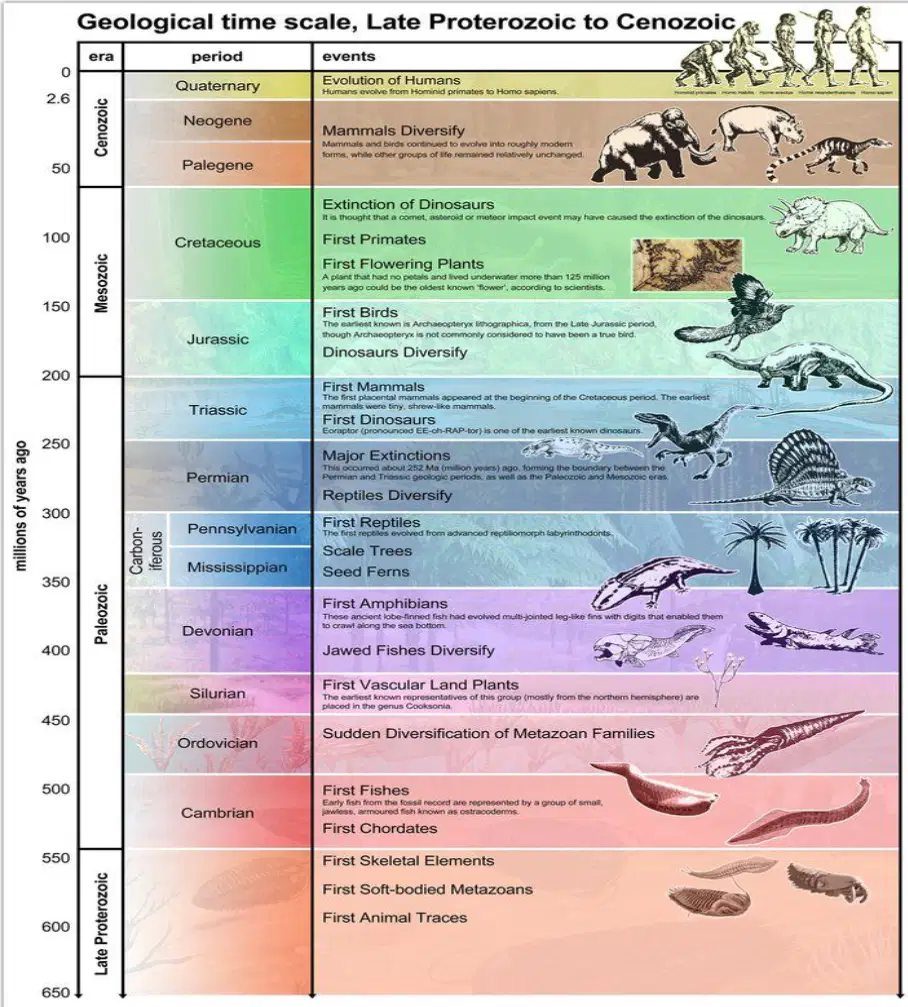
The current ERA began how many million years ago?
66 million years ago
145 million years ago
252 million years ago
23 million years ago

During which ERA did we see mammals rise to prominence?
Mesozoic Era
Cenozoic Era
Paleozoic Era
Precambrian Era
In a closed system, the only thing that can enter or leave is what?
Energy
Matter
Light
Sound
Several ways that Carbon (C) enters our atmosphere include:
Burning fossil fuels, respiration, volcanic eruptions, and deforestation.
Photosynthesis, precipitation, and condensation.
Absorption by oceans, formation of rocks, and plant growth.
Evaporation, melting ice, and mineral deposition.
A canyon that is formed when rocky ground is eroded by a river is an example of an interaction between what two spheres of earth?
Hydrosphere and Geosphere
Atmosphere and Biosphere
Biosphere and Geosphere
Atmosphere and Hydrosphere
What would happen to the climate if Earth took in more energy than it released?
The climate would get warmer.
The climate would get colder.
The climate would stay the same.
The climate would become more humid.
What is the primary source of energy on the Earth?
The Sun
The Moon
Wind
Coal
Which sphere are you a part of?
Biosphere
Hydrosphere
Atmosphere
Lithosphere
What do we call an orderly sequence of events that repeat themselves?
Cycle
Pattern
Chain
Series
The lava from a volcano destroying a nearby forest is an example of an interaction between which two spheres?
Geosphere and Biosphere
Atmosphere and Hydrosphere
Biosphere and Atmosphere
Hydrosphere and Geosphere
A beaker of water is heated over a laboratory burner. Is this an example of a closed system or an open system?
Open system
Closed system
Isolated system
Adiabatic system
A test tube containing plant material and water is sealed and left in sunlight. Is this an example of an Open or Closed system?
Closed system
Open system
Isolated system
Dynamic system
A representation of an object, process or phenomenon called?
Model
Theory
Experiment
Hypothesis
One reason that Earth is not an entirely closed system is:
energy from the Sun enters the Earth system
no matter ever leaves the Earth system
Earth does not interact with space
Earth receives no energy from outside sources
The Carbon (C) or Nitrogen (N) cycles are examples of what type of “cycle”?
Biogeochemical cycle
Physical cycle
Hydrological cycle
Atmospheric cycle
Which type of rock forms from the cooling and solidification of magma beneath the Earth's surface?
Extrusive igneous rock
Intrusive igneous rock
Sedimentary rock
Metamorphic rock
What is the main cause of earthquakes along transform plate boundaries?
Volcanic eruptions
Plates moving apart and creating new crust
Plates colliding and forming mountains
Plates sliding past each other
Which mineral is the softest on the Mohs hardness scale?
Gypsum
Quartz
Talc
Calcite
Which process is responsible for the formation of sedimentary rocks?
Melting and cooling of magma
Heat and pressure on existing rocks
Evaporation of seawater
Compaction and cementation of sediments
What is the main mineral component of granite?
Quartz
Calcite
Gypsum
Halite
Which type of plate boundary is most likely to produce earthquakes?
Transform plate boundary
Divergent plate boundary
Subduction zone
Convergent plate boundary
Which of the following processes is NOT involved in the formation of minerals?
Crystallization from magma
Precipitation from solution
Photosynthesis
Metamorphism
What is a mineral?
A liquid found naturally in the earth
A solid, natural substance where all the atoms are arranged in order
A synthetic compound
A type of plant

Which map shows a mountain?


Lines that show areas that have the same elevation
Aging Lines
Check Out Lines
Contour Lines
Waiting Lines
The distance between contour lines, representing the difference in elevation between points
Contour Grace
Contour Lines
Contour Discipline
Contour Interval
Close contour lines indicate
steep slope
gradual slope

Match the topographic map to its profile.


Convergent Plate Movement can create
Rifts
Ocean Ridges
Mountains
Radiation
Divergent Plate movement can create
Convection Currents
Mountains
Conduction
Ocean Ridges and Rift Valleys
Which is caused by a divergent boundary.
Rocky Mountains
Mariana Trench
Mid Atlantic ridge
Yellowstone
Which of the following is where one plate slides under another plate?
loading zone
divergence zone
subduction zone
lower zone
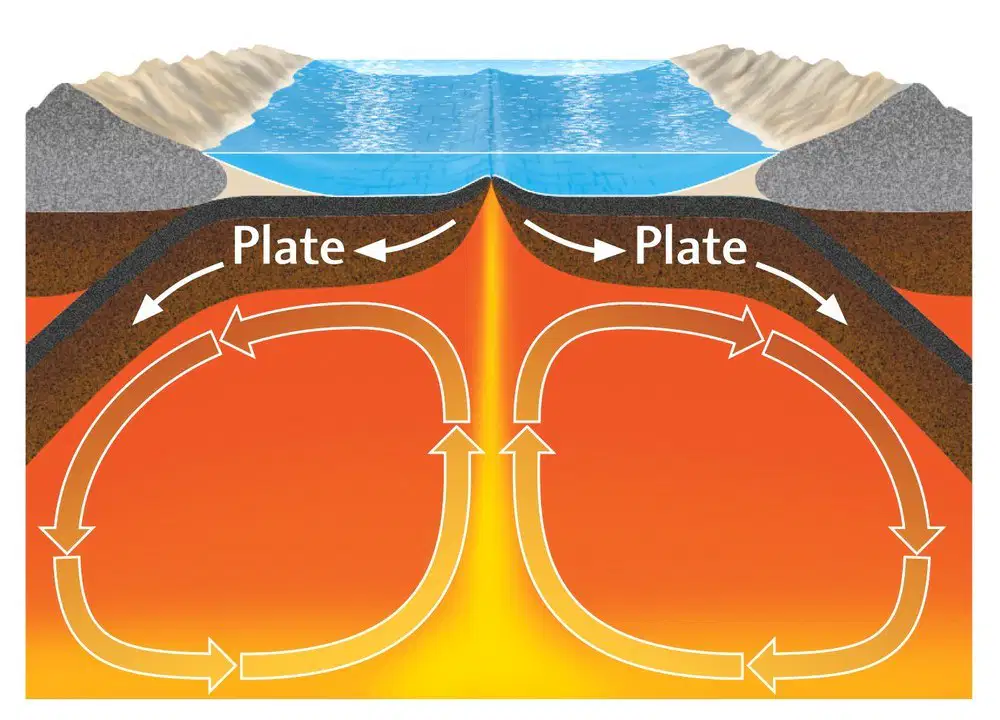
Most geologists think that the movement of Earth’s plates is caused by _______
convection.
continental drift.
subduction.
conduction.
The hypothesis that the continents have not always been in their present locations but have moved there over millions of years
Continental Drift
Relative Dating
Gravity
Lystrasaurus
In some areas of the world, like California and Japan, earthquakes are a common occurrence. How can this best be explained?
The strong ocean currents are undermining both areas causing earthquakes.
Both areas are located near the edge of the Pacific Ocean, the unstable sand causes earthquakes.
Both areas are subjected to strong ocean wind and waves that causes earthquakes.
Both areas are on the boundary of active plates, the motion of the plates causes earthquakes.
The area around the pacific plate where boundaries form is called...
danger zone
fire zone
ring of fire
zone of fire
The Himalayas in Asia are an example of what type of plate boundary?
divergent
continent-to-continent convergent
ocean-to-continent convergent
transform
What geologic feature/event would you most likely to find at a convergent boundary between two pieces of continental crust?
Volcano
Mountain
Rift
Island Arc
The most destructive type of Earthquake wave is a ___________.
P-wave
S-wave
Surface wave
transverse wave
Which is the fastest type of seismic wave?
p-waves
s-waves
Surface Waves
Tubular Waves
What is a large ocean wave that results from an underwater earthquake, landslide, or volcanic eruption?
Aftershock
Liquefaction
Seismic Gap
Tsunami
What is the temporary state in which loose soil and rock materials take on the property of quicksand?
Aftershock
Liquefaction
Seismic Gap
Tsunami
Earthquakes happen every day. Most are too small for humans to notice.
True
False
What is the minimum number of seismograph stations needed to locate an earthquake epicenter?
2
3
5
Only 1
Which of the following things was NOT a piece of evidence that Wegner had at his disposal when he suggested the concept of moving continents?
Matching Fossils
Matching Shorelines
Matching Mountain Ranges
Matching Magnetic Banding in the Seafloor
What was the major technological development that allowed for the theory of plate tectonics?
Hand drawn maps of coastlines
Sonar Mapping of the Seafloor
Volcano Mapping
Satellite images showing continents moving in herds
Why did the fact that there were fossils of plants and reptiles in Antarctica help support the idea of plate tectonics?
They proved it was more than just ice
Those organisms couldn't live there today meaning the climate must have been very different
Reptiles and plants can't migrate, so there is not way they could have just moved there in order to die
Because the volcanoes caused by plate tectonics are the only way that Antarctica could have been warm enough for those organisms
Which type of plate boundary is most likely to form a volcanic island chain?
Convergent (Oceanic - Oceanic)
Divergent
Transform Fault
Convergent (Continental - Continental)
What type of rock is formed from other rocks that come into contact with heat from Magma?
Intrusive Igneous
Extrusive Igneous
Regional Metamorphic
Contact Metamorphic
Mafic Rocks
Which type of rock is formed from large (gravel sized) pieces of rock that are cemented together?
Organic Sedimentary Rock
Clastic - Shale
Chemical Sedimentary Rock
Clastic - Conglomerate
Clastic - Sandstone
Which type of rock is formed from the smallest (silt sized) pieces of rock that are cemented together?
Clastic - Conglomerate
Clastic - Sandstone
Clastic - Shale
Organic Sedimentary Rock
Chemical Sedimentary Rock
Which type of rock is formed from the leftover pieces of organisms (like shell pieces) that are cemented together?
Clastic - Sandstone
Clastic - Shale
Organic Sedimentary Rock
Chemical Sedimentary Rock
Clastic - Conglomerate
Which type of rock has a high concentration of Silicates giving them a lighter color?
Gabbro Rocks
Mafic Rock
Felsic Rock
Feldspar
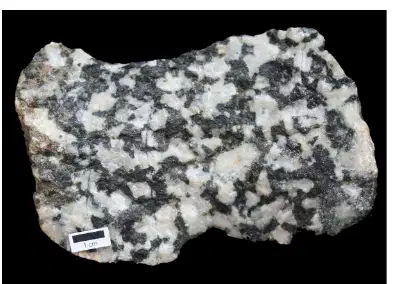
Based on the picture, what type of igneous rock do you think this would be?
Mafic
Clastic
Intrusive
Extrusive
Felsic
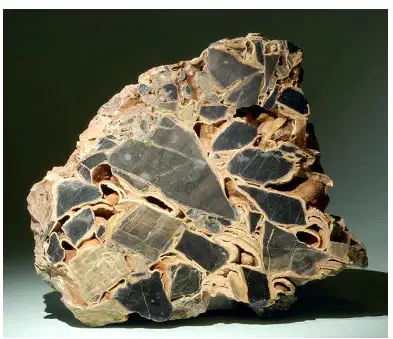
Based on the picture, what type of rock do you think this would be?
Felsic
Clastic
Extrusive
Mafic
Intrusive
What do we call an igneous intrusion that seeps between two layers of rock, forming a long flat pluton?
Batholith
Dike
Sill
Neck
Bituminous Coal is an example of which type of rock?
Organic Sedimentary
Intrusive Igneous
Regional Metamorphic
Extrusive Igneous
Clastic Sedimentary
Obsidian is an example of which type of rock?
Extrusive Igneous
Regional Metamorphic
Clastic Sedimentary
Intrusive Igneous
Organic Sedimentary
Which type of metamorphic rock would have Bituminous Coal as a parent rock?
Slate
Lignite Coal
Quartzite
Marble
Anthracite Coal
Which type of metamorphic rock would have Limestone as a parent rock?
Slate
Anthracite Coal
Lignite Coal
Marble
Quartzite
Which type of metamorphic rock would have Sandstone as a parent rock?
Lignite Coal
Slate
Gneiss
Quartzite
Marble
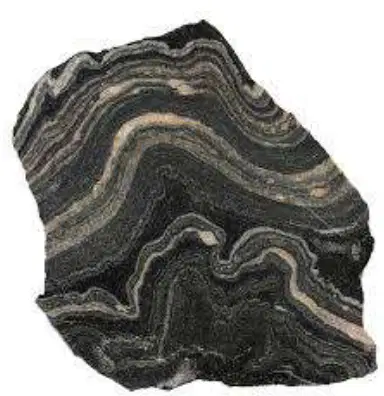
Has wavy bands.
sedimentary rock
extrusive igneous rock
metamorphic rock
intrusive igneous rock
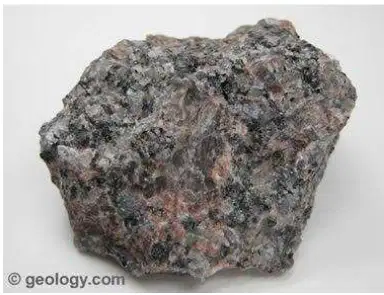
This rock was formed when magma cooled very slowly inside the Earth. What specific type of rock is it?
Extrusive Igneous Rock
Intrusive Igneous Rock
Clastic Sedimentary Rock
Foliated Metamorphic Rock
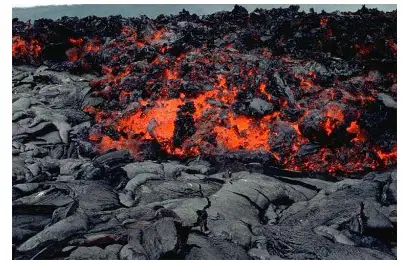
The more silica that magma contains...
the higher the viscosity
the runnier the magma
the thicker the magma
the thinner the magma
Shield volcanoes have:
a steep cone shape
gently sloping sides
moderately sized sides
long cracks along plate boundaries
Explosive eruption that hurls ash, gases, cinders, and bombs from the main vent.
Geyser
Geothermal energy
Volcano bomb
Pyroclastic flow
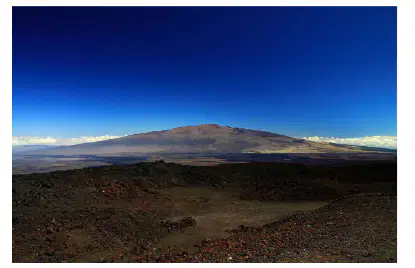
The Hawaiian islands are made from this type of volcano.
Composite
Cinder Cone
Big
Shield
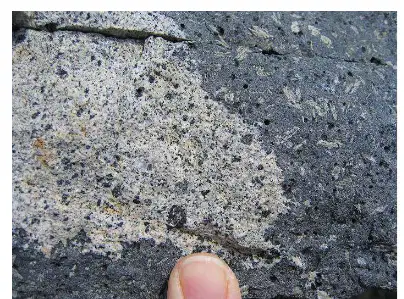
Felsic (light-colored) magma has a...
Low silica content
High silica content
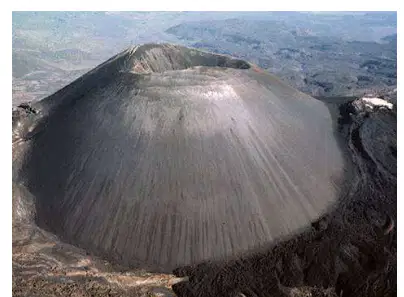
This type of volcano has explosive eruptions that result in massive amounts of tephra (ash).
Fissure volcano
Shield volcano
Composite / Stratovolcano
Cinder cone
Mafic (dark-colored) magma has a...
high silica content
low silica content
This common type of volcano is made up of alternating layers of ash and lava.
Composite / Stratovolcano
Shield volcano
Fissure volcano
Cinder cone
Which type of volcano has steep angled sides, throws blobs of lava in the air that fall as cinders, and is built over a short period of time?
Composite
Cinder Cone
Lava Dome
Shield
An active volcanic area on earth is found at ______.
All of the above
Converging Boundaries
Diverging Boundaries
Hot Spots
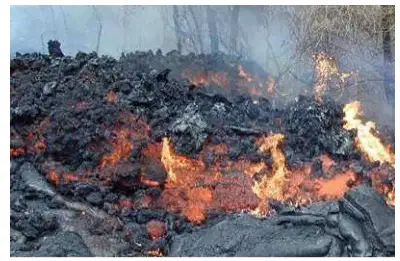
What type of lava is shown in the image of a glowing, rough, blocky flow advancing over dark rock?
Pahoehoe
'A'a
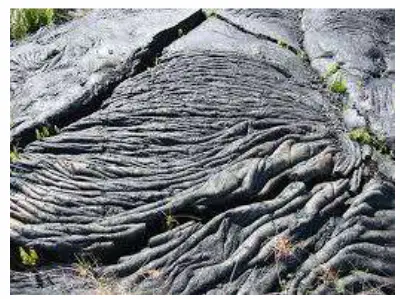
What type of lava is shown in the image of a smooth, ropy-textured solidified flow?
Pahoehoe
'A'a
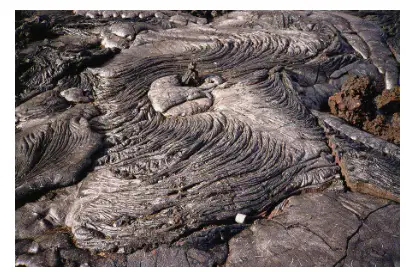
What type of lava is shown in the image of a gray, rippled, ropey lava surface with swirling patterns?
'A'a
Pahoehoe
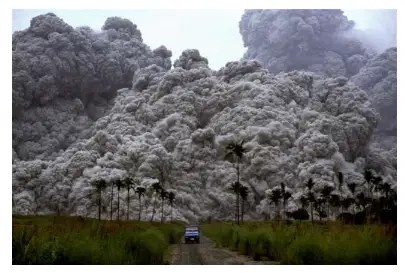
This image is showing a car downhill from an erupting volcano. What danger is most likely to affect this car?
A lava flow
A mudflow
A pyroclastic flow
A soft, "refreshing" puff of air
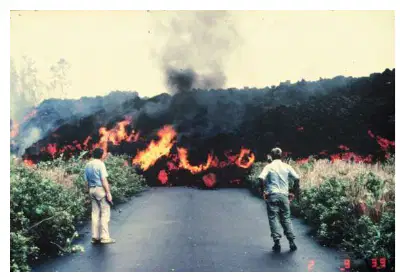
This is an image of two scientists observing a(n) ____.
Ash fall
Lava flow
Mudflow
Pyroclastic flow
The property of a mineral splitting evenly along a flat surface is
Luster
Streak
Cleavage
Fracture
The property of a mineral splitting unevenly is
Luster
Streak
Cleavage
Fracture
A physical property that is easy to observe is
Luster
Color
Hardness
Density
The color of the powder left behind by a mineral.
Streak
Cleavage
Color
Luster
A measure of how easily a mineral can be scratched.
Structure
Texture
Luster
Hardness
Streak
Which of the following is NOT a way to identify a mineral?
Streak
Density
Luster
Crumble
If a mineral can SCRATCH another one, it is:
harder than the mineral
weaker than the mineral
the same mineral
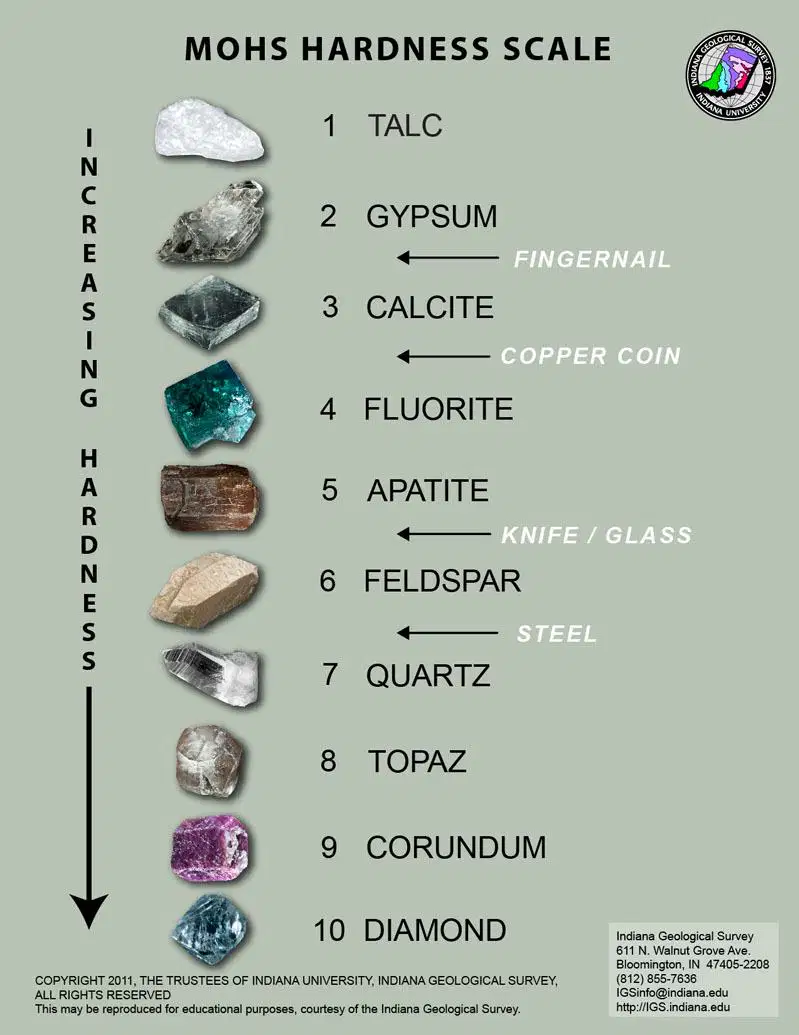
Calcite can scratch:
Apatite
Fluorite
Talc
What type of property test is a mineralogist conducting when she rubs a mineral over a mirror, tile, or hard surface?
Streak Test
Luster Test
Appearance Test
Cracking Test
What is a crystal?
A pure material that can’t be changed.
Material with a regular, repeating arrangement of atoms.
A foggy like material.
What is the mineral name for table salt?
Gypsum
Calcite
Halite
Dolomite
Only eight elements make up the vast majority of rock-forming minerals. Which of the following elements is not one of the eight?
Oxygen
Iron
Hydrogen
Potassium
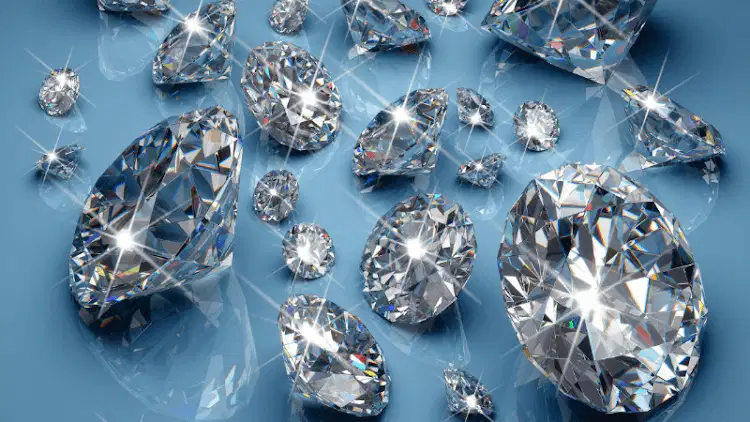
Which property do you see in the picture?
Luster
Hardness
Streak
What do we call minerals that are made of only one element (like gold or diamond)?
Trace Elements
Igneous Rocks
Native Elements
Original Matter
Why is anthracite coal not considered a mineral?
Because it doesn't have a consistent chemical formula
Because it isn't a solid
Because it is organic
Because it isn't naturally occurring
Why is a lab-created diamond not considered a mineral?
Because it doesn't have a consistent chemical formula
Because it isn't a solid
Because it isn't inorganic
Because it isn't naturally occurring
Why isn't oil considered a mineral?
Because it doesn't have a consistent chemical formula
Because it isn't a crystalline solid
It is a mineral
Because it isn't naturally occurring
Why isn't granite considered a mineral?
Because it doesn't have a consistent chemical formula
Because it isn't a solid
It is a mineral
Because it isn't naturally occurring

If there is a mineral that will scratch a penny, but not glass, which element could it be?
Calcite
Fluorite
Talc
Quartz
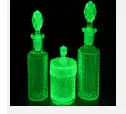
This glow is an indicator of which special property?
Magnetism
Fluorescence
Double Refraction
Transparency

What do we call this type of crystal shape?
Monoclinic
Hexagonal
Cubic
Conchoidal Cleavage

Pyrite, Galena and Copper are examples of minerals that have ______________________ luster.
Metallic
Adamantine
Pearly
Earthy

