wayground logo

Free Printable Worksheets

Font size

S
M
L
XL
Worksheets

Quarter 2 Extra Credit Honors Chemistry

Total questions: 135

Worksheet time: 3hrs 9mins

Name
Class
Date
1.
1.  What is the shape of an s orbital?
a)
sphere
b)
dumbbell
c)
double dumbbell
d)
TOO COMPLEX TO KNOW IT.
2.

How many electrons can each p orbital hold?

a)

6

b)

3

c)

2

d)

4

3.

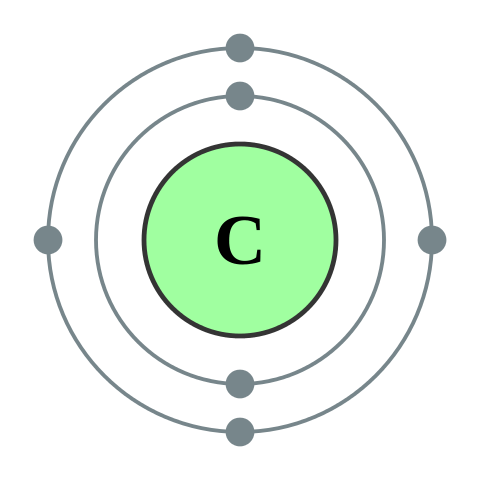
This orbital diagram represents which element?

a)

C

b)

B

c)

N

d)

O

4.

Electrons fill energy levels and sublevels of _____ energy first.

a)

lower

b)

higher

5.

What is the correct Noble Gas shorthand electron configuration for phosphorus atom?

a)

[Ar] 4s2

b)

[He]2s22p4

c)

[Ne] 3s23p4

d)

[Ne] 3s23p3

6.

How many orbitals does an s sublevel have?

a)

1

b)

3

c)

5

d)

7

7.
What atom matches this electron configuration?
1s2s2p3s2
a)
Neon
b)
Magnesium
c)
Aluminum
d)
Potassium
8.
Which orbital shows a violation of Hund's Rule?
a)
A
b)
B
c)
C
d)
D
9.

What element's orbital notation is pictured here?

a)

Ar

b)

Br

c)

Cu

d)

Cl

10.

Who proposed that electrons are only found in specific, discrete circular orbits around the nucleus?

a)

Albert Einstein

b)

Erwin Schrodinger

c)

Ernest Rutherford

d)

Niels Bohr

11.

What is the difference in a 1s orbital and a 2s orbital?

a)

The shape of the orbital

b)

The size of the orbital

c)

The number of electrons it can hold

d)

None of the above

12.

When atoms _____________ energy, their electrons move to higher energy levels. These electrons _____________ energy by emitting light when they return to lower energy levels.

a)

lose, absorb

b)

absorb, lose

c)

lose, lose

d)

absorb, absorb

13.

One of the key understandings of quantum theory is that atoms emit energy in

a)

random amounts.

b)

specific amounts.

c)

only the gamma range of the electromagnetic spectrum.

d)

only the microwave range of the electromagnetic spectrum.

14.
Which sublevel has the highest energy?
a)
3s
b)
3d
c)
3p
15.

Scientists modified the Bohr model of the atom. The new idea involved orbitals which are

a)

two dimensional pathways.

b)

actual "strings" on which the electrons travel like beads on a necklace.

c)

regions of probability where electrons are most likely to be found.

d)

a cell-like structure that contains the electrons.

16.
Which main energy level is furthest from the nucleus ?
a)
1
b)
2
c)
3
17.
The electron configuration of an atom is 1s22s22p6.  The number of electrons in the atom is 
a)
3
b)
6
c)
8
d)
10
18.

Which electron configuration belongs to Chlorine (Cl)?

a)

1s2 2s2 2p6 3s2 3p5

b)

1s2 2s2 2p5

c)

1s2 2s2 3p5

19.

Each row on the periodic table represents:

a)

an energy level

b)

a sublevel

c)

an electron

d)

an orbital

20.
What is the electron configuration for this atom?
a)
1s22s22p6
b)
1s22s22p5
c)
1s22s22p3
d)
2s22p3
21.

What is incorrect about this orbital diagram?

a)

Both arrows in the 2p box should be pointing up

b)

There is nothing incorrect with this diagram

c)

In the 2p box there should only be 1 electron in the first 2p box and one in the 2nd 2p box pointing in the same direction.

d)

All the arrows should be pointing up.

22.
Which of the following elements is a noble gas?
a)
1s2 2s2
b)
1s2 2s2 2p5
c)
1s2 2s2 2p6 3s2 3p6
d)
1s2 2s2 2p6 3s1
23.

Which principal energy level change by the electron of a

hydrogen atom will cause the greatest amount of energy to be absorbed?

a)

n = 2 to n = 4

b)

n = 2 to n = 5

c)

n = 4 to n = 2

d)

n = 5 to n = 2

24.

Which occurs if an electron transitions from n = 5 to

n = 2 in a hydrogen atom?

a)

Energy is absorbed, and visible light is emitted.

b)

Energy is released, and visible light is emitted.

c)

Energy is released, and visible light is not emitted.

d)

Energy is absorbed, and visible light is not emitted.

25.

Flame tests can be used to identify an element. Each element emits characteristic waves of light when it is heated in a flame. What describes how the light is produced?

a)

Protons in the ground state lose energy and give off light.

b)

Protons in the ground state gain energy and are emitted from the nucleus, giving off light.

c)

Electrons in the ground state lose energy and move to an excited state, giving off light.

d)

Electrons in the ground state gain energy, move to an excited state, and give off light when they return to the ground state.

26.

Which energy level change by an electron of a

an atom will have the greatest amount of energy emitted?

a)

n = 2 to n = 4

b)

n = 2 to n = 5

c)

n = 4 to n = 2

d)

n = 5 to n = 2

27.

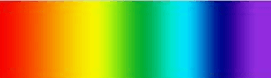
What color has the shortest wavelength, highest frequency, and highest energy?

a)

yellow

b)

blue

c)

red

d)

violet

28.

Emitted light will be due to electrons

a)

moving toward nucleus

b)

moving away from nucleus

c)

not moving

29.

Absorbed light will cause electrons to

a)

move toward nucleus

b)

move away from nucleus

c)

not move

30.

A. electron transition from n=3 to n=2

B. electron transition from n=5 to n=1

Which electron transition (A or B) will have low energy light emitted?

a)

A

b)

B

c)

They both will not have any light emitted.

d)

They both will have the same type of energy emitted.

31.

This shape is that of a...

a)

s orbital

b)

d orbital

c)

p orbital

d)

f orbital

32.

Write a set of quantum numbers for a 4d orbital.

a)

(4,1,0, -1/2)

b)

(4,2,-2, +1/2)

c)

(4,0,2,-1/2)

33.

A beam of light has a wavelength of 600 nm in air. What is the frequency of the light (c = 3x10⁸ m/s)?

a)

5 x 10¹⁴ Hz

b)

2 x 10¹⁴ Hz

c)

3 x 10¹⁴ Hz

d)

6 x 10¹⁴ Hz

34.

The frequency of light is 7.14 x 10¹⁴ Hz. What is the energy?

a)

4.73 x 10⁻¹⁹ J

b)

1.20 x 10-48 J

c)

1.13 x 10⁻¹⁷ J

d)

4.97 x 10-49 J

35.

Which wave has a greater frequency?

a)

A

b)

B

36.
Why were there blank spaces left in Mendeleev's periodic table?                                              
a)
He didn't know what to put there.
b)
 Undiscovered elements not yet known.
c)
Multiple elements could have fit
d)
He forgot to add the elements in.
37.
What was Dmitri Mendeleev's greatest contribution to the history of the periodic table?
a)
He arranged all of the known elements by their atomic number
b)
He realised that there was a pattern of reactivity which repeated every 8 elements
c)
He predicted the existence (and properties) of new elements
d)
He identified the "law of triads" which became the groups
38.

How many valence electrons does carbon have?

a)

4

b)

5

c)

6

d)

7

39.
This is a correct dot diagram for nitrogen (N)
a)
true
b)
false
40.
a)
12
b)
7
c)
8
d)
14
41.
This is a correct dot diagram for oxygen (O)
a)
true
b)
false
42.
The elements in Group 16 will have how many dots in their Lewis symbol?
a)
6
b)
16
c)
2
d)
4
43.
The Lewis dot symbol for the noble gases will contain 8 dots except:
a)
He
b)
Ne
c)
Ar
d)
Rn
44.
Which atom has the largest atomic radius?
a)
potassium
b)
rubidium 
c)
francium
d)
cesium
45.
Which element has 2 valence electrons? 
a)
cesium (Cs) 
b)
magnesium (Mg)
c)
boron (B)
d)
argon (Ar) 
46.
What is the family name of this group of elements? 
a)
Alkali metals 
b)
Halogens 
c)
Noble Gases 
d)
Alkali Earth Metals 
47.
According to the Periodic Table of the Elements, which set of elements has similar properties?
a)
H, C, I
b)
He, H, Al
c)
He, Ne, Ar
d)
Na, Ca, Al
48.
The number of valence electrons in an element affects the reactivity of that element. Which element listed has the fewest valence electrons?
a)
beryllium (Be)
b)
sodium (Na) 
c)
oxygen (O) 
d)
neon (Ne)
49.
Based on their locations in the periodic table, which element has chemical properties most similar to those of calcium, Ca?
a)
beryllium, Be
b)
potassium, K
c)
titanium, Ti
d)
yttrium, Y
50.
Fluorine, chlorine, bromine, and iodine all have the same number of valence electrons and have a tendency to gain electrons. Which element has the greatest ionization energy and electronegativity?
a)
fluorine
b)
chlorine 
c)
bromine 
d)
iodine 
51.
The Periodic Table of the Elements is useful for revealing patterns and trends in the elements. Which statement accurately describes a pattern in the size of atomic radii in the Periodic Table of the Elements?
a)
Atomic radii decrease from left to right across a period and decrease from top to bottom in a group.
b)
Atomic radii increase from left to right across a period and increase from top to bottom in a group.
c)
Atomic radii decrease from left to right across a period and increase from top to bottom in a group.
d)
Atomic radii increase from left to right across a period and decrease from top to bottom in a group.
52.
Which of these elements has the greatest atomic radius? 
a)
H
b)
N
c)
Cl
d)
Cs
53.
List the two most reactive families on the periodic table.
a)
Alkali metals & Transition Metals
b)
Noble gases & Oxygen Family
c)
Halogens & Alkali metals
d)
Halogens & Noble gases
54.
How many energy levels does an atom of Chlorine have?
a)
2
b)
3
c)
4
d)
7
55.

To which group does this atom belong?

a)

1

b)

3

c)

13

d)

11

56.
Is this a metal, nonmetal or metalloid?
a)
Metal
b)
Nonmetal
c)
Metalloid
57.
Which elements are in the same period?
a)
A & F
b)
F, B & D
c)
E & D
d)
F & B
58.
Which of the following will have a lower ionization energy than Scandium (Sc)?
a)
Helium (He)
b)
Titanium (Ti)
c)
Calcium (Ca)
d)
Magnesium (Mg)
59.
Electronegativity is...
a)
the ability of an atom to attract/ accept electrons
b)
the ability of an atom to lose electrons
c)
the energy required to remove an electron from a specific atom
d)
how easy it is to make friends. 
60.
Francium (Fr) has the lowest ionization energy in Group 1 because - 
a)
it has the smallest number of valence electrons
b)
it has the greatest atomic mass
c)
it has the greatest number of protons, so it attracts its electrons the strongest
d)
its 1 valence electron is very far from the nucleus, so little energy is needed to remove it
61.
As you move down a group, atomic radius increases because - 
a)
you add more and more neutrons
b)
you add more and more protons
c)
you add more and more shells (energy levels)
d)
you add more atomic mass
62.

Which of the following elements is most likely a poor conductor of electricity?

a)

Beryllium (Be)

b)

Gold (Au)

c)

Phosphorus (P)

d)

Copper (Cu)

63.
The Modern Periodic Table of Elements is arranged by
a)
atomic mass
b)
atomic number
c)
valence electrons
d)
number of isotopes
64.
__________ would have some characteristics of metals and some characteristics of nonmetals.
a)
Gold
b)
Sodium
c)
Arsenic
d)
Bismuth
65.
Elements in a ..................have similar chemical properties.  
a)
period
b)
group
c)
row
66.

Which of the following is most reactive?

a)

Lithium

b)

Potassium

c)

Sodium

d)

Cesium

67.

An engineer is building a sun reflector which must withstand storms, large winds, and reflect sunlight well, what would suggest they use?

a)

Alkali metal

b)

Alkaline earth metal

c)

Transition metal

d)

Metalloid

e)

Lanthanide

68.
What is the formula for aluminum fluoride?
a)
AlF
b)
Al2F3
c)
AlF3
d)
Al3F2
69.
A chemical bond resulting from the electrostatic attraction between positive and negative ions is called a(n)
a)
covalent bond.
b)
ionic bond.
c)
charged bond.
d)
dipole bond.
70.
If I gain electrons I become
a)
Positive because I've added to my atom
b)
negative because I've added electrons
c)
same because i'm balanced
d)
equal because now I have electrons
71.
If my charge becomes 2+ what does that say about me?
a)
I am stealing 2 electrons
b)
I am losing 2 electrons
c)
I am in period 2
d)
I have an atomic # of 2
72.
Metals tend to 
a)
gain electrons
b)
lose electrons
73.
What is the correct formula for the compound, lithium oxide?
a)
LiO
b)
Li2O
c)
LiO2
d)
Li2O2
74.
The name for CrN:
a)
Chromium nitride
b)
Chromium (I) nitride
c)
Chromium (III) nitride
d)
Chromium nitride (III)
75.

The charge of Fe in Fe2O3:

a)

+2

b)

+3

c)

+1

d)

-2

76.

The charge of copper in Cu2S:

a)

+1

b)

+2

c)

-1

d)

-2

77.

The name of Cu₃N₂ is

a)

copper (III) nitride

b)

copper (II) nitride

c)

copper nitride

d)

tricopper dinitride

78.
How do the following two elements bond together?
Cr3+  O2-         
a)
CrO
b)
Cr3O2
c)
Cr2O3
d)
CrO3
79.
Name the following ionic compound: Cr(NO2)3
a)
chromium nitrite
b)
chromium nitride
c)
chromium III nitride
d)
chromium III nitrite
80.
Which of the following is NOT an ionic compound:
a)
CaO
b)
NaOH
c)
BaCl2
d)
Br2
81.
The chemical formula of iron (III)bromide is
a)
FeBr
b)
Fe(III)Br
c)
FeBr₃
d)
Fe₂Br₃
82.

crystalline structure of alternating positive and negative charges

a)

ionic

b)

covalent

c)

metallic

83.

CAN conduct electricity when dissolved in water

a)

ionic

b)

covalent

c)

metallic

84.

Have high melting & boiling points

a)

ionic

b)

covalent

c)

metallic

85.

Can NEVER conduct electricity

a)

ionic

b)

covalent

c)

metallic

86.

Why do metallic compounds conduct electricity as solids?

a)

core electrons are mobile, allowing electricity to flow through the metal

b)

valence electrons are mobile, allowing electricity to flow through the metal

c)

protons are mobile, allowing electricity to flow through the metal

d)

the metal cations are mobile, allowing electricity to flow through the metal

87.

Which of the following is a covalent compound?

a)

CaO

b)

NaCl

c)

CaCl2

d)

CH4

88.

Which particle is responsible for bonding?

a)

Protons

b)

Electrons

c)

Neutrons

d)

Nucleus

89.

Why do atoms form bonds?

a)

to attain a noble gas configuration

b)

to increase their mass

c)

to increase their atomic number

d)

to attain an alkali metal configuration

90.
Some are solids, some are liquids, and some are gases at room temperature.
a)
ionic compounds
b)
covalent compounds
91.

What is the formula for dihydrogen monoxide?

a)

HO

b)

HO2

c)

H2O

d)

OH

92.

When electrons are shared equally the compound is a what type of bond?

a)

Polar Covalent

b)

Polar Ionic

c)

Non-Polar Covalent

d)

None of the above

93.

When electrons are NOT shared equally it is a what type of bond?

a)

Polar Covalent

b)

Non-Polar Covalent

c)

Polar Ionic

d)

None of the above

94.

In the compound water, H2O, which element is the positive dipole?

a)

Hydrogen

b)

Oxygen

c)

Both

d)

Neither

95.

What makes up covalent compounds?

a)

Metal and a Non-Metal

b)

Two or more Non-Metals

c)

Two or more Metals

d)

Metals and Metalloids

96.

What is VSEPR?

a)

Electrons attract making bonds for compounds

b)

Electrons repel making the bonds easy to break

c)

Electrons attract giving compounds their shape

d)

Electrons repel each other which affects a compounds shape

97.

What is the shape of CF4?

a)

Linear

b)

Trigonal Planar

c)

Tetrahedral

d)

Trigonal Bipyramidal

98.

What is the shape of NF3?

a)

Bent

b)

Trigonal pyramidal

c)

Trigonal Planar

d)

Tetrahedral

99.

Is NF3 Polar or Non-Polar?

a)

Polar

b)

Non-Polar

c)

Both

d)

Neither

100.

What is the name of NF3?

a)

Mononitrogen Trifluoride

b)

Nitrogen Trifluoride

c)

Trinitrogen MonoFluoride

d)

Nitrogen Fluoride

101.

What is the formula for Decacarbon Hexafluoride?

a)

C6F10

b)

CF

c)

C10F7

d)

C10F6

102.

How many electrons make up a double bond?

a)

2

b)

4

c)

6

d)

1

103.

How many electrons make up a triple bond?

a)

2

b)

4

c)

6

d)

1

104.

All elements want 8 valence electrons EXCEPT who?

a)

Carbon only wants 2

b)

Oxygen only wants 2

c)

Hydrogen only wants 2

d)

Fluorine only wants 2

105.
The chemical formula shows one carbon atom bonded to __________ oxygen atoms.
a)
one
b)
two
c)
three
d)
four
106.
Give the formula for oxygen dichloride
a)
OCl2
b)

O2Cl2

c)
OCl
d)
O2Cl
107.
What is the proper name for S2O2?
a)
Sulfur oxide
b)
Sulfur dioxide
c)
sulfur (II) oxide
d)
disulfur dioxide
108.
Why do atoms share electrons?
a)
To attain the electron configuration of a noble gas.
b)
To become ions and take a charge
c)
to increase the mass
d)
it's a nice thing to do.
109.

Which of the following is NOT covalently bonded?

a)

K2S

b)

H2O

c)

I2

d)

CO2

110.

Name the compound: NO

a)

Mononitrogen monoxide

b)

nitrogen oxide

c)

nitrogen monoxide

d)

mononitrogen oxide

111.

In the compound N2O, what does the subscript 2 indicate?

a)

There are 2 sodium atoms for each atom of oxygen

b)

There are 2 nitrogen atoms for each atom of oxygen

c)

There are 2 oxygen atoms for each atom of nitrogen

d)

Nitrogen atoms are twice a large as oxygen

112.

Which pair of atoms is most likely to form a covalent molecule?

a)

Hydrogen and lithium

b)

Phosphorus and sulfur

c)

Helium and neon

d)

Zinc and Boron

113.
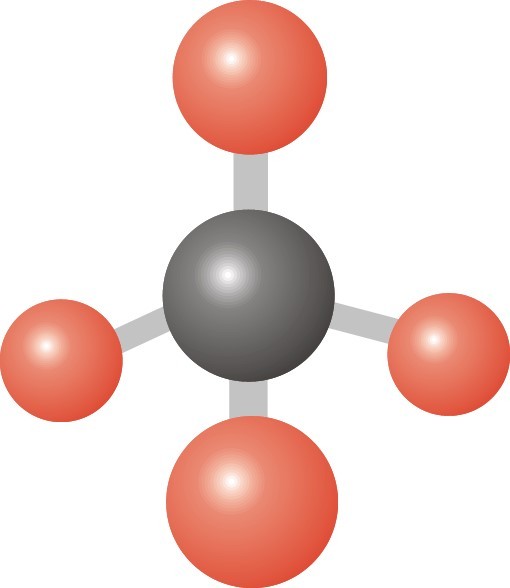
Who could this molecule be?
a)
CH4
b)
CO2
c)
PCl5
d)
BF3
114.
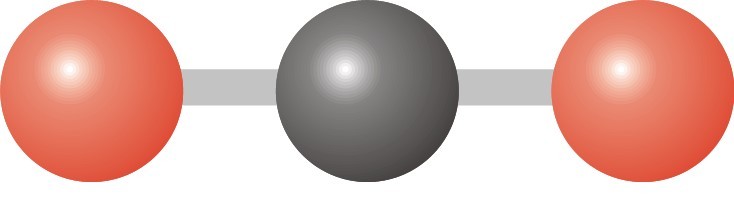
Which molecule would have this molecular geometry?
a)
BF3
b)
CH4
c)
PCl5
d)
CO2
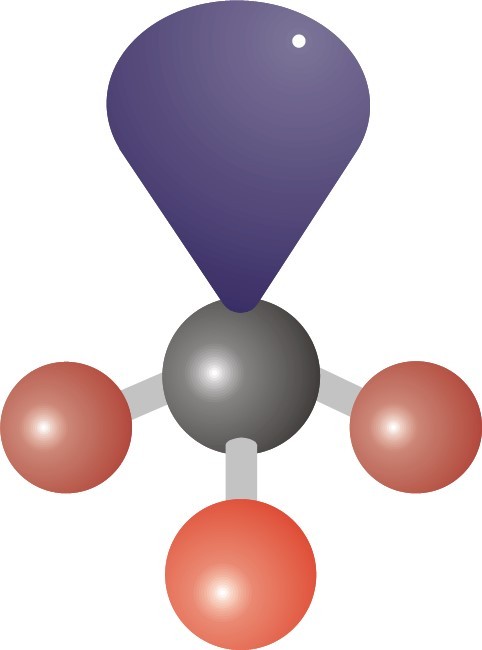
115.
Who could this be? 
a)
CO2
b)
NH3
c)
H2S
d)
CH4
116.

Who could this be?

a)

H2O

b)

NH3

c)

CO2

d)

SO3

117.
According to VSEPR, molecules adjust their shapes to keep which of the following as far away as possible?
a)
Pairs of valence electrons
b)
Inner shell electrons
c)
Mobile Electrons
d)
Electrons closest to the nucleus
118.

How many unshared pairs of electrons will a bent molecule have?

a)

0

b)

2

c)

3

d)

4

119.
In a polar bond, the more electronegative element will assume a partial ________ charge.
a)
positive
b)
negative
120.
Br & Br
a)
Ionic 
b)
Polar Covalent 
c)
Nonpolar Covalent 
121.
This is an example of a __________ bond.
a)
non-polar covalent
b)
polar covalent
c)
ionic
d)
metallic
122.

When you have Si-O, what is the polarity?

a)

nonpolar

b)

polar

c)

ionic

123.

When you have F-F, what is the polarity?

a)

nonpolar

b)

polar

c)

ionic

124.

When you have C-H, what is the polarity?

a)

nonpolar

b)

polar

c)

ionic

125.
A diatomic molecule like O2 is always_______ because electrons are shared ________.
a)
nonpolar; equally
b)
polar; equally
c)
nonpolar; unequally
d)
nonpolar; unequally
126.

Is this molecule polar or non-polar?

a)

Polar

b)

Non-polar

127.

Is this molecule polar or non-polar?

a)

Non-polar

b)

Polar

128.
What geometry will this molecular structure have?: PH3
a)
bent
b)
tetrahedral
c)
linear
d)
trigonal pyramidal
129.
What geometry will this molecular structure have?: CCl4
a)
bent
b)
tetrahedral
c)
linear
d)
trigonal pyramidal
130.
Will this molecule be polar or nonpolar? H2S
a)
polar
b)
nonpolar
131.

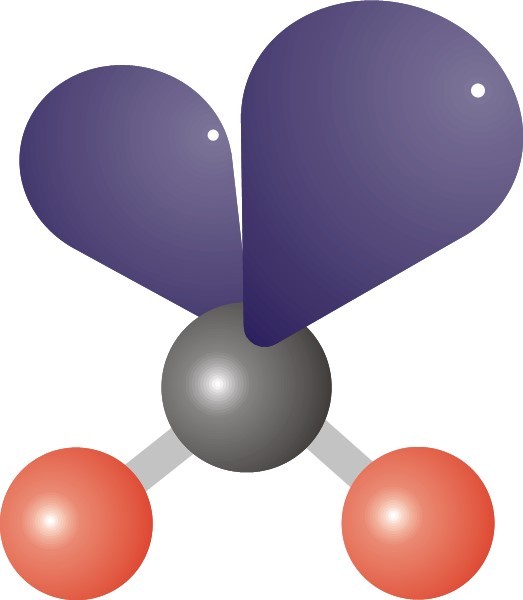
What is the molecular geometry for this molecule?

a)

Bent

b)

Trigonal pyramidal

c)

Trigonal planar

d)

Linear

132.
Choose the correct shape for this molecule:
a)
Bent
b)
Linear
c)
Tetrahedral
d)
Trigonal pyramidal
133.

HCN is a linear molecular geometry. What is the polarity of HCN molecule?

a)

Polar molecule

b)

Non-polar molecule

134.
Choose the correct shape for this molecule:
a)
linear
b)
Trigonal pyramidal
c)
Bent
d)
Tetrahedral
135.

Which Lewis Dot Model drawing correctly shows an O2 molecule?

a)
b)
c)
d)