
 Worksheets
AQA Paper 2 Practise Questions
Total questions: 141
Worksheet time: 2hrs 13mins
A contact force is from
objects physically touching
far apart objects
not touching object
always a pull
Friction is a
Contact Force
Myth
Non-contact Force
A non-contact force is between
two objects that aren't touching
two objects that are touching
the ground and wheels
you and me

Gravity is a
Contact Force
Myth
Non-contact Force
Air Resistance Force
Contact Force
Non-Contact Force

What is the resultant force?
400 N, Up
400 N, Down
800 N, Up
800 N, Down

What is the resultant force?
17 N, Left
6N, Right
11N , Left
12N, Left

How will this object move?
It will move to the left
It will accelerate to the right.
It will move to the right.
It will accelerate to the left

Calculate the resultant force acting on the truck.
15 N to the right
15 N to the left
35 N to the right
35 N to the left

Calculate the resultant force acting on the ball.
10 N to the left
10 N to the right
0 N
5 N to the right

Calculate the resultant force acting on the parachute.
19 N upwards
19 N downwards
5 N upwards
5 N downwards

Calculate the resultant force acting
on the parachute.
85 N upwards
85 N downwards
215 N upwards
215 N downwards
The unit of force is
ms-1
ms-2
Newton
kg
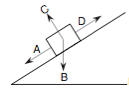
The diagram shows a box being pulled up the ramp. Which letter represents normal force?
A
B
C
D

The diagram shows a box being pulled up the ramp. Which letter represents applied force?
A
B
C
D

The diagram shows a box being pulled up the ramp. Which letter represents the weight?
A
B
c
d
The diagram shows a box being pulled up the ramp. Which letter represents the frictional force?
A
B
c
d
What is the definition of force?
Push
Pull
Push and pull
What is a contact force?
A force that involves objects physically touching
A force that involves objects being very close
A force that involves objects that are not physically touching
What is a non-contact force?
A force that involves objects physically touching
A force that involves objects being very close
A force that involves objects that are not physically touching
Which of the following is not a contact force
Magnetism
Friction
Air resistance
Tension
Which of the following is not non-contact force
Normal
Gravity
Magnetism
Electrostatic
What is a resultant force?
The sum of all forces acting on an object, taking direction into account.
The forward force added to the backwards force.
The backwards force subtracted from the forward force.
What is mass?
The amount of matter an object is made from.
The force of gravity acting on an object.
The strength of the force around an object with mass.
What is weight?
The amount of matter an object is made from.
The force of gravity acting on an object.
The strength of the force around an object with mass.
What is a gravitational field?
The amount of matter an object is made from.
The force of gravity acting on an object.
The area around an object where the force of gravity is experienced.
Which device is used to measure weight?
Scales
Balance
Newton meter
All of the answers are correct
What is the centre of mass?
The point where an object's mass acts.
The middle of an object.
What is work done?
When energy is transferred to move an object.
When a force is applied.
When there is a large momentum.
What is the unit of mass?
g
kg
N/kg
kg m/s
What is the unit for gravitational field strength?
N/kg
N
kN
N/kg/⁰C
What is the unit for work done?
J
N
N/kg
kg m/s
When tension acts on an object, what is elastic deformation?
The object will return to its original size and shape once the force is removed.
The object will not return to its original size and shape once the force is removed.
When tension acts on an object, what is inelastic deformation?
The object will return to its original size and shape once the force is removed.
The object will not return to its original size and shape once the force is removed.
How could we describe the relationship between force and extension for an object that shows elastic deformation?
Directly proportional
Inversely proportional
Positive correlation
No relationship
How could we describe the relationship between force and extension for an object that shows inelastic deformation?
Directly proportional
Inversely proportional
Positive correlation
No relationship
What is the limit of proportionality?
The length a spring can be stretched to before it becomes inelastically deformed.
The length a spring has been stretched to once it becomes inelastically deformed.
The most force a spring can hold.
What is the unit for spring constant?
N/m
Nm
N
m
What is the unit for extension?
m
cm
N
N/m
What is a normal contact force? Choose all correct answers
A force that acts at 90⁰
A force between an object and the surface it rests on
A force caused by objects falling due to gravity
A force caused by the movement of particles
State the equation which links gravitational field strength, mass and weight.
weight = mass x gravitational field strength
gravitational field strength = mass x weight
mass = gravitational field strength x weight
mass = gravitational field strength ÷ weight
Which equation links distance, force and work done?
work done = force x distance
work done = force ÷ distance
force = work done x distance
distance = force ÷ work done
Which equation links extension, force and spring constant?
force = spring constant x extension
force = spring constant ÷ extension
spring constant = force x extension
force = spring constant x extension2






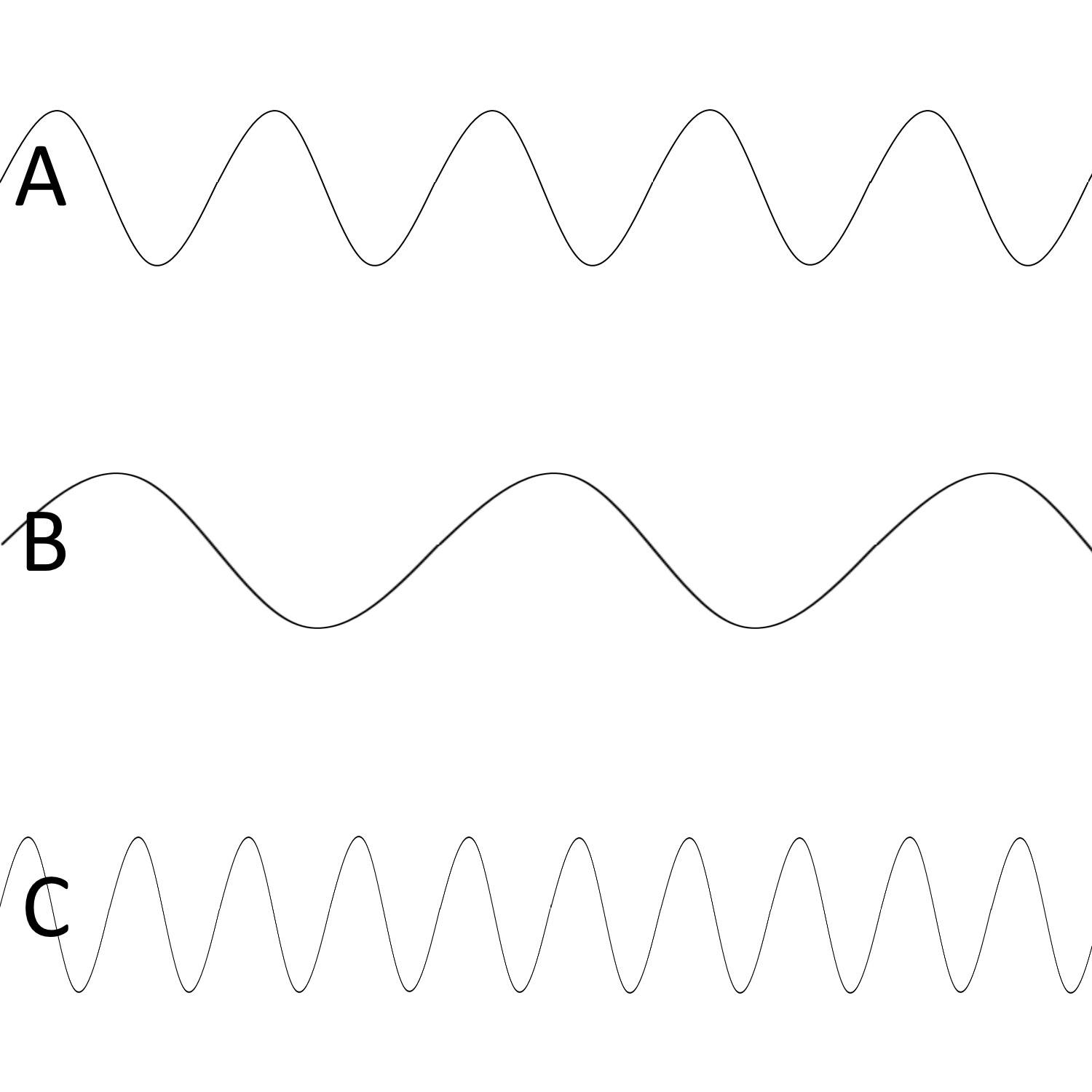
The number of wavelengths that pass a point each per second is:
frequency
period
longitudinal
transverse wave
Waves transfer
the medium in which they occur.
energy.
energy and matter.
disturbances.

What type of wave is this?
rarefaction
compressional
longitudinal
transverse

What type of wave is this?
compressional
transverse
longitudinal
surface
In what way does a longitudinal wave move?
parallel to the direction of the wave
back and forth
tangentially to the direction of the wave
perpendicular to the direction of the wave
In what way does a transverse way move?
parallel to the direction of the wave
tangentially to the direction of the wave
at an 180 degree angle
perpendicular to the direction of the wave
A vibration is
a physical environment in which waves occur.
a back and forth motion of an object.
a disturbance made by energy within a medium or space.
none of the above.

#1 refers to the
wavelength
amplitude
crest
trough
#2 refers to the
wavelength
amplitude
crest
trough
#3 refers to the
wavelength
amplitude
crest
trough
#4 refers to the
wavelength
amplitude
crest
trough


A student placed a pencil in a cup of water. The pencil appears broken because light
always travels in a straight line.
bends when it passes through water.
makes the water in the glass evaporate.
reflects the pencil on the water's surface.

What is the wave speed equation?
v= f/λ
v= λ - f
v=λ/f
v=λf

What is the wavelength of a wave with a speed of 25 m/s and a frequency of 50 Hz?
6250 m
.5 m
75 Hz
75 m

A wave has wavelength of 10 m and a speed of 340 m/s. What is the frequency of the wave?
34 m/s
3400 Hz
3400 m/s
34 Hz

What is the wavespeed if the frequency of the wave is 10 Hz and the wavelength is 2 m?
100 m/s
20 m/s
6.25 m/s
10000000000000000000000000
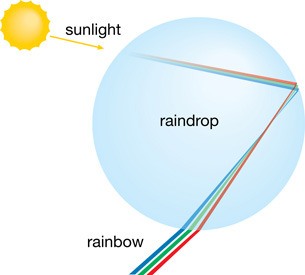

What happens to the speed of light as it enters water?
Speeds up
Slows down
When two like poles are brought together they...
Repel
Attract
Don't move
When a north pole and a south pole are placed near each other they...
Repel
Attract
Don't move
Which element is not magnetic?
Nickel
Aluminium
Cobalt
Iron
What is a permanent magnetic?
A magnetic that produces its own magnetic field
A magnet that turns on and off
a material that becomes a magnet when places in a magnetic field
An electromagnet
What is an induced magnet?
A magnetic that produces its own magnetic field
A magnet that turns on and off
A material that becomes a magnet when places in a magnetic field
An electromagnet
Where is the magnetic field the strongest?
At the North pole
At the South pole
The closer it is to the poles
The further it is from the poles
What is the region around a magnet where a force acts on another magnet or on a magnetic material?
(a)
Name a magnetic element
(a)
What can you use to plot a magnetic field?
Iron filings
Magnets
Paperclips
Compass
What is magnetic flux density measured in?
Metres
Voltage
Teslas
Amps
Magentic fields travel from...
North to South
South to North
What is produced when a current flows through a wire?
(a)
How can you make a electromagnetic stronger?
Increase the number of coils
Change the direction of the current
Switch around the magnets
Decrease the number of coils
How can you make an electric motor spin the opposite direction?
Increase the voltage
Increase the current
Change the number of coils
Switch the direction of the current
Using Fleming's left hand rule, the thumb represents the...
Force
Current
Magnetic field
Voltage
Using Fleming's left hand rule, the second finger represents the...
Force
Current
Magnetic field
Voltage
Using Fleming's left hand rule, the first finger represents the...
Force
Current
Magnetic field
Voltage

Which way will the wire move?
Left
Right
Towards you
Away from you

Left
Right
Up
Down
When a conductor carrying a current is placed in a magnetic field they will exert a force on each other. This is called the...
(a)
What does a step-up transformer do?
Increase voltage
Decreases voltage
Keeps the voltage the same
When there are more coils on the primary coil compared to secondary coil it is a...
Step-down transformer
Step-up transformer
Electromagnet
What material is the core of a transformer made of?
Magnesium
Wood
Aluminium
Iron
Electromagnets can be turned off
True
False
The magnetic flux is the the strength of the magnetic field
True
False
When drawing magnetic field lines, they should have…
arrows pointing south to north
arrows pointing in both directions
no arrows
arrows pointing north to south
When drawing magnetic field lines, they should have…
arrows pointing south to north
arrows pointing in both directions
no arrows
arrows pointing north to south
An unmagnetised iron nail is passed through a coil of wire attached to a sensitive ammeter.
What happens?
The nail is attracted
The nail is repelled
A current is induced
No current is induced
A magnetic field is acting away from you and a conductor moves upwards through this field.
If you use Fleming's right hand rule, what can you conclude?
No current will be induced
A current will be induced upwards
A current will be induced to the left
A current will be induced away from you

A current passes through this solenoid from the left to right end. How should the magnetic field arrows be drawn?
The magnetic field arrows should be drawn inward at both ends
The magnetic field arrows should be drawn outward at both ends
The magnetic field arrows should be drawn into the left end and out of the right end
The magnetic field arrows should be drawn into the right end and out of the left end
The region around a magnet where the effect of the magnet can be felt is called the…
magnetic pole
magnetic field
magnetic force
magnetic line
An iron nail that isn't initially magnetic is brought close to a magnet and becomes magnetised.
What is the nail now called?
A constant magnet
A permanent magnet
A temporary magnet
An induced magnet
Which piece of equipment would you NOT need to use in order to show how a current is induced?
A magnet
A battery
A wire
An ammeter
Which of the following describes what a relay switch can be used for?
To attract a hammer to hit a bell
To attract the switch terminals of a circuit to turn on something needing a larger current
To attract an iron bolt to pull it back
To attract an iron bar to activate an electronic counter
When you move towards a magnet, the magnetic field becomes…
stronger
more spread out
weaker
parallel
A magnet is moved past a straight wire and a current is induced.
Which of the following would increase the induced current?
Turning the magnet round
Moving the magnet past in the opposite direction
Making the wire into a coil
Moving the magnet more slowly
Which of the following would NOT make an electromagnet stronger?
Having the wire coils turn in both directions
Wrapping more turns of wire round the core
Using a soft iron core instead of air
Increasing the current through the wire
A magnet is passed through a coil of wire at a steady speed.
It is then passed back through the same coil of wire at the same speed but in the opposite direction.
Which of the following is true?
The current is now stronger, but in the same direction
The current is the same strength and in the same direction
The current is the same strength but in the opposite direction
The current is now stronger and in the opposite direction
The magnetic field around a solenoid is the same shape as the magnetic field…
between two north poles
between two south poles
between two opposite poles
surrounding a bar magnet
A coil of wire is connected to a sensitive voltmeter.
A magnet is pushed into the coil then left there.
What does the voltmeter needle do?
The needle does not respond
The needle flicks to the right then stays in that position
The needle flicks right then left
The needle flicks right then returns to zero when the magnet stops moving

Look at this solenoid. How would a permanent magnet stood underneath the solenoid be affected?
A permanent magnet stood under this solenoid with the south pole upwards would be attracted
A permanent magnet stood under this solenoid with the south pole upwards would be repelled
A permanent magnet stood under this solenoid with the north pole upwards would be repelled
A permanent magnet stood under this solenoid with the north pole upwards would be unaffected
How could you investigate the strength of an electromagnet?
See how many plastic beads it can hold
See how many steel paper clips it can hold
See how many copper nails it can hold
See how many brass tacks it can hold

What does this image show?
This image shows two opposite poles repelling
This image shows two opposite poles attracting
This image shows two like poles repelling
This image shows two like poles attracting
How are the two poles on a bar magnet named?
North and north
South and south
North and south
East and west
When a current passes through a straight length of wire, the magnetic field created is…
alongside the wire in the direction of the current
alongside the wire but in the opposite direction to the current
circular, along the length of the wire
radiating outwards from the wire in all directions
A magnet is dropped through a coil of wire.
Which of these suggestions will NOT affect the strength of current that is induced?
Drop the magnet through with the other pole pointing downwards
Drop a stronger magnet through the coil
Use a coil with more turns of wire
Lower the magnet through on a string instead of dropping it
Which of these devices does NOT use a solenoid?
A door bell
A relay switch
An electric door lock
An electric fan
An iron bar is made to be magnetic all the time.
What is the iron bar called?
A constant magnet
A permanent magnet
A temporary magnet
An induced magnet
Which of the following is NOT an advantage of an electromagnet?
Can be turned on and off easily
Can be made stronger or weaker easily
Poles can be reversed easily
Doesn't need a power supply
Electromagnetic induction causes a current to flow when…
currents cut through a field
a field experiences a force
a conductor cuts through magnetic field lines
a conductor aligns with magnetic field lines

