wayground logo

Free Printable Worksheets

Font size

S
M
L
XL
Worksheets

Biology EOC Review

Total questions: 142

Worksheet time: 2hrs 17mins

Name
Class
Date
1.
Name the photosynthesizing organelle of the plant cell.
a)
G
b)
B
c)
J
d)
C
2.
Name the process in the picture.
a)
transcription
b)
mitosis
c)
translation
d)
replication
3.
What process is occurring in the picture?
a)
DNA replication
b)
mitosis
c)
protein synthesis
d)
meiosis
4.
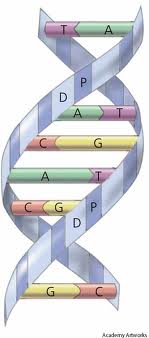
Name B.
a)
phosophate
b)
glucose
c)
deoxyribose
d)
nitrogen base
5.
These onion cells are losing water, they are suffering from .......
a)
turgor pressure
b)
plasmolysis
c)
hemolysis
d)
exocytosis
6.
What type of punnett square?
a)
codominance
b)
incomplete dominance
c)
complete dominance
d)
sex linked recessive
7.
Which process is used to make mRNA from the DNA in the nucleus?
a)
transcription
b)
translation
c)
replication 
8.
Which RNA bases would pair with TACGAA in transcription
a)
AUGCUU
b)
ATGCTT
c)
GCATCC
d)
GCAUCC
9.
Where does transcription take place?
a)
nucleus
b)
cytoplasm
c)
ribosome
10.
How many amino acids are coded for by this sequence of nucleotides:
ATG GGA ACT CCA
a)
4
b)
2
c)
6
d)
12
11.
Which species’ DNA is most similar to the DNA of the toothed whale? 
a)
Hippopotamus 
b)
Baleen Whale
c)
Grazing Mammals
d)
Camels
12.
The white feathers of a snowy owl allow it to blend in with its environment during the winter months (snow). This is an example of ________________
a)
Species
b)
Environmental Change
c)
Adaptation
d)
Variation
13.
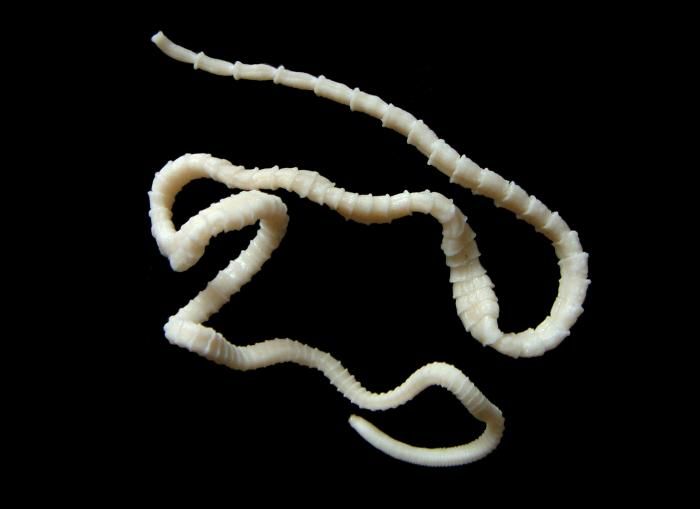
A tapeworm and a cat have this type of relationship.
a)
mutualism
b)
parasitism
c)
commensalism
d)
competition
14.
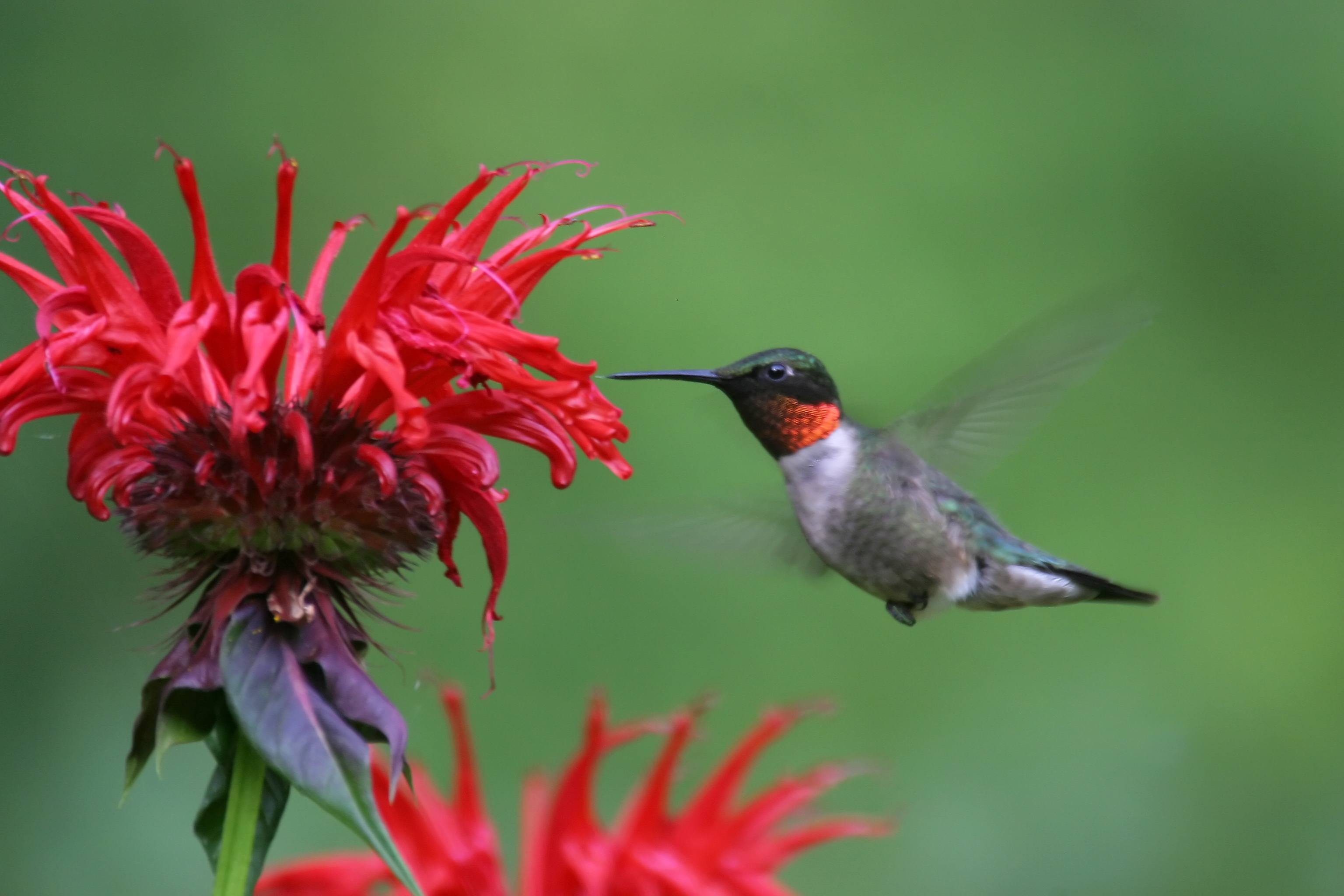
What type of symbiosis?  Hummingbirds feed on nectar from flowers.  The flowers are pollinated by hummingbirds as they move from flower to flower.
a)
commensalism
b)
mutualism
c)
parasitism
d)
predation
15.
Cattle egrets forage (feed) in fields among cattle. The egret gets easy access to flying insects stirred up by the cattle, and the cattle don't care if they are there or not.
a)
mutualism
b)
commensalism
c)
competition
d)
parasitism
16.
Which type of cell has no nucleus?
a)
Eukaryote
b)
Prokaryote
c)
Animal
d)
Plant
17.
Which type of cell?
a)
Prokaryote
b)
Eukaryote
18.
Which type of cell?
a)
Prokaryote
b)
Eukaryote
c)
Mixed
19.
Has ribosomes
a)
Prokaryote
b)
Eukaryote
c)
both
d)
nihn
20.
All of the living and nonliving things in an area that interact with each other are called a/an ______.
a)
community
b)
habitat
c)
population
d)
ecosystem
21.

In the graph to the right, what is the population of deer at the carrying capacity of the environment?

a)

3

b)

7

c)

70

d)

40

22.
What does the graph represent?
a)
Emigration
b)
Exponential growth
c)
Immigration
d)
Logistic Growth
23.
Provides support and protection for the cell, while also controlling the movement of materials in and out of the cell.
a)
Cellular Membrane
b)
Nucleus
c)
Ribosomes
d)
Vacuole
24.
What type of transport is illustrated?
a)
facilitated diffusion
b)
active transport
c)
diffusion
d)
osmosis
25.
Fruit fly body cells have 8 chromosomes. After mitosis, you would expect a resulting fruit fly daughter cell to have ...
a)
16 chromosomes.
b)
46 chromosomes.
c)
8 chromosomes.
d)
4 chromosomes.
26.

Is the following cell diploid or haploid?

a)

Diploid

b)

Haploid

27.
Replicate the following strand of DNA: 
AATCATGGA
a)
AATCATGGA
b)
TTAGTACCT
c)
UUAGUACCU
d)
GGATAUCUA
28.
How do enzymes increase the speed of chemical reactions?
a)
reducing the number of products   
b)
reducing the activation energy
c)
increasing the temperature of the cell
d)
increasing the concentration of reactants 
29.
Which of these is NOT true?
a)
Enzymes can denature (change shape) when the temperature gets too high.
b)
Enzymes can only be used once in a chemical reaction. 
c)
Extreme pH can denature enzymes.
d)
Enzymes speed up chemical reactions. 
30.
This picture represents which type of cellular transport?
a)
passive transport
b)
endocytosis
c)
exocytosis
d)
osmosis
31.
The cell below is in a _________ solution.
a)
Hypotonic
b)
Hypertonic
c)
Isotonic
32.
Which of these is not a way in which biotechnology can benefit agriculture?
a)
increase crop population
b)
reducing the loss of crops to insects
c)
producing better-tasting fruits
d)
improving farm machinery
33.
What two products does a plant make during photosynthesis?
a)
Water and Glucose
b)
Oxygen and Glucose
c)
Oxygen and Water
d)
CO2 and Glucose
34.
The diagram below represents a cell. Which organelle is the site where amino acids are synthesized into proteins? 
a)
1
b)
2
c)
3
d)
4
35.
An offspring will receive how many alleles from each parent to determine a specific trait?
a)
one
b)
two
c)
three
d)
five
36.
G = green, g = yellow
The genotype for a yellow plant is...
a)
GG
b)
Gg
c)
gg
d)
all of the choices result in yellow
37.
According to the diagram, when did the common ancestor of giant pandas and spectacled bears exist? 
a)
5-10 mya
b)
10-15 mya
c)
15-20 mya
d)
20-25 mya
38.
Prokaryotes used to be classified as a single kingdom. New technology allowed them to be split into...
a)
Protista and Prokaryota
b)
Protista and Bacteria
c)
Eubacteria and Archaea
d)
Archaea and Eukarya
39.
Movement of materials down the concentration gradient through a protein channel is an example of 
a)
facilitated diffusion
b)
active transport
c)
respiration
d)
osmosis 
40.
Which list includes only structures that would be found in a prokaryotic cell? 
a)
Cell wall, plasma membrane, mitochondria
b)
Central vacuole, cell wall, lysosome
c)
Cell wall, plasma membrane, cytoplasm
d)
Plasma membrane, nucleus, mitochondria
41.
Humans are made up of different cells that preform different functions. From which cells do nerve cells develop? 
a)
Muscle cells
b)
Stem cell
c)
Sperm cells
d)
White blood cells 
42.
What is the function of this molecule in organisms? 
a)
Storage of genetic information
b)
Structure and support
c)
Short term energy storage
d)
Long term energy storage
43.
Which factor determines the shape and function of a protein?
a)
The density of ribosomes in the cell
b)
The peptide bonds between amino acids
c)
The order of the amino acids in the peptide chian
d)
The sequence of the phosphate molecules in the DNA chain. 
44.
Which process uses ATP to move materials across the plasma membrane against the concentration gradient?
a)
passive transport
b)
active transport 
c)
facilitated diffusion
d)
osmosis
45.
Which process of the carbon cycle removes carbon dioxide from the atmosphere? 
a)
photosynthesis
b)
cellular respiration
c)
combustion of fossil fuels 
d)
death and decomposing organisms 
46.
An experiment is performed on plants to see how different liquids affect plant growth. Each plant in the experiment is given a different liquid; water, apple juice, or milk. Each plant has the same amount of soil, sunlight, and listens to the same music. In this investigation, the independent variable is ...
a)
The type of plant
b)
The amount of sunlight
c)
The type of music
d)
The type of liquid
47.

Which of the following converts food into energy for the cell?

a)

vacuole

b)

mitochondria

c)

cytoplasm

d)

cell membrane

48.
What is something that prokaryotic and eukaryotic cells have in common?
a)
They have a nucleus. 
b)
They are multi-cellular. 
c)
They have DNA. 
d)
They have organelles that are membrane-bound.
49.
Which 2 molecules forms the sides (backbone) of the DNA ladder?
a)
deoxyribose and adenine
b)
deoxyribose and a hydrogen bond
c)
sugar and the nucleus
d)
deoxyribose (sugar) and phosphate
50.
In this image, the cell is using which type of molecular transport?
a)
Osmosis
b)
Diffusion 
c)
Endocytosis
d)
Exocytosis 
51.
What are the two reactants of cellular respiration?
a)
C6H12O6 & 6CO2
b)
6 CO2 & 6H2O
c)
C6H12O& 6O2
d)
6CO2 & 6O2
52.
Name structure #5.
a)
rough ER
b)
nucleus
c)
vesicle
d)
cytoplasm
53.
What property of water makes it the 'universal solvent'?
a)
it is a polar molecule
b)
it is an ionic compound
c)
it contains hydrogen bonds
d)
it steals electrons from other atoms
54.
Proteins are composed of what smaller building blocks?
a)
amino acids
b)
nucleic acids
c)
fatty acids
d)
nucleotides
55.
Glucose is a _____.
a)
carbohydrate
b)
lipid
c)
protein 
d)
nucleic acid
56.
Which group of organic molecules serve as long-term energy storage and make the cell membrane is?
a)
proteins
b)
carbohydrates
c)
lipids
d)
nucleic acids
57.
Also known as simple sugars, these are the monomers of carbohydrates.
a)
lipids
b)
nucleotide
c)
monosaccharide
d)
monomer
58.
Attractions between water molecules are called
a)
Covalent bonds
b)
Ionic bonds
c)
Polar bonds
d)
Hydrogen bonds
59.
The building blocks of nucleic acids are called ...
a)
amino acids
b)
nucleotides
c)
carbohydrates
d)
proteins
60.
ATP is...
a)
a unit of energy in the cell
b)
a type of lipid
c)
a molecule of DNA
61.
Enzymes are _________ that __________ chemical reactions.
a)
proteins, slow down
b)
proteins, speed up
c)
lipids, slow down
d)
lipids, speed up
62.
The cell membrane is formed mostly by...
a)
carbohydrates
b)
proteins
c)
phospholipids
d)
nucleic acids
63.
Nucleotides are made up of three parts. The three parts are...
a)
DNA, RNA, and a sugar
b)
a lipid, a fat, and an oil
c)
a carbohydrate, a protein, and a fat
d)
a sugar, a phosphate, and a base
64.
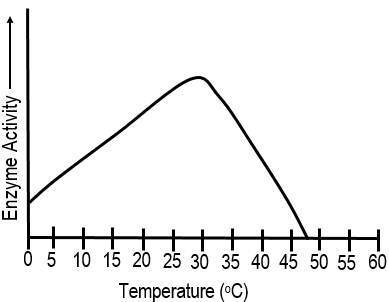
Based on the graph, what temperature does this enzyme work best? 
a)
15 C
b)
40 C
c)
30 C
65.
Which of the following binds to the active site of an enzyme? 
a)
substrate
b)
product
c)
codon
d)
none of the above
66.
What is another name for natural selection?
a)
survival of the smartest
b)
survival of the fastest
c)
survival of the biggest
d)
survival of the fittest
67.
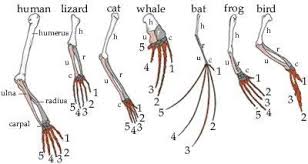
What is this an example of?
a)
vestigial structures
b)
embryology
c)
homologous structures
d)
fossil record
68.
Which layer is the oldest?
a)
1
b)
2
c)
3
d)
4
69.

This is a structure that was inherited but has lost most of its original function

a)

homologous

b)

analogous

c)

vestigial

d)

homozygous

70.

These structures are similar from common ancestry

a)

homologous

b)

analogous

c)

vestigial

d)

homozygous

71.

These structures share a common function but not structure ex) the wing of a bird and the wing of an insect

a)

homologous

b)

analogous

c)

vestigial

d)

homozygous

72.
The diagram shows a container divided into two compartments by a membrane permeable to water but not to starch. Two solutions containing different concentrations of dissolved starch were placed on each side of the membrane. Which of the following describes what will happen to the water level during the process of osmosis?  
a)
The water level of both sides of the membrane will decrease 
b)
The water level on the right side of the membrane will increase 
c)
The water level on the left side of the membrane will increase
d)
The water level on both sides of the membrane will stay the same 
73.
An animal cell placed in a sugar solution is shown in the diagram. Which statement best describes how osmosis will affect this animal cell?  
a)
Water will move out of the cell and the cell will shrink
b)
Water will move into the cell and the cell will expand 
c)
Sugar will move out of the cell and the cell will expand 
d)
Sugar will move into the cell and the cell will expand
74.
A cell requires energy to move materials from an area of low concentration, across the cell membrane, to an area of high concentration.  This process is called ___. 
a)
Osmosis
b)
Active transport 
c)
Passive transport 
d)
Facilitative diffusion
75.
The diagrams show the stages of mitosis in random order.  What sequence correctly shows the stages of mitosis?             
a)
3-1-2-4
b)
1-3-4-2
c)
4-2-3-1
d)
2-1-4-3
76.
What must occur during the cell cycle to ensure proper division of the chromosomes?  
a)
The cell must grow in size
b)
The mitochondria must divide 
c)
The DNA of the cell must replicate
d)
The cell membrane must dissolve
77.
The standardized system for naming organism is known as binomial nomenclature.  What two pieces of information are used to name and identify organisms using this system?
a)
genus and species
b)
class and genus
c)
class and species
d)
domain and kingdom
78.
Which class of biomolecules includes DNA and RNA?
a)
carbohydrates
b)
lipids
c)
proteins
d)
nucleic acids
79.
The process through which the monosaccharides are joined together to form a polysaccharide is known as what?
a)
dehydration synthesis
b)
linking
c)
catabolic reacting
d)
enzymatic hybridization
80.
What process best explains how a nerve cell and a muscle cell can both develop from the same fertilized egg?
a)
differentiation
b)
natural selection
c)
selective breeding
d)
genetic engineering
81.
During strenuous exercise, body temperature increases. The body responds to the increase in temperature by sweating, which helps to reduce the body temperature. Which is demonstrated in this situation?
a)
excretion
b)
metabolism
c)
homeostasis 
d)
synthesis
82.
Two different populations of birds live in the same area and eat the same types of food. Which most likely describes the relationship between these two populations of birds? 
a)
competition
b)
mutualism
c)
parasitism
d)
predator-prey
83.
The use of pesticides on crops has been a common farming practice for decades. What has been the greatest effect of natural selection through the use of pesticides on certain insect populations? 
a)
Natural selection has been altered because the insects and their predators are killed. 
b)
The rate of selection is increased because the pesticides do not kill the insects that are naturally resistant to it. 
c)
The rate of selection has decreased because the pesticides kill only young insects. 
d)
The pesticides have altered natural selection by causing the insect DNA to spontaneously mutate.
84.
Which best explains why muscle cells are different from blood cells? 
a)
A mutation occurs during the development of muscle cells but not in blood cells.
b)
Different genes are activated in muscle cells than in blood cells. 
c)
Muscles cells experience different environmental influences than blood cells. 
d)
Muscle cells are produced by the brain, but blood cells are produced by the heart.
85.
During which phase of the cell cycle is the cell growing and preparing for cellular division? 
a)
cytokinesis
b)
anaphase
c)
prophase
d)
interphase
86.
The males of a bird species do a “dance” and “sing a song” each spring. What is the main purpose of these behaviors? 
a)
to scare off young birds
b)
to imprint young birds
c)
to clean their feathers
d)
to attract female birds
87.

Having freckles is dominant over not having freckles. If two individuals heterozygous for freckles have a child, what is the probability the child will have freckles?

a)

0%

b)

25%

c)

50%

d)

75%

88.

Some marine worms and mollusks go through similar larval stages during development. Which can be inferred about their relationship?

a)

They share a common ancestor

b)

The mate with each other

c)

They compete for a habitat

d)

The share the same food source

89.

Which statement best describes natural selection?

a)

As the weather changes, organisms that are able to find shelter need less energy to live.

b)

Organisms that eat only plants need less food than organisms that eat animals.

c)

Organisms better adapted to their environment are more likely to reproduce and pass on their traits to their offspring.

d)

Small organisms are more likely to survive than larger organisms.

90.

Some scientists claim recent evidence suggests birds should be reclassified to share more taxonomic groups with dinosaurs. What type of evidence would provide the best support for this claim?

a)

evidence showing birds shared similar habitats with dinosaurs

b)

evidence showing birds shared similar nutritional requirements as dinosaurs

c)

evidence showing birds shared similar behaviors with dinosaurs

d)

evidence showing birds shared a common genetic history with dinosaurs

91.

This is a dichotomous key for selected arthropods. To which order does the caddis fly belong?

a)

Acarina

b)

Diptera

c)

Siphonaptera

d)

Trichoptera

92.

Which word equation best represents the process of cellular respiration?

a)

carbon dioxide + glucose → oxygen + water

b)

carbon dioxide + water → glucose + oxygen

c)

glucose + oxygen → carbon dioxide + water

d)

oxygen + water → carbon dioxide + glucose

93.
A reduction in which of these would lead to a decrease in all other populations?
a)
Coyote
b)
Grass
c)
Grasshoppers 
d)
Squirrel 
94.
Which of these best explains the difference between the way animals and plants exchange gases with their environment?
a)
Animals use only photosynthesis, while plants use both photosynthesis and respiration
b)
Animals use only respiration, while plants use both photosynthesis and repiration
c)
Animals use both photosynthesis and respiration, while plants use only respiration
d)
Animals use both photosynthesis and respiration, while plants only use photosynthesis
95.
What is the main function of a selectively permeable membrane?
a)
storage of water
b)
storage of chemicals
c)
breaks down molecules within the cell
d)
regulates what enters and leaves the cell
96.
How many daughter cells are formed in meiosis? 
a)
0
b)
1
c)
2
d)
4
97.
Which of these shows the steps by which proteins are coded and synthesized? 
a)
RNA-> DNA-> protein
b)
DNA-> RNA-> protein
c)
protein-> RNA-> DNA
d)
protein-> DNA-> RNA
98.
Two gametes containing 20 chromosomes fuse during fertilization. How many chromosomes will the zygote? 
a)
10
b)
20
c)
40
d)
80
99.
Which is the most important criteria for a hypothesis to be useful in science?
a)
It is correct.
b)
It is testable.
c)
It can be observed.
d)
It can be measured.
100.
Viruses are infectious particles made of nucleic acid and protein.  Based on the cell theory, how would viruses be described today?
a)
Viruses are living because they are made of cells.
b)
Viruses are non-living because they are not multicellular
c)
Viruses are non-living because they are not made of cells.
d)
Viruses are living because they are produced from existing cells.
101.
(SC.912.L.17.9) A team of ecologists observed feeding patterns of several populations in the desert. The energy pyramid shown below depicts the feeding patterns the ecologists observed. Which of the following best explains the difference in the amount of available energy in the trophic levels of the desert ecosystem?
a)
There is less energy available in the producers because their tissues are less dense than those at higher trophic levels. 
b)
There is more energy available in the second trophic level because less energy is needed for hunting compared to the higher trophic levels. 
c)
There is less available energy in the fourth trophic level because of the loss of energy through metabolism in each of the lower trophic levels. 
d)
There is more available energy in the birds of prey because they have greater muscle mass for storing energy than organisms in lower trophic levels have. 
102.

Which graph best illustrates the growth of a population introduced into an environment with limited resources?

a)
b)
c)
d)
103.

Which will most likely result in a negative growth rate in the human population of a country?

a)

The death rate is higher than the birth rate

b)

The birth rate is higher than the death rate

c)

The country has improved economic conditions

d)

The country has made improvements in sanitation

104.

During translation, what does the tRNA deliver to the ribosomes?

a)

amino acids

b)

DNA

c)

mRNA

d)

proteins

105.

The chemical colchicine disrupts cell division. Which cell process would most likely stop if colchicine were added to a culture of human liver cells?

a)

mitosis

b)

meiosis

c)

crossing over

d)

active transport

106.

Which statement best explains why animals are considered heterotrophic?

a)

They are able to produce food through the process of photosynthesis.

b)

They are able to produce food through the process of respiration.

c)

They are able to obtain nutrients by decomposing plant and animal tissue.

d)

They are able to obtain nutrients by consuming other organisms or their products

107.

What will most likely be the result as humans move into new areas, forests are clear cut and housing developments are built?

a)

Global temperatures will decrease because trees are removed.

b)

Many organisms will lose their homes because their habitats have been destroyed.

c)

Better sanitation in the area will reduce the amount of pollution.

d)

The rainfall in the area will increase because there will be increased runoff.

108.

Which process can occur in both mitosis and meiosis?

a)

fertilization

b)

independent assortment

c)

gene mutation

d)

crossing over

109.

What is the difference between the DNA of a dog and the DNA of a fly?

a)

the type of sugar building blocks

b)

the sequence of nucleotides

c)

the strength of hydrogen bonds

d)

the strength of covalent bonds

110.

Which would be a desirable trait scientists may want to create in a transgenic plant?

a)

the ability to resist insects

b)

the ability to grow less fruit

c)

the ability to change color in the winter

d)

the ability to use a lot of water

111.
Which process produces the most variation within a species? 
a)
Asexual reproduction
b)
Sexual reproduction
c)
mitosis
d)
cloning
112.
Which technique would most likely be used by forensic scientists?
a)
gene cloning
b)
gene therapy
c)
DNA fingerprinting
d)
karyotyping
113.
How does the amount of energy resulting from fermentation compare with that of aerobic respiration? 
a)
Aerobic respiration results in less energy.
b)
Aerobic respiration results in more energy.
c)
Each process results in equal amounts of energy.
d)
Each process results in variable amounts of energy.
114.
The genetic variation that leads to evolution can occur when genes from one population are introduced into the gene pool of a different population.  This process is known as
a)
mutation
b)
crossing over
c)
natural selection
d)
gene flow
115.
Below is a food web diagram. Based on the diagram, it is reasonable to conclude that energy could follow which of the following paths as it cycles through this ecosystem?
a)
Sun ---> plant seeds ---> deer
b)
Plant seeds ---> field mouse ---> robin
c)
Eagle ---> deer ---> plant seeds
d)
Grass ---> deer ---> mountain lion
116.
An organism has a nucleus, is multicellular but has no cell wall and no chloroplast?
a)
Fungi
b)
Plantae
c)
Animalia
d)
Eubacteria
117.
Osmosis is the movement of _____ across a membrane.
a)
food
b)
energy
c)
oxygen
d)
water
118.
The main source of energy for all life comes from ____.
a)
Plants
b)
ATP
c)
the Sun
d)
Glucose
119.
What you see, or the physical appearance in a person:
a)
Genotype
b)
Phenotype
c)
Homozygous
d)
Heterozygous
120.
The alleles Bb are:
a)
homozygous
b)
heterozygous
c)
homozygous recessive
d)
homozygous dominant
121.

Sections of DNA that code for proteins are called

a)

genes

b)

chromosomes

c)

zygotes

d)

gametes

122.

Why is independent assortment, crossing over, mutations and random fertilization important?

a)

it promotes diversity among individuals

b)

it allows for a greater chance for some individuals to survive changes in the environment

c)

it promotes unity among species

d)

it creates offspring that are identical

123.

Which process ensures that gametes contain half the number of chromosomes?

a)

segregation

b)

crossing over

c)

independent assortment

d)

random fertilization

124.

Which process ensures that the combination of chromosomes will be different in each of the gametes?

a)

segregation

b)

indpendent assortment

c)

random fertilization

d)

punnett squares

125.

Which of the following mutations is LEAST likely to cause a change in a protein?

a)

substitution

b)

insertion

c)

deletion

d)

frameshift mutation

126.

True or False: All mutations are harmful.

a)

True

b)

False

127.

If two parents are heterozygous for 2 traits, what is their genotype?

a)

RrTt and RrTt

b)

Rr and Tt

c)

RRTT and rrtt

d)

RT and rt

128.

Which of the following are possible gametes of this parent: RrTt

a)

Rr

b)

Tt

c)

RT

d)

Rt

e)

rT

129.

In a dihybrid cross (RrTt x RrTt) What is the phenotypic ratio of the offspring?

a)

3:1

b)

1:2:1

c)

9:3:3:1

d)

1:1:1:1

130.

Genes that are located on the same chromosome are usually inherited together and are called ________ genes

a)

homologous

b)

sister

c)

linked

d)

daughter

131.

Sex-linked genes are usually found on the

a)

autosomes

b)

X chromosome

c)

Y chromosome

d)

21st chromosome

132.

True or False: Evolution always results in a new species

a)

True

b)

False

133.

A change in allele frequency in a population is known as

a)

Microevolution

b)

Macroevolution

c)

Speciation

d)

Punctuated Equilibrium

134.

Hardy-Weinberg Equilibrium refers to a population that is

a)

constantly changing

b)

going extinct

c)

not evolving

d)

growing quickly

135.

Which of the following would cause a population to change/evolve?

a)

natural selection

b)

sexual selection

c)

mutations

d)

immigration/emigration of individuals (gene flow)

e)

genetic drift

136.

True or False: If an individual acquires a characteristic during its lifetime (like a longer neck) it will pass this trait to its offspring

a)

True

b)

False

137.

Which of the following "evolves"?

a)

an individual

b)

an entire species

c)

a population

138.

When bacteria evolve resistance to antibiotics, which statement is a correct explanation for why this happens.

a)

The antibiotic causes the resistance in the bacteria

b)

Mutations create the resistance and antibiotics selectively eliminate the non-resistant varieties.

139.

When it comes to an organism's fitness, what is this a measure of?

a)

ability to survive

b)

ability to produce offspring

c)

how strong it is

d)

how fast it is

140.

True or False: Energy is recycled within an ecosystem

a)

True

b)

False

141.

True or False: Matter/nutrients are recycled within an ecosystem.

a)

True

b)

False

142.

The number of individuals an environment can support is known as

a)

biodiversity

b)

populations

c)

carrying capacity

d)

exponential growth