wayground logo

Free Printable Worksheets

Font size

S
M
L
XL
Worksheets

Chem Unit 11-A

Total questions: 139

Worksheet time: 3hrs 27mins

Name
Class
Date
1.
In a reaction A + B ----> C,  reactant A has 5g and product  C has 9g. How many grams does reactant B should have? 
a)
4g
b)
5g
c)
9g
d)
14g
2.

What is the part of the chemical equation in green called?

Fe + S → FeS

a)

products

b)

reactants

c)

yield

d)

input

3.
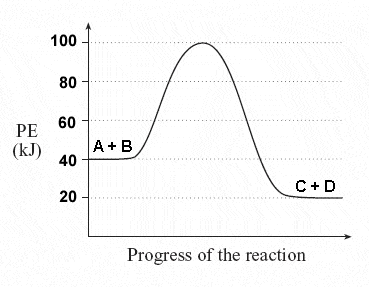
What is the PE of the reactants?
a)
40 kJ
b)
20 kJ
c)
100 kJ
d)
60 kJ
4.
What is the activation energy?
a)
40 kJ
b)
20 kJ
c)
100 kJ
d)
60 kJ
5.
Is the reaction endothermic or exothermic?
a)
Endothermic
b)
Exothermic
c)
Caroussothermic
d)
Nonthermic
6.
What is the PE of the reactants?
a)
40 kJ
b)
20 kJ
c)
100 kJ
d)
60 kJ
7.
What is the PE of the products?
a)
40 kJ
b)
20 kJ
c)
100 kJ
d)
60 kJ
8.
What is the activation energy?
a)
40 kJ
b)
20 kJ
c)
100 kJ
d)
60 kJ
9.
What is the PE of the activated complex?
a)
40 kJ
b)
20 kJ
c)
100 kJ
d)
60 kJ
10.
What is the change of the heat of the reaction (ΔH)?
a)

-80 kJ

b)
20 kJ
c)
100 kJ
d)

-60 kJ

e)

-20 kJ

11.
Is the reaction endothermic or exothermic?
a)
Endothermic
b)
Exothermic
c)
Caroussothermic
d)
Nonthermic
12.
Is the reaction endothermic or exothermic?
a)
Endothermic
b)
Exothermic
c)
Caroussothermic
d)
Nonthermic
13.
Which letter represents the PE of the reactants?
a)
B
b)
A
c)
C
d)
D
14.
Which letter represents the PE of the products?
a)
B
b)
E
c)
C
d)
D
15.
Which letter represents the activation energy?
a)
B
b)
E
c)
C
d)
D
16.
Which letter represents the change of the heat of the reaction?
a)
B
b)
E
c)
C
d)
D
17.
What is the PE of the reactants?
a)
100 kJ
b)
175 kJ
c)
50 kJ
d)
75 kJ
18.
What is the PE of the products?
a)
100 kJ
b)
175 kJ
c)
50 kJ
d)
75 kJ
19.
What is the activation energy?
a)
100 kJ
b)
175 kJ
c)
50 kJ
d)
75 kJ
20.
What is the change of the heat of the reaction (ΔH)?
a)

-75kJ

b)
175 kJ
c)
50 kJ
d)
75 kJ
e)

-50kj

21.
Is this reaction endothermic or exothermic?
a)
Caroussothermic
b)
Endothermic
c)
Exothermic
d)
Endoexthermic
22.
Which number represents the change of the heat of the reaction (ΔH)?
a)
1
b)
2
c)
3
d)
4
23.
Which number represents the activation energy?
a)
1
b)
2
c)
3
d)
4
24.
Which number represents the activated COMPLEX?
a)
1
b)
2
c)
3
d)
4
25.
Is the reaction endothermic or exothermic?
a)
Endothermic
b)
Exothermic
c)
Endoexo
d)
Exoendo
26.
Which letter represents the reactants?
a)
B
b)
A
c)
Z
d)
X
27.
Which letter represents the products?
a)
B
b)
A
c)
Z
d)
X
28.
Is this reaction endothermic or exothermic?
a)
Endothermic
b)
Exothermic
c)
Exoendo
d)
Endoexo
29.
Is this reaction endothermic or exothermic?
a)
Endothermic
b)
Exothermic
c)
Exoendo
d)
Endoexo
30.
What is the PE of the reactants?
a)
30 kJ
b)
10 kJ
c)
40 kJ
d)
20 kJ
31.
What is the PE of the products?
a)
30 kJ
b)
10 kJ
c)
40 kJ
d)
20 kJ
32.
What is the activation energy?
a)
30 kJ
b)
10 kJ
c)
40 kJ
d)
20 kJ
33.
Is this reaction endothermic or exothermic?
a)
Exoendo
b)
Caroussothermic
c)
Endothermic
d)
Exothermic
34.
Is this reaction endothermic or exothermmic?
a)
Exothermic
b)
Endothermic
c)
Exoendo
d)
Thermos
35.
What is the PE of the reactants?
a)
225 kJ
b)
75 kJ
c)
250 kJ
d)
150 kJ
36.
What is the PE of the products?
a)
225 kJ
b)
75 kJ
c)
250 kJ
d)
150 kJ
37.
What is the activation energy?
a)
250 kJ
b)
75 kJ
c)
225 kJ
d)
150 kJ
38.
What is the heat of the reactions (ΔH)?
a)
250 kJ
b)
75 kJ
c)
225 kJ
d)
150 kJ
39.
Is the reaction endothermic or exothermic?
a)
Endothermic
b)
Exothermic
c)
Caroussothermic
d)
Nonthermic
40.
Which letter represents the PE of the reactants?
a)
B
b)
A
c)
C
d)
D
41.
Which letter represents the PE of the products?
a)
B
b)
E
c)
C
d)
D
42.
Which letter represents the activation energy?
a)
B
b)
E
c)
C
d)
D
43.
Which letter represents the change of the heat of the reaction?
a)
B
b)
E
c)
C
d)
D
44.
What is the PE of the reactants?
a)
100 kJ
b)
175 kJ
c)
50 kJ
d)
75 kJ
45.
What is the PE of the products?
a)
100 kJ
b)
175 kJ
c)
50 kJ
d)
75 kJ
46.
What is the activation energy?
a)
100 kJ
b)
175 kJ
c)
50 kJ
d)
75 kJ
47.

What is the heat of the reaction (ΔH) of the REVERSE Reaction?

a)
100 kJ
b)

-75 KJ

c)

-50 kJ

d)
75 kJ
e)

50 kJ

48.
Is this reaction endothermic or exothermic?
a)
Caroussothermic
b)
Endothermic
c)
Exothermic
d)
Endoexthermic
49.
What is the PE of the products?
a)
30 kJ
b)
10 kJ
c)
40 kJ
d)
20 kJ
50.
What is the PE of the reactants?
a)
30 kJ
b)
10 kJ
c)
40 kJ
d)
20 kJ
51.

What is the heat of the reactions (ΔH) of the forward reaction?

a)
250 kJ
b)
75 kJ
c)
225 kJ
d)
150 kJ
e)

-150 kJ

52.

How does a catalyst work in speeding up a reaction?

a)

By lowering the activation energy or reaction

b)

by giving them more energy

c)

by making them more available

53.
What is the rate of reaction?
a)
How fast a reaction is 
b)
How big a reaction is
c)
How loud a reaction is
d)
How much gas a reaction produces
54.
Grinding a seltzer tablet into powder increases the rate of reaction due to increased
a)
concentration
b)
surface area
c)
temperature
d)
reactants
55.
Which factors increase the rate of a reaction.
a)
increasing temperature
b)
increasing concentration
c)
increasing surface area
d)
all of these
56.

What does the M after a concentration value stand for?

a)

meters

b)

music

c)

Molarity

d)

moles

57.

Which is the highest concentration?

a)

10m

b)

2M

c)

25 mmol

d)

0.5M

58.

How does a catalyst work in speeding up a reaction?

a)

By lowering the activation energy or reaction

b)

by giving them more energy

c)

by making them more available

59.
The following graph shows two different reaction pathways for the same overall reaction at the same temperature. Which pathway is slower and why?
a)
Red, because the activation energy is larger
b)
Blue, because the activation energy is lower
c)
both reaction progress at the same rate
60.
In an exothermic reaction, heat is ...
a)
taken in
b)
given out
61.

What is the heat of the reactions (ΔH) of the REVERSE reaction?

a)
250 kJ
b)
75 kJ
c)
225 kJ
d)
150 kJ
e)

-150 kJ

62.

What is the change of the heat of the reaction (ΔH) of REVERSE Reaction?

a)

-80 kJ

b)
20 kJ
c)
100 kJ
d)

-60 kJ

e)

-20 kJ

63.

2 C2H6 + 7 O2 → 4 CO2 + 6 H2O

Ethane (C2H6) combusts in the above reaction. What is the mole ratio of ethane to oxygen gas?

a)
b)
c)
d)
64.

2 C2H6 + 7 O2 → 4 CO2 + 6 H2O

Ethane (C2H6) combusts in the above reaction. What is the mole ratio of carbon dioxide to water?

a)
b)
c)
d)
65.

In the equation 2 Al2O3 → 4 Al + 3 O2, what is the mole ratio of aluminum to oxygen?

a)
10:6 
b)
3:4
c)
4:3
d)
2:3
66.

N2 +  3H2 → 2NH3  What is the mole ratio between Nitrogen and Ammonium (NH3) in the above reaction?

a)

1 moles NH3 / 2 moles N2 

b)

3 moles NH3 / 1 moles N2 

c)

2 moles N2 / 2 moles NH3 

d)

1 moles N2 / 2 moles NH3 

67.

2Na + S → Na2S

What is the ratio of Na2S to Na?

a)

1:1

b)

1:2

c)

2:1

d)

2:2

68.

How many grams are in .093 liters of O2 gas at STP?

If only 1 conversion factor is needed... use "Done!" in the final spot.

69.

How many grams are in 0.705 moles of Cr?

If only 1 conversion factor is needed... use "Done!" in the final spot.

70.

Where did the  3 mol H22 mol NH3\frac{3\ mol\ H_2}{2\ mol\ NH_3}  come from?

a)

The mole ratio from the balanced equation

b)

The Molar Mass of H2

c)

The Molar Mass of NH3

71.

Finish the set up for the following problem

72.

Where did the  2.02 g H21 mol H2\frac{2.02\ g\ H_2}{1\ mol\ H_2}  come from?

a)

The mole ratio from the balanced equation

b)

The Molar Mass of H2

c)

The Molar Mass of NH3

73.

Where did the  1 mol NH317.04 g NH3\frac{1\ mol\ NH_3}{17.04\ g\ NH_3}  come from?

a)

The mole ratio from the balanced equation

b)

The Molar Mass of H2

c)

The Molar Mass of NH3

74.

Where did the  3 mol H22 mol NH3\frac{3\ mol\ H_2}{2\ mol\ NH_3}  come from?

a)

The mole ratio from the balanced equation

b)

The Molar Mass of H2

c)

The Molar Mass of NH3

75.

Inspect the following mass to mass problem

Click on the molar mass of copper(II)sulfate.

76.

Inspect the following mass to mass problem

Click on the Mole Ratio

77.

Inspect the following mass to mass problem

Click on the given

78.
Name this compound: 
NaBr
a)
Bromide sodide
b)
Sodium bromide
c)
Sodium bromate
d)
Sodium bromite
79.
Name this compound: 
KF
a)
Potassium fluoride
b)
Potassium fluorite
c)
Fluorine potasside 
d)
Potassium fluorate
80.
What mass does a neutron have?
a)
1
b)
0
c)
-1
d)
+2
81.

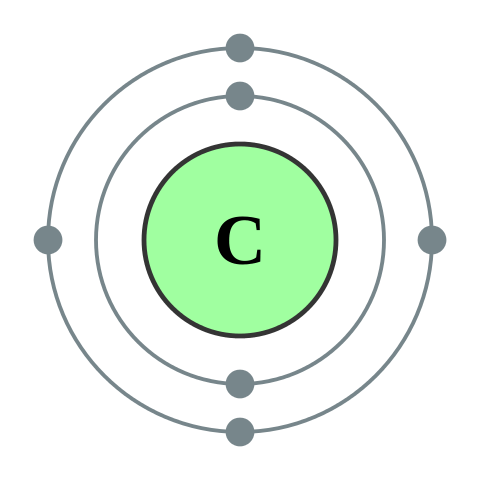
How many valence electrons does carbon have?

a)

4

b)

5

c)

6

d)

7

82.

What is the noble gas electron configuration for sulfur?

a)

[Ar] 3p4

b)

[He] 3s23p4

c)

[Ne] 3s23p4

d)

[Na] 3s23p4

83.
Share electrons
a)
Ionic Bonds
b)
Covalent Bonds
c)
Both bonds
d)
Neither bond
84.
Between  nonmetals
a)
Ionic Bonds
b)
Covalent Bonds
c)
Both bonds
d)
Neither bond
85.
CO2
a)
Ionic Bond
b)
Covalent Bond
c)
Both bonds
d)
Neither bond
86.
H2O
a)
Ionic Bond
b)
Covalent Bond
c)
Both bonds
d)
Neither bond
87.

What is the most common ionic charge for nitrogen?

a)

+4

b)

+3

c)

-4

d)

-3

88.

What is the most common ionic charge for potassium?

a)

+1

b)

+2

c)

-1

d)

-2

89.
Which is the electron configuration for an oxygen atom?
a)
1s22s22p63s23p64s2
b)
1s22s22p4
c)
1s22s22p6
d)
1s22s22p63s23p6
90.
What atom matches this electron configuration?
1s2s2p3s2
a)
Neon
b)
Magnesium
c)
Aluminum
d)
Potassium
91.
How many electrons can the first energy level hold?
a)
1
b)
2
c)
8
d)
0
92.
How many valence electrons does Chlorine have?
a)
5
b)
2
c)
7
d)
5
93.
According to the octet rule most elements need _______ valence electrons.
a)
2
b)
8
c)
6
d)
18
94.
Hydrogen needs _____ electrons in its valence shell to be stable.
a)
4
b)
6
c)
8
d)
2
95.
What molecular shape is the structure shown here? (NH4+)
a)
linear
b)
trigonal planar
c)
tetrahedral
d)
trigonal pyramidal
96.

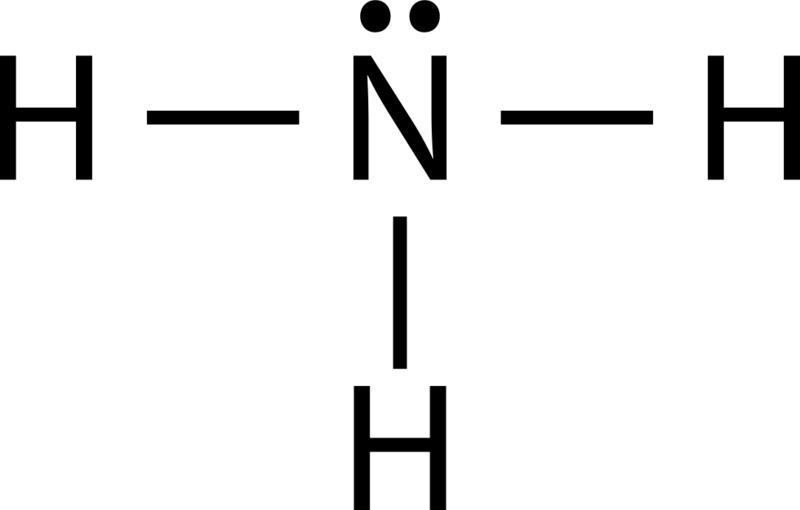
What shape will this molecule be?

a)

linear

b)

bent

c)

tetrahedral

d)

trigonal pyramidal

97.
What is the the shape of this molecule according to VSPER theory?
a)
Linear
b)
Tetrahedral
c)
Trigonal Planar
d)
Trigonal pyramidal
98.
What is the shape of this molecule?
a)

Linear

b)

bent

c)

tetrahedral

d)

trigonal planar

99.

How many SHARED VALENCE ELECTRONS are in the diagram for this molecule?

(a)  

100.

How many electrons does this carbon have on it?

a)

2

b)

4

c)

6

d)

8

e)

0

101.
How many electrons are shared in a triple bond?
a)

6

b)

3

c)

6 pairs

d)

5

102.

What 3-D shape would this molecule have?

a)

tetrahedral

b)

trigonal planar

c)

trigonal pyramid

d)

bent

103.
Ionic or covalent?
NaBr
a)
Ionic
b)
Covalent
104.

Is Na3N an ionic or covalent compound?

a)

Ionic

b)

Covalent

105.

NO3-

a)
ammonium
b)
nitrite
c)
nitrate
d)
nitrile
106.

CN-

a)

peroxide

b)

cyanide

c)

hydroxide

d)

hydronium

107.

PO43–

a)

phosphorus tetroxide

b)

phosphate

c)

sulphate

d)

hydroxide

108.
Choose the correct shape for this molecule:
a)
Trigonal planar
b)
Trigonal pyramidal
c)
Bent
d)
Tetrahedral
109.

What is the name of the molecular geometry for this Lewis Structure?

a)

trigonal planar

b)

trigonal pyramidal

c)

tetrahedral

d)

bent

110.
How many bonds does a carbon atom form with other atoms?
a)
1
b)
2
c)
3
d)
4
e)
0
111.
How many bonds does a nitrogen atom form with other atoms?
a)
1
b)
2
c)
3
d)
4
e)
0
112.
How many bonds does an oxygen atom form with other atoms?
a)
1
b)
2
c)
3
d)
4
e)
0
113.
How many bonds does a hydrogen atom form with other atoms?
a)
1
b)
2
c)
3
d)
4
e)
0
114.
How many electrons are shared in a double bond?
a)
2
b)
4
c)
6
d)
8
115.

What is the change of the heat of the reaction (ΔH)?

a)

-40 kJ

b)

-20 kJ

c)

100 kJ

d)

60 kJ

116.
This symbol indicates that a reaction is ____________
a)
reversible
b)
irreversible
117.
For the reaction...
SO2 + O2 ↔ SO3
If the equilibrium shifts to the right, the concentration of SO3 will ___________.
a)
increase
b)
decrease
c)
remain the same
d)
double
118.

For the reaction...

SO2 + O2 ↔ SO3

If the equilibrium shifts to the right, the concentration of O2 will ___________.

a)

increase

b)

decrease

c)

remain the same

d)

double

119.
For the reaction...
SO2 + O2 ↔ SO3
If the concentration of Ois decreased, the equilibrium of the reaction will shift ___________.
a)
left
b)
right
c)
left and right
d)
neither left nor right
120.
For the reaction...
heat  +  N2  +  O2  ↔  2NO
If the heat is added to the chemical system, the equilibrium will shift _______.
a)
left
b)
right
c)
left and right
d)
neither left nor right
121.
For the reaction...
heat  +  N2  +  O2  ↔  2NO
If the heat is removed to the chemical system, the equilibrium will shift _______.
a)
left
b)
right
c)
both left and right
d)
neither left nor right
122.
This symbol indicates that a reaction is ____________
a)
reversible
b)
irreversible
123.
When writing an endothermic reaction, heat energy is stated as
a)
product
b)
catalyst
c)
reactant
124.
For the reaction...
heat  +  N2(g)  +  O2(g)  <−>  2NO(g)
If the heat is removed to the chemical system, the equilibrium will _______.
a)
shift to the left
b)
shift to the right
c)
not shift
125.

A single sided arrow (→), indicates that a reaction is:

a)

Reversible

b)

Irreversible

c)

Not reactive

126.

When the forward and reverse reactions are occurring at the same rate, the reaction is said to be at:

a)

Chemical equilibrium

b)

Chemical reaction

c)

Chemical constant

d)

Chemical peace

127.

A temperature increase causes the particles ......

a)

to slow down

b)

move faster

c)

collide higher

d)

in the right order

128.
In an exothermic reaction, heat is ...
a)
taken in
b)
given out
129.

For the following equilibrium reaction:

N2 (g) + 3 H2 (g) <==> 2 NH3 (g)

Predict the direction that the reaction will proceed, or shift, if...

N2 is added

a)

right

b)

left

c)

no effect

130.

For the following equilibrium reaction:

N2 (g) + 3 H2 (g) <==> 2 NH3 (g) ΔH=-386 kJ/mol

Predict the direction that the reaction will proceed, or shift, if...

H2 is removed

a)

right

b)

left

c)

no effect

131.

For the following equilibrium reaction:

N2 (g) + 3 H2 (g) <==> 2 NH3 (g) ΔH=-386 kJ/mol

Predict the direction that the reaction will proceed, or shift, if...

NH3 is added

a)

right

b)

left

c)

no effect

132.

For the following equilibrium reaction:

N2 (g) + 3 H2 (g) <==> 2 NH3 (g) ΔH=-386 kJ/mol

Predict the direction that the reaction will proceed, or shift, if...

NH3 is removed

a)

right

b)

left

c)

no effect

133.
A +  B <--> C + D   ΔH= 151kJ
Rewrite the above equation with energy as a reactant or product:
a)
A +  B <--> C + D + energy
b)
A +  B + energy <--> C + D 
134.
When  ΔH  is negative it represents a(n)
a)
exothermic reaction 
b)
endothermic reaction 
135.
For the reaction...
heat  +  N2(g)  +  O2(g)  <−>  2NO(g)
If the heat is removed to the chemical system, the equilibrium will _______.
a)
shift to the left
b)
shift to the right
c)
not shift
136.

A double sided arrow (↔), indicates that a reaction is:

a)

Reversible

b)

Irreversible

c)

Not reactive

137.
For the reaction...
H2 (g)  + Cl2 (g) <−>  2HCl (g)  +  heat
If the temperature is cooled, the _________ reaction will be favored.
a)
forward
b)
reverse
c)
forward and reverse
138.
2A + 3B  <---->  2AB
The forward reaction points towards the __________.
a)
left
b)
right
c)
up
d)
down
139.
For the reaction...
SO2 + O2 <−>  SO3
If the equilibrium shifts to the left, the concentration of SO2 will ___________.

a)
increase
b)
decrease