
 Worksheets
Bio Review 1
Total questions: 139
Worksheet time: 3hrs 22mins
What is the most basic unit of life?
Cell
Molecule
Organelle
Organ
According to cell theory, all cells come from what?
Energy
Organelles
Pre-existing cells
Mitosis
What is a structure within a cell that performs specific functions?
Atom
Cell
Organelle
Cytoplasm
The nucleus is considered the what of the cell?
Brain/Control Center
Powerhouse
Storage
Cleaner
Where can ribosomes be found in the cell?
Rough ER
Golgi Body
Nucleus
Cytoplasm
Where is DNA found in a eukaryotic cell?
Mitochondria
Cytoplasm
Chloroplast
Nucleus
In which organelle does photosynthesis take place?
Nucleus
Cytoplasm
Chloroplast
Golgi Body
What is the process of breaking down food to produce ATP?
Cellular respiration
Cell Division
Photosynthesis
Mitosis
What types of cells have a nucleus?
Eukaryotic Cells
Prokaryotic Cells
What are the three parts of the cell theory?
All cells come from pre-existing cells
All cells come from living things
All living things are composed of cells
A cell is the smallest functioning unit of life
All living things are composed of living things
Which type of cell has all genetic material and organelles suspended in the liquid interior of the cell?
Prokaryotic
Eukaryotic
The second level of cellular organization is...
organ system
organ
tissue
cell
organism
Cell division in eukaryotes is a complex process called_______________________
Photosynthesis
Mitosis
Cellular Respiration
Energy
Name two organelles that a plant cell has that an animal cell does not have.
Chloroplast
Ribosomes
Cell Wall
Golgi body
Which organelle controls what comes in and out of a cell? It is found in both plant and animal cells.
Cell Membrane
Cell Wall
Lysosomes
Vacuole
Which organelle controls what comes in and out of a cell? It is found in both plant and animal cells.
Cell Membrane
Cell Wall
Lysosomes
Vacuole
What is the gel-like fluid where the organelles are found?
Ribosomes
Lysosomes
Golgi Body
Cytoplasm
Which organelle produces the energy a cell needs to carry out its functions; the powerhouse of the cell?
Endoplasmic Reticulum
Mitochondria
Cytoplasm
Vacuole
This organelle uses chemicals to break down food and worn out cell parts; the cleaner of the cell.
Lysosomes
Ribosomes
Chromosomes
Cytoplasm
Which organelle stores food, water, wastes, and other materials?
Nucleus
Vacuole
Endoplasmic Reticulum
Mitochondria
Which organelle provides a rigid outer layer of a cell? It provides structure and protection
Chloroplast
Vacuole
Cell Wall
Nucleus
There are two types of cells:
eukaryotic and gigantic
carbohydrate and lipids
prokaryotic and eukaryotic
probiotic and nucleic acid
An example of a prokaryotic cell is
plant cell
animal cell
eukaryotic cell
bacteria
Prokaryotic cells do not have
ribosomes
cell membrane
membrane-bound organelles
DNA
ALL Eukaryotic cells have a ____________.
flagella
cell wall
nucleus
none of the above
Animal cells are an example of
prokaryotic cell
eukaryotic cell
plants
carbohydrate
Cleans the cell by digesting old materials and organelles.
cytoplasm
lysosome
vacuole
Endoplasmic reticulum
The diffusion of water molecules through a selectively permeable membrane is:
Homeostasis
Osmosis
Active Transport
Equilibrium
All matter is composed of very small particles called:
Molecules
Ions
Solutes
Isotopes
The movement of molecules from a place where there is a greater/higher concentration to an area where there is lesser/lower concentration is:
Homeostasis
Diffusion
Endocytosis
Active Transport
A selectively permeable membrane
allows all substances to enter and leave
prevents all substances from entering or leaving
allows certain size substances to enter and leave
allows only waste materials to leave
A solution in which the concentration of solutes is the same inside and outside of a cell is a _____________________ solution.
hypertonic
hypotonic
isotonic
homeotonic
If a red blood cell is placed in a solution that has a concentration gradient higher than the red blood cell, this type of solution is called:
Isotonic
Hypotonic
Hypertonic
Homeotonic
If a red blood cell is placed in a hypotonic solution, it will eventually
shrink up
swell and burst
no change will occur
swell and not burst
When substances move in and out of cells using only their own kinetic energy this is called:
Active Transport
Passive Transport
Activation Energy
Selective Transport
Osmosis is a type of
turgor pressure
homeostasis
active transport
facilitated diffusion
Because the human body is 60% water, an important process which helps humans and all living things maintain a “normal” internal cellular environment even when external surroundings are constantly changing is:
diffusion
osmosis
active transport
carrier transport
Cell "eating" is referred to as which of the following?
phagocytosis
exocytosis
pinocytosis
passive transport
A cell that is 90% water and 10% solute is placed in a solution that is 90% water and 10% solute. Which of the following is correct?
it is hypertonic because water is exiting the cell.
it is isotonic because the concentration is the same inside and outside the cell.
it is hypotonic because water is entering the cell.
it is hypertonic because water is entering the cell.
A cell that is 80% water and 20% solute is placed in a solution that is 60% water and 40% solute. Which of the following is correct?
It is isotonic because the concentration is the same inside and outside the cell.
It is hypertonic because water is exiting the cell.
It is hypotonic because water is entering the cell.
It is hypertonic because water is entering the cell.
A cell that is 70% water and 30% solute is placed in a solution that is 75% water and 25% solute. Which of the following is correct?
It is isotonic because the concentration is the same inside and outside the cell.
It is hypertonic because water is exiting the cell.
It is hypotonic because water is entering the cell.
It is hypertonic because water is entering the cell.
What is the energy molecule for all living cells?
ADP
ATP
Protein
Sugars
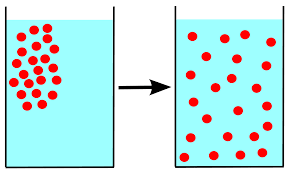
solution with lower solute concentration on outside of cell and higher solute concentration on inside of cell. Water will into the cell causing the cell to swell and eventually burst
Hypertonic Solution
Hypotonic Solution
a solution with a higher solute concentration on the outside of the cell and a lower solute concentration on the inside of the cell. Water will move out of the cell causing the cell to shrink and shrivel.
Hypertonic Solution
Hypotonic Solution
a solution that has the SAME solute concentration on the outside and inside of the cell. There will be NO NET MOVEMENT of water into or out of the cell. Cell size will stay the SAME.
ISOTONIC
HYPOTONIC
process that occurs when a cell moves large materials OUTSIDE of the cell through secretory vesicles. This type of transport is active and requires energy.
ENDOCYTOSIS
EXOCYTOSIS
a process by which cells absorb or take in external materials by engulfing it (taking in) with the cell membrane. Examples of this is pinocytosis and phagocytosis.
ENDOCYTOSIS
EXOCYTOSIS
Which statement does NOT describe a scientific theory?
A scientific theory can never be proven
A scientific theory is supported by facts
A scientific theory eventually becomes a fact
A scientific theory is a generally accepted explanation
A(n) __________ is a rule that describes a pattern in the natural world.
theory
hypothesis
scientific law
observation
In 1859, Charles Darwin described a model of how living things change over time. He described this model and the evidence that supported it in a book called On The Origin of Species. Which scientific term is used to describe a testable model that seeks to explain natural phenomena?
data
hypothesis
theory
observation
Scientists form _________ hypothesis to answer questions.
accurate
short
mathematical
testable
Before a scientific theory is accepted and supported, it has
been tested by only one scientist.
been published in scientific journals.
been tested many times by different scientists.
been approved by the International Committee of Scientists.
Theory or law? The cell _________ of living things: living things are made of cells, which explains how things grow and live.
Theory
Law
Theory or Law? Newton's first ______ of Motion: Objects will stay in motion unless stopped. Shows what happens with moving objects.
Theory
Law
Are theories and laws the same?
Yes
No
Scientists ___________ experiments to make sure the results are meaningful.
perform
repeat
conclude
communicate
Theory or Law? Big Bang _______: the universe came from one minute particle and expanded over billions of years to what we see today. Tries to explain how the universe was created.
Theory
Law
Scientific knowledge can withstand the test of time because
it is open to change as new evidence or data is discovered.
scientific theories have been proven beyond doubt.
advancements in technology have no impact on science.
exceptions can be made regarding scientific laws.
Scientific inquiry includes many different types of activities and processes. When someone makes measurements using scientific tools, what part of the inquiry process are they performing?
communicating evaluations
formulating questions
collecting data
evaluating data
Enzymes are made of Proteins. The monomers of proteins are....
Fatty Acids
nucleotides
amino acids
monosaccharides
Enzymes have a specific shape. It will only fit a special _________ in order to begin a chemical reaction.
substrate
key
sugar
The amount of dissolved salts in a body of water
Halocline
Density
Salinity
Bouyancy
The tendency of an object to float when submerged
Halocline
Density
Salinity
Bouyancy
A measure of how tightly packed matter is in an area
Halocline
Density
Salinity
Bouyancy
Most common salt found in seawater
MgCl2 (Magnesium Choride)
K2SO4 (Potassium sulfate)
NaCl (Sodium chloride)
Ca2SO4 (Calcium Sulfate)
The degree of acidity or alkalinity of a solution
pH
D.O.
Barotrauma
Ambient Pressure
Which of the following processes increase the amount of ammonia in an aquatic system?
Fish waste
Excess decomposing food
Decomposing fish or plants
All of these
What is the chemical formula for water?
HO
2HO
H2O
HO2


Attractions between water molecules are called
Covalent bonds
Ionic bonds
Polar bonds
Hydrogen bonds
Why does ice float?
As water freezes, the molecules move farther apart and its density decreases.
As water freezes, it takes up more hydrogen from the atmosphere
As water freezes, air becomes trapped between the water molecules.
As water freezes, it takes up more oxygen from the atmosphere
Which term refers to water having a slightly positive and a slighty negative charge on its ends?
cohesion
surface tension
polar
adhesion
Why is water so good at dissolving so many substances?
it is polar
it is less dense as a solid
cohesion
adhesion
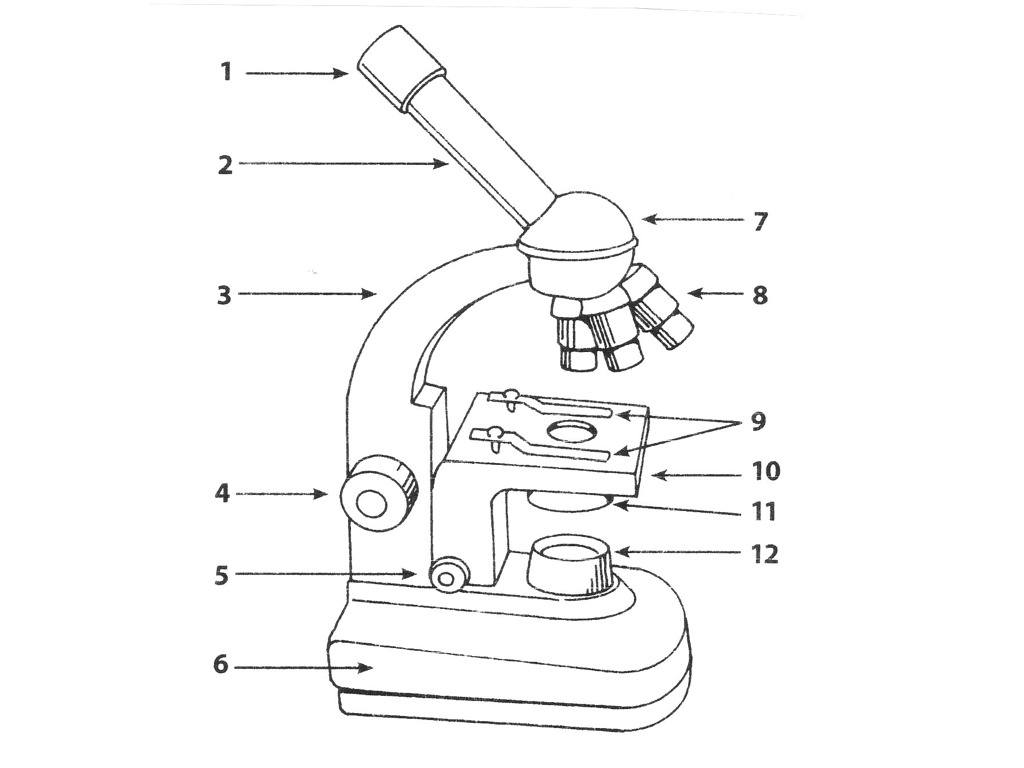
Which objective lens should you start on to locate an image?
medium power
low power
high power
What is the type of microscope we use in the lab?
transmission electron microscope
phase contrast microscope
compound light microscope
fluorescence microscope

Who invented the microscope?
Marie Curie
Robert Hooke
Charles Darwin
Isaac Newton
What does "micro" mean?
Very small
big sized
super sized
medium size
Unlike Hooke, Leeuwenhoek observed cells that
had no cell walls.
came from plants.
were alive.
could only be seen with a compound microscope.
How does magnification occur in an electron microscope?
An electron beam creates an enlarged image.
An electron beam actually makes the object become larger.
Light is changed into electrons by a convex lens.
Light is reflected by an electron beam.
The invention of the microscope made it possible for people to discover
plants.
skin.
animals.
cells.
Which of the following statements is part of the cell theory?
Only plants are composed of cells.
All cells are produced (made) from other cells.
Cells can be produced from nonliving matter.
Cells are one of several basic units of structure and function in anything.
What does the term resolution refer to?
how well structures close together can be distinguished, or how clear and detailed the image is
how large an image can be
how many lenses a microscope uses
how much light is needed to see an image
A microscope allowed Hooke to see “tiny rectangular rooms,” which he called
organs
cells
bacteria
microbes
Cells are the basic units of _______________________________ in living things.
protein and lipids
carbon and oxygen
structure and function
food and oxygen
Schwann determined that all ________________ are made of cells.
plants
animals
fungi
protists
Scheliden discovered that all ________________ are made of cells.
animals
plants
fungi
protists
Virchow stated that all cells come from ________________________________.
thin air
preexisting cells
spontaneous generation
crystallization
Who is credited with coming up with the first compound microscope?
Anton van Leeuwenhoek
Zacharias Janssen
Robert Hooke
Matthias Schleiden
What did Anton van Leeuwenhoek call bacteria when he first discovered them?
Animalcules
Protozoa
Bacteria
Microorganisms
Who is credited with coining the term 'the cell'?
Robert Hooke
Anton van Leeuwenhoek
Zacharias Janssen
Matthias Schleiden
Who discovered that all plants are made of cells?
Zacharias Janssen
Matthias Schleiden
Robert Hooke
Anton van Leeuwenhoek
Who discovered that all animals are made of cells?
Zacharias Janssen
Anton van Leeuwenhoek
Robert Hooke
Theodor Schwann
The building blocks for organic compounds are called...
Polygons
Polymers
Monograms
Monomers
___ are used by cells to get quick energy.
Carbohydrates
Lipids
Proteins
Nucleic Acids
Nuts, butter, and waxes are examples of ____
Nucleic Acids
Lipids
Proteins
Carbohydrates
_____ help build organelles (cell parts) and help defend against illness.
Proteins
Nucleic Acids
Lipids
Carbohydrates
_____ store genetic information.
Carbohydrates
Lipids
Nucleic Acids
Proteins
What is the monomer of carbohydrates?
Monosaccharide
Nucleotide
Fatty Acid
Amino Acid
What is the monomer of proteins?
Amino Acid
Fatty Acid
Nucleotide
Monsaccharide
What is the monomer of lipids?
Monosaccharide
Fatty Acid
Amino Acid
Nucleotide
What is the monomer of nucleic acids?
Monsaccharide
Nucleotide
Amino Acid
Fatty Acid
What elements would be found in carbohydrates?
Carbon, Hydrogen
Carbon, Hydrogen, Oxygen
Carbon, Hydrogen, Oxygen, Nitrogen
Carbon, Hydrogen, Oxygen, Nitrogen, Phosphorous
What elements would be found in lipids?
Carbon, Hydrogen, Oxygen, Nitrogen, Phosphorous
Carbon, Hydrogen, Oxygen, Nitrogen
Carbon, Hydrogen, Oxygen
Carbon, Hydrogen

A ______________ is a large molecule.
Micromolecule
Polymer
Amino Acid
Macromolecule
Which of the following is not one of the four major classes of macromolecules?
Lipids
Carbon
Protein
Carbohydrates
Nucleic Acid
Which macromolecule is used as our main source of energy?
Lipids/Fats
Nucleic Acids
Proteins
Carbohydrates
Which of the following are examples of carbohydrates? (Select all that apply).
Bread
Pasta
Olive Oil
Cheese
Which macromolecule stores energy?
Carbohydrates
Proteins
Lipids/Fats
Nucleic Acids
Nucleic acids make up which of the two molecules listed below?
FDA
RNA
DNA
FDR

An avocado is an example of a which macromolecule?
Carbohydrate
Lipid/Fat
Protein
Nucleic Acid

