
 Worksheets
8th Grade Science Final Review
Total questions: 135
Worksheet time: 3hrs 31mins
What is the pH range of an acid?
0-14
less than 7
exactly 7
greater than 7
What is the pH range of a base?
0-14
less than 7
exactly 7
greater than 7
What is the pH range of a neutral solution?
0-14
less than 7
exactly 7
greater than 7
How do acids taste?
Sweet
Sour
Salty
Bitter
How do bases taste?
Sweet
Sour
Salty
Bitter
What type of acid is in your stomach?
Battery
Hydrochloric
Neutral
Antacid
Which substance increases the number of hydroxide ions (OH-) in a solution?
Acid
Base
Neutral
Citrus
Which substance increases the number of hydrogen ions (H+) in a solution?
Acid
Base
Neutral
Bleach
What will an indicator tell you? (Check all that apply)
Whether a substance is an acid or a base
Where on the pH scale the substance will fall
What color the substance is
What elements are in the substance
Which of these are acids? (Check all that apply)
Vinegar
Citrus
Toilet cleaner
Coca cola
Which of these are bases? (Check all that apply)
Baking soda
Citrus
Toilet cleaner
Hand soap
What is the term for "A scale that measures the acidity of a solution"?
Indicator
pH scale
Balance
Neutralization
What is the term for "A substance that changes color in the presence of an acid or a base"?
Neutral solution
Alkaline
Indicator
Electrolyte
What is the term for "The reaction between an acid and a base that yields water and often a salt"?
Synthesis
Neutralization
Decomposition
Radioactivity
What is the term for "A solution with a pH greater than 7"?
Acid
Base
Neutral solution
Salt
What is the term for "The gradual wearing away of a metal due to a chemical reaction in which the metal is changed into a metallic compound"?
Acid
Base
Indication
Corrosion
speed of an object in a particular direction
motion
velocity
speed
acceleration
when an object changes its position compared to a reference point.
acceleration
speed
motion
reference point
total distance traveled divided by total time taken to travel that distance
velocity
motion
acceleration
average speed
the rate at which speed or velocity changes
acceleration
average speed
motion
reference point
an object that appears to stay in place and that helps you detect motion in another object
acceleration
average speed
motion
reference point

Is this a speed or acceleration graph?
speed
acceleration

What is happening at segment E?
acceleration
deceleration
constant speed
no motion/object at rest
What is happening at segment F?
acceleration
deceleration
constant speed
no motion/object at rest
What is happening at segment A?
acceleration
deceleration
constant speed
no motion/object at rest
What is happening at segment B?
acceleration
deceleration
constant speed
no motion/object at rest
What is happening at segment C?
acceleration
deceleration
constant speed
no motion/object at rest
What is happening at segment D?
acceleration
deceleration
constant speed
no motion/object at rest

Is this a speed or acceleration graph?
speed
acceleration
What is happening at segment B?
no motion/object at rest
constant speed
acceleration
What is happening at segment A?
no motion/object at rest
constant speed
deceleration
A runner crossed the 1 mile marker of a race running at a speed of 9 miles per hour. She crossed the finish line running at a speed of 9.8 miles per hour. Did the runner change her velocity?
Yes
No
A runner crossed the 1 mile marker of a race running at a speed of 9 miles per hour. She crossed the finish line running at a speed of 9.8 miles per hour. This is an example of...
positive acceleration
negative acceleration
no acceleration
A snake slithered across the sidewalk in between two sign posts. At the first sign post his speed was 1.2 m/s. At the second sign post his speed was 1.2 m/s. Did the snake change velocity?
Yes
No
A snake slithered across the sidewalk in between two sign posts. At the first sign post his speed was 1.2 m/s. At the second sign post his speed was 1.2 m/s. This is an example of...
positive acceleration
negative acceleration
no acceleration

The formula for calculating speed is...(x means multiply; / means divide)
time x distance
distance x speed
distance / time
time / distance
A force that opposes motion between any surfaces that are in contact.
gravity
acceleration
friction
direction

Which type of friction is shown in the picture?
rolling
fluid
static
sliding
Sanding wood with sandpaper will ______ the friction.
increase
decrease

Which type of friction is shown in the picture?
fluid
static
rolling
sliding
If the following objects were dropped from the same height, which one would hit the floor first?


Which type of friction is shown in the picture?
rolling
static
fluid
sliding
Adding oil will ________ friction on gear chains.
increase
decrease


Which has the MOST inertia?


Objects with greater _________ also have greater inertia.
speed
mass
force
friction
Motion is any change in ___________.
accelration
distance
position
velocity
The law of inertia states that a body in motion will remain in motion and a body at rest will remain at rest unless acted upon by a(n) ________________ force.
balanced
unbalanced
equal
strong
Which law of motion is also known as the Law of Inertia?
First Law
Second Law
Third Law
Newton's First Law says that an object that is not moving will _____.
stay at rest
keep moving with a constant velocity
resist any physical change
has mass
Newton's First Law says that an object that is moving will _____.
stay at rest
keep moving with a constant velocity
resist any physical change
has mass
Which of the following has more inertia?
Bowling ball
Tennis ball
Which of the following has less inertia?
Feather
Hammer
Which law of motion is also known as the Law of Acceleration?
First Law
Second Law
Third Law
Newton's Second Law says that an unbalanced force is applied to an object, it causes it to _____.
accelerate
slow down
stay at rest
have more mass
The greater the force that is applied, the _____ the acceleration.
greater
lesser
The less the force that is applied, the _____ the acceleration.
greater
lesser
What equation is used to solve Newton's Second Law problems?
F = ma
M = Fa
A = m / F
F = m / a
Which law of motion is also known as the Law of Action - Reaction?
First Law
Second Law
Third Law
Newton's Third Law says that every time there is an action force, there is also a reaction force that is _____ in size and acts in the _____ direction.
equal, opposite
opposite, equal
greater, different
lesser, same
In Newton's Second Law equation, what does the F stand for?
force
friction
french fries
friends
In Newton's Second Law equation, what does the m stand for?
mass
minutes
measurement
mountain
In Newton's Second Law equation, what does the a stand for?
acceleration
animals
atom
ant

Suppose Lemming A runs off the edge of the cliff at 2 m/s and Lemming B runs off the edge at 1 m/s. Which will hit the ground farther from the base of the cliff?
A
B
Both at the same distance
Suppose Lemming A runs off the edge of the cliff at 2 m/s and Lemming B runs off the edge at 1 m/s. Which will hit the ground first?
A
B
Both at the same time
As an object travels through the air, its vertical velocity
changes continuously due to gravity
remains the same
For work to be done on an object,
some force need only be exerted on the object.
the object must move some distance as a result of a force.
the object must move, whether or not a force is exerted on it.
the object must not move.
A force of 8 Newton pushes a 2 kilogram object across a level floor for 10 meters in 3 seconds.
How much work is done?
160 J
80 J
27 J
5.3 J
Identical twins run up a flight of stairs. Jake takes 20 seconds, and Jordan takes 1/4 of a minute. Who did more work?
equal work
Jake
Jordan
Identical twins run up a flight of stairs. Jake takes 20 seconds, and Jordan takes 1/4 of a minute. Who had more power?
equal power
Jake
Jordan
What is the definition of matter?
Anything that has mass and takes up space
A substance that is liquid, solid, or gas
Anything that is pure
Anything that you can see or hold
What does the number 3 represent in 4NH3?
Subscript
Superscript
Coefficient
What does the number 4 represent in 4NH3?
Subscript
Superscript
Coefficient

How many Nitrogen (N) atoms are in 4NH3?
4
1
3
12

How many Hydrogen (H) atoms are in 4NH3?
4
1
3
12

How many total molecules is 4NH3?
4
1
3
12
How many total atoms make up 4NH3?
4
16
3
12

In the equation shown, what are the reactant(s)?
N2 + H2
NH3
In the equation shown, what are the product(s)?
N2 + H2
NH3

Is this equation balanced?
Yes
No

Is this equation balanced?
Yes
No

Is this equation balanced?
Yes
No


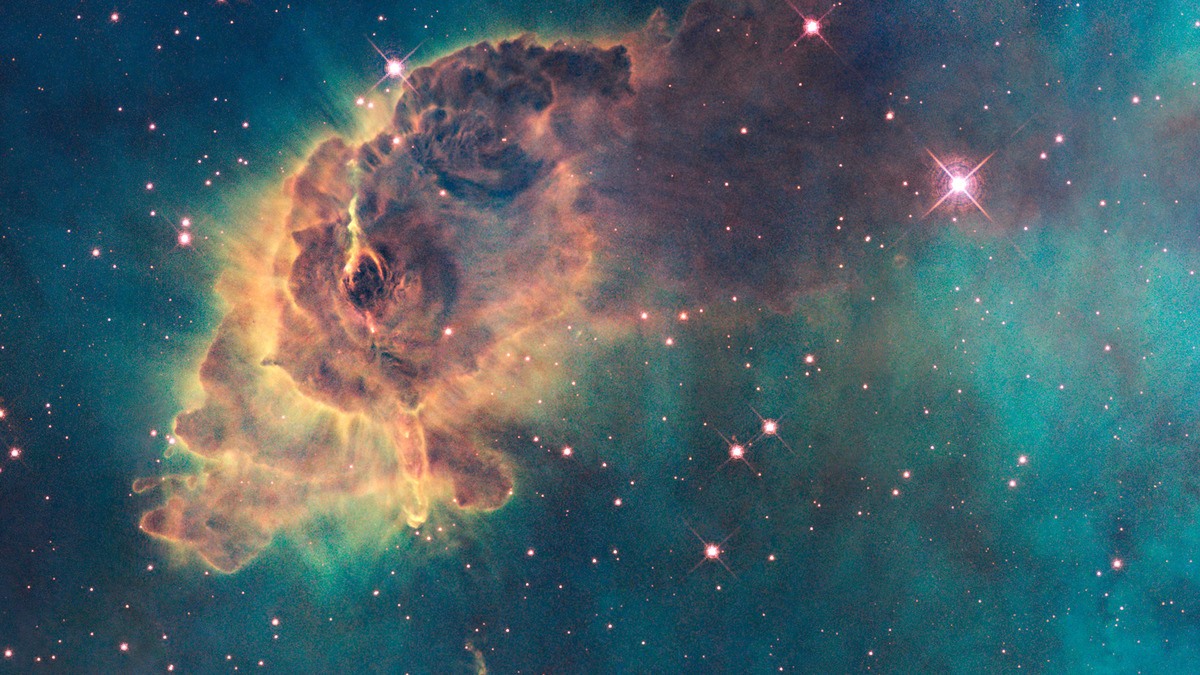
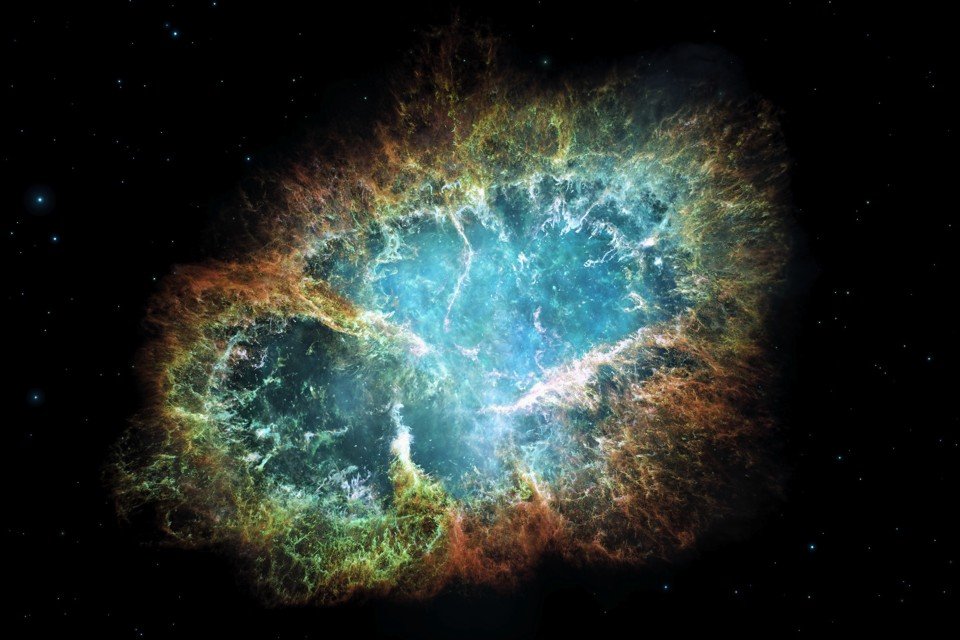


The professional who studies the stars is...
an astronaut.
an astrologer.
an astronomer.

What will be the next stage in our star the sun's life cycle?
supernova
white dwarf
blackhole
red giant

