
 Worksheets
U2 Spring Final Review Adv. Bio
Total questions: 137
Worksheet time: 2hrs 4mins

What does the water cycle do?
creates clouds
Save water in liquid form
turns water into energy
recycles water
The sun drives the water cycle by
rotating on its axis
heating the ocean
giving light to plants
What are the 5 processes of the water cycle? check all that apply
precipitation
condensation
evaporation
transpiration
run off

WATER CYCLE: What is Part A?
runoff
precipitation
condensation
evaporation
WATER CYCLE: What is Part B?
runoff
precipitation
condensation
evaporation
WATER CYCLE: What is Part D?
runoff
precipitation
groundwater
evaporation
WATER CYCLE: What is Part E?
runoff
precipitation
groundwater
evaporation
WATER CYCLE: What is Part F?
condensation
precipitation
groundwater
evaporation
The Carbon Cycle (check all that apply)
Affected by volcanoes
Relies on decomposing organisms
Has Combustion through burning fossil fuels

What starts the Carbon cycle? check all that apply
Human activities
Respiration
Sun
Water

What is the Carbon Cycle?
Series of processes in which carbon is interconverted in the environment
The way that carbon is destroyed
The series of processes in which carbon is created
The way that carbon is moved
What is a stage of the carbon cycle? Check all that apply.
Respiration
Nitrification
Photosynthesis
Ammonia fixation
Combustion
Identify one way that humans are affecting the carbon cycle.
Erosion
Respiration
Decomposition
Combustion
How is decomposition involved in the carbon cycle
it removes the carbon from the dead organisms
it breaks down carbon compounds
it adds carbon to dead organisms
it creates carbon compounds
The Nitrogen Cycle...
Doesn't need the atmosphere
Animals get the nitrogen from plants
Greatly affected by the moon's pull on the tides
All of the above
What is the nitrogen cycle Check all that apply
The nitrogen cycle is the movement of nitrogen
Nitrogen is in the air and other abiotic and biotic factors
The nitrogen cycle is nitrogen into the atmosphere's crust
Chickens will overtake the nitrogen cycle
What are the three stages of the nitrogen cycle?
Oil, air, water
Phosphate, water, natural gas
Dirt, water, air
Nitrogen fixation, Nitrification, and denitrification.
Nitrogen fixation is the process in the nitrogen cycle that...
Bacteria in the soil turn nitrogen back into N2 gas
Bacteria in the roots of plants turn N2 gas into usable form
Nitrogen is removed from dead organisms to be used
Nitrogen is fixed into the atmosphere

What does the 1 represent in the nitrogen cycle?
Ammonium
Decomposers
Plants
Animals
What does the 2 represent in the nitrogen cycle?
Ammonium
Decomposers
Plants
Animals
What does the 3 represent in the nitrogen cycle?
Ammonium
Decomposers
Plants
Animals
which types of bacteria are involved in the nitrogen cycle? check all that apply
Denitrifying bacteria
Microbacterial decomposers
Nitrogen fixing bacteria
Nitrifying bacteria
Algae blooms
Why is nitrogen fixation by bacteria an essential part of the nitrogen cycle?
Plants cannot use nitrogen in it's atmospheric form
Water is released as a by-product of nitrogen fixation
Decomposers break down dead organisms to return N to soil
most plants/ animals can use only elemental nitrogen

A beautiful butterfly.
Chicken, Cow, Grass, Buffalo, and Mouse living on farmland.
A habitat is ___________________.
the place or kind of place in which an animal or plant naturally lives.
is how plants produce their own food.
is an animal that only eats meat.
the place where only one animal lives.
A niche ________________.
is the function that an organism performs in the food web of that community.
includes everything else the organism does and needs in its environment.
is specific to each individual animal and plant.
All of the above.
A squirrels niche would be _________________.
hunting prey and providing meat for other squirrels.
searching for fish to eat in the ocean.
staying busy storing nuts and seeds for winter.
help decompose other animals and plants.
A squirrels habitat would be _____________.
Ocean
Arctic
Forest
Dessert

What is the general term used to describe the interaction between two different organisms that are living in close physical association?
photosynthesis
symbiosis
habitat
prey
omnivore
What would you call an ecological symbiotic relationship that is helpful to both organisms involved?

An ecological symbiotic relationship between two organisms where one benefits and the other is harmed…
parasitism
herbivore
mutualism
carnivore
commensalism

What you would call an ecological symbiotic relationship between two organisms where one benefits, but the other is not helped or harmed?
mutualsim
predator
commensalism
parasitism
herbivory


Organisms that produce their own food mostly through photosynthesis (producers). Examples are plants and algae.
Ominvore
Detritivore
Heterotroph
Autotroph

Organisms that get their energy and nutrition from other organisms (consumers).
Heterotroph
Autotroph
Decomposer
Detritivore

The level in an Ecological pyramid that includes all the organisms that share the same place in a food chain.
Trophic Levels
Toxic Levels
KeKe Levels
Environmental Systems

The third trophic level where the animals eat herbivores.
Abiotic Factor
Biotic Factor
Secondary Consumer
Secondary Producer

The fourth trophic level where animals eat secondary consumers or below.
Herbivore
Autotroph
Tertiary Consumer
Tertiary Producer

Only 10% of the energy is passed on from one trophic level to the next. 90% is lost as heat due to cellular respiration or waste.
Tertiary Consumer
Biotic Factor
Abiotic Factor
10% Rule

Which of the following correctly shows an energy pyramid?
A
B
C
D

320,000 kCals of energy are found at the producer level in an energy pyramid. How much energy is available for consumers in the primary consumer level? (Hint: use the Rule of 10s)
320,000 kCals
32,000 kCals
3,200 kCals
320 kCals

Kilocalories (kCal) is a measure of energy. If there are 1000 kCal available for the producers in trophic level #1, how much energy is available for the secondary consumers trophic level #3? (Hint: use the Rule of 10s)
10 kCal
1 kCal
100 kCal
1000 kCal
Why are there no more than four or five links in a food chain?
There is not enough energy in an ecosystem to support more than four or five links in a food chain.
There is too much energy in an ecosystem to support more than four or five links in a food chain.

The diagram represents a model of a biomass pyramid. Which statement best describes what happens in this biomass pyramid?
More organisms die at higher levels than at lower levels, resulting in less biomass at higher levels.
Energy is lost to the environment at each level, so less biomass can be supported at each higher level.
When organisms die at higher levels, their remains sink to lower levels, increasing the biomass of lower levels.
Organisms decay at each level, and thus less biomass can be supported at higher levels
What is biomass?
the total dry weight of organisms in an ecosystem
the total weight of organisms in an ecosystem
the total dry weight of producers in an ecosystem
the total weight of animals in an ecosystem

What are the "producers" levels in the two pyramids most likely referring to?
different ecosystems, the numbers are different
the same ecosystem, looking whole verses parts of the producer
the same ecosystem, during different times
there is no correct answer, not enough information is given

The table shows the biomass of the organisms at each stage in the food chain.
Calculate the percentage of the biomass of the invertebrate animals that is transferred to the large fish.
5%
10%
20%
2000 %
The table shows the biomass of the organisms at each stage in the food chain.
Calculate the percentage of the biomass of the small fish that is transferred to the large fish.
25%
10%
20%
400 %
The table shows the biomass of the organisms at each stage in the food chain.
Calculate the percentage of the biomass of the algae that is transferred to the large fish, to one decimal place.
1.2%
1.1%
5%
25%

Which pyramid of biomass is correct for the food chain shown?


A fish farmer keeps trout in a large net in a lake. The fish farmer feeds the trout on food made from soya beans. When the trout are large enough the farmer sells them for food for people. It would be more energy efficient if people ate the soya beans rather than eating the trout. Which two of the following are reasons for this?
Some people do not like eating animals such as trout.
The trout release energy when they respire.
Soya bean plants release energy when they respire.
Some energy will be lost in waste from the trout.
Soya bean plants absorb energy during photosynthesis.

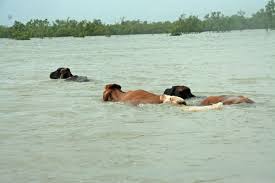
Natural disasters can be considered limiting factors.
true: density independent limiting factors
false; natural disasters are not limiting factors
true: density dependent limiting factors
false: because Mrs. Schaffer said
A lion and a cheetah attempt to occupy the same niche. The more aggressive lion survives; the cheetah does not.
Density-Dependent: Competition
Density-Independent: Competition
Density-Dependent: Predator-Prey
Density-Independent: Predator-Prey
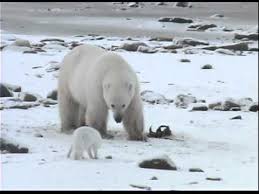
Two arctic fox are fighting with a polar bear for a sea lion carcass. One fox distracts the bear while the other eats. What type of limiting factor is the polar bear?
Predator-Prey Relationships
Competition
Herbivory Effect
Weather

A group of elephants gets stuck in mud at the edge of the river from a recent mud slide. A lion waits for an elephant to get tired before it attacks. What is the limiting factor to the elephant population?
Predator-Prey Relationships
Natural Disaster
Herbivory Effect
Competition

A duck population is breeding at exponential rates. The snakes that hunted them have been collected by fur collectors. They make boots from python snake skin. What is the limiting factor to the snakes?
Ducks
Predator-Prey
Exponential Growth
Humans

A duck population normally begin migrating south right after the last rain of the late summer season. Suddenly, they’re migrating much earlier. The climate has been changing far too often which is altering the effects of their magnetite.
Predator-Prey Relationships
Weather
Herbivory Effect
Competition

Small krill sweep the river bottom rocks for debris and muck. Next, the krill is suddenly swooped up by a small fish. The small fish then gets eaten by a salmon. A week after the bear eats the salmon, it begins to have symptoms. Over time the bear weakens from a botfly infection. What is the limiting factor to all the consumers?
Predator-Prey Relationships
Parasites
Disease
Competition
What is a limiting factor?
Factors that always increase a population
Factors that always decrease a population
Resources that are unlimited
Factors/resources that limit how many organisms can live in an area at the same time
If there was a wildfire in the forest that destroyed the plant life, what would happen to the herbivore population?
Herbivores would decrease due to a lack of food
Herbivores would increase due to an increase of food
Herbivores would not be affected
Herbivores would decrease due to an increase in predators
Choose the 4 limiting factors.
Food
Water
Time
Space
Shelter

What is the overall trend of this population graph?
Increasing
Decreasing
Constant
No trend
Zone where small numbers can survive these difficult conditions
range of tolerance
zone of intolerance
optimal range
zone of physiological stress
Zone where a stable healthy population survives
zone of intolerance
optimal range
zone of physiological stress
limiting factors
Zone where organisms cannot survive
zone of intolorance
range of tolerance
optimal range
zone of physiological stress
There must be a certain amount of abiotic factors in an ecosystem to allow organisms to survive. Factors that are too low or too high cause the organisms to die
range of tolerance
limiting factors
zone of intolerance
zone of physiological stress

What is ecological succession?
A series of predictable changes that occur in a community over time.
It is the number of fish increasing.
It is the seasons of the year.
It is that rain follows cloud formation.
Primary succession begins where there was no ecosystem and no soil such as
a severe storm
a volcanic eruption
an old farm is abandoned
a forest fire
So, how does an ecosystem start if there is no soil?
Moss and lichen break down rock and lava and produce soil.
Moss and lichen are air borne and they move by the wind to start in a secondary succession environment.
Moss and lichen are simple living organism that can start growing almost anywhere.
All answers
Secondary succession (thnk soil) forms after a catastrophic event like a forest fire and has a ___________ growth rate than primary succession because soil already exists.
extremely slower
slower
faster


What term best relates to equilibrium?
pioneer species
primary succession
secondary succession
climax community
Which of the following is a density independent limiting factor?
competition for resources
predation
disease
natural disasters
Which of the following is a density dependent limiting factor?
pollution
food
climate change
hurricane


What type of growth is shown in the graph?
exponential
logistics
a good kind
linear
The largest number of individuals of a population that the environment can support is the...
carrying capacity
population crash
lag phase
mutualism

What is the carrying capacity for this sheep population?
1.9 million
1.6 million
1.25 million
1.0 million

Which statement sounds accurate based on the graph data?
The zebra and lions do not affect each other.
When lion population increases, so does the zebra population.
When the zebra population increases, it causes the lion population to also increase.
When zebra populations increase, the lion population decreases.
A j-shaped curve is a representative model of what type of growth?
exponential growth
logistic growth
minimal growth
linear growth

What type of distribution pattern is evenly spaced apart from one another?
Uniform
Clumped
Random
Uneven

This is the most commonly seen distribution pattern. Example: wolves. This is usually because there are resources found in particular areas and the organisms need more space to survive.
Random
Uniform
Clumped
Ueven
What are the three types of distribution patterns?
uniform, clumped, random
uniform, uneven, random
uneven, clumped, random
uniform, clumped, uneven

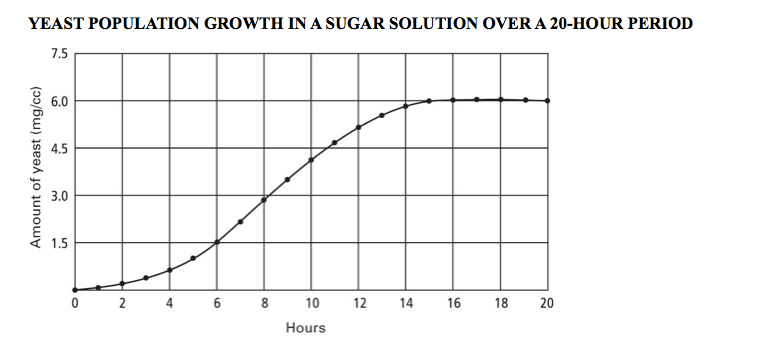
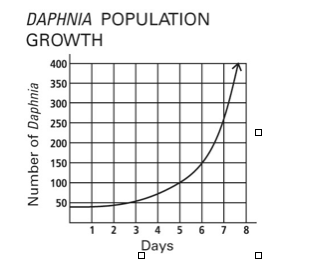

Which of the following is a density dependent limiting factor?
pollution
food
climate change
hurricane

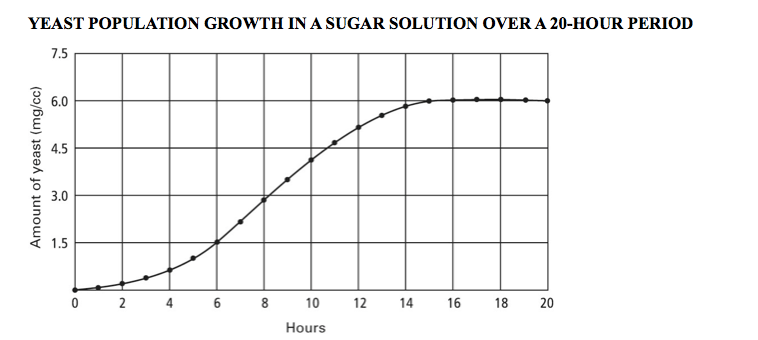
The graph below represents the growth of a population of flies in a car? Which of the following statements best describes the graph?
The fly population did not change.
The fly population decreased, then increased.
The fly population grew following the logistic growth model.
The fly population grew following the exponential growth model.
Which of the following could be a density-independent limiting factor in the desert?
number of prey
food supply
parasitism
rainfall

Which point in this graph represents exponential growth?
Point E
Point A
Point B
Point C

The graph represents _____ of a population.
logistic growth model
exponential growth model

Which point on the graph best represents the carrying capacity?
Letter A
Letter C
Letter E
Letter D

In which month(s) did the Cottontail Rabbits reach their carrying capacity?
January and February
March and May
April and January
April and May
Owls and snakes eat mice and other organisms. What would happen to the mice population if the owl population decreased?
The population would decrease, as the loss of owls as part of their diet is a limiting factor.
The population would decrease, as shelters created by owl nests is a limiting factor.
The population would increase, as competition for food is a limiting factor.
The population would increase, as predation by owls is a limiting factor.

This graph shows ....
When one population increases, the other decreases.
When one population decreases, the other increases.
When one population increases, the other increases instantly.
When one population increases, it causes the other to increases shortly after.
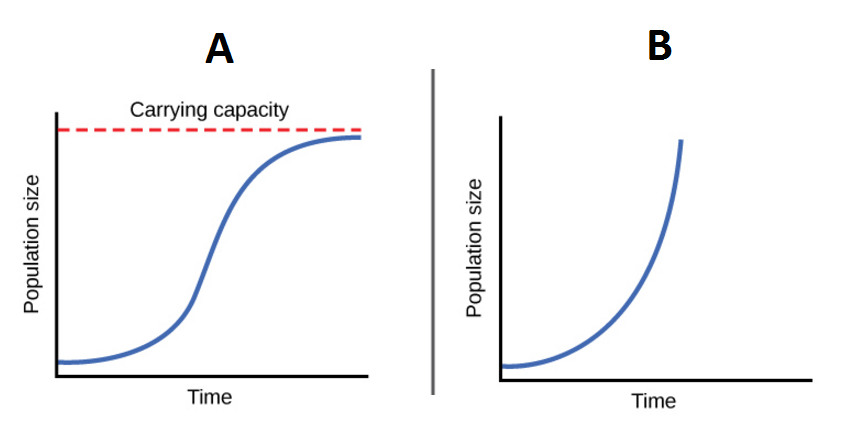
What type of growth model is shown in image A?
Exponential
Logistic
What type of growth model is shown in image B?
Exponential
Logistic


