
 Worksheets
Ch 22-24 Review Questions
Total questions: 142
Worksheet time: 1hrs 27mins
Which ancient astronomer developed a GEOCENTRIC model of the universe explaining the observable motions of the planets?
Aristotle
Ptolemy
Copernicus
Newton
Model of the universe in which the moon, sun and known planets (Mercury, Venus, Mars, Jupiter, and Saturn) move around Earth.
plutonic
geocentric
heliocentric
Newtonian
The first accurate measurement of the size of Earth was made by
Eratoshenes
Aristotle
Ptolemy
Newton
The path of an object as it moves around another object in space.
orbit
ellipse
revolution
rotation
The heliocentric model of the universe stated that
Earth revolved around the celestial sphere
the sun was the center of the universe
Earth was a "wanderer"
Earth was the center of the universe
Aristotle concluded that Earth was round because
it always cast a curved shadow during a lunar eclipse
he sailed around the world
he calculated Earth's circumference
it exhibited retrograde motion
In the model proposed by Ptolemy
Earth was flat
Earth was the center of the universe
the sun was the center of the solar system
Earth was much larger than the sun
Using Tycho Brahe's data, which scientist proposed three laws of planetary motion?
Newton
Kepler
Galileo
Copernicus
What is the shape of a planet's orbit?
elliptical
circular
irregular
parabolic
Which scientist determined the nature of the forces that keep the planets in their orbits?
Copernicus
Galileo
Brahe
Newton
Which scientist was the first to use the telescope in astronomy?
Newton
Galileo
Copernicus
Kepler
Which scientist discovered that Venus has phases, just like the moon?
Ptolemy
Copernicus
Kepler
Galileo
The Greek philosopher Aristotle concluded that Earth was round because
it always cast a curved shadow on the moon during a lunar eclipse
he sailed around the world
he calculated Earth's circumference
it exhibited retrograde motion
The geocentric model of the universe stated that
Earth revolved around the celestial sphere
the sun was the center of the universe
Earth was a "wanderer"
Earth was the center of the universe
Which Greek was the first to discover the apparent backwards, or retrograde motion of some planets?
Aristotle
Ptolemy
Aristarchus
Eratosthenes
Aristarchus was the first Greek to propose a sun-centered, or ________ universe.
geocentric
elliptical
heliocentric
retrograde
Using Tycho Brahe's data, which scientist proposed three laws of planetary motion?
Newton
Kepler
Galileo
Copernicus
The scientist that first proposed a model of the solar system with the sun at the center.
Copernicus
Aristotle
Galileo
Brahe
What is the shape of a planet's orbit?
circular
elliptical
irregular
parabolic
The true shape of planetary orbits was discovered by
Newton
Galileo
Brahe
Kepler
Who developed the Law of Universal Gravitation?
Galileo
Newton
Kepler
Brahe
Which of the following was NOT discovered by Galileo?
sunspots
mountains on the moon
Jupiter's four largest moons
the two moons of Mars
The turning, or spinning, of a body on its axis. (a)
The motion of a body, such as a planet or moon, along its orbit around some point in space.
rotation
revolution
apogee
orbit
Earth is closest to the sun at a point called (a)
What movement of Earth is responsible for night and day? (a)
Seasons are caused by (a)
The moon is closest to Earth at
perigee
apogee
perihelion
aphelion
During the period that the moon's phases are changing from NEW to FULL, the moon is (a)
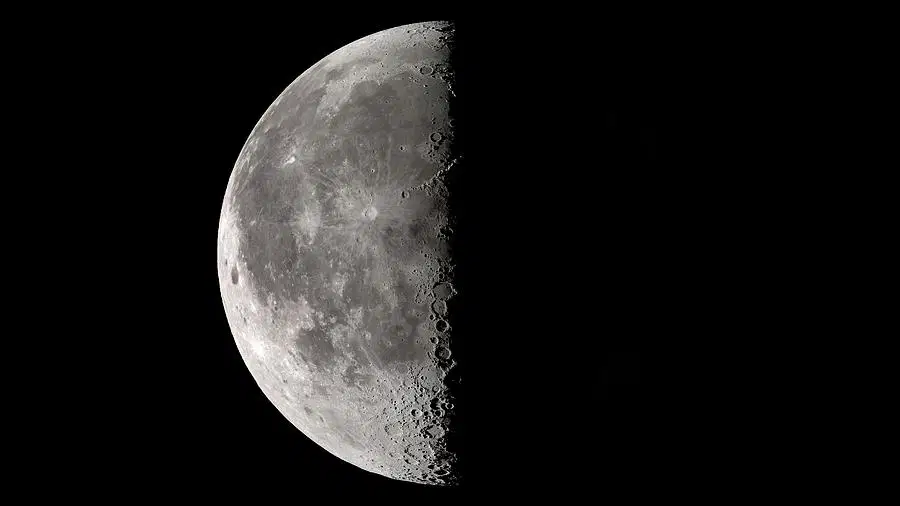
The moon phase shown in the picture is a
new moon
waxing crescent
third quarter moon
first quarter moon
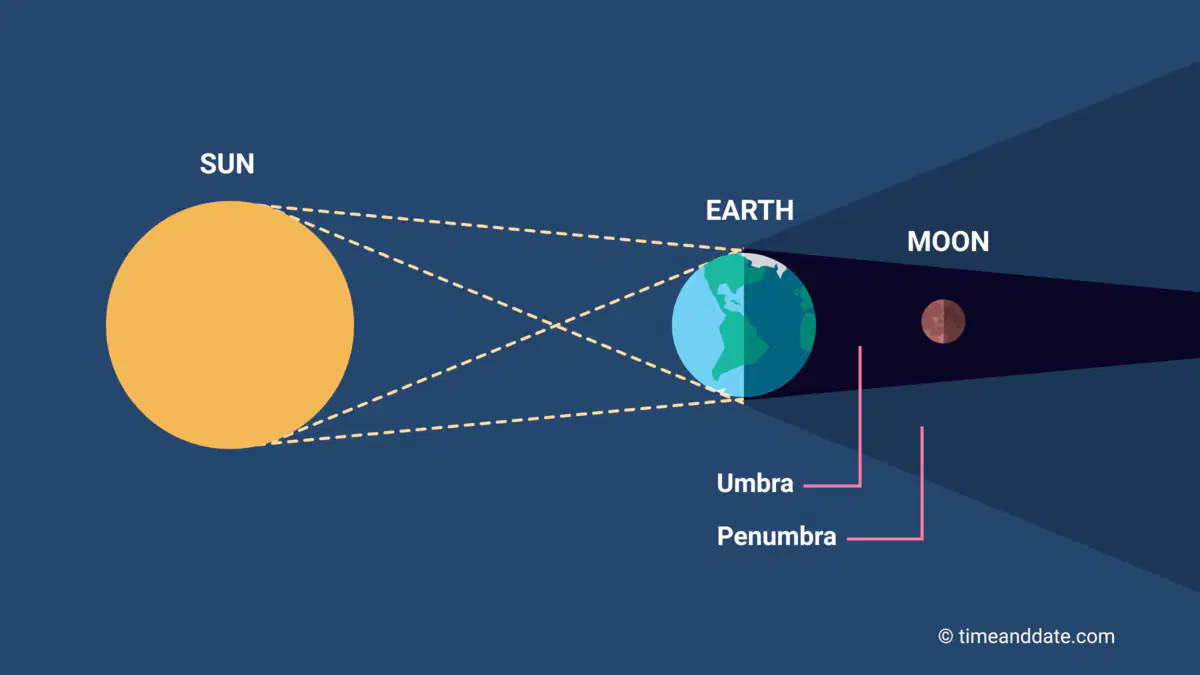
The diagram shows a
solar eclipse
lunar eclipse
new moon
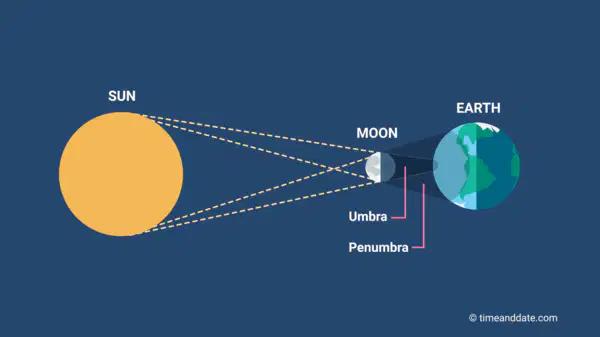
The diagram shows a
solar eclipse
lunar eclipse
full moon
The density of the moon is comparable to that of mantle rocks on Earth.
true
false

Dark, relatively smooth lunar areas made of ancient beds of basaltic lava. (a)

Splash marks on the moon that radiate outwards for hundreds of kilometers.
craters
rays
rilles
maria

Long channels on the moon similar to valleys or trenches.
craters
rays
rilles
maria
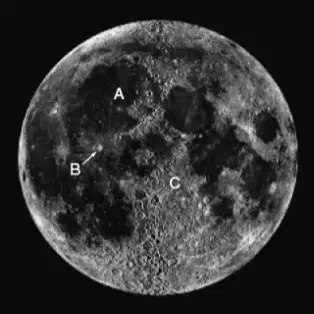
Which lunar feature is labeled with the letter A?
ray
crater
highland
mare
Which lunar feature is labeled with the letter C?
ray
crater
highland
mare
The accepted theory of the moon's origin is that a body the size of Mars impacted Earth as the solar system was forming.
true
false

A soil-like layer of igneous rock, glass beads, and fine lunar dust.
maria
rays
rilles
regolith
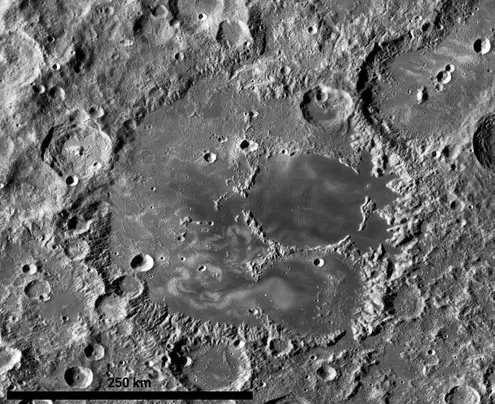
Maria originated when asteroids punctured the moon's surface, letting magma "bleed" out.
true
false

Most craters on the moon were produced by volcanic activity.
true
false
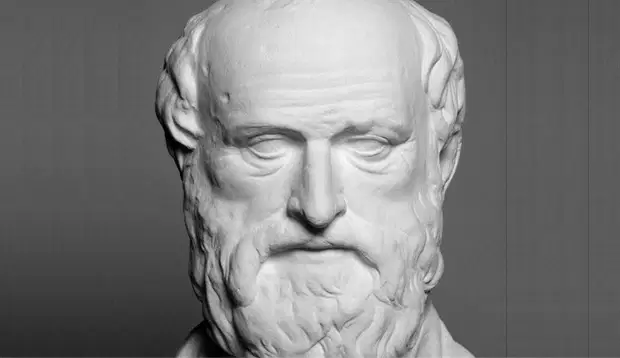
Ancient Greek mathematician who calculated the circumference of the Earth.
Aristotle
Ptolemy
Eratosthenes
Copernicus
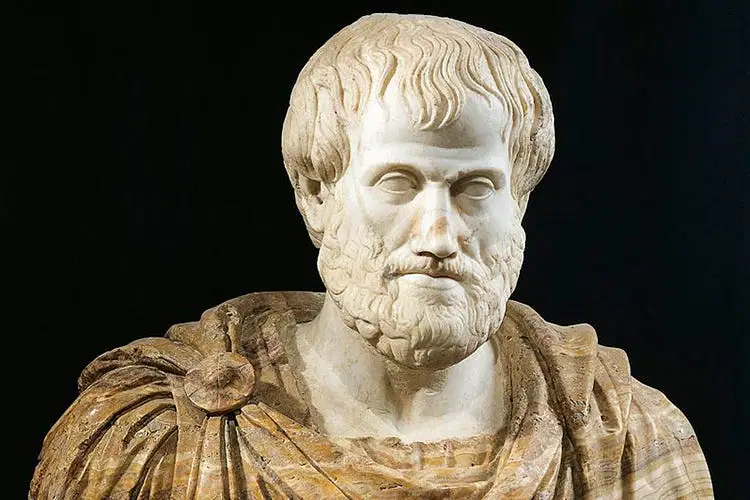
Proposed that Earth was round based on the shadow it cast during a lunar eclipse.
Aristotle
Aristarchus
Galileo
Ptolemy

Discovered that Venus has phases just like the moon.
Copernicus
Ptolemy
Newton
Galileo

Discovered three laws of planetary motion, the elliptical orbits of planets, and the astronomical unit (AU).
Galileo
Newton
Kepler
Brahe

Developed the Law of Universal Gravitation that explained the gravitational attraction between objects in the universe.
Newton
Kepler
Galileo
Aristotle
First astronomer to have the use of a telescope.
Copernicus
Ptolemy
Newton
Galileo

Modern astronomer who concluded that Earth is a planet and proposed a solar system with the sun at the center.
Brahe
Galileo
Copernicus
Newton

Studied planets for 20 years without the use of a telescope, yet made very precise observations of Mars.
Copernicus
Ptolemy
Brahe
Galileo

Greek astronomer who explained retrograde motion with his epicycle model of planetary orbits.
Ptolemy
Aristarchus
Aristotle
Copernicus
Discovered sunspots and that the moon's surface is not smooth.
Copernicus
Ptolemy
Newton
Galileo
Which of the following is NOT a Jovian planet? (a)
Which planet has the fastest orbital motion? (a)
All planets in our solar system revolve around the sun in the same direction.
true
false
Place the planets in order from closest to farthest from the sun.
Mercury
Earth
Mars
Jupiter
Neptune
The shape of a planet's orbit around the sun is a(n)
circle
ellipse
oval
parabola
Which of the following is NOT a terrestrial planet?
Jupiter
Mercury
Earth
Mars
Which of the following is NOT a characteristic of Jovian planets?
large size
composed mainly of gases and ice
thin atmospheres
located beyond the orbit of Mars
The formation of the solar system from a huge cloud of dust and gases is called the (a) theory.
Which of the following is NOT considered part of the solar system?
terrestrial planets
Jovian planets
galaxies
sun
A cloud of dust and gas in space is a(n) (a)
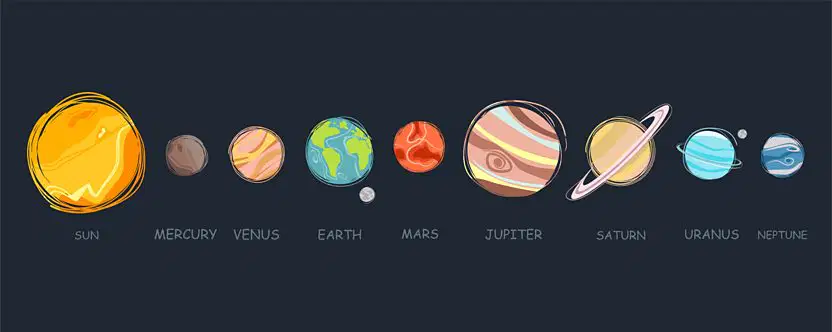
Which planet has a cratered surface similar to Earth's moon?
Mars
Venus
Mercury
Saturn
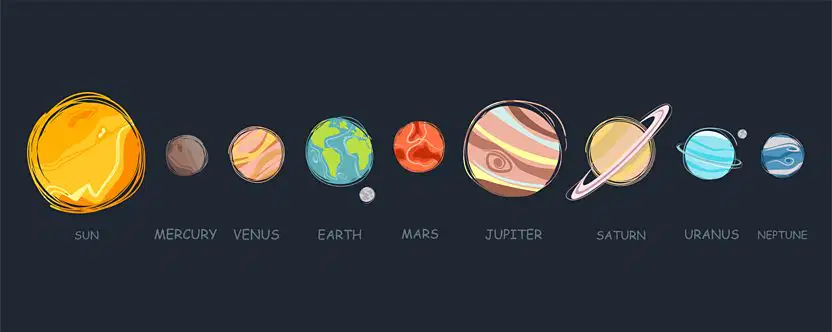
The planet with the greatest temperature extremes.
Earth
Venus
Mars
Mercury
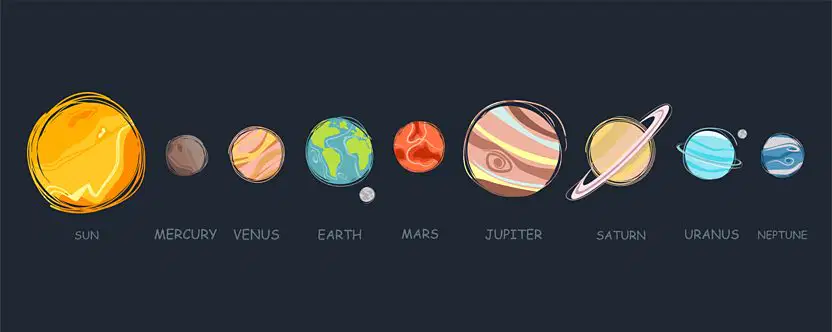
Which planet shows evidence of water erosion?
Mars
Venus
Jupiter
Mercury
Which planet has a dense carbon dioxide atmosphere and high surface temperatures?
Mars
Venus
Earth
Mercury

How many known satellites does Mars have?
1
2
5
0

The atmosphere of Venus is composed primarily of
water vapor
oxygen
hydrogen
carbon dioxide
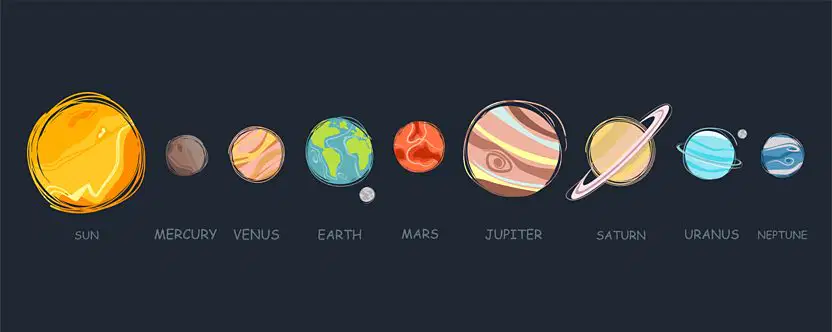
Olympus Mons, a volcano the size of Ohio, is found on
Earth
Mars
Mercury
Saturn
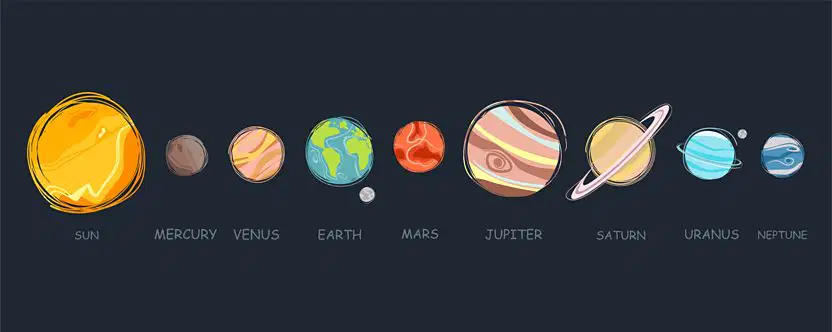
Which of the following planets does NOT have rings?
Mars
Uranus
Neptune
Saturn
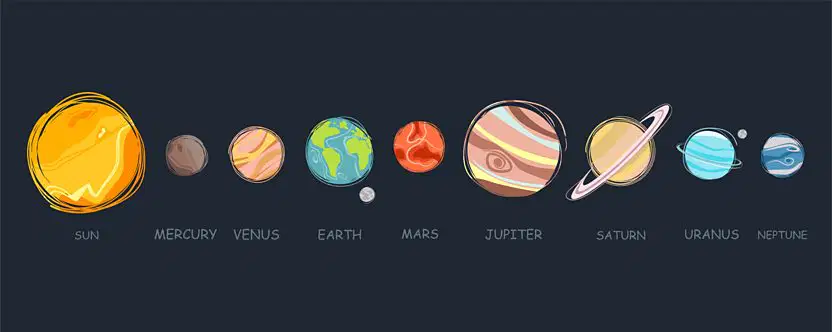
Which planet, when viewed through a telescope, appears as a reddish ball interrupted by some permanent dark regions that change intensity?
Mercury
Earth
Mars
Saturn

Which planet is second only to the moon in brightness in our night sky?
Mercury
Mars
Jupiter
Venus
The largest planet in the solar system, with a mass that is 2.5x greater than the mass of all the other planets and moons combined.
Jupiter
Saturn
Uranus
Neptune
Its four largest moons - Io, Europa, Ganymede, and Callisto - were discovered by Galileo in 1610.
Jupiter
Neptune
Saturn
Uranus
Its largest moon - Titan - is bigger than Mercury and has its own atmosphere.
Jupiter
Saturn
Uranus
Neptune
It's most prominent feature is its ring system, containing more than 20 separate rings.
Saturn
Jupiter
Neptune
Uranus
Instead of being perpendicular to the plane of its orbit, like the other planets, its axis of rotation lies nearly parallel with the plane of its orbit.
Neptune
Saturn
Jupiter
Uranus
Its atmosphere includes winds exceeding 1000 km/hr.
Neptune
Jupiter
Saturn
Uranus
A celestial body in its own orbit around the sun, yet not big enough to be considered a planet.
dwarf planet
perihelion
elliptical planet
aphelion
The most well-known dwarf planet, which takes 248 Earth years to complete one orbit around the sun.
Pluto
Eris
Ceres
Mercury
A dwarf planet the same size as Pluto that was discovered in 2005.
Ceres
Eris
Halley
Titan
Which of Jupiter's moons is one of the four known volcanically active bodies in our solar system?
Io
Europa
Ganymede
Callisto
The arrangement of electromagnetic radiation according to their wavelengths and frequencies.
electromagnetic spectrum
visible light
emission spectrum
Doppler effect
All electromagnetic waves travel through space at the same speed.
true
false
All electromagnetic waves travel through space at the same frequency.
true
false
Particles of light are called (a) .
Which of the following has the highest frequency?
gamma rays
visible light
ultraviolet rays
infrared rays
Which of the following has the longest wavelength?
visible light
gamma rays
infrared rays
microwaves
When a wave source is moving toward or away from an object, the wavelength changes, a phenomenon know as the _____.
Doppler effect
emission spectrum
electromagnetic spectrum
continuous effect
Visible light from an object that is moving away from you shifts toward
red
blue
In astronomy, the Doppler effect is used to determine whether a star is moving away from or toward Earth.
true
false
Produced when visible light is passed through a relatively cool gas under low pressure. The gas absorbs certain wavelengths of light. Appears as a continuous spectrum with a series of black lines running through it.
continuous spectrum
absorption spectrum
emission
spectrum
Doppler effect
The arrangement of electromagnetic waves according to their wavelengths and frequencies is called the
emission spectrum
continuous spectrum
electromagnetic spectrum
Which of the following energy types is NOT found on the electromagnetic spectrum?
microwaves
gamma rays
radio waves
sound waves
T or F: Different electromagnetic waves travel through a vacuum at different speeds.
true
false
Particles of light are called _____.
protons
neutrons
batons
photons
Put the following electromagnetic waves in order from shortest wavelength to longest.
gamma rays
x-rays
visible light
microwaves
radio waves
Match the following
band of color with a series of dark lines running through it
absorption spectrum
series of bright lines of particular wavelengths
emission spectrum
uninterupted band of color
continuous spectrum
The study of the properties of light that depend on wavelength.
spectroscopy
astronomy
gastroscopy
astrophysics
When a wave source is moving toward or away from an object, the wavelength changes, a phenomena known as the
Newton Effect
Kepler Effect
Dalton Effect
Doppler Effect
As a sound source approaches an observer...
the pitch becomes lower
the pitch becomes higher
As a light source moes away from an observer...
the light becomes redder
the light becomes
bluer
A _____ telescope uses a lens to bend light.
refracting
reflecting
radio
space
Astronomers usually study an image from a telescope by first photographing the image.
true
false
Most large optical telescopes are reflecting telescopes.
true
false
A _____ telescope uses a concave mirror to focus the light in front of the mirror.
radio
reflecting
refracting
space
A _____ telescope focuses incoming radio waves on an antenna, which absorbs and transmits those waves to an amplifier, just like a radio antenna.
radio
reflecting
refracting
Galileo
Radio telescopes are much less affected by clouds and weather than optical telescopes.
true
false
____ telescopes are useable 24 hours a day, not just at night.
reflecting
refracting
radio
The first space telescope was called the _____ telescope.
Galileo
Apollo
Compton
Hubble
____ telescopes orbit above Earth's atmosphere and produce clearer images than Earth-based telescopes.
optical
radio
refracting
space
Some telescopes are able to gather data by detecting x-rays.
true
false
A _______ uses a lens to bend or refract light.
reflecting telescope
radio telescope
refracting telescope
The main difference between a reflecting telescope and a refracting telescope is that reflecting telescopes us a(n) _______ to focus the incoming light.
mirror
lens
antenna
satellite
Match the following properties of telescopes to their meanings.
makes brighter images
light gathering power
resolving power
makes sharper images
magnifying power
makes larger images
Which of the following types of invisible radiation from space can be detected from Earth's surface?
gamma rays
x-rays
radio waves
Space telescopes produce clearer images that telescopes on earth because...
space telescopes are above the atmosphere
space telescopes are larger
space telescopes are more expensive
space telescopes are reflecting and telescopes on Earth are refracting
Which was the first space telescope?
Hubble Space Telescope
Apollo Space
Telescope
Compton Space Telescope
Chandra Space Telescope
T or F: Astronomers usually study an object by looking directly through a telescope.
true
false
T or F: Most large optical telescopes are reflectors.
true
false
T or F: A radio telescope works in a similar way to a radio antenna.
true
false
T or F: Refracting telescopes suffer from an optical defect called chromatic aberration.
true
false
The four main parts of the sun are the solar interior, the visible surface (photosphere), the chromosphere, and the _____.
corona
sunspots
prominence
aurora
The layer of the sun that radiates most of the sunlight we can see.
chromosphere
photosphere
corona
solar interior
The outermost part of the sun's atmosphere.
chromosphere
photosphere
corona
solar interior
The relatively thin layer of the sun's atmosphere that can be observed during a total solar eclipse.
chromosphere
photosphere
corona
solar interior
A dark region on the surface of the photosphere.
solar flare
aurora
sunspot
prominence
Brief bright outbursts, lasting about an hour, and are associated with sunspot clusters.
solar flare
aurora
sunspot
prominence
Another name for the northern and southern lights is _____.
auroras
solar flares
sunspots
prominences
The sun produces energy through nuclear fission.
true
false
When four hydrogen nuclei are converted into the nucleus of a helium atom.
nuclear fission
nuclear fusion
solar flare
solar wind
Different parts of the sun rotate at different speeds.
true
false
The source of the sun's energy is
electromagnetic radiation
nuclear fusion
nuclear fission
gravity
Match the following
core
radiation zone
convection zone
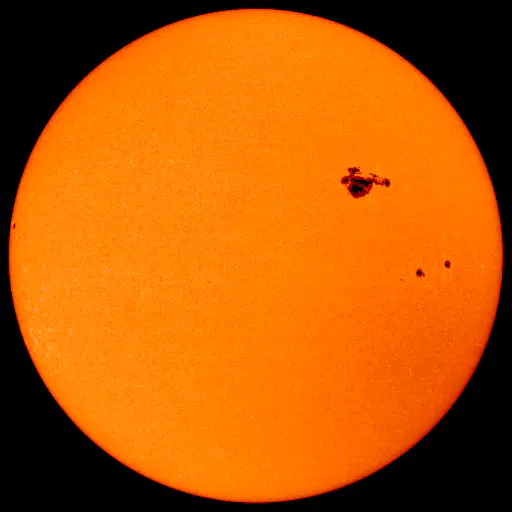
The innermost layer of the sun's atmosphere, which is the visible surface of the sun.
photosphere
chromosphere
corona
core

Middle layer of the sun's atmosphere. Visible only during a solar eclipse.
photosphere
chromosphere
corona
convection zone

The outermost layer of the sun's atmosphere, only visible during a solar eclipse. Gradually thins into the solar wind.
photosphere
chromosphere
corona
radiation zone
A stream of electrically charged particles that flows outward from the sun through the solar system.
solar wind
chromosphere
solar flare
sunspot

Areas of gas in the photosphere that are cooler than the surrounding gases. Although they are large, they appear as small, dark-looking regions on the sun's surface.
sunspots
solar flares
solar wind
prominences

Huge loops of gas that erupt from sunspot regions, extending upwards as far as the corona.
sunspots
solar flares
solar wind
solar prominences
A sudden release of energy from the sun that erupts near sunspots.
sunspots
solar flares
solar wind
solar prominences
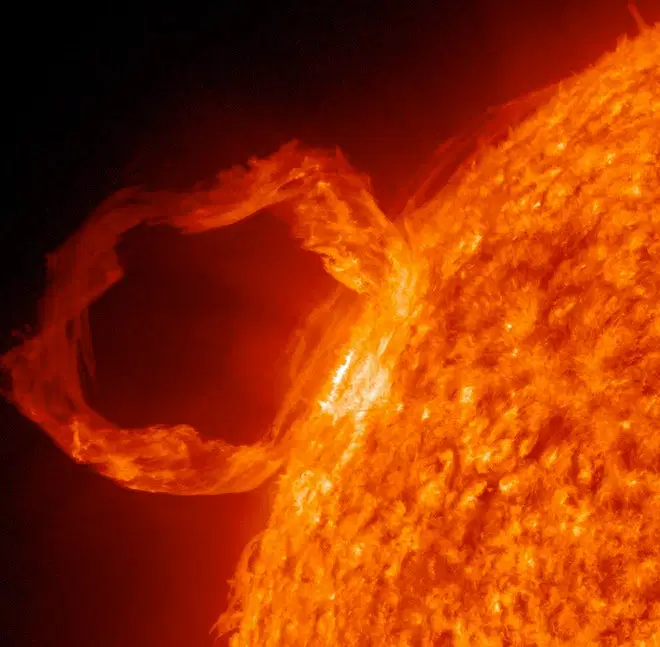
The three main forms of energy released by solar flares are
ultraviolet, radio, and x-ray
gamma, microwave, and x-ray
ultraviolet, infrared, and microwave
radio, gamma, and x-ray

