
 Worksheets
Skeletal System Exam
Total questions: 143
Worksheet time: 1hrs 26mins
All of the following are major functions of skeletal system EXCEPT
body movement
posture and balance
support and protection
storage of calcium, magnesium, sodium, potassium
Normally, there are about ______ bones in the human body.
206
200
32
31
Axial bones includes
scapula, clavicle, legs
head, neck, trunk
thigh, legs, arms
arms, legs scapula
The two main divisions of skeleton are
axial and appendicular skeleton
central and peripheral nervous
pectoral and pelvic girdle
long and short bone
The bones in the appendicular skeleton includes
head, neck, trunk
pectoral and pelvic girdle
vertebral column and thoracic cage
limbs and bones that connect to the pectoral and pelvic girdle
The two ends of the long bone is called
diaphysis
epiphysis
spongy bones
articular cartilage
Inside the long bone, the hollow chamber filled with bone marrow is called
compact bone
spongy bone
medullary cavity
red marrow
The lining of the medullary cavity is called
perimysium
epiphysis
epimysium
endosteum
The membrane that covers the entire bone is called
endosteum
endomysium
periosteum
perimysium
The shaft or the central part of a long bone is called
epihysis
diaphysis
perosteum
articular cartilage
The ball and socket joints in our body can be found in
thumb
lower arm
elbow, knee
shoulder, hip
Bone tissue is called
osseous tissue
osteocytes
lacunae
canaliculi
Types of bone tissues are
red and yellow marrow
compact and spongy
epiphysis and diaphysis
endosteum and perosteum
Bone cells are called
osseous
osteoblasts
osteocytes
osteclasts
Hyaline cartilage covering the ends of the bones is called
epiphysis
diaphysis
medullary cavity
articular cartilage

What bone is highlighted?
Skull (Cranium)
Mandible
Clavicle
Scapula
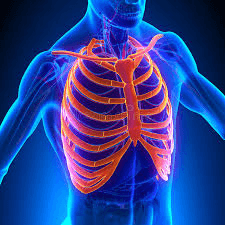
What bone is highlighted?
Ribs
Vertebrae
Clavicle
Femur

What bone is highlighted?
Radius
Ulna
Humerus
Carpals

What bone is highlighted?
Vertebrae
Radius
Pelvis
Ribs

What bone is highlighted?
Radius
Ulna
Humerus
Carpals

What bone is highlighted?
Radius
Ulna
Humerus
Carpals

What bone is highlighted?
Femur
Tibia
Fibula
Humerus

What bone is highlighted?
Patella
Pelvis
Clavicle
Femur

What bone is highlighted? (hint: inside of your leg)
Tibia
Fibula
Femur
Humerus

What bone is highlighted? (hint: bone on the outside of leg)
Tibia
Fibula
Radius
Ulna
Flat Bones protect the
vital organs
muscles
skin
ligaments
Bones are made up of
calcium
iron
potassium
oxygen
Bones serve as scaffolding for (more than one correct answer)
ligaments
joints
muscles
organs
Bones are categorized (or named) based on (more than one correct answer)
shape
job they perform
location
connection
Long bones
support weight
protect vital organs
facilitate movement
are only found in the legs
short bones are
cubed shaped
protect vital organs
support weight
facilitate movement
Irregular bones (like the vertebrae) have
complex shapes
cubed shapes
connections to vital organs
bone marrow inside
Sesamoid bones are shaped like
sesame seeds
cubes
irregular objects
long bones
Babies are born with more bones than adults because some of their bones haven't _____________ yet
fused
calcified
ossified
developed
Bone marrow is produced in
long bones
flat bones
sesamoid bones
irregular bones


These type of bones are typically longer than they are wide.
Irregular
Flat
Short
Long
These type of bones have a variety of shapes.
Long
Short
Irregular
Flat
These type of bones have roughly equal widths and lengths; cube shaped.
Long
Short
Flat
Irregular
Which of the following is found in the axial skeleton?
Femur
Skull
Clavicle
Humerus
Which tissue cushions the end of bones?
tendons
ligaments
cartilage
joints
What do we call the place where two bones meet?
skeleton
joint
muscle
rib
Which is NOT a function of the skeletal system?
production of red blood cells
store calcium
digest food
movement, protection, and support
Which type of tissue connects bone to bone?
tendons
ligaments
skeletal mucscles
smooth muscles
What is the name of the outer membrane that surrounds bones?
compact bone
periosteum
spongy bone
bone marrow

Which bones protect the heart and lungs?
number 7
number 8
number 9
number 10
Match the following common names of bones to their scientific names
Kneecap
Patella
Thigh Bone
Femur
Collar Bone
Clavicle
Shoulder blade
Scapula
How many bones are in total in the human body
300
210
206
100

Which bone is labeled O?
Femur
Tibia
Fibia
RibCage
Which of the following bones in an example of a flat bone?
Femur
Patella
Rib Cage
Humerus

Identify the skeletal bone in the picture highlighted blue
mandible
humerus
cranium
femur


Bone cells are known as
Lacunae
Osteocytes
Collagen
Osteon
From wrist to fingertip, what is the order of bones?
Carpals, metacarpals, phalanges
Phalanges, metacarpals, carpals
Carpals, phalanges, metacarpals
Metacarpals, carpals, phalanges

This picture is an example of:
spongy bone
compact bone
muscle
cylinders
Isla, Mason, and Jackson are learning about the human body in their biology class. Their teacher asks, 'What is the purpose of the skeletal system in our bodies?'
Transport oxygen to tissues and waste products from tissues
Protect against the outside environment, regulate temperature
Support and protect our body while allowing movement and producing red blood cells
Provide protection at a cellular level from pathogens and foreign substances
What bone is highlighted?
Skull (Cranium)
Mandible
Clavicle
Scapula
What does the cranium protect?
heart
eyes
brain
liver
What is the purpose of the rib cage?
Helps us to think
Carries blood throughout the body
Protects our brain
Protects our vital organs
About how many bones does an adult have?
399
1,290
14
206
What connects bones together?
ligaments
brains
trachea
heart
What connects bones to muscles?
hair
bones
tendons
teriyaki
What are two examples of joints?
noose, lock
key, door
ball and socket, hinge
hinge, crow
called__________________ .
_______________________ cells.

The functions are the skeletal system are
To support the body, protect the organs, store calcium, and produce blood cells
to regulate the composition of body fluids by removing metabolic wastes and retain the balance of water, salt, and other nutrients
to regulate and maintain bodily functions by producing hormones and releasing them into the blood stream
to enable the diffusion of oxygen into the bloodstream and the removal of carbon dioxide from the bloodstream
What are the 2 organs in the skeletal system?
muscles and joints
joints and bones
heart and lungs
kidney and pancreas

Where is new blood cells created?
In the scapula
In bone marrow, located inside the bone
In the patella
In bone marrow, located inside the muscle tissue

What is cartilage?
joints that connect bone to tissue
Connective tissue that acts as balance for the body
Connective tissue near joints that act as a shock absorber
a piece of tissue that is attached to the scapula

Where is cartilage, a connective tissue, located?
Outside of the bone
Around the muscle fibers
In between bone and joints
In between muscle and bone

How many bones are in the adult human body?
260
280
208
206

What are the joints in the skeletal system?
Ball and socket, gliding, pivot, fused, hinge
ball ad socket, screw, wrench, metatarsals
ball and socket, gliding, immovable (fused) and juking
None of the choices are correct

identify the skeletal bone in the picture that is highlighted green and blue; also known as the breastbone
clavilce
Sternum
Rib Cage
verterbrae

Identify the skeletal bone in the picture; has immovable (fused) joints
ribs
tibia
femur
cranium

Identify the skeletal bone in the picture highlighted green
fibula
femur
tibia
phalanges
Identify the skeletal bone in the picture highlighted blue
mandible
humerus
cranium
femur

Identify the skeletal bone in the picture highlighted red that is the upper arm or forelimb, forming joints at the shoulder and the elbow
ribs
phalanges
patella
humerus

Identify the skeletal bone in the picture highlighted in green; cartilage surrounds this bone to act as a shock absorber
femur
mandible
humerus
patella

Identify the skeletal bone in the picture highlighted in red
sternum
ribs
femur
vertebrae

Identify the skeletal bone in the picture highlighted in orange
ribs
mandible
vertebrae
humerus

What bone makes up your fingers and your toes?
phalanges
tibia
femur
scapula

What bone is also known as your shoulder blade?
Sternum
Scapula
Thorax
Vertebrae

What bone is also known as your collar bone and links the sternum?
scapula
vertebrae
humerus
clavicle
How many bones are in an adult body?
600
206
300
210
Which is not a function of the skeletal system?
shape and support
movement
protection
gas exchange
Name the center of your skeleton
Pelvic girdle
vertebral column
patella
femur
Name the type of joint that have little or no movement.
movable
immovable
Ball and Socket
Hinge
What makes up the vertebral column?
tendons
ligaments
vertebrae
cartilage
What is a joint?
The place where 2 or more bones meet.
A thin membrane that covers the surface of bone.
A band of tissue that hold bones together.
Connective tissue
Which is a movable joint?
Pelvis
sutures
cranium
arms
Name the joint that is found in wrists and ankles.
Ball and Socket Joint
Hinge Joint
Pivot Joint
Gliding Joint
Name the joint that makes up the elbows,knees, and fingers.
Ball and Socket Joint
Hinge joints
Pivot Joint
Gliding Joint
Turning the head is example of a ______________ joint.
Ball and Socket Joint
Hinge Joint
Pivot Joint
Gliding Joint
Legs and arms are examples of a __________________ joint.
Ball and Socket Joint
Hinge Joint
Pivot Joint
Gliding Joint
Where is marrow found?
In the cartilage
In compact bone
in spongy bone
in the periosteum
What is hard bone?
Cartilage
Tendon
Spongy Bone
Compact Bone
A living bone's surface is covered with a tough, tight-fitting membrane called the _________________________.
periosteum
cartilage
marrow
compact bone
What is the function of marrow?
To make protein
To make red blood cells and store fat.
reduce friction
to hold bones together
What are the ends of bone covered with that helps reduce friction when two bones are rubbed together?
periosteum
ligament
tendon
cartilage
A tough band of tissue that holds bones together at the joint are called a __________________________.
tendon
cartilage
periosteum
ligament
Name the condition in which the bones become weak and break easily.
Osteoarthritis
Rheumatoid arthritis
osteoporosis
arthritis
The functions are the skeletal system are
To support the body, protect the organs, store calcium, and produce blood cells
to regulate the composition of body fluids by removing metabolic wastes and retain the balance of water, salt, and other nutrients
to regulate and maintain bodily functions by producing hormones and releasing them into the blood stream
to enable the diffusion of oxygen into the bloodstream and the removal of carbon dioxide from the bloodstream
What are the 2 organs in the skeletal system?
muscles and joints
joints and bones
heart and lungs
kidney and pancreas
Where is new blood cells created?
In the scapula
In bone marrow, located inside the bone
In the patella
In bone marrow, located inside the muscle tissue
What is cartilage?
joints that connect bone to tissue
Connective tissue that acts as balance for the body
Connective tissue near joints that act as a shock absorber
a piece of tissue that is attached to the scapula
Where is cartilage, a connective tissue, located?
Outside of the bone
Around the muscle fibers
In between bone and joints
In between muscle and bone
How many bones are in the adult human body?
260
280
208
206
What are the joints in the skeletal system?
Ball and socket, gliding, pivot, fused, hinge
ball ad socket, screw, wrench, metatarsals
ball and socket, gliding, immovable (fused) and juking
None of the choices are correct
identify the skeletal bone in the picture that is highlighted green and blue; also known as the breastbone
clavilce
Sternum
Rib Cage
verterbrae
Identify the skeletal bone in the picture; has immovable (fused) joints
ribs
tibia
femur
cranium
Identify the skeletal bone in the picture highlighted green
fibula
femur
tibia
phalanges
Identify the skeletal bone in the picture highlighted blue
mandible
humerus
cranium
femur
Identify the skeletal bone in the picture highlighted red that is the upper arm or forelimb, forming joints at the shoulder and the elbow
ribs
phalanges
patella
humerus
Identify the skeletal bone in the picture highlighted in green; cartilage surrounds this bone to act as a shock absorber
femur
mandible
humerus
patella
Identify the skeletal bone in the picture highlighted in red
sternum
ribs
femur
vertebrae
Identify the skeletal bone in the picture highlighted in orange
ribs
mandible
vertebrae
humerus
What bone makes up your fingers and your toes?
phalanges
tibia
femur
scapula
What bone is also known as your shoulder blade?
Sternum
Scapula
Thorax
Vertebrae
What bone is also known as your collar bone and links the sternum?
scapula
vertebrae
humerus
clavicle
Which of the following is NOT a function of the skeletal system?
Helps your body move
Send oxygen to the body
Protect your organs
Give your body shape and structure
True or False:
Babies have more bones than adults.
True
False
The skeletal system works with the ______________ to help your body move.
digestive system
circulatory system
respiratory system
muscular system
What does bone marrow make?
blood cells
cancer
bone cells
oxygen
The place where two bones meet is called a ___________. They work with your muscles to help you move.
tendon
joint
blood vessel
ligament
The skull protects which organ?
heart
lungs
brain
stomach
What part of the skeleton protects the heart, lungs, and stomach?
rib cage
femur
skull
spine
Where is the femur located in the body?
arm
shoulder
leg
foot
How is the skeletal system connected to the circulatory system?
(Choose 2)
bones pump blood to the heart
bones make blood cells
the heart needs calcium from the bones
bones protects the heart
How many bones are in an adult?
200
203
206
209

